Successful Blog

  • Home
  • Community
  • About
  • Author Guidelines
  • Liz’s Book
  • Stay Tuned

The Book List: ‘I’m at a Networking Event, Now What?’ and ‘The Entrepreneur Equation’

March 23, 2011 by teresa

A Weekly Series by Teresa Morrow of Key Business Partners, LLC

I’m Teresa Morrow, Founder of Key Business Partners, LLC and I work with authors & writers to help them with their online book promotion and marketing. As part of my job I read a lot of books (I love to read anyway!).

The books in the Book List Series will cover a range of topics such as social media, product development, marketing, blogging, business, organization, career building, finance, networking, writing, self development, and inspiration.

‘I’m at a Networking Event, Now What?’ by Sandy Jones-Kaminski
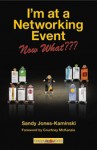
networking_now_whatmid

“Networking should be like the holiday season–more about giving than receiving.”
Women Entrepreneur book review

About the Book*:

Through this book you will learn how to make quality connections, cultivate relationships, expand your circle of influence through networking events, and create good “social capital.” You’ll also find information on networking tools and technology that will promote new contacts and connections.

I’m at a Networking Event—Now What??? illustrates that today’s social networking environments practically demand that you have at least some knowledge of effective networking practices in order to achieve the results most of us are looking for.

About Sandy*:
Sandy Jones-Kaminski is a self-described networking enthusiast and accomplished marketer and business development professional. In 2002, Sandy launched her own online marketing and biz dev strategy consulting practice called Bella Domain, LLC. She is also a former VP of Networking for one of the largest chapters of the American Marketing Association. Sandy knows how to make meaningful connections, cultivate relationships, host some great networking events, and create what she refers to as good “social capital.” You can connect with her at www.belladomain.com.

You can purchase a copy of ‘I’m at a Networking Event, Now What?’ online at Amazon or on the publisher site. *this information came from Amazon.

Next, I would like to introduce you to another book on the business book list on Amazon and on my reading list: ‘The Entrepreneur Equation’.

‘The Entrepreneur Equation: Evaluating the Realities, Risks, and Rewards of Having Your Own Business’ by Carol Roth

This book came out this week on the new releases (business) list on Amazon.

“Carol delivers the reality check that today’s entrepreneur needs to succeed.”
—JJ Ramberg, Host of MSNBC’s “Your Business” and CEO of Goodsearch.com

“Aspiring entrepreneurs and small business owners alike can generate the best return on their success simply by investing their time reading The Entrepreneur Equation. Written in Carol’s frank and fun style, this book gives you the key tools that you need to stack the odds of success in your favor.”
—Loral Langemeier, CEO/Founder of Live Out Loud, international speaker and bestselling author of the Millionaire Maker 3 book series and Put More Cash In Your Pocket

“Finally! Someone asks the million dollar question—and then answers it. It isn’t about CAN you be an entrepreneur? It is really about—SHOULD you be an entrepreneur? You can spend thousands of dollars and years of your valuable life figuring it out. Or, you can read this book.”
—Shama Kabani, Author of The Zen of Social Media Marketing and President of the Marketing Zen Group

About the Book
There’s never been a better time to start a business—or so the conventional wisdom would have you believe. But with up to 90 percent of businesses failing within the first five years, it’s time to take off the rose-colored glasses and think twice before you invest your precious time, money and energy.

The Entrepreneur Equation
helps you do the math before you set down the entrepreneurial path so that you can answer more than just “Could I be an entrepreneur?” but rather “Should I be an entrepreneur?” By understanding what it takes to build a valuable business as well as how to assess the risks and rewards of business ownership based on your personal circumstances, you can learn how to stack the odds of success in your favor and ultimately decide if business ownership is the best possible path for you, now or ever.

Through illustrative examples and personalized exercises, tell-it-like-it-is Carol Roth helps you create and evaluate your own personal Entrepreneur Equation as you:

• Learn what it takes to be a successful entrepreneur in today’s competitive environment
• Save money, time and effort by avoiding business ownership when the time isn’t right for you
• Identify and evaluate the risks and rewards of a new business based on your goals and circumstances
• Evaluate whether your dreams are best served by a hobby, job or business
• Gain the tools that you need to maximize your business success

About Carol*:

Carol Roth helps businesses grow and make more money. An investment banker, business strategist and deal maker, she has helped her clients, ranging from solopreneurs to multinational corporations, raise more than $1 billion in capital, complete $750+ million in M&A transactions, secure high-profile licensing and partnership deals, create brand loyalty programs and more.

Carol is a frequent radio, television and print media contributor on the topics of business and entrepreneurship, having appeared on Fox News, MSNBC, Fox Business, WGN TV Chicago and more. She is also signed to LA-based t.v. production company Snackaholic who is currently developing a television show around Carol’s life as a business expert and personality.

Carol Unsolicited Business Advice blog at CarolRoth.com was recently named as one of the Top 10 small business blogs online and Carol is a contributor to a number of other business blogs.

Carol graduated Magna Cum Laude from The Wharton School of Business at the University of Pennsylvania.

*courtesy of book website and/or Amazon

You can purchase a copy of ‘The Entrepreneur Equation’ at Amazon.

Filed Under: Business Book, Business Life, Successful Blog Tagged With: bc, Business Book, business networking books, Carol Roth, Successful Entrepreneurship

Are You Ready to Claim the Right Things You’ve Done?

March 21, 2011 by Liz

We’re Awfully Good at Debriefing Failures and Just Toasting Our Success

insideout logo

It takes a team to achieve a major business initiative. The research, the trials, the final product, the sampling effort, the trade shows, the tests and metrics, the PR, marketing, and social media effort designed amplify the buzz all took people, time, money, resources invested where it counts.

And when that sort of investments fails, we’re all over it to figure out where it went wrong. We hold meetings to debrief our choices, our missteps, and errors like so many grains of broken glass ground down to sand. In the name of learning from our mistakes we own our loses like so many merit badges. Sometimes we beat the losing horse until it’s long past dead with a mantra never to forget or to repeat the mistakes we made again.

But when we win, we toast to our success and move ahead.
What if we put the same rigor to debriefing our success?

How to Claim the Right Things You’ve Done

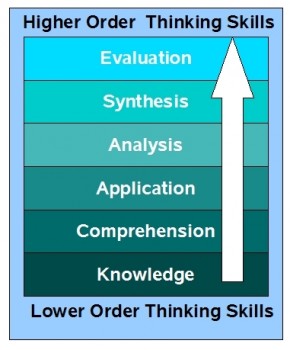
We’re great about learning from our losses. We’re not so great a learning from our success. A quick look at Bloom’s taxonomy will show that what we often do when we debrief a losing situation is we work all of the way up from knowledge through evaluation of what didn’t work.

blooms_taxonomy

Suppose we followed that toast to our success with an equally granular discussion of what worked with our success? It might look like this.

  • Knowledge – What it is we accomplished? What were the key parts that led to the success?
  • Comprehension – What do we know now about the project, the team, the customers that we didn’t know before?
  • Application – How can we use what we’ve learned from this success to build the next initiative like this one?
  • Analysis – How is this project similar and different from other projects we undertake?
  • Synthesis – What overall learnings can take forward from this success?
  • Evaluation – How as this win change what we understand about what we do as a business?

Raise that toast to your success. Then ask the six simple questions to claim what you’ve won.
The moments of reflection that bring you to the answers are the time you need to incorporate, internalize, and own what you’ve done — to move the “winning behavior” from a possibility into a natural response.

The evaluation of the win is the way to claim your rewards, to own them, and to leverage that learning from then on.
When you own your success, it shows every time you walk into a room. That’s how claiming rewards from success leverages itself into more success.

The good news is we can all go back — alone or with our teams — and claim our rewards for every success we’ve ever won.

Not everything we learn has to come from what we do wrong. Are you ready to learn from every right thing you’ve done?

Be irresistible.

–ME “Liz” Strauss
Work with Liz on your business!!

Buy the Insider’s Guide to Online Conversation.

Successful-Blog is a proud affiliate of

third-tribe-marketing

Filed Under: Blog Comments, Business Life, Marketing /Sales / Social Media, Motivation, Successful Blog, Writing Tagged With: bc, claiming your rewards, LinkedIn

You Don’t Have To Be The Stereotypical Blogger

March 16, 2011 by Guest Author

cooltext455576688_blogging

By Terez Howard

When I visited dictionary.com to see what it had to say about a stereotype, I read, “The cowboy and Indian are American stereotypes.” They are “a simplified and standardized conception or image invested with special meaning and held in common by members of a group.”

In classic Western shows, cowboys are white men. But cowboys were also of African American, Mexican and Native American decent. And we all know that the Indians that go with cowboys are not from India.

Why the stereotypes?

I don’t really know. I believe that someone or group of people somewhere decide that this is going to be the norm. Cowboys will be white, and Indians will be Native Americans. They will never get along, and it will be a fun game for kids to play. Then, that norm transforms into a stereotype. Before long, the actual truth of a matter is lost. A stereotype becomes truth.

This is why when most people speak of a stereotype, it engenders thoughts of something bad.

What is the stereotypical blogger?

I have been thinking about this for a while.I suppose the stereotypical blogger knows everything there is to know in her niche, at least everything thinks she does. She posts frequently, well, regularly.She is witty, conversational and informative, all wrapped up in a delicious but very real blog.Readers hang on her every word. She posts pictures and video, too, because she wants her blog to have it all.She knows everyone, and everyone knows her.

The stereotypical blogger doesn’t sound bad at all. In fact, it sounds like the type of person that every serious blogger wants to become. But, why? Because those characteristics equate success? Is it because that is what all of the top, authority bloggers are doing? Just because they’re doing it, you have to do it too. They’re successful, and there’s no other way for you to be a successful blogger. Is that so?

I’m not that kind of blogger

Yep. I’m not that kind of blogger. I’m not saying that I don’t want to be. I wish that I could post every single day and that I understood the ins and outs of html. I don’t, and I can’t. I am not ashamed.

I have made another observation about the stereotypical blogger. She has very limited time for the rest of her life. She’s always answering e-mails. She’s constantly tweeting her stuff and everyone else’s. She always seems to be on every blog related to her niche, commenting and guest blogging. She is everywhere, and everyone loves it.

If you’re not going to be the stereotypical blogger, then you know by now that you are letting some things go. Your blog might not have everything, every tool and form of media, right away. I believe that if you want to have a life outside of your blog and you’re patient, you can eventually have everything on your blog.

Also, your name will not get to be all over the Internet immediately when you aren’t the stereotypical blogger. You will not have the time. Slowly, you can make connections that will boost your image. You may never be No. 1 in your niche. Is that OK?

It’s OK with me. No. 1 has too much responsibility. I’m content doing what I can do, having fun writing, collecting my money and then having a life.

I’m not ashamed to say that I don’t have the time to be the stereotypical blogger. I will never be that girl. I do what I do. I enjoy what I do. And blogging is only a small part of “what I do.”

What do you think? Are you or do you want to be the stereotypical blogger?

—
Terez Howard operates TheWriteBloggers, a professional blogging service which builds clients authority status and net visibility.  She has written informative pieces for newspapers, online magazines and blogs, both big and small.  She regularly blogs at Freelance Writing Mamas. You’ll find her on Twitter @thewriteblogger.

Thanks, Terez!

–ME “Liz” Strauss
Work with Liz on your business!!

Filed Under: Business Life, Successful Blog, Writing Tagged With: blogging, LinkedIn, Terez Howard

The Book List: ’42 Rules for Driving Success with Books’ and ‘The Money Class’

March 9, 2011 by teresa

A Weekly Series by Teresa Morrow of Key Business Partners, LLC

I’m Teresa Morrow, Founder of Key Business Partners, LLC and I work with authors & writers to help them with their book promotion and social media marketing. As part of my job I read a lot of books (I love to read anyway!).

The books in the Book List Series will cover a range of topics such as social media, product development, marketing, blogging, business, organization, career building, finance, networking, writing, self development, and inspiration.

’42 Rules for Driving Success with Books’ by Mitchell Levy

driving_success_3d

“I always say that in order to achieve success you must first build visibility and then credibility; only then can you move forward into profitability. In ’42 Rules for Driving Success with Books,’ Mitchell Levy explains how becoming a published author is the ultimate way to build visibility and credibility by branding yourself as an expert which will inevitably build your business. Simply put, this book is an essential read for anyone wishing to attain a higher degree of success.”
Ivan Misner, NY Times Bestselling author and Founder of BNI

About the Book*:

This book will help you appreciate the ease of creation and the depth of value a book (or series of books) can create for your business. Whether the author writes the book themselves, had their clients/partners provide content, or had it ghostwritten, you will be informed and inspired by the stories and lessons of others’ successes with books.

The authors in this book wrote content that allowed them to demonstrate innovation, share their marketing strategy, improve client retention, and share tricks and techniques on using a tool or service. The fact that they put this content in a book gave their ideas weight and increased their credibility and reputation. Having the books show up on Amazon, BN.com and other bookstores as well as personally delivering their books to clients/prospects really helped to drive the impact of their message.

If you are a CEO, CMO, evangelist or someone in your company that needs to demonstrate thought leadership, drive lead generation, and increase revenue, this book is an invaluable read as it will help you catapult your success.

About Mitchell*:

Mitchell Levy, CEO, Happy About®, is a strategist, educator and prognosticator helping companies succeed by putting tools in the hands of corporations and individuals to allow them to create their own success. He is a frequent media guest and a popular speaker, lecturing on business and management issues throughout the U.S. and around the world. He has started 13 companies/joint ventures since 1997 and has provided strategic consulting to over 100 companies.

Books are his latest and most powerful toolset. He has written 8 business books, and through Happy About has published over 50 titles. He has helped his authors generate leads, procure speaking engagements, be written up in major newspapers and magazines, be asked to host programs for major TV networks and double their annual income, and in one case quadruple it. There is no doubt that books work.

You can purchase a copy of ’42 Rules for Driving Success with Books’ online at Amazon or on the 42 Rules site. *this information came from Amazon.

Next, I would like to introduce you to another book on the business book list on Amazon and on my reading list: ‘The Money Class’.

The Money Class: Learn to Create your New American Dream by Suze Orman

This book has come out today, March 8th on the business top 100 list on Amazon. I enjoy Suze’s no nonsense, straight forward approach to helping people with their finances. Most of our conversations, whether in business or personal revolves around money. In this economical stage (which is ever changing) it is good to have someone who gives it to you straight.
Amazon.com Review*

Suze Orman, the woman millions of Americans have turned to for financial advice, says it’s time for a serious reconsideration of the American Dream—what promise it still holds, what aspects are in need of revision, and how it must be refashioned to fit our lives so that we can once again have faith that our hard work will pay off and that a secure and hopeful future is within our reach.

In nine electrifying chapters, Orman delivers a master class on personal finance for this pivotal moment in time. She addresses every aspect of the American Dream—home, family, career, retirement. She teaches us that in order to create lasting security we must learn to stand in our truth. We must recognize, embrace, and be honest about what is real for us today and allow that understanding to inform the choices we make. The New American Dream is not the things we accumulate, says Orman, but the confidence that comes from knowing that which we’ve worked so hard for cannot be taken away from us. In THE MONEY CLASS, Orman teaches us how to take control over our present—right here, right now—in order to build the future of our dreams.

Whether navigating the complicated mix of money and family, offering the most comprehensive retirement resource available today, or delivering a bracing dose of reality when it comes to recalibrating our expectations and our goals, Orman educates us with her signature no-nonsense approach and laser-like clarity. She empowers us to live a life of integrity and honesty that will create an enduring legacy for future generations—a New American Dream that lies in truth, security, financial freedom, and peace of mind.

About Suze*:

Suze Orman is a two-time Emmy Award–winning television host, #1 New York Times bestselling author, magazine and online columnist, writer/producer, and one of the top motivational speakers in the world today.

Orman has written eight consecutive New York Times bestsellers and has written, co-produced, and hosted seven PBS specials based on her books. She is the seven-time Gracie Award–winning host of the Suze Orman Show, which airs on CNBC, and of the forthcoming Money Class on OWN: The Oprah Winfrey Network. She is also a contributing editor to O: The Oprah Magazine.

Twice named one of the “Time 100,” Time magazine’s list of the world’s most influential people, and named by Forbes as one of the 100 most powerful women, Orman was the recipient of the National Equality Award from the Human Rights Campaign. In 2009 she received an honorary doctor of humane letters degree from the University of Illinois at Urbana-Champaign and in 2010 she received an honorary doctor of commercial science from Bentley University.

Orman, a Certified Financial Planner™ professional, directed the Suze Orman Financial Group from 1987 to 1997, served as Vice President—Investments for Prudential Bache Securities from 1983 to 1987, and was an account executive at Merrill Lynch from 1980 to 1983. Prior to that, she worked as a waitress at the Buttercup Bakery in Berkeley, California, from 1973 to 1980.
*courtesy of book website and Amazon

You can purchase a copy of ‘The Money Class’ at Amazon.

Filed Under: Business Book, Business Life, Successful Blog Tagged With: bc, book selling, mitchell levy, success with books, Suze Orman, the money class

Be Irresistible: 10 Steps to Consistently Develop Highly Viral, High ROI Products

March 8, 2011 by Liz

How Good, Great, and Elegant Is a Product that No One Uses?

insideout logo

Yesterday while I was talking with @MichaelPort about solid.ly the software system he’s developing to support his Book Yourself Solid System. He told me about a conversation he had with venture capitalist who asked him, “What makes you think you can move from writing books into developing software?” I was taken by the perfectness of his answer. It was something like …

“I’m hiring the best people to do the development, but I know and care about the people who will be using it.”

That lead us into a discussion of what a product developers job is.

I spent almost 3 decades developing products for teachers — books, CD-Roms, websites, videos, audios, and others. During that time, I learned a lot about how products were made — what works, what doesn’t, and that the great idea that hasn’t made it to the market probably isn’t there NOT because someone hasn’t already thought of it, but because

  • it’s too expensive,
  • too labor intensive — to build or to use
  • or no one really wants it.

If I can’t afford it, don’t have time to use it, or don’t want it, it doesn’t matter how elegant, great, clever, cutting-edge, award-winning or beautifully you produce it.

10 Steps to Consistently Develop Highly Viral, High ROI Products

But the most crucial thing I learned as product person was that no matter how much I thought about my products, I had to think about my customers more. My role wasn’t to produce great products, but to produce great products people wanted to buy and use. Those are the products that folks buy again and tell their friends about. Here’s the secret I discovered …

It’s not my brilliance that makes a product irresistible. It’s not the awards the product might win that makes a products go viral and gain loyal long-term fans. It’s understanding my role as the product person is to know, love, and serve the customer.

Most of my intelligent customers could do or learn to do what I do.
But if they did what I do, they wouldn’t have time to do what they do.
My job is to make the customer’s life easier, faster, more meaningful and, if possible, more fun.

We turned around a failing company by developing highly viral, high ROI products by getting as close as we could to our customers. Here’s a few ways to do that before you even start planning that product execution …

  1. Know and live with the people you’re building for. Talk to the people you want to use what you’re building. Live in their natural habitat. Know the issues of their lives. Know the little things that bring joy to them. Know the prickly things that they don’t even realized irritate them daily. Know the influencer group of your customer group. Know the folks who understand both groups intimately and best. Invite the most interested from all three groups into your process as participants not just advisors.
  2. Use measurements appropriately. Data supports how people do things but rarely gets down to the why they do or the patterns of what moves them emotionally. When you think you know something, then, test and measure it. Don’t build a profile of customers through measurement only. Think about what companies would get wrong about you if they only used the quantitative data and scores from your medical check ups and school reports about you, without ever finding out about your personality.
  3. Respect the products that your customers are already using. Don’t fall into the trap of only seeing the faults of what’s already out there. That product you see so many flaws in has already solved a huge number of problems for your customers or they wouldn’t be using it. If it’s so bad, why does it have 100,000 or a million people using it? Ask people what they love about it. Be careful not to build something that takes away something they’ve made a part of what they’ve come to enjoy and they’re regularly doing. Lose what they hugely love and it won’t matter if you offer something that fixes a minor irritation.
  4. Start with a small offer built to your highest standards. Respect your customers’ time. Make the first release your best work, not a beta test. If you know your customers, if you’ve lived with them and invited them into the the development process, you know what works for them. Deliver it. Don’t play with their time or ask them to work out the bugs for you. That’s your job. If you want to attract the best, be the best.
  5. Simplify until there is no learning curve. Simple is not only elegant. It allows us to focus on why we got the product not learning the product first. Apple has mastered this. They can put the entire manual for using a product in a pamphlet that no one reads because we can pick up the product already knowing how to use it.
  6. Get paid for your product. Free samples are fine. Free products are not. The model of building things for free costs those who build products more than we might think. We release things unfinished at standards less than our best. We don’t build the appropriate support or service into them and we ask too much from our “free” customers who take us for granted. We work with people on promises. We lose money, reputation, and if nothing else, time we don’t have. Ever seen a tweet the equivalent of, “I’d gladly pay for Twitter if they’d guarantee service.”
  7. Systematically and strategically build your customer base as you build your product line. We no longer need to build a huge department store and fill it will products to prove we exist. We don’t need to stress our resources, cash, or infrastructure like that. Release one product that does one thing well for one audience. Let that product and that customer base finance the next. One customer group well served is better than 12 products less well defined — and one product is easier to market and easier for our friends and networks to share on our behalf. Know, love and serve that first group and they’ll tell their friends. They’ll also tell you what they want next and what group of their friends are your next best bet.
  8. Learn the life cycle of your product and know when to revise. Every product has a life cycle. It seems the way of the Internet to let the product die a slow death. Know how long that product is likely to sell well, then just after the peak selling point, carefully revise it to add new features. Once you’ve got a history to rely on do this on a predictable schedule. If your product life cycle is 9 months to a year. Plan your next revision at 11-12 months. Be careful not to revise out the features that customers love and not to add features they don’t care about. Look to make your product even easier, faster, and more meaningful at doing what it does. .
  9. Release new products on a predictable schedule. High tech companies might be slaves to the fast-changing conditions, but not every company is. If you can provide a predictable release schedule get fully behind that. It will build discipline into your infrastructure and your process. Predictability also builds trust. Customers will come to know that they can look forward to something knew from you when they’re planning their budgets. .
  10. And go back to Step 1 by getting to know your customers even better after they buy from you. Think of that first purchase as the first date in a long-term relationship. Value the customer who’s already shown a commitment above all others. Respect them by giving the best offers to them, not to the “potentially new” customers who haven’t been listening to you. .

These 10 steps work. I know because I’ve used them successfully and two well-respected financial guys have put their names on that fact.

It takes two things to win a loyal and growing customer base,

  1. products customers truly want that live up to their promise
  2. and more opportunities to get those kinds of products from a business they can trust..

Simply being that business who knows, loves, and serves their customers better than anyone else can save those customers the time of having to look in other places when they need what you offer. Who wouldn’t value that?

Have you had any experience with a company that consistently builds highly viral, High ROI products.

–ME “Liz” Strauss
Work with Liz on your business!!

Buy the Insider’s Guide to Online Conversation.

Successful-Blog is a proud affiliate of

third-tribe-marketing

Filed Under: Business Life, Content, Successful Blog, Writing Tagged With: bc, high roi, LinkedIn, Product strategy, vial product

Top 5 Free Video Tools for Producing Internet Marketing Videos

March 4, 2011 by Guest Author

A Tools Review by
Rahil Muzafar

cooltext451585442_tools

Who Says Your Marketing Video Can’t Be Cool?

Whether you’re making

  • a video commercial
  • something funny for YouTube and hoping that it will go viral
  • a video tutorial
  • or a video for any other purpose

And the video requires some sort of editing, you don’t need to pay for editing anymore. The advancement in the technology and a number of user friendly video editing software means that it is quite doable at home even if you have no understanding of how video editing works. Anybody with a little bit of creativity can produce compelling, share worthy, and interesting videos by using these intelligible tools and step by step guides which are freely available on Internet.

Multiple options are available for mixing up still pictures to create a meaningful video, joining different video clips into one, adding music, audio, or jingles to your recordings, and of course, adding titles, text overlays, and credits to describe your company or products. Sounds pretty convincing? Keep on reading to find a list of 5 freely available tools that you can use for making a video and make the most of this cost-effective marketing medium.

1. Windows Movie Maker:

This, as you already know, comes with the Microsoft Windows, without any kind of additional charges. It is a very basic, easy to use, and a beginner’s level software that can be used by just about anybody for producing some impressive projects and editing home made videos. The best thing about Windows Movie Maker is that it has a very familiar interface that syncs well with the overall user experience of Microsoft Windows, which means you will be able to get on with this tool in next to no time. A simple, yet powerful tool to create and edit videos, add audio, and many different effects, Windows Movie Maker is the perfect starting point for your video marketing campaign.

Wax:

Slightly more complicated than the Movie Maker, but still pretty easy to understand, Wax provides a great platform for creating professional looking videos with flexibility and special effects. The special effects include 2D and 3D, and it has a multitude of options for both professionals and home users.

Zwei-Stein and ZS4

This tool is one step ahead of the basic ones (even though it doesn’t appear to be when you first look at it) but once you get going, you will find that it’s an incredible video compositing and editing tool, offering some very unique options as compared to the features provided by other free tools. In fact the features are exploitable by both an average user and the pro. Zwei-Stein lets you edit a large number of videos, putting forward a staggering number of special effects. Both Zwei Stein and ZS4 are free for personal use and available for download on their websites.

Blender:

Blender is not really a video editor, but it totally deserves to be in this list. This one is actually meant for 3D content production and even though 3D animation may take more time, but it’s a great way to stand apart from the crowd. The interface will take some time before you can get used to it, but once you get a handle on the hotkeys, you will find that your effort were totally worth it. Blender lets you create unparalleled animations, and has a plethora of features that seem to offer more and more every time you get a little creative. There are a number of tutorials and lots of websites dedicated to the tips and tricks for 3d enthusiasts. Blender offers a number of tools that will make your task easier and there’s no limit to what you can do with this software.

Jaycut

This is a web based editor, which means you don’t need to download or install anything on your computer, Jaycut gives you the freedom of editing anywhere on the internet with some handy options available for web based software. It provides the functionality similar to the Movie Maker, and includes features like recording audio or video straight from the application. You can publish your videos direct to YouTube or save on your disk; in fact you can save the video on their servers to access it from any computer with Internet access.

So, what are you waiting for? With so many free tools and a platform like YouTube at your disposal, you have got no reasons but to utilize video marketing and publicize your products, create buzz, engage customers, and much, much more.

,

Rahil Muzafar

—-
This post was contributed by Rahil, and this piece of information is not the only thing he has to offer, you can also benefit from Hostgator coupon code and eleven2 coupon code at his website.

Thanks! Rahil!

–ME “Liz” Strauss
Work with Liz on your business!!

Buy the Insider’s Guide to Online Conversation.

Successful-Blog is a proud affiliate of

third-tribe-marketing

Filed Under: Business Life, Successful Blog, Tools Tagged With: bc, LinkedIn, Rahil Muzafar, video tools

  • « Previous Page
  • 1
  • …
  • 71
  • 72
  • 73
  • 74
  • 75
  • …
  • 186
  • Next Page »

Recently Updated Posts

Is Your Brand Fan Friendly?

How to Improve Your Freelancing Productivity

How to Leverage Live Streaming for Content Marketing

10 Key Customer Experience Design Factors to Consider

How to Use a Lead Generation Item on Facebook

How to Become a Better Storyteller


From Liz Strauss & GeniusShared Press

  • What IS an SOB?!
  • SOB A-Z Directory
  • Letting Liz Be

© 2025 ME Strauss & GeniusShared