Successful Blog

  • Home
  • Community
  • About
  • Author Guidelines
  • Liz’s Book
  • Stay Tuned

Why Influencer Marketing Is More Important Now Than Ever Before

August 28, 2020 by Guest Author

By Kayla Matthews (Guest Author)

The concept of influencer marketing is far from new. In fact, modern influencer marketing dates back to 1920 when Coco Chanel became one of the most transformative influencers on fashion. However, this branding strategy didn’t experience a rise in popularity until the late 1990s and early 2000s as bloggers and content creators grew in number. 

Now, brands are connecting with popular social media influencers on any and every platform in a rather successful attempt to promote their services and products. As more people flock to social media, especially in the wake of the COVID-19 pandemic, brands will likely invest even more in this marketing strategy. For influencers, the future is bright, to say the least.  

People Hate Ads

Advertisements have been bombarding consumers for years. From commercials on TV to billboards to ads on Facebook and Instagram, brands are vying for your attention. Meanwhile, most consumers are actively blocking these ads or completely ignoring them, even when the algorithm uses a person’s browsing history to target them and pique their interest. These traditional ads simply don’t work like they used to. Why you might ask? Consumers don’t trust brands that self-promote and they’re tired of all the noise. 

Enter the Influencer

Then, influencers entered the scene. Popular people — like Kim Kardashian and Donald Millner— with huge social media followings began to partner with both small and large brands to promote their products. This marketing strategy proved quite effective since followers viewed their recommendation as authentic and trustworthy. On Twitter, nearly 40% of users report purchasing a product because of an influencer and 60% of YouTube subscribers would follow the advice of their favorite creator. Evidently, influencer marketing is working. 

Even those without huge followings, like TikToker Lauren Godwin and beauty Instagrammer Daniel Jewels, boast an impressive engagement rate and frequently partner with brands. While some most enter these partnerships as a way to make money, many are choosy about which products they endorse. After all, they want the brands they tout to be trustworthy and legitimate so as not to tarnish their reputation and lose followers. 

COVID-19 and Online Engagement

The coronavirus has changed influencer marketing in huge ways. When the pandemic first hit America, ad budgets decreased and, with them, the financial compensation to many influencers. However, since then, budgets have increased and some are making even more off promotional posts than ever before. This increase is largely due to the rise in social media consumption during shelter-in-place orders and quarantine. 

Since the pandemic, web browsing has risen by 70% and social media engagement has increased by 61%. Of course, this level of online interaction has lent itself well to influencer marketing. Content creators have more time to increase their output, connect with followers and experiment with new platforms while followers now have the opportunity to engage more than ever. Consequently, many ad agencies and brands are investing more in this effective marketing strategy. 

The Future of Influencer Marketing and How to Get Involved

As the pandemic drags on and social media continues to surge in popularity, it’s likely brands will invest even more in influencer marketing. Thus, since celebrities and macro-influencers can only rep a few brands without losing engagement, companies will likely begin partnering with more micro-influencers and those with only a few hundred followers. 

If you’re one of these creators who has a smaller, dedicated following, it may be time to seek out a partnership with one or two of your favorite brands. Odds are your audience will love them, too and you might be able to make a commission from affiliate links and posts. Begin by creating genuine relationships with your followers. Then, reach out to brands and explore new platforms, sharing your for different products and services wherever you go.

About the Author: Kayla Matthews writes about communication and workplace productivity on her blog, Productivity Theory. Her work has also appeared on Talent Culture, MakeUseOf, The Muse and Fast Company.

Photo by Laura Chouette on Unsplash

Filed Under: Marketing /Sales / Social Media

How to Save on Taxes When You Are Self Employed

July 30, 2020 by Guest Author

By Kayla Matthews

Self-employment means a lot of freedom and flexibility in your work — but being your own boss isn’t cheap. Unlike a worker on business payroll, you’re responsible for paying your own Medicare and social security tax in the form of a 15.3 percent self-employment tax.

It’s a big expense, and one that leads many freelancers to think about alternative career options. Fortunately, it’s possible to seriously cut down on those extra taxes that you have to pay.

The tax code is full of lines that provide deductions for business and the self-employed. While the 2017 Tax Cuts and Job Act nullified a number of these tax write-offs, there are still many write-offs you can use to lower your taxes. Below, we’ll cover the best ways to save on taxes when you are self employed, plus other strategies you can use to save on taxes.

1. Take Advantage of Above-the-Line Deductions

Since 2017, standard deductions have been higher than usual, even for single filers. The size of these deductions, combined with the labor needed to track expenses, means some taxpayers skip keeping track of potential deductions. It may seem like there’s no way you can spend enough to have itemized deductions that beat the standard deduction.

Even if you don’t itemize your deductions, you can still write off certain expenses on your tax return.

Above-the-line deductions, sometimes called business deductions, reduce your adjusted gross income (AGI). Your AGI is the sum total of your annual income, including wages, business income, capital gains, unemployment and so on.  You can take these deductions even if you don’t itemize.

There is a variety of above-the-line deductions that you can use to cut down your AGI. For example, you can use retirement plan and HSA contributions. You can also deduct many self-employed business expenses, like office rent, utilities and legal fees.

2. Deduct Travel-Related Expenses

Business travel is a deductible expense, so long as it lasts longer than a work day, requires you to sleep or get rest and takes place out of your tax home. You can also write off many travel-related expenses.

The cost of transportation to and from your destination is deductible. So is the cost of transportation at your destination. You can also write off meals and lodging — so long as they’re not considered “lavish” or “extravagant,” per IRS guidelines.

Typically you can only write off 50 percent of the cost of meals, but there are exceptions that let you go over this limit.

3. Save Purchases for the End of the Year

IRC Code Section 192 allows taxpayers to deduct the cost of personal property in the year you put it into service — so long as you use it more  than 51 percent of the time for your business. So long as you buy a business asset and start using it by December 31, you can probably write off the expense on your tax return for the year.

Normally, you’d have to depreciate the expense over several years, splitting up your savings.

4. Write off Interest

If you’ve taken out a business loan, interest paid on those loans can be fully deductible, so long as you’re spending loan funds on business expenses.

There are some exceptions to this rule. For example, the loan needs to come from a real lender. Some banks and financial groups offer loan options for self-employed professionals. If you take out one of these loans, you can write off the interest on your tax return. If you borrow money from a family member or friend, however, you can’t write off the interest.

5. Write off Publications and Subscriptions

Any business-relevant publications you buy or subscribe to can be written off on your taxes.

Not all subscriptions can be written off. You may have a hard time justifying a subscription to your local paper, for example. Relevant industry publications, however, can be written off. Reference materials are also a deductible expense.

6. Deduct Your Home Office

Have a space in your home dedicated to work? You can write off the value of that space on your taxes.

The space has to be dedicated to work, however. If it’s serving another purpose — like a bedroom — it won’t be deductible. The IRS may request documentation of your home office space.

Even if you can’t write off the costs of your work space, you can generally write off the cost of utilities. Your internet connection and phone line are may count as fully- or partially-deductible expenses.

Tracking and Applying These Deductions

You can connect personal finance software to your bank account and automatically log expenses. This can help you keep track of your annual expenses.

You may also want to start looking at long-term tax saving strategies. If you don’t have a HSA, retirement fund or self-employed defined benefit plan, opening one can provide additional opportunities for savings.


About the Author: Kayla Matthews writes about communication and workplace productivity on her blog, Productivity Theory. Her work has also appeared on Talent Culture, MakeUseOf, The Muse and Fast Company.


Photo by StellrWeb on Unsplash

Filed Under: Business Life Tagged With: tax

3 Keys to Selling a Startup

July 22, 2020 by Thomas

Is there any chance you may want to sell your startup anytime soon?

If the answer is yes, do you know what is necessary to get this all-important task done?

Making sure everything falls into place is critical to say the least.

The last thing you want is hassles that can end up costing you time, money and more.

With that in mind, are you going to be selling sooner than later?

What Will Make for a Better Sale?

When you are thinking of preparing your startup for acquisition, here are three keys you want to zero in on:

  1. Is now the right time? – Above all else, be as sure as you can that now in fact is the right time to sell. There are a myriad of factors that can and often do come into play with such an important thing to consider. For one, is the market in your particular industry good for selling now? If such sales are sluggish right now, you may well decide it is best to hold off. In the event many startups in your industry are on the market, you may also decide now is the best time to cash-in on this. You also want to think about what a sale will mean to your professional and personal lives. Do you have another business to turn to? Will you go work for someone else? If you are getting up there in years, is retirement a possibility now? Weigh everything in play to see if selling a startup now makes sense.
  2. Where do your workers go? – Unless your company is void of employees, what happens to your workers when selling is key. The last thing you want is to leave them hanging. That said you typically would have a few options to look at. First, you may be buying another startup soon. If so, will you offer to take your current employees with you? Second, you may include some language in the sale of your startup. Language that says the buyer will at least offer your workers jobs. For some sellers of startups, they will not do either. If this is where you are leaning to; at least give your employees as much notice as possible. This allows them more time to see what else is out there on the job front.
  3. Charting your next course of action – Last, you want to have a good idea of what is next in store for you. Are you looking at buying something else? Would you go and work for someone else? If you are up there in age, could retirement be in the cards for you sooner than later? By having a good sense of what it is you want and can do, you are in a better position moving ahead.

Once you have made the decision it is a go to sell your startup, a lot needs to come together.

With that in mind, you want to put together a checklist.

Be sure to check the appropriate boxes as you move along.

In selling your startup, you more than likely have options on the table to what will come next.

About the Author: Dave Thomas covers business topics on the web.


Filed Under: Business Life Tagged With: business, sales, startup

How and Why To Host Webinars for Lead Generation

July 19, 2020 by Jessy Troy

Webinars have proven to be a powerful marketing strategy, therefore, hosting your own event will undoubtedly be a smart marketing strategy for your business or brand.
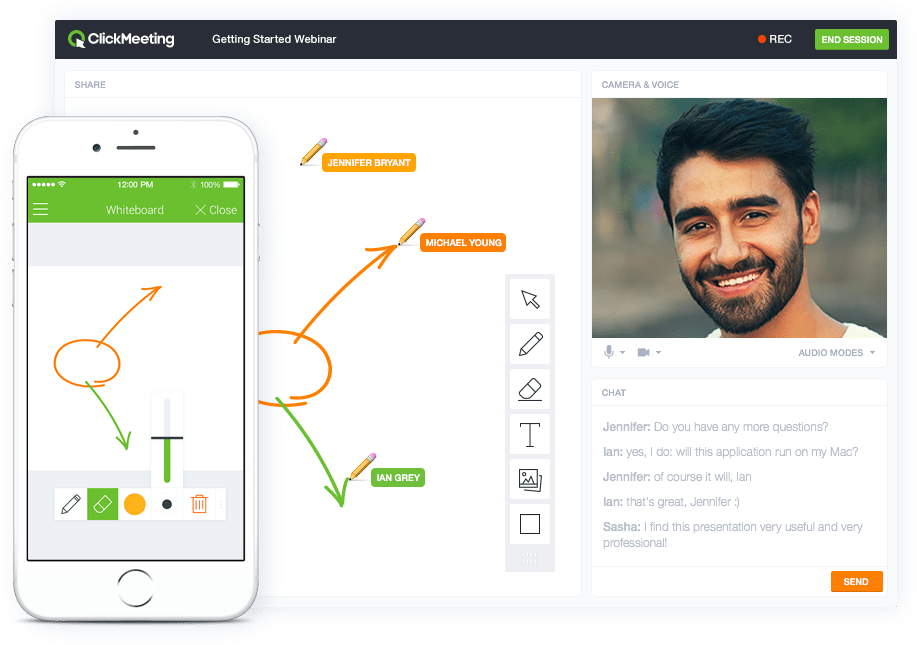
Now if you’re considering setting up your webinar, here are 9 ways it’ll help you attract new clients and grow your business.

Webinar marketing offers multiple marketing opportunities.

Webinars help develop trust and authority

Hosting a webinar doesn’t only let you showcase your products and services, but your expertise, skills, abilities and industry knowledge as well. And what about the human element?

Webinars allow you to put a real face to your business. Your audiences can identify with your face and become emotionally invested in your business.

Webinars are the most effective lead generation tools out there.

Hosting webinars create business relationships

“Business is not just doing deals; business is having great products, doing great engineering, and providing tremendous service to customers. Finally, business is a cobweb of human relationships.”

Ross Perot via bqotd.com

Think about it, how much do you think prospects can know you in a 30 second commercial? A little, right? Engaging your prospects via webinars lets your prospects to know you on a deeper level.

After all, people only do business with people, not companies. With a webinar, your attendees have the chance to know your person, admire you and trust you from the content you share.

Understand your audience more via interactive webinars

With the question and answer segment of an interactive webinar, you get to know your target audience, their challenges, expectations, and needs.

And with that, you are able to understand what motivates these audiences and create tailor-made products and services that match these needs.

Create brand awareness

Hosting webinars let you easily promote your business or brand – especially when you’re consistently feeding your audience with topnotch content and not simply handling it as another sales pitch presentation.

And when you also factor the nonexistent additional overhead, promoting your brand via webinars is incredibly cost-effective. With very little or no financial outlay, you can skyrocket the outreach of your nosiness.

Hosting webinars is affordable

Conventional seminars, meetings, and even conferences are no doubt expensive to set up. Interestingly, you can drastically reduce this high costs with webinars, especially with the wide variety of affordable webinar software solutions out there.

All that’s needed is a broadband connection, webcam, and microphone.

Webinars can be re-purposed

You might have only held your webinar – but that’s not the end of it. The content can be repurposed to offer the same value to those who couldn’t attend the webinar.

You can convert your presentation into an eBook or series of blog post. This lets you share your webinar content in other engaging ways.

Webinars can be recorded

When you re-purpose your content, your audience is able to relive your content and better understand your content as much as possible.

Webinars, unlike traditional conferences, are extremely easy and cost effective to record.

Increase your revenue via webinars

If you an audience base that’s big enough to monetize, you can simple set up a paid webinar event.

In so far your webinar is guaranteed to offer genuine value to your customers, your customers wouldn’t mind parting with a few bucks. And with a relatively unlimited capacity for attendees, you can easily generate an added revenue stream via webinars.

Webinars let you build up your list and generate quality leads

With the sign-up forms for your webinar, you can collect lead information such as email, addresses and job titles. Even better, the information and education that you offer in your webinar can be used to inform your audiences about your products and services – thereby creating a strategic sales lead in the process.

The benefits highlighted in this piece reflects the power of hosting your webinar. If you’re looking to boost your revenue, create cordial relationships with clients, minimize your costs and establish your credibility, then its time you begin to hold that webinar.

5 Ways to Better Do Webinar Lead Gen

  • Show the registrant numbers: social proof as a demonstration of the herd mentality is one thing that gets talked about a lot. “Join the 10,000 people who have registered for this webinar.” Really, sign me up. Now that’s how it works.
  • Urgency: tell people to hurry up. Setting up a maximum number of available “virtual seats” lets people be more inclined to sign up quickly because they don’t want to miss out. Indeed, nobody wants to be left out in something interesting.
  • Show what’s next: make sure that your website has a calendar showcasing your upcoming webinars. This can get sign ups in advance which you can then market to on the lead up to the main event.
  • Share free content: one exemplary way to convert your leads is to share valuable free materials. Practically, you can share eBooks with the people who have registered for your event. This way, you can facilitate easy conversion of your leads.
  • Follow up: after a successful event, send email to your attendees with a recording of the event. Also, include links to other closely related free content to the webinar they just watched. Trust me; they’ll love it.

QUESTION: What’s been your most significant challenge in hosting your own webinars? Do share with me. I’ll like to hear from you.

Featured image source: Pixabay

Filed Under: Blog Basics, Marketing

20 Unique Places to Find Qualified Employees

July 2, 2020 by Guest Author

By Kayla Matthews

The search for the best talent can be tricky. You need to balance your company’s needs with unique job applications to draw in as many options as possible. Finding resources can be difficult, too. Luckily, the following places will help you conquer it all.

1. Job Boards

Job boards like LinkedIn, Monster, Glassdoor and Indeed are some of the most popular places to find employees. You can start your search with these options and informative job descriptions for each position.

2. Professional Organizations

If your company is a partner of any professional organization or other company, you can reach out and ask to advertise on their platforms.

3. Social Media

You should try to use all social media platforms possible — Facebook, Twitter, Instagram and YouTube — to create different kinds of content. For example, you can send quick updates about jobs through Twitter, but longer, video content with YouTube. Social media advertising can turn a passive candidate into an active one for any position.

4. Email and Newsletters

If your business uses email and newsletters to connect with customers, clients or the surrounding community, you can send out information about your job search.

5. Employee Referral Program

With an employee referral program, you can ask your employees or coworkers to look for potential talent. If you end up hiring the person they recommend, they then receive a reward from the program.

6. Job Fair

A job fair is a great place to meet new people that are already looking for opportunities. Remember, job fairs can be in-person or virtual — keep your eyes open for both options.

7. Promotions

Sometimes you don’t need to look for new talent because you already have someone for the job. If a current employee doesn’t mind switching their role, they might be able to fulfill the opening.

8. Specific Job Boards

While the bigger job boards are popular for finding employees, they can flood your inbox with spam applications. Niche or industry-specific job boards can help you reach out to talent that’s looking in lesser-known places.

9. Write to Impress

Your job applications and descriptions need to be transparent, accessible and easy to follow. You can hire a writer to help your descriptions stand out and draw in more talent.

10. Networking Events

You’ll likely attend different events for business. Whether it’s a fundraiser or meeting, you can network during these events to find new employees. The people you meet are already in similar industries, so they may have some helpful insight.

11. Company Website

Your company website is crucial to the application process. Many job-seekers go directly to company websites to apply. You’ll need to make sure your website is user-friendly and accessible with pages for open positions and applications.

12. Streamline the Process

Sometimes, job applications can be clunky. If they carry on for too long, people may lose interest. If you shorten the process to get the basic information you need, you can follow up later with the most qualified candidates.

13. Advertisements

You can advertise online on different websites, from corporate websites to job boards. Indeed allows you to sponsor your listings, for instance, if you want to stand out.

14. New Technology

Within the tech industry, there are exports of $1.5 billion every year. Tech is so expansive that it can now help you find new talent through artificial intelligence (AI), data analytics and machine learning. These machines can also sort through applications and weed out ones that don’t meet your standards.

15. Colleges and Universities

Colleges and universities are where emerging students are ready to find jobs. You can talk to professors or advertise on their job boards to draw in the fresh generation of talent.

16. Talent Pool

A good candidate sometimes slips through the cracks if you have to hire someone else. However, you can keep their information and call them back when another position opens up. That way, you already have the connection and you know they qualify.

17. Old Fashioned Way

Most things are digital these days, but you can still take notes from the older methods. You can advertise in newspapers and on bulletins in places like supermarkets or cafes.

18. Recruitment Firm

If you’re not having any luck or simply need more help, you can work with a recruitment firm. These firms specialize in finding talent through every platform possible.

19. Loosen Restrictions

To get more applications, you can loosen restrictions. Not every job should require a degree, so you can adjust to fit experience in some instances.

20. Customers and Clients

You can talk with your customers or clients about potential hires. They are part of your network. Ask them for help!

Finding the Best Talent

When you use these resources, you are putting yourself in the right spot to find qualified employees. Once you implement them, you can focus on picking from all the qualified candidates.


About the Author: Kayla Matthews writes about communication and workplace productivity on her blog, Productivity Theory. Her work has also appeared on Talent Culture, MakeUseOf, The Muse and Fast Company.


Photo by Evgeni Tcherkasski on Unsplash

Filed Under: management Tagged With: employee

5 Benefits of Using Chatbots for Business

June 25, 2020 by Guest Author

By Kayla Matthews

If you want to stay ahead in today’s business world, you need to leverage technology. AI is one of the most promising aspects of technology today, and chatbots are an excellent way to use it. Chatbots for business is a growing field and one you should consider looking into.

The word “chatbot” may make you think of the robotic, monotone voices you’ve heard on calls in the past. Today’s bots are far superior, though, and are a handy resource for any company. Here are just five of the ways you can benefit from a chatbot for your business.

1. Increased Profits

Traditionally, you’d answer customer questions with an employee, either a dedicated customer relations agent or whoever’s free. This model can end up being costly, though. You may not be able to afford a dedicated service agent, and answering questions can distract employees from their regular work.

If you automate the relations process with a chatbot, you avoid these expenses. Chatbots don’t need a salary, and you allow your employees to focus on their other tasks, accomplishing more at once. Some researchers even suggest that chatbots will save businesses $8 billion a year by 2022.

2. Unlimited Availability

Chatbots are also available at any time on any day. You can only work for so long, but you never know when your customers may have questions. With a chatbot, you can help them get the answers they need whenever they need them.

Even during regular business hours, traditional customer service systems can have trouble keeping up. If you have more callers than you have service reps, you may have to put people on hold. Chatbots, on the other hand, can talk to multiple people at once, so everyone gets immediate service.

3. Versatile Customer Service

When you use a chatbot for your business, you also create a more versatile customer service platform. For example, 64% of consumers prefer texting over calling, so you want to provide the same experience across both. Since the same chatbot system can handle both calls and texts, it can deliver consistent service for all customers.

Chatbots also allow for multilingual support. Finding an employee who’s fluent in many languages is challenging, but finding a robot that is isn’t. That way, you can help your customers no matter what their needs are.

4. Fast Responses

Your consumer base may be just as busy as you are. They want information as fast as they can get it, but traditional customer service systems can be slow. Since AI works so much faster than people, chatbots can offer almost instant responses.

There are many reasons why a human employee may be slow to answer a customer. They could have to think about the answer, think about how they’d phrase something or they could be distracted. Chatbots don’t experience any of those pauses, so they can work faster.

5. Fewer Errors

Another benefit of chatbots for businesses is that they reduce the risk of human error. If your employees are tired, distracted or have a momentary lapse of judgment, they could accidentally tell a customer incorrect information. Chatbots don’t have this problem.

Chatbots don’t forget anything, and they don’t get distracted. They will almost always give the right answers. That kind of reliability is hard to ignore as a business.

AI Will Drive Tomorrow’s Business World

The potential of chatbots for business is substantial, and it’s growing as the technology gets better. If you want to improve your customer service, you should consider investing in chatbots. Not only will it help your customer more, but it’ll save you time and money.

AI applications are driving industry, and will likely shape the business of tomorrow. Resources like chatbots will become standard practice before long, and you can see that trend is already starting to take place. If you want to move your business into the future, consider chatbots.


About the Author: Kayla Matthews writes about communication and workplace productivity on her blog, Productivity Theory. Her work has also appeared on Talent Culture, MakeUseOf, The Muse and Fast Company.

Photo by Priscilla Du Preez on Unsplash

Filed Under: Tools Tagged With: live chat

  • « Previous Page
  • 1
  • …
  • 11
  • 12
  • 13
  • 14
  • 15
  • …
  • 1049
  • Next Page »

Recently Updated Posts

Is Your Brand Fan Friendly?

How to Improve Your Freelancing Productivity

How to Leverage Live Streaming for Content Marketing

10 Key Customer Experience Design Factors to Consider

How to Use a Lead Generation Item on Facebook

How to Become a Better Storyteller


From Liz Strauss & GeniusShared Press

  • What IS an SOB?!
  • SOB A-Z Directory
  • Letting Liz Be

© 2025 ME Strauss & GeniusShared