Successful Blog

  • Home
  • Community
  • About
  • Author Guidelines
  • Liz’s Book
  • Stay Tuned

Search Results for: using social media

Social Media Etiquette for Your Business

January 18, 2017 by Thomas

mobile-phone-1917737_640If you’re a business owner using social media these days to promote your brand, welcome to the group.

Millions of business owners around the globe use social media regularly in order to push their products and/or services, hoping that consumers answer the call.

That said properly using social media is of the utmost importance, especially if you want your brand’s online reputation to be a sound one.

So, would you consider you and your team well-versed on social media etiquette? If not, do you planning on learning more in how to go about being a good social media participant?

Being Socially Responsible

So that your brand can do its best when it comes to social media and your business, remember these important pointers:

  • Message – For starters, what kind of message are you intending to send with social media? Some business owners simply use social media because their competitors are on it. While that is a decent enough reason to be active on sites such as Twitter, Facebook, Instagram, Snapchat, YouTube and others, it certainly shouldn’t be your prime reason. First and foremost, you should be on social networking sites to deliver your brand’s message. That message should be as to why your products and/or services are superior to your competitors. Make sure each and every time that you go on a social site it has some purpose to it. Just casually using social media is fine for people with personal messages, but companies are best-served when they have a reason to use social sites on a daily basis;
  • Messenger – Do you have a designated messenger or messengers to deliver your social message on a regular basis? Some companies opt to have one person in charge of their social efforts, while others have multiple people doing the job (including the owner at times). You need to decide which voice or voices will deliver your message, thereby allowing for a more consistent voice;
  • Commitment – How committed will you and your team (if you run a company with employees) be to social media? Unfortunately, some business owners only dabble on occasion with social media, thereby missing out on some great opportunities to get their brand the recognition it needs to survive. Be sure to make social media one of your priorities as a business owner. Just coming and going on occasion is not going to be worth your time or that of those consumers doing or looking to do business with you.

Avoid Negative Social Media Experiences

  • Positivity – Although you might be tempted to fire off a negative post every now and then, avoid it at all costs. It is one thing when you don’t run a business to engage in some tit-for-tat negativity on social media. It is an entirely different animal when you have a business reputation to nurture and ultimately protect. Yes, some consumers (including even longtime customers) might get under your skin every now and then, but avoid the temptation to strike back on social media. If you decide to respond to any negative comments, always do it in a professional manner;
  • Growth – Finally, always be looking to grow your social media presence over time. While making money is and always should be your top priority (don’t forget customer service and its importance too), being relevant on social networking sites is all but a necessity these days. With millions and millions of consumers the globe over on social media, you would be foolish to think it can’t do some good for your business. That said take the time to craft a well thought out social media approach, one where your business shines daily.

As a business owner, how are you putting social media to work for your brand?

Photo credit: Pixabay

About the Author: Dave Thomas covers business topics on the web.

Filed Under: Marketing /Sales / Social Media Tagged With: brand, business, Facebook, social-media, Twitter

Get More Social in 2017

November 30, 2016 by Thomas

twitter-292994_640What would you say about your company’s social media efforts up to now?

If they have been helping you land new business, by all means keep up the efforts.

On the flip side, if your social media efforts have been less than stellar, do you plan to change course in the New Year?

Being a social media dynamo in today’s business world is nothing short of a necessity.

If your business is pushing itself on social media, it stands a good chance of getting noticed. If it is doing little or no social media promotions, the overall results for your brand can be damaging.

With that being the case, do you plan to get more social in 2017?

Social Plans for the New Year

Given there are many benefits and advantages of using social media, are you taking advantage of any and/or all of them?

For starters, social media gives you an opportunity to engage with consumers, something all businesses should jump on.

In today’s business world, more and more companies are dealing remotely with customers.

As more walk-in types of businesses become harder to find, consumers are oftentimes having to deal with automation, computers, and of course ordering goods and services online. With less of a one-on-one touch, businesses and consumers can meet in the world of social media.

By engaging with current and prospective customers on sites like Facebook, Twitter and Instagram (there are more out there to look at), you can get the pulse of what people are saying about your brand. You can also help those in need of information and/or solving issues when it comes to your brand or industry.

With that in mind, is it time you put more effort into social media heading into 2017?

If the answer to that question is yes, here are a few pointers to help you:

  • Mission – For starters, clearly define what your mission is with social media. Is it to engage with consumers? Are you only interested in having a social presence because the competition does? Does social media seem like a necessity to keep in touch with the consumer world, seeing what it is saying about your brand? Clearly defining your reasoning for being social in the first place is where you need to begin;
  • Efforts – If you’re a small business, you may feel you don’t have the time and/or resources to devote to social media. That line of thinking can prove very detrimental, so try and avoid it at all costs. Even if you have to outsource your social media efforts to make them work, do it. Having social experts manning your social networking needs is perfectly fine; though make sure you hire someone (or a company) with social media experience. There is much more than just posting a few messages each day or week. You should track and analyze (see more below) where you’re doing well and not so well on various social sites. Also look to see what times prove most opportune to engage in social media.

Always Stay Positive

  • Engagement – Although it can prove tempting to respond in a negative manner to consumer comments on your social pages, don’t do it. Given your online reputation goes a long way in determining how much business you ultimately get, coming across as juvenile and/or nasty in social interactions is bad. For starters, it makes consumers wonder if you truly care about them. Secondly, it gives your competition an opportunity to seize upon, painting you and your brand in a bad light. Find a way to make a negative social interaction turn positive for your business;
  • Results – Last but not least, be sure to gather and understand the results you are getting with social media. To simply post blindly and not know if you’re making inroads or not is not productive. Also use your social sites to survey consumers on different aspects of your business. What do they like? What don’t they like? Are there practices you need to do more of (or for the first time) that you are not presently doing? Lastly, should you be focusing on one or more social sites to get the best results? Knowing where to zero-in on instead of spinning your wheels will benefit you and consumers at the end of the day.

If social media has been a bit of a foreign concept to you up to this point, will that change in 2017?

Photo credit: Pixabay

About the Author: Dave Thomas covers business topics on the web.

 

Filed Under: Marketing /Sales / Social Media Tagged With: brand, business, outreach, promotions, social-media

5 Ways Charity Events Can Benefit from Social Media

November 2, 2016 by Jessy Troy

5 Ways Charity Events Can Benefit from Social Media

The world can be cruel, with natural disasters destroying cities, famines facing whole countries, wars killing parents or taking away their livelihood, or just social and economic issues that create a set of difficult challenges. It is through a sense of responsibility in the welfare of our fellow man that we do something to change lives, hopefully for future generations.

Social media and networking have changed the way charities are handled, and especially how they gain support from potential donation pools, company sponsors and even government agencies. On a basic level this is done just by getting the name of an event out onto the Internet where people can see it and share it. This will usually bring people to the event itself, and sometimes alert the press that it will be going on.

But there are other ways that large charity events can be benefited through social media marketing.

1. Expanding the Role of Local Volunteers Within Networks

Any mega event is going to have to have a wider base than just a single city. If you are hosting one, you probably have volunteers in various cities, some major, as well as connections with philanthropists and activists either nationally or internationally. These people can have an incredible impact on your campaign, and through social media they can all assist in spreading the word from where they are.

Giving them free reign to develop their own method of social media for the event will give you an impressive workforce that can be brought together and harnessed for maximum efficiency. This method can also be used outside of the event for your organization year round, keeping people informed in their specific region of events, and just keeping up with current issues and needs.

Tip: Use local hashtags to find and enroll volunteers as well as to keep them engaged.

2. Connect with the Community, Not the Cash

It can be easy to feel yourself falling into the trap of focusing on donations from an event or cause more than the cause itself and the people who support it. With a non-profit that is struggling to remain active while giving significant help to whatever need, this is understandable. But if you lose focus of your community, you will lose momentum and eventually fall flat.

Make the effort to stay tuned in to what your supporters are saying. Communicate with them and keep them up on the goings-on of both your organization and the wider effort itself. Include them and they will return the favor. If you lose that connection, you will lose everything.

Tip: Use Slack to keep engaging with your community and team. Alternatively you can use a self-hosted alternative MatterMost (a cloud hosting would be an affordable option to host a community)

3. Inspire and Empower Through Networks

Don’t think of your social media work for your event as the end-all. What you are trying to do is not create a one-stop place for information, but to inspire people to share, and empower them to get involved in their own way. Your campaign is a spark that will light a fuse, which will then cause sparks all the way down the line in other networks.

Create a passionate network with people who are dedicated to your cause. Then, use your ingenuity to light their interest further, empowering them to get really involved with spreading the word. Watch them do so, giving that same spark to others, who give it to others and continue to pass it on. You might even be inspiring their own events.

4. Communicate With Personal Connections

Never forget the importance of one-on-one contact with people involved in your community. Maintaining personal connections, keeping the lines of communication open and staying directly linked is extremely important. Even with a mega event, you should have a way for people at any level of participation to contact you and receive a response. You also have to regularly communicate with those who are more heavily involved, such as running specific campaigns or smaller events in other areas.

Social media makes this easier. Regular emails, social networking pages like Facebook and Twitter, and even Youtube videos are all ways to keep that line going. Having local branch pages of your non-profit from larger cities you are involved might also help to keep it from becoming too overwhelming from a single source.

Tip: Use Hootsuite to use most of your social media accounts from one place.

5. Use All Your Tools

Relying on one single social media tool can be dangerous. Simply because you are trying to mobilize a greater force using a paltry arsenal. You have to take into account all that you have at your disposal in order to best reach people.

For example, email lists are extremely helpful for long term communication. It allows you to regularlyu update your entire community, and gives them a chance to learn about what is going on in their own time. Sites like Facebook and Twitter are good for real-time updates and regular communication one on one with users. Blogs are good for in depth explanations of events, coming changes or press associated with your cause.

Tip: Sharing programs like Google Drive or Zoho can be a simple way to give access to projects by group members without having to rely on constant email attachments.

Adapting to Technology to Make a Difference

Over the coming years we are sure to see further changes in social media, networking and sharing that will further expand out ability to connect with causes and events. But for now, there are plenty of ways that you can mobilize long and short term support using these methods.

Post image by Stefano Mazzone under Creative Commons

Filed Under: Marketing, Motivation

Top 5 Ways to Influence the Modern Social Media User

October 6, 2016 by Guest Author

By Jessica Davis

Influence is a highly valued social currency.

Today, the influence factor is synonymous with television ratings or viewership, perhaps slightly more powerful because of the added specificity or targeting potential. That holds true if you define influence as the ability to drive desirable change in a specific niche.

As a brand on social media, the power to influence an audience is invaluable (to follow, interact and purchase), but dealing with the tech-savvy and instant-gratification-seeking members of today’s market is a challenge. That is why I’ve explored and listed the top five ways to influence the modern social media user.

1. Play to your strengths with social content

According to this Google trend, the interest in thought leadership is growing. Whether you’re blogging to convert readers into buyers, or you’re blogging for brand recognition, it is vital to establish yourself as an expert or a thought leader. The simplest way to do that is begin with areas you’re comfortable with, or have expertise in. As Ronell Smith says, write the post that you’re passionate about. To cover the rest of your niche you could curate content from around the internet. Tools like FlipBoard, DrumUp or Curata help source. Your social page in totality should showcase all of the important information in your niche.

2. Change the focus of your social media conversations

To impact social users, brands must learn to use social media from the perspective of their audience. According to this study, 55% people said they use social to connect with friends and family (the top reason for using social media), while 45% said they use it to keep in touch with news and trends. “To be pitched to” doesn’t show up on the list. Instead of talking about your brand, you could give people news and information to stay up-to-date. That would be a more powerful way of reaching out to them rather than outright selling them something. Trend identification tools like Google trends and BuzzSumo are great sources of the news that you should research and write about.

3. Target your readers against targeting your buyers

Most brands target their buyers by focusing on set buyer personas. What they don’t account for is the people who don’t purchase from the brand but read and share their content. Instead of targeting your buyer personas, if you focused on reader personas, you benefit by increasing your reach and earning the opportunity to convert more people into buyers. Create content that attracts an audience wider than your target market. Doing that will help build a better perception of your influence.

For instance, home décor and interior design brand The Chromologist often talks about design in general and shares great photographs of art in nature, in cities and the world. Using that approach, the brand not only attracts people who want to redo their homes, but also people who are interested in design and appreciate beauty in general – an audience much larger than their intended target audience.

chromologist

4. Acknowledge mentions and responses to drive more interaction

According to a study conducted by Search Engine Watch, 70% people who tweet brands expect a response, and 53% of them want one within the hour. The longer you take to respond, the more likely your audience is to switch to another social page, brand or product even if the tweet is a complaint or a trouble-shoot request. To stay truly real-time, you require notifications to warn you of social mentions. There are a host of listening tools like Mention and Brand24 that offer real-time desktop and mobile notifications for social mentions making them easy for you to track and respond to.

Whether the mention is positive or negative, it is a potential opportunity for PR and brand building.

5. Leverage the influence of your social media network

According to global market research firm Nielsen, 92% today’s social media users trust recommendations made by people like them over ‘brand content’. By connecting with people within your network and in your niche and enabling them to promote your content, you can impact your audience and even drive sales.

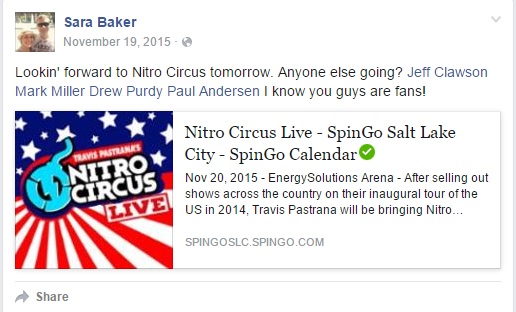
Brands as big as BMW have successfully done it, and so have medium sized set-ups like SpinGo. You simply need to find the right influencers to advocate your brand. One of social media’s biggest advantages is the fact that it puts power in the hands of ordinary people. Influencers needn’t be celebrities. They could simply be employees, partners, happy customers or well-wishers – anyone who is in contact with your market. These are sometimes referred to as micro-influencers. Here’s a look at one of SpinGo’s employee advocacy posts.

screenshot

To organize and manage your advocacy efforts you could use an employee advocacy platform like LinkedIn Elevate, Kredible, Circulate.It or DrumUp Employee Advocacy Platform. Make sure that any employees who Tweet corporate information are clearly identified as employees in their profiles or bios, to be in compliance with FTC rules on influencer marketing.

Influence is simply about increasing your reach and impact on social media. With the right content, targeting and distribution channels you can drive maximum impact and conversions.

Author Bio: Jessica Davis is a Content Writer with Godot Media – a leading Content Management company. She has years of experience in working closely with online businesses, helping them refine their marketing strategy through optimum use of content. Her other interests, besides online content strategy, copywriting and search engine optimization, are technology, sports and even fashion.

Featured image via Flickr cc: Little Calpurnia!

Filed Under: Marketing /Sales / Social Media Tagged With: influence

5 Unique Ways for Social Media Managers to Save Time

February 29, 2016 by Guest Author


By Jessica Davis

As an entrepreneur or business owner, you must be familiar with the feeling of never being done with your work.

You’ re always on the move – daily tasks to complete, stats to analyze and new goals to accomplish –and there’s not much down time.

Time management is tedious but crucial. Without time management, you might as well work 24/7 without any extraordinary results. Find out how you can save time (and your sanity) with these five unique tips.

1. Social Content Calendar

Create a social calendar that helps you organize your upcoming posts. This could be done monthly to keep track of articles or topics.You can also figure out which articles/topics work best for your audience as they are all logged.

A simple spreadsheet with the name, themes, keywords and links (once published) is all it takes.

Once you find out what works for you – you can change the calendar accordingly to accommodate new topics and remove old ones.

A calendar is also useful for allocating your writing – you already know the topic and keywords, all that’s left is a little research and actually writing the post. If you’re meant to publish on Thursdays for example, you can start writing bits and parts on Tuesday, finalize the piece on Wednesday and make final edits before publishing on Thursday.

A social calendar will make it easier to stay motivated and organized.

2. Create Templates

Create templates for everything – blog posts, social media posts and even your emails. The amount of time this saves is mind blowing. Instead of custom creating every blog post/ social media post – you can just copy, paste, make relevant changes and you’re done.

If you know it’s a list post about social media tools, for example – having a template of your most used tools and small points about their features will allow you to spend less time while still putting out quality content. You can then create templates for social media – short templates focusing on individual points for Twitter, longer posts for Facebook and Google+ etc. This is the same for emails, having templates is like having your own FAQ page – copy and paste is all you have to do to save time.

3. Scheduling

Scheduling content in advance is a life saver. Many brands/ pages focus on pushing out as many posts a day as possible – this waters down the content and may even push your readers away. It is recommended to focus on scheduling content to go out at specific times of the day – based on your target audience’s location, most active time, the tool itself, etc.

There are various tools that help you with this – including DrumUp, Sprout Social and Commun.it – these tools let you schedule in advance on various social media platforms with ease. Also limit the number of posts you put out in a day – don’t push your audience too much.

4. 90-minute rule

As the name suggests, the 90-minute rule is a block of 90 minutes where you remove all the distractions from your life and focus completely on your work. Create a space for these 90 minutes every day and pinpoint one main task that you feel is most important. For those 90 minutes, all distractions need to be eliminated – close your email, close all the other tabs on your browser, put your phone on do-not- disturb mode – do whatever else is necessary to remain 100% focused on the tasks at hand.

It takes a while to get used to this, but once it becomes a part of your routine, you’ll notice that you get more work done in those 90 minutes compared to the rest of the day. A plus point is that you don’t have to worry about important tasks for the rest of the day and can work on already scheduled daily tasks from your social calendar.

5. Write Everything Down

You would have noticed that inspiration doesn’t really come when you’re sitting at your desk. It is a waste of your time to sit and wait for ideas to come along. More often than not, they come at the most random times – while commuting, eating, out with friends – and you tend to make a mental note about it but eventually end up forgetting.

To avoid this, write everything down – topics, themes, ideas about different areas – no matter how small you think it is, write it down. When you’re more focused, come back to the ideas and see which ones are actually beneficial and start working on them.

As a bonus tip, always remember to measure and analyze your efforts, this allows you to eliminate the least effective strategies and stay consistent. Using these tips in combination with each other will help you save time and open up your calendar for new ventures.


AUTHOR BIO: Jessica Davis has a keen interest in social media and content marketing, and writes extensively about it. She represents Godot Media, a leading content marketing firm.

Featured image: Business vector designed by Freepik

Filed Under: Productivity Tagged With: time-saving

Don’t Turn a Simple Disagreement into a Social Nightmare

April 29, 2015 by Thomas

How much time as a business owner do you spend on social media?

That is a question that oftentimes will elicit a variety of answers. Some spend a sizable amount of time using social networking to promote their brands; others use it sparingly or even not at all.

No matter which camp you end up in, it is important to properly use social media when the time comes. Yes, if you have not been using social media to give your business some publicity, consider this task long overdue.

Come Down on the Side of Caution

When it comes to properly using social media for work, there are several important factors which come into play, most notably being professional.

Sure, one or more visitors to your social page or pages may get under your skin from time to time, but you must always remain in control. If you slip up and start engaging them in a volatile verbal disagreement, you run the risk of damaging not only your brand, but also your own reputation as a business owner.

With that in mind, here are some tips to avoid the down side of consumer interactions:

  1. Take the high road – When one or more people are verbally attacking you and/or your brand on Facebook, Twitter, YouTube or other such sites, down go negative on them. Try in a simple and direct response to remedy the problem. If that does not work, look to take the issue private. The more people who see you battling online with one or more individuals, the more people who are likely to gain a negative view of you and/or your brand;
  2. Solve the problem – In some cases, the issue might be something as simple as bad customer service etc. A matter like that is something which generally can be overcome by offering an incentive for the individual to want to continue doing business with you. If it is a sales matter and they want to work with another customer service rep, take that under consideration. Maybe they simply did not like the product or service they received and figured going social about it was a way to vent. Offer them a replacement product or service at no extra charge. Simple actions like these can oftentimes be the answer to the problem;
  3. Be timely – Finally, it is always important that you respond to any and all consumer inquiries in a timely manner. With millions and millions of people using social media on a daily basis, it can seem a little overwhelming at times to stay abreast of all that is occurring. Still, delayed responses spell nothing generally but trouble. If you don’t have the time personally to respond to the inquiries, make sure you dedicate someone on your team or even outsource your social media needs.

When you offer consumers a social media campaign large on responsiveness and short on confrontation and delay you and your brand stand to benefit from it.

As a business owner or marketer, how do you make sure your social media campaigns are working to bring out the best in you and your brand?

About the Author: Miguel Salcido has been a professional search marketing consultant for over 11 years. He is the founder and CEO of Organic Media Group, a content driven SEO agency. He also likes to blog atOrganicSEOConsultant.com and share insights into advanced SEO.

Filed Under: Marketing /Sales / Social Media Tagged With: bc

  • « Previous Page
  • 1
  • 2
  • 3
  • 4
  • …
  • 68
  • Next Page »

Recently Updated Posts

Is Your Brand Fan Friendly?

How to Improve Your Freelancing Productivity

How to Leverage Live Streaming for Content Marketing

10 Key Customer Experience Design Factors to Consider

How to Use a Lead Generation Item on Facebook

How to Become a Better Storyteller


From Liz Strauss & GeniusShared Press

  • What IS an SOB?!
  • SOB A-Z Directory
  • Letting Liz Be

© 2025 ME Strauss & GeniusShared