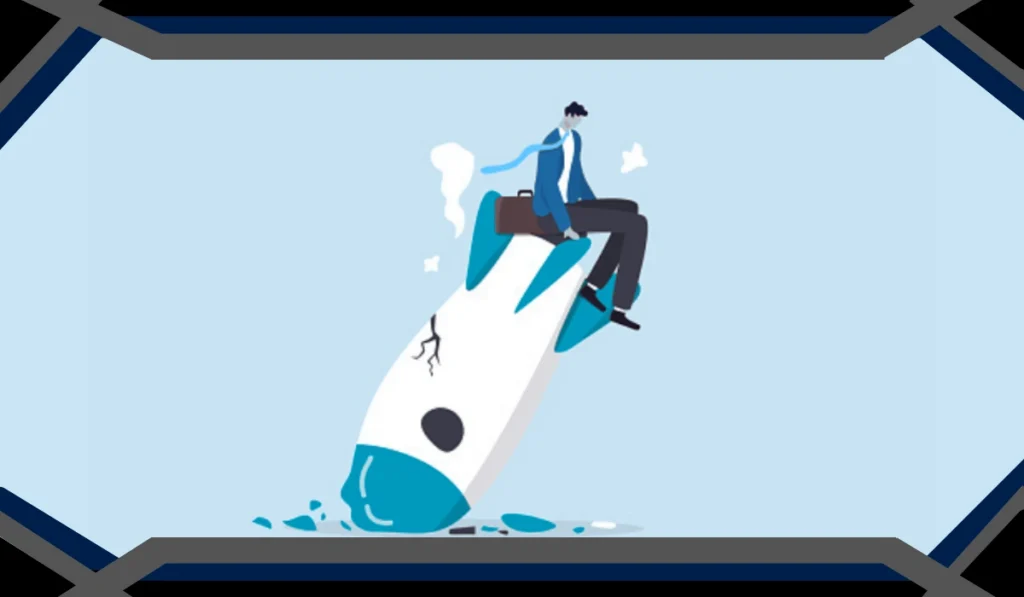
Your business idea can fail long before you launch if you ignore early warning signals that most founders overlook in the excitement phase. Many entrepreneurs assume failure only happens after product release, but in reality, weak foundations silently kill most ventures during the planning stage. Understanding these signals early can save time, money, and emotional energy while helping you refine or completely rethink your direction.
Below are eight critical warning signs that indicate your concept may not survive the early stages of execution.
1. Weak Market Validation and Lack of Real Demand
One of the earliest and most dangerous signs is when there is no solid proof that people actually want what you are planning to build. Many founders fall in love with their concept instead of validating real-world demand.
A failing business idea often starts with assumptions rather than evidence. If you haven’t spoken to potential users, tested interest through landing pages, or measured search demand, you are essentially building in the dark. Without validation, even the most innovative concept struggles to gain traction.
Another subtle issue is when feedback is overly polite but not enthusiastic. People may say “interesting idea” but avoid committing to sign-ups, pre-orders, or deeper engagement. This signals curiosity, not demand.
Finally, if your target audience is unclear or too broad, it becomes impossible to position your offering effectively. A vague audience leads to vague messaging, which ultimately leads to weak market pull.
2. Financial Weaknesses and Unrealistic Execution Models
Even a promising concept can collapse if the financial structure behind it is unrealistic or poorly planned. Many entrepreneurs underestimate costs while overestimating revenue potential.
A common red flag is when the business idea depends heavily on rapid scaling without considering customer acquisition costs. If it costs more to acquire a customer than the revenue they generate, the model breaks from the start.
Another issue appears when revenue streams are unclear or overly optimistic. Relying on “viral growth” or “organic traction” without a clear monetization strategy creates a fragile foundation. Sustainable businesses are built on predictable revenue, not hope.
Execution gaps also matter. If there is no clear roadmap for building an MVP (Minimum Viable Product), the concept may remain stuck in theory. Many founders spend too much time refining ideas instead of testing simple versions in the real world.
When financial planning is based on assumptions rather than tested data, the risk of failure increases dramatically before launch even happens.
3. Lack of Differentiation and Poor Strategic Positioning
In today’s competitive environment, having an idea is not enough. If your concept does not clearly stand out, it will struggle to survive even if it reaches the market.
A strong business idea must offer a unique value proposition. If you cannot clearly explain why someone should choose your solution over existing alternatives in one or two sentences, you likely lack differentiation.
Many early-stage founders also underestimate the importance of competition analysis. Entering a saturated market without a unique angle or better solution often leads to being ignored, regardless of product quality.
Another warning sign is copying existing solutions without improving or innovating meaningfully. Incremental improvements are fine, but if your offering is indistinguishable from competitors, customers have no reason to switch.
Strategy also plays a critical role. If your positioning changes frequently or you cannot confidently define your niche, it indicates a lack of clarity. Without strategic direction, even a good concept can lose momentum before launch.
4. Weak Feedback Loops and Resistance to Adaptation
Another major reason early-stage ideas fail is the inability to adapt based on feedback. Founders who become overly attached to their original vision often ignore signals that require change.
A healthy business idea evolves quickly during early testing. If you find yourself dismissing user feedback because it doesn’t match your expectations, that is a warning sign. Real market validation often contradicts assumptions.
Another issue is when feedback is collected but not acted upon. Many teams gather insights from surveys or interviews but fail to translate them into product improvements. This creates a false sense of progress without real development.
Slow iteration cycles also contribute to failure. If it takes too long to adjust features, messaging, or targeting, competitors may move faster and capture attention first. Speed of learning is often more important than initial perfection.
Ultimately, adaptability determines whether your concept can survive real-world conditions. Without it, even strong ideas stagnate before launch.
5. No Clear Understanding of the Customer Problem
At the core of every successful venture is a deeply understood problem. When this is missing, the entire foundation becomes unstable.
A fragile business idea often focuses too much on features rather than pain points. If you cannot clearly articulate the specific problem your audience faces, your solution becomes irrelevant.
Many founders also assume they understand their customers without direct interaction. However, assumptions often differ significantly from real behavior. Without interviews, observation, or behavioral data, your understanding remains incomplete.
Another red flag is when the problem is not urgent. If users can easily ignore or delay solving it, adoption becomes slow and inconsistent. Strong businesses are built around pressing needs, not optional improvements.
6. Overcomplicated MVP and Delayed Testing
A common trap is building too much too soon. When early versions become overly complex, testing slows down significantly.
A well-structured business idea should begin with a simple MVP that focuses only on the core value proposition. If your initial version requires extensive development time, multiple integrations, or large budgets, you may be overengineering.
Delayed testing is another warning sign. If you are waiting for a “perfect” product before showing it to users, you are likely delaying essential feedback that could reshape your direction.
Speed of experimentation is crucial. The longer you wait to test, the higher the risk of building something that does not match market expectations.
7. Poor Alignment Between Founder Skills and Execution Needs
Even strong ideas fail when the execution team lacks the necessary skills or alignment. This mismatch often appears early but is ignored in excitement.
A realistic business idea requires matching capabilities in marketing, product development, operations, and sales. If key skills are missing and there is no plan to fill those gaps, execution becomes weak.
Another issue is lack of focus. Founders who try to handle too many roles simultaneously often dilute their effectiveness. Without clear responsibilities, progress slows and confusion increases.
Additionally, emotional burnout during early planning stages can indicate deeper structural problems. If the idea already feels overwhelming before launch, scaling it will become even harder.
8. Ignoring Market Signals and External Changes
Markets are dynamic, and failing to observe external shifts can quietly make an idea obsolete before it launches.
A strong business idea stays aligned with industry trends, customer behavior changes, and technological developments. If you are not monitoring these factors, your solution may become outdated before reaching users.
Ignoring competitor movements is another major risk. If similar products are gaining traction or evolving quickly while your concept remains static, you may already be behind.
Economic and industry trends also matter. Changes in regulation, consumer spending, or platform algorithms can significantly impact viability. Founders who fail to adapt to these shifts often struggle at launch.
Conclusion: Recognizing Failure Early Is a Strategic Advantage
Not every concept should be pursued, and that is an important truth many founders overlook. Recognizing the warning signs early allows you to refine, pivot, or abandon a weak direction before investing significant resources.
A resilient business idea is not defined by initial excitement but by validation, clarity, adaptability, and real market demand. When these foundations are missing, failure is often inevitable long before launch.
By carefully evaluating these eight warning signs, you increase your chances of building something sustainable rather than something speculative. In the end, successful entrepreneurs are not just idea generators, they are disciplined validators who know when to continue and when to rethink.
Also Read: Starting a Business: 5 Harsh Truths Most Entrepreneurs Learn Too Late