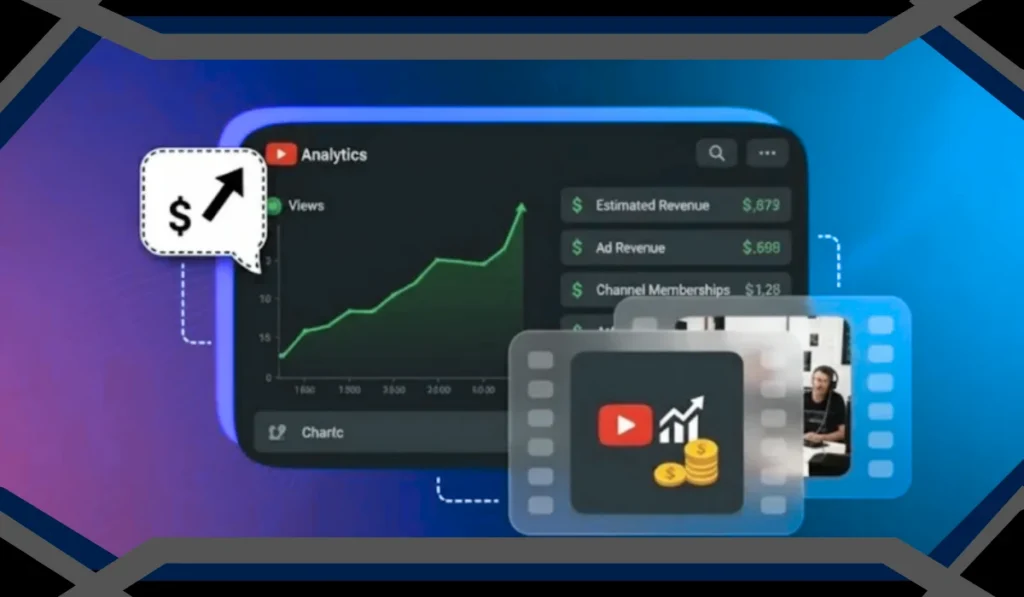
From the very beginning, understanding views on revenue is the foundation of modern digital growth, where attention is only valuable if it converts into measurable business outcomes.
In today’s digital economy, attention is abundant but conversion is rare. Brands, creators, and businesses can accumulate millions of impressions, yet still struggle to generate consistent revenue. The real challenge is no longer how to get seen, it is how to transform visibility into sustainable income. This is where the concept of turning views to revenue becomes essential for long-term success.
Search engines, social platforms, and content ecosystems reward engagement, but engagement alone does not pay the bills. Businesses that learn how to strategically guide attention through structured conversion systems are the ones that ultimately dominate their niche. This article explores how to bridge that gap effectively and sustainably.
Understanding the Shift: From Attention to Monetization
The digital landscape has evolved from pure content creation to performance-driven ecosystems. A decade ago, success was measured in traffic spikes and viral reach. Today, those metrics matter only when they contribute to business growth. This shift has redefined how brands think about content strategy.
At its core, attention is just the starting point. What matters is what happens after a user views your content. Do they trust your brand? Do they engage further? Do they take action? Without a structured path, even high traffic becomes meaningless.
To effectively move views to revenue, businesses must rethink how content functions. Instead of treating content as an endpoint, it should act as the beginning of a guided journey. Each piece of content must serve a purpose within a broader conversion ecosystem whether that is building trust, educating the audience, or triggering purchase intent.
One of the most overlooked aspects in this shift is intent alignment. Not all traffic is equal. Some users are browsing, others are researching, and a smaller segment is ready to buy. The brands that succeed are those that tailor their messaging to each stage of awareness rather than relying on generic content distribution.
Building Conversion Systems That Turn Traffic into Buyers
Once attention is secured, the next step is creating systems that convert that attention into measurable results. This is where most businesses fail; they generate traffic but lack a structured conversion path.
A conversion system is not a single tactic; it is a connected flow that guides users from discovery to decision. It includes landing pages, content sequencing, email nurturing, retargeting strategies, and value-driven offers that align with user intent.
A strong system typically begins with content that captures attention through search visibility or social reach. From there, users are guided into deeper engagement channels such as newsletters, product pages, or educational resources. Each step reduces friction and builds trust.
To successfully convert views to revenue, businesses must focus on three critical layers of the conversion journey:
First, clarity of message. Users should instantly understand what value they are receiving and why it matters. Confusion kills conversions faster than competition.
Second, trust reinforcement. Social proof, case studies, and consistent messaging across platforms help establish credibility. Without trust, even the best offer will fail to convert.
Third, frictionless action. Every additional step between interest and purchase reduces conversion probability. Simplifying checkout processes, reducing form fields, and optimizing mobile experience can significantly improve outcomes.
When these elements are combined, traffic stops being just numbers and starts becoming predictable revenue.
Importantly, this is where views to revenue become more than a concept; it becomes a measurable framework for business growth. Instead of chasing more traffic, businesses begin optimizing what already exists, increasing return on every impression.
Scaling Sustainable Revenue from Audience Trust and Retention
Short-term conversions are valuable, but long-term profitability comes from retention and trust. Businesses that rely solely on acquiring new audiences often face rising costs and diminishing returns. Sustainable growth comes from maximizing the lifetime value of each user.
Audience trust is built through consistency. When users repeatedly encounter valuable, relevant, and reliable content, they begin to associate the brand with authority. This trust compounds over time, making future conversions easier and less expensive.
Retention strategies are equally important. Once a user converts, the journey should not end. Instead, it should evolve into ongoing engagement through personalized communication, product recommendations, and value-driven updates. This turns one-time buyers into repeat customers and brand advocates.
At this stage, views to revenue becomes a compounding system rather than a linear process. Every piece of content contributes not just to immediate sales but to long-term customer relationships.
Scaling also depends on data. Understanding which content drives the highest conversion rates, which channels produce the most engaged users, and which audiences have the highest lifetime value allows businesses to refine their strategy continuously. Without data, scaling becomes guesswork.
Another key factor is content diversification. Relying on a single traffic source is risky. Successful brands distribute content across search engines, social platforms, and direct channels to ensure stability and consistent growth.
Turning Attention Into a Predictable Revenue Engine
The ultimate goal of any digital strategy is predictability. Viral traffic may create spikes, but predictable systems create businesses. When attention is properly structured, optimized, and nurtured, it becomes a reliable revenue engine.
The transition from visibility to profitability requires a mindset shift. Instead of asking how to get more views, the better question is how to make each view more valuable. This approach transforms marketing from a cost center into a growth engine.
In practical terms, businesses that master this transformation focus less on chasing algorithms and more on building systems. They invest in content that attracts the right audience, funnels that convert efficiently, and retention strategies that maximize lifetime value.
At this point, views to revenue is no longer just a phrase, it becomes a performance metric that defines success across every channel.
Conclusion
Turning attention into revenue is not about shortcuts or hacks. It is about building structured systems that guide users from discovery to decision and beyond. Businesses that understand this principle stop competing for attention alone and start competing for outcomes.
When executed properly, every view becomes an opportunity, every click becomes a potential conversion, and every interaction contributes to long-term business growth. The brands that thrive in the modern digital landscape are those that treat attention not as the end goal, but as the beginning of a carefully engineered revenue journey.