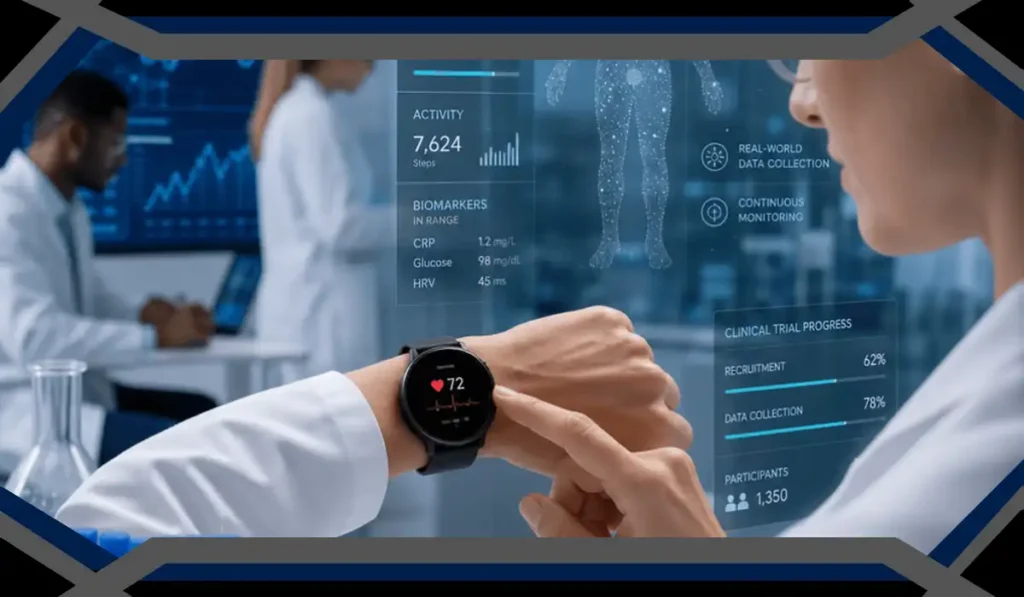
Galaxy Watch health data is becoming one of Samsung’s most valuable assets in advancing clinical research and digital healthcare. As wearable technology evolves beyond fitness tracking, Samsung is using health insights collected from Galaxy Watch devices to support medical studies, improve preventive care, and accelerate innovation in healthcare. The growing ability to monitor heart rate, sleep, blood oxygen levels, and other wellness metrics continuously gives researchers access to real-world data that was difficult to collect through traditional clinical trials.
By combining wearable technology with artificial intelligence and cloud-based analytics, Samsung aims to strengthen clinical research while helping healthcare professionals better understand long-term health trends. This shift reflects a broader movement toward personalized medicine, where continuous health monitoring plays an increasingly important role.
Why Galaxy Watch Health Data Matters
Wearable devices have transformed how people manage their health. Instead of relying solely on occasional medical checkups, users can now monitor vital health indicators throughout the day.
The Galaxy Watch health data ecosystem provides continuous information that may include:
- Heart rate trends
- Blood oxygen measurements
- Sleep quality
- Physical activity
- Stress levels
- Body composition analysis
Unlike traditional clinical research, which often depends on limited observations, wearable devices collect information in real-world environments. This allows researchers to identify long-term patterns that may otherwise remain unnoticed.
How Samsung Uses Galaxy Watch Health Data in Clinical Research
Samsung is expanding its healthcare initiatives by integrating wearable technology into medical research. Rather than replacing hospitals or physicians, Galaxy Watch devices complement traditional healthcare by supplying additional health information.
Supporting Long-Term Health Studies
One of the biggest challenges in medical research is collecting consistent patient data over extended periods. Traditional studies require participants to visit clinics regularly, making long-term monitoring expensive and time-consuming.
Wearable devices simplify this process by collecting health metrics automatically. Researchers can analyze months or even years of data to understand how lifestyle habits affect long-term health outcomes.
For example, researchers studying cardiovascular disease can evaluate how daily exercise, sleep quality, and resting heart rate influence heart health over time.
Improving Preventive Healthcare
Continuous monitoring allows healthcare providers to detect early warning signs before symptoms become severe.
If a wearable device identifies unusual heart rhythms or significant changes in sleep patterns, users can seek medical advice sooner. Earlier intervention often leads to better treatment outcomes while reducing healthcare costs.
This preventive approach is becoming a major focus of modern healthcare systems worldwide.
The Role of Artificial Intelligence
Artificial intelligence plays an essential role in transforming Galaxy Watch health data into meaningful medical insights.
Large volumes of health information require advanced analytics to identify useful trends. AI algorithms can examine millions of data points to detect patterns that human researchers might overlook.
For instance, AI can identify subtle relationships between sleep quality, stress levels, physical activity, and cardiovascular health. These insights help researchers build more accurate predictive health models.
As AI technology continues improving, wearable devices may become even more valuable in supporting personalized healthcare recommendations.
Benefits for Patients and Researchers
The use of wearable health technology creates advantages for both individuals and medical researchers.
Benefits for Users
Galaxy Watch users gain access to continuous health monitoring without visiting a healthcare facility every day.
Potential benefits include:
- Better awareness of daily health habits
- Early identification of unusual health changes
- Improved fitness and wellness tracking
- Personalized health insights
- Increased motivation to maintain healthy lifestyles
Benefits for Researchers
Medical researchers receive access to larger and more diverse health datasets collected under real-world conditions.
This can improve:
- Clinical trial accuracy
- Disease pattern analysis
- Population health studies
- Long-term patient monitoring
- Development of digital health solutions
These advantages may help researchers produce stronger evidence while reducing the time required to complete clinical studies.
Privacy and Data Security Remain Essential
Health information is among the most sensitive types of personal data. As wearable devices collect increasing amounts of medical information, privacy protection becomes critical.
Samsung emphasizes user consent, encrypted data storage, and secure data management practices when handling health information. Individuals generally control whether their health data is shared for research purposes.
Strong cybersecurity measures also reduce the risk of unauthorized access, helping build public trust in wearable healthcare technology.
Maintaining transparency about how health information is collected and used will remain essential as digital healthcare continues expanding.
Real-World Applications
The value of Galaxy Watch health data extends beyond academic research.
Healthcare providers may use wearable information to monitor patients recovering from surgery or managing chronic illnesses. Fitness professionals can develop personalized exercise plans based on real-time performance data.
Insurance companies may eventually use wellness programs supported by wearable technology to encourage healthier lifestyles, although privacy regulations will continue shaping these applications.
Researchers can also study population-wide health trends by analyzing anonymized wearable data collected from diverse demographic groups.
Challenges That Still Need Attention
Despite significant progress, wearable healthcare technology still faces several challenges.
First, smartwatch measurements are not intended to replace professional medical equipment. Clinical validation remains necessary before wearable data can support major medical decisions.
Second, user behavior affects data quality. If individuals wear their devices inconsistently or remove them during important periods, researchers may receive incomplete datasets.
Finally, expanding digital healthcare requires clear regulatory frameworks governing medical device approval, data privacy, and research ethics.
Addressing these challenges will help improve confidence in wearable-based clinical research.
The Future of Samsung’s Clinical Research Strategy
Samsung continues investing in digital health technologies that combine wearable devices, artificial intelligence, and cloud computing.
Future Galaxy Watch models may include additional health sensors capable of measuring new biomarkers that support disease detection and long-term health monitoring.
As healthcare becomes increasingly data-driven, wearable technology could play a larger role in decentralized clinical trials. Instead of requiring participants to visit hospitals frequently, researchers may collect much of the necessary information remotely through connected devices.
This approach could make clinical research faster, more efficient, and more accessible to participants worldwide.
Conclusion
Galaxy Watch health data is helping reshape the future of clinical research by providing continuous health insights that support medical studies, preventive healthcare, and personalized medicine. As Samsung expands its investment in wearable technology and artificial intelligence, researchers gain access to valuable real-world information that can improve disease understanding and patient care.
Although privacy, regulatory, and clinical validation challenges remain, wearable technology continues to demonstrate enormous potential. By combining innovation with responsible data management, Galaxy Watch health data is set to become an increasingly important resource in the future of global healthcare.
Frequently Asked Questions
1.Is Galaxy Watch health data medically accurate?
Galaxy Watch provides valuable health insights, but it is not a replacement for professional medical diagnosis. Users should consult healthcare professionals regarding medical concerns.
2.How does Samsung use Galaxy Watch health data?
Samsung supports health research by using wearable data, with user consent, to improve digital healthcare technologies and clinical research initiatives.
3.Can Galaxy Watch detect health problems?
Galaxy Watch can identify certain abnormal health patterns, such as irregular heart rhythms or changes in activity levels. However, medical professionals should always confirm any diagnosis.
4.Why is wearable data important for clinical research?
Wearable devices collect continuous real-world health information, allowing researchers to study long-term trends that traditional clinical trials may miss.