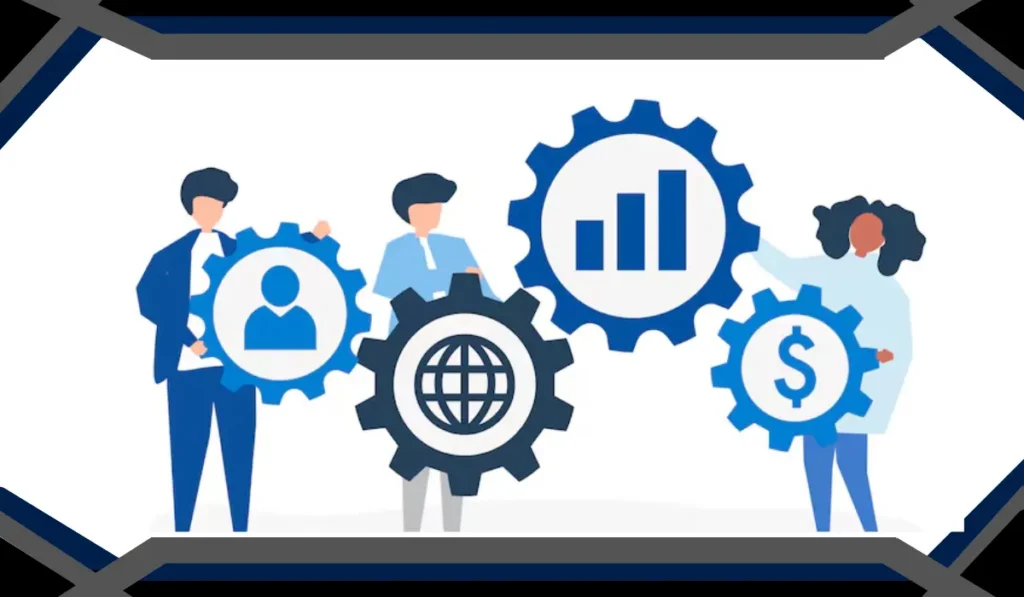
The creator economy is undergoing a structural shift that is quietly redefining how digital influence works. For years, influencers dominated social platforms, shaping buying decisions through personality-driven content and lifestyle storytelling. However, a new model is emerging that prioritizes systems over personalities, performance over popularity, and scalability over individual reach. This shift is often described as the Rise of Content Operators, a transformation that signals the beginning of a more engineered and data-driven era of online content production.
Unlike traditional influencers who rely heavily on personal branding and audience attachment, content operators focus on building repeatable content systems that can be optimized, distributed, and monetized at scale. This evolution is not just a trend but a response to platform saturation, declining organic reach, and the increasing demand for measurable ROI in digital marketing. As brands and platforms grow more sophisticated, the creator economy is moving from charisma-led influence to strategy-led execution.
What Are Content Operators?
To understand this shift, it is important to define what a content operator actually is. A content operator is not simply a creator; they are a strategist, systems thinker, and distribution architect combined. Their role extends beyond producing content to designing entire workflows that generate consistent attention across multiple channels.
The Rise of Content Operators reflects the growing need for individuals who understand how content behaves across algorithms rather than just how it performs on a single post. Instead of focusing on building a personal fan base, these operators build content engines-systems that can produce videos, posts, and articles in high volume while continuously optimizing for engagement signals such as watch time, retention, and conversion.
This approach is fundamentally different from influencer culture. Where influencers depend on identity and relatability, content operators depend on structure and repeatability. They often work behind the scenes, sometimes managing multiple faceless brands or pages, each designed to capture attention in specific niches.
Why Influencers Are Losing Ground
The influencer model is not disappearing overnight, but it is facing increasing pressure from both platforms and audiences. Social media algorithms now reward consistency, relevance, and watch behavior far more than follower count. As a result, even creators with large audiences often struggle to maintain reach without constant reinvention.
Another challenge is trust fatigue. Audiences have become more skeptical of sponsored content that feels overly curated or inauthentic. This has created a gap between influence and conversion, where visibility does not always translate into action. In contrast, the Rise of Content Operators is driven by a focus on performance metrics rather than personal branding, allowing content to succeed even without a recognizable face behind it.
Brands are also shifting their budgets. Instead of paying high fees to individual influencers, many companies now invest in content systems that can generate hundreds of assets per month. These systems are often managed by operators who understand SEO, platform algorithms, and audience segmentation at a deeper level than traditional creators.
How Content Operators Build Scalable Systems
Content operators approach creation like engineers rather than entertainers. Their process often begins with identifying demand patterns across platforms-what people are searching for, engaging with, and sharing. From there, they design content frameworks that can be replicated and iterated quickly.
One of the defining traits of the Rise of Content Operators is the emphasis on modular content production. Instead of creating one-off viral posts, operators build templates that can be adapted across formats such as short-form video, blog articles, and social snippets. This allows them to maximize output without sacrificing consistency.
They also rely heavily on analytics feedback loops. Every piece of content becomes a data point that informs the next iteration. If a video performs well due to its hook structure or topic timing, that insight is immediately integrated into future production cycles. Over time, this creates a compounding effect where content systems become increasingly efficient at capturing attention.
Unlike influencers, who often rely on intuition or personal style, content operators treat creativity as an optimized process. The result is not just more content, but smarter content that aligns closely with platform behavior.
The SEO Advantage in the Content Operator Era
Search optimization plays a crucial role in this transformation. As platforms like YouTube, TikTok, and Google increasingly function as search engines, content discoverability depends on structured optimization rather than social reach alone.
The Rise of Content Operators has coincided with a renewed focus on SEO-driven content strategies. Operators understand how to align topics with search intent, structure content for ranking, and maintain topical authority across multiple assets. This allows them to generate sustained traffic long after the initial publication date, unlike influencer posts that often peak within hours.
Additionally, content operators often build entire ecosystems of interconnected content. A single topic can be expanded into multiple supporting pieces, each reinforcing the other in search rankings. This creates a network effect where visibility compounds over time, giving operators a long-term advantage in organic discovery.
Brands are increasingly recognizing that SEO-optimized content systems provide more predictable returns than influencer campaigns, which can be volatile and difficult to measure.
The Future of Digital Influence
As the digital landscape continues to evolve, the distinction between creators and operators will likely become even more pronounced. While influencers will still exist, particularly in lifestyle and entertainment niches, the majority of commercial content creation is expected to shift toward operational models.
The Rise of Content Operators signals a future where influence is less about personality and more about infrastructure. Instead of asking “Who is speaking?”, audiences will increasingly respond to “What is being delivered?” and “How efficiently is it reaching me?”
This does not eliminate creativity; rather, it reframes it within systems that prioritize scale and performance. Content operators will continue to refine how information, entertainment, and marketing intersect, using data and automation to amplify human creativity rather than replace it.
Ultimately, the winners in this new era will not necessarily be the most famous creators, but those who understand how to build, manage, and optimize content ecosystems that thrive across platforms.
Conclusion
The digital economy is entering a phase where systems matter more than personalities. The Rise of Content Operators represents a fundamental restructuring of how content is created, distributed, and monetized. It challenges the traditional influencer model by introducing a more scalable, data-driven approach that aligns with the demands of modern platforms and audiences.
As this shift accelerates, brands, creators, and marketers will need to rethink their strategies. Success will depend less on individual influence and more on the ability to design repeatable systems that consistently capture attention in an increasingly competitive digital environment.
Also Read: The Shift From Token Marketing to Crypto Ecosystem Building