Sales funnel in marketing is one of the most important frameworks businesses use to understand how strangers become paying customers. It helps map the entire customer journey from awareness to purchase and beyond, enabling marketers to optimize conversions and revenue.
In today’s competitive digital landscape, understanding how a sales funnel works is essential for any business looking to scale efficiently. This guide breaks down the stages, strategies, and real-world examples so you can build a high-performing funnel for your business.
What Is a Sales Funnel?
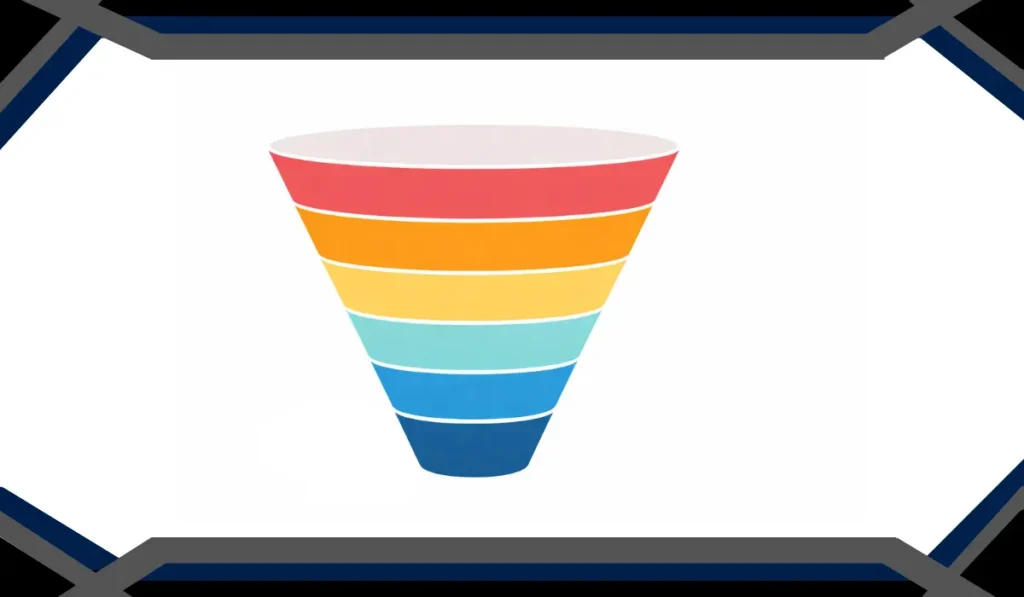
A sales funnel in marketing refers to the step-by-step process that potential customers go through before making a purchase decision. It is called a “funnel” because many people enter at the top, but only a fraction convert into customers at the bottom.
The funnel helps businesses track user behavior, identify drop-off points, and improve messaging at each stage. It typically starts with broad awareness and narrows down to highly qualified leads who are ready to buy.
At its core, the funnel represents the psychological journey of a customer—from discovering a brand to trusting it enough to make a purchase.
Why the Sales Funnel Matters in Modern Marketing
Understanding the sales funnel in marketing is crucial because it helps businesses align their strategies with customer intent. Instead of relying on generic messaging, marketers can deliver targeted content based on where a user is in the buying journey, making communication more relevant and effective.
This approach improves conversion rates by ensuring the right message reaches the right audience at the right time. It also reduces marketing waste by focusing only on qualified leads, while enhancing the overall customer experience through personalized engagement.
Ultimately, a structured funnel increases Return on Investment (ROI) by optimizing every stage of the customer journey. Without it, businesses often face inconsistent sales and unclear marketing performance, making growth harder to sustain.
Stages of a Sales Funnel
A typical funnel consists of five core stages. Each stage represents a different level of customer awareness and intent.
1. Awareness Stage
At the top of the funnel, potential customers first discover your brand. They may find you through social media, blog posts, search engines, or ads.
The goal here is visibility. Businesses focus on content marketing, SEO, and paid ads to attract attention.
2. Interest Stage
Once users are aware of your brand, they begin showing interest. They might follow your social pages, read more content, or subscribe to newsletters.
At this stage, education is key. You need to provide valuable content that addresses their pain points.
3. Consideration Stage
Here, prospects compare your product or service with competitors. They are evaluating options and seeking proof of value.
Case studies, testimonials, and product comparisons work well in this stage.
4. Intent Stage
In the intent phase, users show strong buying signals. They may add products to carts, request demos, or engage with sales teams.
Offering discounts, free trials, or limited-time offers can help push them forward.
5. Conversion Stage
This is where the purchase happens. The prospect becomes a paying customer.
However, the journey doesn’t end here. Post-purchase engagement is essential for retention and repeat sales.
Sales Funnel Strategy for Business Growth
A strong sales funnel in marketing strategy focuses on optimizing each stage to guide users smoothly toward conversion.
Top of Funnel (TOFU) Strategy
At this stage, focus on attracting large audiences through:
- SEO-optimized blog content
- Social media campaigns
- YouTube videos and educational content
- Paid advertising campaigns
The goal is not selling but building awareness and trust.
Middle of Funnel (MOFU) Strategy
Here, your focus shifts to nurturing leads:
- Email marketing sequences
- Lead magnets like ebooks or webinars
- Retargeting ads
- Educational guides and comparisons
This stage builds credibility and deepens interest.
Bottom of Funnel (BOFU) Strategy
At the bottom, your goal is conversion:
- Free trials or demos
- Customer testimonials and reviews
- Personalized offers
- Sales consultations
This is where trust turns into action.
Real-World Examples of a Sales Funnel
To better understand how a sales funnel in marketing works, let’s look at practical examples.
Example 1: E-commerce Store
- Awareness: A user sees a Facebook ad for sneakers
- Interest: They visit the website and browse products
- Consideration: They compare styles and read reviews
- Intent: They add shoes to the cart
- Conversion: They complete the purchase
Example 2: SaaS Company
- Awareness: A blog post ranks on Google
- Interest: The user signs up for a newsletter
- Consideration: They attend a webinar or read case studies
- Intent: They request a product demo
- Conversion: They subscribe to the software
These examples show how structured funnels guide users toward buying decisions.
How to Optimize Your Sales Funnel
Optimizing a sales funnel in marketing requires continuous testing and improvement across every stage. One of the most important areas to focus on is landing pages. They should be clear, fast-loading, and designed to convert visitors by removing distractions and highlighting key benefits that guide users toward action.
Another key element is using data analytics to understand user behavior. Tracking where users drop off helps identify bottlenecks so you can make targeted improvements. Alongside this, A/B testing allows you to experiment with different headlines, calls-to-action, and offers to determine what drives the highest conversions.
Finally, personalization and automation play a major role in improving performance. Tailoring content based on user behavior and demographics increases engagement, while marketing automation tools help nurture leads through email sequences and retargeting campaigns, ensuring consistent communication until conversion.
Common Mistakes in Sales Funnels
Even experienced marketers make mistakes when building funnels. Common pitfalls include targeting the wrong audience, ignoring mobile optimization, using weak or unclear calls-to-action, overcomplicating the funnel structure, and failing to track performance metrics.
Avoiding these issues is essential because fixing them can significantly improve conversions, streamline the customer journey, and increase overall ROI.
The Role of Content in a Sales Funnel
Content plays a major role in guiding users through each stage. Educational blog posts, videos, infographics, and case studies help build trust and authority.
High-quality content ensures that prospects move smoothly from awareness to conversion without confusion or hesitation.
Measuring Sales Funnel Performance
To evaluate success, track key metrics such as:
- Conversion rate at each stage
- Cost per lead (CPL)
- Customer acquisition cost (CAC)
- Lifetime value (LTV)
- Drop-off rates
These insights help refine your funnel and improve long-term profitability.
Future of Sales Funnels in Digital Marketing
The future of sales funnel in marketing is becoming more data-driven and personalized. With advancements in AI and automation, businesses can now predict customer behavior and deliver hyper-targeted experiences.
Modern funnels are no longer linear. Customers may enter at different stages and move back and forth before converting. This makes flexibility and personalization more important than ever.
Conclusion
A well-structured funnel is the backbone of successful digital marketing. From awareness to conversion, every stage plays a critical role in guiding potential customers toward a purchase.
Understanding and optimizing a sales funnel in marketing allows businesses to improve conversions, reduce costs, and build long-term customer relationships. By applying the right strategies, testing continuously, and focusing on customer needs, any business can turn its funnel into a powerful growth engine.
Also Read: 10 Proven Tips to Increase Sales for Your Small Business