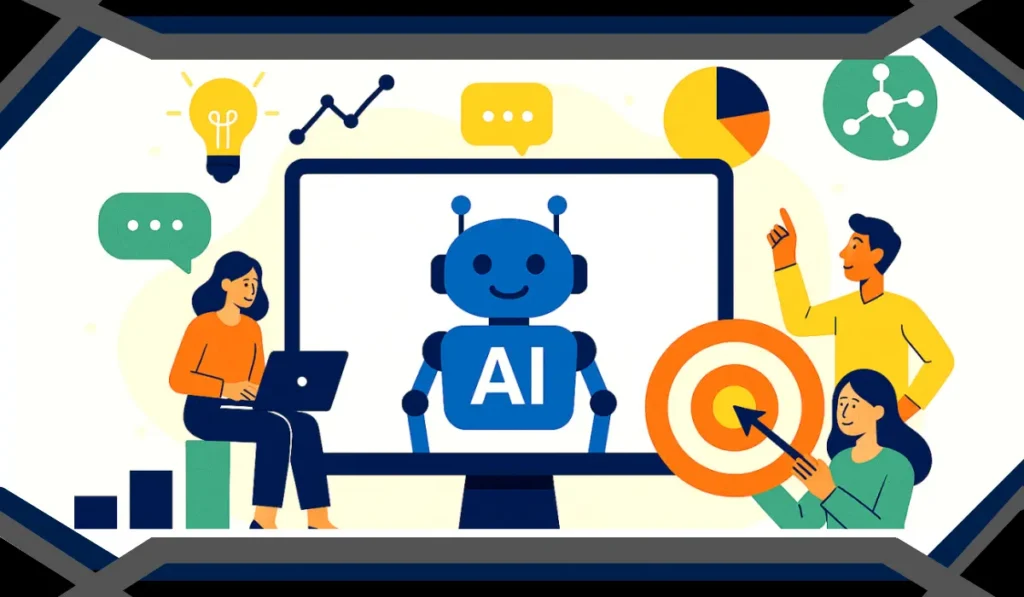
Combine AI Tools Into Marketing System is becoming a defining strategy for modern businesses that want to scale faster, reduce manual workload, and improve marketing precision without dramatically increasing costs. Instead of using isolated AI applications for content, ads, analytics, and customer engagement, forward-thinking marketers are now integrating them into a unified ecosystem that works like a connected brain. This approach transforms scattered efforts into a synchronized growth engine that continuously learns, adapts, and improves performance.
As competition intensifies across digital channels, the ability to unify AI tools into a cohesive workflow is no longer optional. It is quickly becoming the foundation of high-performing marketing operations that can compete at scale.
The Shift From Individual AI Tools to Unified Marketing Systems
For years, marketers have adopted AI tools in isolation-one for copywriting, another for email automation, another for SEO optimization, and yet another for analytics. While each tool provides value on its own, the real limitation lies in fragmentation. Data gets trapped in silos, workflows become disconnected, and teams end up spending more time switching between platforms than actually executing strategy.
The modern approach focuses on integration rather than accumulation. Instead of asking “Which AI tool should I use?”, businesses are now asking how to create a seamless flow of data and automation across all tools. When you Combine AI Tools Into Marketing System, the goal is not just efficiency, but intelligence-where each tool informs and enhances the others.
For example, AI-generated content insights can directly influence ad targeting, while performance analytics can automatically refine future content creation. This continuous feedback loop is what turns separate tools into a unified marketing engine.
Building the Foundation: Centralizing Data and Strategy
A strong AI marketing system begins with centralized data. Without a unified data source, even the most advanced AI tools operate blindly. Businesses need a central hub-often a CRM or marketing platform-that acts as the “source of truth” for customer behavior, campaign performance, and engagement history.
When you Combine AI Tools Into Marketing System effectively, this central layer ensures that every AI application is working from the same dataset. This eliminates inconsistencies and allows automation to function intelligently across channels.
Instead of manually transferring insights between platforms, data flows automatically. Customer interactions from email campaigns can inform ad retargeting strategies, while website behavior can trigger personalized messaging sequences. This level of integration transforms marketing from reactive to predictive.
Content Creation Powered by Connected AI Workflows
Content remains the backbone of digital marketing, but AI has fundamentally changed how it is produced and distributed. However, the real power emerges when content tools are connected rather than used independently.
In a unified system, AI writing assistants generate blog posts, social media captions, and ad copy based on real-time keyword trends and audience insights pulled from analytics tools. SEO platforms then evaluate and optimize this content before publication. Once published, performance data feeds back into the system to refine future outputs.
This creates a self-improving content cycle. When you Combine AI Tools Into Marketing System in this way, content stops being static and becomes dynamic-constantly evolving based on audience response and search behavior.
The result is not just higher output, but smarter output that aligns more closely with user intent and search engine algorithms.
Smarter Customer Journeys Through Automation Integration
Customer journey mapping is another area where AI integration creates significant impact. Traditionally, marketers design funnels manually and adjust them periodically. With AI integration, these journeys become adaptive.
Behavior tracking tools monitor how users interact with websites, emails, and ads. AI systems then analyze this behavior in real time and trigger personalized responses. For example, a visitor who repeatedly views a product page might automatically receive tailored email content or retargeting ads with dynamic messaging.
When businesses Combine AI Tools Into Marketing System across the customer journey, every interaction becomes part of a larger intelligence network. Instead of static funnels, you get evolving pathways that adjust based on user intent, engagement level, and conversion probability.
This leads to higher conversion rates and more meaningful customer relationships, because communication becomes relevant and timely rather than generic.
AI-Driven Analytics That Guide Every Decision
One of the most powerful advantages of integration is real-time decision-making powered by unified analytics. Instead of reviewing separate dashboards for SEO, ads, social media, and email performance, businesses can consolidate insights into a single intelligence layer.
AI analytics tools can detect patterns that would be nearly impossible for humans to identify manually. They can highlight which campaigns are driving long-term customer value, which content formats are generating the most engagement, and which channels are underperforming.
When you Combine AI Tools Into Marketing System, analytics no longer serve as a reporting function—they become a decision engine. Campaigns can be automatically optimized based on performance thresholds, budgets can shift dynamically between platforms, and underperforming assets can be replaced in real time.
This reduces guesswork and ensures that marketing decisions are always backed by data rather than intuition alone.
Personalization at Scale Without Manual Effort
Personalization has long been a goal in marketing, but achieving it at scale has always been a challenge. AI integration solves this by connecting behavioral data with content generation and delivery systems.
Instead of creating dozens of segmented campaigns manually, AI can dynamically generate personalized messages for each user based on their behavior, preferences, and engagement history. Emails, ads, and landing pages can all adapt automatically to individual user profiles.
When businesses Combine AI Tools Into Marketing System in this way, personalization becomes continuous rather than static. Every interaction contributes to a deeper understanding of the customer, which in turn improves future communication.
This level of personalization increases engagement, builds trust, and significantly improves conversion rates because users feel understood rather than targeted.
The Role of AI Orchestration in Marketing Efficiency
AI orchestration is the layer that connects everything together. It ensures that different tools do not operate in isolation but instead work as coordinated components of a larger system.
For example, when a new blog post is published, an AI orchestration system can automatically distribute it across social media channels, trigger email campaigns, update SEO metadata, and monitor performance-all without manual intervention.
This level of coordination is what transforms fragmented AI usage into a true marketing system. When you Combine AI Tools Into Marketing System through orchestration, you eliminate repetitive tasks and free up human teams to focus on strategy, creativity, and innovation.
The efficiency gains are substantial, but the real value lies in consistency. Every marketing action becomes aligned, timely, and optimized.
Scaling Growth With an AI-Powered Marketing Ecosystem
Once integration is fully established, scaling becomes significantly easier. Instead of adding more manual resources, businesses can simply expand their AI ecosystem.
New tools can be plugged into existing workflows without disrupting operations. Whether it is advanced predictive analytics, new content generators, or customer engagement platforms, everything integrates into the same system.
At this stage, when you Combine AI Tools Into Marketing System, marketing evolves into a self-sustaining ecosystem. Campaigns run continuously, data flows seamlessly, and optimization happens in real time.
This allows businesses to scale faster without proportionally increasing workload or complexity. Growth becomes a function of system intelligence rather than human capacity.
Future Outlook: Marketing Systems That Think and Adapt
The future of marketing is not about using more AI tools-it is about building smarter systems that connect them effectively. As AI continues to evolve, integration will become even more autonomous, with systems capable of self-optimizing across entire marketing ecosystems.
We are moving toward a future where marketing platforms will not just execute commands but actively suggest strategies, predict outcomes, and deploy campaigns automatically based on market conditions.
In this landscape, businesses that learn to Combine AI Tools Into Marketing System early will hold a significant advantage. They will operate with greater speed, precision, and adaptability than competitors still relying on fragmented tools.
Conclusion
Modern marketing success depends less on individual tools and more on how effectively they work together. A connected AI ecosystem transforms scattered efforts into a streamlined, intelligent system capable of continuous learning and optimization.
When you Combine AI Tools Into Marketing System strategically, you create more than efficiency—you build a marketing engine that evolves, adapts, and scales with your business. This integrated approach is quickly becoming the standard for competitive digital marketing, where speed, personalization, and data-driven decision-making define success.
Also Read: How to Turn Your Skills Into a Personal Business Brand That Attracts Clients