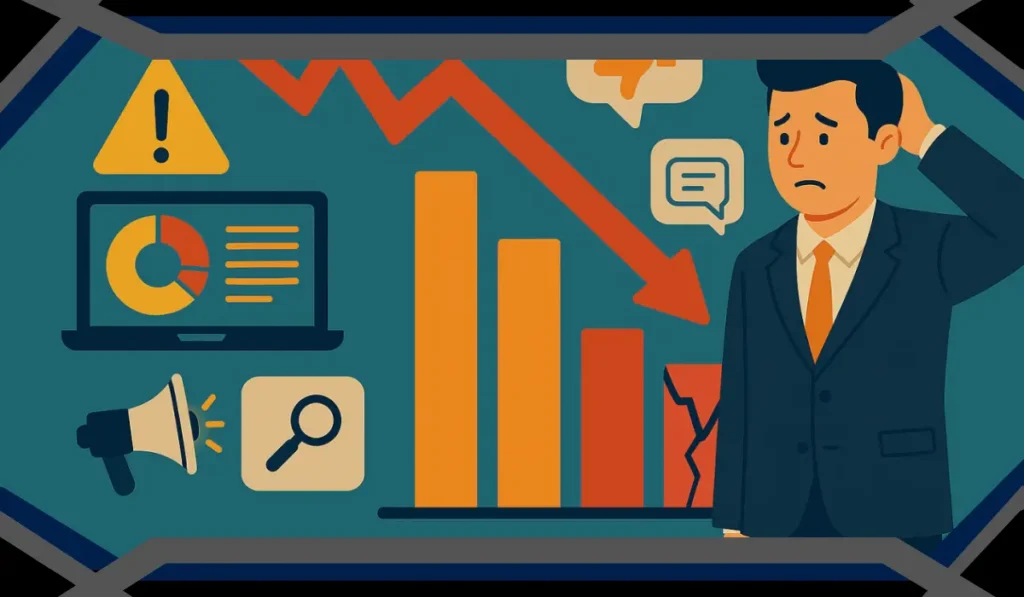
Marketing Isn’t Turning Views Into Sales is one of the most frustrating challenges businesses face today. You can have strong traffic, viral content, and steady engagement, yet still struggle to generate consistent revenue. At first glance, it feels like your marketing is working because people are watching, clicking, and interacting. But when those views do not translate into purchases, something deeper in the system is broken.
The truth is, modern digital marketing does not fail because of visibility. It fails because of misalignment between attention and intent. Getting eyes on your content is only the beginning. Turning that attention into revenue requires a clear, intentional path that guides users from curiosity to confidence to conversion.
Understanding why this gap exists is the first step toward fixing it.
The Illusion of Success: Why Views Can Be Misleading
One of the most common mistakes businesses make is assuming that high view counts equal effective marketing. In reality, views only measure exposure, not persuasion. You can reach thousands of people who have zero intention of buying what you offer.
This is where the core issue behind Marketing Isn’t Turning Views Into Sales starts to show itself. Many campaigns are optimized for engagement rather than conversion. That means content is designed to attract attention rather than filter and qualify the right audience.
When your marketing is built to entertain rather than guide decision making, you end up with traffic that looks good on dashboards but does nothing for your revenue.
Misaligned Audience Intent: The Hidden Conversion Killer
A major reason views fail to convert is misaligned intent. Not every viewer is in a buying mindset. Some are browsing casually, others are researching broadly, and only a small percentage are ready to purchase.
If your content attracts the wrong stage of awareness, you will always struggle with conversion. For example, educational or viral content often brings in top of funnel traffic, but without a structured path to guide them deeper, they leave without taking action.
This is why Marketing Isn’t Turning Views Into Sales becomes a persistent issue for businesses that rely heavily on awareness campaigns without a conversion strategy attached.
The fix is not necessarily to reduce traffic but to better qualify it. Your messaging, targeting, and content structure must align with the buyer journey, not just general interest.
Weak Value Positioning: When People Do Not See the Reason to Buy
Even when you attract the right audience, conversion can still fail if your value proposition is unclear or weak. People do not buy products. They buy outcomes, transformations, and solutions.
If your marketing focuses too much on features and not enough on meaningful outcomes, potential customers may understand what you offer but not why it matters to them.
This is another critical layer behind Marketing Isn’t Turning Views Into Sales. The message may be visible, but the value is not emotionally or practically compelling enough to trigger action.
Strong marketing connects directly to a pain point or desire and positions the offer as the simplest and most credible solution. Without that clarity, attention fades quickly.
The Broken Funnel: Where Interest Dies Before Action
A properly functioning funnel guides a user step by step from awareness to purchase. But in many businesses, this funnel is either incomplete or inconsistent.
Users might discover a brand through social media, land on a website that lacks clarity, and then exit without understanding what to do next. Or they might read content that interests them but never encounter a clear call to action.
This breakdown is a major contributor to Marketing Isn’t Turning Views Into Sales. The journey from interest to purchase should feel natural, not forced or confusing.
When the funnel is broken, every stage leaks potential revenue. Even strong traffic cannot compensate for a weak conversion path.
Landing Pages That Do Not Close the Gap
Your landing page is often where the conversion decision is made. Yet many landing pages are designed like brochures instead of decision making tools.
A common mistake is overwhelming visitors with too much information or, on the other hand, providing too little clarity. If a user lands on your page and cannot immediately understand what problem you solve and why you are the right choice, they leave.
This is one of the most underestimated reasons Marketing Isn’t Turning Views Into Sales continues to happen even in well funded campaigns.
A high performing landing page should reduce confusion, reinforce trust, and make the next step obvious. If it requires effort to figure out what to do next, conversion rates will suffer.
Trust Deficit: Why People Do Not Feel Safe Buying
Even if everything else is in place, trust remains the final barrier between interest and purchase. Online users are more skeptical than ever. They look for signs that a brand is credible, reliable, and safe to engage with.
If your marketing lacks trust signals such as social proof, clear branding, testimonials, or transparent messaging, users may hesitate at the final moment.
This hesitation is often invisible in analytics. You see clicks and page visits, but not the internal doubt that prevents conversion. That is another reason Marketing Isn’t Turning Views Into Sales persists across industries.
Trust is not built through claims alone. It is built through consistency, clarity, and evidence that others have successfully used your product or service.
The Messaging Disconnect Between Ads and Reality
Another major issue occurs when marketing messages do not match the actual experience users get after clicking.
If your ad promises simplicity but your landing page feels complex, or if your content suggests urgency but the offer feels generic, users experience friction. That friction leads to drop offs.
This disconnect quietly undermines conversion performance and reinforces the pattern of Marketing Isn’t Turning Views Into Sales.
Consistency across every touchpoint is essential. From ad copy to landing page to checkout, the message should feel like one continuous conversation rather than separate, disconnected pieces.
Why Traffic Without Strategy Always Fails
Traffic alone is not a strategy. Many businesses invest heavily in driving clicks without building the system needed to convert those clicks into customers.
Without segmentation, retargeting, nurturing sequences, and conversion focused design, even high quality traffic will underperform.
This is where Marketing Isn’t Turning Views Into Sales becomes more than a symptom. It becomes a structural issue. The system is incomplete, not just inefficient.
A strong strategy ensures that every visitor is guided toward the next logical step, whether they convert immediately or return later after further engagement.
The Fix: Building a Conversion Centered Marketing System
Solving this problem requires a shift in mindset. Instead of focusing on visibility alone, marketing must be built around conversion architecture.
That means aligning messaging with intent, designing funnels that guide decision making, and ensuring every piece of content has a purpose beyond views.
When businesses fix Marketing Isn’t Turning Views Into Sales, they usually do not do it by increasing traffic. They do it by improving clarity, trust, and direction.
Small changes in structure can create major shifts in performance. Refining your offer presentation, simplifying landing pages, and tightening message consistency often produce better results than scaling ad spend.
Turning Attention Into Action
Attention is valuable, but only when it leads somewhere meaningful. If people are consistently viewing your content but not converting, the issue is not a lack of interest. It is a lack of direction.
Successful marketing bridges that gap by guiding users step by step from curiosity to confidence. It removes uncertainty, strengthens trust, and makes decisions easier.
When you address the underlying causes of Marketing Isn’t Turning Views Into Sales, you stop relying on luck or volume and start building a predictable revenue system.
Final Thoughts: Fixing the Real Problem Behind Low Conversions
At its core, the challenge is not about getting more views. It is about making those views matter. Most businesses already have enough attention. What they lack is alignment between message, intent, and conversion design.
Once you understand that Marketing Isn’t Turning Views Into Sales is not a traffic issue but a structural and psychological one, the path forward becomes clearer.
Fix the funnel. Clarify the message. Build trust. Align intent. And most importantly, design every part of your marketing to move people forward, not just to look impressive on a dashboard.
That is how views stop being vanity metrics and start becoming revenue.
Also Read: Your Digital First Impression: Why Your Online Presence Matters More Than Your Resume