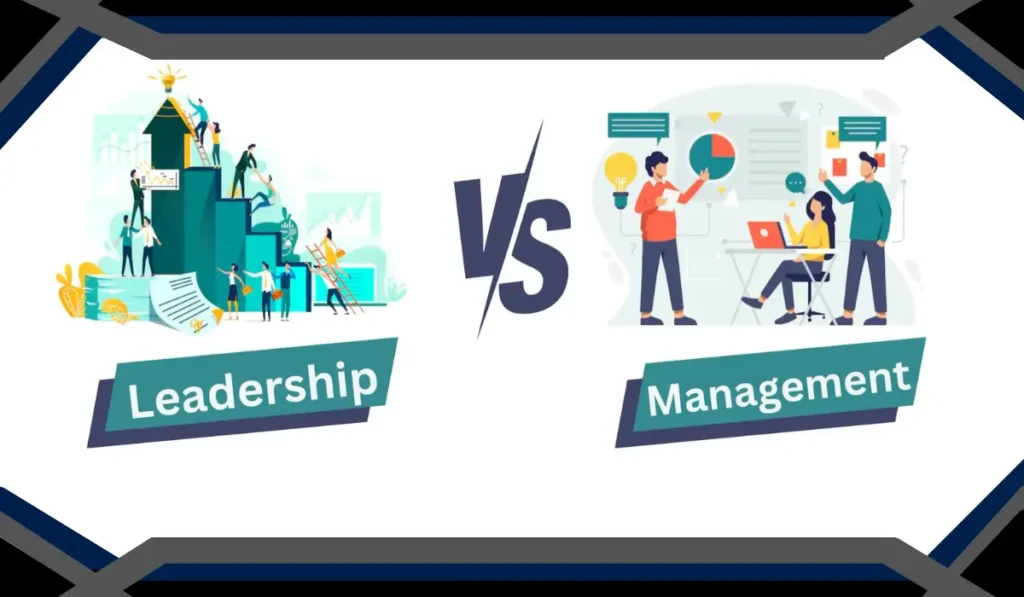
In today’s fast-changing workplace, understanding Leadership vs Management is essential for professionals who want to grow, influence teams effectively, and deliver consistent results. While the two terms are often used interchangeably, they represent distinct mindsets, skill sets, and approaches to guiding people and achieving organizational goals. Confusing them can lead to inefficiencies in teams, misaligned expectations, and missed opportunities for growth.
This article explores how leadership and management differ, where they overlap, and why both are necessary for long-term success in any organization.
Why the Distinction Matters in Modern Workplaces
Modern organizations operate in environments shaped by rapid technological change, hybrid work models, and increasing competition. In this context, professionals are expected not only to execute tasks efficiently but also to inspire innovation and adaptability within teams.
This is where understanding Leadership vs Management becomes critical. Management ensures structure, stability, and execution, while leadership drives vision, change, and motivation. Without clarity between the two, organizations risk becoming either too rigid or too unstructured.
Professionals who understand both perspectives are better equipped to handle complex responsibilities, from project delivery to team development and strategic planning.
Understanding Leadership vs Management
At its core, Leadership vs Management reflects two different ways of influencing people and outcomes.
Leadership is primarily about direction, inspiration, and influence. A leader focuses on setting a vision, encouraging innovation, and helping people see the bigger picture. Leadership is less about control and more about empowerment. Leaders ask questions like: Where are we going? Why does it matter? How can we grow beyond our current limits?
Management, on the other hand, is about planning, organizing, and ensuring that systems work efficiently. Managers focus on processes, timelines, resources, and performance tracking. They ensure that goals are broken down into actionable steps and completed on time.
While leadership leans toward vision and change, management leans toward structure and consistency. Both are essential, but they serve different purposes within an organization.
The Core Differences in Approach and Mindset
One of the most noticeable differences in Leadership vs Management lies in mindset.
Leadership is future-oriented. Leaders tend to focus on long-term impact, transformation, and possibilities. They are comfortable with ambiguity and often challenge the status quo. Their role involves motivating people to move toward a shared vision, even when the path is uncertain.
Management is present-oriented. Managers focus on execution, stability, and control. They ensure that daily operations run smoothly and that teams meet predefined objectives. Their approach is more systematic, relying on planning, budgeting, and performance measurement.
Another key distinction is how authority is exercised. Leaders often influence through trust and inspiration, while managers rely more on formal authority and defined roles.
Despite these differences, successful professionals recognize that both approaches are necessary depending on the situation.
Skills That Define Effective Leaders and Managers
In practice, Leadership vs Management also differs in the skills each role emphasizes.
Leadership requires strong emotional intelligence, communication, creativity, and the ability to inspire others. Leaders must be able to connect with people, understand their motivations, and guide them through uncertainty. They often act as role models who shape organizational culture.
Management requires analytical thinking, organizational skills, problem-solving, and attention to detail. Managers must coordinate resources, set priorities, and ensure accountability across teams. Their effectiveness is often measured by consistency, efficiency, and delivery.
While these skill sets differ, the most effective professionals develop both. A manager who can inspire and a leader who can organize becomes a powerful force within any organization.
How Leadership and Management Work Together
It is a mistake to view Leadership vs Management as opposing forces. In reality, they complement each other.
Leadership without management can lead to chaos. Vision without execution results in ideas that never materialize. On the other hand, management without leadership can create rigid systems that lack innovation and motivation.
Organizations thrive when both elements are balanced. Leaders provide direction and purpose, while managers translate that vision into actionable steps. For example, a leader may define a strategic goal such as entering a new market, while managers break it down into operational plans, budgets, and timelines.
This synergy ensures that organizations not only dream big but also execute effectively.
When Leadership Matters More Than Management
There are situations where leadership becomes more critical than management. During periods of change, uncertainty, or innovation, teams need direction and reassurance more than strict control.
For example, in a company undergoing digital transformation, employees may feel uncertain about new technologies and processes. In such cases, leadership plays a key role in communicating vision, reducing resistance, and encouraging adaptability.
In these moments, Leadership vs Management shifts in emphasis toward leadership, as people need motivation and clarity rather than rigid oversight.
When Management Takes Priority
Conversely, there are times when management becomes more important. In stable environments where efficiency, consistency, and precision are critical, strong management ensures that operations run smoothly.
Industries such as manufacturing, logistics, and healthcare often rely heavily on structured processes. Here, attention to detail, compliance, and coordination are essential.
Even in creative industries, strong management ensures that deadlines are met and resources are used effectively. Without it, even the most innovative ideas can fail due to poor execution.
Common Misunderstandings About Leadership and Management
A common misconception in discussions about Leadership vs Management is that leadership is inherently more valuable than management. This is not true. Both are equally important, but they serve different purposes.
Another misunderstanding is that leaders are only found at the top of an organization. In reality, leadership can exist at any level. Employees who take initiative, influence peers positively, and contribute to solutions demonstrate leadership qualities even without formal authority.
Similarly, management is not limited to job titles. Anyone responsible for organizing tasks, meeting deadlines, or coordinating resources is practicing management in some form.
Recognizing these realities helps organizations build stronger, more flexible teams.
Developing Both Leadership and Management Skills
Professionals who want to grow in their careers should focus on developing both sides of Leadership vs Management.
This involves cultivating vision while also strengthening execution skills. For example, improving communication helps with leadership, while learning project planning tools enhances management capability. Seeking feedback, taking ownership of projects, and working across teams can also help build both skill sets over time.
Organizations increasingly value individuals who can switch between leading and managing depending on the situation. These hybrid professionals are often more adaptable and effective in complex roles.
The Evolving Role of Professionals in Modern Organizations
The modern workplace no longer strictly separates leaders and managers. Instead, roles are becoming more fluid. Employees are expected to lead initiatives while also managing responsibilities efficiently.
This evolution makes Leadership vs Management less about fixed roles and more about flexible capabilities. Professionals who understand when to lead and when to manage are better prepared for career advancement and organizational impact.
As businesses continue to evolve, the demand for this dual capability will only increase.
Conclusion
In conclusion, understanding Leadership vs Management is crucial for anyone aiming to succeed in today’s professional world. While leadership focuses on vision, inspiration, and change, management emphasizes structure, execution, and consistency. Neither is superior to the other; both are essential for organizational success.
The most effective professionals are those who can balance the two-knowing when to inspire and when to organize, when to innovate and when to stabilize. By developing both leadership and management skills, individuals not only enhance their own careers but also contribute significantly to the success of their teams and organizations.
Also Read: The New Rules of Online Reputation Building