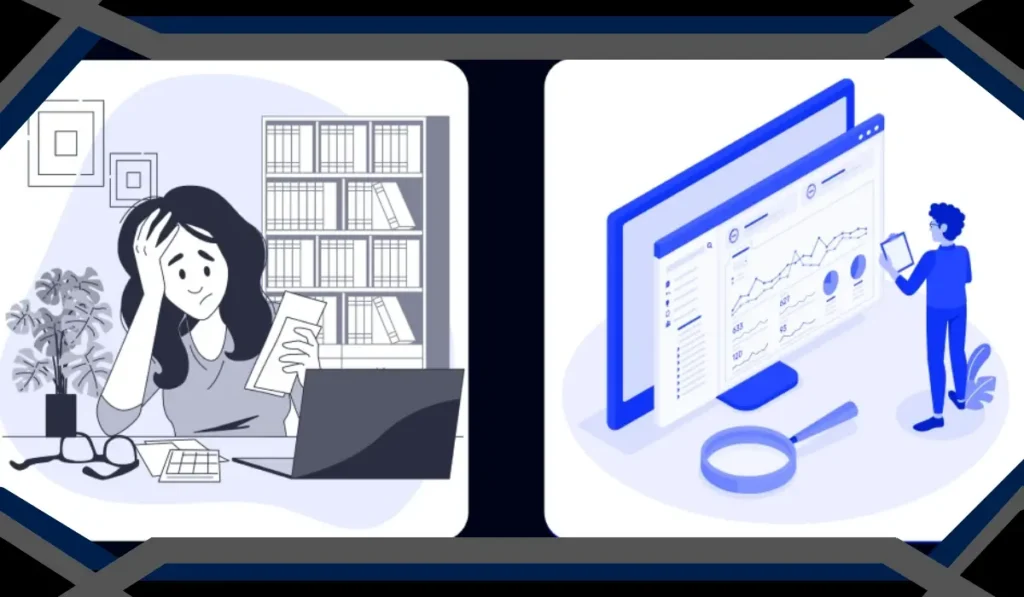
Technology Replacing Traditional Business decision-making is reshaping how organisations operate, compete, and grow in an increasingly digital economy. What once relied heavily on managerial intuition, experience, and delayed reporting is now being transformed by real-time data, artificial intelligence, and predictive analytics that deliver faster and more accurate insights. Businesses are no longer asking whether they should adopt technology in decision-making, but how quickly they can integrate it before competitors outpace them.
This transformation is not just a trend-it represents a structural shift in how decisions are formed, validated, and executed across industries.
The Evolution of Business Decision-Making
For decades, traditional business decision-making was largely hierarchical. Senior executives relied on periodic reports, historical performance data, and gut instinct to guide strategy. While this approach worked in relatively stable markets, it often struggled in environments where rapid change demanded agility.
Decisions were slow because data collection itself was slow. By the time information reached decision-makers, market conditions could already have shifted. This gap between data and action created inefficiencies, missed opportunities, and reactive rather than proactive strategies.
The introduction of digital systems began to close this gap, but it is only in recent years-driven by cloud computing, big data, and machine learning-that businesses have truly begun to replace traditional decision-making frameworks with technology-first models.
Rise of Data-Driven Decision Making
Modern organisations now operate in an environment where data is continuously generated from customer interactions, supply chains, social media, and internal systems. This has given rise to data-driven decision-making, where choices are guided by measurable evidence rather than assumptions.
Instead of relying on quarterly reports, businesses can now access dashboards that update in real time. These systems allow leaders to understand what is happening at any moment, rather than what happened weeks or months ago.
The shift to data-centric thinking has also reduced reliance on subjective judgment. While human experience remains valuable, it is increasingly supported-or even challenged-by insights derived from large datasets that reveal patterns invisible to traditional analysis methods.
This evolution has made organisations more responsive, more accurate, and significantly more competitive in fast-moving industries such as retail, finance, and logistics.
Artificial Intelligence and Automated Decision Systems
Artificial intelligence has become one of the most powerful forces accelerating the replacement of traditional decision-making models. AI systems are capable of analysing massive datasets in seconds, identifying patterns, and making recommendations that would take humans far longer to produce.
In many industries, AI is no longer just a support tool-it actively participates in decision-making. For example, in supply chain management, AI systems can automatically adjust inventory levels based on demand forecasts. In marketing, algorithms can determine which audience segments are most likely to convert and allocate advertising budgets accordingly.
What makes AI particularly transformative is its ability to learn and improve over time. Unlike traditional decision frameworks that remain static until revised manually, AI systems continuously refine their outputs based on new data inputs.
This shift reduces human bias in decision-making while increasing speed and precision, although it also raises concerns about transparency and accountability in automated systems.
Real-Time Analytics and Instant Business Intelligence
One of the most significant changes in modern business environments is the move from delayed reporting to real-time analytics. Traditional decision-making often depended on monthly or quarterly reports, which meant leaders were always reacting to past events.
With real-time analytics platforms, businesses can now monitor performance as it happens. This immediacy allows for quicker adjustments in pricing, operations, customer service, and marketing strategies.
For instance, e-commerce platforms can track customer behaviour in real time and adjust product recommendations instantly. Similarly, financial institutions can detect unusual transactions within seconds, improving both efficiency and security.
This constant flow of information reduces uncertainty and enables decision-makers to act with greater confidence. As a result, organisations are increasingly relying on technology systems to make operational decisions autonomously, reducing the need for manual intervention.
Predictive Analytics and Future-Oriented Strategy
Beyond understanding what is happening now, businesses are increasingly focused on what will happen next. Predictive analytics plays a crucial role in this shift by using historical and real-time data to forecast future outcomes.
Instead of reacting to market changes, companies can anticipate them. Retailers can predict seasonal demand, healthcare providers can anticipate patient admission rates, and financial institutions can assess credit risk more accurately.
This forward-looking capability fundamentally changes the nature of decision-making. Traditional models focused on reacting to known problems, whereas predictive systems allow businesses to prepare for scenarios before they occur.
The integration of predictive analytics into core business functions is one of the clearest examples of how technology is replacing traditional business decision-making with proactive, intelligence-led strategies.
Cultural and Organisational Challenges
Despite its advantages, the shift toward technology-driven decision-making is not without challenges. Many organisations struggle with cultural resistance, especially in environments where leadership has long relied on experience and intuition.
There is often hesitation to trust automated systems, particularly when decisions involve high stakes or long-term consequences. Employees may also fear that increased automation reduces the value of human judgment or threatens job security.
Additionally, integrating advanced technologies requires investment in infrastructure, training, and change management. Without proper alignment, even the most advanced systems can fail to deliver meaningful improvements.
However, organisations that successfully navigate these challenges often find that technology enhances rather than replaces human decision-making. The key lies in balancing automation with oversight and ensuring that employees understand how to interpret and act on technological insights.
Human Intelligence and Machine Collaboration
Although technology is increasingly central to decision-making, human intelligence remains essential. The most effective modern organisations do not fully replace human judgment; instead, they combine it with machine intelligence.
Technology excels at processing data, identifying patterns, and generating predictions. Humans excel at interpreting context, understanding emotional and ethical considerations, and making strategic decisions that require creativity and intuition.
This collaboration creates a hybrid decision-making model where machines provide insights and humans provide direction. For example, an AI system might recommend a pricing adjustment, but a human manager evaluates whether it aligns with brand positioning and long-term goals.
Rather than eliminating traditional decision-making, technology is reshaping it into a more informed and balanced process.
The Future of Business Decision-Making
The future of decision-making will likely be defined by even deeper integration of automation, artificial intelligence, and autonomous systems. As technology continues to evolve, businesses may increasingly rely on systems that not only recommend decisions but execute them independently within predefined parameters.
Edge computing, advanced machine learning models, and intelligent automation will further reduce the time between data collection and action. In some industries, decision cycles may become almost instantaneous.
However, this future also raises important questions about control, ethics, and accountability. As machines take on greater responsibility, organisations will need to establish clear frameworks to ensure transparency and responsible use of technology.
Ultimately, the businesses that succeed will be those that effectively combine technological capability with human oversight, ensuring that decisions are not only fast and data-driven but also ethical and strategically sound.
Conclusion
The transformation brought by digital innovation marks a clear shift away from traditional methods of business judgment. Technology Replacing Traditional Business decision-making is not simply about automation-it represents a fundamental change in how organisations think, plan, and act.
From real-time analytics to predictive intelligence and AI-driven automation, technology is enabling faster, smarter, and more accurate decisions than ever before. However, the human element remains crucial in guiding strategy, interpreting insights, and ensuring ethical responsibility.
As this evolution continues, businesses that embrace technology while preserving human oversight will be best positioned to thrive in an increasingly complex and competitive world.
Also Read: The Rise of Micro-Brands: Why Small Businesses Are Winning Big Online