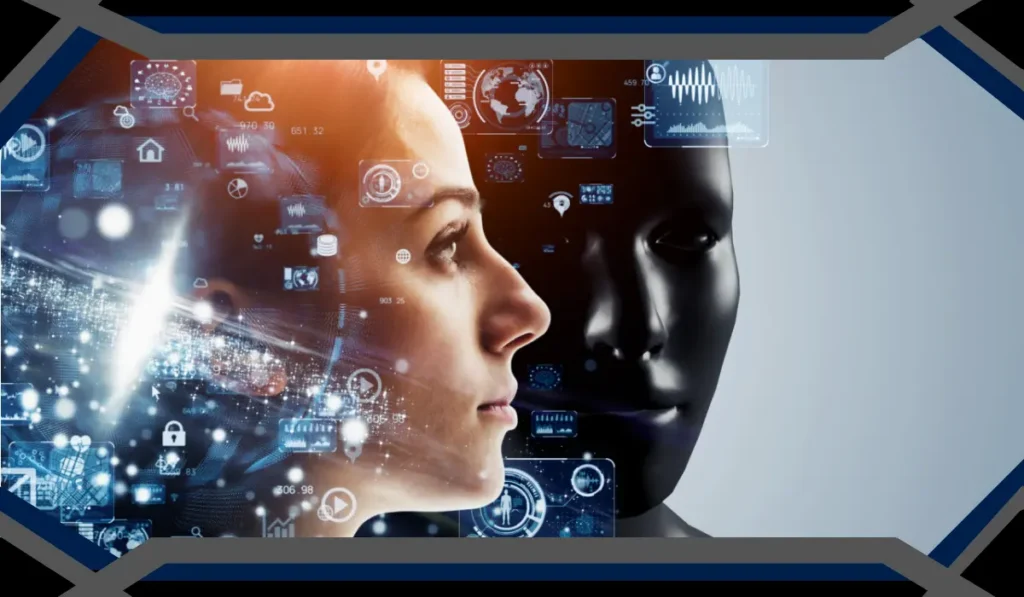
Personal Branding in the AI Era is no longer just about having a polished LinkedIn profile or a consistent social media presence. It has evolved into a dynamic, data-driven, and highly adaptive ecosystem where individuals are continuously shaped, interpreted, and even amplified by artificial intelligence. As AI systems become more integrated into search engines, content platforms, hiring tools, and digital communication channels, the way people build and maintain their personal identity online is undergoing a profound transformation.
What once relied heavily on manual effort and slow organic growth is now influenced by algorithms that analyze behavior, predict credibility, and curate visibility in real time. In this shifting landscape, personal branding is becoming less about static self-presentation and more about ongoing digital intelligence, authenticity signals, and strategic adaptability.
AI as the New Architect of Digital Identity
Artificial intelligence is fundamentally changing how individuals are discovered, evaluated, and remembered online. Search engines no longer rely solely on keywords and backlinks; they now interpret intent, sentiment, and authority through machine learning models. Social media platforms prioritize engagement patterns and behavioral predictions over chronological posting. Even recruitment systems are increasingly using AI to screen candidates based on inferred personality traits and digital footprints.
In this environment, identity is no longer fully controlled by the individual. Instead, it is co-authored by algorithms that decide which parts of a person’s digital presence are amplified and which are buried. This creates both opportunity and complexity. A well-structured personal brand can achieve unprecedented reach, but inconsistencies or lack of clarity can lead to fragmentation across platforms.
Personal Branding in the AI Era therefore requires individuals to think beyond content creation and consider how machines interpret their digital signals. Every post, comment, collaboration, and even passive engagement contributes to a larger narrative that AI systems continuously analyze and redistribute.
From Static Profiles to Living Digital Ecosystems
Traditional personal branding once revolved around static representations: resumes, portfolios, and carefully curated social profiles. Today, that model is rapidly becoming obsolete. AI-driven platforms are pushing individuals toward what can be described as living digital ecosystems—constantly evolving representations of who they are, what they know, and how they contribute.
These ecosystems are shaped by real-time data streams. Articles written years ago may resurface based on new relevance signals. A single viral post can redefine professional perception overnight. Machine learning systems connect dots across platforms, building increasingly complex profiles that reflect behavior rather than intention alone.
This shift means that personal branding is no longer a one-time effort but an ongoing process of alignment between identity, output, and perception. Consistency matters, but so does adaptability. Individuals must learn to operate within systems that are constantly learning about them, adjusting visibility based on perceived expertise, trustworthiness, and engagement value.
In this evolving context, Personal Branding in the AI Era becomes less about controlling a narrative and more about guiding an algorithmic interpretation of that narrative over time.
Content Creation, Automation, and the Authenticity Challenge
One of the most significant disruptions brought by AI is in content creation itself. Generative models can now produce articles, videos, images, and even entire marketing campaigns in seconds. This has dramatically lowered the barrier to entry for online visibility, but it has also saturated digital spaces with synthetic content.
As a result, authenticity has become one of the most valuable assets in personal branding. Audiences and algorithms alike are becoming more sensitive to signals that indicate genuine human experience. Tone, storytelling depth, originality of thought, and lived expertise are increasingly used as differentiators in an environment where content volume is infinite.
However, the challenge lies in balance. Over-automation can dilute individuality, while underutilizing AI tools can limit reach and efficiency. Successful personal branding now depends on the ability to integrate AI as a creative partner without losing the human essence that makes a brand relatable and trustworthy.
In Personal Branding in the AI Era, the most effective individuals are not those who avoid automation, but those who strategically use it to amplify their voice while maintaining authenticity as a core principle.
Trust, Credibility, and Human Differentiation in an AI-Driven World
As digital environments become more automated, trust becomes the ultimate currency. When audiences are unsure whether content is human-generated or machine-generated, credibility signals become essential. These signals include consistency in messaging, depth of insight, transparency of identity, and verifiable expertise.
AI systems are also increasingly responsible for determining credibility. Recommendation engines, ranking algorithms, and content moderation systems all play a role in shaping perceived authority. This creates a dual-layer trust system: one that exists between humans and one that is mediated by machines.
To stand out, individuals must emphasize what AI cannot easily replicate—emotional intelligence, nuanced perspective, and lived experience. These human traits become the foundation of differentiation in a space where technical content generation is no longer a competitive advantage.
The evolution of Personal Branding in the AI Era is therefore deeply tied to the ability to build trust in both human and algorithmic ecosystems simultaneously.
Navigating Growth in Algorithmically Curated Environments
Growth in today’s digital landscape is no longer purely organic. Algorithms decide visibility thresholds, content distribution, and audience reach. This means that personal branding strategies must account for machine learning systems that reward engagement patterns, retention signals, and behavioral consistency.
Instead of chasing virality, sustainable personal growth now depends on understanding how platforms interpret value. Depth of engagement often matters more than volume of reach. Meaningful interactions, repeat audience behavior, and cross-platform coherence all contribute to stronger algorithmic positioning.
At the same time, individuals must remain aware that algorithms are not static. They evolve constantly, reshaping what is prioritized and what is ignored. This requires a mindset of continuous experimentation and adaptation rather than fixed strategy execution.
Within this context, Personal Branding in the AI Era becomes a long-term interplay between human intention and machine interpretation, where success is determined by alignment rather than control.
The Future: AI-Augmented Identity and Reputation Systems
Looking ahead, personal branding is likely to become even more deeply integrated with AI-driven identity systems. Digital identities may evolve into unified profiles that span across platforms, professions, and even physical-digital boundaries. Reputation will not only be based on what individuals say or create but also on how AI systems interpret their overall behavioral footprint.
We are moving toward a world where personal branding is continuously updated by intelligent systems that track expertise, credibility, and influence in real time. AI assistants may eventually help individuals manage their reputation, suggest content strategies, and even predict how certain actions might impact their digital standing.
In such a world, the boundaries between personal identity and algorithmic representation will continue to blur. Individuals will need to become more intentional about how they interact with digital systems, understanding that every interaction contributes to a long-term data narrative.
The evolution of Personal Branding in the AI Era will ultimately reflect a broader shift in human identity itself—one where presence is no longer just physical or digital, but algorithmically interpreted and continuously reshaped.
Conclusion
The rise of artificial intelligence is redefining what it means to build and sustain a personal brand. It is no longer sufficient to simply present oneself online; individuals must now navigate a complex ecosystem where machines interpret, amplify, and sometimes distort their identity.
Success in this environment depends on adaptability, authenticity, and an understanding of how AI systems influence visibility and trust. While technology continues to evolve, the core of personal branding remains deeply human-rooted in storytelling, expertise, and meaningful connection.
Ultimately, Personal Branding in the AI Era is not just a marketing concept but a reflection of how human identity is being reshaped in a world where intelligence is no longer exclusively human.
Also Read: Content Marketing vs Social Media Marketing: What Works Best for Growth?