Successful Blog

  • Home
  • Community
  • About
  • Author Guidelines
  • Liz’s Book
  • Stay Tuned

Invest In Your Health For Business Success

March 30, 2017 by Rosemary

By Deb Bixler

Home business owners rarely think about business assets, and when they do, there is one asset they often overlook.

When you work for yourself it is not unusual to become engulfed in the pursuit of income and forget to invest in your most important asset.

Your Most Important Business Asset

Your health is your greatest business asset and you should treat it as such.

With all the activities that need attention in a home business combined with the busy lifestyle of the 21st century, it is easy for a business owner to put their health aside for future consideration, but this is a big mistake.

When your life is balanced between personal and business time, you can prioritize your health and be a more productive employee working for yourself.

Working with a schedule is often the best way to go. Create a schedule that matches the results you want in your business.

If you want a full-time income then plan to work full-time hours. Schedule 40 hours a week for business activities.

For those who want a part-time work-at-home commission schedule, your work hours need to be between 20-30 per week.

While the desired income won’t immediately start flowing, a consistent, steady and balanced schedule that you consistently and steadily work year-round will create the income you desire.

When you take personal time off, you will be more productive and focused in the office. Many major corporations are switching their work ethics to a balanced approach as science shows that fewer work hours and more personal time makes for better employees.

Less work means less stress and a more productive worker.

There is nothing more important than your health because without it, you have no life.

Take the time to exercise! You don’t have to go to the gym, just incorporate everyday activities such as a simple walk to make a big impact on your long-term health.

Health Is Your Best Business Asset

Rarely do we equate the food we eat to our work performance, but what we eat affects us more than we think!

Did you ever notice how difficult it is to concentrate when you are hungry?

Food has a direct impact on our cognitive performance, which is why a poor decision at lunch can derail an entire afternoon.

When you make poor food choices you can have a tough time staying focused and performance drops.

Make a plan to eat three small balanced meals a day and three healthy snacks in between to satisfy between-meal cravings and prioritize your health!

Your Best Business Asset

Your health is the best business asset you have. Invest in it regularly and it will pay off handsomely.

If you work hard and make a fortune it will mean nothing if you don’t protect your greatest business asset… your health.

About the Author:
Deb Bixler is a trained chef turned passionate speaker who focuses on sales education and healthy living. As a party plan trainer she focuses on systems for direct sellers at the CashFlowShowRadio.com and her healthy food website can be found at WowFoodTips.com.
Filed Under: Personal Development, Productivity Tagged With: health, Productivity

Shifting your mind from consumption to reflection

March 23, 2017 by Rosemary

Yesterday I had the great pleasure of participating in a Periscope with my friend Paul O’Mahoney, one of our SOBCon/GeniusShared tribe.

It was a light-hearted, general conversation among a global group of acquaintances. (If you don’t follow Paul on Periscope, you really should; he reads Walt Whitman and shares his witty perspectives from Cork, Ireland.)

At one point, Paul asked if anyone was a reader, and we all started sharing our favorite topics and authors. Then someone (forgive me, I can’t remember who it was) asked, “does reading make you clever?”

Without a moment’s hesitation, Paul responded, “no, reflection makes you clever.”

That insight has simmered in my consciousness all day.

You can read every novel, every blog post, every textbook, and not gain a thing if you don’t take time to meditate on and consider the art you’re consuming.

Yes, read. Read whatever sparks your imagination. Read voraciously and with abandon.

But take the time to reflect as well.

Author’s Bio: Rosemary O’Neill is an insightful spirit who works for Social Strata — makers of the Hoop.la community platform. Check out the Social Strata blog. You can find Rosemary on Google+ and on Twitter as @rhogroupee

Filed Under: Personal Development Tagged With: reading

5 Nifty Time Tracking Resources for Entrepreneurs (updated)

March 8, 2017 by Rosemary

One of my first jobs was as a real estate settlement coordinator, and I learned valuable lessons being thrown into the fiery brew of emotional sellers, unreliable home inspectors, and mortgage refinance. The habit that has stuck with me the longest, however, is logging how I spend my time each day at work.

In that first job, it was crucial to note my contacts, how much time was spent, and who promised to do what. On day one, my boss gave me a legal pad and told me to keep a running log of my day. She said, “trust me, you’ll be glad you did.”

The first time I got into a dispute about whether a certain termite report was supposed to be submitted, I was able to say, “on February 22nd at 10:30am, you committed to sending that report by today.” BOOM.

In a subsequent job, I worked on a government contract, where I had to designate (at an hourly level) which project I was working on. (Also on paper, pre-Internet.)

Whether you are trying to track your activities for accounting purposes or for productivity, it’s much easier now. (I still log my days in a Moleskine, though– old habits die hard.)

These five apps will help you track and manage your time much more efficiently than my old legal pad.

1. TSheets

Tsheets is one of the most popular time tracking and scheduling apps, approaching its 11th birthday.

  • TSheets is the only time tracking app embedded into QuickBooks Online
  • See who’s working, their GPS location, and what they’re working on straight from your phone or computer
  • Create, update, and dispatch employee schedules on the fly
  • Turn a tablet into a mobile punch clock on any job site with TSheets Kiosk
  • Take advantage of resources on gig-style time tracking on their Mobile App page

In June 2008, Liz Strauss did a 4-part interview with Matt Rissell, CEO of TSheets, with lots of insights regarding time tracking.

2. Weekplan.net

Weekplan is currently beloved by more than 300,000 users. Its simple layout is based on time-tested management techniques. They include a free multi-step online course on time management.

  • Uses a weekly grid based on importance and urgency to track time allotted to tasks.
  • Balance your time with a role-based system.
  • Pomodoro timer integrated to keep you focused.
  • Syncs with Google Calendar and provides analytics (ultimate plan).

3. Toggl

Toggl claims to “drive a stake in the heart of timesheets,” which sounds great to me! The whole point is to make it so easy that you don’t forget to use it, and Toggl succeeds.

  • Useful for teams, with billable rates and time audit tools.
  • Includes project management tools.
  • Integrates with lots of other tools, including Asana, Freshbooks, and Basecamp.
  • Track time automatically or manually, with tagging and projects.

4. Timely

I fell in love with Timely when I saw on their site that it was “meticulously designed by vikings from Oslo, Norway.” A productivity app with a sense of humor. Timely’s secret sauce is the gorgeous calendar-based interface, which makes it simple to just dive in and start tracking.

  • Sync meetings and calendar events into the app.
  • Set money or time-based project budgets and then track progress toward the goal.
  • Understand how the time is being spent with tags and subtags.
  • Integrate with other apps like Trello or email, and keep a detailed activity log.

5. Time

The guys at Blue Cocoa (two teenagers) are going to have a hard time with their SEO strategy, but their Time app is really cool. It functions mostly as a to do list, but I include it here as a time tracker because that’s how I’ve been using it.

  • Click any to do item to start a color-coded timer that changes as the time ticks down.
  • Easily just drag to reorder, add/delete, or shift the timeframe for any task.
  • If you take too long, it goes into “overtime” with a red timer, to push you to finish.
  • Stats and insights into how you’ve spent your time.
  • Powered by artificial intelligence, which learns your behavior and offers tailored suggestions to help.

BONUS: TimeCamp

TimeCamp is time tracking & invoicing software that helps to increase your team’s productivity. It records every minute of the task your team is working on, shows results in clear reports and allows you to square up with clients accurately.

  • Includes reporting, budgeting, and billable hours.
  • Integration with several project management platforms, including Asana, Podio, and Trello.
  • Track attendance and time off.
  • See project profitability, and see problems before they arrive.

EXTRA BONUS: ProjectManager.com

ProjectManager.com goes beyond time tracking and covers the whole waterfront of project management. It’s a complete online suite of tools to manage a project from start to finish.

  • Includes real-time customizable project dashboard that tells you at-a-glance whether your projects and your team are on track.
  • Create, monitor and share your project plans online, with multiple views for your team. As they work on tasks, your project plan updates automatically in real-time.
  • Create executive-ready status reports with the push of a button. You can export and share your reports as a PDF, Word or Excel file.
  • Manage your team’s workload across the board, and have timesheets auto-filled with last week’s tasks.

EXTRA EXTRA BONUS: HubStaff

HubStaff is time tracking software with screenshots, app & internet monitoring, employee payroll system, and 30+ integrations.

  • Set the maximum number of hours you want a member to be able to work in a week and the app will automatically prevent them from exceeding the limit.
  • GPS monitoring and time tracking apps for iOS and Android allow you to track time while on the go and reports on your location.
  • See which applications your team members are using and what URLs they are browsing, while tracking time.
  • Add your team’s one-time or recurring shifts to the work calendar easily.

SUPER EXTRA BONUS: Time Doctor

Time Doctor is a SaaS time tracking and productivity tool that helps you and your team get a lot more done each day. This software helps you see exactly where time is spent in your business, or for individuals to improve productivity.

Hubstaff and Time Doctor are the two most popular time management apps used in the market today. Learn the pros and cons of using each app in this quick guide to Hubstaff vs Time Doctor.


What’s your favorite time management tool right now?


Author’s Bio: Rosemary O’Neill is an insightful spirit who works for Social Strata — makers of the Hoop.la community platform. Check out the Social Strata blog. You can find Rosemary on Google+ and on Twitter as @rhogroupee

Filed Under: Productivity Tagged With: time tracking

How to Get Back on Track When Your Coaching Habit Slips

March 2, 2017 by Rosemary

By Michael Bungay Stanier

A company’s success lies in its employees, so it’s no surprise that good leaders are always looking for ways to help their employees learn and develop at work. The best practices have changed over the years, but arguably one of the best things you can do for your employees (and for yourself, in the end) is coach them.

We all need to coach for performance when issues arise, but I’m talking about coaching for development — the kind of coaching that benefits everyone involved, as it helps employees learn, it encourages managers to step back and it allows us all to do that great work we set out to do.

The best way to do this is to create a new habit and start coaching on a daily basis.

The Key to Coaching

You’ve probably already attempted to coach your employees in one way or another, but did you know that the key to coaching is asking questions? In my book The Coaching Habit, I explore how asking more questions is what really helps drive employees.

It’s simple, really: Stay quiet a little longer, offer less advice and ask more questions.

Perhaps you’ve already noticed this approach works and you’re trying to implement it as a new coaching habit. Good for you! You’re looking for ways to better your work environment and encourage those around you, while also eliminating your tendency to jump in and take over.

At some point, you will stumble. You might accidentally take over a project with the good intention of helping. Or offer advice before asking an employee for their thoughts. Or start fixing an issue that isn’t the actual challenge that needs to be addressed. It’s okay, you’re human. And hey, you’re likely just trying to help.

When that happens, all you’ll need is to have a plan for how to get back on track.

Make Your Habit a Resilient System

The secret to building a resilient system is to build in a fail-safe so that when something breaks, it’s easy to recover from it. You can do just that with your coaching habit: build in your own fail-safe. That’s the first step to creating a habit that’s hard to break.

Chances are, if you’re trying something new, you’ll encounter some resistance. If your employees usually come to you for advice and you start asking questions instead of offering answers, it might take them some time to adapt to your new coaching style. It might take you time to adapt also — asking questions instead of offering advice when we’re used to the latter can be difficult!

Make a Plan

To make your habit a resilient system, create a plan to get started, one which includes a way to circle back when the road gets bumpy. Here are some ideas for getting going:

Try out your new habit on someone who you think would make a good guinea pig, or on someone with whom you’ve run out of ideas, so you’ve got nothing to lose.

Start small. You don’t need to change everything all at once. Maybe you begin by asking a few questions here and there and then gradually incorporate more as you gain confidence in your system.

Get someone else involved. Tell a colleague what you’re trying to accomplish and ask them to do it too. You can encourage each other and hold one another accountable, and even practice together.

Deal with Setbacks

These strategies are all part of a great plan, but even together they won’t always do the trick.

You might feel awkward when you first try to implement a new habit at work; the resistance you encounter might make you feel incompetent or you might revert back to old habits without meaning to. These types of setbacks are bound to happen; you just need to know how to deal with them.

When you feel like surrendering, remember why you committed to making a change in the first place. This will remind you of the payoff and encourage you to not give up. Concentrate on what you’re really committed to doing, and then decide what you can let go of in order to refocus your energy.

Learn to adapt. Maybe you’ve fallen off track because you’re having a hard time rolling with the punches. You’re asking the questions, but they aren’t being well received. You’re talking less, but your employees aren’t jumping in more. That’s okay — everyone operates differently and there are many ways to approach people. Be ready to adapt and work with your team’s differences. Ask yourself what is working and what isn’t, and figure out what you should stop doing and what you can do more of. Build in time to reflect as part of your plan for getting back on track.

Connect with people. If you’re not immediately successful in creating your new habit, check in with those you’ve been trying it on. Check in with your accountability buddy and ask for feedback.

You’ve made the choice to build a new coaching habit. Be bold, don’t be afraid to keep trying — and don’t add more to your plate. Focus on what’s essential and keep practicing. Get back on the horse and keep on with your original plan.

The same goes for any habit you’re trying to build — this doesn’t apply just to my suggested coaching habit.

Regardless of the behavior you’re trying to change, remember that people make mistakes and that you just need to persevere. Eventually, if you’re committed, the new habit will stick and you’ll worry less about it and focus more on how that habit is positively affecting your workplace.


About the Author:

Author of The Coaching Habit, Michael Bungay Stanier is Senior Partner of Box of Crayons, a company that helps organizations do less Good Work and more Great Work. It is best known for its coaching programs, which give busy managers practical tools to coach in 10 minutes or less.

Download free chapters of Michael’s latest book, The Coaching Habit: Say Less, Ask More & Change the Way You Lead Forever, here.

Filed Under: Leadership Tagged With: coaching, leadership

Book Review: Known, The Handbook for Building and Unleashing Your Personal Brand in the Digital Age

February 23, 2017 by Rosemary

All of the personal branding gurus out there are leaving out an important piece of the puzzle.

Yes, you should try to discover your life’s passion. But what’s next?

According to Mark W. Schaefer, consultant, speaker, and author of Known, the missing piece is applying your passion in service of a long-term goal.

For example, talking about my obsession with cupcakes is not going to help my personal brand unless I’m opening a bakery.

Mark is a masterful teacher, and he uses extensive interviews with successful people to give the reader actionable advice. He pulls back the curtain on regular people who found the right niche, built an engaged audience, and then patiently activated that audience to achieve a goal.

He’s the right person to talk about this subject, since he left the corporate world and started over as a consultant, using blogging as his calling card to become known in a new professional niche. His blog, {grow}, is now one of the top marketing blogs in the world.

My favorite thing about this book is that it’s written in Mark’s inimitable voice, as if you’re old friends. It’s not a stuffy, by-the-numbers business book.

Each person interviewed brings a new insight to the story, whether it’s the “grandpa who shoots things on YouTube,” or the blogging pediatrician. You’ll just have to read the book to meet these interesting characters.

There is also a separate workbook that takes the lessons from the book and provides a step-by-step walkthrough of the process to become “known.” Each question or prompt will provoke deeper thought and encourage you to put some meat on the bones of your professional plan.

I’d recommend this book to anyone who is struggling to be heard and recognized above the din. You’ll find inspiration and solid ideas in one entertaining package.


Disclosure: I consider Mark a friend, but he did not request this review or send me a free book (what’s up with that?). I forked out my own hard-earned dollars to purchase it, and these are my unvarnished opinions.


Author’s Bio: Rosemary O’Neill is an insightful spirit who works for Social Strata — makers of the Hoop.la community platform. Check out the Social Strata blog. You can find Rosemary on Google+ and on Twitter as @rhogroupee

Filed Under: Business Book Tagged With: book review

My Productivity Secret Weapon

February 9, 2017 by Rosemary

If your work involves spending any significant amount of time online, you’re always going to be vulnerable to distraction.

Ooh pictures of baby hedgehogs…

Every tab you keep open in your browser represents an opportunity to wander down the garden path. That’s fantastic if you need creative inspiration or you’re spending some downtime. It’s destructive if you’re working against a deadline or trying to “move the big rocks.”

Hey, a new recipe for enchiladas…

Today, I wanted to share my single most effective productivity secret weapon. (Full disclosure: my amazing husband kept telling me about this and I only recently downloaded and fell in love with it.)

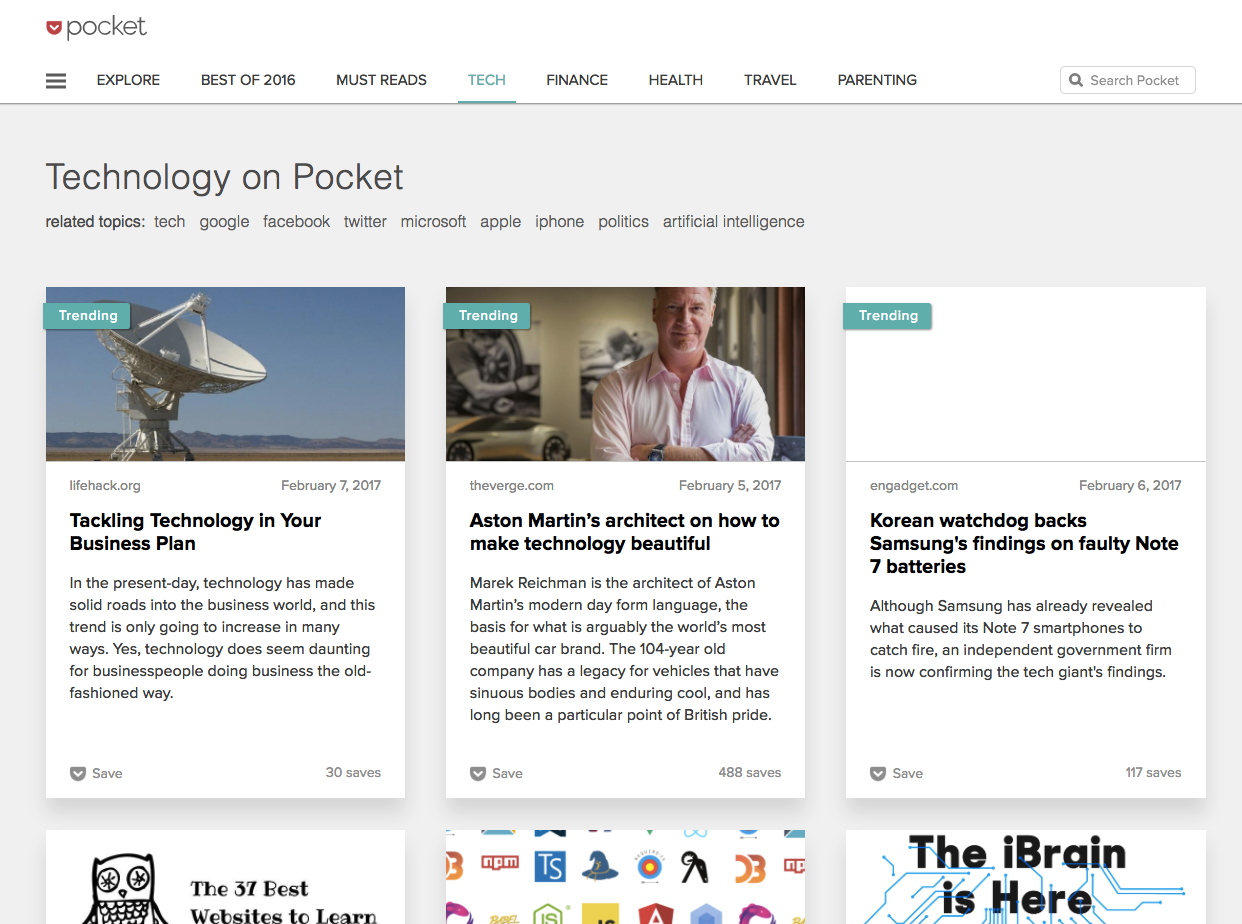
It’s called Pocket and if you use it effectively, it can really keep you focused and organized.

Pocket

Once you sign up for an account, you have a space where you can save articles or web pages of interest. There’s a browser-based interface and an app for your phone, so you can save things from anywhere.

The superpower comes in when you use the browser extension button (it’s available for Chrome, Safari, Opera, and MS Edge). With the extension, you get a tiny magic button in your browser bar. Any time you find yourself on a distracting website, just click the magic button and it’s saved for later.

Yes, you can save fun things like hedgehog pictures and recipes, but you can also use tagging to organize and separate the leisure items in the list from the business-related content. I’ve got tags set up for “research” and “marketing planning” as well as “recipes.”

Sometimes magic happens when the random content you’ve been reading collides with a real-world business requirement. Remember the scene in Working Girl where Melanie Griffith pulls out her “idea” folder and shows Mr. Trask how she put together Trask and radio?

Pocket is my “idea” folder and my distraction terminator. Did I mention that it’s free for most functions? There is also a premium option that adds advanced search, permanent saving of pages (protects against website changes), and other goodies.

I wasn’t asked to promote Pocket, and I’m not an official “ambassador,” but it’s made such a big difference to me that I had to share it!

How do you defend against distraction?


Author’s Bio: Rosemary O’Neill is an insightful spirit who works for Social Strata — makers of the Hoop.la community platform. Check out the Social Strata blog. You can find Rosemary on Google+ and on Twitter as @rhogroupee


Featured image via Flickr CC: Chief Trent

Filed Under: Productivity Tagged With: content_tool, Productivity

  • « Previous Page
  • 1
  • …
  • 4
  • 5
  • 6
  • 7
  • 8
  • …
  • 84
  • Next Page »

Recently Updated Posts

Is Your Brand Fan Friendly?

How to Improve Your Freelancing Productivity

How to Leverage Live Streaming for Content Marketing

10 Key Customer Experience Design Factors to Consider

How to Use a Lead Generation Item on Facebook

How to Become a Better Storyteller


From Liz Strauss & GeniusShared Press

  • What IS an SOB?!
  • SOB A-Z Directory
  • Letting Liz Be

© 2025 ME Strauss & GeniusShared