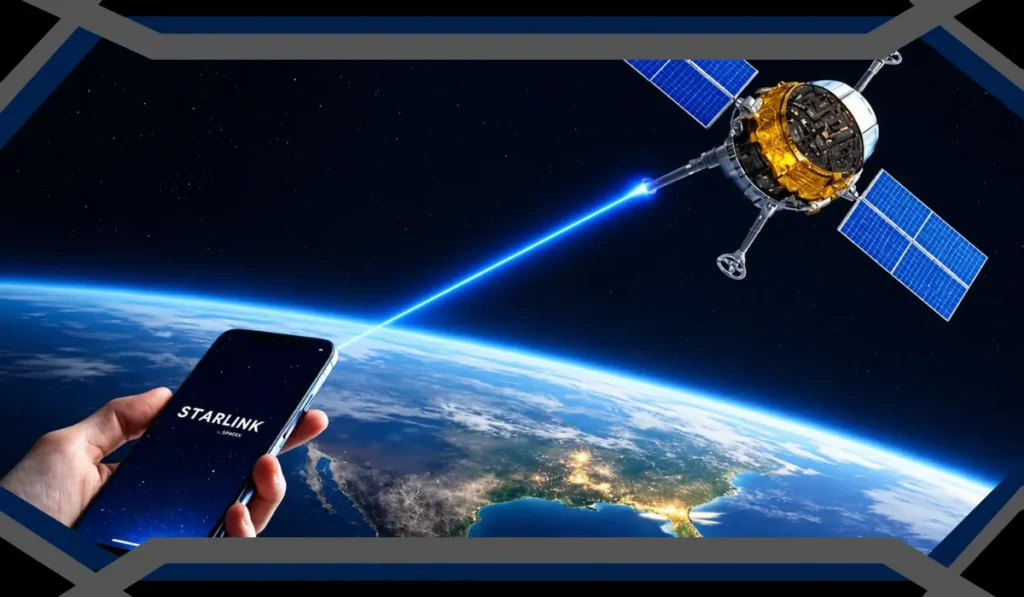
Elon Musk’s SpaceX is reportedly exploring a major expansion of its Starlink business into the U.S. mobile telecommunications market, according to a Financial Times report. The move, if it materializes, would represent a significant shift from Starlink’s current role as a satellite internet provider toward a broader position as a direct competitor to traditional mobile network operators such as AT&T, Verizon, and T-Mobile.
The development reflects SpaceX’s growing ambition to integrate satellite-based connectivity with mainstream mobile services, potentially reshaping how consumers access voice, data, and messaging services in both urban and remote regions.
Starlink’s Current Role in Mobile Connectivity
Starlink currently operates as a low-Earth orbit satellite internet network providing broadband services to residential, enterprise, maritime, and aviation customers. In the United States, its closest involvement in mobile communications comes through its partnership with T-Mobile, which enables “direct-to-cell” connectivity.
This system allows standard smartphones to connect directly to Starlink satellites without additional hardware. At present, it primarily supports basic functions such as SMS and emergency messaging in areas where traditional cell coverage is weak or unavailable. The service is designed to complement existing terrestrial networks rather than replace them, acting as a backup layer that extends coverage into remote or underserved regions.
This existing infrastructure forms the foundation for Starlink’s potential transition into a more advanced mobile service offering.
What the FT Report Suggests About Starlink’s Plans
According to the Financial Times report, SpaceX has indicated in investor discussions that it is considering launching a Starlink-branded mobile service for U.S. consumers. This would represent a major strategic expansion beyond its current partnership-based model.
Under this potential plan, SpaceX would move closer to operating as a full mobile virtual network or even a hybrid network operator. Instead of relying entirely on telecom partners, it could begin offering direct consumer mobile plans, integrating satellite connectivity more deeply into everyday smartphone usage.
The report also suggests that this idea is still in an early planning stage, and no official launch timeline has been confirmed. However, the fact that it has been discussed at the investor level signals that Starlink’s mobile ambitions are becoming more concrete.
Strategic Reasons Behind the Expansion
One of the main drivers behind this potential move is the large untapped value of the global mobile communications market. While Starlink has achieved strong adoption in rural broadband, mobile services represent a far larger and more stable consumer revenue stream.
SpaceX has also been advancing its direct-to-cell satellite technology, which enables smartphones to communicate directly with satellites using standard hardware. This capability reduces reliance on traditional cell towers and could eventually allow Starlink to provide continuous coverage across vast geographic areas.
In addition, SpaceX’s recent moves in acquiring wireless spectrum assets indicate that it is preparing for deeper involvement in telecommunications infrastructure. These acquisitions are widely viewed as early steps toward building a more comprehensive mobile network capability.
From a business perspective, expanding into mobile services would also strengthen Starlink’s long-term valuation potential, especially in the context of its reported IPO-related discussions.
How a Starlink Mobile Service Could Change the Market
If Starlink moves forward with a consumer mobile service in the United States, it could introduce a new competitive dynamic in an already highly consolidated industry. The U.S. mobile market is currently dominated by a small number of major carriers, and entry barriers are extremely high.
A satellite-integrated mobile service could pressure existing operators to accelerate innovation, particularly in rural coverage and network redundancy. It could also help redefine expectations around nationwide connectivity by reducing reliance on physical cell tower infrastructure.
However, industry observers note that even with advanced satellite technology, Starlink would still need to overcome significant challenges to match the performance, capacity, and reliability of established terrestrial networks in densely populated areas.
Key Challenges Facing Starlink
Despite its technological advantages, Starlink faces several structural hurdles:
1. Spectrum Limitations
Compared to established carriers, SpaceX controls a relatively small portion of usable mobile spectrum, which may limit capacity in dense urban areas.
2. Infrastructure Complexity
A full mobile network requires:
- Dense terrestrial cell infrastructure (if hybrid model is used)
- Nationwide backhaul systems
- Retail and billing ecosystems
- Customer service operations at scale
3. Regulatory Barriers
The U.S. Federal Communications Commission (FCC) will play a decisive role in approving expanded satellite-to-device services and spectrum usage.
4. Technical Constraints of Satellite Networks
Even with advancements in direct-to-cell systems, satellite connections still face limitations such as:
- Latency variability
- Weather sensitivity
- Lower bandwidth compared to fiber and 5G networks
Industry Reactions and Broader Implications
Analysts are divided on how realistic Starlink’s mobile ambitions are in the near term. Some view the move as a natural evolution of satellite communications technology, suggesting that hybrid satellite-terrestrial networks will eventually become standard in global telecommunications.
Others believe the announcement may serve a strategic purpose in strengthening Starlink’s negotiating position with existing telecom partners. Even without a full mobile rollout, the threat of competition could accelerate partnerships or infrastructure-sharing agreements.
Regardless of the outcome, Starlink’s progress in direct-to-device connectivity is already influencing how the industry thinks about future network design. The idea of seamless coverage from space to smartphone is gradually moving from experimental technology to a plausible commercial model.
Conclusion
The Financial Times report highlighting Starlink’s potential entry into the U.S. mobile market underscores a broader transformation in global communications technology. While still in early-stage consideration, the initiative reflects SpaceX’s ambition to evolve Starlink from a satellite broadband service into a fully integrated connectivity platform.
If successful, this expansion could reshape competition in the telecom industry, expand connectivity in underserved regions, and accelerate the convergence of satellite and terrestrial networks. However, significant technical, regulatory, and commercial hurdles remain before Starlink can realistically operate as a mainstream mobile service provider.
For now, the development signals a clear direction of travel: the boundary between satellite internet and mobile telecom is beginning to blur, and Starlink is positioning itself at the center of that shift.