Successful Blog

  • Home
  • Community
  • About
  • Author Guidelines
  • Liz’s Book
  • Stay Tuned

How to Attract Guest Post Invitations from Authority Publications

October 3, 2019 by Guest Author

By Ankit Singla

We already know that publishing high-quality content on your website can do wonders. But did you know that writing for other websites can help your business, too?

I’m talking about guest posting. Otherwise called guest blogging, guest posting can help bolster your brand and grow your audience. 

But in order to maximize its potential, your guest posts should be seen in authority publications. So, how can you do just that?

In this guide, I will show you how you can attract guest post invitations from credible and recognized websites as a way to grow your business.

Why is Guest Posting Important?

In the competitive landscape of online marketing, you have to maximize all your digital channels to stay ahead. According to the Content Marketing Institute (CMI), guest posting or offsite thought leadership plays an important role in your marketing funnel.

Guest-contributed content allows you to reach a new audience, strengthen brand awareness, and bolster your ties with niche influencers. In fact, if guest posting is done right, it could even generate quality leads and increase your revenues. 
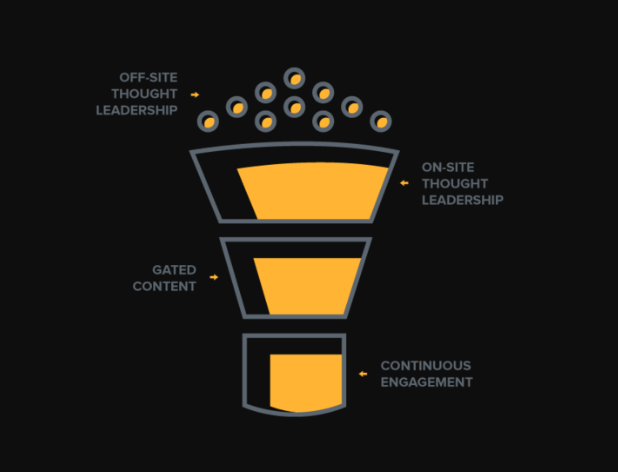
content marketing funnel

How to Entice Guest Post Invitations from Authority Sites

It’s pretty clear why you should add guest posting as part of your online marketing strategy. So, without further ado, here’s a list of the things you need to do to gain guest post invitations:

Optimize Your Social Media Accounts

First things first: You have to optimize all your social media accounts. 

Consider listing all your social media profiles – Facebook, Twitter, Instagram, Google+ and LinkedIn. Then, set them up accordingly.

You can follow these steps to make your profile optimization much easier:

  1. Pick a stand-out profile picture and/or cover photo.
  2. Clearly explain what your brand is about.
  3. Avoid too many buzzwords in the description section. 
  4. Include crucial bits of information such as location and business hours.
  5. Create a timeline for your social media sharing.

Your social media accounts are a crucial part of your online marketing efforts. So, make sure that people can search you on the social platforms I’ve mentioned, and optimize them well.

In addition, make sure to put your social media buttons on your website smartly. They should be clearly visible and accessible for your site visitors.

Position Yourself as an Authority in Your Niche

If you want authority publications to seek your content, it is essential to position yourself as an expert in your niche. You can begin by writing and publishing ten in-depth, relevant, and high-quality posts related to your industry.

To do this, you have to think of real value. Keep in mind that people are always thinking what’s in it for them. If they don’t find your content useful, it’s more likely they leave your page and find another source. 

Simply put, before writing, think from your readers’ perspective.

Writing high-quality content is one thing. Knowing what to write about is another. If you’re running out of ideas for content to write, it helps to visit Q&A websites such as Quora. 

In the search box, type your keyword, and see what people are curious to know. Read related articles about hot topics and find a new angle. 

Tip: You can provide additional depth for your readers by combining concepts and ideas. 
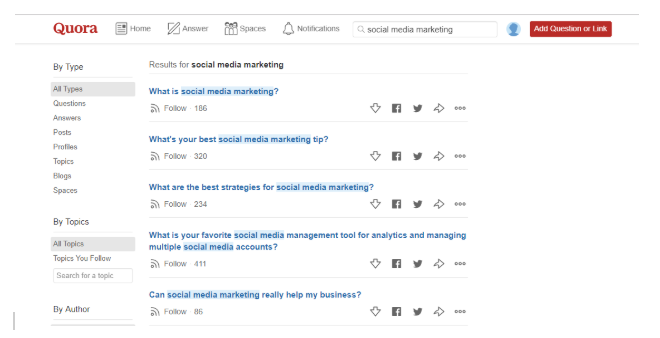
screenshot from Quora

Make sure to include statistics, and only link to credible sources. Remember, you want to position yourself as an expert, so your content needs to be truthful, informative, and useful for the readers.

Also, keep in mind that your efforts should not stop with publishing insightful articles. To cement your position as an authority, you have to engage with your community as well. 

While it helps to answer questions and respond to comments, don’t forget to stay transparent. Admit if you’re uncertain, but offer to look into a query, and actually return to your readers with answers. 

Authority publications wouldn’t only appreciate your honesty and effort but will also more likely think highly of you.

Publish High-Quality Content

Crafting high-quality content is non-negotiable when it comes to online marketing. It’s one of the most effective ways to build credibility for your brand. Additionally, it is important if you want to position yourself as an expert in your niche.

Essentially, valuable content has the following characteristics:

  • It has insightful and interesting information about a particular subject
  • It follows proper grammar and spelling
  • It is easy to read and understand
  • It has quality images or video embeds on it

Again, the users should be on top of your mind when crafting a piece. Monitor social media so you can pick up the hottest topics and trends people are raving about. Then, research thoroughly about it and write an engaging, informative article that discusses it further.

And of course, don’t forget about the other essentials: keyword research and a “can’t-miss-it” title. Ideally, your headline should contain your keyword and spark interest to get users hooked. In short, you need a high-quality title, too.

Even if you have a top-notch blog, it would be pointless if it doesn’t have readers. So, make sure that your titles are engaging enough to trigger readership.

I find the Headline Analyzer by CoSchedule very useful in gaining actionable insights about my titles. It scores my headlines based on several factors such as word balance and user sentiment. 
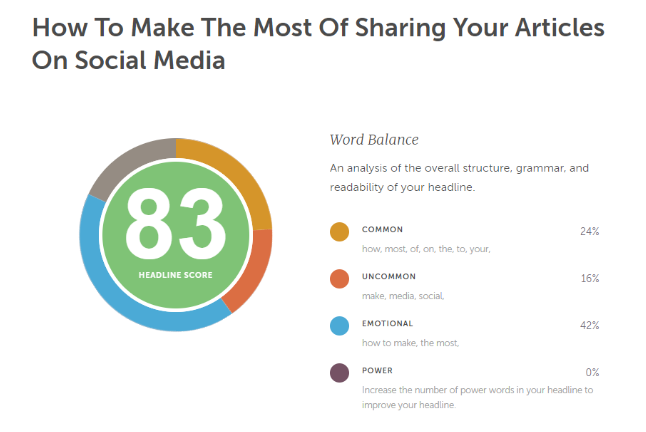
headline analyzer from CoSchedule

Share Your Articles on Your Social Media Profiles

Every time you publish an article on your website, share it on your social media channels, too. Make sure that it comes with an engaging copy that follows your brand’s voice as well. 

If you’ve already contributed articles for other websites, be sure to thank the editor. This will allow your target publications to know that you’ve already contributed content for others.

It also helps to know what’s the best time to post on social media. You can use Sprout Social’s key data points about social media posting as reference:

  • Best day and time to post on Facebook: Wednesday at 11 am and 1 pm
  • Safest times to post: Weekdays from 9 am to 3 pm
  • Times with least engagement: Early mornings and evenings before 7 am and after 5 pm

Facebook global engagement from Sprout Social

To reach more audience, try repackaging your posts for different networks. Remember that each social media platform is unique, and you’d want to make the most out of them.

One great example is turning your old post into a slideshow, voice over or a video tutorial that would go on YouTube. Otherwise, you can create infographics, which are perfect for direct uploads on Pinterest and Twitter.

In a nutshell, create something new from your previous posts. It’s a great way to maximize your content and expand your reach.

Track Your Progress

Many marketers and entrepreneurs tend to overlook this step, which is very crucial in your marketing strategy. Tracking your work and progress is just as important as the other strategies mentioned above.

Having a spreadsheet where you can record the URL of your published articles is important for your digital marketing efforts. Whenever you contribute to other sites, you can refer to the spreadsheet. 

It would serve as a reference for your previous works, which you can include in your contributed content. Not only will your articles get more visibility, but it would also help bolster brand awareness.

As you strengthen your ties with certain publishers, you may offer to contribute regularly for them – say, one article per week. Update your spreadsheet every time you contribute a guest post, and monitor your progress. This way, you will be able to gauge how far you’ve come, and how else you can improve.

Conclusion

While guest blogging isn’t something all entrepreneurs are used to doing, it’s definitely worth it to give it a try. It’s a great way to expand your network and reach more potential customers for your brand.

To gain advantageous results, remember to optimize your social media accounts and publish high-quality content. This way, you can also position yourself as an authority in your niche. Then, share your work and track your progress.

With consistent effort, your marketing strategy will surely bear fruit, leading to more traffic, leads, and even revenues.


Author Bio:  Ankit is a professional blogger, affiliate marketer, consultant, trainer, public speaker and founder of MasterBlogging, where he is passionate about helping people generate a full-time income with blogging. You can follow him on twitter at @iAnkitSingla

Filed Under: Blogging Tips Tagged With: guest blogging

6 Ways to Slow Down and Really Succeed at Work

September 26, 2019 by Guest Author

By Liz Bywater, PhD

Today’s workers are constantly faced with too much to do and too little time in which to do it. From employees on the front lines to leaders in the C-Suite, the frenetic pace of business is taking a toll on workers’ productivity and personal health. A recent survey found that an alarming one in four employees feel burned out at work. The resulting psychological and physical problems associated with burned-out employees add up to $125 to $190 billion each year.

In our fast-paced world, everyone is under intense pressure to succeed at work. They face back-to-back meetings, nonstop emails and voice messages, pressing deadlines and the kind of excessive busyness that leads to a sense of overwhelm. And, at the end of a day of rushing, they’re left asking: “What did I actually accomplish?”

When you’re moving at breakneck speed, you’re not thriving — you’re just surviving. Until you learn to hit the brakes at crucial intervals, you’ll have little time to reflect on the hurdles in your way. Often, you go into autopilot without preemptively considering the pros, cons and implications of your decisions.

But when you teach yourself to pause and reflect before acting, you’ll make better decisions, achieve faster results and avert the kind of mistakes that take precious time, energy and political capital to correct. Even building in a modest 15-minute pause into your daily schedule can do wonders for gaining a competitive edge.

If you or your team have a project that requires your urgent attention — a client who needs your immediate help, a regulatory agency demanding rapid response or a sales target that cannot be missed — then your attention must go to those pressing priorities first. On the other hand, if you only attend to the here-and-now but neglect the bigger picture, you may do well enough for a while. But it’s unlikely you or your organization will thrive over time.

Taking a step back in your daily routine to thoughtfully reflect will allow you, your team and your organization to thrive in the following ways:

1. Developing a clear vision. Adjust your focus from near-term activities to the longer-term, more strategic view. This will allow you to become far more proactive than reactive. By taking your foot off the accelerator, you allow yourself time to assess your current situation, analyze challenges and consider opportunities from a variety of angles. For example:

Effectiveness of team – You’re able to take stock of the individual and collective performance of your team and determine whether you have the right people in the right roles.

Competition – You can evaluate whether you’ve gained an advantage over competitors or how to differentiate your business to increase market share.

Challenges – Unless you slow down to ask the question, “What’s holding me back?”, you’ll miss important opportunities for growth.

2. Creating a strategy for moving forward. It’s easy to become bogged down with fielding complaints and non-urgent issues. But it’s important to step out of the details and periodically re-evaluate whether the strategy you’ve developed is still on track to lead to a stellar outcome. Pause to ask yourself these questions:

Strategic priorities – How does a particular challenge or opportunity fit into your strategy?

Milestones – Are these the correct milestones? Are the timelines sound?

Team dynamics – What’s helping or hindering progress? What could mitigate the problem?

3. Better decision-making. On average, you make 3,500 decisions a day. Every one of them, large and small, takes up mental energy that can impact your effectiveness. Hasty decision-making, while moving too quickly, is bound to lead to mistakes. Repeated mistakes. Costly mistakes. Preventable mistakes. Better decision-making begins with refusing to be pulled into fire-fighting mode. Train yourself to slow down and fully assess the situation before deciding. Reflect on any important decision using the CIA framework: Control, Influence, Accept/Adapt.

Control – Ask yourself if this is a situation over which you have direct control. If so, what outcome do you want to achieve?

Influence – If you don’t have direct control, can you influence the decision or outcome? If so, how can you most effectively exert that influence?

Accept/Adapt – If you have neither control nor influence, can you accept the situation? What can you do to make it more palatable and positive? What must you do to adapt?

4. Prioritizing time allotted to stakeholders. With a finite amount of time to attend to everyone’s demands, create a Stakeholder Priority Plan. Think of all the stakeholders relevant to your success and assign each to one of three tiers:

Tier I – These are your most important stakeholders. Their support will help you rapidly progress. Conversely, their opposition will create major headaches. They are the people with whom you must closely align to move your agenda forward. Tier I stakeholders may include your manager, his or her manager and peers, your closest colleagues and leadership team. If you are the CEO, tier one includes members of the board. Important customers and clients are tier one.

Tier II – Tier II stakeholders are a moderately lower priority, but still important. They’re the people you must influence and with whom you must have a trusting relationship — but the urgency to do so is less intense. Tier II stakeholders may include the people who work for your direct reports. They may be colleagues in other areas with whom you need to collaborate. Some of your customers and clients will fall into this category, too.

Tier III – This tier consists of everyone else. Tier I and II get first dibs on your attention, but Tier III shouldn’t be ignored or dismissed. After all, you need to inspire and engage the entire organization. And, you never know when a small client account may turn into something big, so don’t neglect your Tier III customers.

5. Effective delegating. As a leader, you can’t allow yourself to continually get pulled into the details or become bogged down by day-to-day execution. Some things simply must be delegated. Before diving in yourself, ask the following:

Capacity/Interest – Who has the capacity for the work or has an interest in taking on the challenge?

Promising potential – Is a direct report ready for the opportunity to stretch and learn?

Suited for another team – Is this task best directed to a different department or team? (Be careful here: you don’t want to be viewed as someone who passes the buck.)

6. Improving communication. When you’re overly busy day after day, it can be difficult to keep all parties sufficiently informed and updated. But a lack of communication and coordination means mistakes are more easily made and relationships strained. Communication is particularly difficult given the intense reliance on email, with the average manager receiving more than 120 emails each day — and senior executives often facing 500-plus a day. Instead of spending precious hours clearing your inbox, train your staff to start the subject line of any email message with one of three headings:

Action – An immediate action/decision is needed

FYI – No response is required, but the content is something you should know

Talk – Coming to a resolution would be easier through a phone discussion

With this system in place, resolve to check email at specific times each day, rather than continually, to avoid constant distractions.

The consequences of rushing add up in missed opportunities or remaining mired in projects that don’t add real value. Rushing also leads to costly and preventable mistakes. Instead, give yourself the time to slow down and ponder the broader view.

Deliberately pausing to re-evaluate strategy, determine where you want to exert influence, decide where you can delegate, and prioritize where to focus attention will make it much easier to move forward thoughtfully, prevent needless mistakes, and ultimately succeed at work.

*     *     *

Liz Bywater, PhD, works with senior executives and teams across an array of companies, such as Johnson & Johnson, Bristol-Myers Squibb, AmerisourceBergen and Nike. She brings a rapidly actionable framework for success, which is captured in her new book, Slow Down to Speed Up®: Lead, Succeed and Thrive in a 24/7 World. She writes a monthly column for Life Science Leader and provides expert commentary for the Wall Street Journal, Fast Company, FierceCEO and other top media outlets. Learn more at lizbywater.com.

Filed Under: Personal Development Tagged With: Productivity

5 Benefits of Community Involvement for Businesses

September 12, 2019 by Guest Author

By Kayla Matthews

Volunteering is a great option for businesses across all industries. Whether you run a small, local salon or manage an extensive team of chefs at a well-known restaurant, every company can benefit from community involvement.

Not convinced? Here’s a look at five reasons why you’ll benefit from offering your support to the individuals that define your local area.

1. Let the Community Know You Care

One of the most obvious benefits of community involvement is giving back to the people that define your area. Giving back deserves a spot on our list of the top benefits of small businesses in a community.

For example, you may decide to donate toys during the holidays or host a canned food drive in your area. Any effort you make to give back to those in need is sure to be warmly welcomed by your community. Since the people in your county likely make up the majority of your clients, it’s always nice to help these very same individuals when they need it most.

2. Give Employees More Incentive to Get Involved

While community service is known to benefit your surrounding city or town, it also positively impacts your company’s work environment.

In fact, there’s research that supports the idea that giving back as a business helps enhance company culture. When your workers feel like what they do has deep meaning and purpose, they’re much more likely to want to give it their all.

If you’re planning to host a charity event or provide a service for your community, be sure to run your plans by your workers. Not only will you find that many are more than happy to help, but you may also see a positive impact in how they feel when they return to the office.

3. Build Stronger Community Relationships

How well do you truly know the faces of your community? When you decide to volunteer, host a charity event or partake in a community service event, you get up close and personal with the people who make up your city or town.

Aside from getting to know residents, you may have the opportunity to connect with other small-business owners in your area. Simple connections such as these can lead to an endless array of opportunities regarding counseling, mentorship and general business connections.

4. Seem More Appealing to Prospective Customers

While it certainly isn’t the only motivating factor to help out your surrounding community, giving back makes you seem more appealing to potential clients as well.

Whether you’re sponsoring an event or plan to partner with other local businesses and run a charity, getting involved in the community spreads the word about your company.

Local newspapers and magazines are always looking for positive news to cover. The exposure your business generates from doing services for the community can be astonishing. It gets your name out their while convincing new clients to invest in your company, too.

5. Help Promote Business in Your Community

Did you know that giving back can help promote your city? You may be wondering how your effort has such a profound impact. Believe it or not, even the smallest things can create the biggest waves of influence.

When you do your part to make your community more welcoming, safe and clean, it helps make your city at large more inviting. This means residents are more likely to stay within the community and invest in local businesses — which helps with the economic development of your town.

Are you ready to roll up your sleeves and give back to the community that’s helped your business thrive? Offering your help is a win-win situation for everyone — so how do you plan to get involved?


About the Author: Kayla Matthews writes about communication and workplace productivity on her blog, Productivity Theory. Her work has also appeared on Talent Culture, MakeUseOf, The Muse and Fast Company.

Photo by Nathan Lemon on Unsplash

Filed Under: Community Tagged With: volunteering

5 Types of Resume Formats and When to Use Them

September 5, 2019 by Guest Author

By Kayla Matthews


The resume is a fairly straightforward document, but multiple resume formats exist for appealing to employers. Hiring managers don’t spend a lot of time poring over paperwork, so job seekers need to craft resumes that make them stand out. To do this, they must consider the job position and the standards of that field.

Combining all these elements in the creation of a satisfactory resume is complex. However, job seekers are more likely to succeed at it when they familiarize themselves with different types of resume formats.

1. Functional

Functional resumes focus on skills and accomplishments over employment history. A list of relevant skills will start near the top of the resume and continue for the rest of the page.

Some people who create functional resumes choose not to include work history at all. If they do, they list it near the end of the resume, and they only give information on job titles and former employers’ names.

The functional format lends itself well to those with limited work experience, such as recent college graduates. This type of resume also serves individuals with significant gaps in their career or those looking to change careers.

2. Chronological

Employers commonly expect to see chronological resumes crossing their desks. Chronological resumes set the standard for resume formats, and they’re arguably the easiest to create. They list current job experience first, and all other positions follow from most recent to oldest. How far back one can go depends on the individual, but a good rule of thumb is to avoid exceeding 10 years. If the applicant has more than a decade of experience, they can choose to list only the number of years the employer requires.

This format suits job seekers with ample experience in their respective fields and little to no employment gaps. It displays how long the individual worked, what cities they worked in and what job positions they held.

3. Combination

A combination resume does what its name implies — it combines features of the chronological and functional resume. On a resume like this, professionals list their employment history while also highlighting skills they acquired at each job. This format prevails at displaying people’s capabilities within the context of the tasks they performed, which helps employers envision how the candidate can benefit the company.

However, the abundance of information can get lengthy, so applicants must remain aware of this and streamline their resume. This format matches with senior-level individuals who possess substantial employment opportunities, skills and accomplishments.

People creating SES resumes for government or military jobs can benefit from analyzing the combination technique. SES applications resemble combination resumes in their critical eye for detail and a clear focus on relevant skill sets. One must know how to incorporate detailed ECQs to begin developing a proper SES, and they must understand how to sell their qualifications to succeed.

4. Targeted

Job seekers often create targeted resumes for openings where they meet many of the qualifying marks. Every item on a targeted resume gears itself toward the specific job the individual is applying for. Individuals tailor their skills, work history and education to fit the position. For example, if someone applies to a book publishing company for the position of a developmental editor, they might list editing classes they took in their education section. For skills, they’d include concept organization and manuscript evaluation.

The targeted format is the more time-consuming of the four, but it pays off when the employer sees how well the applicant fills the spot. An applicant who finds a position they are well-suited for should use this format when applying.

Those who opt for targeted resumes must keep in mind that honesty is key. Attempting to lie about or embellish certain qualifications will be noticeable if the employer calls for an interview and asks for details.

5. Curriculum Vitae

Individuals in the educational field commonly use CVs when applying to jobs. CVs emphasize academic achievements such as conferences, presentations, journal publications and papers. While applicants outside the educational field desire to condense their resumes, those within it tend to make their CVs several pages long to capture their successes. Employers in fields of scientific and medical research expect to encounter many lengthy CVs. Those looking for jobs in academia or research would do well to begin compiling a list of relevant items for a CV.

Diligence Is Key

Job applicants should select the type of resume format that hits their intentions and sets them apart from others. The process becomes more straightforward when they know what they’re looking for and what the employer is expecting.


About the Author: Kayla Matthews writes about communication and workplace productivity on her blog, Productivity Theory. Her work has also appeared on Talent Culture, MakeUseOf, The Muse and Fast Company.

Photo by Helloquence on Unsplash

Filed Under: management Tagged With: resume

What Are the Phases of Project Management?

August 8, 2019 by Guest Author

By Kayla Matthews

Project management involves using a team’s knowledge, skills and resources to accomplish a common goal — the successful completion of a project with a specific beginning and end date.

The phases of project management, from initiation to closure, are designed to help team members understand their roles and how functions intersect. Research has revealed companies who implement project management initiatives save 28 times more money than their non-planning counterparts.

While a solid strategy can’t solve every problem that may arise, it can ensure the processes runs as smoothly as possible.

Phase 1: Initiation

The initiation phase comes before planning a project. This is where you identify a specific need, problem or challenge and how your team can solve it. Brainstorm ideas, get creative and don’t be afraid to think outside the box. During this time, it’s essential to figure out your project’s objective — what you hope to accomplish.

You should also use this phase to determine the feasibility of a project. Is the timeline workable and how much will the implementation cost? According to one study, one in six projects sees an average budget overrun of 200 percent. Identify which resources your team will need to successfully bring the project to fruition.

Phase 2: Planning

Project management techniques are used by 28% of businesses — and only 2.5% complete 100% of projects successfully. The planning phase, the most crucial, is when you identify goals to break the project up into actionable chunks. Each should be specific, realistic and measurable. Unobtainable or unrealistic goals are a recipe for failure.

One person, a project manager, should take reins of the team and control operations. Use a schedule to determine task durations and set deadlines for completion. Decide on the best means to communicate progress and unexpected set-backs. Before moving into execution, learn what risks might arise, how they can impact the project and how they can get resolved.

Phase 3: Execution

Your plan has been developed and approved. Now it’s time for team members to take action. Project managers will need to maintain constant communication with employees to ensure the project is moving along as planned. Help team members stay organized and hit deadlines by sending updates regularly.

Other responsibilities of a project manager include:

  • Briefing team members
  • Monitoring work quality
  • Organizing tasks with workflows
  • Allocate spending and resources
  • Communicating with management

As the project develops, project managers will need to follow the pre-created plan, assign new tasks and assess ongoing progress with project management tools. PMs also interact closely with clients to update them about the project and ease any concerns or questions about development.

Phase 4: Monitoring

Every project — no matter if it lasts one hour or one year — should be closely monitored. Project managers should look at work quality, costs, risks, scope, changes and more. Out of all high-performing projects, 77% use project management software to track progress and provide detailed reports. These metrics determine if a project is meeting budget and timeline requirements.

Project management software can be used to monitor all moving parts of a project, including time tracking, task distribution, budgeting, resource planning, cloud-based collaboration and much more — but only 22% of businesses take advantage of it. Project managers use this software to monitor team members and communicate wants and needs, but many companies lack access to real-time key performance indicators.

Phase 5: Closure

No project is complete without closure. Has your project been a success or a failure? Most project managers determine a project’s success based on the ability to stay within budget. Other factors to consider include the quality of the end product and client satisfaction. Carefully listen to any feedback to determine areas of improvement.

Once the project is analyzed as a whole, the project manager should also determine the output of individual team members. Did they meet goals? Did they produce high-quality work? Interview team members and ask about their experience. What did they learn? What could be done better next time? What could make their role easier?

The phases of project management are in place to ensure higher chances of success. From initiation to closure, team members should have a clear outline of goals, expectations and deadlines. Success is ultimately determined by a project’s quality, timeline and budget.


About the Author: Kayla Matthews writes about communication and workplace productivity on her blog, Productivity Theory. Her work has also appeared on Talent Culture, MakeUseOf, The Muse and Fast Company.

Featured Image: https://unsplash.com/photos/_pc8aMbI9UQ

Filed Under: Productivity Tagged With: project management

Developing Great Leaders: The Human Workplace Perspective of DevOps

August 1, 2019 by Guest Author

By Wendy Dessler

One of the most challenging aspects of working in the tech industry is remembering the most important component of excellent performance: humanity. Software development is a great springboard for building competent, collaborative leaders when it’s done correctly. 

The DevOps mindset brings different teams together to create a continuous workflow that thrives on human interaction. Here are some useful tips for developing great leaders through DevOps, as well as reasons why the human side of the tech world matters.

The Benefits of DevOps

DevOps brings development and operations teams together to create a unified system that allows businesses to get projects completed faster without sacrificing quality. In doing so, businesses ultimately improve their bottom line and make scaling more attainable.

Successfully implementing DevOps also benefits a business by:

  • Improving cross-team functionality
  • Improving flexibility and production speed
  • Allowing for multiple projects to be handled at any given time
  • Creating a culture of respect and collaboration

For the various benefits of DevOps to be achieved, businesses need to break down the barriers between Quality Assurance, Operations Management, and the core development team. 

Traditionally, these different areas have been in silos– separated and isolated from one another. By breaking the barriers, businesses provide an opportunity for understanding and appreciation. In other words, some of the foundational qualities of excellent leadership.

Mentorship: A Benefit for Both Parties

A standalone benefit of focusing on the human side of DevOps is the potential for mentorship opportunities. This enhanced workflow creates opportunities for senior and junior team members to come together and learn from one another.

For example, a senior member of the team may have the opportunity to help a junior member with a challenge they’re facing. Alternatively, junior members provide the opportunity for developing critical thinking and problem-solving skills for senior members, and may even teach them new, updated skills.

Some organizations are even going as far as to have DevOps Dojos, to create a space for mentorship and the development of insightful, passionate leaders.

How to Implement DevOps: A Human-Centric Approach

Unfortunately, you can’t flick a switch and make DevOps work. It takes a lot of planning and change management to create a human-centric DevOps culture. Here are some important considerations when implementing DevOps. 

Have the Right Tools

Implementing DevOps can be a challenge for all. Humans naturally resist change, preferring the comfort of a routine, even when the end-result of the change would be simpler. By having the right tools in place to support a collaborative environment, you simplify the road to DevOps. 

One of the most important tools you can have in place when implementing the DevOps philosophy is powerful, streamlined project management software. While nothing will ever compare to the visual of a well laid-out whiteboard, having cloud-based project management ensures everyone is up to date, no matter where they are. 

Logging services can also streamline DevOps efforts and create a virtual map of what’s happening in the system; you can visit the Papertrail website to learn more about this process.

Transparency Matters

When implementing DevOps, it’s important for all members of the team to know what is happening and when regardless of the hierarchy. Share successes and failures, challenges, and solutions. Create a safe platform for everyone to be heard and ensure that all questions are eventually answered.

There’s a lot of concern surrounding job losses when DevOps is put in place, as automation plays such a key role. Be sure to address these concerns early and nip employee discontent in the bud.

Make the Business Fit the Format

Trying to make DevOps fit your current business, rather than the other way around, is a recipe for disaster. It’s essential for key stakeholders to be involved in the DevOps implementation process, as it might cause widespread disruptions and restructuring. The more buy-in from the executive team and management, the more effective the result will be.

Focus on Human Development

Empower your people to take an active part in making the changes. Present opportunities to take ownership of various tasks and develop their skills. For some, the implementation of DevOps could present a stepping stone into a leadership position.

Before and during the implementation process, take time to assess people individually and talk to them about their goals. Collect their insights and work with them to create a positive environment that promotes respect and teamwork, as these are more important than the technical components for making DevOps work.

Prioritize Cybersecurity

Ensuring that your business is kept secure for every step of the way is essential when implementing DevOps. It should be addressed early on before changes are implemented. 

Consider who needs access to what, and what areas of the infrastructure should be limited. Work these security considerations into any restructuring efforts. While tools like access rights management and logging are great solutions to many of the cybersecurity problems, it’s important to think about the various areas that need to be addressed before choosing the approach that works for your organization.

Remember Your People

While implementing the DevOps philosophies, automating processes, and streamlining business efforts to improve the bottom line, it’s important not to lose sight of what matters the most: your people. 

By focusing on the human side of software development, you can create a positive workplace culture that cultivates great leaders and ensures the business’s continuity for years to come.


About the Author: Wendy Dessler frequently writes about the latest advancements in tech and digital marketing. She currently focuses on helping SaaS businesses create a better world for our kids.

Photo by Perry Grone on Unsplash

Filed Under: Leadership Tagged With: devops, leadership

  • « Previous Page
  • 1
  • …
  • 3
  • 4
  • 5
  • 6
  • 7
  • …
  • 109
  • Next Page »

Recently Updated Posts

Is Your Brand Fan Friendly?

How to Improve Your Freelancing Productivity

How to Leverage Live Streaming for Content Marketing

10 Key Customer Experience Design Factors to Consider

How to Use a Lead Generation Item on Facebook

How to Become a Better Storyteller


From Liz Strauss & GeniusShared Press

  • What IS an SOB?!
  • SOB A-Z Directory
  • Letting Liz Be

© 2025 ME Strauss & GeniusShared