Successful Blog

  • Home
  • Community
  • About
  • Author Guidelines
  • Liz’s Book
  • Stay Tuned

Developing Great Leaders: The Human Workplace Perspective of DevOps

August 1, 2019 by Guest Author

By Wendy Dessler

One of the most challenging aspects of working in the tech industry is remembering the most important component of excellent performance: humanity. Software development is a great springboard for building competent, collaborative leaders when it’s done correctly. 

The DevOps mindset brings different teams together to create a continuous workflow that thrives on human interaction. Here are some useful tips for developing great leaders through DevOps, as well as reasons why the human side of the tech world matters.

The Benefits of DevOps

DevOps brings development and operations teams together to create a unified system that allows businesses to get projects completed faster without sacrificing quality. In doing so, businesses ultimately improve their bottom line and make scaling more attainable.

Successfully implementing DevOps also benefits a business by:

  • Improving cross-team functionality
  • Improving flexibility and production speed
  • Allowing for multiple projects to be handled at any given time
  • Creating a culture of respect and collaboration

For the various benefits of DevOps to be achieved, businesses need to break down the barriers between Quality Assurance, Operations Management, and the core development team. 

Traditionally, these different areas have been in silos– separated and isolated from one another. By breaking the barriers, businesses provide an opportunity for understanding and appreciation. In other words, some of the foundational qualities of excellent leadership.

Mentorship: A Benefit for Both Parties

A standalone benefit of focusing on the human side of DevOps is the potential for mentorship opportunities. This enhanced workflow creates opportunities for senior and junior team members to come together and learn from one another.

For example, a senior member of the team may have the opportunity to help a junior member with a challenge they’re facing. Alternatively, junior members provide the opportunity for developing critical thinking and problem-solving skills for senior members, and may even teach them new, updated skills.

Some organizations are even going as far as to have DevOps Dojos, to create a space for mentorship and the development of insightful, passionate leaders.

How to Implement DevOps: A Human-Centric Approach

Unfortunately, you can’t flick a switch and make DevOps work. It takes a lot of planning and change management to create a human-centric DevOps culture. Here are some important considerations when implementing DevOps. 

Have the Right Tools

Implementing DevOps can be a challenge for all. Humans naturally resist change, preferring the comfort of a routine, even when the end-result of the change would be simpler. By having the right tools in place to support a collaborative environment, you simplify the road to DevOps. 

One of the most important tools you can have in place when implementing the DevOps philosophy is powerful, streamlined project management software. While nothing will ever compare to the visual of a well laid-out whiteboard, having cloud-based project management ensures everyone is up to date, no matter where they are. 

Logging services can also streamline DevOps efforts and create a virtual map of what’s happening in the system; you can visit the Papertrail website to learn more about this process.

Transparency Matters

When implementing DevOps, it’s important for all members of the team to know what is happening and when regardless of the hierarchy. Share successes and failures, challenges, and solutions. Create a safe platform for everyone to be heard and ensure that all questions are eventually answered.

There’s a lot of concern surrounding job losses when DevOps is put in place, as automation plays such a key role. Be sure to address these concerns early and nip employee discontent in the bud.

Make the Business Fit the Format

Trying to make DevOps fit your current business, rather than the other way around, is a recipe for disaster. It’s essential for key stakeholders to be involved in the DevOps implementation process, as it might cause widespread disruptions and restructuring. The more buy-in from the executive team and management, the more effective the result will be.

Focus on Human Development

Empower your people to take an active part in making the changes. Present opportunities to take ownership of various tasks and develop their skills. For some, the implementation of DevOps could present a stepping stone into a leadership position.

Before and during the implementation process, take time to assess people individually and talk to them about their goals. Collect their insights and work with them to create a positive environment that promotes respect and teamwork, as these are more important than the technical components for making DevOps work.

Prioritize Cybersecurity

Ensuring that your business is kept secure for every step of the way is essential when implementing DevOps. It should be addressed early on before changes are implemented. 

Consider who needs access to what, and what areas of the infrastructure should be limited. Work these security considerations into any restructuring efforts. While tools like access rights management and logging are great solutions to many of the cybersecurity problems, it’s important to think about the various areas that need to be addressed before choosing the approach that works for your organization.

Remember Your People

While implementing the DevOps philosophies, automating processes, and streamlining business efforts to improve the bottom line, it’s important not to lose sight of what matters the most: your people. 

By focusing on the human side of software development, you can create a positive workplace culture that cultivates great leaders and ensures the business’s continuity for years to come.


About the Author: Wendy Dessler frequently writes about the latest advancements in tech and digital marketing. She currently focuses on helping SaaS businesses create a better world for our kids.

Photo by Perry Grone on Unsplash
Filed Under: Leadership Tagged With: devops, leadership

Four Essential SEO Plugins for Bloggers

July 22, 2019 by Jessy Troy

Search engine traffic is the most reliable and in many cases top-converting traffic for many websites. That’s the reason most people ask for tips and plugins that can help them boost SEO of their WordPress websites.

If you are looking to increase your search engine rankings, you will need to use some of the best WordPress SEO plugins. Fortunately, there are a plethora of SEO plugins to help you get that higher search traffic that you are dying to achieve. In this guide, we shall share with you some of the best SEO plugins that will improve SEO of your WordPress website.

1. WordPress SEO by Yoast

WordPress SEO by Yoast

Yoast SEO is the most popular and holistic SEO plugin on WordPress. To date, it has more than 4.5 million downloads with an average rating of 4.7-star over five from 1,418 users. Developed by SEO specialist Joost de Valk, this plugin has features that ensure optimal success for your site when it comes to SEO. The plugin is used by some of the most famous online magazines and websites such as the next web, Mashable, and others.

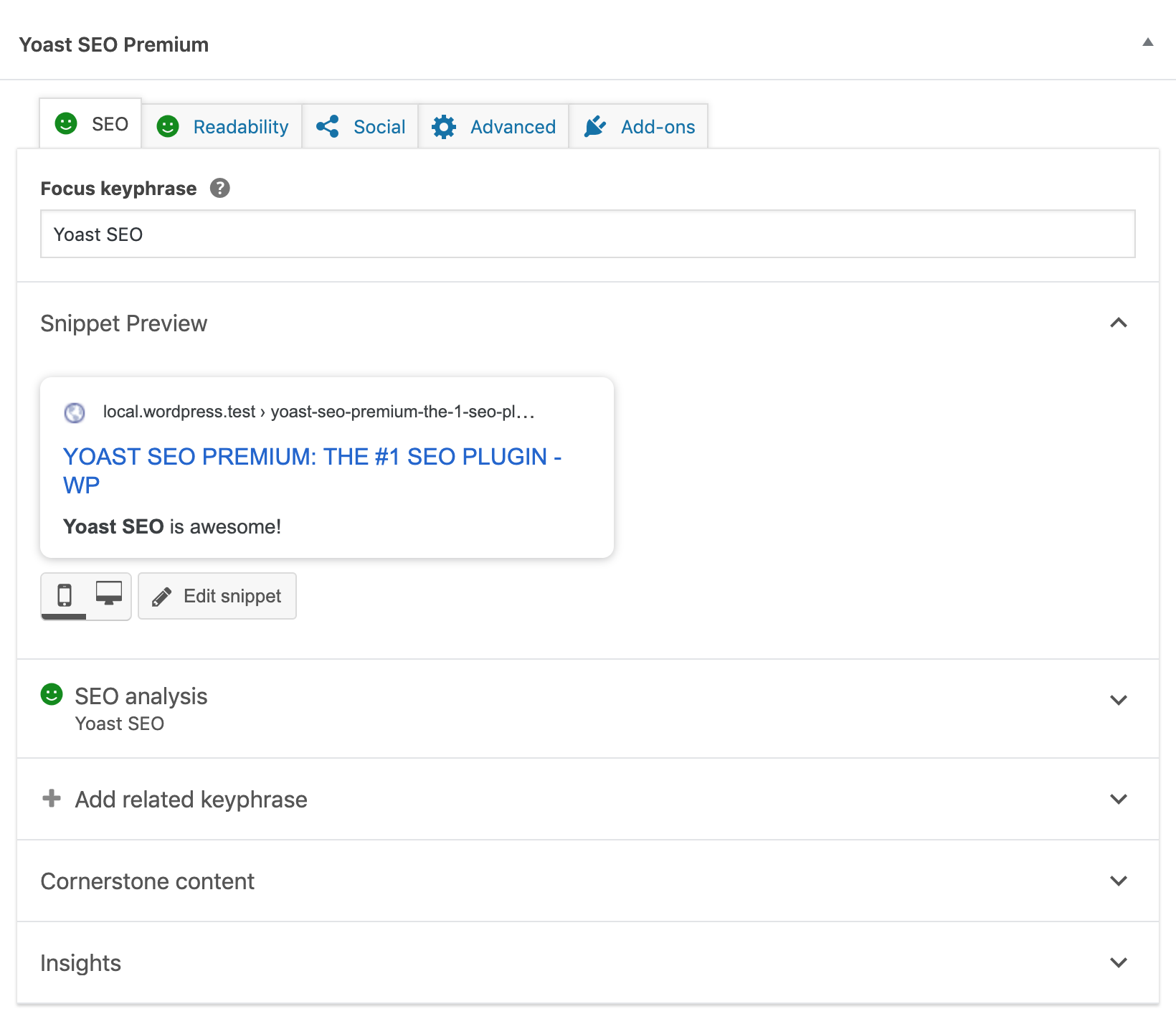
WordPress SEO by Yoast plugin can assign keywords to a blog post so that the user can focus on using it in the entire content. It also has a snippet view where users can see how their post will look like in search results.

Another important feature of this plugin is the Page Analysis. Powered by Linkdex, this feature allows users to check whether all the keywords, meta description, images and post title or subheadings are in place. The list of features for Yoast SEO is extremely long, check out others here. This is a great productivity-boosting plugin for writers.

2. Text Optimizer

Text Optimizer

Text Optimizer is one of the most advanced SEO plugins built for online business, eCommerce, bloggers, and magazines. This plugin offers you an easy way to use Text Optimizer to get your content rank higher in Google.

It is perfect for everyone with little knowledge of SEO or rarely cares to perform on-page optimization. It uses semantic analysis to generate related concepts and terms and helps you include those in your content in the most meaningful way.

The best thing about Text Optimizer plugin is that it lets you optimize your site for search engine while improving your content quality. In other words, the default installation is good enough to serve. But as you interact more with the plugin, you can play with the settings as per your requirements.

3. Broken Link Checker

A broken link is a horrible nightmare for bloggers or SEO enthusiasts. Having broken links will earn your site a bad reputation with Google. Eventually, that reputation will degrade your search engine rankings to the point that you may no longer be regarded an authority in your industry. Google is trying so hard to better web experience for everyone. So they will not direct users to websites with broken pages.

This is where tools, such as the Broken Link Checker come in. The name speaks for itself; this plugin allows you to check for any broken links and missing images. If there is any, it will alert you and give you the option to customize the link(s) either by deleting it completely or by placing the correct one.

Here is a summary of its features:

  • Ability to detect links that don’t work
  • Option to deter search engines from following broken links
  • Monitors links in pages, comments, posts and even custom fields
  • Option to change broken links

4. SEOPressor

SEOPressor

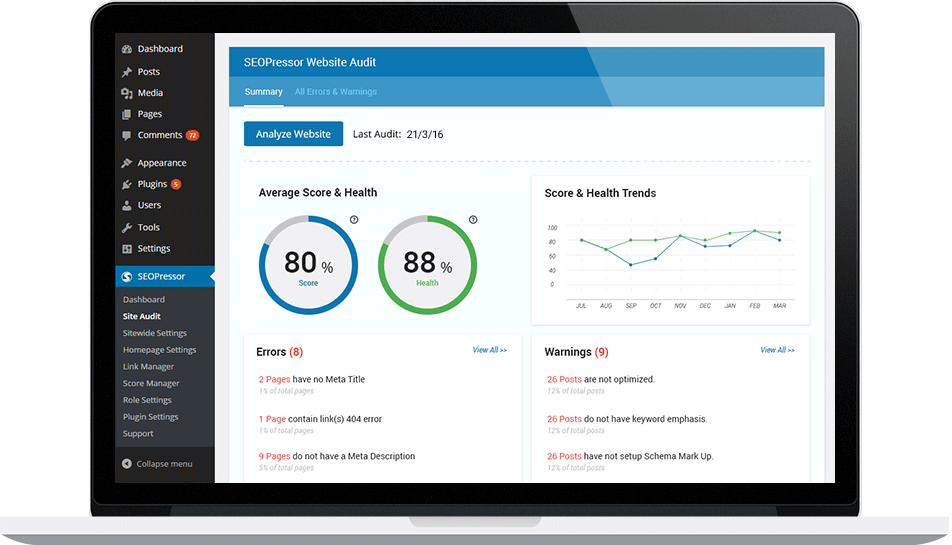
SEOPressor covers every possible aspect of SEO and puts the same attention to all of it. It offers you a number of useful features which help you optimize your images, blog posts and your site for social media.

It also allows you to use its drag and drop function allowing you to easily use your chosen keywords in your content. With this feature, you won’t have to spend so much time conducting keyword research on other tools or services.

After posting your content, this plugin goes ahead to analyze your post and give you a score based on the analysis. In the analysis, it checks your subheadings. SEOPressor also comes with a reliable internal linking feature. This feature makes your work easier since each time you re-publish content the phrases you linked on the first content will be hyper-linked automatically.

Wrapping up

These are some of the top WordPress SEO plugins. Tell us which one is your favorite among the ones discussed here. If there is any plugin that you feel we should include in this guide, please let us know in the comments section.

Outside of SEO, there are more useful SEO plugins for you to try… Let me know your pick!

Filed Under: SEO

6 Types of Fundraising for Small Businesses

July 18, 2019 by Guest Author

By Kayla Matthews

Is your small business ready for some significant growth? If your funds are limited, there are plenty of funding resources available to small businesses. Whether you want to unleash a newly designed product or open a second location, the six types of fundraising below will help you achieve your goal.

1. Crowdfunding

Crowdfunding is a way for small businesses to reach out to individual consumers. Pitch your business idea, whether brand new or growing, and raise money in exchange for rewards, future repayment or equity.

The best crowdfunding websites for small businesses include:

  • Patreon
  • GoFundMe
  • Indiegogo
  • Kickstarter

Look for a crowdfunding site with a broad audience, offering as much exposure to potential investors as possible. And read testimonials from businesses who previously used the site.

2. Business Incubators

If you’re a small business in the early stages of growth, consider joining a business incubator. Some business incubators operate online while others are physical spaces where entrepreneurs can network. The goal is to speed up business development and success.

Instead of an incubator, some programs are called accelerators, meant to boost more developed businesses. These types of organizations have funds or funding sources to raise capital. They also offer access to invaluable resources like accountants, lawyers, coaches and more.

3. Grant Competitions

Enter a competition aimed at small businesses to win grants, exposure and new customers. If you’re a woman-owned company invested in environmental change, check out the Eileen Fisher Foundation. The organization gives out $200,000 annually to up to 10 businesses.

Other grants to apply for include:

  • Etsy Maker Cities Grant
  • Visa Everywhere Initiative
  • Sam’s Club Grant Program
  • FedEx Small Business Grant

Always read the requirements of a grant before starting an application. And keep a calendar of deadlines to ensure you submit documents on time.

4. Angel Investors

As a small business, your development team is likely made up of just a few people. Team members will need to take on multiple roles to cover all aspects of fundraising, including account, event planner and social media manager. They’ll also need to be adept at creating relationships with potential donors, like angel investors.

If you’ve ever watched the TV show Shark Tank, you know that angel investors are well-to-do individuals who provide business capital in return for equity. The percentage of equity is based on a business’s profits and expected growth. Some of the most prolific angel investors include Fabrice Grinda, Paul Buchheit and Wei Guo.

5. Product Pre-Sales

If your business is product-based, consider using pre-sales as a way to gain funding. By pre-selling goods, you can obtain the capital to get started while ensuring your stock will be sold out come launch day. It also means consumers rely on you to maintain deadlines and follow through on orders.

If you want to raise funds through pre-sales, set up a sales page on your website outlining your product and the basic features. Call attention to your target audience and tell them how your product will help them. Include the benefits your product has over competitors. And don’t forget to remind everyone that purchases are a pre-sale and the product has not yet been created.

6. Venture Capitalists

Venture capitalists, similar to angel investors, offer to fund start-ups and growing businesses in exchange for a share of the equity. The goal of a venture capitalist is to invest in a business that will provide high rates of return. Capital investments typically last five to eight years with an expected return of 25% or higher.

Some businesses seek venture capitalists when in need of expertise. For example, Bill Gates convinced Dave Marquardt, co-founder of the firm August Capital, to invest in Microsoft in 1981. He was on the company’s board of directors for more than 30 years.

Are you a start-up looking to expand? The six funding options above can help you meet your business goals, even when resources are limited. Look into a crowdfunding website like Kickstarter or Indiegogo. Meet with interested angel investors who provide capital in exchange for equity. Or enter competitions to earn business-boosting grants.


About the Author: Kayla Matthews writes about communication and workplace productivity on her blog, Productivity Theory. Her work has also appeared on Talent Culture, MakeUseOf, The Muse and Fast Company.

Featured Photo by Jakub Gorajek on Unsplash

Filed Under: Leadership Tagged With: fundraising

4 Ways To Prevent Employee Turnover In Your Startup

July 4, 2019 by Guest Author

By Kayla Matthews

Keeping good talent is tough for any business, but when you’re an emerging startup, it can be a make-or-break matter. Losing the person who drives innovation or puts the whole team at ease can cripple a promising operation in its youth, and as a leader it’s your job to stop that.

So what can be done?

Sometimes you have to think outside the box when you can’t throw money at people. It won’t surprise you to hear that the world of startups relies heavily on flexibility and the attraction of new ideas to retain talented people who value their stake in the company. Here’s how you can realize these ideas at your own startup.

1. Be Choosy About Management

When you’re a startup, every member of your team is critical, but for you to do the job of leading the company you can’t always spend your time overseeing each individual. Stressors are high in this environment, and while many startups enjoy a high-energy culture that lends itself to breakthroughs and rapid growth, that takes a toll on employees. This is why you need excellent management.

Managers who know how to motivate and encourage their direct reports are essential for your company to succeed. Think of them as an extension of your own role and empower them as your direct reports. A strong management team will go to any length to shape procedures and policies in a way that lends itself to productivity by listening to their employees, understanding what works and acting when change is needed.

2. Encourage Personal Growth

Speaking of listening to employees, a startup is often attractive because of the opportunity for growth that a startup presents. Workers have to push themselves and wear multiple hats. In doing so, they pick up valuable resume builders. If you’re not careful, they’ll take those new skills and walk right out the door.

But many people don’t. Startups that succeed in keeping good people understand why their people are learning these new skills, how they plan to use them in their career and what the next challenge is after an employee has advanced.

If your management team can stay one step ahead and continue to provide learning opportunities other places can’t, employees will remain engaged. Run out of new skills in one area? Throw a rockstar employee into something a little foreign to them and watch them thrive on new challenges.

3. Be Social

The company that hangs together, stays together. And in a startup environment you might just be hanging together working twelve hours into the day because the team is small and things need to get done. We’re not saying that should be an all-the-time thing, but the flexibility of a startup environment should allow you to make the workplace fun and less rigid.

That means you need to spend some time putting work down, too. Get the team out on the town, or even have a gathering at someone’s home if it’s small enough. The opportunity to create strong bonds that a startup presents is unique to this size and type of business. Don’t waste that opportunity. Build strong relationships with your team.

4. Incentivize with Vesting

Vested options are perhaps the most drastic, but also very effective means of ensuring that people stick around. Many startups offer stock options as part of their compensation package. If the options mature too quickly, people are encouraged to take their money and run. So create a plan wherein their shares increase across multiple years and employees can only keep them if they stay with the company.

Companies in the San Francisco area where tech startups abound have been said to use a four-year strategy that vests after the fourth year and then restarts at a higher quantity of stock.

However you choose to do it, the only way you can go wrong is by not realizing the importance of your employees in a startup. Hiring the wrong people can completely sink your operation, so you’ve got to choose wisely. The best selected employees can’t help you if they all leave, so give them every reason to stay with cool workplace perks, a friendly culture that embraces productivity and some exciting alternative compensation!


About the Author: Kayla Matthews writes about communication and workplace productivity on her blog, Productivity Theory. Her work has also appeared on Talent Culture, MakeUseOf, The Muse and Fast Company.

Featured Photo by Shridhar Gupta on Unsplash

Filed Under: management, Motivation Tagged With: employee engagement

How I Achieved a Tenfold Increase in Organic Traffic with Text Optimizer

June 26, 2019 by Jessy Troy

I have been in the blogging / marketing / freelancing business long enough to lose trust in any “get rich quick” or “triple your traffic in a week” headlines. I would never even click those unless I see them on a trusted resource.

Therefore when I came across this article, I was skeptical but being an avid reader of the blog, I decided to give it a read. I admit it all sounded a bit overwhelming: “semantic search”, “related concepts”, etc. But I still went ahead and gave the featured tool a try.

Text Optimizer does what it says: Helps you optimize your text. In essence, it shows all kinds of words and phrases that somehow relate to your main keyword, i.e. the one that you’d want rank for in Google search.

The idea is, if you cover more concepts that constitute your topic, you have more chances to meet your readers’ expectations, and thus will achieve both better engagement and higher rankings. You can get a better idea of this by playing with the tools’ demo here.

The tool is based on semantic analysis which is what I decided to start researching.

What is Semantic Search?

According to Wikipedia:

Semantic search seeks to improve search accuracy by understanding the searcher’s intent and the contextual meaning of terms as they appear in the searchable dataspace, whether on the Web or within a closed system, to generate more relevant results. Semantic search systems consider various points including context of search, location, intent, variation of words, synonyms, generalized and specialized queries, concept matching and natural language queries to provide relevant search results

What I could understand from this definition is the following:

  • Semantic search tries to understand the context (versus an isolated query)
  • Semantic search tries to understand intent (i.e. what searchers expect to find when performing a search)

Both sounded very good to me, so I decided to give the tool a try.

How to Use Text Optimizer

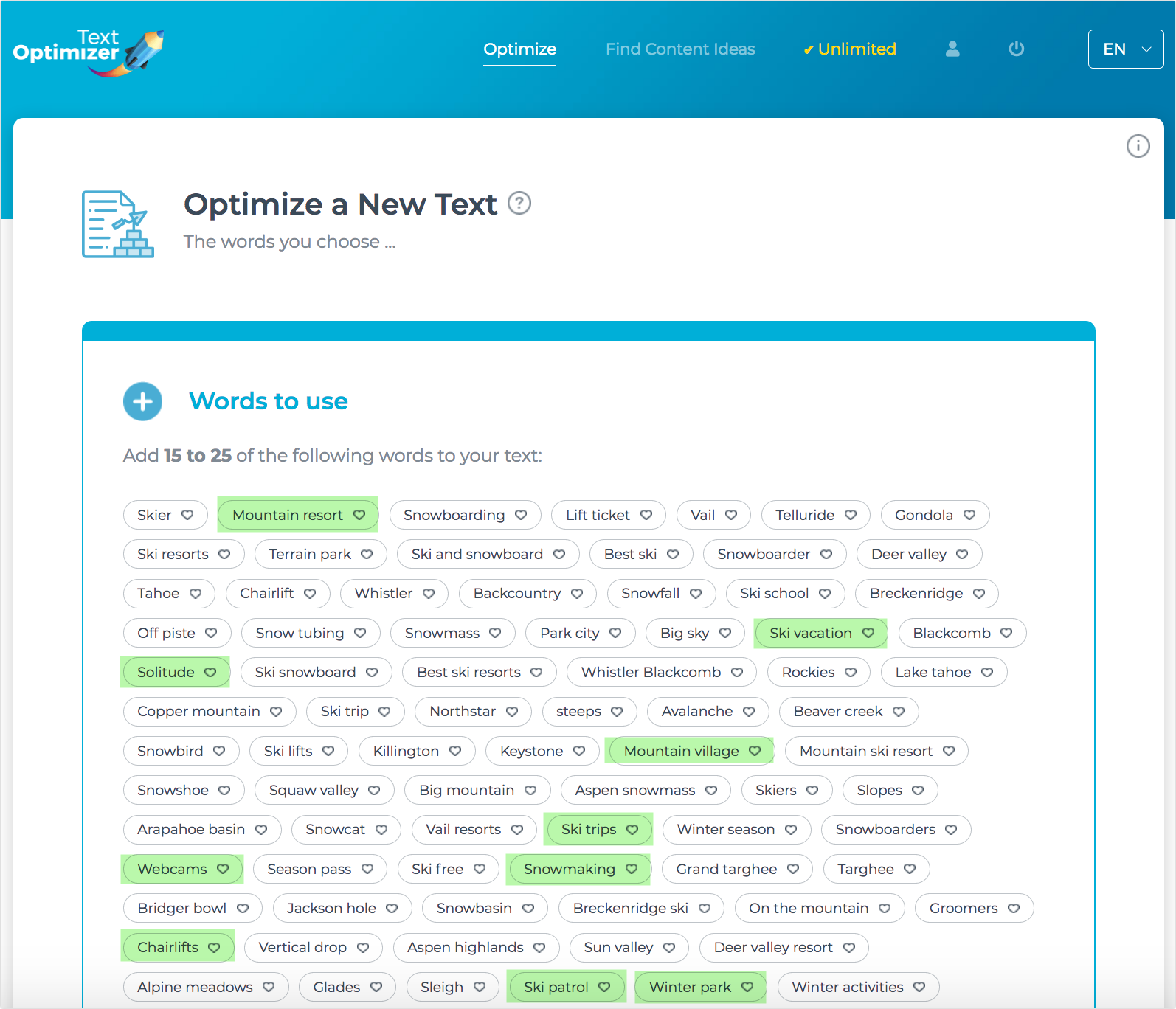
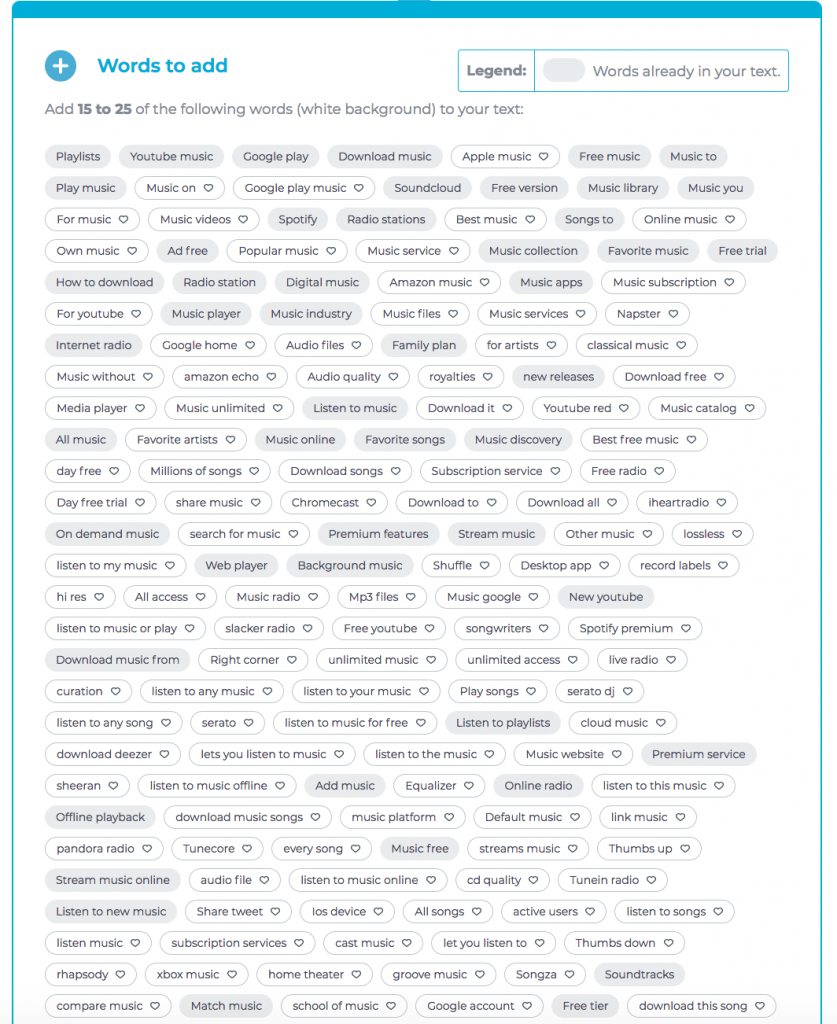
The first step is registering for free trial. Once you are there, simply provide your target query, choose Google, and then copy-paste your URL you want to rank for that query. The tool will grab Google’s search snippets for that query, applies semantic analysis to them to better understand context and then identify which terms are missing from your text:

Your job is to pick 15-20 of listed concepts and naturally include into your content to optimize it better. Don’t overdo: You don’t your article to sound weird or artificial. If you need to write more content to cover those concepts, go ahead and do that. After all, this makes your content better, which is a beauty of using this tool.

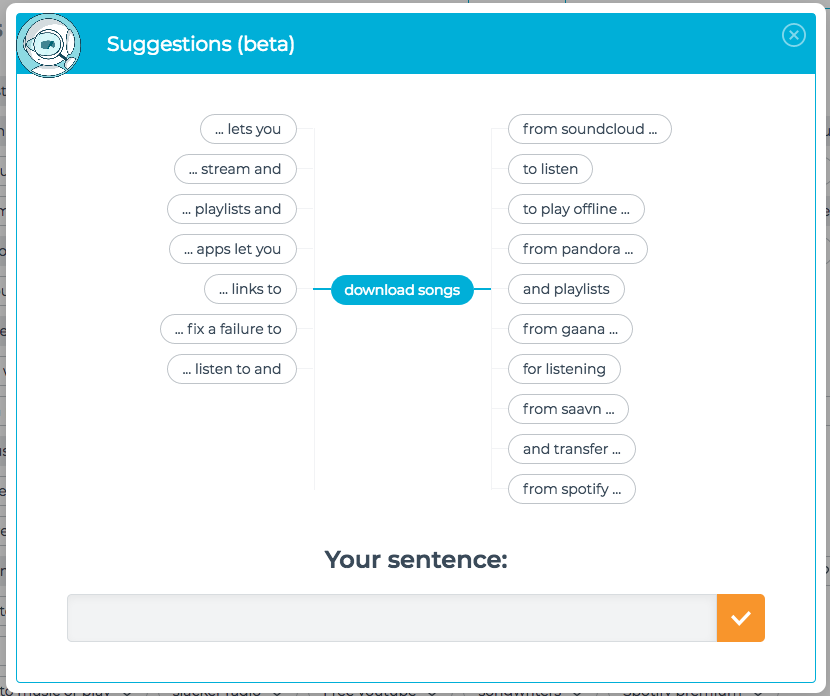
Text Optimizer also helps you build sentences:

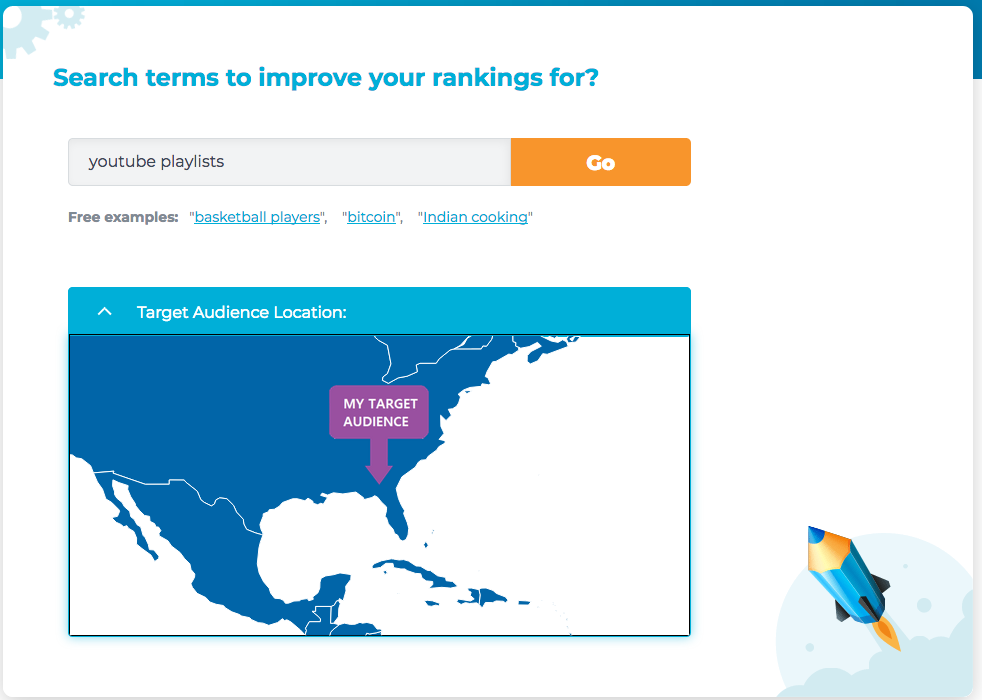
As well as target your audience to certain territory:

Text Optimizer and My Process

I started going through my old content, article by article and optimizing them to achieve minimum score of 70

Luckily, I ddidn’t have to much client work, so I was able to delve into the tool almost full time. I actually enjoyed using it because I liked what it did to my content: I felt like my blog was becoming much better.

This took me about two works of work.

Now, looking back at my organic traffic, I was excited to see my time wasn’t wasted. I went from ~100 users a day to ~1000 users a day and growing! Whether it’s semantic SEO or simply making my content better (longer, more in-depth, etc.) but Text Optimizer definitely worked:

Now, it’s not a magic button! Optimizing content using Text Optimizer takes lots of time: You need to run the tool, write content and then re-run the tool, then rinse and repeat. But if you can dedicate at least an hour a day to this, you may have great results over time!

Good luck!

Filed Under: Featured, SEO

4 Ways to Market Your Business’ Job Opening

June 20, 2019 by Guest Author

By Kayla Matthews

It’s hiring season and there are so many qualified candidates out there ready to work for your company. Filling a job opening can take months and you want to make sure you hired the right candidate who is committed to your business’s future. Today’s economy is raising candidate expectations and recruiting challenges.

According to a recent study, 74% of recruiters believe that hiring will become more competitive in the next 12 months. Therefore, it is essential to market your company’s job openings to the right audience to capture the attention of a future employee. To hire top talent, HR teams need to stay on top of modern recruitment strategies.

If your business is serious about adding and attracting the right candidate, we have suggested four ways to market your job listings.

1. Stand Out From The Crowd

Let’s start with the most important way to market your company’s job listings. You need to stand out from the other tens of thousands of job openings. Drop the boring description that sounds like any other job listing. Create a tone that is unique and resonates with the reader. This way they can feel like you are speaking directly to them.

When writing your job post, include future plans for the position so candidates are aware of the potential growth they have with your company. This will target motivated job seekers who are looking to stay with the same company for an extended time.

Don’t forget to sell yourself. If there is something unique or awesome about your company, include it on the job description page so applicants are aware of your company’s culture. As you are writing the job advertisement think, “Why should they want to work for us?” Job seekers will also want to know what sort of benefits the job will have or potential salaries.

Be extremely clear on what your expectations are. Is it a part-time or full-time position? Employee or freelance? According to Indeed, jobs with descriptions between 700 and 2,000 words get on average 30 percent more applications. Make your posting easy on the eye with bullet points, listing responsibilities and qualifications.

2. Target The Right Audience

One of the most important aspects of the hiring process is hiring the right person for the job who also fits the culture of the company. In order to find the right fit, be sure that your job description expresses your company’s brand to attract the perfect candidate.

When job seekers are job hunting, it is important for them to know who the organization is. Give a brief backstory of your company and explain what your business does. If there is more information about your open position, then the right candidate will want to apply because they know what the company stands for and what they are expected to do.

Extend your outreach for a prospective employer. When you only post on job boards, you are only attracting those searching for immediate placement, which means you are getting people who:

  • Usually do not have a job
  • Usually do not like their job
  • Are actively seeking employment
  • See a lot of other jobs just like yours available

It may seem obvious, but in order to reach your target audience, you must know who they are and what their needs are. Talking to your target audience is a great way to connect your job position with a potential candidate. The tone of your job advertisement should connect with them on a personal level and use a conversational, rather than a lecturing tone.

Your audience will want to feel that you understand their needs and are going to provide them opportunities to make their lives better. People tend to work harder for companies that will take care of them in return.

Take your job campaigning a step further and expand your audience to anyone- even those currently employed. The next section will cover how to reach a larger audience.

3. Use Current Jobs Sites

There are so many platforms to submit a job posting, but it is important to stay on top of current job search trends. People no longer have the mentality to just “get any job.” They look for reviews, people they know who enjoy their job, and employee satisfaction.

  • LinkedIn – LinkedIn allows you to look specifically at candidates profiles. It is a digital resume platform, where either they can respond to your job listing, or a company can even reach out to a prospective candidate. This is also a great way for employers to look for credibility in a candidate as they can see how many people have “endorsed” the candidate to prove that they do have that knowledge and skills that they claim to possess. Many companies use LinkedIn to try to steal talent, and you should consider being a part of that.
  • Glassdoor – Glassdoor is becoming extremely popular among millennials because they have the opportunity to read reviews from current and past employees. Job seekers also have better insight on the salary range to expect as this is displayed on Glassdoor. Another reason why so many candidates utilize Glassdoor is that they can get tips and insights on the interview process so they are better prepared.
  • Colleges & Universities – Using college and university job search boards is another great way to get a truly motivated employee. Usually, as students start to finish off their degree they start searching for the right job through their alumni job portal or job board. Some colleges even let employees post their job opportunities and internships for free.

4. Get Your Employees Involved

One of the best ways to make your brand more appealing is through your employees. People will be more attracted to your company if the employees can vouch for it. Many people have watched their parents come home unhappy from a job they hated, so candidates are now looking for a job that won’t be dreadful. When current employers can express their job satisfaction through social media, LinkedIn, Glassdoor or other public platforms then more people will want to work for you.

This shows transparency between the employer and the employees. Reviews are beneficial not just for potential job seekers, but for the employer as they have the opportunity to respond to feedback and get additional insights on where things are going within your company. When an employer responds on social platforms it shows that they actually care about their team, which is an attractive quality for job seekers.

Another great way to recruit top talent is to implement an employee referral program. If you currently have great talent on your team it is likely that they are connected to others with great talents- such as friends, previous coworkers or university alumni.

Since your current employees are satisfied with their jobs, they are walking advertisements and will attract more qualified candidates to work with them. Referral hires tend to have greater job satisfaction and stay longer at companies.

Don’t Forget The Essentials

Being a trustworthy company is an attractive quality for serious job seekers. So invest in your employees’ happiness to attract top quality talent. After all the time and effort you have put into constructing a job post that stands out from the crowd, attracts your targeted audience, and is up to date in job promotion trends, don’t forget the essentials. Be sure to clearly state your location, contact information, and what the applicant should submit to the job post- resumes, cover letters, referrals.

Look for creative ways to express why your company is a great place to work. Take the time to explain why your company is unique when writing the job listing. If you follow these tools you will attract better talent and also receive more job acceptances from your top-choice candidates.

About the Author: Kayla Matthews writes about communication and workplace productivity on her blog, Productivity Theory. Her work has also appeared on Talent Culture, MakeUseOf, The Muse and Fast Company.

Featured Image: Tim Mossholder on Unsplash

Filed Under: management Tagged With: Hiring

  • « Previous Page
  • 1
  • …
  • 19
  • 20
  • 21
  • 22
  • 23
  • …
  • 1050
  • Next Page »

Recently Updated Posts

The Creator’s Edge: How Bloggers and Influencers Can Master Dropshipping

Is Your Brand Fan Friendly?

How to Improve Your Freelancing Productivity

How to Leverage Live Streaming for Content Marketing

10 Key Customer Experience Design Factors to Consider

How to Use a Lead Generation Item on Facebook


From Liz Strauss & GeniusShared Press

  • What IS an SOB?!
  • SOB A-Z Directory
  • Letting Liz Be

© 2025 ME Strauss & GeniusShared