Successful Blog

  • Home
  • Community
  • About
  • Author Guidelines
  • Liz’s Book
  • Stay Tuned

Do Your Customers Speak Your Language?

April 23, 2021 by Rosemary

The teacher sent me a lengthy email about the upcoming DBQs the kids would be working on, as well as the IGPs that were coming up. While I appreciated the proactive communication, I had NO IDEA what she was talking about.

I’m picking on educators because she was in the top of my inbox this week. But it’s not just educators who use “inside baseball” jargon.

Your industry probably has concepts, acronyms, and special names that mean something only to insiders. If you’re sprinkling them into your marketing communications and content, you may be talking straight over the heads of your prospects and customers.

Remember, this problem can pop up in your emails, marketing copy, website content, presentations, sales materials, and verbal communications (like product demos or pitches).

5 Ways to Get out of the Jargon Trap

  1. Run your copy through a readability tool or jargon detector. Many of these tools are free online, and you can get a paid subscription if you write a lot of copy. While you’re at it, check for buzzwords too!
  2. Show it to someone outside your industry as a “sanity check.” It’s great to have an editor as a second set of eyes, but if your editor is someone who sees through the eyes of your target customer, even better.
  3. Spell out the first instance of any acronym. Especially in long-form writing, don’t assume that your reader knows the meaning of your acronyms. Spell it out the first time, and then use the acronym afterwards. Ideally, limit your use of acronyms in the first place!
  4. Do more reading outside your industry bubble. Don’t get caught in the rut of only reading industry insider journals, blogs, and news. The more you permeate your thoughts with the limited culture of your particular niche, the less you will notice the buzzwords and jargon. It will be normalized for you. Make an effort to consume content that is outside your comfort zone.
  5. Pay close attention to the way your customers write and speak. Set up a repository in your notes where you can track key words and phrases they use (bonus – these can then also become keywords if you’re running ad campaigns). This will help you write in the voice of your customer, which will feel familiar and attractive to prospects.

Conclusion

Writing is a critical skill, whether you’re a solo entrepreneur, creator, or small business owner. Incorporate some routine checks before you hit “publish,” and you’ll be speaking your customer’s language in no time.

Photo by That’s Her Business on Unsplash

Filed Under: Business Life, Checklists Tagged With: jargon

Three Must Read Tips for New Small Business Owners (No Fluff)

September 10, 2020 by Jessy Troy

So you are planning to start your own business or go solo? I have to warn you, it’s not for everyone, but most people who get a taste of it, love it and never go back to working 9-5.

And, with more and more people opting to freelance and companies becoming more open to the idea of working with freelancers, we are seeing a shift in how work gets done.

Whether you are just getting your feet wet out of curiosity or are trying to make some extra cash or because you are in between jobs, here are three tips about the reality new business owners can expect:

Start Part Time

Owning a business can be scary. There is no guarantee, and you get out of it what you are willing to put in. While it’s tempting to jump in head first, a better approach is to start freelancing part time on the side while keeping your current job.

Therefore, you will have safety net just in case things don’t work out. You’ll also still have a regular income while you are figuring out freelancing and trying to etch out your niche.

The good news is, now is the best time to get the ball rolling! As it happens, Covid and its lock-downs have done one good thing: It has caused the demand for digital businesses to skyrocket:

The whopping 50% increase in internet use in some areas of the world is so significant that many have speculated about the possibility of the increased demand, breaking the internet (don’t worry, experts are saying that we are fine – for now).

The forced self-isolation to prevent the spread of coronavirus has provoked rapid changes in consumer behaviours. The most obvious result of this is the increase in online content and consumption.

Source: Megaphone Marketing

Treat Freelancing Like a Business (Because It Is)

Just because you are a great graphic designer doesn’t mean you are a good business person.

Many new freelancers overlook the importance of treating freelancing like a business. Freelancing is both a skill and a business, and you need both to be successful.

Set up an invoicing routine

One of the biggest ways people not experienced in business fail is by failing to ensure payments are delivered on time. Make sure you have a mobile invoice system like Invoice2Go that allows customers to pay with both credit and debit cards.

Create a better phone system

If your business involves a lot of communication (with clients, partners, remote employees, etc.), set up a better phone system early on. It will save lots of money and help productivity. Here’s a good virtual phone system for small businesses to consider.

Phone system for small businesses

Keep an eye on your ROI

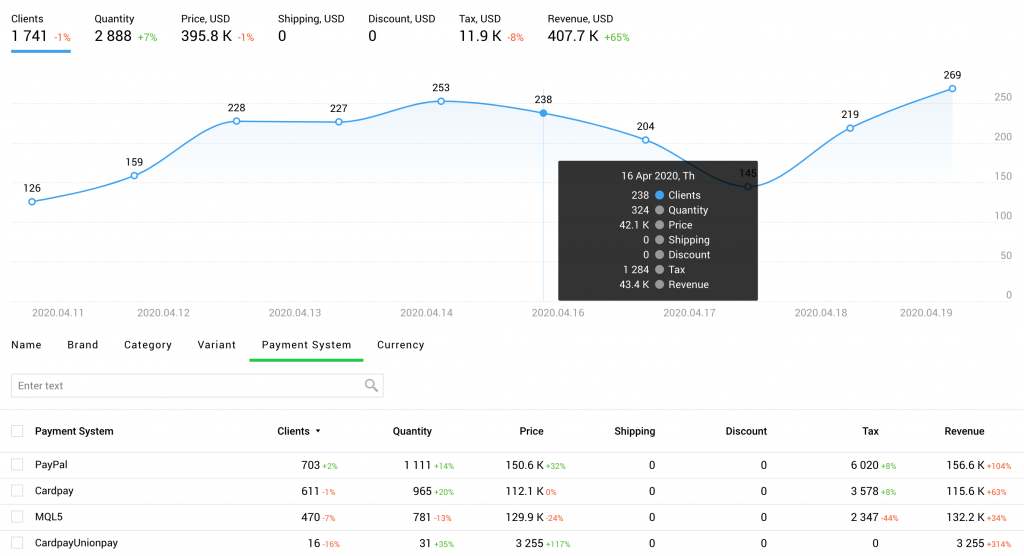
It may sound obvious but too many businesses don’t have a good system for tracking and analyzing ROI. For digital businesses, Finteza is a comprehensive web analytics platform that will help you analyze and predict your ROI:

Web analytics

It’s a Battle of Attrition

Most freelancers fail because they give up too soon. Building a strong client base and having success in your industry takes time. It takes time to build the necessary connections, develop a portfolio of work, and hone in on your area of specialization.

If you can battle through the lean times at the beginning, you’ll be able to reap the rewards once you get your footing. This is where starting part-time definitely helps!

If your business is still slow, here are a few resources to help:

  • Here are a few great portfolio website builders for you to start working on branding
  • Here are a few great ways to set up your home office to maximize your productivity
  • Here’s an easy promo video maker for you to start generating leads through engaging ads
  • Finally, here’s a great way to create content for your website the way it really impacts your bottom line.

Are you up for the challenge?

Image by mohamed Hassan from Pixabay

Filed Under: Business Life

Five Reputation Management Tools to Use

September 9, 2020 by Jessy Troy

Nowadays there’s a lot of personal information publicly available on the web. We all have an “online persona” which is directly related to the way people see and judge us as individuals.

Unfortunately managing your online reputation is everything but an easy task.

There are many social media channels where people can spread unbiased opinions about others, tag inappropriate photos, and otherwise mess with your reputation. As a blogger, your name stands for the quality and authenticity of your posts, apart from your personal and professional interest in having a “clean and positive” online reputation.

As Google says: “Your online identity is determined not only by what you post, but also by what others post about you – whether it is a mention in a blog post, a photo tag or a reply to a public status update.”

If you want to influence the way people see you online, it’s important to understand that there are two basic techniques for managing your online reputation.

  • Constantly monitor what people are saying about you and respond instantly when necessary.
  • Actively develop your reputation by creating “positive” content. Create a hub such as a personal landing page where people can easily find everything about you in a simple and compact format. Hiring a solid digital performance agency would be helpful here.

With those two techniques in mind, here are six simple, yet effective tools that might help you along the way to monitor what people are saying about you as well as actively develop and influence your online reputation.

1. Google Alerts

Google Alerts let you get notified whenever your name or email address gets mentioned publicly on the web. To use Me On The Web, just log into your Google dashboard and click “Set up search alerts for your data” – it’s as easy as that!

It is also a good idea to use a SERP tracker to monitor your branded search results.

2. SocialMention

As Inform Buki rightfully states, social media is the branding powerhouse, so it is only natural that you need to monitor your brand on social media.

Another brilliant tool to track your name across the web is Social Mention. It’s a social media search engine that searches blogs, comments, bookmarks, events, news, videos and micro-blogging services. You can select the sources you want to search and employ email alerts or a personalized RSS feed to stay up-to-date.

But don’t take it from me. Here’s their official description.

“SocialMention allows you to easily track and measure what people are saying about you across the web’s social media landscape in real-time. Social Mention monitors 100+ social media properties directly including: Twitter, Facebook, FriendFeed, YouTube, Digg, Google etc.”

3. WiseStamp

Easily create a HTML email signature and automatically add it to your outgoing email with WiseStamp. Email signatures are effective tools when it comes to building your personal brand and an ideal starting point for influencing your online reputation with anyone you contact via email.

Having a professional email signature is very important – it should at least contain your full name, basic contact info, and a link to your main website or personal landing page. To see it in action, here’s a detailed tutorial in how to add an email signature in Outlook.

Cloud PBX is a useful tool to set up as well as it will let you be more in control of your contacts.

4. Linktree

Take advantage of a clean and simple app for building awesome personal landing pages in minutes with Linktree.

Linktree sites are free, customizable, and help you manage your information all in one place like your bio, social networks links, your blog, and contact details. Once created, you can provide one simple link where people can find out everything about you and follow you around the web.

5. Knowem

Knowem helps you to secure your personal name or username on over 590 social media services and websites.

You’ll hardly use any of the services you sign up to via Knowem, but assuring that your name or pseudonym will not be related to any undesirable content on those websites is worth the effort.

I hope these tools will definitely help you to maintain your online reputation. But if you would like to grow your online reputation then here is a great resource with some proven social media marketing strategies that will help you to grow your online reputation.

Are there any reputation management tools I have missed? Please share!

Image by mohamed Hassan from Pixabay

Filed Under: Business Life

Are You up to Speed on Your Business Finances?

September 2, 2020 by Thomas

Running a business means you wear many hats and have a lot on your plate to deal with.

That said the biggest focus should be on how your business is doing financially. If you lose focus here, you could in fact end up losing your business if not careful.

So, how up to speed are you on your business finances?

Don’t Let Financial Issues Cost You Your Business

In looking at the impact various financial matters can have on your business, here are a few to focus on:

1. Bringing in enough revenue – How good of a job are you doing bringing in revenue? If you have been in business for a few years now, it is wise to compare revenue numbers from prior years. This can give you a good sense of if your business is headed in the right or wrong direction. If you see indications that revenue is heading south, you can at least be aware of it and try to turn things around. Figure out if it is only your business having financial issues or more a sense of the industry you are in. If the former, you need to put a stop to the bleeding sooner than later.

2. Knowing the financial rules you face – From taxes to commission revenues, be up to speed on rules you face. For instance, if someone asked you what is ASC 606, could you answer that question rather quick? ASC 606 involves the accounting of commissions and how they are tracked and reported. Things like this you need to be aware of and any changes that come with it. This is why having a top-notch accountant for your business proves crucial. Small financial mistakes at a company can oftentimes be overcome. What you do not want to have happen is having major ones put you on the brink.

3. Erasing debt – One of the worst things you can have hanging over your head as a business owner is a large amount of debt. With that being the case; are you dealing with sizable debt? If so, are you taking any action to deal with it? Not dealing with it can leave you in financial rough waters for years to come. An example here would be credit card debt. While it is fine to use a business credit card for some needs, do not rely on it all too often. If you do, you could see that balance become rather high in a short amount of time. In the event you only pay the minimum each month, think of those interest fees. Those fees are in essence like throwing money out the window. This is why using cash more often and paying down any credit card debt makes a lot more sense. If you do have sizable credit card debt, look to see about doing a balance transfer. You may discover another bank with better financing rates.

As you go about reviewing your company finances, be sure to look for any red flags.

If you find red flags with your finances, do all you can to lower them.

About the Author: Dave Thomas covers business topics on the web.

Filed Under: Business Life, Uncategorized Tagged With: accounting, finances

How to Save on Taxes When You Are Self Employed

July 30, 2020 by Guest Author

By Kayla Matthews

Self-employment means a lot of freedom and flexibility in your work — but being your own boss isn’t cheap. Unlike a worker on business payroll, you’re responsible for paying your own Medicare and social security tax in the form of a 15.3 percent self-employment tax.

It’s a big expense, and one that leads many freelancers to think about alternative career options. Fortunately, it’s possible to seriously cut down on those extra taxes that you have to pay.

The tax code is full of lines that provide deductions for business and the self-employed. While the 2017 Tax Cuts and Job Act nullified a number of these tax write-offs, there are still many write-offs you can use to lower your taxes. Below, we’ll cover the best ways to save on taxes when you are self employed, plus other strategies you can use to save on taxes.

1. Take Advantage of Above-the-Line Deductions

Since 2017, standard deductions have been higher than usual, even for single filers. The size of these deductions, combined with the labor needed to track expenses, means some taxpayers skip keeping track of potential deductions. It may seem like there’s no way you can spend enough to have itemized deductions that beat the standard deduction.

Even if you don’t itemize your deductions, you can still write off certain expenses on your tax return.

Above-the-line deductions, sometimes called business deductions, reduce your adjusted gross income (AGI). Your AGI is the sum total of your annual income, including wages, business income, capital gains, unemployment and so on.  You can take these deductions even if you don’t itemize.

There is a variety of above-the-line deductions that you can use to cut down your AGI. For example, you can use retirement plan and HSA contributions. You can also deduct many self-employed business expenses, like office rent, utilities and legal fees.

2. Deduct Travel-Related Expenses

Business travel is a deductible expense, so long as it lasts longer than a work day, requires you to sleep or get rest and takes place out of your tax home. You can also write off many travel-related expenses.

The cost of transportation to and from your destination is deductible. So is the cost of transportation at your destination. You can also write off meals and lodging — so long as they’re not considered “lavish” or “extravagant,” per IRS guidelines.

Typically you can only write off 50 percent of the cost of meals, but there are exceptions that let you go over this limit.

3. Save Purchases for the End of the Year

IRC Code Section 192 allows taxpayers to deduct the cost of personal property in the year you put it into service — so long as you use it more  than 51 percent of the time for your business. So long as you buy a business asset and start using it by December 31, you can probably write off the expense on your tax return for the year.

Normally, you’d have to depreciate the expense over several years, splitting up your savings.

4. Write off Interest

If you’ve taken out a business loan, interest paid on those loans can be fully deductible, so long as you’re spending loan funds on business expenses.

There are some exceptions to this rule. For example, the loan needs to come from a real lender. Some banks and financial groups offer loan options for self-employed professionals. If you take out one of these loans, you can write off the interest on your tax return. If you borrow money from a family member or friend, however, you can’t write off the interest.

5. Write off Publications and Subscriptions

Any business-relevant publications you buy or subscribe to can be written off on your taxes.

Not all subscriptions can be written off. You may have a hard time justifying a subscription to your local paper, for example. Relevant industry publications, however, can be written off. Reference materials are also a deductible expense.

6. Deduct Your Home Office

Have a space in your home dedicated to work? You can write off the value of that space on your taxes.

The space has to be dedicated to work, however. If it’s serving another purpose — like a bedroom — it won’t be deductible. The IRS may request documentation of your home office space.

Even if you can’t write off the costs of your work space, you can generally write off the cost of utilities. Your internet connection and phone line are may count as fully- or partially-deductible expenses.

Tracking and Applying These Deductions

You can connect personal finance software to your bank account and automatically log expenses. This can help you keep track of your annual expenses.

You may also want to start looking at long-term tax saving strategies. If you don’t have a HSA, retirement fund or self-employed defined benefit plan, opening one can provide additional opportunities for savings.


About the Author: Kayla Matthews writes about communication and workplace productivity on her blog, Productivity Theory. Her work has also appeared on Talent Culture, MakeUseOf, The Muse and Fast Company.


Photo by StellrWeb on Unsplash

Filed Under: Business Life Tagged With: tax

3 Keys to Selling a Startup

July 22, 2020 by Thomas

Is there any chance you may want to sell your startup anytime soon?

If the answer is yes, do you know what is necessary to get this all-important task done?

Making sure everything falls into place is critical to say the least.

The last thing you want is hassles that can end up costing you time, money and more.

With that in mind, are you going to be selling sooner than later?

What Will Make for a Better Sale?

When you are thinking of preparing your startup for acquisition, here are three keys you want to zero in on:

  1. Is now the right time? – Above all else, be as sure as you can that now in fact is the right time to sell. There are a myriad of factors that can and often do come into play with such an important thing to consider. For one, is the market in your particular industry good for selling now? If such sales are sluggish right now, you may well decide it is best to hold off. In the event many startups in your industry are on the market, you may also decide now is the best time to cash-in on this. You also want to think about what a sale will mean to your professional and personal lives. Do you have another business to turn to? Will you go work for someone else? If you are getting up there in years, is retirement a possibility now? Weigh everything in play to see if selling a startup now makes sense.
  2. Where do your workers go? – Unless your company is void of employees, what happens to your workers when selling is key. The last thing you want is to leave them hanging. That said you typically would have a few options to look at. First, you may be buying another startup soon. If so, will you offer to take your current employees with you? Second, you may include some language in the sale of your startup. Language that says the buyer will at least offer your workers jobs. For some sellers of startups, they will not do either. If this is where you are leaning to; at least give your employees as much notice as possible. This allows them more time to see what else is out there on the job front.
  3. Charting your next course of action – Last, you want to have a good idea of what is next in store for you. Are you looking at buying something else? Would you go and work for someone else? If you are up there in age, could retirement be in the cards for you sooner than later? By having a good sense of what it is you want and can do, you are in a better position moving ahead.

Once you have made the decision it is a go to sell your startup, a lot needs to come together.

With that in mind, you want to put together a checklist.

Be sure to check the appropriate boxes as you move along.

In selling your startup, you more than likely have options on the table to what will come next.

About the Author: Dave Thomas covers business topics on the web.


Filed Under: Business Life Tagged With: business, sales, startup

  • « Previous Page
  • 1
  • 2
  • 3
  • 4
  • 5
  • …
  • 187
  • Next Page »

Recently Updated Posts

The Creator’s Edge: How Bloggers and Influencers Can Master Dropshipping

Is Your Brand Fan Friendly?

How to Improve Your Freelancing Productivity

How to Leverage Live Streaming for Content Marketing

10 Key Customer Experience Design Factors to Consider

How to Use a Lead Generation Item on Facebook


From Liz Strauss & GeniusShared Press

  • What IS an SOB?!
  • SOB A-Z Directory
  • Letting Liz Be

© 2025 ME Strauss & GeniusShared