Successful Blog

  • Home
  • Community
  • About
  • Author Guidelines
  • Liz’s Book
  • Stay Tuned

#GetMomentum – Interview with Jason and Jodi Womack

June 2, 2016 by Rosemary

Everyone has felt it at some point in their lives. You have the desire, but can’t seem to start moving in the right direction. Maybe you haven’t even figured out what the right direction is, yet.

With Get Momentum, the new book from Jason and Jodi Womack, you’ll be able to work through a series of exercises and guided thought processes and come out the other side with a clear set of actions. I enjoyed having a paper copy of the book, so I could write in the margins and create my own roadmap along with the activities provided. There’s also a wealth of additional information on the GetMomentum.com website.

Jason and Jodi were gracious enough to answer some of my questions.

What inspired you to write your new book Get Momentum: How To Start When You’re Stuck?

We’ve been working together for more than 20 years, and over the past 9 years we’ve served as leadership and executive coaches helping busy professionals improve their productivity – and their lives. We wrote this book to share the secrets to success that we know will help people achieve more, work smarter, and be happier.


What are the key themes of the book?

When you know what you want to be known for, it’s easier to decide what to do and what not to do. As you read through each of the 5 stages of momentum that we describe, you will begin to understand the approach you can take to Get Momentum on projects you want to start or changes you want to make.

There are 5 distinct stages you’ll pass through; they are:

  1. Motivation: Here, you decide what you want to be known for so that you can more easily decide what to take on and what to let go of.
  2. Mentors: At this stage, you identify the people you can learn from, the ones willing to help you by sharing what they have learned (often, the hard way) so you don’t make so many mistakes.
  3. Milestones: By choosing 3 subprojects (milestones) you can complete over the next 90 days, you are spreading the work out. Even a project that will take you a year or more NEEDS to be divided into chunks that you can work on.
  4. Monitor: At the end of the day, you must reflect on success. You have to look back and recognize that you “moved the mission forward”. Identify what you want to watch for, what you’ll want to have completed, and celebrate what you accomplish.
  5. Modify: Along the way, you’ll make small changes, consistently, that act as guard rails that pull you back on track as you continue moving toward the goals you’ve set. As you become what you want to be known for, you’ll be ready to take on new goals.

What is the most important thing you want readers to learn from the book?

Ask for help. So much time is lost and so much hardship is endured because we wait too long before we ask for the assistance we COULD have used to achieve success. Once you know what you want to be known for, and as you surround yourself by people willing to help you, it’s easier and easier to make progress on those subprojects you’ve set for yourself.


Why do you think it’s so hard for people to get and keep momentum?

Many leaders subconsciously believe that they should already know everything there is to know about how to work, manage teams and projects, and make progress on their goals. When people lose momentum it is usually because they’re comparing themselves to someone who has it different than they do. There’s only one person to compare yourself to, and that is you!

Reflect back on what you DID get done today and think about what you can do tomorrow. Create a plan, ask for the help you need, and honor the process as you move from where you are to where you want to be.


How did the two of you meet?

We met in the front row of a history class at the University of California. Jodi asked Jason if she could borrow his notes. He said, “No”, and that was the beginning of what has become a beautiful relationship.

After spending time as school friends, the “No” turned into many “Yeses” and 23 years later we are still sharing our notes and editing each other’s writing. We’ve grown up together as we worked in our local, small town high school where Jason taught history and Jodi worked in the Counseling office. We moved on to found our own consulting firm, The Womack Company. We help busy professionals be more productive through coaching, consulting, our Get Momentum Leadership Academy, and now the book… Get Momentum: How To Start When You’re Stuck (Wiley, May 2016).


What is your favorite thing to do together?

Our version of nothing… That’s going for a hike in the hills of Ojai, California or Costa Rica… a long road trip, singing (badly!) to the 80’s tunes we both grew up with…dreaming of the next article or book we could write that would help the people we love working with and serving all over the world. Basically, we love doing life together!


How do you balance being partners in both work and in life? How does that play out in a practical way for each of you?

We are different. Sure, some days it’s tough because we both can see the very same problem from two different perspectives, or with one perspective we see two very different problems. However, what our Get Momentum Leadership Academy members tell us is that the “she said / he said” approach is a healthy way to recognize the many ways they can address the projects they are working on and the problems they are solving. In a practical way, we work very well together when we recognize the strengths each of bring to the work we do.


What was it like writing your first book together?

Oh, it was easy! Jason wrote the book. Jodi deleted it! Seriously, we played to our strengths. Jason is prolific. He can write hundreds and even thousands of words in a sitting. Jodi can read through all that “raw material” and choose the best lines and paragraphs that are going to help readers Get Momentum!


Author’s Bio: Rosemary O’Neill is an insightful spirit who works for Social Strata — makers of the Hoop.la community platform. Check out the Social Strata blog. You can find Rosemary on Google+ and on Twitter as @rhogroupee


I was given a free copy of this book for review purposes. Opinions expressed are my own. ~Rosemary

Filed Under: Personal Development, Uncategorized Tagged With: momentum

Do Your Employees Have Enough Schooling?

February 19, 2016 by Thomas

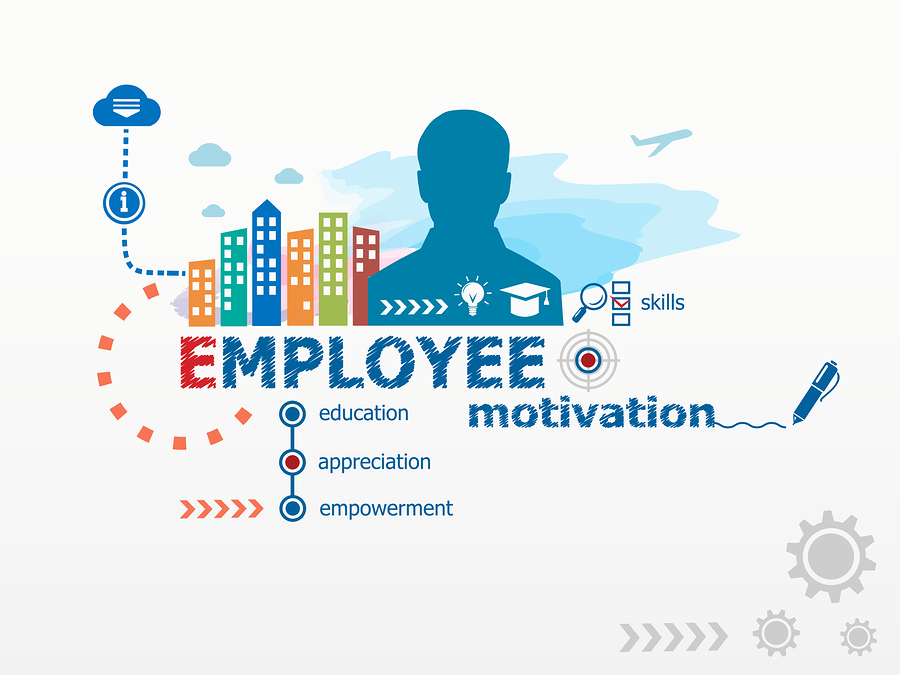
Employee Motivation Concept And Business Man.Whether you have a handful of employees or hundreds of them, making sure they have as much education as necessary to handle their respective job duties is something that should never be taken for granted.

Think about when you started working and before you created your business or purchased it from someone else. How much schooling did you have at either time?

In today’s technologically-driven work world, having workers up to the tasks that you throw at them is more critical than ever.

As a result, there are a number of things you can do as an employer to beef up your employees’ educational portfolios, all the while enjoying the benefits down the road of having more educated workers on your team.

They include:

  • Needs – First and foremost, look to see what your current and likely pending needs are for your industry and your company in general. Have you looked at a projected growth for your business and market overall? What current economic factors are harbingers for things to come over the next 12 months? Are you forecasting any notable job increases or layoffs in the next year? These should all be areas of interest to you as a business man or woman, having the finger on the pulse of your industry;
  • Strengths and weaknesses – It should not come as a major surprise that just about all employees have their strengths and weaknesses. Your job as an employer is to bring out the best in your workers and improve their skills where possible. When it comes to the latter, there are educational opportunities that your employees can benefit from. If you have one or more employees working in H.R., sending them to school for additional education in areas of workplace rules and regulations, liabilities that employers can be exposed to, handling the complex world of health insurance etc. are all opportunities where a little more schooling can make a world of difference. As for employee strengths, it never hurts to have the occasional refresher course or two (something that some additional classwork can provide) so that your staff will be as up to speed on possible;
  • New opportunities – One of the many advantages of the Internet is having access to countless online opportunities, including additional education. If your employees who are yearning for more education can’t attend classes in person due to work schedules, family commitments, long traveling distances, they likely have the option of online studies. Whether it is in accounting and finances, human resources, electrical and computer engineering, marketing or myriad of other subjects, letting employees take online courses to improve their standing with your company is a great idea;
  • Long-term financial benefits – Yes, contributing towards or even paying the entire bill to have employees get more education now is a costly matter, but the benefits down the road are oftentimes all so worth it. Employees with more educational and job skills are more apt to stay with an employer, especially those companies who treat them well and offer advancement opportunities (see more below). Better educated employees also are better equipped to handle the questions, concerns and even occasional anger of customers. With additional educational and workplace skills, such workers can oftentimes diffuse a situation with a consumer before it gets out of hand;
  • Higher standing – Last but not least, your company offering additional educational opportunities to its employees will stand out in the crowd. When many people are fighting just to get their hands on low-paying or even minimum wage jobs in today’s challenged economy, the opportunity proves appealing to work at companies where moving up the ladder and the pay scale for that matter is very attractive. Tout the educational opportunities your business offers when marketing your company to prospective employees. This can be done in brochures, email ads, on social media, even in videos. The more the word gets around, the better opportunities your company has to attract the best.

As an employer, all you can do to attain and retain the best employees benefits you, your employees, and your customers, so everyone involved wins.

Use the educational bonus to bring in quality staff who one day have the ability to be even better employees with some additional schooling.

Photo credit: BigStockPhoto.com

About the Author: Dave Thomas covers business and educational topics on the web.

Filed Under: Business Life, Personal Development

10 Life-Changing Ways to Become More Business Savvy

January 28, 2016 by Rosemary

(Updated in 2020)

When I look to hire a new employee, one of the key skills I look for is savvy. It goes beyond education, beyond experience, and beyond talent.

Here’s Google’s definition of savvy:

shrewd and knowledgeable in the realities of life.

synonyms:

shrewd, astute, sharp-witted, sharp, acute, adroit, intelligent, clever,canny, perceptive, perspicacious, sagacious, sage, wise

People can be savvy about different things— social, political, business, tech, cultural. One of the cool things about savvy is that it can be a noun, a verb, or an adjective. Captain Jack Sparrow is fond of using the verb form, meaning “understand?”

In the entrepreneurial world, if you find a partner or employee with business savvy, you’ve struck gold. You’ve found someone who is resourceful, quick, and probably a leader too.

I recently saw a rant by Gary Vaynerchuk about why people over 40 should be more entrepreneurial, (warning there is a tiny bit of profanity in the video) and he touched on this exact quality. People with a lifetime of actual experience naturally build up savvy. They have learned to adapt to different situations because they’ve been through them. They have context.

But don’t assume that savvy is restricted to the over-40 crowd. Practical experience helps build savvy, but you can encounter young people who are “savvy savants.” Often they are referred to as “old souls.” 

How to Become More Business Savvy

  1. Look beneath the surface in any situation; don’t immediately accept things at face value.
  2. Pick up skills intentionally. Communication skills, in particular, contribute to savvy.
  3. Take note of things going on around you. Perceptive is another synonym for savvy.
  4. Don’t be afraid to go against the herd.
  5. Apply insider knowledge to your advantage (like using curbside checkin at the airport instead of inside counter help).
  6. Don’t ignore etiquette; pay attention to the details of social graces, which apply even more in business situations.
  7. Do a lot more listening than talking.
  8. Humility is important, but don’t be a doormat. Savvy people look for a win-win whenever they can. It’s not always about getting an advantage for yourself.
  9. Take time to learn about cultural differences.
  10. Be the most prepared person in the room.

Do you consider yourself a savvy business person? What qualities do you feel make someone savvy?

Author’s Bio: Rosemary O’Neill is an insightful spirit who works for Social Strata — makers of the Hoop.la community platform. Check out the Social Strata blog. You can find Rosemary on Twitter as @rhogroupee


Filed Under: Personal Development Tagged With: business savvy, Savvy

Mindfulness for Entrepreneurs

January 21, 2016 by Rosemary

The idea of mindfulness conjures “touchy-feeliness.” Meditation, incense, perhaps some herbal tea.

But Ellen Langer, a social psychology professor at Harvard University, is more straightforward about mindfulness.

She says it’s simply the act of noticing change. If you want to be more mindful, simply put yourself in a context where you can notice change and then engage. No wind chimes required.

I found this strategy+business interview with Professor Langer fascinating. The interview focuses on mindfulness for senior executives and business leaders, but there are lessons for solopreneurs, consultants, and small business owners as well.

Mindfulness for the Entrepreneurial Spirit

  • To snap yourself out of auto-pilot behavior, change your physical context. If working from your home office is fostering bad habits, go find a co-working space with some new energy.
  • Stop being certain about things. Re-evaluate some of the long-held attitudes and beliefs you’ve become stuck with over time. Take a second look at your assumptions.
  • Explore different points of view, and notice how others express themselves. Find someone who will challenge your positions on a certain subject.
  • Look at distractions as potential opportunities. New things that come into your environment should be inspected, appreciated, and used as fuel for growth.
  • Think of the limitations you feel you have on your business right now. Are they real, or are they presumed limitations? How would you run your business if you assumed there were no limitations?
  • People create context as well. Surround yourself with people who energize and challenge you.
  • Noticing the things and people around you, in detail, makes you magnetic.

Take a moment and watch the video and interview linked above; what do you think? Can you find ways to incorporate mindfulness into your day-to-day business?

Author’s Bio: Rosemary O’Neill is an insightful spirit who works for Social Strata — makers of the Hoop.la community platform. Check out the Social Strata blog. You can find Rosemary on Google+ and on Twitter as @rhogroupee


Featured image via Flickr CC: Umberto Salvagnin

Filed Under: Personal Development Tagged With: mindfulness

Is a Retirement Crisis in the Cards for You?

December 16, 2015 by Thomas

imagebase14_26_cIs there a retirement crisis in the U.S.?

If you are one of nearly 86% of Americans sensing they are living in the midst of a retirement crisis, you probably also feel that you won’t be able to rely on the government to bail you out.

Are you justified in thinking that your retirement is not safeguarded? And if so, what can you do about it?

Is the Crisis Real?

It might be.

According to a recent study reported by EBRI, nearly 45 % of Americans run the risk of falling short of money during retirement.

Other studies report that most Americans have less than $50,000 saved up for retirement.

It seems that most people are still counting on social security to cover the gap between savings and what they’ll really need during retirement.

Who is to Blame for the Retirement Crisis?

As the article “who to blame for the retirement crisis?” looks at, you might want to take a quick check in the mirror.

One facet of the problem is that folks haven’t saved up enough for retirement.

People overspending, relying on credit cards for staples, and not paying back owed debt has helped put this country in some real financial dire straits.

The stock market crash of 2008 can be at least partially blamed on consumer debt, and that comes down to people wanting the latest televisions, computers and smart phones.

Was it worth it?

The government has spent millions if not more in bailout money, but the solution is short term.

What will be done when your generation is set to retire and the stock market is at its lowest point?

How Can You Protect Yourself?

For starters, recognize that your retirement security is up to you.

Though Social Security will probably still be in place by the time you retire, no one can guarantee that outcome.

Why put your livelihood in the hands of someone else? Take control of your own retirement now, before it’s too late.

Nothing could be worse than sitting around waiting for that first Social Security check from the postman and discovering that it is far less than you can live on.


Living on Less

Next, you should look at your current lifestyle.

Are there areas where you can cut corners and sock more money into savings? Do you need to spend so much on holiday gifts, or can you cut the gift giving budget in half and put the rest into savings? Do you really need that expensive cell phone plan, or can you put up with a less than perfect plan that has budget pricing?

Trying to budget for 20 or so years of living with no work income is no easy task for anyone.

But instead of spending your energy blaming others, your time will be put to better use finding ways to take care of yourself and your family anyway.

That way, if the retirement crisis does turn out to be true, you will have safeguarded your security anyway.

Photo credit: BigStockPhoto.com

About the Author: Kate Supino writes extensively about financial matters.

Filed Under: Personal Development

Educate Yourself on Importance of eLearning for Business

November 20, 2015 by Thomas

Businessman Gear SuccessIt’s time to educate yourself on the importance of e-learning for business.

Both employers and employees can benefit from taking online courses. The choice of courses is almost limitless.

Whether you are seeking to obtain a certification, a degree, or simply to increase your knowledge in a particular area, e-learning offers a way to achieve those ambitions.

Convenience of eLearning

E-learning offers flexibility for students.

Enrolled students can log on to their classroom dashboard from any place with an Internet connection.

So when a business owner has an employee in the field who they want to enroll in an e-learning course, that employee doesn’t need to come in from the field in order to sit in a classroom and learn.

Timing is also a huge benefit to e-learning courses.

Most often, there is no time limit for how long a student can take to finish any one course, or to get their final certification. In cases where there is a time limit, it’s usually quite liberal.

After all, e-learning courses are specifically designed to meet the needs of students who have other major demands on their time, such as raising a family or working a full-time job.

Location is another valuable benefit for most e-learning students.

Armed with a laptop and a set of ear buds or headphones, students can engage with their course work outside in a park, in the employee break lounge, on public transit, or anywhere else they find themselves with extra time to spare.

How eLearning Benefits Employers

Even if employers don’t enroll in e-learning courses themselves, their businesses will benefit when employees are motivated enough to take e-learning courses.

Employers can greatly enhance their talent resources when they encourage and reward employees for taking e-learning courses.

As the following article looks at, there are 3 basic needs for inspiring motivation in eLearning.

The first one is accessibility. Having the courses be accessible to the employees is a key part of making sure everyone is treated fairly in regards to the opportunity.

One great way to ensure this is to post news about the e-learning opportunities in employee newsletters, in company emails and on office bulletin boards. This is also a terrific way for employers to protect themselves against the possibility of discrimination suits.

A second way to motivate employees to take up e-learning is to make it relatable to their job success. It is in this way that employers can really benefit from helping all their employees to do better in their job performance.

Any industry can benefit from employees who are more educated in terms of dealing with the issues that come up in their job.

For example, a factory worker would benefit from courses that teach about automation. A salesperson would benefit from courses about purchasing behavior. A retail clerk would benefit from courses regarding preventing shoplifting.

Finally, employers can motivate employees to enroll in e-learning by offering rewards based on measurable goals.

When employees see that they can be promoted or earn more money by taking e-learning courses, everyone benefits.

Photo credit: BigStockPhoto.com

About the Author: Kate Supino writes about best business practices.

Filed Under: Personal Development Tagged With: business, education, elearning, employees, employers

  • « Previous Page
  • 1
  • …
  • 6
  • 7
  • 8
  • 9
  • 10
  • …
  • 13
  • Next Page »

Recently Updated Posts

Is Your Brand Fan Friendly?

How to Improve Your Freelancing Productivity

How to Leverage Live Streaming for Content Marketing

10 Key Customer Experience Design Factors to Consider

How to Use a Lead Generation Item on Facebook

How to Become a Better Storyteller


From Liz Strauss & GeniusShared Press

  • What IS an SOB?!
  • SOB A-Z Directory
  • Letting Liz Be

© 2025 ME Strauss & GeniusShared