Successful Blog

  • Home
  • Community
  • About
  • Author Guidelines
  • Liz’s Book
  • Stay Tuned

Book Review: Building on Bedrock, by Derek Lidow

February 15, 2018 by Rosemary

Successful entrepreneurship starts with donkey poop and watermelon juice, according to Derek Lidow. I couldn’t agree more.

Some people think that successful entrepreneurs roll around in expensive cars, giving interviews on CNN, and gracing the cover of the Wall Street Journal in pixelated glory. The reality of it is years of very hard work, financial sacrifice, lost family time, and unglamorous tasks.

Building on Bedrock by Derek Lidow uses the life stories of some well known (and some not-so-well-known) entrepreneurs to illustrate the path to entrepreneurship. Sam Walton started from nothing (and leveraged the aforementioned donkeys and watermelons), Estee Lauder was struggling against an unkind comment from a store patron, and “Jody” Maroni just didn’t want to work in his dad’s butcher shop.

I’d recommend this as a good read for anyone who might be wondering whether they’re cut out for being an entrepreneur. Using the interwoven stories of these successful men and women, the author provides a “gut check” of how, when, and why you might want to start your own business.

Continuing the lessons of the highlighted men and women, they all slowly built their empires one step at a time. Once the new business was launched, the real success came with control, low risk, and patience. We can all draw some inspiration from these stories.

There is a diversion in the book, going into detail on “high risk” entrepreneurs, and the venture capitalists and angel investors they typically deal with. At first glance, it seems off-topic; however in today’s world of high-flying tech geniuses, it’s useful to know the pros and cons of dealing with that type of business model.

The financial foundation of a quick-start, high risk tech startup is vastly different from the “bedrock” entrepreneurship of a Sam Walton (not that one is better or worse, they’re just different, and it’s best to go in knowing where you fit into the equation). The two different modes require completely different personalities and leadership styles.

Another recurring theme among the entrepreneurs is travel and face-to-face interaction with the team. Walton even bought a used plane at one point, so he could more easily visit his franchise locations. Estee Lauder spent years on the road while her husband took care of the family.

Ultimately, according to Lidow, it comes down to five core skills:

  1. Self Awareness
  2. Relationship Building
  3. Motivating Others
  4. Leading Change
  5. Enterprise Basics

Are you thinking about starting your own business? Would you consider yourself a “bedrock entrepreneur?”


Disclosure: I was given a digital copy of this book for purposes of this review.

Author’s Bio: Rosemary O’Neill is an insightful spirit who works for Social Strata — makers of the Hoop.la community platform. Check out the Social Strata blog. You can find Rosemary on Google+ and on Twitter as @rhogroupee

Filed Under: Business Book Tagged With: book review

Could Distractions Be Taking a Toll on Your Business?

February 7, 2018 by Thomas

To make your business as efficient as it can be, you need to have a myriad of things fall into place.

First, you want to hire the best employees possible.

Sure, there will be times when you make a mistake or two in the hiring process. That said getting it right as often as possible is key to a successful company.

Second, you need to give your brand as much positive promotion as possible.

With your brand getting the right marketing and social media, the sky can be the limit on how far it can go.

Last, while hiring right and promoting your biz are critical, you also need efficiency.

Without an efficient office, your business could very well hit many bumps in the road.

So, is your company doing all it can to take distractions out of the equation?

Be an Efficient Business

In doing all you can to be an efficient business, look at avoiding these distractions:

  1. Employees who are not focused – In hiring the best people, you want those who are most efficient. Yes, their resumes can be quite impressive, but how efficient will those you hire prove to be? Do your best to get those individuals who will focus on work and nothing else when they are on the clock. While you do not want to hire robots, you do want those who know what is necessary to get the job done and still have fun. Unless running a home business, you have to rely on others to help get you to where you want to be in the business world.
  2. Calls and emails that waste time – As a business owner, your phone likely rings countless times a day. That said how many of those calls would you say are worth your time? You want to do your best to avoid phone calls that are a nuisance. Such calls can detract from your daily focus and that of your employees’ too. The same holds true with emails. You and your employees will get a lot of emails on your work computers each day. Be able to discern those which are wasting your time. Although much or all those emails should go to a spam that does not always happen. When you lessen the load of unwanted calls and emails, your work days can prove much more productive. As part of that production, be sure to promote your business with the right marketing plan. From traditional marketing to social media and more, spread the word about your brand.
  3. Family attention – As important as your family is, does it seem at times as if you’re torn between family and work? Do your best to find that happy medium. Yes, your family means the world to you. That said you need your business to do well so that you can support your family now and for many years to come.
  4. Financial concerns – Last, what business owner does not think about their revenue stream? With that in mind, you do not want to get to the point where you are too fixated on it. When you hire right, avoid distractions, and find a happy balance of family and work, revenue will be fine.

In avoiding business distractions, do your best to have the focus in the right areas.

Photo credit: Pixibay

About the Author: Dave Thomas covers business topics on the web.


Filed Under: Business Life, management Tagged With: business, distractions, employees, managing

How to Create and Control Your Business Budget

January 25, 2018 by Guest Author

By Kayla Matthews

Striking out with your first startup? Been in business for a few years but still stumped by budgeting? You’re not alone. Budgeting doesn’t come naturally to many business owners, but you can develop the skills needed to create and manage your business budget.

Many scenarios require a business budget to ensure company success and direction. Matching business expenses, both anticipated and real, to revenue helps you determine if you possess enough money to put into operations, expansion and income generation, among other needs. New startups should research their market to replace a history of financial reporting while being realistic about their goals and ambitions. Businesses will use their budget to direct company growth toward income, profit and spending over the future months and years.

Without a budget plan in place, businesses risk going into debt or not spending enough of their financial resources to grow a business to compete in the market.

Starting and Maintaining Your Business Budget

Think of your company budget as a roadmap for your business. A business plan outlines directions and goals, but your budget also informs the end goals of your company. Here are five ways to create and control your business budget:

1. Make a List and Check It Twice

Base your budget off of realistic profit you desire to produce in the coming year. Don’t fret over accuracy too much because budgets focus on realistic forecasts and forward-thinking. Start with a list and build your budget from there.

Pull out your most recent business financial statements. Look at the current profit brought in since it drives other estimates for capital expenditures, expenses and costs. Consider outside factors such as the loss of a major client or a downturn in the economy in your estimates. Don’t forget your operating costs: rent, utilities, research, insurance, taxes and travel. As you would in a personal budget, create an emergency business fund or plan to seek out a loan should the need arise.

2. Don’t Be Afraid to Shop Around

Staying on top of your long-term success means continually looking for what’s best for your company and its budget. Why waste money on suppliers that deliver little but issue a hefty invoice every month? Why continue to use lead generation tools that fail to produce results?

Don’t be afraid to shop around for the tools, suppliers and services that best accommodate your company and its success. You may even consider seeking outside capital to grow your business in order to expand your resources using external finances. No matter where you invest, it’s important you get the most out of your money without wasting it.

3. Make a Budget Spreadsheet

Spreadsheets feel intimidating but remain the classic business budget tool for a reason. When opening or operating a business, use a spreadsheet to calculate estimates regarding revenue percentage and total amounts you’ll need to direct to raw materials and other resources. Do the same with your taxes, insurance and operating costs, for example.

Templates will help you plug in the right information to make conservative estimates, and you should pull out your budget spreadsheet every month for review. You’ll track business outcomes against the estimates as you move along in the following months to monitor whether your business is profitable and achieving goals.

4. Show Restraint, Not Rigidity

It’s better to go under budget than over budget in most opinions. Conduct restraint in your budget over rigidity. Going too under repeatedly sets up your business for stagnancy. Invest in new technology or other resources that will help grow your business.

When you go over budget, review areas to cut costs. Focus reduction strategies first on analyzing profit margins on services and products offered. Direct investments primarily in your most profitable services and products. You don’t need to cut positions needlessly, either. Implement a telecommute plan or reduce the workweek for applicable positions to conserve costs and keep employees. Stay on top of tracking your business expenses.

5. There’s an App for That

When it comes to managing expenses, there’s an app for that, too. Many aspects of conducting business are now automated, and budgeting is no exception.

Many budgeting apps focus on various areas of spending, from clocking hours for employees to allowing receipts to be scanned for tax purposes or reimbursement. Examples of helpful apps include LearnVest (tracking goals), DollarBird (includes past and present income) and Level Money (subtracts reoccurring expenses to show what’s left to spend). For those getting started, apps help business owners separate their personal and business lives.

Budgeting feels intimidating for many business owners. To build and maintain an effective budget, companies must see budgeting as a roadmap to future success with forecasts to weather the sunny and stormy business days.

Stay realistic, but don’t be too rigid with your budget. The ultimate goal of your budget is to keep your business running with an eye to the future for competition and growth.


About the Author: Kayla Matthews writes about communication and workplace productivity on her blog, Productivity Theory. Her work has also appeared on Talent Culture, MakeUseOf, The Muse and Fast Company.

Featured image: Photo by Fabian Blank on Unsplash

Filed Under: Business Life Tagged With: budget, Kayla Matthews

What Makes Your Business Stand Out from the Rest?

January 24, 2018 by Thomas

As you take a moment to reflect on the success of your business, what has made it achieve greatness up to this point?

Some business owners will state that it is the employees that make the company tick.

Others will also point out that they could not be doing this well if not for a great marketing plan being in place.

Still others would highlight they learned from their mistakes. As such, they improved business operations over time.

No matter what makes your business stand out from the rest, always strive to make your company better.

Remember, standing still can be a recipe for disaster.

Does Your Workplace Run as Smooth as It Can?

In having a smooth running workplace to stand out from others, remember the following:

  1. Employees – Hiring top-of-the-line employees gives you a competitive advantage over your competitors. That said there may be times when employee issues come to the surface (see more below). If they do, will you handle them the best way possible? In having the best human resources solutions, you can more times than not avert problems. With that in mind, be sure when hiring anyone that they know full well what you expect of them. You don’t want a workplace where rules are not followed and mayhem is the order of the day.
  2. Meetings – Yes, there are employees and even bosses who dread regular company meetings. The same is true for one-on-one meetings between an employee and his or her supervisor. Even with that in mind, meetings are productive on several fronts. They allow you and your team to chart a business course each week. You can also hash out any issues that are within the framework of everyone can know about the situation. For example, one or more clients are being difficult when it comes to renewing contracts with you. By sitting down as a team, your employees share ideas on how best to keep those clients on-board for the future. Among those issues to deal with on a more personal level would be some workers not getting along with one another.
  3. Personalities – While you are not running a dating service, you do expect your co-workers to at least be cordial with one another. Running a company also means being a part-time psychologist. Doing your best to know office personalities and which ones need a little more attention is key. With human resources consultants along for the ride, you are better set to receive H.R. advice to take to the bank. Such consultants can also remind you how to go about staying within the framework of your legal responsibilities in running a business.
  4. Goals – Last; always be thinking about what tomorrow may bring. One of your goals as a business owner is to have a plan in place not only for today, but also tomorrow and beyond. If you end up becoming complacent, it can backfire on you. In fact, it could one day lead to your business closing its doors. Always keep an eye on what competitors are doing and how you can surpass them.

In having your brand at the top of the heap, strive hard to be the most resourceful business owner possible.

Photo credit: Pixibay

About the Author: Dave Thomas covers business topics on the web.


Filed Under: Business Life, management Tagged With: employees, human-resources, small business, workplace

Traits of a Great Founder – Being Your Own Brand Evangelist

January 18, 2018 by Rosemary

By Tim Brown

One of the most important traits of a great founder is learning how to be a brand evangelist. Not only is this vital when you are growing a new business and trying to attract customers, but it’s also crucial once you start looking for funding or liquidity events with investors.

At all points throughout your business journey, you will need to ignore the naysayers and continue to trump the benefits of your company which is why you must be an evangelist. If not, you will struggle to attract new customers, the talent for your workforce or investors to fund your dreams.

What is a Brand Evangelist?

An evangelist is somebody who believes in everything that your company stands for and who is willing to dedicate their time to helping your mission without any personal gain. Therefore, by being your brand evangelist, you should be vividly telling everybody possible about your business and trying to further your progress.

How to Be a Brand Evangelist

The first step in being a brand evangelist is dedicating yourself to sales and marketing. You don’t have to be engaging in minuscule campaigns actively, but you should be focussing your time on figuring out how to further your reach through sales and marketing.

Most of the great founders of our time have been extremely involved in marketing, and that’s what’s allowed them to succeed. In many cases, the sole reason why customers choose to buy from the brand was that they believed in the evangelist and their mission.

Creating Something Truly Brilliant

However, if you’re going to learn how to be a brand evangelist, then you must entirely buy into your own business and your mission. But to do this, you must create something that is truly brilliant because it’s impossible to buy into something entirely if it’s low quality.

After all, there’s only so much you can do to convince people to follow you if you’re leading them in a terrible direction. Instead, part of being a brand evangelist is being exceedingly obsessed with the quality of your products and services, so that you create something beautiful so that it’s easy to be an evangelist.

Telling a Great Story

Thirdly, you must learn how to tell a great story, the same way that the mystical Steve Jobs did. Perhaps his best skill was his ability to tell a compelling story that made people attached to Apple, making them want to join in with his mission which was far greater than just his company.

As a business founder, you will have to convince everybody that you meet to join your mission and the only way that you can achieve this is by learning to story tell.

In most cases, the best way for a small business to tell a story is by identifying a mission that is far greater than just the reach of a company. Steve Jobs did this with Apple; he would often talk about bringing fantastic design and software to the world, he wasn’t only interested in growing his sales revenue.

Then, you must learn the basics of public speaking so that you can craft your story and tell it in an efficient and compelling way that keeps people enthralled and amplifies its effect. Most likely your business idea isn’t that exciting to most people, but that’s only because of the way that you are telling it and the direction in which it is spun.

Building Your Audience

Unless you are already famous, then it’s vital that you build up your audience so that once you know how to be a brand evangelist it has an impact on others. You could tell everybody around you about your company, but if that’s only ten people, the effect will be tiny.

In this day and age, there is no excuse to have a reach less than a thousand people. Networks like Facebook, Twitter, and Instagram make it easy to build a following, people who will listen to you and who in-turn could become brand evangelists of their own.

Why Must a Great Founder Be an Evangelist?

It’s easy to hire salespeople, and it’s often not difficult to find competent CMO either, so, why is it vital that a great founder must be an evangelist? Primarily, all organizations take the lead from the person at the top and if you as a founder aren’t energetically and passionately telling every person about your company, nobody else will, and you won’t attract the right customers, employees or investors.

Being an evangelist is critical in the early stage of your company when you have little to no capital and must convince people to take the risk of joining your rocket ship. This statement includes customers who will often have a more established alternative and who are taking a chance by purchasing from you instead.

Every step in the right direction will be difficult, you will have to force people to do everything, and unless you are an inspiring evangelist, this will never change. If you look at Steve Jobs, the greatest brand evangelist of all time, people chose to move across the world to work for him, they paid more for his products and investors fell over themselves to join in.

Why? He told a compelling story about an incredible story to his growing audience that got them excited about his mission and the vision that they could be a part of.

About the Author: Tim Brown is the owner of Hook Agency- Web Design Minneapolis, and is a web designer and SEO Specialist out of Minneapolis, Minnesota. Tweet him at @hookagency

Featured image: Photo by Marcos Luiz Photograph on Unsplash

Filed Under: Business Life, Leadership Tagged With: brand evangelists

6 Marketing Platforms to Add to Your Toolset in 2018

January 3, 2018 by Jessy Troy

Beginning of the year is great time that we should start going through our business resolutions. Updating your marketing tool list with newer, more up-to-date platforms that can bring your business to a new level is the first step to take. Here’s my top picks of marketing platforms to try in 2018:

1. DirJournal: Get Listed

Are you into local business or do you have a verifiable location where your customers come to visit? If so, you need to verify your business with Google but not only that! Get listed in other high-quality directories to build citations and targeted traffic.

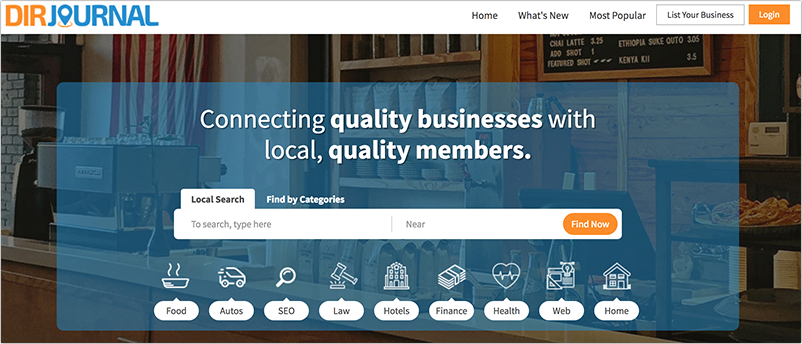
dirjournal

DirJournal is a great place to start because it’s one of the highest-quality directories I’ve ever seen. It also serves both local and global businesses, so you may want to apply to get listed right away.

2. Salesmate: Organize Your Leads

Have you been doing your homework when it comes to verifying and organizing your leads? 2018 is your year to start doing that!

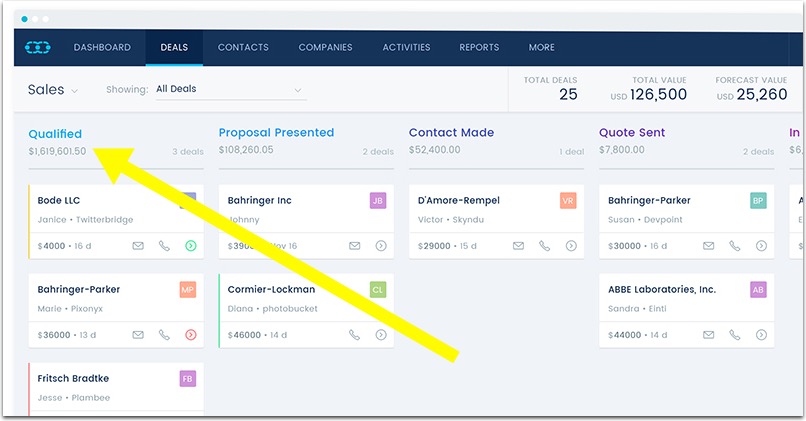
Salesmate

Salesmate is a great platform that organizes your new prospects, gives you a customized library of templates for better email pitches, finds the sources for sales targets, books appointments, and a ton more. All from a single tool that integrates in plenty more apps including Gmail, WordPress, Shopify and more.

3. Topvisor: Research and Organize Your Keywords

Topvisor doesn’t bother with the majority of data it could be mining. Instead, it goes right to the good stuff from the very first step. Using the top ten search results, Topvisor then creates keyword clusters within those results to offer you the most powerful, direct clusters possible for each page of your website.

It works by automating search queries, taking all the keywords from the top ten results and forming groups that are related to one another for each page on your site. You can customize each search, such as how many keywords are needed in the return for it to create a cluster and begin gathering key phrases to use.

They have a free version, with paid versions beginning at $29 per month. It isn’t a very feature heavy tool but it doesn’t have to be. It does exactly what it says and goes from there.

Colorlib has a great list of more SEO tools to look into if you are looking for more affordable options.

4. LSI Graph: Up Your Keyword Game

How are you Latent Semantic Indexing Keywords? Is your SEO suffering because you haven’t done enough LSI focused research?

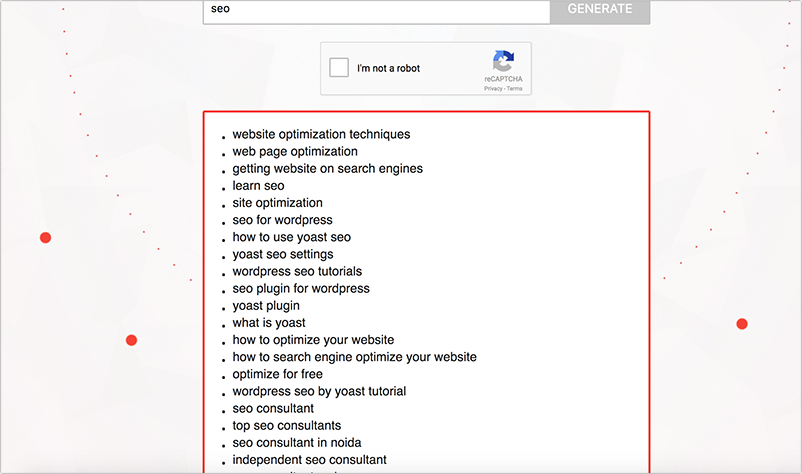
lsigraph

The LSI Graph will do it for you. Just put in your keywords and it will generate LSI’s on your behalf. Not only will it give you a fairly exhaustive list for free, but it will provide you with an ebook that teaches you how to properly use these keywords.

5. SpyFu: Research Your Competitors

Your competitors are doing something right if they are taking all your customers away. Their content strategy is likely a part of that and you can bet they are keeping their keywords a part of the process.

While you shouldn’t copy their keywords (your own strengths will be in what works for your brand, not theirs) you can get an idea of what they are doing and learn from it. This can help you to discover gaps they aren’t filling, which provides you an opportunity to fill it instead. See? It is sneaky!

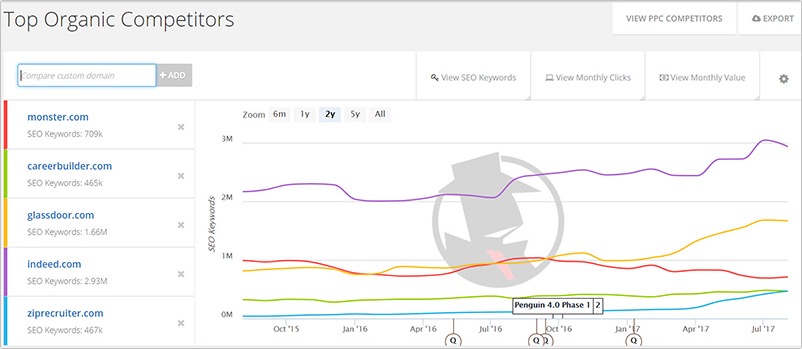
Spyfu

There are quite a few tools that help with this. My personal favorite right now is Spyfu, which lets you search and download all of the competitor data you could want. LXR also has a great free tool that isn’t as thorough but still helpful, especially if you are on a budget.

6. Ahrefs: Audit Your Site

Finally, we have your own website. Looking back over your content over time, your social media posts and your emails and feedback from visitors, what is it that people are bringing up over and over again? Patterns from a website audit, especially of your blog, is a great way to see what your already existing audience is reacting to.

An example would be a blog post that got more attention than the others. What was it about? Did other related posts also do well?

Ahrefs

Ahrefs is a nice tool that provides a thorough website audit report and runs its tools on a monthly basis to offer you a regular update.

Are there other SEO platforms you are using? Please share them with me by tweeting to @jessytroy

Filed Under: Marketing

  • « Previous Page
  • 1
  • …
  • 29
  • 30
  • 31
  • 32
  • 33
  • …
  • 1050
  • Next Page »

Recently Updated Posts

The Creator’s Edge: How Bloggers and Influencers Can Master Dropshipping

Is Your Brand Fan Friendly?

How to Improve Your Freelancing Productivity

How to Leverage Live Streaming for Content Marketing

10 Key Customer Experience Design Factors to Consider

How to Use a Lead Generation Item on Facebook


From Liz Strauss & GeniusShared Press

  • What IS an SOB?!
  • SOB A-Z Directory
  • Letting Liz Be

© 2025 ME Strauss & GeniusShared