Successful Blog

  • Home
  • Community
  • About
  • Author Guidelines
  • Liz’s Book
  • Stay Tuned

5 Top Collaborative Tools for Content Marketing Efficiency

May 11, 2017 by Guest Author

By Jessica Davis


Content creation has been identified as one of the biggest challenges that marketers face. Some companies work with in house teams, while others work remotely with freelancers or agencies to create their content. Regardless, managing everything from planning to approval requires some coordination, and the process can be frustrating. Low content productivity can affect your company’s content output and slow down your content marketing efforts.

Check out these collaborative tools that can streamline the process and boost your content productivity.

Trello

As a content strategist, you have to oversee content production from start to finish. Managing that job is a nightmare, with dozens of files for different clients being passed between writers, reviewers and SEO analysts. A hangup in any stage can cause a drop in content productivity. You can use a collaborative content management system to add some structure to that chaos. That is where Trello comes in.
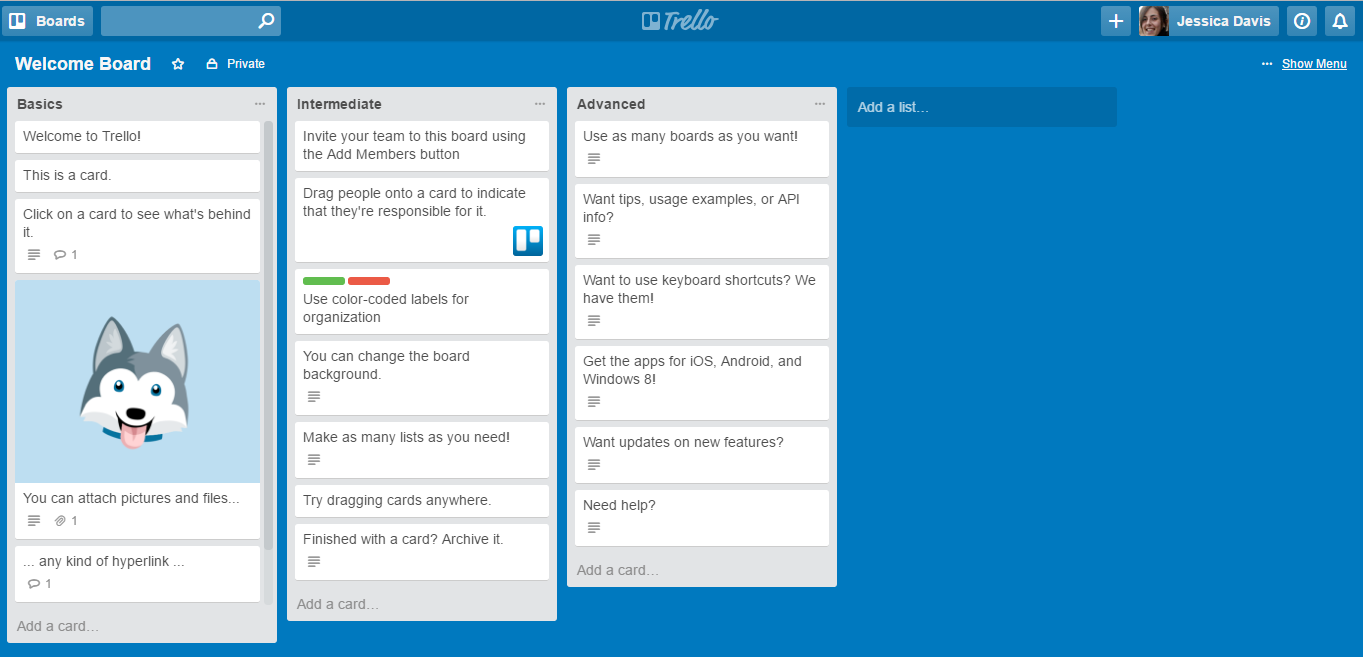
Trello screenshot

Creating projects

You can add a new project by creating a card and labelling it. Once you have invited team members to join your project board, you can assign projects to them by tagging them on cards.

Managing projects

You can set a deadline for each project and hold that person accountable by commenting on his/her card, when the project is overdue. You can move a project between phases (say topic – in process – to be reviewed – to be posted).

Reviewing content

People working on projects can upload files on their cards on completion. You can view files on cards and share suggestions via comments or make changes to the files and upload them again.

You can create an account for anyone and invite them to your project board for collaboration. By shifting your team to the app, you can oversee all your projects, virtually, in one place.

DrumUp

As a social media manager, you have to work with copywriters, graphic designers and brand strategists to create your content. Even if you manage your brand’s social networks by yourself, doing it on more than one social media page can be tough.

With an app, you can manage multiple social media accounts with ease.
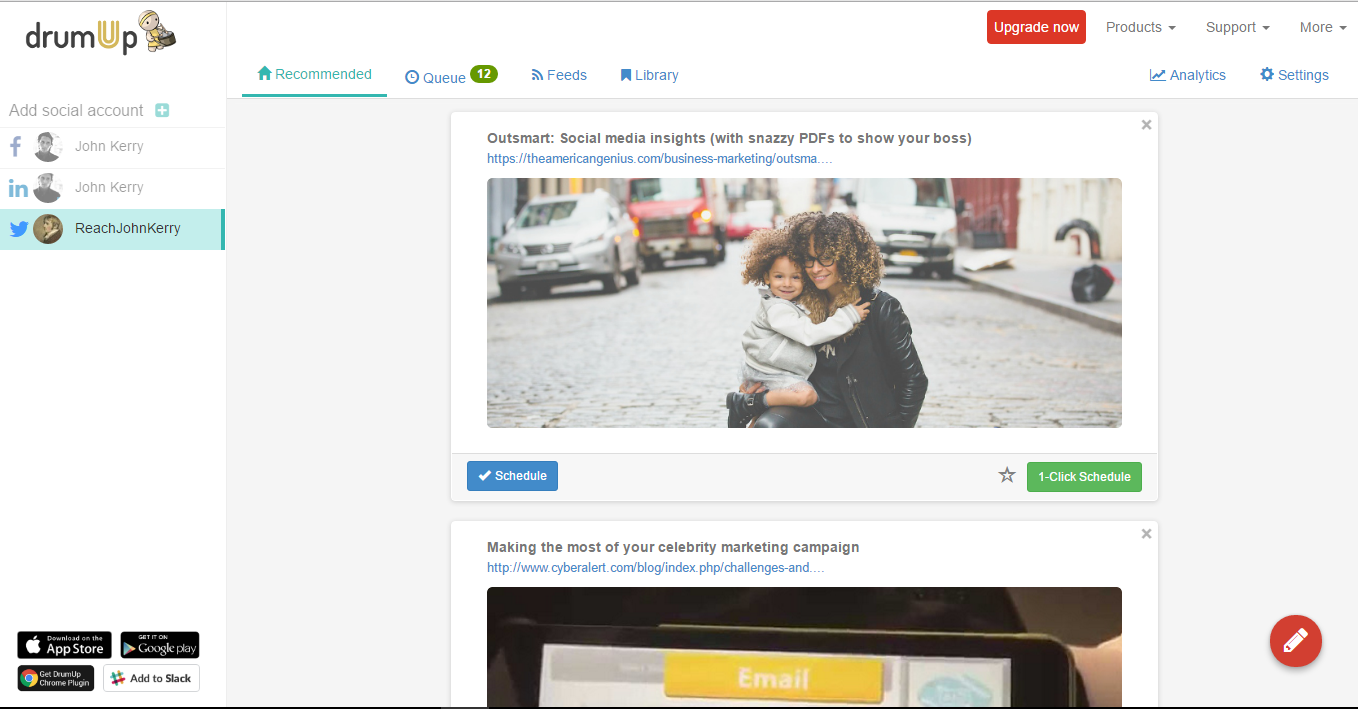
DrumUp screenshot

Collaborative social media management

You can add team members and give them different levels of access to the content stored on your app dashboard. You can provide them with access without having to giveaway your social media account passwords and review all the content they create before it gets posted.

Managing original content

You can store your content online where it is easily accessible in a content library and schedule content from there, to be posted on your Facebook, LinkedIn and Twitter accounts when needed.

You can also view the queue of your scheduled content in calendar form to get a sense of how many posts you have set for each day and what the overview or general theme seems to be.

Curating content

Your industry probably has great publications and experts who create brilliant content on a regular basis. You could curate that content for your social media audience, to show them that they can trust you with content in your niche.

You can also use the @mentions and #tags that the app recommends with suggestions to build powerful relationships with influencers in the industry, so you can collaborate with them for content.

GetResponse

As a content marketer, email marketing is probably an important responsibility. If you are working with a large team for multiple clients, or working for a large organization globally, you need to collaborate on concept, content and execution.

That’s where GetResponse can be used, to make collaboration effective.
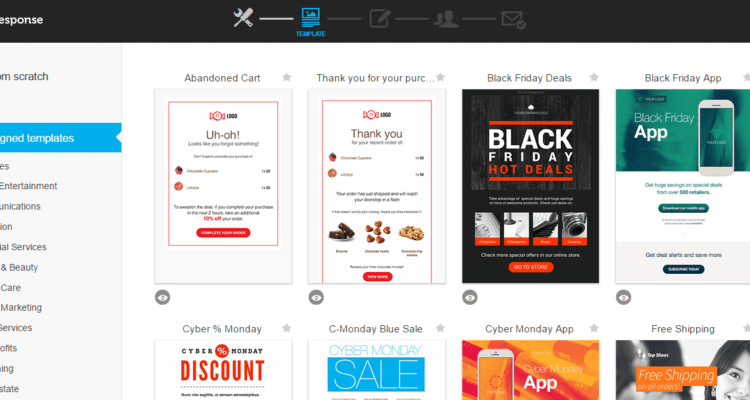
GetResponse screenshot

Collaborative email marketing

You can provide users different levels of access to the company account and overview all of their content before it gets delivered to your client base. You can also give read-only access to certain people of required (reviewers or clients).

Creating newsletters

If creating newsletters is only a part of your responsibility, you can streamline the process by using built-in templates and stock images.

Optimizing newsletters

If mobile view is a priority (and it should be), you can preview your designs in mobile view before scheduling it to be sent to your email database.

You can also personalize emails by inserting the custom name field wherever necessary in your email text.

If needed, you can also automate the responders to ensure that your email recipients don’t feel ignored when they write back to you.

Finally, if your email database is diverse, you can target your content better by segmenting your email lists by custom data, geographical location, subscriber engagement, date and more.

You can also provide teammates access to analytics so they can stay in the loop about email marketing performance.

WorkflowMax

If you work for multiple clients and collaborate with a team of people responsible for the content production, managing trivial but crucial tasks like proposing quotes and tracking payments can be a hassle that takes focus away from the content.

WorkflowMax is an interesting means to solving that problem and streamlining client communication.
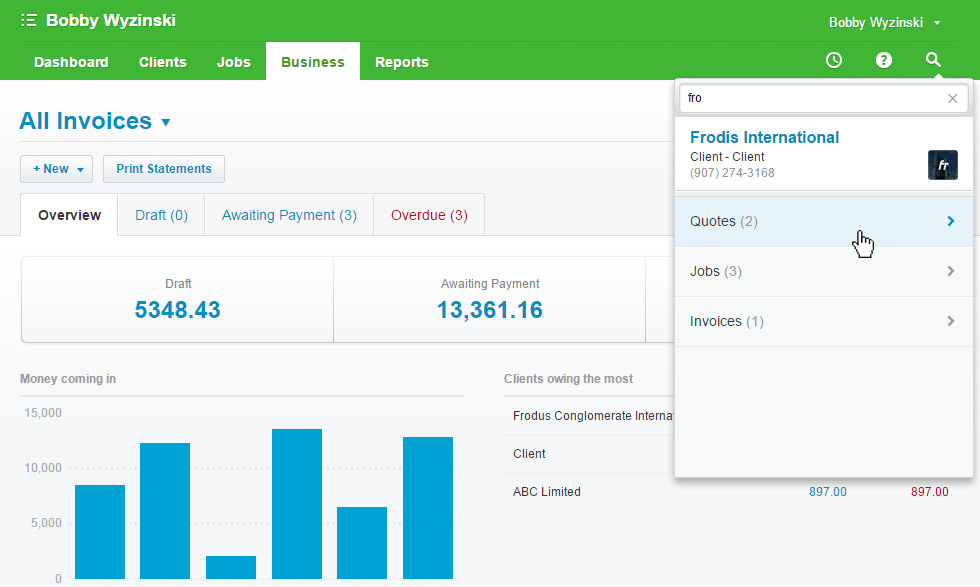
WorkFlowMax screenshot

Customizing client interaction

Your brand is a promise of the content you intend to deliver. You can make your brand a part of all the communication between you and your clients by enabling automated insertion of brand insignia on quotes and invoices.

Storing project details

Manually forwarding data between teams can be a cumbersome task to manage each time a client comes on board.

You can use the app to store and share account details like emails, documents and other information where your team can access them.

Assigning and tracking projects

You can assign projects from the main dashboard, set deadlines and track them. You can also automate reminders so your teammates receive emails to notify them of projects that are past their deadlines.

The tool helps you see who’s working on what, so you can allocate your resources better. You can also monitor the budget being spent on each project and analyze which projects earn you most revenue.

The dashboard can be accessed from anywhere, making it easy to work on the move.

You can also provide clients access so they can follow progress and add their comments on the work that is taking shape.

MailShake

As a content marketer, emails sent to clients aren’t the only ones you have to worry about. You probably also send emails for guest post pitches, content promotion, link-building, co-marketing partnerships, lead generation and PR pitches.

Managing email campaigns can be a challenging task. That’s where MailShake can make a difference.
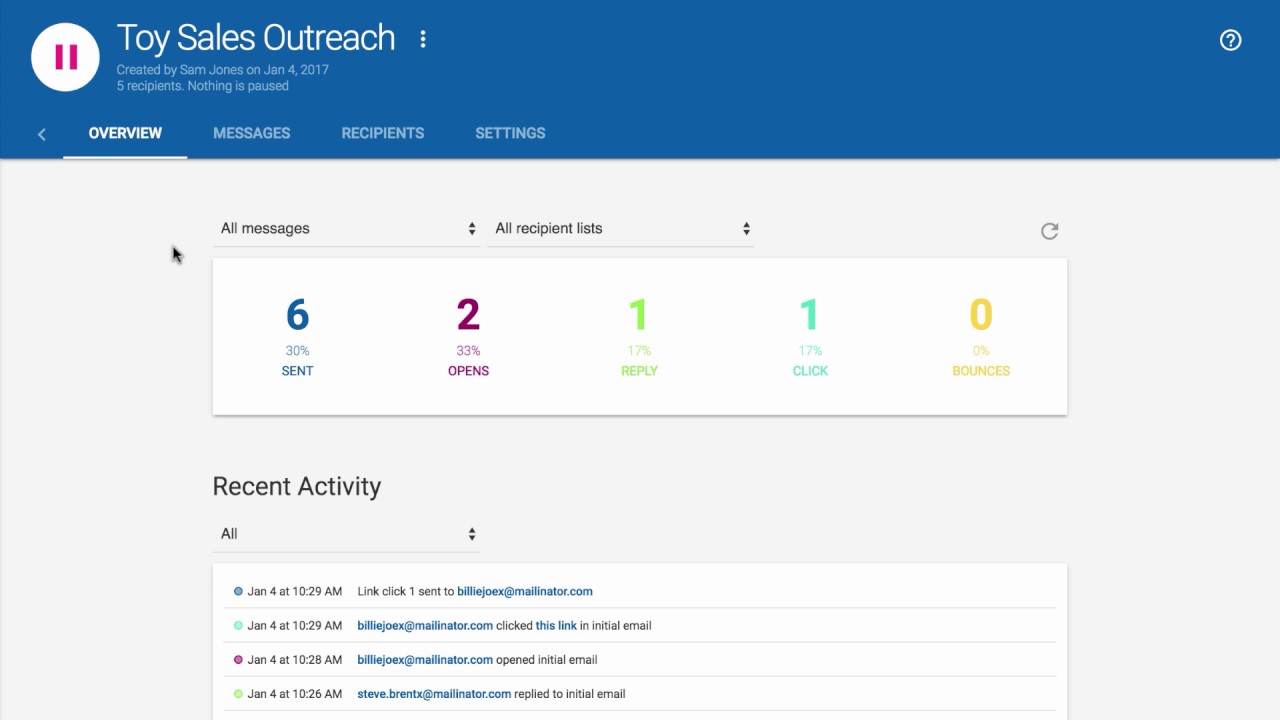
MailShake screenshot

Collaborative email management

You can create an email management team and provide certain people access to edit, pause or stop your campaigns.

You can also set long-term campaigns on an automated loop to avoid doing it manually every single time.

Creating email copy

You can enter your deliverables into the app to generate copy for your emails. Further, you can store drafts for each type of email that you intend to send out.

Following up with emails

Sending an email is just the first step – you have to follow-up when needed and ensure that you get through to the person you’re trying to reach.

You can set up reminders to follow-up with certain people based on triggers. Set up alerts to be notified when someone clicks on a link, or no reply is received to an email within a previously decided interval of time. You can rely on those reminders and relieve yourself of the burden of remembering too much.


Author bio

Jessica Davis is a Content Writer at Godot Media, a leading content agency. represents Godot Media. Her areas of interest include social media and content marketing, science and fashion.


Featured image via Pexels.com

Filed Under: Content Tagged With: content marketing

Top 5 Ways to Influence the Modern Social Media User

October 6, 2016 by Guest Author

By Jessica Davis

Influence is a highly valued social currency.

Today, the influence factor is synonymous with television ratings or viewership, perhaps slightly more powerful because of the added specificity or targeting potential. That holds true if you define influence as the ability to drive desirable change in a specific niche.

As a brand on social media, the power to influence an audience is invaluable (to follow, interact and purchase), but dealing with the tech-savvy and instant-gratification-seeking members of today’s market is a challenge. That is why I’ve explored and listed the top five ways to influence the modern social media user.

1. Play to your strengths with social content

According to this Google trend, the interest in thought leadership is growing. Whether you’re blogging to convert readers into buyers, or you’re blogging for brand recognition, it is vital to establish yourself as an expert or a thought leader. The simplest way to do that is begin with areas you’re comfortable with, or have expertise in. As Ronell Smith says, write the post that you’re passionate about. To cover the rest of your niche you could curate content from around the internet. Tools like FlipBoard, DrumUp or Curata help source. Your social page in totality should showcase all of the important information in your niche.

2. Change the focus of your social media conversations

To impact social users, brands must learn to use social media from the perspective of their audience. According to this study, 55% people said they use social to connect with friends and family (the top reason for using social media), while 45% said they use it to keep in touch with news and trends. “To be pitched to” doesn’t show up on the list. Instead of talking about your brand, you could give people news and information to stay up-to-date. That would be a more powerful way of reaching out to them rather than outright selling them something. Trend identification tools like Google trends and BuzzSumo are great sources of the news that you should research and write about.

3. Target your readers against targeting your buyers

Most brands target their buyers by focusing on set buyer personas. What they don’t account for is the people who don’t purchase from the brand but read and share their content. Instead of targeting your buyer personas, if you focused on reader personas, you benefit by increasing your reach and earning the opportunity to convert more people into buyers. Create content that attracts an audience wider than your target market. Doing that will help build a better perception of your influence.

For instance, home décor and interior design brand The Chromologist often talks about design in general and shares great photographs of art in nature, in cities and the world. Using that approach, the brand not only attracts people who want to redo their homes, but also people who are interested in design and appreciate beauty in general – an audience much larger than their intended target audience.

chromologist

4. Acknowledge mentions and responses to drive more interaction

According to a study conducted by Search Engine Watch, 70% people who tweet brands expect a response, and 53% of them want one within the hour. The longer you take to respond, the more likely your audience is to switch to another social page, brand or product even if the tweet is a complaint or a trouble-shoot request. To stay truly real-time, you require notifications to warn you of social mentions. There are a host of listening tools like Mention and Brand24 that offer real-time desktop and mobile notifications for social mentions making them easy for you to track and respond to.

Whether the mention is positive or negative, it is a potential opportunity for PR and brand building.

5. Leverage the influence of your social media network

According to global market research firm Nielsen, 92% today’s social media users trust recommendations made by people like them over ‘brand content’. By connecting with people within your network and in your niche and enabling them to promote your content, you can impact your audience and even drive sales.

Brands as big as BMW have successfully done it, and so have medium sized set-ups like SpinGo. You simply need to find the right influencers to advocate your brand. One of social media’s biggest advantages is the fact that it puts power in the hands of ordinary people. Influencers needn’t be celebrities. They could simply be employees, partners, happy customers or well-wishers – anyone who is in contact with your market. These are sometimes referred to as micro-influencers. Here’s a look at one of SpinGo’s employee advocacy posts.

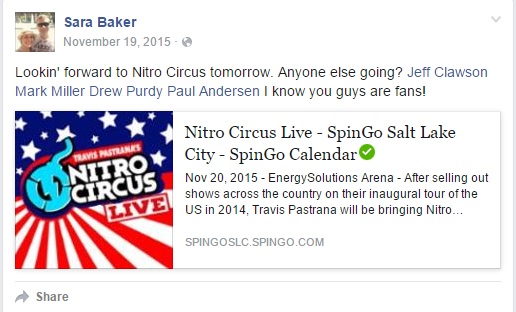
screenshot

To organize and manage your advocacy efforts you could use an employee advocacy platform like LinkedIn Elevate, Kredible, Circulate.It or DrumUp Employee Advocacy Platform. Make sure that any employees who Tweet corporate information are clearly identified as employees in their profiles or bios, to be in compliance with FTC rules on influencer marketing.

Influence is simply about increasing your reach and impact on social media. With the right content, targeting and distribution channels you can drive maximum impact and conversions.

Author Bio: Jessica Davis is a Content Writer with Godot Media – a leading Content Management company. She has years of experience in working closely with online businesses, helping them refine their marketing strategy through optimum use of content. Her other interests, besides online content strategy, copywriting and search engine optimization, are technology, sports and even fashion.

Featured image via Flickr cc: Little Calpurnia!

Filed Under: Marketing /Sales / Social Media Tagged With: influence

Beach Notes: Some Oars/Oarsome Volunteers

September 18, 2016 by Guest Author

By Suzie Cheel & Des Walsh

Beach Notes

These oars are part of a great Australian story of the volunteer lifeguards (we call them lifesavers) who patrol surfing beaches around Australia every weekend in summer.

The oars are for the open boats that were traditionally used for rescues that were too hard for an individual lifesaver to get to. In today’s inflatable boats with outboard engines and jet skis world, the boats are no longer used as part of the rescue apparatus, but happily the tradition lives on with clubs maintaining boats and crews and competing in the “surf carnivals” held around the country through summer.

Probably because the boats are not part of the basic rescue setup these days, they all need sponsorship to be bought and maintained. Typically, that seems to be by local businesses.
It’s a thrill to see one or more of these boats, each with a crew of 5-7, two or three each side and the “sweep” steering from the stern, breaching the surf, sometimes elevated at such an angle you wonder if they are going to tip over and be swamped – and that does happen.

Until fairly recently crews were all male – as were the lifesaver patrols in earlier years – and the boat crews were traditionally pretty tough. In recent years there has been a big uptake of surf boat racing by women crews.

One joke about the selection of crews in older days was that contenders would line up and others would throw house bricks at them: the ones who didn’t duck were selected.

In the photo here you’ll see that in the daredevil tradition of surf boat racing the crew are not wearing any special safety protection such as inflatable vests or helmets.

Beach Notes - volunteers

Men or women crews – seriously tough, seriously fearless, seriously dedicated. All volunteers devoting their weekends to saving lives. Inspirational? We think so.

More about the boats here. And about the Australian Surf Life Saving Association here.
Image credit: Alexandra Headland Colts Manipulate Shore Break in a surf carnival: by DonJeffFranky, Wikimedia Commons, CC BY-SA 3.0


Authors’ Bios: Suzie Cheel is the Heart Whisperer at Suzie Cheel You can find Suzie on Facebook and on Twitter as @suziecheel. She also shares her inspiring Beach Notes here on Sundays.

Des Walsh is a Digital Disruption Navigator at Des Walsh Dot Com You can find Des at LinkedIn and on Twitter as @deswalsh

Filed Under: Motivation Tagged With: Beach Notes

Beach Notes: Castles and Creativity

August 28, 2016 by Guest Author

By Suzie Cheel & Des Walsh


It is amazing to see how a bucket that was originally designed to carry water is so often used to create sand castles and in this case create a city of castles.

Someone, somewhere, some time, took a bucket which up till then had only be used for carrying water or other practical purposes, filled it with sand, tipped it upside down and created the first sand castle.

Now all over the world children get their little buckets and make sandcastles, delighting themselves and others.

This is how creativity works sometimes, through play, not through striving.


Creative Castles

Authors’ Bios: Suzie Cheel is the Heart Whisperer at Suzie Cheel You can find Suzie on Facebook and on Twitter as @suziecheel. She also shares her inspiring Beach Notes here on Sundays.

Des Walsh is a Digital Disruption Navigator at Des Walsh Dot Com You can find Des at LinkedIn and on Twitter as @deswalsh

Filed Under: Motivation Tagged With: Beach Notes, inspiration

Beach Notes: Gray Days Are Normal

August 21, 2016 by Guest Author

By Suzie Cheel & Des Walsh


Most beach pictures seem to be taken on bright, sunny days. But it’s the same beach, the same sea, on gray days and rainy days.
Like life, like business. Just because not every day is wonderful doesn’t mean life isn’t wonderful or business not full of possibilities.
Just see it through. That old sun will come out again.
Gray days are normal

Authors’ Bios: Suzie Cheel is the Heart Whisperer at Suzie Cheel You can find Suzie on Facebook and on Twitter as @suziecheel. She also shares her inspiring Beach Notes here on Sundays.

Des Walsh is a Digital Disruption Navigator at Des Walsh Dot Com You can find Des at LinkedIn and on Twitter as @deswalsh

Filed Under: Motivation Tagged With: Beach Notes, inspiration

6 key content marketing ideas for small businesses on a budget

August 2, 2016 by Guest Author

By Jessica Davis

Content marketing has been blowing up over the last few years. Most companies already have a content marketing strategy in place, or are planning to implement one. Small businesses struggle to come up with a content marketing strategy that is compliant with their budget as well as goals. Competition within the industry has driven the cost of content marketing up but small businesses can still keep up. For small businesses with tight purse strings, here are some ideas that can help you shine.

1. Start Sharing

Content marketing relies on sharing; everything from views to visitors to sales depends on it. Without good social media presence and sharing, your content will only be read by those associated with your company. It is necessary to share your social media content at least 5-6 times a day and build good relationships.

If you can’t spare the time to create it, curate it with a good curation tool like DrumUp or Feedly for content discovery. Engage with people who comment on your posts and take their feedback constructively. Employee advocacy and influencer marketing are also excellent ways to help you spread the word with your content.

2. Know Your Target Audience

The first part of a content marketing strategy involves figuring out who your ideal viewer is and how your business can provide value to them. The more accurate your target audience persona is, the more likely you are to get ahead. Target audiences can be defined by various characteristics like location, occupation, age, gender, race etc. Some of these characteristics are obvious. For example, most fashion brands target women of all ages starting from teens to older women. This is because they tend to do the most shopping both for themselves and their families.

Depending on your niche, you will find common characteristics are easy to find while others need detailed research.

3. Do the Research

Now that you know whom to target, research the kind of content you should be creating. This content has to appeal to your target audience and intrigue them. Your research should also include going through more successful companies’ content and getting ideas.

Content curation is also a great way to gauge what kind of content works best for your audience. There are tools that make content curation on social media simple and effortless. Social media trends are another good indicator of the topics you should cover. Keep an eye on the hashtags and discussions related to your industry and gather ideas from them.

4. Commit to a Blog

Blogs are a must for content marketing. They provide great value for your readers and improve your SEO efforts. The deeper the blog content, the better it is for SEO. Content marketing relies on search engine rankings as users tend to visit sites at the top of the search results. Make sure your business website has a blog page that is easily accessible to visitors.

While creating blogs, give good information that helps your readers solve daily problems. Doing blog posts just for the sake of it will get you nowhere in terms of gaining recognition and credibility.

5. Create Compelling Content

This is one area where marketers must let go of their budget in return for quality content. Businesses need to hire good writers that are experienced in their field. Check to see if they have done this kind of work in the past and evaluate it. Hiring sub-par writers can hinder content marketing efforts as the content is the main part of your campaign. Visitors that you gain through social media and other marketing efforts will leave if the content is disappointing.

6. Include Strong Visual Content

Since social media evolves at a rapid pace, visual content including images and videos are a great way to get your audience hooked. Like written content,if you plan to involve visual content as part of your campaign, then you must be willing to spend money. Hiring good designers for images and multiple staff members for videos will require investment. Infographics with relevant and interesting stats also have an impact on your audience.

Content marketing strategies need to be planned carefully. You have to remember to plan carefully and not come off as too pushy. Put yourself in your readers’ shoes and create content to address their problems. The main goal of content marketing is to use content to spread brand awareness and consequently, improve the bottom line. Keep this is mind while devising and executing a content strategy.

Author Bio: Jessica Davis is a Content Writer with Godot Media – a leading Content Management company. She has years of experience in working closely with online businesses, helping them refine their marketing strategy through optimum use of content. Her other interests, besides online content strategy, copywriting and search engine optimization, are technology, sports and even fashion.

Featured image via Flickr cc: Little Calpurnia!

Filed Under: Content

  • « Previous Page
  • 1
  • …
  • 10
  • 11
  • 12
  • 13
  • 14
  • …
  • 109
  • Next Page »

Recently Updated Posts

Is Your Brand Fan Friendly?

How to Improve Your Freelancing Productivity

How to Leverage Live Streaming for Content Marketing

10 Key Customer Experience Design Factors to Consider

How to Use a Lead Generation Item on Facebook

How to Become a Better Storyteller


From Liz Strauss & GeniusShared Press

  • What IS an SOB?!
  • SOB A-Z Directory
  • Letting Liz Be

© 2025 ME Strauss & GeniusShared