Successful Blog

  • Home
  • Community
  • About
  • Author Guidelines
  • Liz’s Book
  • Stay Tuned

7 Tips to Write Stellar Blog Posts

October 9, 2021 by Jessy Troy

Do you know that only two in 10 of your visitors will read your articles until the end?

People don’t have time to waste. They want to find the information they need quickly and easily. And it has to be presented in a friendly manner.

Today, let’s go back to the basics. Here are seven tips to format your blog posts so that they get read — and shared.

Titles matter

What prompts you to read an article? Its title, of course.

A headline is the first thing a person sees. If it grabs their attention, they will read further.

Here are some good examples below:

  • Intriguing titles – “How to Create a Massive Buzz about Your Product Hollywood-Style!”
  • “Ultimate” titles – “The Only List of Content Curation Sites You Will Ever Need”
  • List titles – “30 Tips to Promote Your Events Online”

Be clear and concise.

Hit them with a strong first paragraph

Introductions are just as important as titles. They set the tone.

If you read my blog regularly, you know I love starting my articles with questions and stories. Quotes are also a great option.

Break your content into short paragraphs

Nobody likes long blocks of text. They make content dull and boring.

The only way to keep visitors interested and happy is to make their reading experience enjoyable. So, stick to short paragraphs — 75 words or 3-4 sentences.

Bulleted text is also a great way to present ideas in an attractive manner. It helps set important facts apart from the rest.

Use subheadings

People love being able to skim content. Actually, that’s the second thing they do after looking at headlines.

It’s always a good practice to try and group several paragraphs together under a common subheading. Plus, it allows you to use the H2 or H3 tag, which is a great way to optimize your posts for search engines.

Make your links clickable

While this may not be news to most of you, I have seen quite a few blogs that have no clickable link in their articles.

When you reference an outside source or even your own content, allow your readers to access it easily. Don’t have them copy and paste in a new tab.

It may also be a good idea to use exit popups to prevent your readers from leaving too early.

Use pictures and videos

Since I have covered this topic in many articles, I’ll just repeat myself here. People crave visual content. That’s because he brain processes it much faster than text.

There’s a scientific case for using images in content. According to Megaphone Marketing, our brain processes visuals 60,000 times faster than text and retains 80 percent of what we see versus just 20 percent of what we read.

Conclude your posts

With a conclusion, you put everything in perspective for your readers. Try using the space as an invitation to continue the conversation. Ask people a question or two.

If the context warrants it, don’t forget to include a call to action.

Image by Stefan Keller from Pixabay
Filed Under: Blogging Tips

6 Important Marketing Trends: data Privacy, Real Time Marketing and More

September 23, 2021 by Jessy Troy

When something can become a trending topic in a matter of seconds, it is important for social media marketers to always stay up-to-date on the marketing trends affecting social media.

How to succeed in social media? Monitor and adjust your strategy to these trends:

1. Real-Time Marketing is Redefined

Historically, Real-Time Marketing (RTM) has been described as having a clever response to a trending topic at a moment’s notice. But these days the description is shifting to having “the right content to share with the right audience at the right time.”

This means you really have to know your audience, what kind of content gets them engaged, and which posts will get their attention. We have given a lot of advice about RTM – how to newsjack upcoming events, and how to prepare content in advance to really adhere to this shifting trend.

Thanks to marketing automation, personalization is becoming a norm rather than an advantage.

2. Privacy is Your Priority

After all privacy and data security scandals, it’s no wonder privacy regulation has become a huge trend over the years.

Hari Ravichandran, founder of Aura, names data protection one of the biggest business opportunities these days: If you can figure the balance between data protection and data analytics, you will win your niche.

3. Social Media Ad Spending Increases

It’s no secret that Facebook posts have seen organic reach decline in the last year with an updated algorithm. It especially has caused frustration across small businesses due to the limited budget these companies have to work with.

The trick is to provide less sales-related and more industry-related content as organic posts to enhance brand awareness, and save your sales and promotional content for the ads. This way you can balance your Facebook checkbook and keep your content in front of your fans. (Utilizing targeting tools to the social audience that you know will engage can help keep these costs down and return on your investment (ROI) high!)

4. Content Marketing Continues to Grow

While content sharing continues to increase, social media marketers continue to struggle with measuring the ROI of such efforts. The ROI of social media or content marketing is notoriously in murky waters. But remember, there isn’t one formula for all; ROI will be calculated differently for every organization.

It all depends on the goals of your content. Should the result be the download of a whitepaper or a visit to your website? Establishing these goals before you release the content will help you visualize your results with quantifying value.

5. Video Isn’t Just About YouTube Anymore

Facebook topped YouTube in U.S. desktop views by 1 billion views back in August 2014. And the rumor is that Facebook is giving more value to Facebook videos over YouTube videos in organic reach.

According to JSH&A, Vine and Tumblr are also incrementally seeing more video views, suggesting that video is no longer a one-size-fits-all solution across platforms.

6. Facebook is No Longer King of Engagement

Let’s clarify.

The point JSH&A wants to point out here is that “A Facebook-first or Facebook-only approach may no longer make sense for some brands.”

This doesn’t mean that ALL brands should abandon sharing to Facebook and start an account on EVERY platform. You have to make informed decisions about where your audience is engaging with the brands they love, and post effective, visual, and valuable content to those platforms.

While the infographic points out that Pinterst, Tumblr, and Instagram have gained more than 10MM visitors last year, it is likely that those users are already present on Facebook.

So what is the moral of the story?

Stay visual, stay engaged, stay informed, and you will be able to provide valuable content to the audience you have established a loyal relationship with on social media.

Image by Werner Moser from Pixabay

Filed Under: Marketing

How to Evaluate Your Content Performance

September 20, 2021 by Jessy Troy

It isn’t always easy to evaluate ourselves and our work. Anyone who has created content in any professional capacity has had the experience many times of people responding strongly to a piece you didn’t think was any good, and then all but ignoring the one you poured your heart and soul into. It is an exasperating experience that reminds us that it isn’t always so easy to determine quality based on perspective alone.

The bad news is that evaluating content performance is a very necessary job. We have to be able to see what is working, and what isn’t, in order to continue to grow. Luckily, there is hard data to assist in the process, as well as a few things to keep in mind.

What Makes Content Successful?

Before looking at how to analyze the success of your content, you need to define something very important: what constitutes success. You might get a lot of views on a blog posts, but be disappointed by its lack of comments. Something could generate a ton of comments, but never get shared once on social media. It could be republished (with permission) on another site, but hardly generate any traffic for your own.

There are several ways that you could define success:

  • The content receives a lot of engagement on social media, and brings people to your profile.
  • The content drives click-throughs to your actual site.
  • The content generates a lot of traffic via SEO and search engine results.
  • The content improves your visibility, and attracts an audience you were trying to target.
  • The content enriches the authority of yourself and your brand.
  • The content assists the steady growth of your site, even if only in part.

Here are only some examples. Really, success is defined entirely by what it is you choose it to be.

Once you have established this criteria, you will know what to look at moving forward.

Further reading: The Comprehensive Guide to Content Marketing Analytics & Metrics

The Need For Analytics

The simplest way to go about evaluating your content is to find patterns within data. That is where analytics come in. Google Analytics is your most basic tool (it is free for most people), and easiest to use. But you can find any number of tools online, including plugins that can be integrated into WordPress to provide the details right in your dashboard, or on individual posts.

Don’t make any decisions based on a couple of months of information. While three to five months can give you a small glance at how certain content is doing, it is a very small sampling. Six months should be your minimum, but a year or more is much better. The more posts you have to analyze, the better the picture as you see what has happened over time.

Analytics will tell you how much organic traffic has been generated, how long people have on average remained on the page (did they immediately click out, skim, or read in detail), and what posts are top performing.

Once you have that data comes the tricky part is deciding what to do with it. It isn’t enough to know what content is doing well. You have to figure out why. Ask yourself:

  • What patterns are emerging based on the topic?
  • How was the SEO handled on those posts?
  • Was there a specific tone within those posts?
  • Did it include any kind of visual content that enhanced it?
  • Was the style done in a particular way?
  • Who created the content?
  • Did anything special happen on social media, such as the use of particular hashtags when sharing?
  • Were the topics related to something trending at the time?

You want to find the common links with this content, in order to figure out what it is about them that has been working.

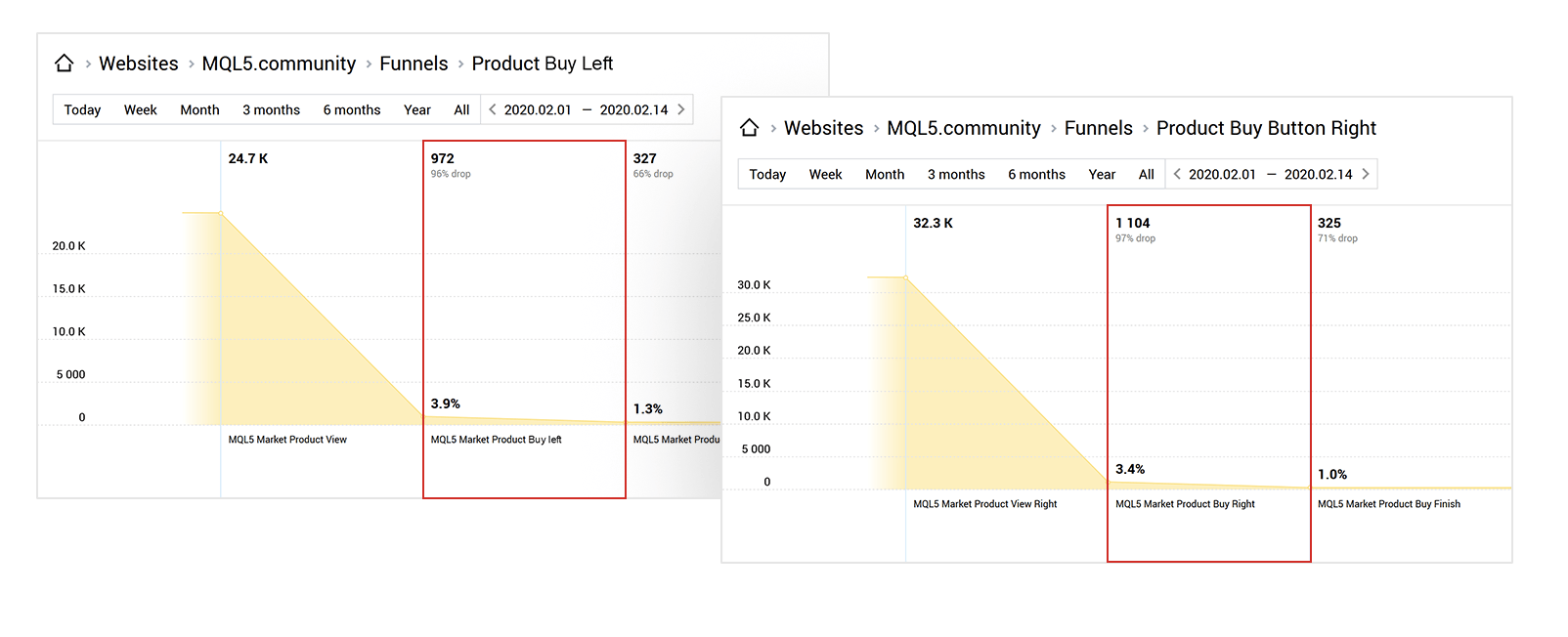
Featured tool: Finteza is a comprehensive web analytics solution that allows you to measure your content performance and even A/B test your sales funnel:

Most online form builders come with built-in analytics solutions you can use as well.

When The Same Thing That Always Works Stops Working

One thing you may notice is a surge of popularity based on these patterns, and then a decline. If what you thought was always working isn’t anymore, analytic data will show you that with brutal clarity. Which isn’t necessarily a bad thing; times change, and you have to adapt with better content for new eras. Otherwise, you will be left behind.

If you find yourself noticing that what used to work is no longer bringing you the results you need, it is time to try something new. That might also be hidden in the data, as you can see the second most popular content that is still rising beyond the decline you’ve noted. It could inspire you to create something new. Take it as an opportunity to grow!

Further reading: talkingAds, a company that “translates data into actionable results”, puts it very well:

Interpreting and acting on the basis of marketing analysis is the key… Aligning marketing analytics with company requirements makes a difference.

Being Honest About Your Content

You are going to be shocked by what you find, from time to time. You are going to want to deny it. No, there is no way your readers have started to avoid your Freaky Fridays theme week, or lost interest in meandering stories about your time working that job only you find interesting!

Further reading: To help you out, here’s a great article on creating great content from startablog123.com: How To Write A Good Blog Post

Well, that is just the way the cookie crumbles. People get bored, they move on, and you have to bring them back. Don’t get so bogged down with what you’re used to. Enjoy this chance to start fresh, and pay attention to what the data tells you. Even if what it tells you makes you a little bit sad.

Filed Under: Marketing

How to Add Audio to Your Digital Marketing

September 8, 2021 by Jessy Troy

2021 has seen an explosion in audio content, especially podcasting. A few factors play into this. The technology to produce quality audio from anywhere is available to pretty much anyone. iTunes has ramped up their focus on podcasting with the launch of their podcast app in 2013 and podcast platforms such as Stitcher are moving into automobiles.

The success of podcasters such as John Lee Dumas, Cliff Ravenscraft and Chris Ducker bring positive attention to podcasting, not just as a content option but as a viable revenue stream.

So how can you turn up the audio in your content strategy?

Adding audio content can be done inexpensively and with less stress around the technology than you may realize. Once you decide to add audio, you will find that this is an excellent medium to leverage for not just podcasting, but other areas of your content strategy.

Free tools like Facebook Live provide an easy way to host your own podcast. Australia-based marketing agency gives some great tips on hosting a live event on Facebook:

The live video will stay on your page after the broadcast and will appear in your friends’ and followers’ feeds just like a usual post. There’s a handy rehearsal feature called Test Broadcast that allows you to broadcast live to admins and moderators of the page to test the audio quality and lighting before you go live to everyone else

Internal podcasting

When you think of podcasting, it’s common to have programs come to mind that are designed for an external audience. But what about your internal audience? Developing a podcast or series of podcasts designed for internal audiences can be a great way to engage your team members and provide important information in a consistent, easy to access delivery model.

Getting Started:  Deduct which areas of your organization could benefit from information, updates or education on a regular basis and who can easily download or access audio for listening. Some possible ideas for internal podcasting implementation could be:

  • Human Resources hosts a series of interviews showcasing employees in your company.
  • Sales Management produces a weekly podcast providing updates, product details, and training for the sales team.
  • Employee Benefits uses audio to keep employees up to date on benefit changes, enrollment information and frequently asked questions.
  • The C-Suite hosts a regular podcast to update the company on the state of the organization, vision of where the company is headed and allow everyone to better connect to management and culture.

To keep things organized and consolidated, use a hosted contact center for your business.

These are just a few ideas on how an internal podcast could benefit your content strategy. What other ways could audio content be used to increase morale and efficiencies, while decreasing costs and turnover?

Filed Under: Marketing

Agile Marketing Is Perfect On Twitter

September 7, 2021 by Jessy Troy

Twitter gives businesses a unique marketing advantage compared to other social media platforms. Internet marketers who know what they are doing love the agility that Twitter provides.

I’m pertaining to the unique culture that only Twitter currently has. You see with Twitter, businesses can post multiple posts in a day without experiencing too many negative responses to it. It’s the norm in that exceptional community. Try doing that on Facebook and you will lose your fans or followers faster than you can delete your posts.

However, not all is able to take advantage of this wonderful culture. It requires a certain creativity because being to blunt and spontaneous without direction doesn’t do brands any good. Because you should know that branding and advertising go side by side. Hence, to make your posts fit your brand and still retain that agility we are talking about, you need to have plan.

Below are some of the best responses we got from the most influential Twitter marketers on how to proceed with this planning.

Plan for Specific Moments

I know it’s impossible to try and foresee events that hasn’t materialized yet. Nevertheless, what you can do is to tailor tweets that go well with events that will surely occur in the near future.

I’m talking about planning for events that are bound to happen like upcoming movies, Hollywood gossip, etc.… Doing this allows you tweet really quick responses to popular events.

People simply wouldn’t know that you’ve already made it witty and consistent with your branding; and that you’re just waiting for the right day to arrive. Other than people thinking that you’re impressive, they would surely think of it as worthy of a follow.

Use this advanced ad maker to create awesome graphics to use in your tweets.

Ad maker

Create A Content Calendar

Every large company I know has this. Small businesses on the other hand are more tedious to adopt. This tip is in connection with the first point. What you want to do is to create a content way in advance for events that would obviously take place along the year. Celebrations like Christmas, Labor Day, black Friday and most of the holidays should be on that calendar.

Don’t forget to adjust your landing page to match each particular campaign you are running on Twitter. This site offers a variety of online form templates to create seasonal CTAs and customize your landing page.

You should already be thinking about the perfect tweets that should generate more followers hopping into your company on those dates. What’s best about it is that since some of the events are far into the future that you have plenty of time to keep perfecting them.

Review What Your Competitors Have Been Up To

In this case, it is likewise true that experience is the best teacher. It’s best if you’ll look at some of the most popular tweets that went around during special days of the year.

Most likely, you’ll find the best ones from your competitors since you’re in the same niche. Their tweets will automatically apply to your business. However, you also have to be mindful not to copy the tweet so closely. There are lot of meticulous eyes on Twitter.

Stay alert!

All that planning will go down the drain if you’re not quick enough. Remember that no matter how witty your tweets are, they wouldn’t do much difference if you are late on the scene.

It will only get burrowed in the millions of tweets users do each day.

Image by Lerey Eric from Pixabay

Filed Under: Marketing /Sales / Social Media

How To Write Faster Without Typing

August 13, 2021 by Jessy Troy

I consider myself a pretty good typist. On a good day I manage to churn out around 2,000 words in an hour and that’s without ever looking down at the keyboard or the screen. I write for a living and so I’ve gotten to the point where it feels almost as natural as talking.

But that’s not to say that typing is perfect or without limitations. For starters it’s not for everybody – those with disabilities often struggle to type efficiently while others simply take a long time to learn to type.

Furthermore, typing requires you to have both hands available and probably a surface you can learn on – which means sitting down at a desk to write and not being able to do anything else (multitasking with typing is pretty much impossible).

And finally, typing still isn’t really all that efficient. Even at 2,000 words an hour that’s much slower than you would be able to speak the same amount, and when you try to translate the process onto a small touchscreen you find that that slows down further.

So what other options are there? If you want to write while at the same time doing the washing, if you don’t have full use of your hands or can’t get to a desk and keyboard setup, or if you just want to try and go faster than your current typing speed, what can you do?

Dictation Software

One option is to try using dictation software. This of course is software that attempts to translate the spoken word into text on the screen so that you don’t have to input the information yourself. In theory this should allow you to stand at the sink and wash up while simply speaking the text you want noted down.

Alternatively you could dictate while going for a walk and at the same time you would expect it to be much quicker. It would be a blessing for those with disabilities and indeed that’s why many people already use it.

Currently though dictation software isn’t perfect, or we would have far less need for keyboards. Perhaps the best known example is ‘Dragon Naturally Speaking’ from a company called Nuance, and this works by using the normal analysis algorithms while at the same time keeping an index of your currently used vocabulary and learning the way you speak.

Still though, there will be times when it makes mistakes, and it can be a fiddly process trying to go back and edit (‘go back – no don’t write go back…! Delete go back!’). For now it’s enough to provide a viable alternative for the disabled, but it’s not yet going to replace a keyboard.

Still, writing and posting by voice is doable: Here’s a guide on how to do that in WordPress. There are also free plugins for WordPress that can make it more doable.

Pen Input

Another option is to use pen input rather than a keyboard, which is another that’s becoming more and more viable as technology improves. The best devices that support stylus input include the Sony Duo 11, the Surface Pro 2, the Dell Venue 8 and the Galaxy Note 3 among others. Each of these allows you to draw directly onto the screen with a pressure sensitive matrix detecting the input on top, and will then convert what you write into text.

This is actually a very fast method for capturing input and is great for jotting down ideas on the tube. However there are also some downsides to the method that again prevent it from being as efficient as it might be.

For one, most handwriting recognition requires you to write a few words or a short sentence at a time and then wait for it to be translated into typing. Even if you could write an essay the same way you might have done in an exam at school, it still wouldn’t offer you the option to scroll down the screen easily or to start new pages, and it would probably be slower than typing anyway.

You may also want to pick a minimalist theme for your blog, one that doesn’t require a lot of editing before publishing.

The Solution

The real problem is that we are taking our existing input methods and trying to adapt them to more modern scenarios.

We are trying to write and type into our computers and talk to our phones, when really our language and the devices themselves aren’t suitable for either. To speed up we are going to have to change one of those things – at which point we may well see a huge paradigm shift.

Image by Free-Photos from Pixabay

Filed Under: Blogging Tips

  • « Previous Page
  • 1
  • …
  • 7
  • 8
  • 9
  • 10
  • 11
  • …
  • 15
  • Next Page »

Recently Updated Posts

Is Your Brand Fan Friendly?

How to Improve Your Freelancing Productivity

How to Leverage Live Streaming for Content Marketing

10 Key Customer Experience Design Factors to Consider

How to Use a Lead Generation Item on Facebook

How to Become a Better Storyteller


From Liz Strauss & GeniusShared Press

  • What IS an SOB?!
  • SOB A-Z Directory
  • Letting Liz Be

© 2025 ME Strauss & GeniusShared