Successful Blog

  • Home
  • Community
  • About
  • Author Guidelines
  • Liz’s Book
  • Stay Tuned

Book Review: The Art of the Start 2.0, by Guy Kawasaki

March 5, 2015 by Rosemary

Have you ever wished you could pick Guy Kawasaki’s brain?

Like, sit down with a pitcher of beer and just pepper him with questions until the pub closes or his head explodes?

This is your lucky day. Guy has done a “brain dump” in the form of an update to his 2004 book, The Art of the Start.

However, The Art of the Start 2.0 is not just a quickly busted-out update, it’s a complete overhaul. It covers everything you want to know about starting a new business, from idea to exit, written by someone who has literally been-there, done-that.

I would recommend it for anyone who is considering answering that little voice in their head, telling them to start something.
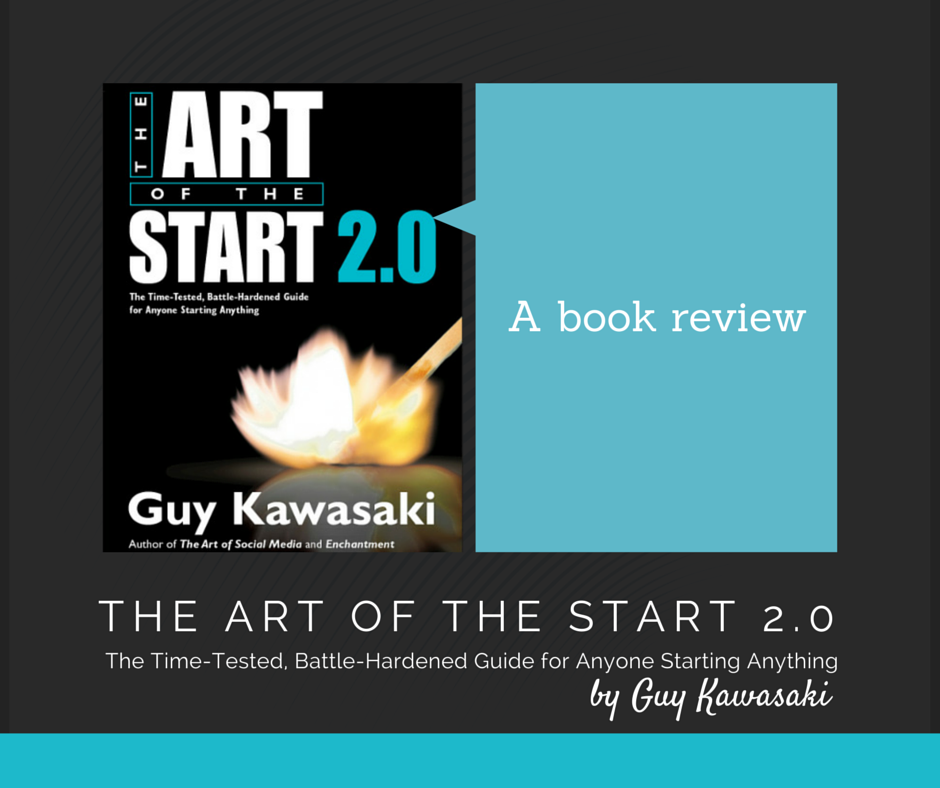
Art of the Start 2.0 book review

Guy Kawasaki was the first person I ever knew to hold the job title “Evangelist.” He has been on the giving and receiving end of pitches, and advised companies large and small. He’s seen the heights of the tech boom and the lows of the bubble burst.

He’s the person who will stand over your shoulder and remind you to spend more time on the product than on the furniture in your conference room.

The style of the book brings you right into Guy’s world. There are pithy stories, lessons-learned, exercises, and Q&A galore. It’s not the type of page-turner that you spend a weekend curled up with; it’s a manual that you dog-ear, highlight, and refer to over and over again.

Each chapter ends with recommended reading, so you can dive deeper into any subject as necessary.

“Customers don’t care if you want to destroy the competition. They want to know what benefits they derive from using your product. Also, evangelism is about what you do for your customers–not about what you want to become.” Guy Kawasaki

There is solid business advice in The Art of the Start 2.0, but by far my favorite bits were the hard-won little insider tips.

Remember to bring two thumb drives to your presentations, pick a company name with “verb potential,” and find your Morpheus (someone who will tell it like it is).

Some of the major topics covered include:

  • The Art of Starting Up
  • The Art of Launching
  • The Art of Leading
  • The Art of Bootstrapping
  • The Art of Fund-raising
  • The Art of Pitching
  • The Art of Building a Team
  • The Art of Evangelizing
  • The Art of Socializing
  • The Art of Rainmaking
  • The Art of Partnering
  • The Art of Enduring
  • The Art of Being a Mensch

In my own 20 years of business experience, I’ve been in many of the situations described in the book. It can be intimidating navigating conversations with potential investors, knowing when to hire more staff, and figuring out how to get the word out about your project.

With Guy’s advice in your arsenal, you’ll be ahead of the game.
Author’s Bio: Rosemary O’Neill is an insightful spirit who works for Social Strata — makers of the Hoop.la community platform. Check out the Social Strata blog. You can find Rosemary on Google+ and on Twitter as @rhogroupee

Disclosure: I was given a digital copy of the book for purposes of this review. My opinion is my own.

Filed Under: Business Book Tagged With: bc, book review, startup

Book review: Joy, Inc., by Richard Sheridan

January 29, 2015 by Rosemary

Corporate joy? Is that an oxymoron?

It doesn’t have to be, according to Richard Sheridan. His company, Menlo Innovations, is devoted to “ending human suffering in the world as it relates to technology™.”

Sheridan’s book, Joy, Inc., (which was originally released in 2013), is a fascinating look inside his team’s “joy factory.”

book cover Joy, Inc. by Richard Sheridan

The casual reader might be tempted to approach this book with some healthy skepticism. The title conjures up a mental image conjured of a bunch of forced-wacky Kool-Aid drinkers.

In reality, the book provides a detailed explanation of systems, methods, and daily processes that are intended to result in joy. Joy for the employees, for the clients, and for the lucky end-users of the software being created.

Learning and teaching are at the core of the Menlo system, where colleagues work in pairs and progress is quite visibly measured on the walls. Humans need to feel that they are making progress in order to be happy, and that need is systematized at Menlo.

Here are just some of the ways Sheridan and his crew build joy:

  • Avoid having “knowledge towers,” employees who are the sole repositories of certain information.
  • Eliminate bureaucracy, and unnecessary meetings wherever possible. Consider having a daily standup where only those with useful information to share speak.
  • Use what Sheridan calls “High-Speed Voice Technology.” Talk to each other, openly and frequently. Stop texting and emailing people who are in the same building. Build relationships, which build value.
  • One of the key elements of a joyful culture is having team members who trust one another enough to argue. Stop hiring people who all agree with each other.
  • Consider reverse show and tell. Rather than presenting your client with a progress report, ask the client to tell the team what is going on with the project.
  • Use physical artifacts for planning and task execution, so that everyone can immediately see progress and status.
  • Hire for joy and build that into the entire process. Look at the human, not the resume.
  • Whatever you’re making, build in the delight/joy for the end-user as well. Find a way to build links between your staff and whomever will be using the work product. Menlo has a special position called “high tech anthropologist,” which is the link between programmers and end-users.
  • Create an atmosphere free of fear. You can fail, you can experiment. Don’t get stuck on something just because you’ve already invested a lot of time in it.
  • Break important HR rules, etc., like having babies or dogs in the office, as long as it’s part of your authentic culture.
  • Share leadership, and be vulnerable. Share your vision and encourage new leaders.
  • Strive for clarity and discipline.
  • Incorporate flexibility as part of the culture, as much as possible. This makes it easier to start new initiatives.
  • Accountability is important, but only when everyone is accountable, top to bottom.
  • Employees need the “ability to go to work and get meaningful things done.” Values must be pervasive and visible in every aspect of the business, from the work space to contracts, to partner agreements.

Menlo is serious about transparency. The conclusion of the book punctures the idea that it is utopia. There are problems, as there always will be when humans are involved. The key difference is that here, problems are openly acknowledged and tackled as a team, not behind closed doors.

I’d strongly recommend this book to anyone who is considering building a business, and especially those who are already running a business. There are ideas galore, and even if you aren’t producing software, Sheridan challenges you to find the joy in your daily business.

Do you look at joy as a business value?

Disclosure: I was provided a digital review copy of this book. My opinion is from the heart.

Author’s Bio: Rosemary O’Neill is an insightful spirit who works for Social Strata — makers of the Hoop.la community platform. Check out the Social Strata blog. You can find Rosemary on Google+ and on Twitter as @rhogroupee

Filed Under: Business Book Tagged With: bc, book review, project management

Book Review: The Mobile Commerce Revolution

October 30, 2014 by Rosemary

The timing of this book couldn’t have been better.

Yes, we’ve been talking about “mobile” for a few years now, but recently Apple jumped into the fray for real, offering Apple Pay to its millions of iPhone users.

This is one of the first salvos in what will become a war for your credit card. (WalMart, CVS, and others have already fired back with their own system.) And let’s not ignore Taco Bell’s “all-in” approach, launching its own unique payment app.

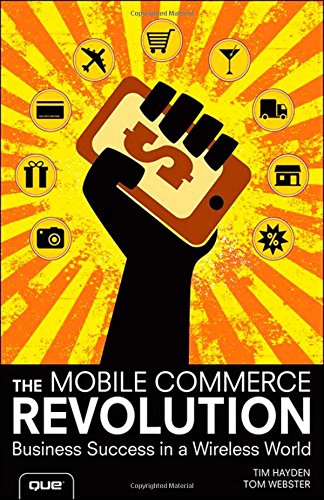
The Mobile Commerce Revolution: Business Success in a Wireless World, by Tim Hayden and Tom Webster, is a deep-dive into the changing landscape of mobile business.

Mobile Commerce Revolution book cover

If you’re ready to pull together a coherent mobile strategy for your business, this book needs to be on your nightstand.

If you are scrunching your eyes together and just hoping this whole mobile thing will just go away, you need to stop reading this blog post and go one-click this book on Amazon.

The mobile revolution is well underway, and it’s not just academic. It’s affecting lives around the world:

“According to a documentary produced by Dr. Steven Shepard on some of Cisco’s efforts to bring mobile Internet to previously off-the-grid areas in Costa Rica, the results are dramatic indeed. According to Shepard, a recent study for the World Economic Forum indicated that an increase in a country’s mobile telephony penetration by 10% leads directly to a 2% increase in Gross Domestic Product (GDP), an increase in life expectancy of 15 months, and education for 600,000 children in that country.”

Be forewarned—this is no quick-read overview. You’ll want to highlight sections, dog-ear some pages, and come back to re-read certain chapters.

One of the most important observations of the book is that “mobile is a behavior, not a technology.”

Think about it. Businesses that want to reach you on your mobile device are really walking with you through your daily life. They’re coming to the restaurant, out on the soccer field sidelines, and (in some cases) into the bathroom with you. Therefore, when you design your own business mobile strategy, you absolutely must consider where, when, and how people are accessing your messages.

Mobilize Your Business: A Summary

  • Look at your online presence. Ensure that your website and your content truly address the needs of the mobile visitor. This goes beyond cramming your same site down into a tiny format.
  • Look at your payment systems. Remove any barriers or friction that make it more difficult for customers to give you their money, regardless of where they are.
  • Look at your message channels. Review your options for outbound messages. Will SMS work? What do your emails look like?
  • Look at your offline presence. Billboards, direct mail pieces, signage, and live events are all part of the mix. Inject some creativity into those traditional outlets.
  • Look at every department in your company. Your mobile strategy can’t begin and end in the marketing department. Reach out across the entire organization and bring in customer service, sales, and everyone else during the planning process.

The authors do an excellent job of describing the current state of affairs, where mobile is heading, and how to address it, including an excellent chapter called “Ten Steps to Mobilize Your Business.”

Bottom line: you’d better get on this now.

Disclosure – I had the great pleasure of attending the book launch party, and received a free copy of the book. However this review was not solicited, and my recommendation is straight from the heart. The link above is not an affiliate link.
Author’s Bio: Rosemary O’Neill is an insightful spirit who works for social strata — a top ten company to work for on the Internet . Check out the Social Strata blog. You can find Rosemary on Google+ and on Twitter as @rhogroupee

Filed Under: Business Book Tagged With: bc, book review, mobile payments

Book review: Smartcuts by Shane Snow

October 9, 2014 by Rosemary

We all know people who seemed to have popped out of nowhere into a career, a gig, or an experience that they had no business doing.

How did they do it?

Smartcuts book cover

In Smartcuts, Shane Snow attempts to explain why and how some people figure out these “lateral jumps.”

The subtitle of the book is “How Hackers, Innovators, and Icons Accelerate Success.”

It’s not accidental that it says “accelerate success,” rather than “achieve success.” If you picked up this book expecting a handbook on how to make your dreams come true, you’d be disappointed.

Snow chooses fast-paced stories to illustrate many different ways of “hacking” the system to make massive success happen faster. Typically, these methods make it look as though the person appeared out of nowhere, since they don’t come from an expected direction or path.

So if you’re already primed for success, how can you pour gasoline on your performance?

The author highlights 9 primary ways to accelerate success:

  • Hack the ladder
  • Train with a master
  • Get rapid feedback
  • Find a platform for your art
  • Watch and capitalize on patterns
  • Harness the power of a super-connector
  • Keep momentum going
  • Simplify your life
  • Dream big. 10X big.

Each concept is illustrated with fun, interwoven stories, making for a quick read. However, the ideas contained in the book will stick with you.

You know that old optical illusion image that looks like an urn, until they tell you that it contains two faces? This book gives you that same feeling, as you may have seen the “accelerators” at work before without recognizing them.

But the key takeaway is that you must be willing to challenge the conventional wisdom about how to become successful. Dare to say you want to go to Mars.

Have you read Smartcuts yet? Please share you thoughts in the comments!

Author’s Bio: Rosemary O’Neill is an insightful spirit who works for social strata — a top ten company to work for on the Internet . Check out the Social Strata blog. You can find Rosemary on Google+ and on Twitter as @rhogroupee

Filed Under: Business Book Tagged With: bc, book review, success

Whole health series for business owners: reading The Difference Maker, by John C. Maxwell

September 25, 2014 by Rosemary

By Teresa Morrow

In his book, The Difference Maker, John C. Maxwell offers tips and tools for not only living differently but questioning our attitude toward life.

He challenges the reader to discover a new way to define ourselves in this world. He shares that “much of what we do every day comes from habitual behaviors. Over the course of time, we have developed a way of approaching life”. This book is described as “one-on-one coaching” from one of the nation’s top leadership experts, John C. Maxwell.
 
Here are just a few segments in the book that struck me (there are many):
 

Your Attitude is Your Responsibility

Maxwell is talking about taking responsibility for your attitude. He shares a story from the singer Roberta Flack and how her parents didn’t make it far in school. She continues to say that despite this, each of them was literate, spoke well, and their values were high. She says, “they drummed into our heads that the situation you live in doesn’t have to live in you.”

Teresa’s Tip: Don’t allow what happened to you in your past define who you are today. Those things in our past can be like a weight dragging us down; however, we have a CHOICE to let go of the weight.

Negative Breeds Negative and Positive Fuels Positive

Maxwell offers a simple but poignant idea. Negative thoughts leads to negative action. He says, “…negative thoughts lead to negative beliefs. Those beliefs become the basis of wrong decisions, which lead to wrong actions.” He goes on to state that it can be a vicious cycle. However, we can break the cycle by forming better thoughts and positive habits.

Teresa’s Tip: This is the basis of law of attraction– what you put out, you get back to you. It doesn’t mean you will never have a bad thought or not do something wrong. However, this can help you understand that you can change your thoughts and not allow them to linger on. You can turn around a bad thought or belief and make it a positive one.

Change; it’s a Part of Life

Maxwell shares tons of great information in this section on change. He offers this quote from Andy Warhol, “they always say that time changes things, but you actually have to change them yourself.” – Andy Warhol
 
Maxwell adds five reasons people resist change: 1) People resist change because of personal loss 2) people resist change because of fear of the unknown 3) people resist change because the timing could be wrong 4) people resist change because is feels awkward 5) people resist change because of tradition.

Teresa’s Tip: He’s right about change—we don’t enjoy it. But what if we (and I include myself in here) don’t fear it but embrace it more. Let’s try and see change as an adventure to new possibilities. I’ve embraced change in my life (when I met the love of my life) and it was a great experience (we have been married for 10 years!) But I’ve also been resistant to change (recently my mom passed away and it is hard to live without her physically in my life). But one thing is true about change—it is going to be a part of our life whether we like it or not. It’s better to find a way to work with it instead of pushing against it.

Failure is an Opportunity

Near the end of the book, Maxwell shares his thoughts on failure. He offers this, “most people don’t need to learn more about how to overcome their rivals. They need to learn how to get out of their own way.”
 
He goes on to talk about how to profit from failure. He talks about an earlier book he wrote, titled, Failing Forward. The focus of that book was “that the difference between average people and achieving people is their perception of and response to failure.”
 

Teresa’s Tip: Hey, it’s going to happen–you and I are going to not succeed at something. But I like the last line of the above statement….”their perception of and response to failure.” Again you and I have a CHOICE in how we deal with what happens to us…including when we fail. We can have our time to react initially—be angry, be sad, be disappointed; however, we don’t have to dwell in the failure but use it to fuel us for the next stage of what is going on in our life.

 
In this book, The Difference Maker, the author John C. Maxwell challenges us with the question, “Is attitude everything or nothing?” What do you say?
 
To get your copy of The Difference Maker by John C Maxwell go to Amazon The Difference Maker: Making Your Attitude Your Greatest Asset (Affiliate link)
 

Author’s Bio: Teresa Morrow is an inspirational author, blogger, poet, and author of ‘Life Lessons from the Heart’ and ‘Healing from Broken Trust: A Journey of Transformation.’ Visit her website at http://TeresaMorrow.com.

Filed Under: Business Book, Successful Blog Tagged With: attitude, bc, books on leadership

Whole health series for business owners: reading The Artist’s Way, by Julia Cameron

August 29, 2014 by Rosemary

Editor’s Note: We’re so excited to welcome back Teresa Morrow, a past contributor to Successful Blog, to share her spiritual insights for business owners. She will be doing a monthly series to help business owners and entrepreneurs leverage the world of mind, body, and spirit books in order to boost overall health. (Welcome back Teresa! ~Rosemary)

By Teresa Morrow

As the first book in this monthly series, I want to share with you—

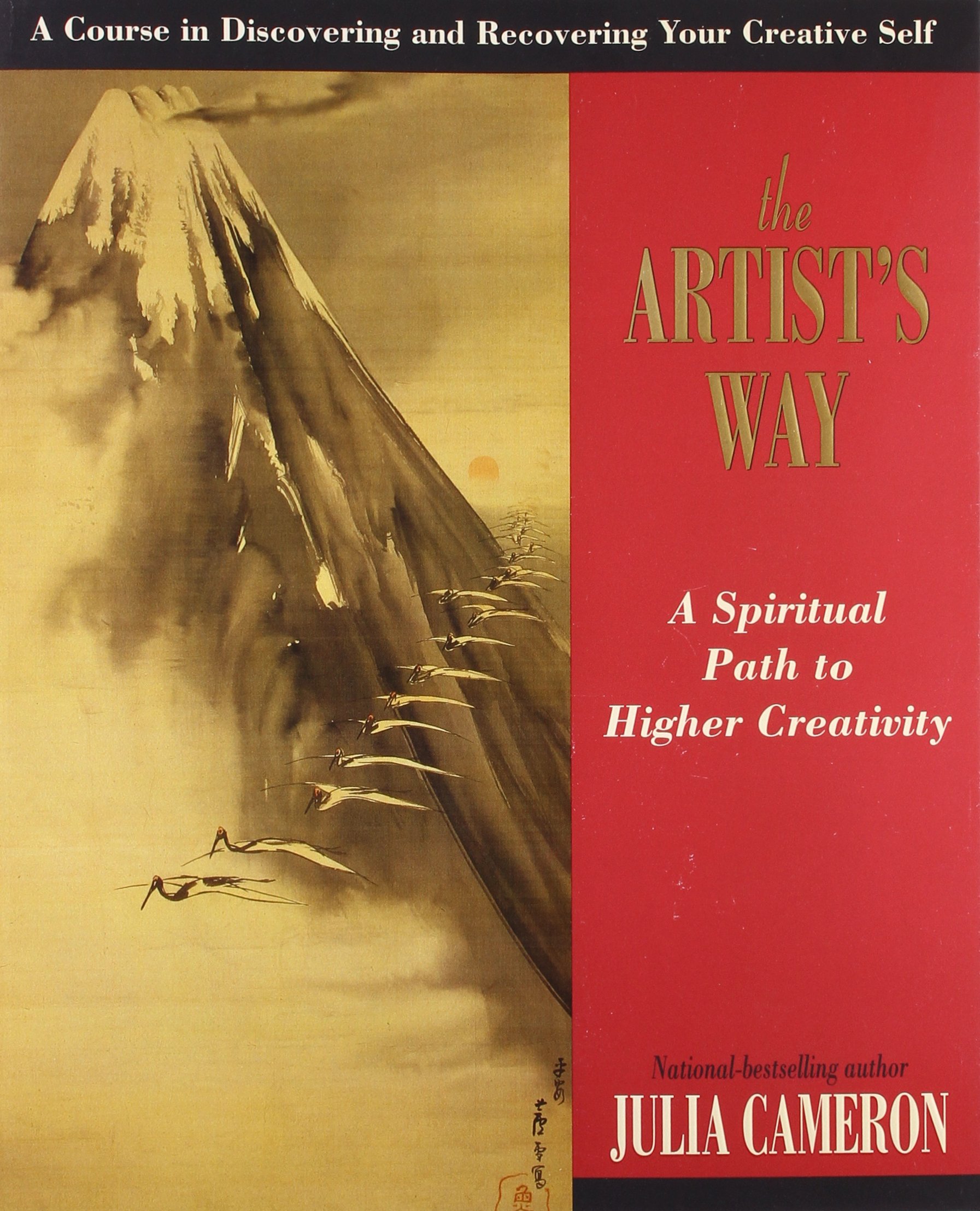
“The Artist’s Way,” by Julia Cameron

cover of The Artist's Way book

You may not think of yourself as an artist; however, if you are ambitious, curious, and creative like most entrepreneurs, this book will help you on your path in life and in business.

The line on the top of the book cover reads:

“A course in discovering and recovering your creative self.”

The subtitle is:

“A Spiritual Path to Higher Creativity”

Then…the line on the back of the book reads:

“For writers, poets, actors, painters, musicians and creative people in all walks of life.”

I believe no matter what business you are involved in or starting, you and I could always use a bit more help with our creativity. Our creativity allows us to birth those great ideas, explore new opportunities and strive to be our best selves.

Here are a few things I loved from this book:

  1. First, author Julia Cameron shares two tools to bring out your creativity —the morning pages and the artist’s date.

    The morning pages are three pages you write each morning. In these pages, there are no wrong words, sentences, paragraphs. Just writing. Just to keep up the creative flow of allowing your ideas, thoughts and feelings to be expressed outward. It’s an exercise in giving yourself permission to vent, share and give to your creative self.

    The artist’s date is a set amount of time you set aside for you to be creative. This can be an hour, a half day or whole day where you immerse yourself in what you find creative—writing, singing, cooking, drawing, etc. And you make a solid commitment to setting this time aside for your creative self.

  2. Art is born in attention. This sentence is found on page 21 and was one of the many powerful statements Julia makes in her book. This statement rings in truth. Without the attention to your art (your business), it would cease to exist. You have to be paying constant attention to what you want from your business, where you wish it to grow, how you want to affect your customers, and the purpose of your art in the world.
  3. In week 7, the sense of connection, Julia Cameron talks about how art is sometimes thought of as “thinking something up” and she says is more the art of “get something down”. She states, “Art is not about thinking something up. It is about the opposite—getting something down.” The directions are important here:

    If we are trying to think something up, we are straining to reach for something that’s just beyond our grasp, “up there, in the stratosphere, where art lives on high…”. “When we get something down, there is no strain. We’re not doing: we’re getting.”

    WHOOHOO! The last line is profound to me because as a creative, I have felt like I was reaching many times and that’s when I was not able to write much. When the flow was natural, I could write for a long while because I was getting not reaching.

I also appreciated the quotes I found in the sidebars throughout the book. Here are a few I enjoyed-

  • “What lies behind us and what lies before us are tiny matters, compared to what lies within us” Ralph Waldo Emerson
  • “Art evokes the mystery without which the world would not exist” Rene-Francois-Ghislain Margritte
  • “Learning is movement from moment to moment” J. Krishnamurti

The Artist’s Way is divided into twelve main chapters, and each chapter is one week of the “course.” Each chapter dives into a section of our being to bring out our more creative self within the parameters of professional and spiritual life.

Week 1: Recovering a Sense of Safety

Week 2: Recovering a Sense of Identity

Week 3: Recovering a Sense of Power

Week 4: Recovering a Sense of Integrity

Week 5: Recovering a Sense of Possibility

Week 6: Recovering a Sense of Abundance

Week 7: Recovering a Sense of Connection

Week 8: Recovering a Sense of Strength

Week 9: Recovering a Sense of Compassion

Week 10:Recovering a Sense of Self-Protection

Week 11: Recovering a Sense of Autonomy

Week 12: Recovering a Sense of Faith

To get your own copy of Julia Cameron’s The Artist’s Way, find it on Amazon (affiliate link).

Author’s Bio: Teresa Morrow is an inspirational author, blogger, poet, and author of ‘Life Lessons from the Heart’ and ‘Healing from Broken Trust: A Journey of Transformation.’ Visit her website at http://TeresaMorrow.com.

Filed Under: Business Book Tagged With: bc, creativity, spirituality, whole health

  • « Previous Page
  • 1
  • 2
  • 3
  • 4
  • 5
  • …
  • 28
  • Next Page »

Recently Updated Posts

Is Your Brand Fan Friendly?

How to Improve Your Freelancing Productivity

How to Leverage Live Streaming for Content Marketing

10 Key Customer Experience Design Factors to Consider

How to Use a Lead Generation Item on Facebook

How to Become a Better Storyteller


From Liz Strauss & GeniusShared Press

  • What IS an SOB?!
  • SOB A-Z Directory
  • Letting Liz Be

© 2025 ME Strauss & GeniusShared