Successful Blog

  • Home
  • Community
  • About
  • Author Guidelines
  • Liz’s Book
  • Stay Tuned

How to Leverage Live Streaming for Content Marketing

August 26, 2025 by Jessy Troy

Live streaming is huge. Almost 1/3 of business videos were viewed via the live streaming pioneer Ustream. Don’t think people have time to watch live-stream video? It was reported that the average viewing time of a stream was 25 minutes on uStream versus a mere 6 minutes for Hulu and 3 minutes for YouTube. UStream reported that there were more than 1 billion hours of enterprise live stream viewed in 2013 (see video at the end of this post for more details).

Amazon bought out live streaming platform Twitch for close to a billion dollars last year, and now Twitch streams more video than UStream, the WWE, ESPN and MLB.com combined, owning a massive 43-percent share of all live streaming traffic.

Live streaming apps that anyone can easily launch and tweet out directly from their smartphone are taking the world, or at least the venture capital world, by storm by allowing anyone to create “selfie” live streams of their life. 

The net-net of all of this is that 

  • Live video is compelling and attracting a lot of eyeballs 
  • It is becoming easier than ever to live-stream through a variety of platforms.

The intent of this introduction to live streaming is to reset your understanding of the technology and get you thinking outside of the box as to how your company can also leverage live streaming, not just for marketing but as a core component of your product.

From a content marketing perspective, live streaming can make a powerful addition to everything else you do when used for the following:

1. Live Streaming Events – A No-Brainer

If your company does events, it is an absolute no-brainer that live streaming be added to the way your content is distributed. Live streaming your event gives you the following specific benefits:

  • If you run an event where there is a cost for admission, adding a virtual ticket can help you better monetize your event.
  • Physical events have physical limitations and usually cost additional resources for each additional attendee. Live streaming allows your event marketing to scale to reach a much larger audience.
  • Your live streaming archives can now provide you with a powerful source of videos which you can republish on your website as a lead magnet or repurpose into several videos which you can upload to YouTube.

It is this 3rd aspect of archiving your videos and repurposing them that enables you to truly harness the content marketing potential of your live streaming efforts. These videos are not only powerful for the inherent SEO benefits of being indexed on YouTube, but also for generating engagement as native uploads to Facebook.

2. Creating New Live Streaming Content by Thinking Like a Broadcaster

As companies become content marketers and begin to publish their branded content, we become the media, and everyone becomes a publisher. It’s now time to think beyond that and become a broadcaster. YouTube celebrities have come out of nowhere and become celebrities by leveraging this and creating, for lack of a better description, video programming similar to television shows.

Why don’t more businesses do the same?

Once you register a domain name and launch your blog, you are already establishing your social voice and adding value to the world with your unique perspective. With eyeballs searching for content in Google as well as consuming it in social media, you need to be present to capture share of eyeballs. But with this many people consuming live streaming content, your brand is simply missing out by not being present in this growing landscape of live streaming broadcasters.

If you think about it, live streaming is no different than hosting a Twitter chat (different medium, same concept). It does require a content strategy, relevant branding, a choice of technology platform, and a format that both helps you meet your business objective and attracts a relevant audience. Your own “television show” could become one of the following:

  • Answers to commonly asked questions
  • Industry updates
  • An inside look at your company by interviewing different employees
  • Customer interviews

3. Flipping Your Reality: Using Live Streaming to Curate User-Generated Content and Engage with Your Community and Influencers

Those with large Twitter followings can easily leverage these platforms to engage with their followers and allow their followers to help virally spread their activity through engagement. Live streaming can now play an important role in companies.

Having their fans talk about how much they love their products on their own live streams. These live streams could also be archived and, with permission from the creators, repurposed into a lot of different user-generated content that can be leveraged for a variety of objectives.

Take this concept one step further and think about the potential for influencer marketing through having influencers talk about your brand on their live streaming platform.

The eyeballs are there. How will your company evolve to leverage potentially the most compelling type of content marketing available?

Filed Under: Marketing, Marketing /Sales / Social Media

10 Key Customer Experience Design Factors to Consider

August 3, 2025 by Jessy Troy

Customer experience design is more important than you might think.

We live in a world where change is the new normal. Just about anyone in business these days has to be able to deal with change on an increasingly frequent basis. Customers now have a growing number of options, from new start-ups to consumer packaged goods giants; everyone is recognizing the value of focusing on customers.

This may not be a new concept; those brands that fail to deliver a differentiating customer experience may soon find themselves out of business.

The research tells a compelling story. Brands that take the customer experience seriously tend to perform better. Their customers are happier, more loyal, and they are willing to tell others about their experience.

Creating and maintaining a differentiating customer experience requires commitment and agility from an entire organization. Customers don’t live in a static environment; their needs and preferences are always subject to change.

Design thinking is a process developed to bring creative, non-linear approaches and strategic viability to the product development process. The concept has been made popular by Tom and David Kelley, the creators of IDEO, a global product innovation and design firm.

Presently, design thinking has expanded to include the digital service space. It encompasses web design that takes into account user interface and ease of navigation. Design thinking is all about reinventing the way customers interact with businesses. This process is all about gaining customer input, then quickly developing prototypes and iterating continually.

I believe companies can apply design thinking principles to 10 customer experience design factors that can create and sustain a differentiating customer experience.

Here are the ten customer experience design factors. I’ll provide some suggestions for each one.

Speed

Everyone is busy.  Time is the most precious commodity consumers have. Consumers want convenience, and if checking out self-service is faster, they’ll choose that option.

Whether it’s answering a question or resolving an issue, customers expect quick responses. And their tolerance for wait times is rapidly dropping.

Based on a recent global survey from Verint, quick resolution of requests was identified by 46% of respondents, by far the most popular response.

From the first impression to finding information, customers want to be able to find what they are looking for when and where they want it. This is a real challenge for companies that have multi-channel touch points.

If your company doesn’t have performance metrics to monitor speed, consider finding ways to monitor this important factor. At the very least, ask for direct feedback from customers and front-line employees. Identify speed bumps and take steps to remove them.

Customer Ecosystem Perspective

According to McKinsey, top-performing companies have a clear understanding of the entire customer ecosystem. They understand relevant interactions and behaviors that extend well beyond those the company is able to control.

These companies often spend time with customers observing their behaviors and understanding their journeys and needs beyond the core journey involving the company’s products or services.

This kind of effort helps unlock insights that would never be available through product research.

Savvy companies recognize they don’t always have to spend large sums on customer research and invest in a customer experience dashboard. Many can use social media tools to monitor the behaviors of the relevant players in this ecosystem.

Relevance

Consumers will trust complete strangers more than most brands; as a result, it’s important to find ways to provide helpful content. While it’s important to provide useful information about your product or service, think about content that might help their journey before, during, and after they purchase your product or service.

Many marketers devote a great deal of content and resources to attracting consumers; however, many neglect the post-purchase phase. Studies have shown that post-purchase behavior is highly correlated with ongoing satisfaction with a brand.

The best way to be relevant is to be helpful.  Make sure you balance your content with all phases of the buying cycle. Be generous.  Prospects and consumers don’t want to be sold; they want to be helped. Helping is quickly becoming the new selling.

When starting out, make sure to buy a domain name that creates relevant associations with what you do.

Mobility

Mobile technology has profoundly shaped the consumer experience far beyond the obvious. Smartphones and tablets have computing power that far exceeds that of some earlier mainframe computers. These multi-function devices have the power to replace a host of functional devices.

The technology has shaped the way brands and consumers interact. These devices have become a part of our everyday lives in ways most could not have imagined a few short years ago. For example, most searches from a mobile phone occur in the living room.

Marketers who want to reach consumers have to think beyond the basics of providing information; they have to be aware of where consumers are located when they are accessing information.

With so many accessing information from smaller screens, consideration of layout, size, download speed, etc., all are becoming an essential component. It’s no longer enough to simply provide mobile access to your website; now you have to think about details like filling out forms and accessing ordering systems from a smartphone.

I would recommend using a smartphone to regularly access and conduct routine transactions from your website. Is the layout clear, and is there proper spacing to accommodate touch access? Does the site respond quickly? Is it easy to access help if required?

You’ll be able to add to these questions; it’s important to build in a regular practice of monitoring and finding ways to make the mobile experience effective.

Seamless Journey

Consumers regularly use multiple platforms on a regular basis. They may access your website while in a store or car; maybe they’re watching TV and using their tablet or phone. Successful brands realize they must provide access options that their customers can choose.

Consumers may start their journey on one device, then continue on another. They expect one experience that is seamless. Marketers define online and offline channels; consumers don’t distinguish, they just want a seamless experience.

Companies are starting to address this challenge; in a recent survey, improving the cross-channel customer experience was a top priority.

Whenever I think of seamless experiences, I think of Evernote. It’s an application that offers a lot of utility – from notetaking to curating, to collecting business cards, I use it all the time. It is completely seamless. I access and update information on my tablet, smartphone, and computer easily. The interface makes sense, and it’s been tweaked for each unique platform.

To provide a seamless experience for your customers, start with a journey map that identifies all touchpoints. Next, identify the interactions that are likely to occur at each touchpoint. Ensure there are appropriate interfaces to internal systems that are needed to initiate or process transactions, etc. It’s a good idea to audit your own processes using multiple devices to ensure the experience is seamless and secure.

Convenience

New business models are being created; some radically alter traditional business models. Imagine applying for a home mortgage that promises little paperwork and faster approval. Faster, as in minutes, not days.

You may not be able to retool your current business model, but remember, time is a precious commodity for your prospects and customers. Look for ways to remove friction from your processes; even small tweaks can yield significant results.

If people have already provided information, can I use it to help pre-fill other forms?

Conduct regular audits that challenge the need for the information you are requiring. Is it really necessary? How are you using it?

Culture

Differentiating customer experiences doesn’t occur in a vacuum; it occurs in organizations committed to the best interests of all stakeholders. They typically have healthy cultures that foster engaged employees who are empowered to deal with challenges.

Feedback and alignment around core values are the fuel that powers healthy cultures.

Surveys indicate that customers want to deal with employees who know how to resolve their problems.

Companies that sustain differentiating customer experiences regularly keep track of employee satisfaction and happiness. They know that employees who are motivated and happy recommend their friends when appropriate.

Companies that clearly articulate their values and then hire associates aligned with those values often enjoy a competitive advantage.

Engage

The statistics on employee engagement are pretty dismal. Globally, they are less than 20% of the workforce. In the US, the number is around 33%. Employees are looking for mastery, autonomy, and purpose. Companies with strong cultures know how to train, empower, and tell their story in a way that ignites a shared mission and vision.

Studies show that simply and authentically offering praise on a regular basis can contribute to employee satisfaction and engagement.

Story is the new currency of brand engagement. Smart brands know how to help by engaging employees and customers alike through the use of compelling narratives. Including all stakeholders helps ensure alignment in consistently delivering brand promises.

John Hancock has created a compelling set of stories with their Life Comes Next campaign. Each story is tailored to a particular target audience. The television ad sets up the story, then the viewer is directed to a microsite where they can choose different endings.

It’s unique, engaging, and compelling. Find ways to create stories that all stakeholders can relate to.

Loyalty

McKinsey has studied the buying process and, through their research, has identified a new approach to consumer behavior. Instead of collecting a number of options at the top of the buying funnel and then eliminating them, they discovered consumers actually add options as they progress through the buying cycle.

Consumers continue to evaluate the product or service after the purchase, significantly influencing future brand purchase decisions. Companies that deliver differentiating customer experiences take full advantage of post-purchase opportunities to ensure consumers continue to have a good experience post-purchase.

McKinsey also identified two types of loyalty, active and passive. While both might appear the same on the surface, active loyalty is the aspirational goal for all brands.

Continually find ways to make it easy for consumers to buy and use more of your product or service. Too often, little or no marketing resources are applied to existing customers. Start by thanking customers for their business. Consider surprise and delight offerings to express your gratitude.

Monitor your social channels carefully. When consumers have positive things to say, acknowledge their comments appropriately.

Ask consumers about their preferences and then honor them. Provide helpful email communications that offer so much value, consumers will complain if they don’t receive them.

Use segmentation to tailor content that helps the customer; don’t turn these into Sunday paper stuffers that focus on selling.

Word of Mouth

The best form of advertising is word-of-mouth advertising. Create a “wow” customer experience, and customers will be inclined to tell others about it. In surveys, consumers usually indicate their first reaction after a “wow” moment is to share it with their networks.

Focus on creating the “wow” experience rather than the word of mouth.

I love this Seth Godin quote:

Is the goal to get people to notice what we make?

Or

Are we setting out to make something people choose to talk about?

Many organizations put a lot of effort into cajoling customers to share with their friends and family. Without the experience to share, these efforts often fail.

Next Steps on Customer Experience Design

There are a lot of moving parts that have to come together to create a differentiating customer experience. It can feel overwhelming. It’s a never-ending journey that requires agility and discipline.

The beauty of design thinking is its iterative nature. It works best with smaller incremental changes. Your product or service has to be competitive. Invite your employees and customers to join you in continually improving it.

Most importantly, DO SOMETHING!! Don’t allow the complexity or magnitude to paralyze.

What are some of the factors in customer experience design you are using in creating a differentiating customer experience?

Filed Under: Marketing

How to Use a Lead Generation Item on Facebook

July 7, 2025 by Jessy Troy

Wondering how to get more leads for your business?

Think Social Media, think Facebook.

Billions of people use social media, which means if it’s not a part of your inbound marketing strategy you’re losing out!

Every business should have a Facebook page. 5 years ago every business had to have a website to appear professional. Now, I say the same thing about Facebook … Every business must have a Facebook page to appear modern and professional. And they must post frequently and consistently.

At the beginning of 2015, there were roughly 1.39 billion active monthly users on Facebook. Even more impressive, an estimated 10% of an average person’s Internet time is spent browsing Facebook.

I’m probably singing to the choir here because if you’re reading this site you’re probably already using some social media in your marketing strategy. You may have had some success, but want more leads, more clients and more progress with your Facebook marketing.

This month I’m talking about putting your Lead Generation item on Facebook to get more newsletter subscriptions.

What is a Lead Generation item?

This is a free item, usually an eBook or a video that educates your readers about your product or service. It may come from the context of solving a problem for the reader or educate a reader about your product.

Hubspot is brilliant at lead generation. They use free eBooks, calendars, case studies, etc. Their list seems unending; that’s why I think they are the perfect model to follow and learn from. You don’t have to be a big business or even have employees, if you’re a one-woman show, like me, you can still learn from Hubspot.

Customizing Your Facebook Page for Lead Generation

A Facebook business page is pretty basic and looks the same as every other Facebook page. To draw attention to your business, you’ll want to customize your page and give it a unique look to make it stand out from the rest of the pack and look professional.

Here are some things you can do to customize your Facebook business page for lead gen:

Create custom tabs – Think of tabs as landing pages. For example, set up a tab with a subscription form for your email list, or a contest for fans – this is an excellent way to capture more leads. Integrate your MailChimp account with your Facebook page for a simple subscription form “gate”. Want something more elaborate? Use an app like TabSite or software like LeadPages. There is a cost for TabSite and LeadPages.

Use your Facebook cover – To draw attention to your tabs and your lead gen item, try big arrows pointing your tab, or large text announcing your lead gen item.

Most people only see your posts in their newsfeed, so it’s challenging to get fans on your page. If fans don’t go directly to your page, they won’t see your tabs and they won’t enter your contest or subscribe to your newsletter. So make sure, every once and awhile, to publish a post about your incredible opt-in offer.

Create High-Quality Content

Facebook users aren’t going to follow you unless you have something to offer them, which is why you should post high-quality content. By posting valuable content that is relevant to your target audience, you’ll begin to establish yourself as an authority within your niche, which in turn, will create trust. Your reputation will draw in more fans. Your fans will in turn like content and share it, increasing your exposure, which will help to increase your lead generation.

Here are a few tips for posting valuable content:

  • Vary your content – Don’t just post written blog pieces. Internet users are more attracted to visuals, so post videos, images, infographics and more. Visual posts are easier to read, and users are more likely to share them as well. Photos are incredibly effective for engagement. According to recent studies, posts that have photos are 128% more likely to be clicked than other links.
  • Use calls-to-action – Facebook users don’t know what to do after looking at your content, which is why the call-to-action is so important. Your call-to-action invites them to do what you want, whether it’s to sign up to your email list or to comment on a post. The call-to-action is vital to capturing your leads. Use words that encourage action and urgency when crafting your calls-to-action. Use Linktree or Linktree alternatives to send your Facebook followers to a social media landing page!

How have you used Facebook for Lead Generation? Have you created some irresistible free opt-in offers?

Filed Under: Marketing

How to Become a Better Storyteller

May 11, 2025 by Jessy Troy

Are you engaging your community the best you can with visuals?

In most cases the answer is: probably not.

Yet, visual marketing is crucial these days. According to Megaphone Marketing,

With 70% of visual receptors in our eyes, it only takes 150 milliseconds to recognise and symbol and 100 milliseconds to attach a meaning to it. Our brain processes visuals 60,000 times faster than text and retains 80 percent of what we see versus just 20 percent of what we read.

Here are a few tips and stats for you to consider:

  1. Invest in becoming a recognizable brand. This includes developing a unique style and creating a consistent digital business card.
  2. In the age of “infobesity” and with an adult attention span of 3-8 seconds, marketers need to learn how to stand out with visual content.
  3. Viewers spend 100% more time on web pages with videos. 60% are more likely to buy a product if video is included. Use an online video editor to create videos.
  4. Web posts with visuals drive up to 180% more engagement than those without visuals. Use visual elements to create better lead magnets!
  5. Publishers who use infographics grow in traffic on average of 12% more than those who don’t.
  6. According to Sephora, their Pinterest followers spend 15X more than its Facebook fans.
  7. 90% of information transmitted to the brain is visual and processed 60,000x faster.
  8. Cartoons can increase your newsletter open rate to 45% vs 5% industry standard.
  9. The 7 elements of visual storytelling are:
    1. design,
    2. personalisation,
    3. usefulness,
    4. personality,
    5. storytelling,
    6. share-worthiness,
    7. real-time app… Know them!
  10. Don’t be afraid of low-fi (Low Fidelity) images taken on the go, we live in the Now! economy and people get it. Have fun w/ it.
  11. Make content easy to consume, make it snackable!
  12. Remember the Cs: content + context: know what content to place on what networks. Ex: GIFs do well on Tumblr, but not others.
  13. Ensure every blog post has at least one great picture and you have a Pin It button on your site for heavy Pinterest users.
  14. Twitter is extremely visual, even if you are sharing a link attach a picture to draw attention and increase click-through.
  15. On Slideshare, use less text on slides, keep it short and visual, use a catchy title, and include a “tweet this” button on the slides.
  16. Don’t be afraid to play with different types of content. See what works for your community; ask them too!

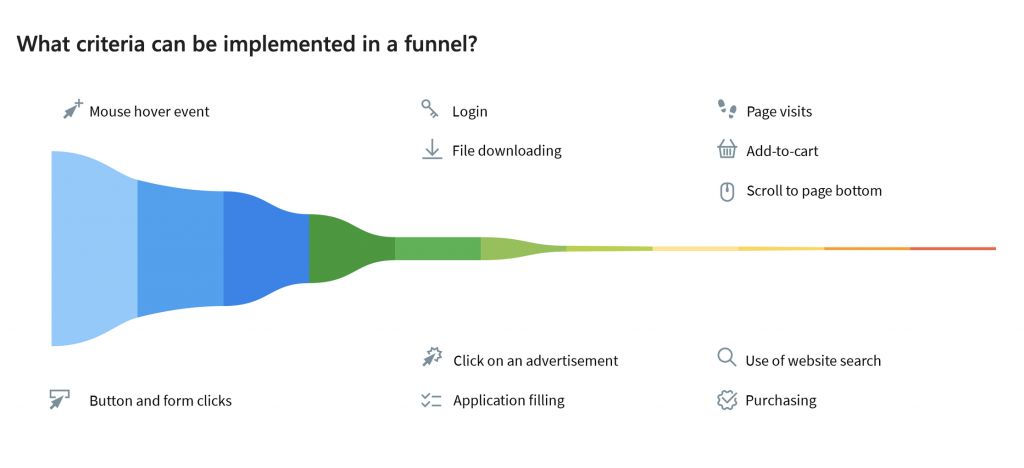
Never stop monitoring and improving. Use web analytics platforms to understand how your audience is engaging with your visual content and whether it is sending them down your conversion funnel:

Visualization of a conversion funnel

There’s no one secret for success! Leave a comment and share what visuals you’re using and what’s working to help you and your brand better connect with your community.

Filed Under: Marketing

How to Monetize Your Hobby

February 9, 2025 by Jessy Troy

Are you looking to make some money in the new year? Do you want to start a business but are confused on where to begin and how? Then why not start with one of your favorite pastime hobbies?

It may sound too good to be true, but many people are starting to turn their hobbies into side hustles to generate an extra stream of income. The best part of monetizing your hobby is that when you work on something you enjoy and love, it doesn’t feel like work.

It becomes fun.

Whether you’re a painter, a graphic designer, an illustrator, a calligraphy master, create DIY art pieces, an embroiderer, or make custom pieces, you can literally monetize any hobby and start generating an income.

That is why in today’s post we’ll share some tips on how you can convert your hobby into a small business that not only generates an income but gives you joy as well.

Keep on reading to know how you can start, right now!

1. Create a strategy

Whenever you start with a new venture or endeavor, it is always wise to start with a game plan on what you want to achieve, and listing down steps to get there.

When first trying to monetize your hobby, research online how other people in the same category as you are selling their products or services.

List down the steps you need to create a digital marketing strategy that includes the time, resources, cost etc it will take for you to achieve goals you’ve set.

If you have a budget, you may want to invest in Adwords Consulting to get things rolling quickly.

Make sure that you set goals that are tangible and realistic, so that you can maximize the benefits from your strategy and be on track for success.

2. Start a website

Having a website for any small business or entrepreneur is a must, even if you’re not thinking of turning your hobby into a monetary profession for the long haul. Creating a website to showcase the range of products you have or services you offer, not only makes it easier for the right customer to reach you, but has positive outcomes long term.

Use this domain name generator to pick a name that reflects your hobby.

When you make a website and provide accurate information regarding price, contact info, shipping and delivery details, it creates credibility in the eyes of a potential customer and will help spread the word faster for more traffic. One of my favorite examples I recently found is this site profiling awesome waterfalls a family is visiting. Such a cool hobby!

3. Pitch and reach out clients

Reaching out to potential clients whether locally or online is very crucial to make your first sale. This point is especially important for people who run a food business, catering, provide supplies on a large scale, and are looking to expand their hobby to serve a company or a large gathering.

Whether your first pay check is the $5 or $500, your motivation to continue your new endeavor will be highly contingent on your first sale. In order to get potential clients, pitch yourself via email, in person, or on call to people you know can get benefit from your services or products.

Even if you’re shy of putting yourself out there, dropping emails is a great way to introduce your new business and if you can’t do that, then the follow the next point.

4. Create content for your social media account

Having a social media account even for your hobby is extremely important for exposure and gaining potential clients. Nowadays, both businesses and customers check social media accounts of businesses they want to engage with financially. Making sure you post creative content, regularly will not only increase your following but help you target potential customers as well.

The goal isn’t to go viral overnight, but to hope that one post gets viral enough to land you on the radar of your targeted business/customer for your category. And for that you need some strategies and tips to engage with your social media audience.

According to Oberlo, there are more than 3.5 billion social media users as of 2019, and the number is only increasing. Making sure you market your products the right way to the right customers will only increase your revenue and help you make profit.

And those are top 4 ways on how to monetize your hobby to generate an extra stream of income in 2021. We hope you found them useful and motivate you to start your journey today.

Image by Steve Buissinne from Pixabay

Filed Under: Marketing

Nonprofits and Social Media: Which Sites Work Best for NPOs (and Why the Answer Isn’t All of Them)

November 21, 2024 by Jessy Troy

Social media is a must for nonprofit organizations (NPOs).

NPOs have to get in the social media game if they want to stay relevant and grow their donor base with the up and coming (of age) donors. What I haven’t addressed is why NPOs shouldn’t use ALL social media networks unless they have a very large staff to manage them. So today we take a look at which social media networks are best for NPOs and why the answer isn’t all of them.

The needs and target audience of a NPO will determine which social media network is best for them. The answer will be different for everyone. Sometimes a presence on just one site will work, while others may need to reach out via multiple networks. The important things to consider when making these decisions are 

  • Do you have a staff person that has enough time to manage multiple sites?
  • Which social network site offers you the services/features you need most
  • Where is your target audience flocking?

First things first, do you have a staff person who can manage multiple sites? The quick answer is typically no, but managing multiple sites doesn’t have to be a full-time job. Most social networking sites offer ways to link to each other so that when you update a status on one, it automatically posts to another. 

While I truly believe that any NPO can handle two or three social media outlets, I also believe there is such a thing as too many. Trying to be everywhere will dilute the time and energy you spend everywhere. So make sure you look at the time available for site management and choose wisely.

Once you’ve decided how much time you have to manage your social networking, how do you decide which sites fit your needs the best? The first place to start is with you and your organization. Determine what it is you really want to do online and then find all the sites that meet those criteria. Is starting a blog on your growth plan for the year? Do you want to post short, to-the-point updates throughout the day? Will you use social media to host chats or conferences for your donors or followers? Figure out what you need and want and go from there.

With your needs determined, the next step is hands-on experience. Get on the sites and see how easy they are to use and if their features are what you thought they were. Many sites offer similar features and it may be a tough choice.

With all of that homework and choices to make, the third thing to consider is the most important – know where your audience is and go there. If your target audience is into brief updates on Twitter then writing even the best blog won’t help you. There’s a good chance that some of your high-profile donor prospects are using LinkedIn and don’t have the slightest idea what Pinterest is. Know your audience.

Next, make sure you have a strategy. In other words, you know how to organize and consolidate everything you are doing on social media. Tools like Hootsuite and Linktree can help. Here’s a great guide on how to make a Linktree.

Having a presence on social media sites is a definite must for NPOs. Spreading yourself too thin with a presence on sites that don’t meet your needs is not. Do your homework and figure out what works best for you and then go for it!

Image source

Filed Under: Marketing, Marketing /Sales / Social Media

  • 1
  • 2
  • 3
  • …
  • 11
  • Next Page »

Recently Updated Posts

Is Your Brand Fan Friendly?

How to Improve Your Freelancing Productivity

SEO and Content Marketing

How to Use Both Content Marketing and SEO to Amplify Your Blog

9 Practical Work-at-Home Ideas For Moms

How To Get Paid For Sharing Your Travel Stories

7 reasons why visitors leave websites for ever


From Liz Strauss & GeniusShared Press

  • What IS an SOB?!
  • SOB A-Z Directory
  • Letting Liz Be

© 2025 ME Strauss & GeniusShared