Successful Blog

  • Home
  • Community
  • About
  • Author Guidelines
  • Liz’s Book
  • Stay Tuned

Revenue is the Small Business Livesaver

February 6, 2013 by Rosemary

By Elaine Love

The facts are set in concrete; at this point it is wet concrete or perhaps quicksand because it can change. As it stands now income taxes, payroll taxes, capital gains and dividend taxes and employee health care benefit expenses are all increasing. With these indisputable facts in mind, what is the small business owner to do?

If you are like me, you concentrate on increasing your market share and your sales volume within your current market share.

Analysis, not Paralysis Wins

Think like your customer. If you were in your customer’s business, what would you like to have? Ask yourself honestly if you are delivering that ideal product or service. If the answer is regretfully ‘no,’ then what do you need to change to make it a ‘yes?’

GM suffered a devastating bankruptcy in 2009. Just two years later, they reported a record profit. With the announcement recently of a totally redesigned and improved Corvette, they are demonstrating their commitment to improved quality going forward. Even though the Corvette represents a miniscule portion of GM sales in comparison to its truck line, it demonstrates the resurgence of quality. The Corvette is the first vehicle to be launched since the bankruptcy. The customer demanded better quality and GM is responding.

What does your customer want? What are you delivering? If there is one place to cut corners, it has been proven throughout history that it is NOT in product quality, customer service or effective marketing.

Market Growth Sectors

When you started your business, you researched what was currently available in the marketplace, what you could improve on the existing offerings and what unfilled niche remained. Go back to basics and do exactly the same research all over again.

Market research studies, interviews of your customers and intelligent observations pinpoint areas in which you can improve your current product or service and add additional products or services to fill niches. Sometimes you need to create the niche by informing them of a benefit they had not fully realized they needed.

Remember Apple’s introduction of the first iPhone? Steve Jobs presented the advantages of the iPhone before the marketplace even knew they needed those features combined.

Sales Revenue

Once the areas to improve and expand are identified, take action. Make the improvements and launch to fill the niche. Keeping capital liquid allows small business owners the ability to capitalize on marketing opportunities.

Small businesses can react very quickly to sales opportunities. An unexpected but delightful powder dump (several inches of light fluffy snowfall for the non-ski informed) is an excellent opportunity to push the word out to get to Steamboat Ski Resort quickly. Take advantage of a last second deal with the airlines to offer an incredibly low rate for Valentines, ‘take your sweetheart for a spring ski trip’ deal on airfare and lodging. Search for new marketing opportunities and capitalize immediately.

Don’™t Get Ready –“ Stay Ready

If you have your postcard campaign ready to launch, call your printer and issue instructions to print and mail the campaign. Blast the offer out to the social media network; ‘the postcard is coming. Present the postcard for an extra deep discount or special bonus.’

Create a new brochure for the newly discovered market niche using brochure design templates. Create a sales campaign to highlight the benefit your product or service offers to fill the market niche, why you are the best one to offer that benefit and a compelling reason to contact you immediately for more information. When you create an impressive marketing piece and produce it through the services of a top quality printing company (for example, check out PrintPlace.com), you are proud to present your marketing materials to your sales force and the marketplace.

Consistent Brand Recognition

Expand upon the highlights of your new brochure and create booklets as additional distribution pieces. Duplicate the elements of your brochure and booklet into your website. Providing a consistent high quality image creates brand recognition. Customers need to see a consistent company image multiple times. They see your company online, see you in social media and hold your brochure in their hand; this repeated consistent image solidifies your brand in their mind and paves the way for a buying decision.

Combining high quality printed marketing materials with your online presence captures the marketplace.

Action Steps

Keep your money liquid and be ready to pounce on marketing opportunities. The best way to mitigate increased expenses is to increase revenue. Increase revenue through delivering superior products and services which fill market niches and high quality marketing to distribute your message to the marketplace. Increasing revenue is the small business owner’s lifesaver.

What is your strategy for growing revenue this year?
Author’s Bio: At home in the Colorado Rocky Mountains, Elaine Love writes about small business and the mindset for success so essential for an entrepreneur. She is the author of Emotional Ice Water. Find her on Twitter @elainelove44 or Elaine4Success.com

Filed Under: Business Life, Marketing /Sales / Social Media, SOB Business, Successful Blog Tagged With: bc, marketing, personal-branding, revenue

Internet Marketing and What it Means for Businesses Today

February 4, 2013 by Rosemary

By Rebekah Griffiths


It’s clear that the internet is becoming an increasingly important aspect of everyday life. From watching the latest TV shows and films to shopping for food and the latest fashion trends, millions of people all over the world connect on a daily basis. This means that by making the most of a strong online presence, perceptive business owners are able to easily tap into a national or even global market. Statistics in recent years have pointed to the eruption of e-commerce; in the U.S. alone, online sales grew from around $70bn back in 2002 to well over $250bn dollars today.


What does it mean for businesses?


With such a huge and active audience available, today’s businesses are advised to bolster their print advertising with online marketing campaigns. Many choose to place an even greater emphasis on modern online methods than they do with other, more traditional marketing means such as flyer distribution, TV commercials, and radio ads.


There are a number of options available when it comes to reaching an online audience and a combination of these, including an intelligent web marketing campaign, can be, for many, the difference between success and failure.


Social media


Today, millions of people are connected to one another via social media. Sites like Facebook, Google+, and Twitter have millions of active users. What makes it easier for businesses to reach individuals on these platforms is the passive way in which they are approached. Marketing via social media is all about connectivity – making it worthwhile for customers to reach the business, rather than the other way round. Businesses can offer humorous or relevant content to users, who can then follow their activity for the latest industry news and offers.


Not only are businesses able to reach a much broader audience through social media; it also allows companies to engage closely with customers, identify trends, and process customer feedback.


In a day and age when consumers are increasingly choosing vendors based on the quality and convenience of the experience offered, providing customers with exactly what they are after is a sure-fire way of maintaining the brand image.


Web design


Just as a store front or print campaign must be both aesthetically pleasing and practical, so too must a company’s website; it should look professional while at the same time point customers in the right direction. In terms of design, a website can be constructed to bear the same colors, logo, and typefaces as the company’s existing branding – which will increase brand recognition with online visitors while portraying a consistent, recognisable company image. Pages can be written with clear, concise, and promotional content, and the most tech savvy businesses will be aware of the effectiveness of search engine optimisation (SEO).


What is SEO?


Search engine optimisation is all about making a website attractive to the most popular search engines today, such as Google and Yahoo. Since the vast majority of internet users will find the sites they need through the offerings of the search engine listings, this is a crucial consideration for businesses looking at online marketing.


By implementing content that is relevant to what potential customers are searching for, sites will be ranked higher in the search engine listings and can experience vastly improved site traffic, which in turn can impact hugely on custom.


What can it mean for a franchisor?


Online marketing enables a franchisor to allow its individual stores to attract customers because, just as online marketing can tap into an international or global audience, so too can it help attract customers on a more local basis – which could, for instance, include the residents of towns and cities near to a store location. Individual stores can each have a presence on social media sites, and SEO can draw in traffic from the locality and drive regional sales.

How are you combining traditional and social media marketing for your business?

Author’s Bio: 

Rebekah works for Engage Web, an internet marketing firm based in the UK. With UK-based and international clients, Engage Web provides a variety of web marketing services, including SEO, social media, and web design.

Filed Under: Marketing /Sales / Social Media, SEO, SOB Business, Successful Blog Tagged With: bc, digital marketing, SEO, social-media, web design

5 Myths About Writing an E-Book

January 28, 2013 by Rosemary

By Ovetta Sampson

“Yes, of course I can do that!”

The words of affirmation flew out of my mouth faster than the reality that I had no idea how to do it hit my brain. I was close to sealing the deal to write a book for a client. She’d provide the brilliance; I’d wrap it up in lovely words. We’d sell books. But she also wanted to publish an e-book. I had never done that before. But I said yes anyway. I mean, it couldn’t be that difficult to publish an e-book? I mean you just send your Microsoft Word document to the ether and it comes out whispering on your Kindle right?

Yeah. Not right. It took me longer to find a credible answer on e-book publishing than it did to write the book. I asked on LinkedIn, I asked people I knew in the business, I even asked established publishing houses, everyone had a different answer and no one convinced me they had it down. The reason is they don’t. But you will. Read on.

Myth #1: I Need to Write a Book to Make Money

Do you know how many books you’d have to sell to get on the coveted New York Times’ Bestseller List? Industry insider estimate 20,000. Think about it. At $26.55, the average price for a hardcover nonfiction book sold in 2011, you’d gross $531,000. But you’d have to give at least a 1/3 of that to your distributor or publisher, take another 15 percent or your agent or publicist, maybe another 10 percent for marketing, and you’re down to less than half your sales at $221,220. That’s nothing to sneeze at but nothing to retire on either. No wonder people are self-publishing. But do you really think you can sell 20,000 copies of your book? If you think so here are some sobering facts from Steven Piersanti, president of Berrett-Koehler Publisher:

  • The average U.S. nonfiction book sells less than 250 copies per year
  • The average U.S. nonfiction book sells less than 3,000 copies over a lifetime
  • Competition is increasing—in 2003 the U.S. published 300,000 books. In 2011 that number was THREE MILLION!

So making money should not be your motivation to publish a book. Spreading brand awareness, though, is a good return on your investment.

Myth #2: All You Need is a Word Document

By far this is the No.1 fallacy I heard when investigating e-book publishing. Everyone said, “All you need is a Word document.” While it’s true that the publishing world is firmly ensconced in Microsoft Word and e-book distributors such as Amazon and Barnes & Noble accept Word docs to create digital books, a Word doc is by far the beginning step not the end. But why?

To put it simply: a print book is created by imagery. An e-book is created by code. In printing you take an image of your written text as designed and reproduce it. In a digital book, you take your text and use code to manipulate it so that it flows and changes to fit the e-reader. A printed book is static. An e-book is flexible.

Read this if you want to know what exactly what happens during the conversion, but otherwise take my word for it. Publishing an e-book is not even remotely the same as sending your Word doc to a printer and having your book typeset at a printing house.

Myth #3: I Can Do It All Myself

If you want a crappy e-book you can upload a Word doc and be done with it. But if you want an e-book that looks professional and can gain respect, you need to have your text doc converted to a major digital publishing language namely: MOBI, for Amazon or E-PUB for everyone else. You can get all the dirty details of conversion in Guy Kawasaki’s new book APE: Author, Publisher, Entrepreneur—How to Publish Your Book. It is by far one of the most comprehensive books on self-publishing I’ve ever read. He also gives step-by-step instructions on how he took his book digital as it was designed with InDesign.

But here’s what you need to know: If you want all the bells and whistles found on e-readers such as navigation, searchable text, clear graphics and tables, hyperlinks, you need special code or formatting, much like HTML for a website. Author service providers can offer you this service. There are several including:

  • Smashwords (free but takes a cut of royalties)
  • BookBaby, charges an up-front fee but offers you 100% of the royalties
  • CreateSpace, owned by Amazon, very aggressive in marketing but print-on-demand is great if you want a real-live book as well as a digital one.

There are tons more. Prices for these companies range from as little as $100 to north of $4,000. For my project I paid $100 for e-book conversion to both MOBI and E-PUB and formatting from the Indian-based SunTec Digital, (Hi Rahul!) and had my client sign up for Amazon’s Kindle Direct Publishing program to distribute the book. The book, It Takes Work to Be Happy, came out fantastic and looks fabulous on my iPad.

Myth #4: I Don’t Need an Editor I’m a DIYer

While there are plenty of tasks you can complete when you self-publish, I mean it is called self-publishing; editing is not one of them. No matter how great of a writer you are, if you want your book to be taken seriously by your audience, the media, clients and even your mother, you need a good copyeditor. I’m not just saying that because I am one.

What’s the first thing you think about when you get an e-mail with a misspelling? Nigerian fraud right? Ever read a Facebook post with someone using “there” for “their?” Makes you cringe doesn’t it? I was contemplating dating a guy but his Facebook posts were so riddled with misspelling and errors I just stayed away.

Communication replete with incorrect spelling, bad grammar, and faulty sentence structure signals carelessness. Correcting those mistakes is about more than pleasing English teachers. It’s about putting your best foot forward. And at just $35 an hour (the average copyediting cost) isn’t your first book worth that kind of attention? Hire a copyeditor this is non-negotiable. Then you won’t be like the losing Mitt Romney whose campaign asked supporters to “Stand with Mitt,” for “A Better Amerca!”

Myth #5: I’ll Write It Then Market It

Nope! Market it as you create it! It’s the only way to rise above the din. In the past authors went to big publishing houses for marketing chops. But thanks to social media and the ‘Net you don’t have to. Still, you’ve got to be Barnum and Bailey to get rich in the Obama era.

Guy in his book APE, notice I keep mentioning it, yeah, you need to read it, gives a crash course on marketing and self-promotion. You can also check out his practical advice reading this Q&A I did with him about marketing for startups. Guy likens publishing an e-book to beginning a startup.

Because even he, an established author, Penguin is one of his publishers, with millions of social media followers, even he spent more than a year promoting his self-published book before it was even written.

When I sat down with business guru and CNBC star Carol Roth and asked how she promoted her New York Times best-selling book The Entrepreneur Equation the answer was simple—she did a yearlong marketing plan. That’s before she wrote a word. Yeah, you can buy her doll here!

Bottom line: When you think of writing a book is when you should create a social media profile for it, tell everyone you know, start soliciting pre-sale e-mails, and bug your local book seller and plant seeds on book-centered websites and groups. Don’t wait until it’s done, besides opening your mouth will give you a reason to actually write it.

Look, publishing is pigeonholed into a paradox. Book sales are dropping just as technology is allowing more people to publish. It’s not enough to have a good book; you need to have a well-designed, well-edited, well-marketed book to rise above the din. So Write. Revise. Format. Market. and Sell!

Author’s Bio: Ovetta Sampson is a freelance digital writer for BlueSodaPromo, a promotional marketing company based in the Chicago area. BSP offers an amazing selection of eco-friendly tote bags and thousands of stress relievers. An avid triathlete, she still finds time to run her own content marketing firm and blog.

Filed Under: Business Book, Marketing /Sales / Social Media, Successful Blog, Writing Tagged With: bc

Google Quality Score – The Ultimate Guide

January 25, 2013 by Rosemary

By Deepak Gupta

Recently, Google took it upon itself to be the bastion of quality in the world of internet marketing. Every website promotion company is well aware of the recent search algorithm updates. However, it’s not only organic search that is being assessed by Google in terms of quality. Pay per click advertising or paid searches are subjected to quality checkpoints as well and in the end, a Quality Score is assigned to every keyword of your ad campaign.
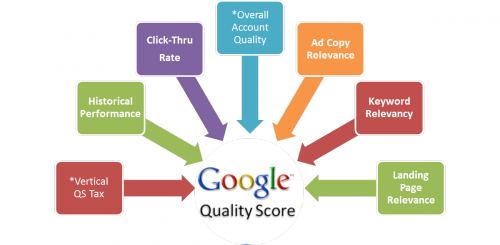
Google Quality Score Factors

According to the definition provided by Google itself: Quality Score is an estimate of how relevant your ads, keywords, and landing page are to a person seeing your ad. Having a high Quality Score means that our systems think your ad, keyword, and landing page are all relevant and useful to someone looking at your ad.
This definition may appear to be crystal clear, but very few marketers know how to deal with Quality Score. Here is a straightforward and simple guide that you can use in understanding Quality Score.

Understanding (not set) and (not provided) Keywords

Google Analytics (GA) is a tool that provides rich insights to a website promotion company as to how its paid search campaigns are doing. However, there are times that you cannot assess the quality of your campaigns because Google Analytics return (not set) or (not provided) keyword data when you extract a GA report. For a rookie website promotion company, this may be confusing and may even be used interchangeably although they are two very different concepts.

A (not set) keyword data occurs when something is missing between the GA tracking and the AdWords click. Typically, this happens with auto-tagging or when repetitive codes are found on pages or there are multiple GA accounts connected to your AdWords campaign.

Length of Display URL and CTR

An experienced website promotion company would know that a URL is not just a web address. In terms of PPC Quality Score, display URLs play a significant role, since one of the criteria used by Google to calculate for your Quality Score is the click through rates of your display URLs. Length and presentation of display URLs are critical factors as to whether searchers will click on your ad or not.

For one, Google will automatically add www to display URLs with fewer than 35 characters. Historical data will show that URLs without the www prefix get more clicks than those with the www prefix. Another not so known fact is that if you exceed the 35-character limit by two (37 characters) it is perfectly fine. Last, if you really can’t contain your URL within 35 characters, insert a few keywords so that when Google shortens it, your keywords are highlighted in the display URL. However, exercise extreme care as Google will decide how to shorten your URL. Basically, the rule of thumb is to target 35 characters without www.

The Surprise Perfect 10 and Pre-assigned Quality Scores

Getting a score of perfect 10 is every web promotion company’s dream. The excitement is equal to going viral in social media marketing services. But before you jump up and down, check for which keywords those perfect scores were given and most likely, you’ll find out that these keywords have zero impressions and zero clicks. Experts are now toying with and testing whether including “empty” keywords gets a perfect score of 10. Your ads won’t show up for these keywords. The goal is to increase the overall score for the entire campaign and raise an ad group’s eligibility for auctions.

Another crucial concept worth pointing out is that your ad groups and keywords have pre-assigned scores before you even launch your campaign and many experts have observed that most of these starting scores would be the end scores by the time a campaign is done. This particular information led PPC marketers to believe that you can actually modify your campaign’s architecture to boost your Google Quality Score even before you launch your ad campaign.

Multiple Groups for Keyword Match Type and Delaying the Use of Bid Management

Along with the campaign’s architecture, matching keyword types within ad groups can increase quality scores. To get the most impressions, it is encouraged that you use a number ad groups for all keyword match types that you want to target.

Finally, if your ad campaign is fresh and new, don’t use the automated bid management yet. Statistics will show that campaigns that were manually optimized during their early stages were more successful versus those that were introduced with the automated bid management system.

Google’s Definition of Quality Evolved

The Quality Score that every web promotion company is using today may not be the same a couple of years down the road. In fact, what Google considers as quality ad campaigns may not stand true in the near future. Who knows? Maybe social media marketing services will be closely tied into the PPC Quality Score. A lot of things can happen and the key is to always be on the lookout and satisfy whatever quality indicators there are.

Author’s Bio: The writer of this post is Deepak Gupta, who is an experienced internet marketing professional and active blogger. He is associated with a search engine optimization company in India that provides professional SEO services and takes care of the search engine marketing activities for clients.

Filed Under: Content, Links, Marketing /Sales / Social Media, SEO, Successful Blog Tagged With: bc, Google, optimization, quality score, SEO, social media marketing

Beginnings and Endings

January 22, 2013 by Guest Author

By James Ellis

There are really only two hard parts to writing effective marketing pieces. If you’re thinking about your email, web pages, or direct mailings, it doesn’t matter.

Sadly, these two things are the beginnings and endings. Do those properly, and you barely need a middle.

The job of the beginning is to get your target interested. The job of the ending is to tell the target what to do next. Yes, it really is that simple. If I was running your marketing department, i’d rather have killer beginnings and endings rather than all the great middle content you can stuff in a web page.

Yes, the beginnings and endings are just that important. Think about it. Once you’ve got someone interested, the only thing that can happen is that you can either close the deal and convert them, or you can say something stupid or unappealing and lose them. Why take that chance? Once you’ve got them interested, tell them what to do next. Don’t waste your target’s time (trust me, they will appreciate it) and get to the point.

Please note that I never said how long the beginnings or endings need to be. The perfect email isn’t necessarily just a subject line and a call to action link. But if you can get their attention in ten words, and the link is the offer, what else is there to talk about?

The beginning isn’t just the subject line and pre-header, but those are part of the beginning. The beginning isn’t limited to the structure of the medium (subject line in emails, headlines in web sites, etc), but whatever it takes to achieve the goal: gain interest.

The beginning of Moby Dick isn’t “Call me Ishmael.” It’s a hundred thousand words that explain the relationship between a man and a white whale, or really the nature of obsession. All those words are needed to get our attention because simply saying “An old sea captain lost a leg to a whale and wants revenge” is not attention-getting; it’s an idea in need of supporting detail.

On the other hand, what else do I need to know beyond “50% off all our most popular products” except what to do next?

It doesn’t matter if you use emotion, loss aversion, numbers, relationship reminders, or sensational quotes. Just be intentional about getting their attention.

So once you have their attention, you need to do something with it. Don’t tease, don’t dawdle, don’t wait. Get to the next step. Click the link, call for an appointment, sign up for a subscription, whatever it is, just get to the point.

It’s crucial that you make sure that the beginning aligns with the ending. If you get my interest by saying “Free beer and pizza” the ending can’t be “Sign up for a subscription” because I won’t understand why they go together. I’ll smell something fishy and bolt.

This is the basis of all good marketing. Making it more complicated than that just clouds the issue. Nail your beginning and ending. The rest takes care of itself.

Author’s Bio: James Ellis is a digital strategist, mad scientist, lover, fighter, drummer and blogger living in Chicago. You can reach out to him or just argue with his premise at saltlab.com.

Filed Under: Content, Marketing /Sales / Social Media, Successful Blog, Writing Tagged With: bc, creative writing, marketing content, storytelling

How to Decide if a New Social Tool is Relevant to Your Business

January 17, 2013 by Rosemary

By Rosemary O’Neill

Remember how uncool bell-bottom jeans were 10 years ago? Then they became so uncool that they were cool again (they’re now uncool again, just FYI).

The world of social media works in much the same way. As Heidi Klum says on Project Runway, “one day you’re in…the next day, you’re OUT.” Facebook is the big kahuna right now, but there’s no guarantee that it will stay on top.

For that reason, it’s a good idea to at least take a glance at new or revived social tools once in a while. This post will give you some strategies to help you evaluate whether a new shiny object is “hot or not” for your online business strategy.

How to Evaluate a New Social Tool

  • Can I afford it? Remember that free tools aren’t really free. Your time is money too. Also consider whether you’d need to upgrade to a pro option to get maximum benefit from the tool.
  • Am I familiar with it? Unless your schedule allows time for training and learning curve, think about how hard it will be to get up to speed. Will it take priority over other, more important tactics?
  • Is my audience there? Try to find out the key demographic using the tool. Does that overlap with your own market strategy? A great resource for demographic information is this Ignite Social Media report.
  • Is it a relevant topic? Some social tools are topic-centric (like the new MySpace). Does the topic relate to your business in some way? Can you leverage it to support your marketing plan?
  • Does it work with the rest of my strategy/tool kit? Hopefully you’re making life easy on yourself by creating a cohesive set of tactics. You don’t want redundant or clashing applications in your portfolio. For example, you probably don’t need to use both Hootsuite and Tweetdeck.
  • Is it stable/supported/funded? It’s good to take a look at new social tools, but don’t go “all-in” until there is some traction or proof that it’s going to last. You don’t want to be caught losing your data or content if a startup pivots or goes out of business entirely.

These are just some of key considerations for when you read a Mashable article about the “next new thing” in social media. It’s important to stay abreast of changing technology, but you don’t want to chase shiny objects!

How do you decide whether to jump into a new social application?

Author’s Bio: Rosemary O’Neill is an insightful spirit who works for social strata — a top ten company to work for on the Internet . Check out the Social Strata blog. You can find Rosemary on Google+ and on Twitter as @rhogroupee

Buy the Insider’s Guide to Online Conversation.

Filed Under: Marketing /Sales / Social Media Tagged With: bc, demographics, online business, shiny object, social-media, technology

  • « Previous Page
  • 1
  • …
  • 19
  • 20
  • 21
  • 22
  • 23
  • …
  • 174
  • Next Page »

Recently Updated Posts

The Creator’s Edge: How Bloggers and Influencers Can Master Dropshipping

Is Your Brand Fan Friendly?

How to Improve Your Freelancing Productivity

How to Leverage Live Streaming for Content Marketing

10 Key Customer Experience Design Factors to Consider

How to Use a Lead Generation Item on Facebook


From Liz Strauss & GeniusShared Press

  • What IS an SOB?!
  • SOB A-Z Directory
  • Letting Liz Be

© 2025 ME Strauss & GeniusShared