Successful Blog

  • Home
  • Community
  • About
  • Author Guidelines
  • Liz’s Book
  • Stay Tuned

Good People, Good Ideas

May 16, 2014 by Rosemary

“Good people, good ideas.”

That’s how Liz summed up the community here at Successful Blog the last time we chatted.

sky with clouds and bubbles

It rings true for me.

Every time I encounter someone who has attended a SOBCon event, is part of this blog community, or resonates with Liz’s message, I am impressed by their intelligence, their generosity, and their spirit of curiosity.

Those traits make you excellent sharers.

With that in mind, we are actively seeking community members who would like to apply to be a weekly columnist on the site.

Successful Blog is a community for people who are serious about building a business and want practical, usable advice to get things done.

We’re for the “doers,” not the readers.

Columnist Requirements

  • Ability to produce one original, exclusive, well written article per week.
  • Long-term commitment (at least 6 months, preferably one year).
  • A passion for, and expertise in, your subject area.

Applicants will go through an interview process.

Benefits To You

  • Grow your online visibility with a huge audience.
  • Hone your writing voice and exercise your writing muscles.
  • Share your expertise.
  • Make lifelong connections with the Successful Blog community.

If you would like to be considered, please email Rosemary O’Neill (rosemary.oneill@gmail.com) and include the following:

  • Links to published writing examples (or your blog if you have one)
  • Social media profile links
  • Desired topic/category (major categories we cover include Content, Design, Leadership, Marketing, and Personal Development – check out our subcategories here in the sidebar)
  • 5 article ideas within that category

We look forward to adding your voice to Successful Blog!

Photo Credit: Nina Matthews Photography via Compfight cc
Filed Under: Successful Blog, Writing Tagged With: bc, blogging, Writing

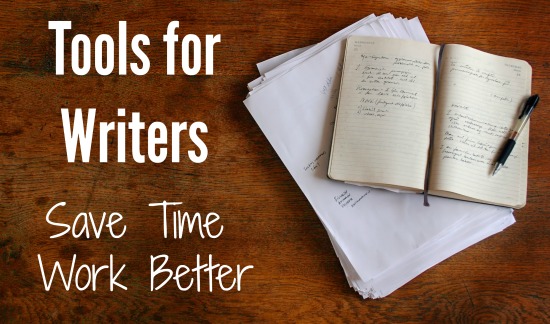
Tools For Writers: Save Time, Work Better

April 1, 2014 by Rosemary

By Angela England

I have a ton of projects at any given time. In fact, as I was just offered the position of Organic Gardening Guide for About.com I will be busier than ever! I wouldn’t survive all of that with five homeschooling kids, if I didn’t have some great tools under my belt to make it easier.

Tools for writers

Here are some of my favorites.

Steno Pads and Pencils

This seems so…so…eighteenth century, I know. But I carry half-sized steno pads with me everywhere for those times when I need to scribble something in analog. Don’t think that high-tech is the ONLY way to go. When it comes to brainstorming and outlining it is often faster for people to “think out loud” on paper and then translate that to digital once you’ve had that initial brain dump. I buy steno pads in bulk at Sam’s Club so I can easily scrawl in them whenever I want and they fit easily in the side pocket of the car, in the diaper bag, in my purse or laptop case, glove box, etc.

Poster Board or Big White Board

Large brainstorming sessions need bigger amounts of space. I have a technique I will use periodically to brainstorm about a hundred blog post ideas in less than an hour. I taught a workshop about it and you can watch the video here: Brainstorming Blog Post Ideas With Ease

The key is to write quickly and not be worried about how it looks or whether it makes sense. Or is spelled correctly. Get all the ideas out of your head and THEN focus on working them into a logical semblance of order.

Evernote

Speaking of working things into a logical semblance of order – Evernote is one of my favorite tools for capturing ideas on the go. I can clip a website, photo, screenshot, email, type a quick idea, etc from any connected device. My Evernote accounts link my phone, iPad, computer, laptop, etc., so I can easily grab that inspiring phrase from Facebook and plug it into Evernote to explore later. I can also gather research notes and materials and place them into “notebooks” according to website or book project to help me find it easily later. Evernote’s robust tagging and search functions make it one of the best online filing systems I’ve ever used. For more tips on using Evernote, I love this post by Alli Worthington – 10 Way to Use Evernote Like a Pro.

Scrivener

Whether I’m writing non-fiction or fiction, Scrivener is my favorite place to write now. And not only books, but other long-form projects like courses, blog series, feature articles for magazines, and more. The features Scrivener offers writers make it the perfect tool for any professional writer. Call it a cross between Word, Evernote, and your favorite Moleskine. It’s the best online writing tool I’ve come across yet and highly recommend it for anyone who writes anything bigger than 500 words in length.

Dropbox

Writers often have to send large chunks of material. Whether you’re sharing a project with a reviewer, sending your book to an editor, or working collaboratively with several people on a project, Dropbox is a great solution for storing and sharing large files. I especially love the ability to access Dropbox files while NOT connected to the internet (on the road with my laptop, for example) and update files (i.e., write more on my book or course or blog post series) and then have Dropbox automatically sync those changes with my main Dropbox account as soon as I’m connected again. I can store a file in Dropbox and access from any of my other connected devices (including mobile) and from public computers by logging in temporarily at dropbox.com. Keep folders private or share as desired for easy-to-control privacy levels.

These are the main tools I use on a near-daily basis when it comes to writing. Some are free, some are paid, some are high-tech, some are as old as time. All impact the work that I do in profound ways. What are your favorite tools as writers?

Author’s Bio: Angela England is a mother of five living in rural Oklahoma but more, she’s also a problogger, speaker, and author of several books including Backyard Farming on an Acre (More or Less) and Getting Prepared. Her most recent projects are helping people transform their blogs and business by publishing amazing books and producing multiple books this year under the Untrained Housewife brand.

Filed Under: Content, Successful Blog, Writing Tagged With: bc, tools, Writing

How To Find Your Blogging Voice

March 14, 2014 by Rosemary

There has been a lot of ink spilled on the subject of where to find blog ideas, how to generate headlines, and the bloggers’ tools of the trade. One area that hasn’t gotten enough attention is the idea of “voice.” When I think of “voice,” I think of Jayme Soulati, who brings a consistent style and tone to her work, regardless of medium. Is your own voice coming through loud and clear in your writing? ~Rosemary

By Jayme Soulati

tongue.jpgJust how does one find blogging voice?

The answer is…elusive! Not sure there is a solid answer, but at the bottom of this article we ought to have a much better understanding of what the hoopla is about a vlogger’s voice.

Omgosh.

When I typed “blogger” in the last sentence, it came up “vlogger,” and I am so grateful that happened whilst sitting in the middle seat in a full airplane cabin pecking letters one by one because the batteries died in my iPad keyboard.

So, instead of using merely a blogger to understand voice, let’s first explore the world of vlogging as it relates to that. Video blogging is so much more visual which makes it easier to illustrate the concept of voice.

What is Voice? Examining Voice and Vlogging

What is your impression watching peeps on camera?

It’s pretty painful sometimes, right? When a vlogger has to look at the camera without furtive eyes or naturally down-turned mouth (without a smile), it is difficult to make great video.

Now think of the words delivered during a video blog.

  • Are you following along and listening?
  • Is that blogger making a connection with you?
  • Are they droning on and on without coming quickly to a point?
  • Did they tick off an agenda or a bulleted list of items they’d cover in their piece?

    How about tone? When someone speaks, it’s normal to listen for inflection and excitement and authority. Is the tone of that vlogger credible? Do they take command of their subject matter and do you believe what you hear?

Exercise 1: How to Identify Others’ Voice on Video

Run and get a video blog you recently watched; I’ll wait. Spend two minutes only re-watching the vlog and pay careful attention; no multi-tasking!

In your head, jot down your impression of clarity, confidence, body language, tone, personality, credibility. Don’t worry, you’ll notice these automagically now that you’re looking and listening more closely.

In a recent vlog I saw, unfortunately, I couldn’t make it to the end and here’s why:

• The person was forced and lacked personality.

• S/he was cracking jokes that were not funny, and the content was subpar.

• It was a sorry attempt at connecting with community using a medium that appeared uncomfortable for him/her.

Let’s revisit some of the factors that make a video blog successful:

• Tone

• Facial expression

• Personality

• Connection with audience

• Command of authority

• Believability

When you add all of the above together with high marks, what you get is a masterful vlogger. Yet, it takes time and practice!

No one can master being on camera unless they are trained broadcasters (who daily practice news delivery prior to going on camera).

Think of Anderson Cooper next to David Letterman. That provides an awesome dichotomy, doesn’t it? The two can’t be farther apart in personality and tone yet they command respect, authority and attention.

Understanding Your Blogging Voice

Are you starting to get the picture of how we’re going to segue into blogging voice?

Many bloggers experience months and months of blogging only to feel a lack of connection with HOW they write. When you read a blogger using English as a second language, the content is often stilted and word choice is sometimes stark.

There isn’t naturalness to the flow of the article, and it takes the reader more time to connect with the writer.

This is not a criticism in the least, it’s merely an observation about how those words jump from the screen and in what tone and fashion. It’s how the reader connects with the writer that makes voice come alive.

Blogging voice is extremely different than journalistic voice or that of an author of romance novels. When bloggers write, there is more usage of the first person. Some new bloggers feel compelled to thread the word “I” throughout writings thinking perhaps that writing in the first person is more personable. In one opinion, it’s more egocentric and boorish.

Bloggers who have “found their voice” seem to fit right into an easy presence and comfort in their blogging skin without too much toil.

Here’s how you get to find your voice:

Establish Goals

When you start blogging, you need to set goals for yourself and the blog.

  • Do you want to build community and subscribers?
  • Do you wish to be an influencer or thought leader?
  • How about being the leading blogger in a genre or category like a parent blogger?

The goals you set drive how you write and thus your voice. If your goal is to sell diapers to moms, then you will need to command authority and then add a sales bent to that voice. Right?

Example of a Mommy Blogger Selling Diapers

Yesterday, I tried the new brand of diaper, called Baby Undies, on my infant daughter and learned the hard way that pretty packaging doesn’t mean better-quality diapers! (I think I’m going to stick to my favorite brand, Diaper G, instead!)

Tone: Personable and friendly

Credible: She experienced a negative event and is warning other moms not to buy that brand

Soft sell: She’s sharing a factual event and encouraging her community to follow her advice

Be Consistent. It takes 12 months of posting about three times a week to find comfort with your online presence. If blogging is your profession, in that 12- month timeframe you most likely have accomplished a few goals and have already switched it up a few times. If blogging is your hobby, then 12 months may be when you see a few milestones happen, and you grow from there.

Know Your Audience

Who is reading your blog? Better yet, who do you want to read your blog? If you are an online educator for home-school kids in fifth grade, your voice will be friendly, informal, conversational, yet authoritative and credible. Your audience is also the home-school parents who duel as teachers.

If you’re the pastor of a community church, blogging voice is going to be oriented to inspiring families to volunteer, tithe and attend church. That pastor blogger will walk a fine line between creating community, encouragement and being a leader.

Understanding your audience who is or may be reading your blog is critical to finding your voice. You will write more powerfully instead of in a meandering way.

You will connect with them to attain your goals each time you write. You’ll think of what they want to hear and write with that purpose.

Think About Buyer Persona.

Have you ever heard of a buyer persona? At first, I thought it silly, but after really thinking hard about who buys my services, I could picture that person reading my blog.

My blog articles began to take on a more professional tone to address some common marketing issues in companies.

My voice amplified confidence in my subject matter, and I felt a connection to the person I’d like to have visiting my blog.

This has contributed to a good feeling about my writing, defined my blogging purpose, which ultimately contributes to my voice.

Exercise 2: Start to Identify Your Own Voice

How and where you find blogging inspiration for writing fodder is a topic for another day. For the purpose of this exercise, select a topic you’d like to write about.

Perhaps you’re a master gardener with a blogging goal to enroll people in your master gardening classes so they can earn their certificate and join your ranks. (Can you recognize the blogging goals in that last sentence?)

How will you write? With purpose!

Your words need to be visual and help the reader connect with your passion about gardening. Do you sense the personalization that has to come across in blogging?

Your passion must be apparent; if you write with dryness you will not connect with your audience. Passion for our topic begets connection with your audience.

Ever read the children’s books Fancy Nancy? Certainly, the illustrator made those books but she had to have the words as inspiration. It was a team effort, for sure.

Your words need to inspire anyone with the hint of a green thumb that they can become a master gardener just like you.

Your plot of land becomes your canvas to create a breezy, flowy, rainbow garden that brings a gasp of visual pleasure with butterfly wings a flutter.

How did that sentence grab you? I hope it created a bit of a visual…don’t butterflies always do that? Notice the word choices that are lighter and more creative with visual appeal. Try to put more of these types of words in your writings and loosen up. Quit being so stilted. A blogger with voice is comfortable with self first and that confidence helps portray authority.

Author’s Bio: Jayme Soulati is an award-winning professional blogger writing at Soulati-‘TUDE! making its home at http://soulati.com. She is president of Soulati Media, Inc., at which she offers business-to-business hybrid public relations blending digital marketing, content marketing and social media marketing with public relations. Since 1984, Jayme has worked in public relations launching in Chicago’s agencies. She is a seasoned practitioner and brings strategy, ideation, writing, media relations, and more to every client engagement.

A version of this post originally appeared on the Shareaholic blog Feb. 28-29, 2013.

Filed Under: Writing Tagged With: bc, voice, Writing

Connected Content. Get Some.

March 4, 2014 by Rosemary

By Lisa D. Jenkins

I live in a place that’s done a lot to embrace art in every day life. When I moved to Boise, I was giddy over the artist murals that cover the downtown traffic boxes. I have a favorite. It reminds me of a Miyazaki film.

A few weeks ago, I was invited to attend a gallery opening for the colleague of a friend. There were close to a dozen pieces on display and I was immediately drawn in by the artist’s palette – all blues and reds that remind me of lined, 3 ring binder notebook paper. I’ve a decidedly odd sense of humor and as I walked from piece to piece, I felt the glimmer of a connection.

Here was a gal I could relate to. I got her sly satirical wit. I recognized something familiar in the expressions she put on canvas. Art does that.

There was one piece in particular I couldn’t get out of my mind so the next week, I went to the gallery website to have another look. Imagine my surprise when I was looking through the artist’s bio and found an image of my favorite traffic box art. Same artist – Erin Ruiz.

Fare Thee Well Erin Rulz

The two pieces couldn’t be more different but I love them both and for me the connection was cemented. I wanted to own that piece in the gallery. The artists’ body of work, her content – found in two distinctly separate spaces, did that.

You can do that.

From your blog to Pinterest and Google+, the articles you publish, the images you post and the updates you share should all work together to spark and sustain that same feeling of recognition with people who want or need what you provide.

It’s not just a picture on Instagram, a link on Twitter or a result in someone’s Google search query. Every piece of content you publish is a touchstone; a neural reminder that your product or service is an option, that your unique approach lets you serve a specific customer in a way that complements their life or business.

Turn those content touchstones to converting stepping stones when you can. While the success of this ultimately lies within your strategy and the tactics you use, there are some simple things you can do to start connecting your content today.

  • Make sure every blog post you write includes at least one link to another piece of related content you’ve published. This will pull people deeper into your site and let you share just a bit more on the subject that interests your reader.
  • Add the link to a related article to the description of images you post to social networks. When people see an image that resonates with them, the link will drive traffic back to your site – to an article that links to another article. You see what I did there.
  • Secure your Google Authorship. Right now. This connects your name and face next to your content any time it shows up in a Google search result.

One could argue these are elementary content tactics. But sometimes it’s the simple things that trip us up – or move things forward.

Is your content connected?

Author’s Bio: Lisa D. Jenkins is a Public Relations professional specializing in Social and Digital Communications for businesses. She has over a decade of experience and work most often with destination organizations or businesses in the travel and tourism industry in the Pacific Northwest. Connect with her on Google+

Filed Under: Content, Successful Blog, Writing Tagged With: bc, Writing

Create a System for Success

February 18, 2014 by Rosemary

By Angela England

5313296821_bf892e1944

I’ve stopped thinking in terms of daily “goals” and have begun thinking about creating daily systems that will create success in my life. I still have goals – lots of them – but I wake up each day focused on what I need to do, rather than what I hope to get. It’s a small shift, but highly effective, and here’s why.

Goals are Temporary and De-Motivate When They are Reached

I experienced this post-partum depressive state after I finished writing my first print book, Backyard Farming on an Acre (More or Less). Before, I had written prolifically and finished each project, eBook, or blog post excited and energized for the next thing to tackle. But Backyard Farming was so intense, and finishing the book was all-the-things to me, so when I turned in the last of the book I basically cried for a week and ate lots of ice cream. It hardly felt like a success to me.

What I realized is that I was waking up in the morning and thinking, “Now what?” instead of “Let’s go!” My goal was reached. The job was done. My brain had quit.

Since that point two years ago, I’ve written three additional books (one for a client and two for myself), launched a major course, added another blog to my roster, and tackled numerous guest posts and client opportunities.

Now, my daily system is to write 1,000 words a day no matter what. And in doing so, I’m able to be continually productive on a variety of tasks and projects. The shift was subtle but profound. The project may change, but the system of producing doesn’t.

The Habits Are What You Can Control

Whatever your business goals are — sign 3 new clients, sell 100 copies on launch day, or get a thousand readers on this blog post — you can’t really control those outcomes. You can’t force someone to click the buy now button or make someone share your post. You can control what YOU do, however, and that pushes you closer to the side of success. Think Steven Covey’s Circles of Influence and focus on those things which you can influence.

I can update my media kit, prepare some guest posts for a new book launch, and pick a conference to attend in order to connect with others in my industry face-to-face. Those actions will probably help me reach my business goals, of course, but by turning my energy towards what I can control, I’m infinitely more energized. And, therefore, more effective.

Reward Your Positive Action on a Daily Basis

One of my favorite things to do is to find effective ways of staying motivated in the areas where I want to be the most successful. It’s been great for me to find new ways to reward myself for daily habits that will produce long-term success in my business and life. Even simple things can be surprisingly effective.

For example, I don’t log into Facebook until I’ve written my first 500 words for the day. Usually, once I’m halfway to my daily goal, I just keep going all the way and often have 1,000 words done almost first thing in the morning. If I were to let myself jump into Facebook and other people’s plans for my day, I would find it more difficult to focus on the system for success that I’ve created.

Another thing I’ll do is avoid my favorite television shows until I finish the next chapter in my book, then reward myself with an evening marathon session to catch up. These are simple, perhaps silly examples, but they are stunningly effective for keeping me on the success side of the slight edge.

Goals Can Limit Your Focus and Ability to See New Opportunities

Lastly – goals lock you onto a set path and could actually prevent you from seeing the opportunities around you. I love this quote from an earlier post of Liz’s which says:

“Imagine opportunities everywhere you look. Lucky people know that opportunity doesn’t knock often. In fact, they know it doesn’t knock at all. People make opportunities from little things they see. Opportunity hides in the details. Look, listen, read, and search for ideas and trends between your niche and your skill set. Then bend and twist and turn those ideas to see how they might become uniquely yours.

Make a practice of looking at everything to see how you might improve it…how you’ll make it more fun, faster, cooler, friendlier, easier, quieter, more musical, lighter, more romantic, more exciting, more inviting, more anything…or less something.”

When you are so focused on a specific goal that you get tunnel vision you could miss a brilliant, but unexpected opportunity. Some of the coolest things that have happened in my life weren’t those things I could have scheduled or marked on a five-year plan. I still have a five-year plan, of course, but I realize that my system of connecting, producing consistently, and staying available to serendipitous encounters has empowered success in my life in brilliant ways.

What systems have you created to help propel you towards success instead of bogging you down in an external set of expectations?

Author’s Bio: Angela England is a mother of five living in rural Oklahoma but more, she’s also a problogger, speaker, and author of several books including Backyard Farming on an Acre (More or Less) and Getting Prepared. Her most recent projects are helping people transform their blogs and business by publishing amazing books and producing multiple books this year under the Untrained Housewife brand.

Photo Credit: zen! via Compfight cc

Filed Under: Successful Blog, Writing Tagged With: bc, goals, Writing

Why Would you NOT Self-Publish a Book?

February 7, 2014 by Rosemary

By Angela England

Self-publishing is all the rage. I’ve been writing eBooks since before they were cool (aka pre-Kindle) and can testify to their power to transform a blog or business for the better. However, in the last five years I’ve seen truly horrible books being produced that did the author, and their business, no good whatsoever.

You might think it’s odd that someone who just launched a course walking people through the process of how to produce a book would warn people away. But let’s be clear, shall we? Writing a book, like running a blog or owning a business, is not for everyone. Some people should not publish a book – especially self-publish a book.

1. You want to get rich quick.

Did you know, the average self-published author only sells between 200 and 250 copies of their book? And traditional print may not be the answer, either – only about 20% ever see any royalty payments, if indeed your contract has royalty structure in place instead of one of the ever-more-common work-for-hire contracts that gives you an upfront payment only with no long-term revenue potential. The bottom line is, whether you go the traditional print route or the self-publishing route, you cannot be average.

The average author doesn’t sell enough copies to make it worth their while. The average author pays next year’s bills with next year’s books, creating a cycle of constantly searching for the next project and next contract, because last year’s book isn’t producing any extra income yet.

Self-publishing is, like most things worth doing, a bigger gamble with a far bigger reward than the safe mediocrity of punching someone else’s time clock.

2. Your book is too broad and not well-focused.

Publishing houses tend to like books that will appeal to a general audience. Broader titles are easier to get into bookstores and easier to get off the shelves as well. But self-published titles that are too broad and have no focus won’t be picked up by bookstores and libraries right away (if at all), so who will buy them? Well, unless you have thousands of rabid fans ready to invest in anything you tell them to, no one. Or at least not many.

One of the biggest mistakes I see self-published authors make is a failure to think about the book creatively. A self-published title needs to stand out. It needs to capture someone’s attention at a glance.

A brilliant example of this is Small Army Strategy by Srinivas Rao. I love the promise and premise that’s built into the title, and it certainly is different from a typical marketing book. It has to be, because do we really need another, “How to Market Your Business” book?

Don’t be bland. The benefit of self-publishing is the ability to have creative control. So don’t mimic the generality of mass-produced when you don’t have to.

3. You aren’t willing to invest in your book like a publishing house would.

Some authors just want to write and forget about it, then open a magic box from the publishing house 6 months later with their book inside. Fine – then you should be pitching legacy publishing houses for any of your titles, because self-publishing means YOU are the publishing house.

That means producing professional, high-quality graphic designs for the cover art and book layout. That means professionally formatted manuscripts that render correctly in every format you plan to offer (Kindle, Nook, etc.), with reader-friendly features like an Active Table of Contents where possible. It means professional-level editing as well. All of those things are probably going to cost you money, and you should gladly pay it.

When I took my self-published book on-air for a news segment in December, I had both it, and my first traditionally published book, side-by-side. And you know what the difference was when it came to quality? Nothing. Unless you looked at the front matter and made note of the publisher’s name, you would never know that was one Penguin and one was me. Only self-publish if you are willing to do the same with your book.

There are so many brilliant ideas yet to be brought into the world. Every day, I’m talking with amazing people who have breath-taking stories and incredible voices, and I can’t wait until those books exist in the world. But no brilliant idea should be overlooked because of an awful book production given today’s technology. If you take the time to self-publish a book, do it right and make it as outstanding as you are.

Are you considering publishing something this year?

Author’s Bio: Angela England is a mother of five living in rural Oklahoma but more, she’s also a problogger, speaker, and author of several books including Backyard Farming on an Acre (More or Less) and Getting Prepared. Her most recent projects are helping people transform their blogs and business by publishing amazing books and producing multiple books this year under the Untrained Housewife brand.

Filed Under: Content, Successful Blog, Writing Tagged With: bc, publishing, Writing

  • « Previous Page
  • 1
  • …
  • 3
  • 4
  • 5
  • 6
  • 7
  • …
  • 64
  • Next Page »

Recently Updated Posts

Is Your Brand Fan Friendly?

How to Improve Your Freelancing Productivity

How to Leverage Live Streaming for Content Marketing

10 Key Customer Experience Design Factors to Consider

How to Use a Lead Generation Item on Facebook

How to Become a Better Storyteller


From Liz Strauss & GeniusShared Press

  • What IS an SOB?!
  • SOB A-Z Directory
  • Letting Liz Be

© 2025 ME Strauss & GeniusShared