Successful Blog

  • Home
  • Community
  • About
  • Author Guidelines
  • Liz’s Book
  • Stay Tuned

How to Work with a Web Design Firm; 5 Questions with Andy Crestodina

June 19, 2014 by Rosemary

When you’re starting a business, one of the first items on the agenda is putting together a website. But it can be really tricky to figure out who can help you get it done.

site is under construction

Luckily, I managed to snag some time with the very busy Andy Crestodina of Orbit Media. I asked him some questions about how to hire and work with a reputable web design firm. (Thanks Andy!)

Every entrepreneur starts out thinking they can cobble together a decent website with HTML, spit, duct tape, and the design knowledge they picked up in college. How do you know it’s time to get professional help?

You know your website is bad when you hope that people don’t visit it. It sounds like a joke, but it’s not uncommon. You tell people the address, but add a disclaimer: I’m still working on it… I made it myself… I’m planning to redesign it soon…

If it’s not obvious from a lack-of-pride, it may be obvious in your Analytics. If traffic isn’t up from last year and if it’s not turning 1% – 3% of visitors into customers and leads, something is probably wrong.

What are some critical indicators that you’re talking to a rip-off artist rather than a professional web design shop? Some of them look pretty convincing.

If you connect with the company through a referral, that helps. Beyond this, I recommend asking some specific questions:

  • Can I meet the team? This will tell you if they’re a company of full time people, or a collection of freelancers. There’s more risk of issues if they’re all freelancers or if they outsource the work.
  • Have you ever done a similar project for a similar company? Ideally, the answer is yes. Ask about the return on the investment and the results in Analytics.
  • What kind of support do you offer after the site goes live? If they have a team dedicated to helping clients post-launch, you’re more likely to be happy in the long run. If their support team is the same as the project team, they may not be great at service over the long run…

They should be really excited to answer your questions. You should be able to feel some passion. If they sound worried about your project, you should probably be a bit worried about trusting them with the project.

What should we expect in an initial consultation with a web consultant? Do we need to have anything prepared in advance?

You should expect to get a demo of their process. Most web companies have a process that they believe in. Seeing this will give you a sense for what to expect. The process should emphasize the people, the scope and the timeframe.

Listen for evidence that the process and the projects are focused on results. Listen for signs that they understand Analytics. They should talk a bit about search engines, visitor psychology and future updates. This shows they care about the three most important things: traffic, conversion rates and easy updates.

How often should a website be re-designed or refreshed? If it’s working well, do you still need to change it periodically?

Website content should be updated regularly, but that doesn’t mean you have to blog everyday. In a recent post about how often to blog, we suggested that blogging and email frequency be aligned to the sales cycle in your industry.

But if the site performs well, it should be years before a complete redesign is necessary. The lifespan of a great website is three to five years!

What’s the most common web design mistake you see small businesses making right now? You don’t have to name names.
There are so many common mistakes! Here’s a quick list…

  1. Generic Navigation
    If the navigation looks like this… “About, Services, Blog, Contact” …then you’re probably missing opportunities to communicate quickly to visitors and indicate relevance to search engines.
  2. Contact Pages Without Forms
    If the contact page doesn’t have a form, it doesn’t have a thank you page, which means you can’t easily track leads in Google Analytics. A contact page with an email link is a problem.
  3. Long Paragraphs
    Remember, visitors are busy. They want to scan. Be concise.
  4. The Home Page Title Tag Says “Home”
    This little bit of text is the single most important piece of SEO real estate on the website. You wouldn’t write a book and call it “Book” so don’t make the title of your home page, “Home”
  5. Abandoned Spaceship Syndrome
    The about page should have names and faces of the team. Better yet, make a page for each person. People buy from people, so add personality to the site. Small business have an advantage here, but a lot of small companies miss the opportunity.

There are a dozen other common mistakes, but these ones are pretty easy to fix. Hope this is helpful!

Author’s Bio: Rosemary O’Neill is an insightful spirit who works for social strata — a top ten company to work for on the Internet . Check out the Social Strata blog. You can find Rosemary on Google+ and on Twitter as @rhogroupee

Photo Credit: jakeisdead via Compfight cc

Filed Under: Interviews, Successful Blog, Web Design Tagged With: bc, Hiring, web design

Content: The Fit Matters

June 17, 2014 by Rosemary

By Lisa D. Jenkins

When I did a last read-through on the post I had for today, I scrapped the whole thing.

Content fit matters

I realized the words I’d written weren’t for you. They didn’t fit. They were too narrowly niched. They were written for my clients. You are not my clients.

Some of you are my peers, some of you are my competitors and some of you are my role models. We gather here because we’re each building an online business. What I write here needs to serve you and honor your time. It needs to add value to your day.

In the same way, regardless of where you publish, every piece of content you produce should serve your reader, honor their time and add value to their day.

Writing for your own blog is one thing – the occasional tangent piece can humanize your brand, but when you’re writing for the audience of a peer, colleague or client you must be respectful of the audience that’s been cultivated. Whether you’ve been asked to write guest post or you’re pitching to a new blog, it’s your job to cater to their fields of interest and needs.

Know Your Audience

Vegetarians don’t want to know how to barbecue the world’s perfect steak.

Parent bloggers don’t need your sports marketing strategies.

People discussing how to build their online businesses don’t have a use for decorating tips.

That doesn’t mean you can’t contribute something worthwhile to any of these groups. It just means that you have to frame what you know in such a way that it’s relevant to those who’ll be reading it.

Find A Way To Fit In

If you’re a barbecue expert, share one of your best sauce recipes and show how it can be used for corn on the cob or a thick slice of grilled cauliflower.

If you’re a sports marketer, adapt your strategies to helping parents provide visibility for their kids’ league sports or school athletic teams.

If you’re an interior designer, help online business owners understand how to choose the right color palette for their website.

Finding a way to tie the knowledge you have to a need your readers have, then sharing that knowledge in a clear concise way so they can put it to work for themselves shows that you understand what you do well enough to explain it simply.

It’s All About Perspective

It doesn’t matter who you are, your content is only a good fit when it helps someone. Never ever make the mistake of thinking you’re so big that it’s the other way around.

Author’s Bio: Lisa D. Jenkins is a Public Relations professional specializing in Social and Digital Communications for businesses. She has over a decade of experience and work most often with destination organizations or businesses in the travel and tourism industry in the Pacific Northwest. Connect with her on Google+

Photo credit: Sephiroth98

Filed Under: Content, Successful Blog, Writing Tagged With: bc

Create Unique Content and Own Your Business Niche

June 13, 2014 by Rosemary

By Paul Biedermann, re:DESIGN

Sharing other people’s content on social media is nice, but the best content sharers are content creators. Makers. Producers. Originators.

create your own content

It’s one thing to cover that ’80s band on stage with a bad wig at the local fair — it’s a completely different thing to perform a song you’ve written and then share it with the rest of the world for the first time. If it’s good, people will snap to attention. If it’s not so good, well… people may head to the side area for a corn dog, but if it’s really, really good? You could soon find yourself on a much larger stage with a vastly larger audience.

Whether it’s a great song, a witty visual, an interesting article, a compelling video, or an innovative dance routine — making something new that only you could have made captures the imagination and sets you apart from the rest. Heck — being original is what moves the ball forward on the field of human civilization.

As social media continues to evolve — and as all media continues to evolve — the noise quotient goes up.

Everybody is a publisher these days with the potential to reach a vast, global audience within a matter of seconds. What you do with that incredible opportunity is up to you. It’s quicker and far easier to just share what other people have created. Most people do that and that’s fine. But if you want to separate yourself from the crowd, the best way to step it up is to use your own special talents and create original content for your niche that others will want to share.

If that sounds challenging, it is. A bit risky? Maybe. But it is also incredibly gratifying — not only to carve out your own unique space in this always-on, 24/7 online world of ours, but also to have produced something original — perhaps evolving into a broad body of work that could only have come from you. Hone those latent talents! Take a creative writing class, practice your on-camera skills or learn to draw!

The important thing is to be original!

That’s always preferable to going down a path of relative sameness. When you write a blog post, fuel it with passion and take an angle that’s different from what others are doing, even if the topic is a popular one. When you create an infographic, draw a diagram in the sand and photograph it to create your image — anything to be different! Some of the content that has the biggest potential for going viral isn’t necessarily the most polished, but it has a good idea and oozes originality. People love that!

Now that many of us have been on social media for a while, I sense that people are starting to rethink things a bit.

  • Where is the best place to put your time?
  • How can you most effectively manage the online presence you’ve worked so hard to establish?
  • Things change — how do you keep it all going, especially as more people are vying for attention online with no end in sight?

Define your business objectives.

Of course, it all starts with what you are trying to do and defining your business objectives — then developing a strategy that will best reach the people you need to reach, solidifying your brand.

This includes fortifying your efforts with content that will get noticed, get shared, and drive the results you’re looking for. But if you’re interested in real business results, and not just high follower counts of dubious relevance, producing original, unique content and developing relationships is the way to get there. And if you don’t possess the skills to create a specific type of content, that’s fine too. The most successful businesses source the talent they don’t possess themselves to bring their content to life and power their brands — anything less presents a less-than-professional vibe to the world that should not be taken lightly, for it is a reflection on you and your business. Mediocrity is rampant, and sometimes we need to put the ego aside and make an honest assessment of where our time and skills are best spent.

Keeping an eye on the bigger picture and how to achieve real benefits for your business over the long-term should always be central. Yet, to my continued surprise, there is far less talk about content creation and an over-abundance of talk about the tactics themselves — advice on how to use social media, the hottest online tools, SEO, etc. is everywhere — necessary and important, but mostly irrelevant when it comes to producing the kind of meaningful content that will truly make you stand out and get noticed.

There is an avalanche of content flooding the social streams — day in and day out — much of it looking the same, rehashed over and over again. It has only just begun. The time to focus on creating your own original, unique, valuable content is now. It’s also a lot more fun.

What are you doing to create your own amazing content?

Author’s Bio: Paul Biedermann is the Creative Director/Owner of re:DESIGN, a small design agency specializing in Strategic Design, Brand Identity, and Visual Content Marketing — intersecting smart design with business strategies that reach, engage, and inspire people to action. Blending traditional and leading-edge media tactics. Paul consistently delivers integrated, award-winning results for his clients. Connect with him on Google+ or Twitter.


Photo credit: Pixabay / Photo illustration by Paul Biedermann, re:DESIGN

Filed Under: Content, Successful Blog Tagged With: bc, Content, visual

Small actions, taken consistently, can move mountains

June 12, 2014 by Rosemary

When Rosa Parks decided she wasn’t going to give up her bus seat, she may not have had in mind kicking off a movement that would change life in America.

Herman Melville, writing the sentence “Call me Ishmael,” probably didn’t sit down to write “the novel of the century.”

Mother Teresa simply decided to care for one person at a time. She had no thought of becoming beatified by the Catholic Church.

We all have to find our own first small action.

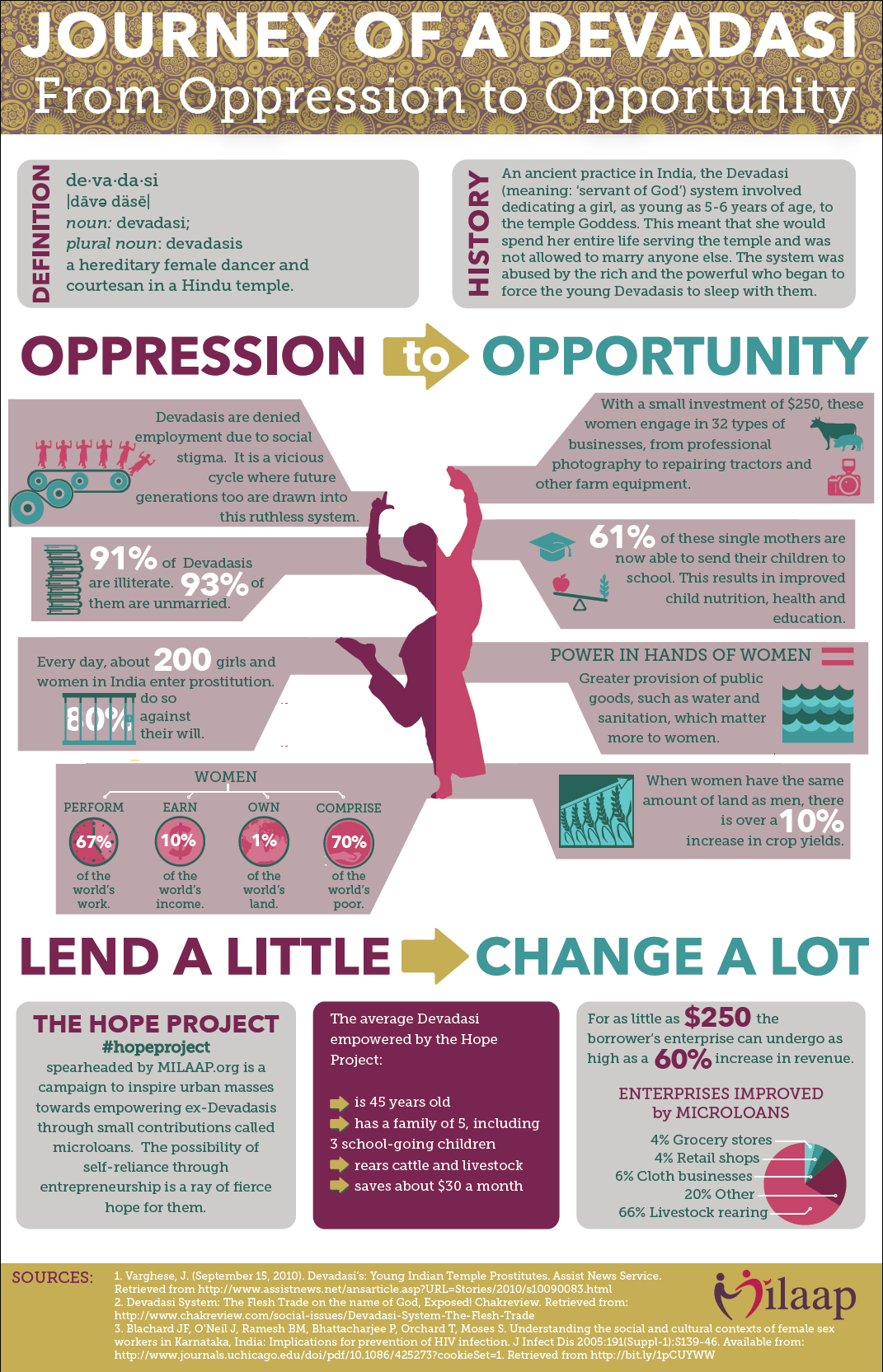
One organization that is truly living this credo is Milaap. It’s a crowdlending platform that has raised more than $1.5 million, with a 98.48% repayment rate. They are celebrating their fourth anniversary with a 24-hour online conversation about sustainable giving.

Members of the site choose a project/borrower to support, and how much they wish to lend, and Milaap gives 100% of your loan funds to the borrower.

You then receive updates on the project via email, and get repaid. The funds can be reinvested in another micro-loan if you wish.

The concept is so simple. With each small loan, lives are changed. With each changed life comes promise and possibility for everyone touched by that life.

Reading through the available campaigns to support, you see families who can use a $100 loan to buy chickens to expand their chicken coops, to help abused women start their own businesses, or bring potable water to underserved areas. Each of these project groups are taking a single small action to improve their lives. The ripple effects over time will be enormous.

Maybe today you’re reading this post with a mountain sitting in front of you.

Is it a physical disability?
A financial hardship?
Do you have an enormous challenge at work?
A burning idea for a new business?

Whatever the mountain is, you can find a first step. Even if you’re moving it with teaspoons, you can make progress right now in this moment.

Maybe you can be inspired by Milaap and gather supporters to help you carry teaspoons.

Molly’s lovely post from this past Monday reminded us that we can’t do it alone. That’s even more true when the mountain looms large.

If you’d like to learn more about Milaap and the work they’re doing, visit their site at Milaap.org.

If you’d like to get help and support from your fellow teaspoon carriers, let us know in the comments. Let’s take the first action together.

Milaap infographic
Author’s Bio: Rosemary O’Neill is an insightful spirit who works for social strata — a top ten company to work for on the Internet . Check out the Social Strata blog. You can find Rosemary on Google+ and on Twitter as @rhogroupee

Filed Under: Community, Motivation, Personal Development, Successful Blog, teamwork Tagged With: bc, charity, nonprofit, teamwork

The Secret of My Success

June 5, 2014 by Rosemary

Moving into a new home is a major undertaking.

Once the boxes are cleared and the new neighbors start bringing over key lime pie, you invariably have to start calling contractors of various stripes.

moving is hard

Lawn guy, handyman to fix the screen door handle, pest control, air conditioning repair, you get the picture. Making all of these calls over a compressed period of time gave me a true education in “who gets the business.”

You know who gets the business?

The person who answers the phone. If everyone fails that test, then it’s the one who returns the call the fastest.

Woody Allen has been often quoted as saying “showing up is 80 percent of life.”

When asked later about the quote by William Safire in the New York Times, he elaborated:

“My observation was that once a person actually completed a play or a novel, he was well on his way to getting it produced or published, as opposed to a vast majority of people who tell me their ambition is to write, but who strike out on the very first level and indeed never write the play or book. In the midst of the conversation, as I’m now trying to recall, I did say that 80 percent of success is showing up.”

Do you have an ambition to start a business, or are you actually doing it? Doing it means answering the phone when it rings.

Businesses hanging out a shingle, getting that Google places listing, polishing up their SEO to get a good search engine rank, and hoping for good word of mouth are truly only 10 percent of the way to the sale.

If all of those things happen and you don’t answer the phone, you’re dead in the water.

Yes, this same imperative applies to online businesses, consultants, writers, and everyone else.

Three Keys to Answering the Phone

  1. Manage your time effectively. Make answering the phone a priority. Yes, it’s probably more important than posting on your Facebook page.
  2. Create a system so that nothing slips through the cracks. Whether you’re using a notepad or a sophisticated contact management system like Salesforce or Nimble, put a mechanism in place that will remind you to follow up.
  3. Practice active listening when you do answer. Don’t launch into a pitch; wait and let the person on the other side tell you what they are contacting you for.

If you show up and answer the phone, you’ll come out ahead every time. (But let’s keep it our little secret, ok?)

Author’s Bio: Rosemary O’Neill is an insightful spirit who works for social strata — a top ten company to work for on the Internet . Check out the Social Strata blog. You can find Rosemary on Google+ and on Twitter as @rhogroupee

Filed Under: Marketing /Sales / Social Media, Productivity, Successful Blog Tagged With: bc, customer-service, Motivation, Productivity

Don’t Let Ties That Bind Lead to Content That Strangles Online Growth

June 3, 2014 by Rosemary

By Lisa D. Jenkins

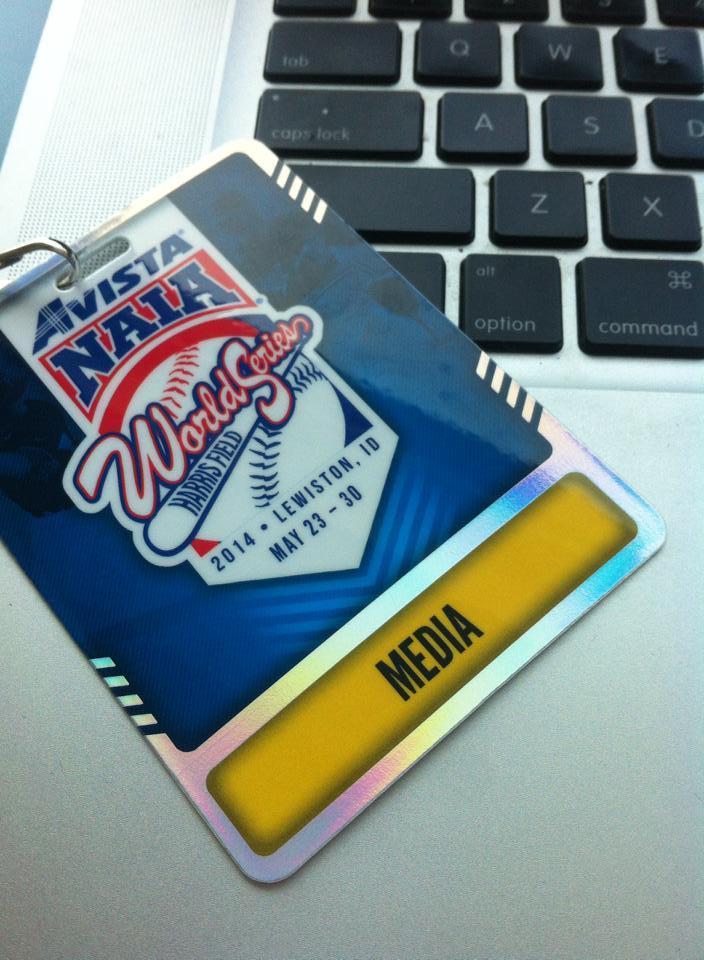
Last week, I was supporting a radio broadcast team covering a long-standing, week-long live event with tweets. This is the fourth year I’ve been part of the KOZE Sports team and this year I keyed in on something new. Not with the event but with the team of two announcers responsible for bringing the event to thousands of people across the nation.

NAIA media pass

Over the several years Brian Danner and Mike Tatko have been announcing NAIA World Series Baseball, they’ve developed a history. They’ve created and maintained off-air relationships with each other, coaches and players, families of coaches and players, fans, officials and a host of other people. A natural part of those relationships is personal experiences that spawned stories most of the listening audience knows nothing about, but those stories come up in on-air color commentary. Because that’s what sports color commentary is … stories to fill dead air between plays.

What I keyed in on, was they way these two men were able to share their histories. Instead of cracking a private joke on-air about something that happened in the past, they took the time to fill in the back story. Every memory reference was colored in. Every person listening was provided with an explanation that invited them into the conversation.

In the same way that Danner and Tatko have developed a history, brands that were conceived and launched online or brands that have been curating content over an extended period of time have a very real history.

One thing that makes a brand and its content attractive to people is a consistent voice that shares that history and the new events that continue to contribute to it. This takes on increased importance when you have a team of people managing that voice.

With any good team you want to encourage ties and relationships that give your team members a sense of connection. A cohesiveness that allows them to pull together to pursue common marketing goals. The danger comes when the intimate aspects of those ties and relationships begin to bleed over into the conversations that take place on your social media profiles.

I’m not writing about behind-the-scenes snapshots of Team Member Josephine caught sleeping at her desk during a quick power nap. Or teasers of an almost-ready-to-launch product. I’m writing about insider banter made up of private jokes and subtle references to previous events new followers might not be familiar with. Instead of being invited to participate in and contribute to conversations that occur on your Facebook Page, Twitter stream, Tumblr profile, or LinkedIn presence, your followers become observers, voyeurs if you will, over an exclusionary conversation.

An oblique reference once in a while shouldn’t damage your brand but if your team becomes comfortable with presenting too many tweets, updates or posts that have overly private resonances and not enough public appeal, people will stop retweeting, sharing or giving +1’s because they don’t have the contextual references they need to understand the content your team is publishing. It will kill your online momentum.

The best time to manage this situation is before it occurs by addressing expectations for your team’s online behaviors in a set of social media guidelines.

If you find yourself having to navigate the situation as it’s occurring online, you need to find a way to help your team bring the content back around to a place where your followers feel included and invited to take part in a conversation.

Author’s Bio: Lisa D. Jenkins is a Public Relations professional specializing in Social and Digital Communications for businesses. She has over a decade of experience and work most often with destination organizations or businesses in the travel and tourism industry in the Pacific Northwest. Connect with her on Google+

Filed Under: Audience, Content, Successful Blog Tagged With: bc, connection, personality, voice

  • « Previous Page
  • 1
  • …
  • 31
  • 32
  • 33
  • 34
  • 35
  • …
  • 84
  • Next Page »

Recently Updated Posts

Is Your Brand Fan Friendly?

How to Improve Your Freelancing Productivity

How to Leverage Live Streaming for Content Marketing

10 Key Customer Experience Design Factors to Consider

How to Use a Lead Generation Item on Facebook

How to Become a Better Storyteller


From Liz Strauss & GeniusShared Press

  • What IS an SOB?!
  • SOB A-Z Directory
  • Letting Liz Be

© 2025 ME Strauss & GeniusShared