Successful Blog

  • Home
  • Community
  • About
  • Author Guidelines
  • Liz’s Book
  • Stay Tuned

Entrepreneurship Isn’t a Solo Activity

January 31, 2013 by Rosemary

By Rosemary O’Neill

“It’s a way more fun world when we’re all winning.” Liz Strauss, at SOBCon NW 2012

Attending SOBCon NW last year was a highlight for me (and you can still get in on SOBCon Chicago), and one of the most memorable quotes was the one above, from Liz herself.

She didn’t mean it in a “kid sports team where everyone gets a trophy” way. She meant that when we help each other achieve, we often find ourselves achieving our own goals along the way.

Give Your Gift Generously and Without Reservation

Of course, everyone has competitors. Particularly in the online arena, it’s exceedingly difficult to provide a service or create a product that’s truly unique. But you know what can’t be copied? You.

Your personality, your style, and your experiences don’t belong to anyone else in the world. Your gift to your customers is your unique approach, based on your life and perspective. That can’t be copied.

So it’s OK to share your ideas, suggestions, and support with those around you. Give a leg up to your fellow entrepreneurs, and you’ll be surprised at how great it makes you feel.

Embrace Your Competitors

I have several people I count as friends who work for companies that compete in the same space with me. My daily task is to create a huge pie—so huge that we can all have big slices together.

In fact, if I’m dealing with a potential customer who will be better served by the services of a competitor, I’ll send ‘em over. Call me crazy, but if I’m the instrument by which someone achieves their vision (even if it’s with a competing product), then it’s all good.

You’re Not Alone

It can seem as if it’s you against the Internet sometimes. But it doesn’t have to be that way. There are so many smart, funny, generous people out there who are ready and willing to share their time and treasure to help you get unstuck. Since SOBCon Portland last November, I’ve stayed in touch with a lot of my fellow participants, shared business leads, offered support, gotten support, and kept my tank full!

Want to meet a huge group of amazing entrepreneurs and doers who will help you win? Register for SOBCon Chicago 2013.

Author’s Bio: Rosemary O’Neill is an insightful spirit who works for social strata — a top ten company to work for on the Internet . Check out the Social Strata blog. You can find Rosemary on Google+ and on Twitter as @rhogroupee

Filed Under: Community, management, SOB Business, Successful Blog Tagged With: bc, Community, sobcon, support

Opportunities in Small Business Grant Writing

January 30, 2013 by Rosemary

By Angie Picardo

What is grant writing?

Grant writing is “the practice of completing an application processes for funding provided by an institution such as a government department, corporation, foundation or trust.” Grants differ from loans in that they do not have to be paid back and are tax free, and the institution associated with the grant usually sees the process as an investment. Grants are typically highly competitive, so the application process must be thorough and specific. Besides funding, some grants offer assistance in the form of resources, goods, and services including manpower or other aid.

Grant writers are expected to convey a sense of expertise in a researched field. They are the sole arbiters of securing outside funding, so a solid background in communication, English, technical writing, or business management is preferable. Grant writers should understand the allocation of funds and the pipeline of distribution, from development to completion in the projects they are writing for. A good grant writer will convey a sense of urgency and purpose, ensuring a solid foundation for their claim.

Small businesses may need grants outside of profit budgets to help fund new projects or construction, which could potentially yield major profits, encourage innovation, and provide community outreach through employment and awareness programs. Ideas spread locally first, so grants provide a unique dialogue for businesses to reach out to the community.

How do small businesses benefit from grant writing?

Government grants are typically not provided for starting or expanding businesses. Exceptions to the rule include small businesses engaged in scientific research and development (R&D). Federal grants may be available to businesses that meet federal standards and have a high potential for commercialization under the Small Business Innovation Research (SBIR) and the Small Business Technology Transfer (STTR) programs. Businesses involved with agriculture, engineering, defense, health and human services, public transportation, energy, or space technology may qualify.

Nonprofit businesses are usually offered a wider selection of grant benefits. These types of businesses require grants for sustained funding and often reach out to the community and build relationships that last. Types of grants available for nonprofit businesses include:

  • Capital Grants – supports the purchase of property, equipment, and facility expansion and remodeling
  • Operating or General Support Grants – an overall grant that supports daily operations and sustainability
  • Endowment Grants – permanent source of income that is renewed annually for project expenses and organization operations
  • Unrestricted Grants – for use where best needed
  • Project Grants – supports specific projects on an as-needed basis
  • Seed Grants – for beginning organizations, new projects, of building anything from the ground up

How do small businesses get grants?

The first place to start looking for information about grants would be at SBA.gov. The U.S. Small Business Administration is an offshoot of grants.gov and provides a search tool to identify local and state grant programs aimed at qualifying small businesses. According to SBA:

Some business grants are available through state and local programs, nonprofit organizations and other groups. For example, some states provide grants for expanding child care centers; creating energy efficient technology; and developing marketing campaigns for tourism. These grants are not necessarily free money, and usually require the recipient to match funds or combine the grant with other forms of financing such as a loan. The amount of the grant money available varies with each business and each grantor.

For research-based Federal grants, Catalog of Federal Domestic Assistance (CFDA) (cfda.gov) provides a comprehensive listing of available grants.

Have you ever thought about pursuing grant money to support your business?

Author’s Bio: Angie Picardo writes about personal finance, travel tips and more at NerdWallet.

Filed Under: Successful Blog Tagged With: bc

5 Myths About Writing an E-Book

January 28, 2013 by Rosemary

By Ovetta Sampson

“Yes, of course I can do that!”

The words of affirmation flew out of my mouth faster than the reality that I had no idea how to do it hit my brain. I was close to sealing the deal to write a book for a client. She’d provide the brilliance; I’d wrap it up in lovely words. We’d sell books. But she also wanted to publish an e-book. I had never done that before. But I said yes anyway. I mean, it couldn’t be that difficult to publish an e-book? I mean you just send your Microsoft Word document to the ether and it comes out whispering on your Kindle right?

Yeah. Not right. It took me longer to find a credible answer on e-book publishing than it did to write the book. I asked on LinkedIn, I asked people I knew in the business, I even asked established publishing houses, everyone had a different answer and no one convinced me they had it down. The reason is they don’t. But you will. Read on.

Myth #1: I Need to Write a Book to Make Money

Do you know how many books you’d have to sell to get on the coveted New York Times’ Bestseller List? Industry insider estimate 20,000. Think about it. At $26.55, the average price for a hardcover nonfiction book sold in 2011, you’d gross $531,000. But you’d have to give at least a 1/3 of that to your distributor or publisher, take another 15 percent or your agent or publicist, maybe another 10 percent for marketing, and you’re down to less than half your sales at $221,220. That’s nothing to sneeze at but nothing to retire on either. No wonder people are self-publishing. But do you really think you can sell 20,000 copies of your book? If you think so here are some sobering facts from Steven Piersanti, president of Berrett-Koehler Publisher:

  • The average U.S. nonfiction book sells less than 250 copies per year
  • The average U.S. nonfiction book sells less than 3,000 copies over a lifetime
  • Competition is increasing—in 2003 the U.S. published 300,000 books. In 2011 that number was THREE MILLION!

So making money should not be your motivation to publish a book. Spreading brand awareness, though, is a good return on your investment.

Myth #2: All You Need is a Word Document

By far this is the No.1 fallacy I heard when investigating e-book publishing. Everyone said, “All you need is a Word document.” While it’s true that the publishing world is firmly ensconced in Microsoft Word and e-book distributors such as Amazon and Barnes & Noble accept Word docs to create digital books, a Word doc is by far the beginning step not the end. But why?

To put it simply: a print book is created by imagery. An e-book is created by code. In printing you take an image of your written text as designed and reproduce it. In a digital book, you take your text and use code to manipulate it so that it flows and changes to fit the e-reader. A printed book is static. An e-book is flexible.

Read this if you want to know what exactly what happens during the conversion, but otherwise take my word for it. Publishing an e-book is not even remotely the same as sending your Word doc to a printer and having your book typeset at a printing house.

Myth #3: I Can Do It All Myself

If you want a crappy e-book you can upload a Word doc and be done with it. But if you want an e-book that looks professional and can gain respect, you need to have your text doc converted to a major digital publishing language namely: MOBI, for Amazon or E-PUB for everyone else. You can get all the dirty details of conversion in Guy Kawasaki’s new book APE: Author, Publisher, Entrepreneur—How to Publish Your Book. It is by far one of the most comprehensive books on self-publishing I’ve ever read. He also gives step-by-step instructions on how he took his book digital as it was designed with InDesign.

But here’s what you need to know: If you want all the bells and whistles found on e-readers such as navigation, searchable text, clear graphics and tables, hyperlinks, you need special code or formatting, much like HTML for a website. Author service providers can offer you this service. There are several including:

  • Smashwords (free but takes a cut of royalties)
  • BookBaby, charges an up-front fee but offers you 100% of the royalties
  • CreateSpace, owned by Amazon, very aggressive in marketing but print-on-demand is great if you want a real-live book as well as a digital one.

There are tons more. Prices for these companies range from as little as $100 to north of $4,000. For my project I paid $100 for e-book conversion to both MOBI and E-PUB and formatting from the Indian-based SunTec Digital, (Hi Rahul!) and had my client sign up for Amazon’s Kindle Direct Publishing program to distribute the book. The book, It Takes Work to Be Happy, came out fantastic and looks fabulous on my iPad.

Myth #4: I Don’t Need an Editor I’m a DIYer

While there are plenty of tasks you can complete when you self-publish, I mean it is called self-publishing; editing is not one of them. No matter how great of a writer you are, if you want your book to be taken seriously by your audience, the media, clients and even your mother, you need a good copyeditor. I’m not just saying that because I am one.

What’s the first thing you think about when you get an e-mail with a misspelling? Nigerian fraud right? Ever read a Facebook post with someone using “there” for “their?” Makes you cringe doesn’t it? I was contemplating dating a guy but his Facebook posts were so riddled with misspelling and errors I just stayed away.

Communication replete with incorrect spelling, bad grammar, and faulty sentence structure signals carelessness. Correcting those mistakes is about more than pleasing English teachers. It’s about putting your best foot forward. And at just $35 an hour (the average copyediting cost) isn’t your first book worth that kind of attention? Hire a copyeditor this is non-negotiable. Then you won’t be like the losing Mitt Romney whose campaign asked supporters to “Stand with Mitt,” for “A Better Amerca!”

Myth #5: I’ll Write It Then Market It

Nope! Market it as you create it! It’s the only way to rise above the din. In the past authors went to big publishing houses for marketing chops. But thanks to social media and the ‘Net you don’t have to. Still, you’ve got to be Barnum and Bailey to get rich in the Obama era.

Guy in his book APE, notice I keep mentioning it, yeah, you need to read it, gives a crash course on marketing and self-promotion. You can also check out his practical advice reading this Q&A I did with him about marketing for startups. Guy likens publishing an e-book to beginning a startup.

Because even he, an established author, Penguin is one of his publishers, with millions of social media followers, even he spent more than a year promoting his self-published book before it was even written.

When I sat down with business guru and CNBC star Carol Roth and asked how she promoted her New York Times best-selling book The Entrepreneur Equation the answer was simple—she did a yearlong marketing plan. That’s before she wrote a word. Yeah, you can buy her doll here!

Bottom line: When you think of writing a book is when you should create a social media profile for it, tell everyone you know, start soliciting pre-sale e-mails, and bug your local book seller and plant seeds on book-centered websites and groups. Don’t wait until it’s done, besides opening your mouth will give you a reason to actually write it.

Look, publishing is pigeonholed into a paradox. Book sales are dropping just as technology is allowing more people to publish. It’s not enough to have a good book; you need to have a well-designed, well-edited, well-marketed book to rise above the din. So Write. Revise. Format. Market. and Sell!

Author’s Bio: Ovetta Sampson is a freelance digital writer for BlueSodaPromo, a promotional marketing company based in the Chicago area. BSP offers an amazing selection of eco-friendly tote bags and thousands of stress relievers. An avid triathlete, she still finds time to run her own content marketing firm and blog.

Filed Under: Business Book, Marketing /Sales / Social Media, Successful Blog, Writing Tagged With: bc

Google Quality Score – The Ultimate Guide

January 25, 2013 by Rosemary

By Deepak Gupta

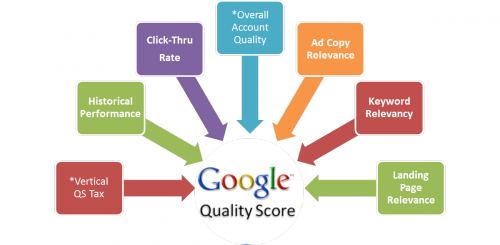
Recently, Google took it upon itself to be the bastion of quality in the world of internet marketing. Every website promotion company is well aware of the recent search algorithm updates. However, it’s not only organic search that is being assessed by Google in terms of quality. Pay per click advertising or paid searches are subjected to quality checkpoints as well and in the end, a Quality Score is assigned to every keyword of your ad campaign.
Google Quality Score Factors

According to the definition provided by Google itself: Quality Score is an estimate of how relevant your ads, keywords, and landing page are to a person seeing your ad. Having a high Quality Score means that our systems think your ad, keyword, and landing page are all relevant and useful to someone looking at your ad.
This definition may appear to be crystal clear, but very few marketers know how to deal with Quality Score. Here is a straightforward and simple guide that you can use in understanding Quality Score.

Understanding (not set) and (not provided) Keywords

Google Analytics (GA) is a tool that provides rich insights to a website promotion company as to how its paid search campaigns are doing. However, there are times that you cannot assess the quality of your campaigns because Google Analytics return (not set) or (not provided) keyword data when you extract a GA report. For a rookie website promotion company, this may be confusing and may even be used interchangeably although they are two very different concepts.

A (not set) keyword data occurs when something is missing between the GA tracking and the AdWords click. Typically, this happens with auto-tagging or when repetitive codes are found on pages or there are multiple GA accounts connected to your AdWords campaign.

Length of Display URL and CTR

An experienced website promotion company would know that a URL is not just a web address. In terms of PPC Quality Score, display URLs play a significant role, since one of the criteria used by Google to calculate for your Quality Score is the click through rates of your display URLs. Length and presentation of display URLs are critical factors as to whether searchers will click on your ad or not.

For one, Google will automatically add www to display URLs with fewer than 35 characters. Historical data will show that URLs without the www prefix get more clicks than those with the www prefix. Another not so known fact is that if you exceed the 35-character limit by two (37 characters) it is perfectly fine. Last, if you really can’t contain your URL within 35 characters, insert a few keywords so that when Google shortens it, your keywords are highlighted in the display URL. However, exercise extreme care as Google will decide how to shorten your URL. Basically, the rule of thumb is to target 35 characters without www.

The Surprise Perfect 10 and Pre-assigned Quality Scores

Getting a score of perfect 10 is every web promotion company’s dream. The excitement is equal to going viral in social media marketing services. But before you jump up and down, check for which keywords those perfect scores were given and most likely, you’ll find out that these keywords have zero impressions and zero clicks. Experts are now toying with and testing whether including “empty” keywords gets a perfect score of 10. Your ads won’t show up for these keywords. The goal is to increase the overall score for the entire campaign and raise an ad group’s eligibility for auctions.

Another crucial concept worth pointing out is that your ad groups and keywords have pre-assigned scores before you even launch your campaign and many experts have observed that most of these starting scores would be the end scores by the time a campaign is done. This particular information led PPC marketers to believe that you can actually modify your campaign’s architecture to boost your Google Quality Score even before you launch your ad campaign.

Multiple Groups for Keyword Match Type and Delaying the Use of Bid Management

Along with the campaign’s architecture, matching keyword types within ad groups can increase quality scores. To get the most impressions, it is encouraged that you use a number ad groups for all keyword match types that you want to target.

Finally, if your ad campaign is fresh and new, don’t use the automated bid management yet. Statistics will show that campaigns that were manually optimized during their early stages were more successful versus those that were introduced with the automated bid management system.

Google’s Definition of Quality Evolved

The Quality Score that every web promotion company is using today may not be the same a couple of years down the road. In fact, what Google considers as quality ad campaigns may not stand true in the near future. Who knows? Maybe social media marketing services will be closely tied into the PPC Quality Score. A lot of things can happen and the key is to always be on the lookout and satisfy whatever quality indicators there are.

Author’s Bio: The writer of this post is Deepak Gupta, who is an experienced internet marketing professional and active blogger. He is associated with a search engine optimization company in India that provides professional SEO services and takes care of the search engine marketing activities for clients.

Filed Under: Content, Links, Marketing /Sales / Social Media, SEO, Successful Blog Tagged With: bc, Google, optimization, quality score, SEO, social media marketing

Stop Treading Water and Swim

January 24, 2013 by Rosemary

By Rosemary O’Neill

The American Red Cross test to become a lifeguard includes a pretty scary segment. You practice swimming out to rescue a “drowning swimmer” and they basically try to drown you.

As a small business owner, especially in the online world, it can feel as though the world is trying to drown you–Google algorithm changes, new social networks, shifting features–all are conspiring to pull you under the surface.

It’s helpful to have some strategies in place that will help you move from treading water to doing laps like Michael Phelps.

swimmer

Continuing Education

If you want to stay good at something, you need to continue learning all the time. Particularly with an online-based business, the sands are shifting constantly, and you need to set up a mechanism for learning new techniques. Take a look at sites like Codecademy.com and Udemy, or the courses offered through AppSumo, to keep your skills sharp. It’s also a good idea to subscribe to the official technical blogs for some of your key platforms; you’ll often get advance notice of upcoming changes. (For example here’s a link to the Twitter Engineering blog).

Catch Your Breath

Build in time each week for relaxation. The Internet will still be there when you get back. One big mistake many business owners make is allowing the business to take over virtually their entire life. Leave space for breathing, family, friends, and sitting in the porch swing. Your best ideas might emerge from downtime.

Look to the Finish Line

When you made your goals for 2013, did you break them down into manageable tasks that you can track during the year? Even Olympic swimmers make use of those lane markers on the bottom of the pool, and ropes on each side. You need to have milestones so that you can make course corrections along the way. I started using a year-at-a-glance calendar this year for that purpose, from NeuYear.net.

If you want to move forward this year, make sure you do some of this:

  • Stay on top of online industry news
  • Schedule feeding your brain
  • Create action items from the stuff you read
  • Slot the actions into your over-arching goal path
  • Use chunking to step forward
  • Prune the junk periodically
  • Follow key blogs from your important platforms
  • Find a peer group for support
  • Have the courage to make a course correction
  • Celebrate the small victories and achievements along the way

How are you going to ensure that your business moves forward this year?

Author’s Bio: Rosemary O’Neill is an insightful spirit who works for social strata — a top ten company to work for on the Internet . Check out the Social Strata blog. You can find Rosemary on Google+ and on Twitter as @rhogroupee

Photo Credit: maHidoodi, Flickr CC.

Buy the Insider’s Guide to Online Conversation.

Filed Under: Successful Blog Tagged With: bc

Writers’ Resolutions for the New Year

January 23, 2013 by Rosemary

By Tiffany Matthews

One of the things that resonated with me as a writer during the new year is a wish that one of my favorite authors shared:

It’s a New Year and with it comes a fresh opportunity to shape our world.

So this is my wish, a wish for me as much as it is a wish for you: in the world to come, let us be brave – let us walk into the dark without fear, and step into the unknown with smiles on our faces, even if we’re faking them.

And whatever happens to us, whatever we make, whatever we learn, let us take joy in it. We can find joy in the world if it’s joy we’re looking for, we can take joy in the act of creation.

So that is my wish for you, and for me. Bravery and joy.

If you are familiar with this, then you know I’m talking about Neil Gaiman’s New Year’s wish. This is a wish that I feel resonates with every writer who is shaped by his or her experiences.

Bravery is a mantra that I think everyone should embrace this year, especially when we’ve been given a reprieve on doomsday last December. This is the year to make things happen and here are some resolutions that will help you achieve your writing goals.

Cruise, Drive, Fly

No matter how busy you are with writing, always set aside time for travel, to de-stress and unwind. Most writers, myself included, tend to be perfectionists and workaholics, which when combined can lead to being overworked and burned out. This is why taking a break every now and then is vital to keep your creative juices flowing.

Still not convinced? Perhaps this checklist can help shed light on why writers need to travel. Before you go on your adventure, keep in mind that travel is very unpredictable; therefore, it’s better to be prepared for the worst that could happen. Always take travel insurance with you as your backup plan.

Make a Booklist

You might wonder how a must-read list of books will help you achieve your writing goals. Author Stephen King in his book, On Writing: A Memoir of the Craft, shares this valuable piece of advice to writers:

“If you want to be a writer, you must do two things above all others: read a lot and write a lot. There’s no way around these two things that I’m aware of, no shortcut.”

The importance of reading is reiterated throughout his book, which is woven with his often humorous insights on writing as a craft. He further states, “Good description is a learned skill, one of the prime reasons why you cannot succeed unless you read a lot and write a lot.”

One Word at a Time

Getting published is one of writers’ dearest dreams, a dream that is riddled with hurdles like trying to survive daily life. Dreams don’t come true overnight and the reality is you have to work to survive. That doesn’t mean, however, that you can just abandon your dream of becoming an author. It can still happen, if you make it happen.

Set aside time to write for yourself and not just for work. You might feel overwhelmed at the sheer volume of words needed to create your book, but it’s never really about the words. It’s the story that you’re telling. Like what a friend of mine said when he paraphrased Lao Tzu’s famous quote, “The journey of a thousand words begins with one word.”

Swallow your fear and try to be brave as you take it one word at a time. Take comfort in what Stephen King said:

“The scariest moment is always just before you start. After that, things can only get better.”

Author’s Bio: Based in San Diego, California, Tiffany Matthews writes about travel, fashion and anything under the sun at wordbaristas.com. You can find her on Twitter as
@TiffyCat87.

Filed Under: Content, Idea Bank, Motivation, Successful Blog, Writing Tagged With: bc, joy, publish, reading, resolutions, Writing

  • « Previous Page
  • 1
  • …
  • 69
  • 70
  • 71
  • 72
  • 73
  • …
  • 84
  • Next Page »

Recently Updated Posts

Is Your Brand Fan Friendly?

How to Improve Your Freelancing Productivity

How to Leverage Live Streaming for Content Marketing

10 Key Customer Experience Design Factors to Consider

How to Use a Lead Generation Item on Facebook

How to Become a Better Storyteller


From Liz Strauss & GeniusShared Press

  • What IS an SOB?!
  • SOB A-Z Directory
  • Letting Liz Be

© 2025 ME Strauss & GeniusShared