Successful Blog

  • Home
  • Community
  • About
  • Author Guidelines
  • Liz’s Book
  • Stay Tuned

Are Your Employees Insured Against Disaster?

July 30, 2014 by Thomas

adoccFor those who own their own small business, decisions must be made on a daily basis.

One of the big decisions that can weigh on the shoulders of small business owners is the one of whether to offer group health insurance or not.

For those owners trying to decide one way or another, check out the following FAQ’s for some answers:

Group Health Insurance FAQ

  1. Does a small business have to offer health insurance to its employees?

No. Unless a small business has 50 or more employees, group health insurance is completely optional.

  1. Why should small businesses offer health insurance to their employees?

If a small business owner does decide to offer group health insurance, his or her employees may seek health assistance quicker if a health issue arises and less work and time may be missed. Though health insurance is an expense to the employer, the goal is to save money in the long run by providing good health care options to employee so they can stay healthier and miss less work. If a serious illness or health condition arises, they’ll have security in getting the proper care they need.

Also, some employees may have benefits as one of their own job requirements. A small business owner can miss out on an excellent employee if they do not offer group health insurance. Many employees feel that if their employer cannot provide health insurance, the loyalty of the company is lacking and they may choose to go elsewhere, where insurance is covered.

  1. Should employees have a say in deciding on group insurance?

That would really be up to the employer, but usually it is better if the employer just makes these choices.

Employees have enough to choose from within the given plan; it’s probably best for the owner to go ahead and choose the best health insurance company to fit the needs of the small business and then offer the plan to the employees.

  1. How does an employer/small business owner go about choosing the best company to provide coverage?

The best way to narrow down the different providers is to begin with research. Employers should research online, make some phone calls and have a list ready with questions they have and whatever requirements they have for their company and employees.

Yes, it’s tough for a business owner to make so many decisions every day.

Figuring out his or her employee’s health care is not an easy one.

But if it is a possibility to offer the option of group health insurance, it’s a great way for a small business owner to make employees feel well taken care of.

As a small business owner, how have you gone about covering your employees?

Photo credit: Image courtesy of photostock / FreeDigitalPhotos.net

About the Author: Heather Legg is a writer who covers topics on small business, social media and mindful living.

Filed Under: Business Life Tagged With: bc, coverage, employees, health insurance, medical

I Am Not A Blogger

July 29, 2014 by Rosemary

By Lisa D. Jenkins

I believe in blogging. Just not for me.

Female silhouette

Every 7 days I sit down to write a post here. Against almost every bit of social media/blogging advice to the contrary, my own blog – for years aptly titled The Occasional and Erratic Blog – has sat sparse and neglected. But I’m just now understanding why.

Self-employment wasn’t so much a carefully considered selection for me as it was a response to circumstances that required immediate action.

My two kids and I had decided to leave everything and start a new life together. I’d held a job I loved at a state college for almost 10 years. With benefits the job paid enough to cover a fairly modest life for a family of three. As my son said at the time, “We might eat hot dogs and ramen forever, but they’ll be our hot dogs and ramen.”

A month after the divorce was final, I lost the job I’d held and loved for 10 years – statewide budget cuts were deep that year. There I was with custody of my 13 year old son, a 21 year old in college, a mortgage and no income to cover any of it.

It was at that moment I decided to truly support myself rather than once more place myself in a position of counting on something else that might dissolve.

I’d been watching social media evolve and participating for a while – hoping my Director would let me integrate it into our marketing – and I knew beyond a doubt that I could make this work for me and for others. So I took the leap and dove head first into finding my way as a social media professional.

I was extremely vocal on Twitter and Facebook, learned WordPress and taught myself the coding skills we needed back in the day. Because: no plugins. I spent every single day learning and building connections by being helpful wherever I could. I offered advice, pointed people to resources, donated my time and writing to non-profits and I went to conferences. Nothing has been as keenly painful to my introverted self as that seemingly endless cycle of self-promotion but I did it. The one thing I never settled into was blogging.

Disclosure: Random exaggeration ahead.

“But you MUST blog,” says everyone always.

Yes, well, five years later and I’m still here – and barely blogging.

Inconceivable? Oh, it’s conceivable, I assure you.

But how to explain that to people and prospective clients became the issue at hand. Two weeks ago, on the Main Salmon River in the middle of Idaho’s Frank Church River of No Return Wilderness, it crystalized for me.

I don’t want to be an A-List blogger. I’ve no aspirations to write a social media or marketing book. I don’t wish to be recognized as a media personality. I’ve never pursued those things.

I define and execute strategy. I measure and analyze metrics. I engage on social media. I curate content. I design campaigns. I build relationships. And, I blog … for my clients.

I do the job I love in the best way possible for the clients I partner with. If my work isn’t the best example of my worth to a new or existing client, no amount of blogging on my own site will help.

Hi. I’m Lisa. I’m a social media practitioner and that’s all I want to be.

How does what you’re doing fit with what you want to be?

Author’s Bio: Lisa D. Jenkins is a Public Relations professional specializing in Social and Digital Communications for businesses. She has over a decade of experience and work most often with destination organizations or businesses in the travel and tourism industry in the Pacific Northwest. Connect with her on Google+

Filed Under: Content, Personal Development, Successful Blog, Writing Tagged With: bc, blogging, personal-development

6 Tools for Running a Successful eCommerce Business

July 25, 2014 by Rosemary

By Teddy Hunt

Running a successful business of any kind, whether it’s a brick and mortar store or an e-commerce website, requires the right tools. Before you launch your online company, make sure you have these programs and systems in place. Opening your digital doors without them is a risk your company should not take.

A User Friendly Purchasing Experience

Shopify

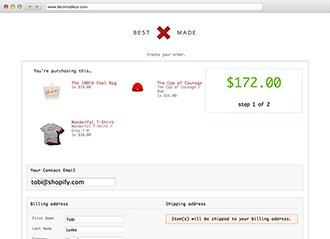
Unless your customers can buy your products easily, your e-commerce business will stumble out of the gate. A simple checkout experience powered by the right shopping cart platform can solve the problem before it starts. If you’ve never run an online retail store before, go with Shopify.

This software allows you to get your store up and running without needing to muck around with servers and complex coding systems. Adding products and changing prices is simple using their intuitive system. You can also process credit card payments the second you open it.

In order to keep your prices as attractive as possible, do a little comparison shopping of your own to keep business expenses low. Since utilities are among your company’s primary bills, you should compare rates through a website like powerexperts.co.uk.

Reliable Business Communication Systems

Establishing real world connections with your vendors and supply chain requires traditional forms of communication. Many business people won’t deal with you if they can’t reach you over the phone. They want to know you are a real person, which makes a business line an essential tool for running a successful e-commerce business.

Mitel Systems offers multiple enterprise solutions for shoring up your lines of communication, including cloud-based providers. Choose from a variety of devices, including digital phones and conference calling systems. “Softphones” allow remote workers to call in right from their desktop without the need for a separate device.

Social Media Account Management

Your online store is more than a website; it’s a brand. Customers expect your company’s brand to exist on social media, and not on just one or two platforms.

Promoting your store’s identity across the web requires multiple social media accounts and delivery systems, including Twitter, Facebook and Pinterest. Posting to each individually can take up valuable time and hurt your company’s productivity.

To manage all your social accounts form a single dashboard, try Hootsuite. Their platform allows you to schedule posts to your social accounts ahead of time and gauge user interaction to your content. You can also set permissions that allow you as the owner to approve all out-going posts.

That way your brand message stays consistent.

Analytics Tools

Google Analytics

Image via Flickr from Panayotis Vryonis

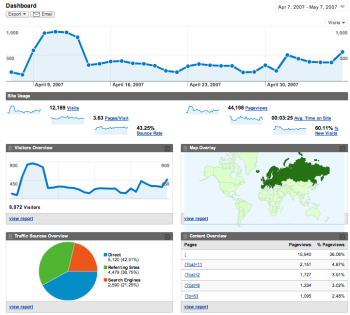
Knowing how visitors behave when they visit your online store can serve as an invaluable asset for improving your product pages and increasing conversion. Google Analytics gives you this information, including user flows through social media, total web traffic, time spent on site and conversion goal tools, free.

Installing the program is a single-string code that you can copy and paste into the header of your e-commerce site. Adding code for Google Webmaster Tools (also free) helps you find errors, including pages that don’t load properly, before they turn into larger issues.

Customer Feedback Channels

Don’t ignore the people who buy your products. Providing them with an email address, blog comments section or social outlet where they can communicate with you is vital for your site’s success. Make sure you respond courteously and in a timely manner to build strong relationships with your customers.

When your customers believe they have a voice, they morph from people simply buying a product into cheerleaders for your brand. Cheerleaders do more than spend money; they leave positive reviews and encourage others to give your store a try. That type of advocacy is worth more to your business than any one transaction.

A Stable Website

Your e-commerce business succeeds or fails on your website’s reliability.

You want a site that uses streamlined coding for fast load times, runs strong security software to protect customer information, and that won’t crash during heavy traffic periods.

If you’re new to the e-commerce world, using templates generated by design platforms like Shopify and Magento can give you a solid basis to launch your store. Once you get comfortable with their system, you can customize features to suit your needs going forward.

Launching an online store is not a quick process. Skipping steps or rushing can leave you without the necessary tools needed for success. Build your e-commerce business the right way, and you’ll reap the benefits for years.

Author’s Bio: Teddy Hunt is a freelance content writer with a focus on technology. When not behind a computer, Teddy spends the majority of his free time outdoors and resides in Tampa, Florida.

Filed Under: Successful Blog, Web Design Tagged With: bc, customer experience, Shopping, website

Business Planning for the Time Crunched

July 24, 2014 by Rosemary

The other day, I caught myself after 7pm, listening to a business podcast, scanning through a research report that is relevant to my business, and periodically glancing over to my iPhone, which was buzzing to alert me about new emails and social media updates from my friends and colleagues.

Did I mention that the television was on in the background?

Even typing that paragraph, I’m getting a headache.

Pretty sure that none of those activities advanced my business one iota. In fact, they probably set me back because my brain was in a tortured, fractured state.

brain on Instagram

Deep breath.

Deep breath.

If you spend your “working hours,” roughly 9am to 5pm (haha) reacting to stimuli, you’re heading for a business rut.

How is your business going to move up to the next level if you’re spending your day putting out fires and your evening “catching up?”

You need to get ahead of the game and stay there if you want to innovate, use your creative juices, and make progress.

Practical Suggestions for Making Time to Plan Your Business

  • Schedule it. The same way you block out time for a customer phone call, make an appointment for your planning. Take a minute right now and block out one hour this week for business planning.
  • Stop multi-tasking. During meetings and conference sessions, leave the devices in your briefcase. Extract the full value of the relationships and information you invested in when you scheduled the meeting or registered for the conference. If you’re listening to a business podcast, really listen and take notes. There’s no award for doing the most stuff at one time.
  • Make a dashboard. Keep your finger on the pulse of your business metrics on a routine basis. Establish the numbers you need to track, and then pull them all into one spreadsheet. This will allow you to spot trends and take action before the fire flares up.
  • Narrow down your consumption. If you’re overwhelmed by your blog subscriptions, emails and social updates, hit the unsubscribe button on a few of them. Focus on quality, not quantity.
  • Move a big rock every morning. Start each day with a “win,” and knock off something that will actually give you progress. Do that before you answer the phone, before you check email, and before your colleagues start sending you Buzzfeed articles.
  • Have a business retreat You don’t have to have a large team, or go to a dude ranch for “trust exercises.” Plan each year to get away (even if it’s only virtually) and spend dedicated time working on the business. Evaluate the previous year, plan the upcoming year, and get your mind focused. Put an “out of office” message on your email, same with voicemail, and take a hiatus from social media. Emerge refreshed and ready to conquer the world.

How often do you step back and work on your business?

Author’s Bio: Rosemary O’Neill is an insightful spirit who works for social strata — a top ten company to work for on the Internet . Check out the Social Strata blog. You can find Rosemary on Google+ and on Twitter as @rhogroupee

Filed Under: Personal Development, Productivity, Successful Blog Tagged With: bc, business planning, strategy, time-management

Overcoming Big Data Skills Concerns

July 23, 2014 by Thomas

abigdate

Big data analytics has been proven to be highly beneficial for businesses, allowing them to extract optimal value from their data and make better-informed decisions.

As more and more businesses are adopting big data analytics, it is becoming increasingly necessary to make big data a part of your business strategy.

However, it is not easy to implement a big data solution, because there is a significant shortage of big data skills.

Then again, if you use the right hiring strategies, you may be able to recruit some of the best big data experts available in the market.

How to Hire the Right Big Data Talent

Define Responsibilities

Before you start the hiring process, it is essential that you clearly define the role and responsibilities that you want the big data expert to assume.

This will help you determine what kind of big data talent you should look for, so that you can attract the most suitable candidates. It also gives the candidates a clearer idea of your expectations.

Set Job Requirements

First of all, you need to set the minimum academic and experience qualifications to ensure that the candidate has the necessary knowledge, skills and training to handle the tasks that come with the job. Then, list down the specific skills and qualities that he or she must possess.

For instance, the candidate should be familiar with the specific type of big data solution that you are planning to implement.

According to a blog post entitled “Combating Big Data Skills Concerns“, business organizations are not only trying to recruit and retain experts to handle long-existing data management technologies, but also new big data technologies such as Hadoop.

It is important that you hire a big data expert who makes an effort to stay up-to-date with the latest big data technologies.

Attract the Best Candidates

Big data experts are highly sought after these days, and they can afford to be selective.

As such, you need to make a very competitive offer in order to attract the best big data talent. Big data experts enjoy solving challenging problems, and they thrive in an environment that allows them to exercise their creativity.

You can bait them by giving them interesting data to manage and fascinating problems to solve, so that they can satisfy their intellectual curiosity endlessly.

While money may not be the main factor affecting a big data expert’s choice of job, it is still an important consideration. Therefore, you have to make sure that you offer your big data expert a highly competitive salary.

Evaluate the Candidates

There are many tools from reliable sources that can help you perform a thorough and accurate evaluation of candidates.

You can use these tools to do resume screening and reference checks, conduct competency-based and background interviews, and create real-life scenarios to assess the responses of the candidates.

It is also a good idea to use psychometric assessments such as cognitive testing, emotional intelligence testing and motivational assessment.

A competent big data expert can do wonders for your business by helping you get the most out of your data.

By following the tips above, you can significantly increase your chances of landing the best big data talent.

Photo credit: Image courtesy of Stuart Miles / FreeDigitalPhotos.net

About the Author: John McMalcolm is a freelance writer who writes on a wide range of subjects, from social media marketing to Cloud computing.

Filed Under: Tech/Stats Tagged With: bc, big data, information, small business, technology

Be More Productive By Doing Less

July 18, 2014 by Rosemary

By Robyn Tippins

If you are a small to medium sized business owner, I’m here to tell you today that your time is limited. I know this will come as an enormous surprise, but there are a finite number of your hours to go around.

You can’t do it all, and I’m guessing you probably don’t want to anyway…

time lost cannot be regained

Information Overload

Your company has to be on the cutting edge, so you must read often.

You spend at least 15% of every day (and probably more like 30%+) consuming information — Tweets, Facebook statuses, Pins, Medium posts and longform blog posts.

Your company has to be a thought leader, and that means churning out clever sayings and deep thoughts, and lots of them, including social updates, blog posts, white papers, videos and case studies.

You are well-read, from strategy to productivity, fascinating and much loved, and none of this is getting the work done.

Your company requires work to be done, the financials to be straight, payroll to be paid and sales to be made, so between administration, billable hours, garnering new business and information consumption/creation, you are doing too much.

Something has got to give.

Choose Whom You Will Serve

Choose a few hours, each day, to get work done.

I go radio silent every day from 2-4pm EST. During that time, I don’t check email, I don’t check Facebook and I don’t answer my phone. I don’t read HackerNews, TechMeme, Reddit or Cracked (my guilty secret). I just flat-out work. I get more done in those 2 hours, than I do in the entire rest of the day.

I’ve become so committed to this schedule that I have been able to cut out work, completely, on some Fridays, just by working ahead during those hyper-productive hours the rest of the week.

I have literally found an extra 8 hours per week, just hiding from my distractions.

Have you established any “heads-down” working hours?

Author’s Bio:Robyn Tippins is Co-Founder and CEO of Mariposa Interactive. She has been managing online communities for 17 years, and her book, Community 101, is a primer on online community management. You can follow Robyn on Twitter via @duzins.

Photo Credit: gothick_matt via Compfight cc

Filed Under: Personal Development, Productivity Tagged With: bc, focus, Productivity

  • « Previous Page
  • 1
  • …
  • 24
  • 25
  • 26
  • 27
  • 28
  • …
  • 959
  • Next Page »

Recently Updated Posts

Is Your Brand Fan Friendly?

How to Improve Your Freelancing Productivity

How to Leverage Live Streaming for Content Marketing

10 Key Customer Experience Design Factors to Consider

How to Use a Lead Generation Item on Facebook

How to Become a Better Storyteller


From Liz Strauss & GeniusShared Press

  • What IS an SOB?!
  • SOB A-Z Directory
  • Letting Liz Be

© 2025 ME Strauss & GeniusShared