Successful Blog

  • Home
  • Community
  • About
  • Author Guidelines
  • Liz’s Book
  • Stay Tuned

Putting Some Notoriety Behind Your Brand

November 28, 2012 by Thomas


When it comes to letting people know about your brand, how do you go about it?

Do you regularly advertise through in-house means on radio and television, through newspapers, and via your social media opportunities? Do your employees spread the word to help promote your business? Or, even though it can be more expensive, do you get a well-known figure to promote your brand?

If you are practicing the latter tactic, you are not alone. In fact, more and more companies are using celebrities to help them spread the word.

Even if you only watch television or peruse the Internet on a limited basis, you have likely seen some of the following ads over the last year:

* Peyton Manning promoting Papa John’s Pizza with owner John Schnatter;
* Charlie Sheen promoting DirectTV;
* Danica Patrick for GoDaddy.com;
* Betty White touting Snickers;
* Norm Macdonald promoting SafeAuto.com.

While celebrity advertising is certainly nothing new in this day and age, it has become more prevalent given the mass reach of the Internet not only in the U.S., but worldwide.

Whether large or small, businesses have the opportunity to put a face behind their brand and tell both current and potential customers why their product or service is second to none.

As you might expect, it oftentimes comes down to advertising budgets, something the smaller business doesn’t always have much of. In those cases, it may involve finding a well-known figure who actually uses the product to go in front of the camera or the radio to promote it.

If you are a smaller business and your advertising dollars are stretched, the big question then becomes can you get the celebrity to consent to their likeness being used in the ad?

The bottom line is that celebrity endorsements give the impression that the individual uses the product or service they are promoting. If it is discovered the celebrity does not actually use the product or service and still promotes it, does a company’s brand suffer as a result?

If you plan on using a well-known figure to promote your brand going forward, consider a few items:

* Does the individual have mass appeal to a wide range of consumers?
* Does the individual come with any “baggage” that may dissuade consumers from touting your product or service? Such cases can be where the celebrity has said something negative, had a run-in with the law, or is viewed as not relevant at the time;
* Does the individual meet your budget needs? If not, you may be able to come to an agreement where they will take less for an advertisement in return for something beneficial to them.

In today’s world, a company’s brand is its heart and soul.

Before you get a well-known figure to promote what you have to offer, look at the big picture, identifying whether that individual is going to brand your business a winner or loser.

Photo credit: adnews.us

 Dave Thomas covers small business topics for various websites.



Filed Under: Personal Branding Tagged With: advertisements, bc, brands, celebrities

12 Major Social Media Myths about Big Brands that Need Taking Down

June 15, 2010 by Liz

cooltext443809602_strategy

Late December 2009, I was knocked over by two conditions:

  • the huge number of social media job descriptions appearing on job sites
  • a simple statistic predicting that 86% of Companies were planning a Social Media Marketing Bump in their Budgets for 2010.

They prompted me to write — the 10 Crucial Roles of a Social Media Director. That piece brought me fact to face with something I’d suspecting for some time …

To bring a new business to the web, the culture has to become a beginner again. The larger the business the harder that is … they have more past success, more to lose, more to fear, less to win. — 10 Crucial Roles of a Social Media Director in 2010

I’ve been watching the differences between how individuals and small business use social media and how big brands do ever since. What strikes me now is a number of myths that have grown around how brands incorporate social media into their cultures.

Though it can be said that big brands move more slowly than a smaller, more flexible startup might move, we can’t assume that slowly means blind, uncaring or mentally inept.

Big brands didn’t get to be big brands by getting everything wrong.

So I asked some of the people I admire most about navigating the social web while working in a brand culture. What myth about brands, business, and social media would you most like to put to rest?
I’ve sorted their answers into 12 major myths. Their words are filled with the mysteries they’re facing and the magic it takes to move a big company to serve customers well.

[I’ve included their names, their industries, links and their twitter streams. Each individual is offering his or her own opinion and observations — not those of his company or brand.]

Myth 1: Social Media Is a Science

Working with people is rarely all tools and numbers. It’s called the “web,” because we link and connect in myriad ways — site to site, message to message, comment to comment, Facebook to Twitter — which all comes down to person to person.

Even one to many is really one to one, one, one, one, one, one, one. Count me as a many; I’ll still feel it like a one.

Social media isn’t a ‘science’ one can master, but the ‘art’ of treating people well. — Robyn Tippins, Community Director

Myth 2: We Can’t Separate the Person and the Company

Great companies realize that people have been meeting and making friends with people who work at companies all of our adult lives — in person, on the phone, through email. Sometimes we meet friends who work at companies. Sometimes company folks become friends. Words in text online might seem to make this more important, but it’s not.

We don’t share the same with all of our colleagues, friends, and acquaintances offline. Why assume that we would online?

I’m not sure if I can be of much help; I deliberately keep my online activities separate from my employer’s brand. I don’t generally engage in social media on my employer’s behalf (though I think this would be a fun career, it’s not the one I have). And I don’t want to have to plaster disclaimers on all of my blog posts. Beyond this, I don’t know what “myths” you’re talking about. Tell me some, and maybe I can put them to rest. — Holly Jahangiri, author, Tech Writer, Information Developer @Holly Jahangiri

Myth 3: All We Do Is On Twitter and Facebook

Great social media teams and their directors spend much of their time managing change — making sure that folks understand the relationships, not just the tools. They “get” that people learn and adapt at their own speed. Great companies serious about taking on more social presence realize both the opportunities and the responsibilities.

Understanding before action is a smart move.

One of the biggest myths is that the fruits of our labor are summed up by our brand’s Twitter or Facebook presence. A response from a company representative doesn’t necessarily indicate they’re actually listening in a meaningful way. Many companies that don’t have the same type of social media presence per se really are listening by doing things like analyzing conversational information and transforming it into data that can be used to improve products and services. This may change someday, but right now, most of the “work” involved with social media centers around helping the company adapt and get contextual understanding of conversations happening online, how they can participate in a meaningful (and legal) way, and re-orient the interface of the business toward the real-time web. — Shannon Paul, Social Media Director, Insurance Industry, @ShannonPaul

Myth 4: Legal Is the Enemy

Great social media companies know how diverse teams build strong strategies through dialogue. It’s easy to find people who think the same as we do. But the best ideas stand the test of different points of view.

People who think differently add value.

I would like to put to rest the idea that Legal is always the roadblock to social media adoption. More times than not, my experience has been that the Legal folks have a ready willingness to help and provide the best counsel for their clients. My advice to anyone starting a social media program at a brand is to involve a member of the Legal team as early as possible. — Michael E. Rubin, Social Media Director, Financial Industry, @merubin

Myth 5: B2B Can’t Rock Social Media

Maybe it’s because consumer companies got into the game sooner; or maybe it’s because their consumer groups are larger and sometimes louder; whatever the reason, some folks are stuck on the idea that companies who sell to and partner with other businesses can’t use the social web to grow their businesses.

I’d love to dispel the myth that B2B can’t “do” social media. There are so many outstanding businesses proving that not only can it work, but that B2B might actually have advantages around content, relationship cycles, and niche communities. It’s time we look at social media as an enhancement to business as a whole, and adaptable to many different models. — Amber Naslund, Director of Community, Social Media Monitoring Industry, @ambercadabra

Myth 6: Social Media Is Just Another Marketing Channel

Great companies see the shift in relationships allowed by the speed and reach of new tools. Yet, they never lose sight of their values and the value of the relationships those tools touch.

Social is part of every business function and relationship.

The notion that social media is just another marketing channel is one that is short sighted and flawed. Sadly, many businesses charge junior staff with social media initiatives. Those efforts exist in a vacuum—and consequently come up short. The reality is that social media extends and enhances advertising campaigns, direct mail messaging, sales efforts, recruiting and just about every business goal if utilized correctly. When was the last time you heard of business tasking a bunch of interns to formulate a “telephone strategy?” — Rob Birgfeld, Director of Audience Development, Marketing and Communications Industry @robbirgfeld

Myth 7: Social Media Is Free Broadcasting Platform

Social media spammers might not understand this one.

Community respects and listens.

The notion that social media is a free platform to blast out your brands message is honestly, complete crap and yes, a myth. First off, social media sites like Facebook and Twitter are free, but the time and energy it takes to build and maintain an interactive community on them is not. Second, if you only want to talk about your brand and how fantastic it is, buy a print advertisement or a billboard that targets nameless, faceless people. — Sarah Caminker , Fundraising Manager, Nonprofit and Social Good, @SarahCaminker

Social media may be free, but it’s not just another broadcast platform. It requires a significant shift in how to think about connecting with customers, and it takes work and attention. — Richard Binhammer , Corporate Communications @RichardatDell

Myth 8: Brands Can’t Be Nimble

It’s true. Great brands know jack!

… the myth that I’d like to put to rest is that brands can’t be as nimble on social media as the rest of us. In fact, this depends on the brand and the visionaries who are responsible for driving communications for that brand. — Alexandra Levit , Business/Workplace Author, Journalist, Speaker @alevit

Myth 9: Brands Use Social Media Selfishly

Successful businesses large and small focus on supporting the people who help them thrive. The ROI of being selfish is negative. Great companies know that.

If I had to try and dispel one myth about brands and their use of social media it would be that companies only use social media to their exclusive advantage. Everyone has seen a few brands attempt to use social media to push their own agenda. Everyone has also seen these same companies falter … in public. Most everyone knows of a few companies that have had success with social media too. I think these companies have figured out a secret about social media — it’s that employees are passionate about being able to use their voice to do good.

These companies have figured out that the simple act of empowering their employees allows for a huge return. Not necessarily a traditional return on investment (ROI) – although that is often one of the effects. It’s more of a return on engagement. When people are engaged – they engage back. One way to think of this is that’s like a “corporate hug” – Most people don’t think about hugging a brand, but they will hug back when the brand makes the effort to engage them.

There are so many companies using, and I do mean the word USING, their corporate brand for the social good. Everyone knows of a few huge brands that are using their brand for corporate good. Which is great to see. There are also a few smaller companies using their brand to engage the community that deserve to be highlighted. One that comes to mind is the clothing company Life is Good. They put on a festival that combines outdoor and in-person activities with a great cause. Another is a subset of the work @ShaunaCausey of Comcast is doing with Voluntweetup – where Comcast sponsors community based efforts on a local scale.

There are countless companies using their brand to do some social good. I hope to see more and more of these stories start to be highlighted in the coming months and years. The smart companies are leveraging their brand and the power of social media to do some good.

Life is Good Festival – http://www.lifeisgood.com/festivals/history-of-Life-is-good-festivals.aspx
Voluntweetup – http://www.voluntweetup.net/wp/ — Jeff Shuey, Director of Business Development, @jshuey

Myth 10: Social Belongs in Marketing or PR, or…

From the first comment, the social web has been about conversation. Communication cannot be shoved into a single department or made a one-sided event. Everyone is responsible for owning and sharing what works. Every employee is the brand.

As with most things, being balanced is a very important and an often forgotten principle. Personally or professionally, folks usually operate on one side of the spectrum instead of somewhere on the mid line. Social media for business is no different and in my experience, I’ve seen people spend a lot of time arguing where social media should be housed or if it pertains to certain disciplines more than others instead of sitting down with each different group that social media will touch and say, “How in the heck can we bring to our people (clients, audience, constituents, what have you) the message in the way they want and is best for them to digest it.” Social media has many facets that touch about how an organization speaks with its publics, so it should be discussed from the top down and all around in an organization’s goals and business strategies. The reason this is so difficult and why so many struggle is because marketing, PR and other disciplines have been segregated or siloed in most organizations. People and departments need to collaborate in order to succeed long term and with the masses. Social media is no exception, and its existence in fact could very well be the thing that starts holding organizations accountable to collaboration. — Lisa Grimm, Digital PR Specialist, @lulugrimm

From General Motors’ standpoint, our social media outreach efforts are not just another PR program. We are interested in keeping the relationship going. Once you are family – we want to keep you in the family. — Connie Burke, Communications Manager, Social Media, @connieburke

Myth 11: Brands Think Too Much, Too Little, Not Enough

Brands are people. We all do all of that.

I think most brands, large and small, worry far too much about how they, themselves, should manage social media, and far too little about how customers use it, and more importantly, how customers interact with the products we offer up. — Robyn Tippins, Community Director, Internet Developer Network, @duzins

Myth 12: Social Media Is a Waste of Time

Time spent without meaning and value is a waste of time. That’s not a social media problem that’s something else.

The social media myth that is no longer valid is that “social media doesn’t work or is a waste of time.” You are reading this, engaging this, using this, retweeting this, arguing this, and thinking about this statement because of social media. There’s no denying it, whether you agree with the termonolgy or not, social media is the new means of communication and connection. It’s no longer a matter of standing out, it’s a matter of relevancy and ultimately existence for your brand. — Kristen Rielly, New Media Developer, @GeekGirls

When we learn, we take in new information and test it against old models we’ve built on information we’ve gathered in the past. Sometimes, we forget to let the new information replace the old … and a myth forms.

What myths about brands and social media do you think need taking down?

–ME “Liz” Strauss
Work with Liz on your business!!

Buy the Insider’s Guide to Online Conversation.

Get a Great Deal When You Join Third Tribe Before June 1, 2010. I’m a proud affiliate.

third-tribe-marketing

Filed Under: Business Life, Successful Blog Tagged With: bc, brands, LinkedIn, myths, social-media

A Dozen $100,000 Brand Ideas for Celebrating Our Heroes Through Social Media

May 30, 2010 by Liz

poppy

I’ve been reading about the history of Memorial Day, before it became about blow-out sales and backyard bar-b-ques.

And the words I’ve found take me back to when my mom still called it “Decoration Day.” She’d buy a paper poppy from the man at the VFW to put in the button hole of my coat. Then she’d take me with her to put flowers on the graves of those we love who lay sleeping while we could still stand, reflect, kneel to say, “thank you.”

Memorial Day is about gratitude, reconciliation, and honoring heroes who paid the ultimate price. They gave and we got.

Rebranding Memorial Day

In his series for Fast Company, Steve McCallion says:

So far we’ve explored how Memorial Day lost its meaning, but how can we get it back? How can we remember Memorial Day in a way that is authentic and relevant today? In this era of instant gratification, can we come together as a nation to recognize the sacrifices that have been made for our freedoms?

memorial-day-branding-fast_company

Click through on the image for his marvelous ideas on how to rebrand to remind us what Memorial Day means.

A Dozen $100,000 Brand Ideas for Celebrating Our Heroes Through Social Media

Social media is about honoring our heroes and connecting people, isn’t it? If anyone knows how to do that we do … big companies, little companies, individuals don’t need to do much to put the celebrating and gratitude back into remembering those who sacrificed for our freedom.

Here are a few ideas …

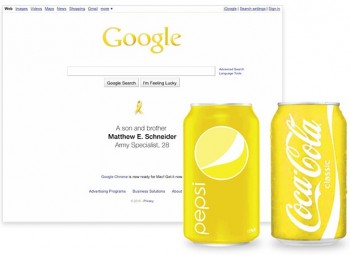
  1. Apple might sell a limited yellow version of the iPhone — or simply choose any yellow iPod product — to donate a portion of sales to hire a social media team to help the White House Commission on Remembrance or The Memorial Day Foundation get their message out next year.
  2. 3M might build a Post-it Note Quote Community by inviting friends and families to publish quotes of their fallen heroes.

    My son would always smile and say, “There’s lots of apple pies, but I’ve only got one mother.”

  3. Berskshire Hathaway might find a volunteer team of social media mavens among their thousands of employees. If that team put out a penny-match challenge, I bet they could pitch a penny campaign that would travel across Twitter and fire through Facebook. Perhaps the collected money go toward health insurance or college scholarships for children of fallen soldiers.
  4. Johnson & Johnson already has communities of nurses and caregivers. They could send out a call via their site, Twitter, and Facebook. They could connect with nurses and caregivers who have shared the final hours with fallen soldiers. Imagine the wealth of history in those stories. If they partnered with the VFW or the Military Channel, that content could make an incredible interview series.
  5. Kodak or Polaroid could build a YouTube channel or a flickr collection for customers and employees to retell the stories of fallen soldiers. With the help of Scholastic, they package them as primary source materials with lesson plans for teachers to share with kids studying history. Teachers could upload comments, videos, and new ideas to add to the community.
  6. Kraft Foods or ConAgra could build the recipe book of heroes. How hard would be to use social media to ask the families of fallen soldiers to share the favorite recipes of loved ones who served our country? Imagine if the Food Channel cooked each recipe and shared the videos on YouTube?
  7. Hallmark Cards or American Greetings could invite the families of fallen soldiers to share cards they received from our heroes and tell the stories behind the cards. Suppose they tweeted a new free Hero ECard for a year?
  8. Starbucks or Panera Bread might print the pictures and a simple memorial statement on the cups that hold their coffee and tea. Folks could Tweet and Facebook their nominations.
  9. Lands End or L.L.Bean could offer a yellow ribbon discount to honor fallen soldiers. Instead of a promo code they might ask for 140 characters in tribute to our heroes. The promo codes could forward to Twitter, FriendFeed, and Facebook.
  10. Sony Music or Universal might put together a collection of songs for heroes by celebrity artists and donate the proceeds to HireHeroes. The songs could be on blip.fm and tweeted. We could DJ a Friday night hero Twitter party.
  11. Netflix could partner with the major studios to sponsor a $1 day of movies and documentaries about our heroes. Ambassadors from families could help chose the appropriate titles and be featured as recommending them. MailOurMilitary.com and milblogging.com might help promote a cause like this one. Netflix might challenge corporations and foundations to add matching funds to support grants to families of fallen heroes.
  12. Southwest Airlines, Marriott, and CNN might partner to offer veterans incredible deals to gather together in D.C. on Memorial Day 2011 to share the stories of fallen heroes.

What would the companies and brands get? They’d get the respect and loyalty of employees and customers who honor our heroes. People remember generosity that connects them to authentic, relevant meaning.

Any nation that does not honor its heroes will not long endure. – Abraham Lincoln

Isn’t that also true of our businesses?

I know you probably see a thousand ways to expand on each of these ideas — ways that each could be tweaked or twisted to fit another business. Take ’em and use ’em. I’d love to hear how you might re-invent an idea or what new ideas came to mind while you were reading.

How will you remember our heroes?

–ME “Liz” Strauss
Work with Liz on your business!!

Buy the Insider’s Guide to Online Conversation.

I’m a proud affiliate of

third-tribe-marketing

Filed Under: Marketing /Sales / Social Media, Motivation, Successful Blog Tagged With: bc, brands, LinkedIn, Memorial Day, sobcon, social-media

Will Your Brand Survive the Culture Shock and Thrive on the Social Web?

February 16, 2010 by Liz

New Tribes, New Rules

cooltext443809437_relationships

It seems like every day now I meet someone who is trying to make sense of the social web. Most folks seem to understand that something important is happening, but just can’t connect to the value of what they’re seeing.

The social web is a vibrant new culture. Corporations, small business, and individuals are bringing their best to be a part of what’s happening.

47 million websites were added in 2009.
The web is a new culture occurring in a new virtual space.
Talking through a computer or smart phone doesn’t return the same results as talking in person does.

It helps to start out knowing that.

We Have the Problem of Speaking the Same Language

1055107_stop_spam_sign

Anyone who’s been a military brat or moved around for their professional life knows that every new location meant learning the rules of the new school and the new community. Somehow that cultural difference is easier to see when we go to a foreign land, where the language has different sounds and a different alphabet. With such obviously linguistic differences we’re more likely to expect differences in values, traditions and how how people choose to connect into business and social groups and tribes.

When I traveled internationally, it took me about three years to identify those same cultural differences in the English speaking countries. We had the disadvantage of speaking the same language. So we often thought we were saying or doing the appropriate thing — We thought the same words meant the same things. We thought we were doing what worked in one place … but found it didn’t work in another.

I once signed a contract with an Australian friend. I thought it described a partnership. As things progressed I realized she thought she had engaged a channel of distribution. Each of us behaved according the premise we believed. Until we figured that out, we were constantly wondering why the other didn’t behave.

Will Your Brand Survive the Culture Shock of the Social Web?

Whenever we meet a new culture, we have the problem of figuring out what’s the same to all humans, what’s just our individuality, and what’s the culture. It’s no wonder that wise folks approach the social web with varying degrees of caution, suspicion, or confusion, fearing missteps or problems. It’s still a bit foreign that people connect via computers and smart phones. For others, it’s a problem of learning a new set of social rules and words that have different meanings in different contexts.

Until we sort those, we can be in a bit of a culture shock. After studying the tradtional symptoms of culture shock, I find that online, culture shock shares these common characteristics. The ones I list here are those that apply to both individuals and brands. With each I’ve added some ways to help you survive the culture shock to thrive on the social web.

  • Sadness, loneliness, melancholy; Lack of confidence; Feelings of inadequacy or insecurity; Feelings of being lost, overlooked, exploited or abused — Does the sheer volume of noise on the Internet overwhelm you and minimize your effort? Does so much noise sometimes make it seem like you or your brand will never get the attention and respect that could be, should be, or once was yours? Find a community where your message makes sense. You’ll be louder and make faster progress.
  • Loss of identity; Preoccupation with health — the health of your business. Have you less idea of who you, your brand, and your customers are now than you did when you got here? Do you or your brand find advisors to help you focus on a healthy Internet presence? Do you blame lack of productivity on Internet ADD and then seek out facts to prove it? Do you treat the Internet as a huge time sink? Are you overly occupied with statistics and connections that are meaningless to building your business? Look to what healthy online businesses are doing. Talk to the people who run and advise them. Learn what goals drive them.
  • Insomnia, desire to sleep too much or too little; Unable to solve simple problems — Do you or your business have trouble stepping away from the computer? Do you binge blog and then avoid it? Have you gotten so caught up in the tools and numbers of followers that you no longer know how to fix simple issues without turning them into bigger problems? Do you meet your online customers offline? Develop habits that match the habits of your audience or the people you want to reach. Talk with them, write for them regularly where they are and when they are online. Their feedback will be the support to keep things going. Not every online problem needs to be solved online.
  • Changes in temperament, depression, feeling vulnerable, feeling powerless — Does it overly affect you or your brand when you don’t get enough pageviews or a response from an influencer on Twitter? Are you certain those are good metrics? Do you spend the right amount of time figuring out why? Keep the Internet in perspective. It’s only one piece of a total business plan. Now more than ever, we need to be meeting our customers and friends online and off. Have a true strategy. Choose a mission and goals that support growing your brand and your business. Then choose the tools that will systematically move those goals forward in a realistic and practical way.
  • Identifying with the old culture or idealizing the old country — Do you play a defensive game? Do you or your business try to make the web work the same as the offline world? Do you hold on to the old tools and the old office rules because they once made your business successful? Pick up the tools and learn how the culture uses them. Look for how the new ways make your business faster, easier, and more meaningful to you and your customers.
  • Trying too hard to absorb everything in the new culture or country — Are you or your brand willing to join with a beginner’s mind? Pace yourself to set simple goals, meet one friend, and learn one tool at a time. Cultures, like businesses, are built, learned, and grow over time.
  • Developing stereotypes about the new culture — Do you or your brand believe that “the Internet is the Wild West,” “Twitter is narcissism,” “Bloggers work in the PJ’s” or any other stereotypes? Putting people who want to buy from you into boxes with labels is not a great way win their interest and loyalty.

Culture shock is a lot less when you find a friend who can translate what’s happening and introduce you to others who live the culture every day. Don’t let the tools decide how you act, lead with the relationships you make.

As my friend, Chris Brogan says … “it’s always about the people.”

Great countries and great companies have been built by ideas and innovations that develop when two cultures connect. The key is being aware that VALUES ARE THE KEY TO BUILDING VALUE.
Listen, engage, interact, learn, and meet up at the core of the matter where our values align well.

What are the keys to integrating into this new culture of the social web?

–ME “Liz” Strauss
Work with Liz to learn the culture of the social web!!

Buy the ebook. Learn the art of online conversation.

I’m a proud affiliate of

Teaching Sells

Isn’t it time you registered for

SOBCon?

Develop strategies and tactics with the best of the Social Web for an entire weekend.

Filed Under: Business Life, Marketing /Sales / Social Media, Successful Blog Tagged With: bc, brands, culture shock, LinkedIn, social web

Recently Updated Posts

Is Your Brand Fan Friendly?

How to Improve Your Freelancing Productivity

How to Leverage Live Streaming for Content Marketing

10 Key Customer Experience Design Factors to Consider

How to Use a Lead Generation Item on Facebook

How to Become a Better Storyteller


From Liz Strauss & GeniusShared Press

  • What IS an SOB?!
  • SOB A-Z Directory
  • Letting Liz Be

© 2025 ME Strauss & GeniusShared