Successful Blog

  • Home
  • Community
  • About
  • Author Guidelines
  • Liz’s Book
  • Stay Tuned

Break the Grip of the Rip

April 24, 2014 by Rosemary

This little stretch of beach occasionally has dangerous rip currents.

The sandbars strung along our part of the coast create strong, narrow currents that run perpendicular to the shore. Unsuspecting swimmers can quickly get pulled far from the beach. If they don’t know what to do, they require emergency rescue to avoid drowning.

avoid the rip current

Marketers can get sucked into the grip of a rip current too.

“You need to post 20x per day on Twitter.”
“You have to have 50,000 Facebook fans.”
“The audience will only read short posts.”
“The audience will only read long posts.”
“We need to strip every link out of our blog posts because Google might blacklist us.”

These rip currents pop up, suck lots of unsuspecting swimmers out to sea, and then dissipate.

How to Break Free of a Marketing Rip Current

Keep your feet planted on the ocean floor

  • Find resources and publications that aren’t trendy. That means more reading Harvard Business Review blogs and less Buzzfeed.
  • Be sure you have someone on your team who will help you focus on your mission when you’re tempted to chase after the latest shiny object.

Remain calm if you get caught

  • If you notice that you’ve gotten sidetracked and sucked into a marketing rip current, don’t just start trashing everything. Go back to your marketing plan, your goals, and your strategy, and remove anything that’s not feeding into them.
  • If you need to take corrective action, do it systematically once you’ve figured out how to proceed.
  • Sometimes it’s hard to remain calm in the face of danger. If you suddenly lose half of your website traffic, or a major client decides to leave, be sure you have a trusted advisor or mentor who can help you navigate the issue. Don’t try to go it alone.

Try to regain your footing and call for help immediately

  • Come up with a plan of action for recovery. If the rip current meant that you suddenly found yourself on page 10 of Google search results, put together a detailed strategy to regain your position.
  • You can iterate and test. Your strategy doesn’t have to be “all or nothing.” Learn about how to do simple A/B testing.
  • Use your data. Numbers don’t panic; use the analytical tools at your disposal to help you sort things out.
  • Don’t try to “wing it,” if you’ve got a problem that needs professional assistance. Consider hiring a consultant or contractor who specializes in the issue (an SEO, a digital marketer, a web designer, a PR pro).

Swim parallel to shore to escape the current

  • When you realize you’ve been pulled out to sea, it’s tempting to swim like crazy, straight for shore. Instead, try a path that makes the most sense for your situation. Rip currents aren’t very wide, so if you swim sideways for a bit, you can return to shore safely.
Author’s Bio: Rosemary O’Neill is an insightful spirit who works for social strata — a top ten company to work for on the Internet . Check out the Social Strata blog. You can find Rosemary on Google+ and on Twitter as @rhogroupee

Filed Under: Marketing /Sales / Social Media, Successful Blog Tagged With: bc, marketing, strategy

Keeping Your Employees and Budget Healthy

April 23, 2014 by Thomas

asuccessHealth insurance can turn into a crazy puzzle for small business owners.

Where larger companies, by law, must provide health insurance to their employees, small businesses have more leeway; however, this sometimes can just add to the confusion.

The bottom line, if you can afford to offer good medical coverage and health insurance to your employees, no matter how many you have – do it.

What if it’s a financial struggle?

There are instances where offering health insurance may not be feasible to your company financially.

If your company is small, you may not legally have to offer health insurance so you can consider these things in deciding to offer or not….

• Longevity of employees – It’s rare that part-time, independent or short term employees will receive medical coverage, and you’re not obligated to do so. Save the insurance benefits for your full time, permanent employees.

• If you have a tiny company, say just a handful of employees, you are not legally in a place to provide health insurance. If it’s financially not possible, you may choose to wait until your company grows financially and physically to offer health coverage.

• With the new laws in place under Obamacare, many small businesses can qualify for tax incentives by providing health coverage to their employees. Before writing it off as not possible, take a look into what you may gain by offering health insurance.

How does offering health insurance to your employees help you?

If you can, it will pay off in the long run if you provide health benefits to your employees….

• For one, some possible great employees may pass you up for a company that can provide health coverage for them. You don’t want to risk not getting the best because you don’t offer health care plans.

• Your employees may be more apt to stay for the long haul if they feel comfortable with the health care plan you can offer. People will shift companies depending on health care these days, as it a big expense to pay for it on your own. If you can offer it, do so.

• You can help your employees by avoiding lapses in health insurance coverage. When they come on board, you can have your plan go right into effect rather than having your employees search out medical insurance in the midst of taking on a new job.

• Employees with an insurance tie will feel more invested in the company itself and this can improve their satisfaction, engagement and overall well-being with your company and their job.

• You’ll save on sick days and illness within the work place. Those with medical coverage are more apt to visit a doctor than those without. Though you may lose a few hours or a day to a doctor visit, it beats a week or more for those who don’t get the needed medical care. It also can prevent sickness from spreading in the office, like strep throat or the flu – two things which can really take an office down.

No one likes to talk about medical coverage – it’s a big expense and a lot to think about it.

But if you want happy, healthy employees, you probably need to consider it.

Photo credit: hipstercrite.com

About the Author: Heather Legg is a writer covering topics related to small business, health and well-being, and social media.

Filed Under: Strategy/Analysis Tagged With: bc, coverage, employees, health insurance, jobs, medical

Infographics: More Than Just a Pretty Face

April 22, 2014 by Rosemary

By Lisa D. Jenkins

Aesthetically appealing, colorful collages of text and imagery that combine to quickly share complex information in bite-sized quips of stats. They drive shares, visibility and clickthroughs at an accelerated rate. They’re infographics, and they’re everywhere.

If you’re ready to add info graphics to your own online content strategy, here are some basics to get you started.

What’s Your Message?

To build a coherent visual representation, you need a focused story line. You have to know what you want to say. What data will you use? Do you want to:

  • Tell the story of your brand?
  • Segment industry stats?
  • Generate product visibility?

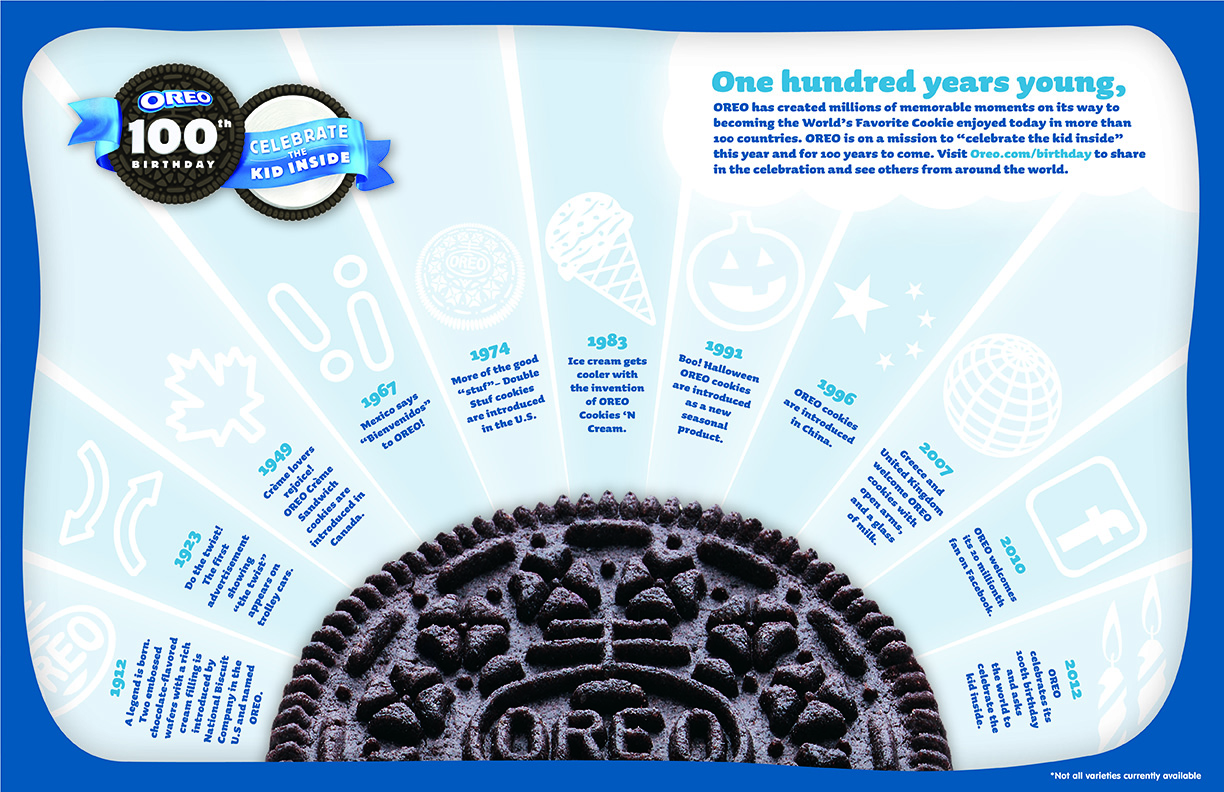
Kraft used the occasion of the Oreo’s 100th birthday to demonstrate the cookie’s history with an infographic.

Oreo 100th Birthday infographic

Why Are You Sharing Your Message?

The answer to this question is not, “Everyone has an infographic so we need one, too.” As with any marketing endeavor, there has to be a goal for investing resources into creating your content. Aside from driving traffic, will your infographic:

  • Create brand affinity or loyalty?
  • Educate stakeholders on trends?
  • Ask viewers to self-segment so you can refine marketing campaigns?
  • Convert prospects to customers?

The Walt Disney Company used this infographic to illustrate the success of Frozen.

Frozen movie infographic

How Will You Share Your Message?

Seriously. What do you want this to look like? All the things that go into creating a successful visual apply here. Take some time and align your design with your goal. Think about:

  • Color palette
  • Font choice and size
  • Graphic elements
  • Layout

Where Will You Share Your Message?

You’ve got your infographic published to your site, now what? As with any owned content, you’ve got to promote it. Make sure it’s branded so people can find you and help you meet your goal, then:

  • Publish it to your social channels and remember to include the right size image preview for each platform.
  • Submit it to infographic galleries; don’t forget Flickr.
  • Allow people to embed your infographic.

Create Your Own Infographics

When you’re ready to tell your story with an infographic, here’s a list of DIY tools you can use.

  • visual.ly
  • easel.ly
  • Picktochart
  • Infogr.am

The appeal and importance of visual content, and infographics in particular, are undeniable. That said, I urge caution. The written word still holds value and as the use of infographics becomes more prevalent, I’m beginning to miss the days when people could connect their thoughts, ideas and data together with words.

I understand the attraction, but I fear a return to communicating solely with images and losing the nuance of language.

Author’s Bio: Lisa D. Jenkins is a Public Relations professional specializing in Social and Digital Communications for businesses. She has over a decade of experience and work most often with destination organizations or businesses in the travel and tourism industry in the Pacific Northwest. Connect with her on Google+

Filed Under: Content, Successful Blog Tagged With: bc, Content, infographics

Community in Conversation: The Give-Back Challenge

April 18, 2014 by Rosemary

I’ve heard Liz refer to Successful Blog as “community in conversation.” A place where we share tips, war stories, and lessons learned from a life of entrepreneurship and leadership.

With that in mind, I’m excited to announce that we’ll be introducing a new regular feature on the site that will highlight both the community and the conversation.

Give-Back Challenge

With each SOBCon event, Sunday was a special day. In the morning, a few passionate non-profits would present their mission and ask for help with a particular challenge they were facing. It was called the Give-Back Challenge.

After the non-profits presented, the entire SOBCon group would break into smaller teams to brainstorm solutions for the challenges described. The emphasis was always on actionable, real-world advice that would have an immediate impact for the non-profit involved.

On this blog, we’ll be adding the Give-Back Challenge as a recurring feature. It will follow the basic format of the real-life SOBCon event, in which the non-Profit will be invited to present their mission (via a video, images, and text), and pose a particular challenge they are facing.

Our community will then be invited to brainstorm ideas in the comments section (and reach out directly via email if followup is necessary). The goal is to devote some of our incredible brainpower to lifting up some of our non-profit friends and colleagues. We can start to become the “people who won’t let you fail.”

This series will require fearlessness on the part of our non-profits, and a willingness to be vulnerable in order to make an even greater impact.

Stay tuned for the first Give-Back Challenge in the next week or so. If you’re interested in nominating a non-profit, feel free to post the name of the organization here in the comments or reach out to me directly.

What do you say? Are you in?

Author’s Bio: Rosemary O’Neill is an insightful spirit who works for social strata — a top ten company to work for on the Internet . Check out the Social Strata blog. You can find Rosemary on Google+ and on Twitter as @rhogroupee

Photo Credit: h.koppdelaney via Compfight cc

Filed Under: Successful Blog, teamwork Tagged With: bc, non-profit

How to Handle Recent LinkedIn Company Page Changes

April 17, 2014 by Rosemary

On April 14, 2014, LinkedIn removed the separate Products & Services page associated with all Company Pages.

zen garden

If you had been trying to build a credible presence on LinkedIn, this change may have removed some valuable information from your Company Page. You’ll need to remain calm, and take some action in order to rebuild your corporate profile.

According to HubSpot, LinkedIn is the best social network for lead generation, so you should definitely have an active Company Page.

Recover Your Product Recommendations

This LinkedIn update had the effect of “disappearing” all accumulated product and service recommendations across the board. But don’t freak out yet. Until May 30, 2014, you can still request the contents of any recommendations that were on the site as of March 4, 2014.

If you plan to repurpose any of those old recommendations (in other web pages or in print), be sure to get permission from the person who wrote it.

Rebuild Your Product Information

The good news is that LinkedIn now has Showcase pages, where you can highlight individual products or services within your company page.

To add a Showcase page:

  • Go to your company page and click the down arrow next to the blue Edit button.
  • Select Create a Showcase Page.
  • Enter a page name and assign administrators for the Showcase Page.
  • Click Create.

Showcase pages contain a single large image across the top, and can include specific status update content. LinkedIn users can follow Showcase pages specifically, if they choose. LinkedIn also provides separate analytics data for Showcase pages, which makes it easier for you to find out which campaigns or products are stirring up interest.

What to Do Now

Now that the LinkedIn Company Page is more tightly focused, all of the attention is on status updates. Make sure that your LinkedIn company updates include a variety of content, including text and links to a website, image, SlideShare presentation, or YouTube/Vimeo video. Make sure your content is valuable to your existing customers and prospects.

Consider sharing or commenting on your customers’ status updates as your Company Page. Remember to reciprocate when they follow your page as well.

It’s also a good idea to commit to a routine of updates, so that your company shows up in the news feed on a regular basis.

The upshot is that you can no longer get away with a “set it and forget it” mentality on LinkedIn (or any other social network). You need to maintain and update your corporate profiles, and stay on top of platform changes.

Have you responded to the LinkedIn changes already? Have you done anything creative with your Company Page on LinkedIn?

Author’s Bio: Rosemary O’Neill is an insightful spirit who works for social strata — a top ten company to work for on the Internet . Check out the Social Strata blog. You can find Rosemary on Google+ and on Twitter as @rhogroupee

Photo Credit: melolou via Compfight cc

Filed Under: Marketing /Sales / Social Media Tagged With: bc, LinkedIn, social-media

Quality over Quantity with Big Data

April 16, 2014 by Thomas

dataBack when computers were still a new technology for businesses, there was a simple acronym going around: GIGO. Garbage in, garbage out.

Basically, if someone fed a computer system flawed or mixed up data, they probably wouldn’t like the result very much. That wisdom still holds true in the newer and fast-moving field of big data.

Big data is exciting.

Used well, it grants the ability to analyze customer trends and wants, customer interactions, lead generation, sales patterns and so much more.

The result? Better understanding of customers’ behavior and desires, a better overview of what is working well in a business, and an opportunity to hone everything from content to products for greater success.

But big data can also be overwhelming and in the rush to adopt it, businesses might find they have a lot data but not a lot of quality. Flawed, irrelevant or inaccurate big data won’t serve them as well as they hoped.

When it comes to big data quality: GIGO lives on.

Businesses can clean up their big data act and access better quality data by paying attention to five key areas:

1. Planning
When it comes to keeping garbage out of the big data stream, prevention is definitely better than cure. Businesses would do well to shun rushing at big data in favor of good solid planning. Before harvesting anything, it’s vital to know what the aim of it is. What business area is being looked at? Sales? Engagement on social media? The behavior of a certain demographic? Knowing exactly what data is needed and why will make it easier to plan out a big data strategy that is focused on collecting exactly what is needed.

2. Collection
Data can come from many different sources. The more sources, the more chance of unhelpful or irrelevant data getting in. Businesses can prevent problems at this stage by figuring out how their big data is to be collected. What are the sources? Who will collect the data from them and what will they do with it? Before including a data source in your overall plan, check out the quality of the data that you’re going to get from that source.

3. Checks
Rigorous and regular checks of data quality are vital in building up a defense against bad data. When it comes to analyzing big data, the lower the quality of data fed into any analytic tool, the less helpful the results will be. To that end, businesses need to set in place a system of checks and balances to make sure the data that goes into the system is of good quality. To make the most of big data, quality control of the incoming data needs to be standard.

4. Training
Sources and stats are important, but to really make the most of big data businesses need to remember the human touch. At some point in the data collection process, employees are going to be responsible for collecting, sending, or analyzing data. Human error can and will happen, and it can lower data quality. Businesses can reduce the risk with training and education and by fostering team work when it comes to their big data plan.

5. Collaboration
From the IT department to the person analyzing the data, to a customer service agent taking details to fill out a form, getting employees working together is good for big data. The more everyone understands about why it matters and what their part is, the better. The same is also true of technology and data channels – the more a business can match up their sources and standardize their data collection procedures, the better.

Big data is big news, no matter the business size. Good quality big data is where the really useful information lies.

For businesses looking to big data, quality really must come before quantity.

Photo credit: Forbes.com

About the Author: Tristan Anwyn is an author who writes on subjects as diverse as health, marketing, business, and SEO.

Filed Under: Business Life, Successful Blog Tagged With: bc, big data, business, data collection

  • « Previous Page
  • 1
  • …
  • 115
  • 116
  • 117
  • 118
  • 119
  • …
  • 1050
  • Next Page »

Recently Updated Posts

The Creator’s Edge: How Bloggers and Influencers Can Master Dropshipping

Is Your Brand Fan Friendly?

How to Improve Your Freelancing Productivity

How to Leverage Live Streaming for Content Marketing

10 Key Customer Experience Design Factors to Consider

How to Use a Lead Generation Item on Facebook


From Liz Strauss & GeniusShared Press

  • What IS an SOB?!
  • SOB A-Z Directory
  • Letting Liz Be

© 2025 ME Strauss & GeniusShared