Successful Blog

  • Home
  • Community
  • About
  • Author Guidelines
  • Liz’s Book
  • Stay Tuned

Run Your Small Business without Interruptions

July 21, 2017 by Thomas

call-15758_640In running your small business operation, you have a lot on your plate. That said the last thing you want to deal with on an on-going basis is interruptions.

While some of those interruptions are all but unavoidable, others are preventable.

Take for instance when you are being bombarded with phone calls on a daily basis. Yes, many of those can be customer calls ranging from questions to comments on your brand. Others, meantime, can be nothing short of a nuisance.

If you’re wondering how to find out who’s calling you on a regular basis, it is actually easier than you may think.

There are services out there that allow you to track down where the call is coming from. In doing so, you can determine if it is worthy of your time or not.

In the event you continue to receive calls from the same number or numbers, you can end up blocking them. By doing so, you remove one more obstacle to avoiding daily interruptions

Calls Are Not the Only Issue

While unwanted phone calls can put a crimp in your daily plans, they are not the only issue you must deal with.

Whether in business for years or getting started in the small business world, keep it moving.

Among some of the interruptions to best try and avoid:

  • Email overload – Have you ever stopped to count how many emails fill your inbox on a daily basis? If you did, there’s a good chance you would be quite surprised by the volume. It is best when you have some down time to go through and sort those that you need to receive on a regular basis.
  • Customers coming in – In a business where customers come in on a regular basis, you have a fine line to balance. On one hand, you want to make sure customers feel welcome when they enter your business. On the other side, you can’t afford to have disruptions that keep you from doing your duties as head of the business. Make sure you find that happy medium.
  • Employee distractions – Though you don’t want to babysit, some workers need more direction. In such cases, stress to those individuals the importance of time management. It only takes one or two employees to throw off the production schedule for a small business. If this occurs, some customers may become upset that they’re not getting what they want on time.

Keeping Your Focus Too

In owning a company, you have to make sure your time management skills are exemplary for others under you.

This means making sure you delegate responsibility when necessary.

For some small business owners, they try and do everything under the sun on their own. As a result, they can end up dropping the ball more times than not.

Your best bet is to hire the right people, responsible individuals that is. When you do, you will feel better about assigning tasks that you can’t do or have time for.

Last, don’t be afraid to make mistakes.

Remember, some of the best small business leaders out there have made their share of gaffes over time. What separates them from the losers is they learned from their mistakes.

So, are you ready to become an even better small business owner today?

Photo credit: Pixabay

About the Author: Dave Thomas covers business topics on the web.



Filed Under: Business Life, management Tagged With: communication, messages, phones, small business

How to Organize Your Digital Reading

July 21, 2017 by Jessy Troy

Oh I love paper-back books. The smell, the spirit, the character: They will never be replaced… But eBooks are not made to replace paper books! eBooks are made to give us access to more information we’ve ever thought we’ll be able to access and moreover, take that info home!

I don’t read ebooks thoroughly. Most of my digital books are reference guides I store to bring back up when I need them. So managing that info is very important to me!

Do you have a lot of ebooks and you need a reliable way to organize them all? Or maybe you are looking to create, upload, edit or convert ebooks of your own to share with the world. Having a good ebook management app on hand is becoming increasingly important, as the traditional print literature makes way for the cheaper and more convenient digital format.

Side note: I am sure most Successful Blog readers are here to find blogging tips, so here’s a great free eBook on blogging for you to download.

Here are some good apps to help you to manage your ebooks.

Amazon Kindle Cloud Reader

Amazon Kindle Cloud Reader

Anyone with a Kindle should be familiar with the cloud app, but they might not have gotten to using it yet. You sign in using your Amazon account related to your Kindle device.

Then you can set up the cloud reader for offline reading on your computer. It will give you access to anything you have downloaded or archived, so you can read it through your computer as well as your Kindle. You can also add other books through the Kindle Store right through the cloud program.

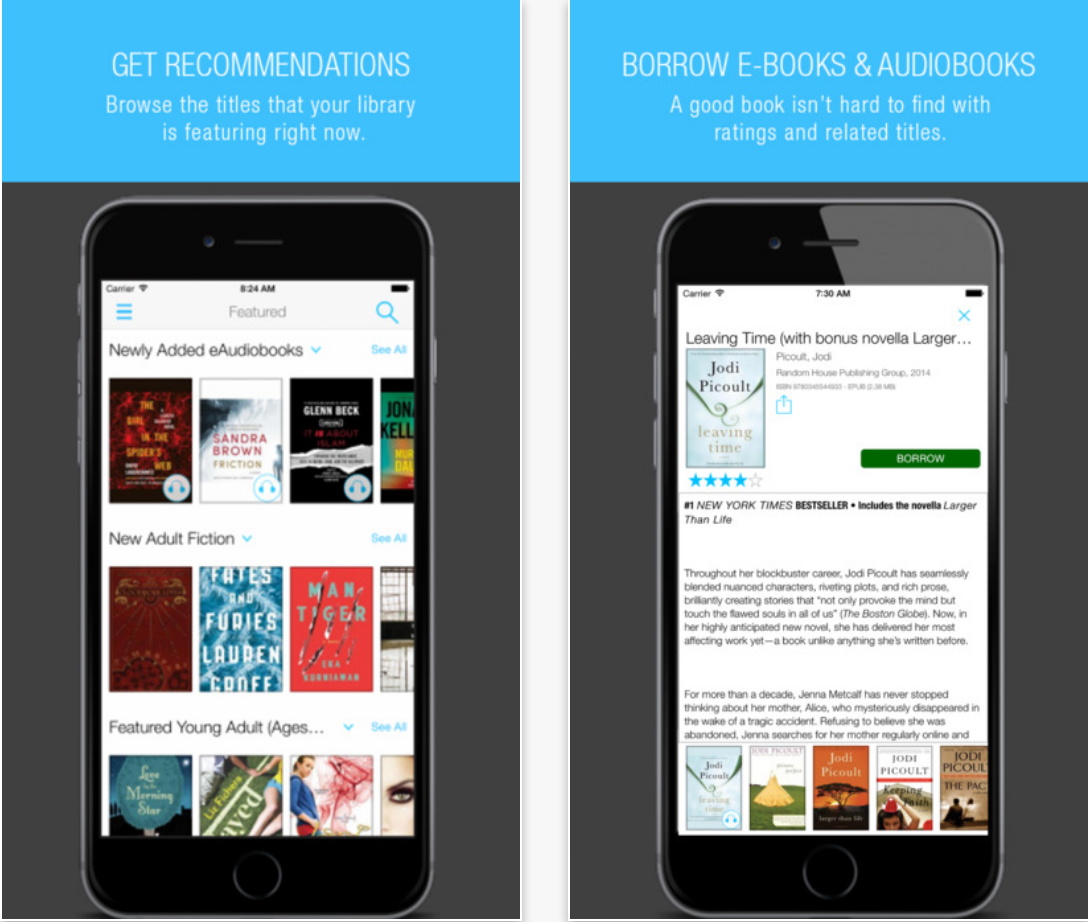
cloudLibrary

cloudLibrary

cloudLibrary is a cross-device library that keeps your whole library in sync. The system will automatically remember which page you left a title on, allowing you to pick up that great novel from where you left-off.

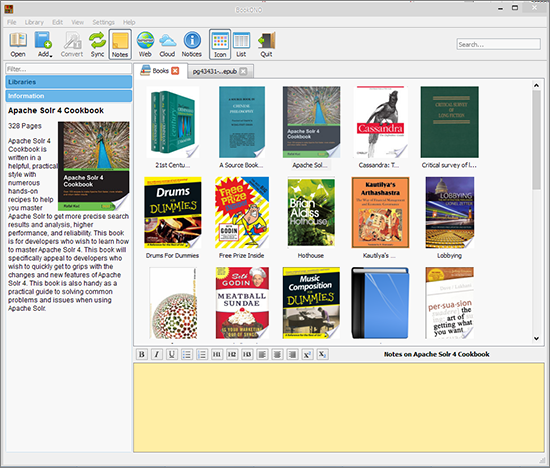
BookONO

BookONO

This is an interesting app, because it isn’t a manager in and of itself. It is actually meant to be an addition to Calibre, to make it more intuitive and follow by a different design scheme. So while it will run on its own, it is meant to compliment that app. Which brings us to…

Calibre

Calibre

The most popular ebook manager on the web, Calibre has many different functions. It manages your library, converts to other formats, syncs ereader and mobile devices, downloads news from the web, creates a full ebook viewer and gives you a direct route to your content. You can do more with this one app than you can with most combined.

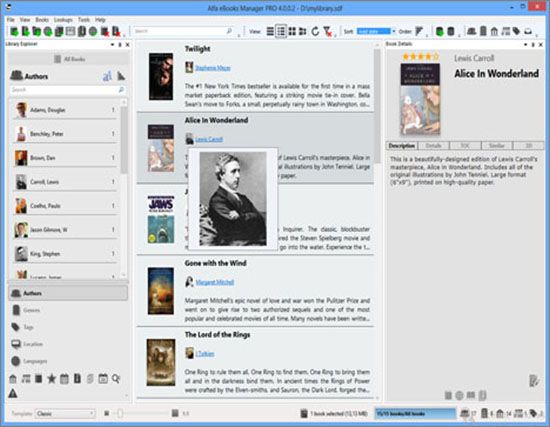
Alfa

Alfa

If you want something that will simply organize your ebook library, you might be better suited to Alfa. It lets you quickly and easily organize your collections into a single library with a user friendly and clean interface. Customize the look, including making it look like a physical bookshelf. Add tags, rename files, put in descriptions and make custom fields. Scan your computer for ebooks and other literary files. Sync up with different sites like Amazon. It is pretty straight forward.

AllMyBooks

AllMyBooks

I have never used this one personally, but I have heard a couple of people say they have. It is another organization program, but it lets you customize it more than some others. Especially when it comes to the look of the interface. You can also easily share book collections with friends, and send it through email or export it directly to various devices.

Bonus tips and resources:

  • There’s also Goodreads (explained here) but it’s more for fiction reading and I am more focused on educational reference guides today!
  • You can create your own library with non-eBook specific software like Owncloud.org. You an even pick your own cloud hosting here.

Do you know of any good ebook management tools and reading hacks? Let us know in the comments

Image source

Filed Under: Idea Bank

Persuasive writing taps into emotional responses

July 20, 2017 by Rosemary

Don’t be afraid to use emotional punch to make your writing more persuasive.

Persuasive writing uses words that evoke a gut-level response from the reader, that paint a time and place with specificity.

The next time you open your laptop to start writing, think about the emotional state you want your reader to reach.

  • If you’re writing website copy, make them curious enough to click some links.
  • If you’re writing a novel, inspire love (or hatred) for your main character.
  • If you’re writing a business blog post, get your readers into a state of inspired energy so they’ll be acting on your advice.

You learned a lot of cool words when you were in school. Remember Barron’s vocabulary tests? (No? Just me?)

However, don’t be the guy who lobs big words into his writing just to get an ego boost (look how erudite I am!). Be the guy who chooses precise words with intent.

Examples of emotion words include: cheerful, intrigued, confident, tenacious, and liberated. Scientists have even come up with new words to describe very specific emotional states. Could you find a way to weave a little “pronoia” into your story? Remember that it’s not about necessarily using those emotion words…it’s more about eliciting that feeling from your reader.

If you typically go straight from blog draft to “publish” button, consider taking an editorial pause.

Re-read your article, and look for ways you can grab the reader by the lapels, starting with your headline.

Consider the words you’re deploying.

Consider the structure of your story.

Consider surprise.

Your writing will stand out from the crowd if you find the courage to write with emotion.


Featured image via: Alice Achterhof

Filed Under: Writing

8 Key Traits of Fantastic Project Managers

July 15, 2017 by Thomas

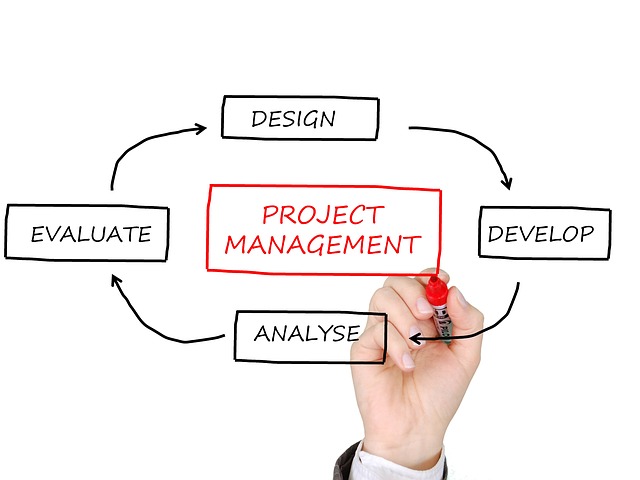
project-management-2061635_640The key to successful project portfolio management revolves around dynamic project managers.

The pivotal role of the project manager is to plan and execute a project from start to finish, overseeing (and motivating!) a team of people in the meantime to set all the pieces in motion at the right time.

Successful project managers are a rare breed.

If you’re curious about making a career move to project management or you are trying to pick out the best match from a slew of candidates, these 8 key traits set the good project managers apart from the lousy:

  1. The Ability to Delegate. Good project managers know that their role is to manage, not do, the project. The project manager should have a high-level overview of the project and the tasks that need to be accomplished in order to achieve the end goal. Then, he or she should delegate those tasks to the best employee for the job.
  2. Motivational and Coaching Skills. A poor project manager might get frustrated after delegating tasks and seeing that the work has been done substandard. Such a project manager might say, “Never mind, I’ll just do it myself!” But in the long run, this strategy will backfire over and over again. The same problem will crop up until the project manager coaches the employee(s) in how to do the work to meet expectations. Good project managers recognize weak areas and bolster their employees to help them grow, not tear them down for their honest mistakes.
  3. Enthusiasm for the Project. Enthusiasm is contagious, and a positive attitude has to start with the project manager. If the manager is bored with the project, the employees will be too. If, on the other hand, the manager exudes optimism and fully supports the work of his or her team, then employee satisfaction is more likely to be high.
  4. Excellent Communication Skills. There’s no room for a wishy-washy or vague project manager in businesses that value efficiency. Managers need to communicate well not only with the employees they manage, but also the higher-ups. Frequent and very specific communication is key. Action items should have clear due-dates and assignees, for example, and negative feedback should be delivered with tact but never avoided altogether.
  5. A Knack for Organization. This is where a project portfolio management tool can make all the difference. When there are multiple ideas and projects that require attention, project managers need to know what’s happening at all times. Even the most focused and organized individual can lose track of important information. Successful project portfolio management hinges on a dynamic organizational system and an ability to use such a tool to its maximum potential.
  6. The Ability to Stay Level-Headed. When conflicts or problems inevitably arise, it falls to the project manager to work out a solution. Knee-jerk reactions have no place in the meeting room. A level-headed response to challenges helps keep projects moving ahead while also maintaining employee morale.
  7. Persistence and Perseverance. As the saying goes, “When the going gets tough, the tough get going!” A project manager should be the last person to back down to a challenge. When emails are ignored, the manager should pick up the phone or arrange to speak in person. When product testing feedback is negative, a solution-oriented mindset is necessary to revitalize the project. In short, a good project manager naturally has a “never say die” attitude.
  8. The Ability to Creatively Problem Solve. A persistent and persevering person is also a problem solver. When a bump occurs in the project’s original road map, the project manager smoothes it out. It does not matter if this problem relates to funding, human resources or any other aspect of the project; the manager’s mission is to see the project to completion (and to uphold the highest standards possible).

Being surprisingly hard to come by, successful project managers are worth their weight in gold.

They have a track record of high-quality projects on their roster and are respected by the people who work with them—both above and below them on the corporate ladder.

If you’re looking to promote a current employee to the position of project manager, their leadership skills may have already bubbled up to the surface; if not, look for these 8 traits to pick a great candidate.

Photo credit: Pixabay

Filed Under: Business Life, Leadership Tagged With: business, leadership, project manager

The Value of Learning to Read Between the Lines in Business

July 13, 2017 by Guest Author

(Updated in 2020)

By Kayla Matthews

The ability to “read between the lines” can be extraordinarily valuable in business. The skill can help distinguish what people actually want, whether it’s their boss or a client, resulting in new opportunities for themselves and their business.

Critical analysis is valued in fields like music and writing, with seemingly simple lyrics or written words being scrutinized with the intent to see beneath the surface. Ernest Hemingway’s implementation of his “iceberg theory,” relaying often seemingly straightforward content with an intent to have the reader discover and expose the deeper themes, is a testament to the power of such depth.

Critical analysis of media has made it the norm to read subtext when it comes to art; however, there are those in business who also recognize the importance of reading between the lines in the workplace. One of the most successful entrepreneurs in the world, Richard Branson, said as much in a Business Insider op-ed:

“Paying close attention to not just what someone says but the way in which they say it can help you to read between the lines — a place where the real story is often dramatically different to what the casual listener might understand is being said on the lines.”

Regard the Many Aspects of Communication

Although it may be difficult to read between the lines in a conversation between two androids, human beings express emotions and intent in ways beyond the content of their words. In business, being aware of various aspects of communication can help you properly read between the lines.

Body language is a huge element here. Facial expressions, word emphasis and other nonverbal cues can place a different meaning on words.

If someone is relaying a business plan to you with a lack of enthusiasm and gesturing, it’s possible they aren’t as fond of the plan as they’re letting on, but they may be too wary of retreating on their own idea. In this case, offering a new idea without outwardly criticizing the old idea is a great way to interact and read between the lines.

The Value of Personal Connection

Any business can assemble a well-worded statement that lauds fellow employees and shareholders. If this message isn’t conveyed with passion and enthusiasm, though, it may come across as more going through the rounds. In the op-ed referenced above, Branson notes an occasion where a British Airways chairman was addressing the topic of low-level employees’ misdemeanors: “The way he looked away from the camera as he said it made me seriously question the veracity of his statement.”

Especially for successful entrepreneurs like Branson, who likely experience many disingenuous people who feign enthusiasm for personal gain, reading between the lines is an excellent tactic to go beyond the PR-speak. Body language and enthusiasm can provide relevant subtext regarding the veracity of the statement, whether it’s just lip service or something more genuine.

People Love Listeners

In the business world, people are often jumping over one another to get their word in. They want to have the best idea, or at least show their boss they’re contributing something worthwhile. However, in desperately trying to speak, many businesspeople neglect the importance of listening.

Think about how you would feel in a meeting where someone monopolized the whole conversation by talking about their own ideas. Even if the ideas had real merit, you’d probably feel ignored. If the person you’re speaking to feels more like a sounding board, as opposed to an actual participant, it’s unlikely they’ll look upon you or your content with much regard.

The Power of Follow-Up Questions

An especially useful perk of listening more often is that you can come up with relevant follow-up questions, which informs the speaker you’re listening attentively and provides you the opportunity to explore potential subtext. If someone seems like they’re at a loss for being able to answer basic, relevant questions, their initial delivery will seem more like generic PR-speak. However, if they enthusiastically answer off-the- cuff questions with depth, it provides an effective oomph to the topic at hand regarding the speaker’s authority and passion.

The Socratic method of participatory dialogue is an outstanding way to build upon ideas, with various people’s creativity and knowledge contributing to greater understanding among all involved parties.

However, it’s impossible to replicate the Socratic method in full if someone is failing to listen, which will make it difficult to ask relevant follow-up questions that provide clarification of the content, as well as the person’s authority on the subject.

Proofread Emails, Twice

Even if you add emoticons in an attempt to show levity in an email, it can be very difficult to relay tone. “I’m looping Bill in” can read more like “This is Bill’s problem now.” Similarly, sending an email at midnight can show over-commitment. Although it’s impossible to avoid email tone miscommunication entirely, paying close attention to tone and aspects like the time you’re sending it out can help the message be delivered as intended: without the subtext of being annoyed or overly fatigued.

Especially for highly communicative positions like project managers and HR reps that rely on email and chat often, proofreading your messages not only for content but also for tone can prevent unnecessary conflict.

How, when and why you interact with others can provide extensive subtext that can form biases, either good or bad. To reduce mistaken subtext and nurture healthier business relationships, it’s important to be very mindful of your body language and tone, as well as considering others’.

About the Author: Kayla Matthews writes about communication and workplace productivity on her blog, Productivity Theory. Her work has also appeared on Talent Culture, MakeUseOf, The Muse and Fast Company.

Photo by Christin Hume on Unsplash

Filed Under: Business Life Tagged With: read between the lines, reading between the lines

4 Keys to a Better Employment Search

July 12, 2017 by Thomas

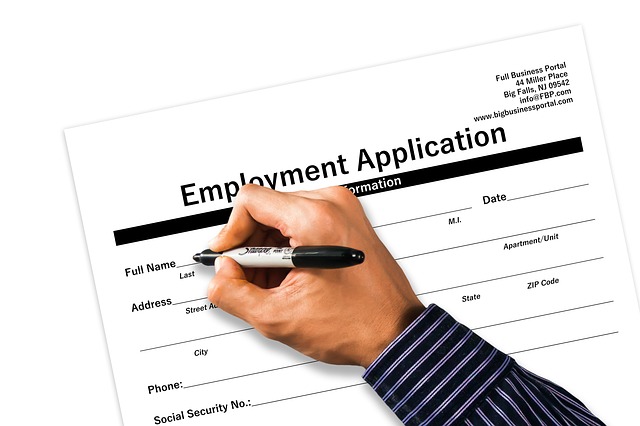
application-1915345_640Having trouble locating the job you want? If the answer is yes, you are not alone.

For millions, the thought of finding the ideal employment opportunity can be frustrating.

As an example, if desperate to pay your bills, you are more than likely going to take the first position out there. In doing so, you may find yourself stuck in a job that is both stressful and frustrating. You could also end up in a situation where boredom sets in. As that happens, you could find it impacting your job performance.

If your employment search is coming up empty, what options are on the table moving forward?

Know Where the Work is

For starters, your job search may be teetering on the edge because you’re looking in all the wrong places.

For instance, are you following the right employment and job market info in your search? If not, you are less likely to locate the ideal job situation.

Keep in mind there are countless online and offline services out there to educate you on where the jobs are. With that information in-hand, you are in a better position to nab the job you want.

With that in mind, take these four keys to heart:

  1. Attitude

First, a positive attitude is a necessity when search for new employment.

If you go into the process with a lackluster attitude, the results tend not to go your way. Be sure to stay positive throughout the experience. Yes, there are going to oftentimes be some down points, but keep your ultimate goal in mind.

You also want to show off that positive attitude when going on interviews (see more below). If a prospective employer sees you are not all that interested in the position, it more times than not will show.

  1. Personality

Everyone has their share of bad days from time to time.

With that in mind, it is crucial that your real personality shines through when you interview for a job. Go into each interview with excitement and a desire to show the interviewer that you want to work for them.

Unfortunately, too many people show up at interviews with less than stellar actions. From little interest to having not researched the company (see more below), they fall flat.

Always remember that you should never burn bridges on an interview.

Even if you do not get the position, thank your interviewer for taking time out of their schedule to meet with you.

You might very well discover that a future position with the company can come your way. This is because of a solid interview you had the first time around, yet did not get the position.

  1. Research

While you are not taking a quiz in high school, a job interview is a test or sorts. As a result, you need to have done your homework on the company and what it does.

As an example, how silly would you look if you went into an interview and did not understand the following?

  • What the company does
  • What are the duties of the person they will hire for the job opening?
  • How long the company has been around

Always be sure to read up on any company you’re going to interview with.

By being knowledgeable about the company and the opening, you improve your odds.

  1. Determination

There is a good chance you’re not always going to get the job you want the first time around. With that in mind, will you stay determined to keep shooting for your goal?

With countless job seekers, you have to remember that there are only so many positions one can fill. With that being the case, you’re not guaranteed anything.

For instance, what if you want a job with a certain company and you interview, yet they hire someone else? Do you write that business off moving forward?

Remember, there is always the chance the person they hired won’t work out or will go elsewhere sooner than later. By staying engaged with that company, you could end up working there.

Ways to go about this include:

  • Following their job boards
  • Dropping the H.R. person an occasional email to see if they still have your resume on file
  • Improving your work skills so you are an even better option the next time around when they have an opening

The employment search can be a challenge.

That said are you up to the task?

Photo credit: Pixabay

About the Author: Dave Thomas writes about business topics on the web.

Filed Under: Business Life, Personal Development Tagged With: business, employment, job-search, work

  • « Previous Page
  • 1
  • …
  • 33
  • 34
  • 35
  • 36
  • 37
  • …
  • 1050
  • Next Page »

Recently Updated Posts

The Creator’s Edge: How Bloggers and Influencers Can Master Dropshipping

Is Your Brand Fan Friendly?

How to Improve Your Freelancing Productivity

How to Leverage Live Streaming for Content Marketing

10 Key Customer Experience Design Factors to Consider

How to Use a Lead Generation Item on Facebook


From Liz Strauss & GeniusShared Press

  • What IS an SOB?!
  • SOB A-Z Directory
  • Letting Liz Be

© 2025 ME Strauss & GeniusShared