Successful Blog

  • Home
  • Community
  • About
  • Author Guidelines
  • Liz’s Book
  • Stay Tuned

The Whuffie Factor, Five Years Later – Interview with Tara Hunt

May 29, 2014 by Rosemary

Last week, in my Internet travels, I stumbled across a reference to Whuffie.

No, Whuffie is not a cleaning product.

The Whuffie Factor, by Tara Hunt, was published in April 2009, when we were all talking about “Web 2.0” and Captain “Sully” Sullenberger. If you didn’t pick up this seminal book five years ago, you should go grab a copy now. Its advice is still very relevant today. Among other things, Tara predicted the rise of subscription music services, content marketing, and many of the reputation-building ideas that are now canon.

Tara Hunt hasn’t relaxed over the last few years, moving from co-founding the groundbreaking Citizen Agency to her current position as Social Digital Leader at MSLGROUP, and helping her clients build relationships along the way. As a long-time participant and builder of online communities, Tara exemplifies the principles she advocates…she walks the walk. When I randomly reached out via Twitter, she was right there and ready to share her thoughts about how things have evolved over the last five years.
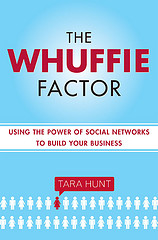
The Whuffie Factor

It’s been five years since you wrote The Whuffie Factor. What do you think has been the biggest business shift during that time?

Has it already been five years?! I can’t believe how much time flies. The biggest business shift during this time has been the overall adoption of social media into the marketing mix. There are very few companies that don’t do anything at all online. The issue now is that everyone is using social media tools, but very few are actually using them truly socially. I see too many examples of companies putting the same kind of content on social networks as they would have placed in traditional media. “Here are our product benefits!” “Our product is awesome!” “You should try our product!” The medium has changed, but the strategy has not.

Do you think it’s more difficult now to build Whuffie?

The bar is definitely higher now to build Whuffie, because brands are competing with their own customers for trust and attention. In the beauty space, the amateur YouTuber has hundreds of thousands (and even millions) of subscribers who hang on their every word while the huge beauty brands with their enormous budgets are still struggling to get any engagement. They try to pay for it, but it’s fleeting. Individuals understand how to build Whuffie because every relationship is important to them – especially when they are starting out – but brands are still thinking in terms of mass market. They don’t know how to invest in one relationship at a time. They are so used to buying a large number of views. They don’t realize that those individual relationships are worth so much more in the long run than a paid view. It’s a matter of valuing the wrong metric.

That being said, the bar is still set pretty low for brands and we celebrate brands that even partially understand this. So, I guess it isn’t more difficult to build Whuffie, it’s just still a foreign concept.

Is Whuffie like Fight Club (i.e., if you have Whuffie, you don’t talk about Whuffie)?

Hah! It’s more like being cool. Cool people (and brands) don’t say they are cool. They just are. If I went around bragging that I have 50,000 followers, people would wonder how valuable that audience really is.

Online communities are a hot topic right now; are you surprised it’s taken this long for everyone to wake up to the value of community?

Yes and no. I’m surprised because it has seemed obvious to me for nearly 15 years, but I’m not surprised because I’ve worked with so many clients over the years who need to see where something is going before they are willing to invest in it. The bigger the company, the more risk-averse they are to trying ‘unproven’ techniques. They have more at stake. They have to report to shareholders and employ leagues of people who count on them to grow the company. I understand that. However, I’ve seen so many examples of companies who win time and time again because they are willing to take a leap of faith. Everyone who waits to watch the results, then jumps in are shrugged off as late adopters.

When I went back to re-read The Whuffie Factor, I expected to find a lot of material that would need to be updated or tweaked because so much has changed in five years, but it’s surprisingly evergreen advice. What would you update if you were going to publish a revised edition?

You know, that is wonderful to hear! I get tweets from people all of the time that they just finished reading TWF and got so much out of it and I usually answer, “Really?” LOL. I shouldn’t be surprised, though, because core principles are core principles and that’s why I wrote it to be more of a business philosophy/strategy book than a business tactic book. If I was to publish an updated edition, I have hundreds of new examples to underscore the basic premise that brands should be focused on building Whuffie and not likes/followers. The examples I used were tiny compared to what has happened.

Would you like to shout-out any companies or brands that are “Whuffie-rich” right now? It looks like Threadless (which you highlighted in the book) has done a great job of keeping its Whuffie going.

Threadless keeps it going because being truly social is in their DNA. There are lots of new upstarts like Dollar Shave Club, Hello Flo, Uber and AirBnB that also have social in their DNA. They aren’t afraid of it. They embrace it and gain loads of Whuffie. But there are also some bigger companies that are impressing me. Chipotle has done an amazing job of building Whuffie in a crowded fast food market. Burberry, under Angela Ahrendts took all sorts of risks as a luxury brand to become more social and digital and it paid off in winning a whole new generation of buyers. There are multiple luxury brands who are winning over new generations of buyers and seeing it pay off handsomely like Chanel, Donna Karen, and Diane von Furstenberg. On the food side, Red Bull and Oreo are killing it with their focus on engaging social content. Red Bull sees themselves as a creative content shop that happens to sell an energy drink. What the Whuffie-rich examples all have in common? They focus on the customer, not on themselves.

You predicted the rise of music subscription services (monthly fee for unlimited downloads). Are you using Rdio, Spotify, Pandora, or Beats Music yourself?

Did I? Yay me! (I know that I should remember that!) I’m using multiple services: Focus@will, Rdio, Spotify, and more. Plus, it’s moved into video. We watch everything via streamed service and haven’t had cable in eons. And for magazines, I’m using NextIssue.

I see you’re writing a report about Furry Influencers. Can pets have Whuffie?

Hahaha….yes. It seems from my research, they can have a WHOLE LOT OF WHUFFIE. It’s serious business now. These Furry Influencers are signing six-figure deals and hitting more red carpets than some of the traditional human celebrities. There is all sorts of amazing psychology behind this, but in many ways this breaks the authenticity rule. We all understand that it isn’t L’il Bub or Boo the Pomeranian who is behind the keyboard or camera phone, but we listen to them anyway. We are reeled in because we love the content (adorable animals satisfy our dopamine addiction), then we find out about pet brands from them. I subscribed to BarkBox because of Manny the Frenchie’s Instagramming his monthly box. There is actually research that cuteness can make us more indulgent. This is dangerous!

If you’d like to connect with Tara, you can find her at http://tarahunt.com or as @missrogue on Twitter.


Author’s Bio: Rosemary O’Neill is an insightful spirit who works for social strata — a top ten company to work for on the Internet . Check out the Social Strata blog. You can find Rosemary on Google+ and on Twitter as @rhogroupee

Filed Under: Interviews, Successful Blog Tagged With: bc, interview, Tara Hunt, whuffie

Put a Face to that Name! Use Images to Build your Personal Brand Online

May 27, 2014 by Rosemary

By Diana Gomez

For many small business owners, their integrity is the backbone of their enterprise. Loyal customers depend on them to reliably deliver exceptional goods and services. This personal trust is a key reason that many of these “Davids” can successfully compete with the “Goliaths.”

As more products and services are transacted online, it has become more difficult for small businesses to maintain the personal relationships that can provide a competitive edge. This is why it is so important to cultivate personal identities and relationships on the web as well.

One easy way to get started is to incorporate personal photos into your online activities. A good approach is to treat your personal profile as if it is your brand. After all, in many ways it is!

images for personal branding

Take a cue from savvy brand marketers:

• Packaging is everything: Consumer products companies spend millions of dollars to design packaging that is appealing to the customer. Make the effort to take some good photos of yourself as well. In most cases, this would be a professional, recognizable head shot. Remember, unless you happen to be a big-time wrestler, you want your image to be friendly and portray trust!

• Be Consistent: Brand marketers generally try to display their brand consistently across all products and media. The same goes for your photo. Consider using the same one in all of your on-line activities. In a way, your photo becomes an instantly recognizable brand logo in the online community.

• Protect the Brand: Many companies go to extraordinary lengths to protect their brands. You should do the same with your online identity. Be careful how your profile and photos are distributed and portrayed on the web. Monitor your online persona. Take corrective action to remove posts that aren’t “on message.”

Once you’ve defined your personal brand, it’s time to publish it. Here are a few places to start:

• If you have a Facebook or LinkedIn account, it’s likely that you have already posted a personal photo. Start by reviewing these and any other photos already on-line and consider replacing them with some that are more suitable.

• If your business has a website, you will want to personalize it with photos. This is one of the few venues where photos other than headshots may be appropriate. Just make sure that they are professional and consistent with your strategy.

• Consider adding your personal photo to your email signature. If you decide to do this, resize the photo and be selective in its use. Some recipients discourage this practice as it can add to the size of the email, but most email providers now make it easier than ever to add images.

• Some integrated phone systems such as Microsoft Lync enable you to add photos to your profile. The system will display these personal images in contacts, email, phone and IM communications.

• By adding a photo to your Google+ profile, it will be accessible from other Google offerings such as Authorship or Hangouts. These applications will link to your profile and further expand its reach. Your photo can even be displayed in Google search results.

• Blogging tools such as WordPress can incorporate your photo. This same image will then be displayed in your posts on all WordPress Blogs. While many people use avatars for blog posts, consider adding your headshot instead.

• Of course, you can also add a photo to your profile on a multitude of individual sites such as Twitter, Skype and Yelp. Be sure to take advantage of these whenever you can.

The old adage that “a picture is worth a thousand words” is just as true today as it was a hundred years ago. Incorporating personal photos into your online activities will help you build and maintain valuable relationships with your customers. Goliath won’t have a chance!

Author’s Bio: Diana Gomez is the Marketing Coordinator at Lyoness America, where she is instrumental in the implementation of marketing and social media strategies for USA and Canada. Lyoness is an international shopping community and loyalty rewards program, where businesses and consumers benefit with free membership and money back with every purchase.

Photo Credit: Brian Auer via Compfight cc

Filed Under: Content, Personal Branding, Successful Blog Tagged With: bc, images, personal-branding

How Amazon Became the “Default”

May 22, 2014 by Rosemary

When I need to buy something, whether it’s a set of s’mores skewers or the latest bestseller, I click on over to Amazon.com first.

It’s taken me a while to recognize this behavior, because I was doing it very unconsciously.

Amazon.com logo

How did this happen?

Amazon.com is my “default” place to buy things. They have simply removed every trace of friction from the shopping experience. To the point that other factors like price and diversity of selection take a back seat.

You may not have the resources of Amazon, but you should aspire to be the “default” provider of whatever service or product you offer.

Remove Purchase Friction:

Answer Questions

Amazon has to sell you things that you can’t feel or touch, so it has to provide you with every single bit of information you might want before buying. Consider the lessons of Marcus Sheridan, “The Sales Lion,” who saved his pool company (and built an empire) by answering every single question right on his website.

Establish Trust

As an entrepreneur, you may not have a recognized name. But Amazon started somewhere too. They incorporated a ratings system for their shopkeeper program so that you can clearly see reputation as a buyer. Look for ways to build trust with your prospects and customers– whether it’s social proof, testimonials, or being maniacal about follow-through.

Remember Your Customers

One reason why Amazon is the default is that they store my credit card information, and they remember everything I’ve bought since the site went live. I hate having to go find my purse, pull out my credit card, and type in those numbers. Have you thought about ways you can streamline invoicing for your customers? Do you offer different options for billing, discounts for annual payments? When your customer contacts you, can you pull up a record of their purchase history?

Offer White Glove Delivery

Recent news items about drones, food lockers, and other innovations coming from Amazon make it obvious that they are very focused on delivering as fast as possible. How magical is it that you can, with one click, have a book delivered to your device in seconds? What parts of your product or service can you deliver for instant gratification? Perhaps you can make sure that the customer receives some component of the service immediately, even if the whole transaction can’t be instantaneous.

Be Proactive

Amazon will sometimes offer me recommendations, remind me of family birthdays, and provide other proactive information as I need it. When you see an opportunity to add value to your customers, do it! If you see an article that is directly relevant to your prospect’s challenges, go ahead and send it. Be proactive and be useful.

Reaching default status is the Holy Grail of sales. Think about it…when was the last time you switched toothpaste brands? Do you get all confused when your favorite product changes its packaging?

All of the key points above relate to one thing–considering the customer’s thought process and experience first.

Focus on removing any trace of friction from the customer’s buying process, and you might earn a spot as the “go-to” provider.

Author’s Bio: Rosemary O’Neill is an insightful spirit who works for social strata — a top ten company to work for on the Internet . Check out the Social Strata blog. You can find Rosemary on Google+ and on Twitter as @rhogroupee

Filed Under: Marketing /Sales / Social Media, Successful Blog Tagged With: bc, marketing, purchasing, Shopping, strategy

Head Smacking Realities: Why Blogging Isn’t Doing a Thing for Your Business

May 22, 2014 by Rosemary

By Tracy Vides

“Have a blog and you’ll start getting inbound leads.

“Blogging helps you gain traction and develop a community.

Companies that have blogs make more sales than those that don’’t have one.

If you did hear one (or all) of those statements but are often wondering why nothing seems to be happening, you aren’t alone. There are millions of blogs that do nothing but exist.

Corporate or business blogging is even more difficult as it’’s like asking businesses to set aside resources to make it happen (compared to individual bloggers who are intrinsically motivated). Nothing happens without a reason and there are plenty of reasons why your blogging efforts aren’’t doing anything to meet your goals yet. Here are some of them:

No plans, no gains

Remember those days when everyone used to carry around business cards? You’d get yourself a set of cards too. Then, everyone and their neighbor got themselves a website and a bunch of social accounts and followed suit. Blogging, more or less, seems to have been bitten by the same bug. You blog because blogging apparently is the ““baby steps” of inbound marketing.

Starting to do something is good, and I won’’t bite you for that. Not having a plan in the sense of not knowing why you blog for your business in the first place is a sore wound.

Do you blog purely to drive sales? Or do you blog to become a thought leader? Do you blog to proliferate your brand name or do you engage in all-out blogging efforts? (Hope you end up getting inspired by How Jon Morrow Writes, as narrated by Demian Farnworth of Copyblogger.)

Figure out why you think you have to blog in the first place. What’’s all this trouble for? Write it down and think about it over a cup of coffee.

You pay attention to worthless stuff

Driven by the incredible amount of information available on digital marketing (most of it is farce, unjustifiable, or maybe just hype), your mind starts to nibble at things that don’’t matter at all: all the drive for ““SEO domination”” lets you believe that keywords should guide your content creation.

The truth is that keywords won’’t matter because the bots don’t buy; people do. All that time spent on social media takes your time away from creating awesome posts. Your blogs are way too short or perhaps way too long. Instead of thinking about your readers, you worry about Meta information, alt text, and backlinks.

There are many of those little gears that have to click in place to make your inbound marketing strategy work, starting with your blog.

Are you doing it right?

It’s not about words, links, or technobabble; it’’s about people.

Bloggers often forget that they are writing for people. Companies are even quicker when it comes to forgetting that blogging is an effort to promote brands, establish credibility, engage with potential and current customers.

David Silverman, author of Typo, and professor of business writing at Harvard, gives this test to his students:

Can you rewrite this bunch of babble into a word or two?

“It is the opinion of the group assembled for the purpose of determining a probability of the likelihood of the meteorological-related results and outcome for the period encompassing the next working day that the odds of precipitation in the near-term are positive and reasonably expected.

Businesses just worry about tools used, platforms that blogs should be based on, and the kind of voice, words, or personality that they expect blog posts to express. Of course, all this counts; individuality does matter, and these are what make blogs different from academic articles. Yet, you shouldn’’t forget that you are writing for people. Relationships still matter. You’ll need to get off the screen and meet actual people. You should be able to sell at a flea market before you can sell online.

Self-centered content strategy

First, your content strategy is self-centered. All that you blog about is how great that vacation has been, how life changing your moving to paradise was, how Venture Capitalists are now trying to break down the doors just so that they can invest, and how you grew your blog from 0 to 67,987 subscribers in 3 months.

What are some of the best examples of narcissistic and self-centered blogs, you ask? Go pick any of those nomadic vagabonds who try to sell you location independence and travel while working. It’s not to say that there’’s no value from such blogs. But more often than not, there’’s the ““me syndrome” creeping in with ““Where I Was Last Week”” and ““Exotic Destinations I’’ve Been To.”

Stand back for a moment. No one cares about you. Your customers — you know, the ones reading your blog — wouldn’t care if you just signed up a million dollar deal, bought another company, merged with a bigger one, or if you now float on $4 billion of excess cash balance in the bank.

All that your customers care about is what you can do for them. How many of your blog posts talk about your customers really? Can you actually count the number of blog posts that share something that doesn’t have anything to do with you, your business, the brand, the products or services?

Crappy content

Your content qualifies as crappy if there’’s no value given to your readers by the end of the post. There’s nothing it for them to ruminate, chew dry bread on, or ponder about. Your blog posts have nothing new to say.

I will repeat that. Your content is dry, sounds like a term paper, and makes readers scroll faster than ever. They won’’t read most of it they’’ll just scroll through and escape. And you’’ll never see them again!

Stop wasting time with blogs that don’’t make an impact. Stop hiding behind words. Show up with some guts and talk to your customers like they were your best friends. Be afraid to own up, accept your mistakes, speak your heart, and get bolder.

Great companies go to the extent of admitting their faux pas. Online marketing firm SEER Interactive admitted screwing up in their link building methods. AirBnB’’s Brian Chesky wrote up a self-deprecating post to own up the apparent horror that a customer had to face.

Doing this takes guts. Can you do it too?

Blogging needs you to post awesomeness regularly. It requires you to show up and be real. It demands that you use the fact that you are human to get other humans to buy from you, believe you, or accept your point of view. It requires you to multi-task. Blogging requires your belief to be brought to fruition by your determination and will.

As long as you produce blog posts because you should, your customers or readers will make it a point to leave because they can.

Author’s Bio: Tracy Vides is a content creator and marketer, who loves to blog about subjects as diverse as fashion, technology, and finance. She’s always raring to have a discussion on startups and entrepreneurship. Say “Hi” to her on Twitter @TracyVides. You can also find her on G+ at gplus.to/TracyVides.

Filed Under: Blog Basics, Successful Blog, Writing Tagged With: bc, blogging, inbound marketing, Writing

Scaling Content Delivery to Fit Your Bandwidth

May 20, 2014 by Rosemary

By Lisa D. Jenkins

I wasn’t here last week. I know I promised more about visual content but something else has been wandering through my brain, and it’s taken me a bit by surprise. Because the connection is so weird.

Two months ago, I agreed to give CrossFit a 3 month try because The Husband, who loves CrossFit, has graciously embraced so many things I love – live Shakespeare, my quirky clothing choices, BBC television, wine, the crazy things I do to support the causes I believe in … he’s quite the sport.

Crossfit training

So on April 1, off to Arbor CrossFit I went with the goal of participating twice a week. In 2 months, I’ve been a total 4 times and here’s why: I refused to scale the workouts and I paid for it in over-exertion and injuries that equated to lost time. It’s entirely my fault.

I’m still not certain the workouts are for me, but I’ll tell you this: the culture at Arbor CrossFit has me committed to doing a full 3 months. Every person in that box is supportive, inclusive and helpful. They help everyone scale, because they want everyone to succeed. If your ego just won’t listen they’ll let you fail on your own terms but step up right beside you the second you need a helping hand to get back on track.

It occurred to me that I recognized something in this – and there was Liz Strauss whispering to my brain, “Surround yourself with people who won’t let you fail.”

If you’re in business, you can’t afford not to have a group of people like this. They can’t, won’t and shouldn’t do the work for you, but they can help you form an achievable plan and make the right choices. They’ll tell you when the load might be too big. They’ll help you figure out how to scale until you can carry that load. They’ll nudge you when you need to step into something bigger. I have that and it’s invaluable.

If you’re like me, the thought of blogging is rough. And when you read that ‘everyone’ says you should be writing on your blog every day, you get worried. Worried to the point that you never write a word, even if you have something valuable to say, because the thought of failing to publish regularly is paralyzing.

‘Everyone’ is wrong. In case you don’t have someone in your corner yet, I’m taking today to invite you to join me in scaling the weight of content delivery to something that’s manageable for you, so you can get started or re-start.

Try this: write a single post. How long did that take you, from start to finish? I mean to the point where it’s fully polished, proofed and publishable – because grammar and punctuation matter just as much as the image you include. Think about how often you can take that much time to write. Is it once a day? Bully for you! Is it once a week? Also amazing. If it’s twice a month, I’m right here cheering you loud and proud because that’s what you can commit to. Don’t take on a commitment you can’t fill. Publish a few articles consistently and over time you’ll know when you’re ready to bump up the blog delivery.

And if actual writing isn’t your thing? Find another way to tell others about what you do. Share how-to’s on SlideShare, replace long text reports with infographics that share key data findings, and if talking is easier for you, record podcasts instead of publishing articles. Communication isn’t a cookie-cutter proposition – modify the tools you’re comfortable with to deliver your message. (This by the way is a helpful bit of advice I received from my own core group – #Table2!)

I can’t tell you how I got from CrossFit to content – my brain is a weird and mostly wonderful place like that. But I can tell you this: I didn’t name my own sadly neglected blog the Occasional and Erratic Blog for nothing. I’m afraid to commit to writing. Publishing here twice a month is a serious stretch for me.

Now it’s your turn. Will scaling help you publish something online more often? Ready to commit? Tell me what you’re aiming for and every time you hit publish, come back here and share the link. I’ll check it out and give you a virtual high-five, a clap of the hands or anything reasonable you request. Let’s do this!

Author’s Bio: Lisa D. Jenkins is a Public Relations professional specializing in Social and Digital Communications for businesses. She has over a decade of experience and work most often with destination organizations or businesses in the travel and tourism industry in the Pacific Northwest. Connect with her on Google+

Photo Credit: Joint Base Elmendorf-Richardson via Compfight cc

Filed Under: Content, Successful Blog, Writing Tagged With: bc, Content, Writing

Good People, Good Ideas

May 16, 2014 by Rosemary

“Good people, good ideas.”

That’s how Liz summed up the community here at Successful Blog the last time we chatted.

sky with clouds and bubbles

It rings true for me.

Every time I encounter someone who has attended a SOBCon event, is part of this blog community, or resonates with Liz’s message, I am impressed by their intelligence, their generosity, and their spirit of curiosity.

Those traits make you excellent sharers.

With that in mind, we are actively seeking community members who would like to apply to be a weekly columnist on the site.

Successful Blog is a community for people who are serious about building a business and want practical, usable advice to get things done.

We’re for the “doers,” not the readers.

Columnist Requirements

  • Ability to produce one original, exclusive, well written article per week.
  • Long-term commitment (at least 6 months, preferably one year).
  • A passion for, and expertise in, your subject area.

Applicants will go through an interview process.

Benefits To You

  • Grow your online visibility with a huge audience.
  • Hone your writing voice and exercise your writing muscles.
  • Share your expertise.
  • Make lifelong connections with the Successful Blog community.

If you would like to be considered, please email Rosemary O’Neill (rosemary.oneill@gmail.com) and include the following:

  • Links to published writing examples (or your blog if you have one)
  • Social media profile links
  • Desired topic/category (major categories we cover include Content, Design, Leadership, Marketing, and Personal Development – check out our subcategories here in the sidebar)
  • 5 article ideas within that category

We look forward to adding your voice to Successful Blog!

Photo Credit: Nina Matthews Photography via Compfight cc

Filed Under: Successful Blog, Writing Tagged With: bc, blogging, Writing

  • « Previous Page
  • 1
  • …
  • 32
  • 33
  • 34
  • 35
  • 36
  • …
  • 84
  • Next Page »

Recently Updated Posts

Is Your Brand Fan Friendly?

How to Improve Your Freelancing Productivity

How to Leverage Live Streaming for Content Marketing

10 Key Customer Experience Design Factors to Consider

How to Use a Lead Generation Item on Facebook

How to Become a Better Storyteller


From Liz Strauss & GeniusShared Press

  • What IS an SOB?!
  • SOB A-Z Directory
  • Letting Liz Be

© 2025 ME Strauss & GeniusShared