
JOIN US TONIGHT AT 7PM
The Birds, the Flops, and the Foolish Folks
And the WKRP Turkey Drop episode
Oh, and bring example links.
The rules are simple — be nice.
Do be nice. 🙂
–ME “Liz” Strauss
Related article
What is Tuesday Open Comment Night?
And the WKRP Turkey Drop episode
Oh, and bring example links.
Do be nice. 🙂
–ME “Liz” Strauss
Related article
What is Tuesday Open Comment Night?
Our SOBCon friend and colleague Phil Gerbyshak alerts us that we have lost one of the members of our community, Susan Quandt:
Last Tuesday one of my dear friends and mentors was taken too quickly from this world; Susan Quandt was killed in a car accident just outside the city of Milwaukee. Susan was one of those people who could connect with you immediately, with a smile, a knowing glance, and always a hug. She lived her life abundantly, always sharing whatever she had with whomever crossed her path.
I was blessed to have Susan in my life for but a short time, as I met her at last year’s 800 CEO Read Author Pow-Wow. We knew immediately we wanted to work on some big stuff together, and she invited me to dinner, and to meet her family at her homes in Chicago and in Port Washington.
Phil shares some of the things that he learned from Susan in the brief time that he knew her in 5 Lessons [Link to Phil’s article], please read the article.
Our hearts and prayers are with all of Susan’s family and friends.

about responsible social media.
Sounds like safe sex, doesn’t it? I know you can get past that.
What I’ve been thinking about is a conversation I had with a dear friend, Jon Swanson, about 3 weeks ago. I had called Jon because I didn’t understand changes I saw happening among my friends. Jon, in his wisdom, pointed out something that keeps returning to me still.
What Jon said recalled this image to my mind and sounded something like this …
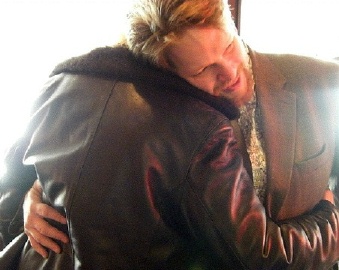
What makes social media business different is it’s twofold nature. We have to manage for the business and the brand, but we can’t lose sight that we make personal relationships with real human beings.
That’s the difference, isn’t it?
Most customer relationships stay in the head. Good ones make us feel smart, but the personal touch of a social media champion gets us to invest with more than our thoughts. Isn’t that what makes social media so powerful, so collaborative? Isn’t that what gets us to think we can change the world or at least how business works?
Folks looking on might think that starting out in social media is the hardest part.
But the longer I watch the more I know that holding dear the investments that people make in us as we grow is the tough nut to crack. Anyone who’s gone from ten friends to a hundred knows that time doesn’t stretch to accommodate the same level of giving back.
It’s the choices we make as we grow that determine whether social media stays centered on personal relationships or turns into a “Hollywood” sort of community of friends.
Real people understand that as we grow we have less time to sit with them. Who doesn’t get that? Who doesn’t wish the best for their friends? They want to enjoy the ride with us, not be left behind and wondering where we went.
Responsible social media respects that real people are investing back one at time.
Real people want to know that a good “friend” doesn’t change when “he, she, or the business” gets bigger than life. It’s not hard to show that. Just keep acting the same to real individuals one at a time and core fans will know that when it’s their turn again, you’ll still be there for them.
The key understanding is that real people come in ones.
Could you add your ideas about responsible social media and would you pass this on, please?

–ME “Liz” Strauss
Image: WendyPiersall photo: SOBCon08
Want to be successful in social media? Work with Liz.
After reading this post from Jason Falls – about the ROI of Social Media – I have been thinking a lot about a quote from Jeffrey Gitomer:
“Most people have powerful connections. Very few people have harnessed the power of their connections.”
It occurs to me that there is a lot more to a Strategic Alliance than simply promoting yourself. In fact, Gitomer gives pages and pages of reasons to do it in his Little Black Book of Connections. I would like to suggest that the strongest reason for creating strategic alliances is that you can build your business because of your them, rather than with your strategic alliances.
Just as with all of your other promotional efforts, networking is a way to establish yourself as an authority – the “go-to-person” in your field. Establishing your credibility and creating an emotional bank account with the people that you meet are important tools for building your business, not on the backs of those that you meet, but through their own word of mouth.
The real benefits of creating a network of powerful friends and an alliance of business-people are many. Here are just a few:
What do you use networking for? Which events or functions do you attend in order to interact with new people? Do you do more networking online or off? Why?
Leave a comment.
Ever had a day that seemed rockier than others?
Ever feel like everything you touched turned to stone?
Ever figured that no one would notice if you disappeared?
Ever been felt so weird that you didn’t want them to see you anyway.
I have too.
I looked for a photo to explain this feeling and found this picture of rocks.

I remembered I made a rock walk a few years ago leading up to garden behind my house. I wanted a walk that was pleasing and natural. It hunted rocks for weeks and days. Then I arranged them in the mud path for weeks, days, and hours. The last spaced needed an individual rock of weird shape and color. It took me even more weeks, days, and hours to find one that fit. When I did, whoa, it was something to see and to celebrate.
And to this day, if I ever go back to that house, it’s that rock that I’ll look for. That’s the rock that made that little four-foot path into rock art.
So now when I look out over the Internet and everyone seems shinier and more colorful than I am, I pick up a rock that a dear friend gave me. I hold it in my open hand, and I think that the universe is like a rock path, weird rocks would be missed if they disappeared.
Ever had a rocky day? It helps to hold a rock in your hand.
–ME “Liz” Strauss
Work with Liz!!

Last week Amber Nashlund wrote post about the hats a social media champion wears. Whether we’re working inside a company or independently, anyone who offers new ways to do anything knows the challenge is not meant for the faint of heart. Knowing which of Amber’s hats to wear and which skill to call on for each situation is part science and part art. That’s the expertise of a social media champion — it’s the key leadership trait of any business manager leading change.
The proverbial hats — the know how, the expertise — won’t get far with a group that doesn’t know and trust the person wearing them. I know that Amber agrees. We’ve talked about this on other projects we’re planning together.
In the early years of educational publishing, dedicated teachers wanted more authentic materials than those offered by big publishers. So they made their own tools, activities, and classroom materials. Soon other teachers noticed and asked to use them. A business was born. Teachers made products and sold them to other classroom teachers they knew. The products were handmade, bound with plastic, and copied somewhere like Kinkos.
Rough edges were a mark of authenticity. Hand drawings and low-design meant the quality was in the content. Those qualities said “A real teacher made this.” New customers knew the books were good because they knew the teachers who made them.
The best of those dedicated teacher-publishers gained experience and perspective. Some left their own classrooms to serve more classroom teachers full time. However, they found growing their business wasn’t as easy as starting their business had been.
Our dedicated teacher-publishers saw other dedicated teachers offering homemade products for individual classroom teachers. Inexperienced copycats and opportunists were selling look-alike products that made empty promises and offered bad practices. Big educational publishers began to make books for individual classroom teachers too.
Classroom teachers had trouble discriminating the value from the noise.
When their customers knew them, the “rough edges” had been a certain kind of credibility, now those same homemade values made their products look shabby. Dedicated teacher-publishers needed a new way to connect their expertise with the classroom teachers they served.
Remind you of a situation anywhere near us right now?
In the early days of blogging and social media, people learned by trial and error and then taught other people. We read their blogs or worked with them personally. Only so many sources existed. Someone new could recognize a wise teacher from a fool by seeing what the wise teachers had in common. We knew who was credible.
Then the blogopshere and the world of social networking exploded. Whole populations exist that have no contact with each other. Anyone can put on the social media hats. It’s hard to discriminate the value from the noise. We need to find new ways to connect with the people we want to serve.
When faced with the same challenge, those teacher-publishers shifted their thinking. They took their expertise out of the handmade package. They raised their production values to match the market. The successful dedicated teacher publishers made careful choices to convey their shared values with their classroom-teacher customers.
They offered the same solid expertise, the same content, in a new presentation.
In any noisy market what newcomers first encounter is presentation. Presentation is more than first impression. Presentation lays the groundwork for connection and relationship.
The way we wear the hats of a social media champion — our presentation verbally, visually, in text, in tone, in personal relationships — is a vital part of the expertise those hats represent.
A social media champion is a living presentation of his or her social media expertise.
Our presentation shows whether we understand who we’re talking to and what they value. From the choice of the photos and the type on a blog — new design in the works — to the choice of whether to wear a grunge jeans to visit a lawyer client, the way we “package” a message communicates even before our first word is offered.

I’m not thinking we should change our identity. Just the opposite. What I’m proposing is that we make our best traits visible — that we walk our talk in the following ways. I see 5 key traits of in the social media champions I most admire and so I recommend them here.
Long before they offer us a chance to speak or show off our social media hats, people evaluate our credibility. By the time we talk, they’ve already decided whether they will listen. Jason Falls says it best,
“Social media, you gotta live it.”
It takes quite a skill set — and several hats — to be a social media champion: listening, understanding, building on what went before, showing proof of success, engaging skeptics in meaningful conversation, inviting them into new ways of participation, planning action appropriate to their history, demonstrating ways that make jobs easier, more effective, and more efficient, helping keep the focus, and cheering people on when they lose the faith.
That’s why it’s a called champion, not a manager.
What traits do you see in the social media champions you trust? Who’s earned your credibility?
–ME “Liz” Strauss
Work with Liz!!