
Successful Blog

  • Home
  • Community
  • About
  • Author Guidelines
  • Liz’s Book
  • Stay Tuned

Do you need more data?

November 18, 2010 by patty

by Patty Azzarello

cooltext466496263_leadership
do-you-need-more-data

Are you implementing your strategy
or studying it?

I was working with a management team on their strategy when we came to an interesting point in the day about their business needing a game-changing initiative.

The group brainstormed for awhile, and discussed several potential game changers.  We narrowed the list to three really cool ideas.

Then came the big question…

Which is THE one? Where will this team focus and invest to create a dramatic shift in their market?

At this point in the meeting the team decided that the next step would be to take these three ideas and study them for two weeks then come back with a recommendation of which one to pursue.

Why not decide right now?

The team had entered this meeting wanting to get aligned on their strategy and come out with clear actions to implement it.  Now they were going off for more study.

I asked the question – Why not pick now?  What will you learn in two weeks that you don’t know today?  What additional data exists that will give you more insight?

The team realized that in three weeks, they probably would not learn anything materially different than what they already knew.  That’s the thing about a being a game changer.  Leaders never have all the data.

The leaders leave a trail of data behind them.

So they decided.  They picked one.

Start moving forward

Instead of leaving the meeting with a bunch of tasks to study the choices, right there in the meeting we worked on the action plan to get a game changer started.  We evaluated the stakeholders and adversaries, cataloged resource requirements, and created the list of the first 5 questions to be answered and subsequent decisions to be made.  We put dates in place for the first draft of the business proposal.  We talked about the timeline and approach for getting employee buy-in. They were moving forward.

Think about how much time this team saved.

Without a decision, multiple people would have left the room with a task to study for three weeks. That would take a toll on their day job, AND not move the new strategy forward.  Instead they left with productive tasks to make real forward progress.

Why is it hard to decide?

When I work with groups that have plenty of data, I find two surprising reasons why they have trouble deciding.
It’s not so much that they are afraid they are making a bad choice, or afraid of the risk that comes with choice.  It’s one of two things:

1. The leader does not want to force it through
So the study is seen as an opportunity to get participation and buy in, so the leader is not seen as railroading the decision through the organization.

2. The team thinks the leader requires more information

So the study is seen as an opportunity for the team to satisfy the leader that their recommendation is valid because the choices have been fully studied and justified.

You are allowed to pick!

What is so interesting is that in many cases, the team actually doesn’t mind if the leader states his choice, and the leader does not actually require more data!  They just get locked in this default behavior to collect more data to satisfy a need that doesn’t exist.

Talk about it.  Make a decision. You are allowed.

There is time for market analysis and study, and there are times when either you know the answer, or there is no more useful data to be had.

When you think you have reached this point ask yourself these questions:

  • Why am I not deciding now?
  • What additional data is available that going to help me?
  • What will be materially different after more study?

By all means, if there is knowable data, go find it.  But if you’ve exhaused the knowable data, stop studying!  Start moving something forward and learn as you go.

Fail Quickly

If you fail, fail quickly. Then don’t try to save a bad idea by throwing more money at it.  Learn, then try something else if necessary.

The most successful companies are not the ones that do everything right, they are the ones that can fund their mistakes, and eventually come up with the winning play.

What blocks your team from making decisions and forward progress?  How have you broken through?
Leave your thoughts in the comment box!

—–
Patty Azzarello works with executives where leadership and business challenges meet. She has held leadership roles in General Management, Marketing, Software Product Development and Sales, and has been successful in running large and small businesses. She writes at Patty Azzarello’s Business Leadership Blog. You’ll find her on Twitter as @PattyAzzarello

Successful-Blog is proud affiliate of

third-tribe-marketing

Filed Under: management, Successful Blog Tagged With: bc, decision-making., LinkedIn, Patty Azzarello, Strategy/Analysis

What Three Values Drive Your Brand?

November 16, 2010 by Liz

(Updated in 2020)

Photo by Aaron Burden on Unsplash

10-Point Plan — The Brand Values Baseline Defined

Three Reasons Get Us to the Task at Hand

Now the core team returns to discuss the feedback from the stakeholder leaders who’ve helped them identify the brand values baseline. Review the words each group has returned with and talk through the meaning until the group can roll up the short list to three words that stand for the foundational core values that drive the business. Try one from the head, one from the heart, and one from the long-term vision or meaning.

An example might be these three that drive SOBCon:

Delivering brilliance: We believe in intelligent, elegant connected ideas that raise us up to higher thinking.

Trusting fearlessness: We believe in authentic trust in ourselves and others that has no room for fear as it stand with our intelligent ideas.

Deep Strategic Vision: Our quest and our purpose is to move ourselves, our businesses, and those around us forward with leadership born of strategy and deep meaningful purpose.

Or brilliance, trust, vision. Those three words wrap up the sentences and make the an easy reference for every decision that drives our business. Other people on the core team can choose their synonyms and as long as they mean the same thing, we can trust in the variations and the mutations that will grow from them.

We have our values aligned.

What three values drive your business?

READ the Whole 10-Point Plan Series: On the Successful Series Page.

Filed Under: Business Life, Community, Marketing /Sales / Social Media, Successful Blog Tagged With: bc, brand values, Brand values baseline, decisions, LinkedIn, values, values baseline

Brand Haiku: Sweet Ride Chicago!

November 15, 2010 by Liz

cooltext443809437_relationships

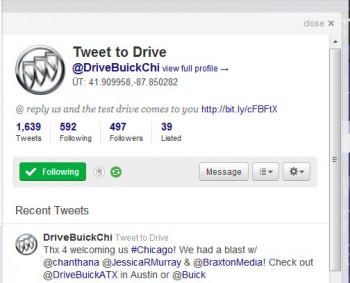
In the social business world of social media and Twitter, online relationships are lead to offline relationships in amazing ways. The Buick Tweet to Drive test drive experience was a particularly special one for me.

With a simple Tweet
I was in the drivers seat
Sweet ride, Chicago!

drivebuickchi

Thanks Buick Tweet to Drive for the transportation and the conversation during the ride! It was more than great marketing. It was an experience.

“Visit Aaron Strout’s blog for the next brand haiku.”

–ME “Liz” Strauss
Work with Liz on your business!!

Buy the Insider’s Guide to Online Conversation.

I’m a proud affiliate of

third-tribe-marketing

Filed Under: Marketing /Sales / Social Media, Successful Blog Tagged With: @DriveBuickCHI, bc, Buick, LinkedIn, Tweet to Drive

Beach Notes: No Ordinary License Plate for Me!

November 14, 2010 by Guest Author

by Des Walsh and Suzie Cheel

lol

Amusing number plate at the beach or maybe just LOL

We loved this number plate that we saw at the beach recently. The owner was a happy guy- who wouldn’t be with a number plate LOL?

Suzie Cheel & Des Walsh

Filed Under: Marketing /Sales / Social Media, Successful Blog Tagged With: bc, Des Walsh, LinkedIn, Suzie Cheel

Blogs in Education?

November 12, 2010 by Guest Author

Blogs – Enhancing Education
A Guest Post by Brian Jenkins

cooltext455576688_blogging

Why do teachers blogs? They use them as a networking tools, to share news and tips with other teachers, to let parents know what’s going on in the classroom, and to distribute information to their students. Teachers are using blogs to post student assignments, handouts and notices, and to offer instructional tips. Teachers provide links to websites related to topics and concepts discussed in the classroom. Blogs are also used by teachers as question and answer forums. Also, school administrators are increasingly using blogs to communicate with parents, faculty members, the community, and other administrators.

Some teachers use blogs to showcase exemplary examples of student writing, ideas, and creativity. Blogs are utilized by teachers to create a classroom that goes beyond the boundaries of the traditional school setting.

Parents and School Blogs

Many teachers encourage parents to read their blogs. If parents follow these blogs they’re more likely to take an active role in their child’s education. The blogs may include summaries of what the students have been studying each month and the projects they’ve been working on.

Student Blogs

Many teachers encourage their students to maintain a blog, which can be assigned as an individual or a team project. A blog gives students an opportunity to express themselves and to enhance their writing skills. It provides students an opportunity to work on assignments as a group and improve their ability to work in a team. Students can also share course-related resources.

Blogs provide opportunities for students to express their ideas who may be too shy to participate in the classroom. They also provide students the opportunity to get feed back from their peers and discuss a variety of issues. Students can use a blog to create a digital portfolio.

Blog Topics

Blogs are used to focus on a variety of topics. Some of the popular categories are education news, college, E-learning, Internet culture, education policies, library and research, learning, technology, and teaching.

TeacherLingo (http://www.teacherlingo.com/) is an educational community of teacher blogs, lesson plans, and other teacher resources. Teachers can share experiences and advice with other educators.

Blogs are increasingly being used by teachers and students throughout the nation. They’re easy to create and use, and they certainly can enhance the education experiences of both teachers and students alike.

_____

Brian Jenkins contributes content related to elementary school teaching careers, among other education and career topics, to the BrainTrack website.

Thanks, Brian!

–ME “Liz” Strauss
Work with Liz on your business!!

Buy the Insider’s Guide to Online Conversation.

I’m a proud affiliate of

third-tribe-marketing

Filed Under: Business Life, Community, Motivation, Successful Blog Tagged With: bc, blogging, Brian Jenkins, education, LinkedIn

Dramatically increase your influence

November 11, 2010 by patty

by Patty Azzarello

cooltext466496263_leadership
influence

Do you have a seat at the table?

I am often asked to speak about how to have more influence.

Managers often feel like they are getting blocked or ignored by the power structure in their company.

Influence

How can you make sure you are included when important strategies are being decided? How can you impact them?

There are many aspects to this including the need to increase the impact of your work, build your credibility, make the right connections with people, and create a network of support for your ideas, your work, and your career.

But today I want to talk about something very specific. A powerful, practical approach to dramatically increase your influence with your stakeholders.

Be a Translator

I can’t overstate the importance of translating what you talk about into the language of your stakeholders.

It starts here…

No one really cares what you do…

(At least not as much as you do.)

Don’t Educate.  Be more Relevant.

Don’t try to educate your stakeholders. I often talk to managers who say, I need to educate my boss about what my group does.

My advice. Don’t bother. It doesn’t work and it only annoys both of you!

But the important thing to realize is this:

If you have to educate people about what you do, you are not relevant.

Just think about that. If you have to educate, you are not relevant…

What IS relevant? What they already know and care about.

If you want to increase your influence, the way to be more relevant is to always start your conversation with something they already know and care about.

Use that as a hook, and then hang your information that hook.

They will think you are smart and be motivated to listen to you because you are starting the conversation by making them feel smart.

You are engaging them on terms they already know and on things they want to make progress on. Once they are thinking that, they will be ready to listen to you.

Translate your ideas, use their hook

To follow the marketing example, don’t talk about a multi-quarter integrated marketing campaign. While you are at it, don’t even use the word marketing. Talk about building pipeline, decreasing the time to close a sale, or opening new revenue streams.

If you are in IT don’t talk about data centers and virtualization. Translate to improving sales effectiveness, helping reach new markets, or reducing the cost of acquiring customers.

A magic translation tool

Here is a very specific bit of magic to make your work and your ideas much more relevant to the rest of the business.

1.
Interview your business stakeholders about what they care about. What is driving their business? What are their pressures and opportunities? What are their key “can’t fail” initiatives right now?
2. Listen for two things:

  • What are the things on their list?
  • What are the exact words they use to describe them?

3. Go back and summarize their top initiatives in their words.

4. Prepare your next communication about what you are doing or trying to influence and ONLY USE THEIR WORDS.

Use your “outside voice”

Remember your plans and your budget are riddled with jargon from your own function. I call that your “inside voice”. You need those things to run your function but don’t – under any circumstances – use those those same artifacts to communicate outside your function.

You need to use your “outside voice”. You need to specifically create new communication tools that are versions of your plans, your proposals, and your budget, but using the language of your stakeholders.

The magic then happens when you are suddenly asking them to approve budget for things they want anyway!

When you translate and use their words, not yours, you are more relevant, you appear more credible and you dramatically increase your ability to influence.

Have you ever been blocked?

What things have you done to increase your influence? Please leave your ideas in the comment box below.

—–
Patty Azzarello works with executives where leadership and business challenges meet. She has held leadership roles in General Management, Marketing, Software Product Development and Sales, and has been successful in running large and small businesses. She writes at Patty Azzarello’s Business Leadership Blog. You’ll find her on Twitter as @PattyAzzarello

Successful-Blog is proud affiliate of

third-tribe-marketing

Filed Under: management, Marketing /Sales / Social Media, Successful Blog Tagged With: bc, influence, LinkedIn, Patty Azzarello

  • « Previous Page
  • 1
  • …
  • 94
  • 95
  • 96
  • 97
  • 98
  • …
  • 190
  • Next Page »

Recently Updated Posts

Is Your Brand Fan Friendly?

How to Improve Your Freelancing Productivity

How to Leverage Live Streaming for Content Marketing

10 Key Customer Experience Design Factors to Consider

How to Use a Lead Generation Item on Facebook

How to Become a Better Storyteller


From Liz Strauss & GeniusShared Press

  • What IS an SOB?!
  • SOB A-Z Directory
  • Letting Liz Be

© 2025 ME Strauss & GeniusShared