Successful Blog

  • Home
  • Community
  • About
  • Author Guidelines
  • Liz’s Book
  • Stay Tuned

How to Be More Productive While You Commute to Work

November 19, 2012 by Guest Author

by
Paul Ellett

cooltext443809602_strategy

Some days there just doesn’t seem to be enough hours in the day to finish all the work you have to do. On top of tasks, both short-term and long-term, things crop up which have to be dealt with there and then, which push you back even further. Deadlines coming up which have to be reached can mean several nights staying late at the office, or spending your evening and weekend working. All of this can mean missing out on the things you would rather be doing with your family and friends.

How Can We Be More Productive On the Commute To Work?

The thing is, those of us who commute to work, whether by car or public transport, spend a long time traveling. This can be up to an hour or even more doing one of the following rather wasteful activities:

  • Listening to the same music as the day before
  • Browsing Facebook on your phone
  • when everyone you know is either still in bed, also traveling or simply not doing anything interesting
  • Stuck trying not to make awkward direct eye-contact with the person in front of you
  • Staring out of your window at the same sights you see everyday
  • Catching up on sleep which only makes you feel more tired when you arrive, or being jerked awake each time your head hits the back of your seat.

Rather than passing the time, we could be using it.

How to Be More Productive While You Commute to Work

We can do so much more with this time. We can get rid of those troublesome smaller tasks that hold us back once we arrive at work. We can also use commute time to help get ahead in other ways through research and learning. Here are some ways to make commuting time more useful and productive.

1: Plan Your Day

Though you sometimes have to wait and see what is on the agenda before you can plan your day (and even this might change as the day goes on), you can get a rough idea of what you have to do. Make a list of these things, starting with the easy things which will make you feel like you’ve accomplished something by the middle of the morning. This might also include firing off some emails so you can get quick replies when those people check their email first thing; this way you’ll be their main priority to get back to rather than your message being one of ten they receive come 9am.

2: Research Through People-Watching

If you work in advertising or marketing, keep your ears and eyes open. It seems a little redundant if you work in these areas, to be surrounded by tens to hundreds of people (from a variety of backgrounds, ages etc) each day and ignore them. This can be valuable research which can help you with projects you’re working on. By simply keeping your eyes and ears open while you travel, you can get a grasp of what people are reading/wearing/listening to. If you overhear their conversations, listen to what they say and how they convey this. This kind of rough insight can also help your approach if you work in sales, simply by giving you tips for conversation to break the ice.

3: Listen to Podcasts

Many are seeing podcasts as a revolution that will deal a further death nail into the heart of the morning commuter’s favourite, radio. Let’s face it: most radio is useless. The music playlists are often the same each day, and the conversation is hardly ground-breaking. For those still waking up who don’t anything too heavy, this is fine; but for those with long journeys who wish to make the most of this time, you should look into podcasts. There is just so much to choose from, depending on your taste. While you can subscribe to comedy or entertainment podcasts, you might find it more useful to research and download a series of motivational podcasts or those which teach something, like a new language. You’ll probably be able to find a series of podcasts relevant to your industry so you can get the latest news through another medium.

Of course, most of these are best to utilize when on public transport. If you drive to work, you can still listen to podcasts, though people-watching may distract you from driving, so be wary of this. Being productive while you travel to work won’t mean much in the grand scheme of things if you receive a driving ban (whether temporary or permanent). It’s always more important that you make it to your destination safely without harming anyone else on the road, than not at all.

Author’s Bio:
Paul has just started to travel to work via public transport, and has been trying to use this time more usefully, as this commute is quite long each day. This experience has helped him in his work with a firm of drink driving solicitors whose clients include those caught for multi-tasking while driving.

Buy the Insider’s Guide to Online Conversation.

Filed Under: management, Productivity, Successful Blog Tagged With: bc, commute to work, LinkedIn, productivity while communiting, small business, work during commute

Thanks to Week 370 SOBs

November 17, 2012 by Liz

muddy teal strip A

Successful and Outstanding Bloggers

Let me introduce the bloggers
who have earned this official badge of achievement,

Purple SOB Button Original SOB Button Red SOB Button Purple and Blue SOB Button
and the right to call themselves
Successful Blog SOBs.

I invite them to take a badge home to display on their blogs.

muddy teal strip A

They take the conversation to their readers,
contribute great ideas, challenge us, make us better, and make our businesses stronger.

I thank all of our SOBs for thinking what we say is worth passing on.
Good conversation shared can only improve the blogging community.

Should anyone question this SOB button’s validity, send him or her to me. Thie award carries a “Liz said so” guarantee, is endorsed by Kings of the Hemispheres, Martin and Michael, and is backed by my brothers, Angelo and Pasquale.

deep purple strip

Want to become an SOB?

If you’re an SO-Wanna-B, you can see the whole list of SOBs and learn how to be one by visiting the SOB Hall of Fame– A-Z Directory . Click the link or visit the What IS an SOB?! page in the sidebar.

–ME “Liz” Strauss

Filed Under: SOB Business, Successful Blog Tagged With: bc, blog-promotion, LinkedIn, small business, SOB-Directory, SOB-Hall-of-Fame, Successful and Outstanding Blogs

Make the Most of SEO in Adobe Muse

November 16, 2012 by Guest Author

by
Anita Brady

cooltext443809602_strategy

The recent release of Adobe Muse in May 2012 has many print designers scrambling to figure out just how to take advantage of this powerful new software. Adobe has created a product that allows almost anyone (assuming you have a marginal amount of design experience) to create websites with little or zero knowledge of web development or HTML code. Although there are quite a few limitations (and some heavy industry criticism;), using the right knowledge and a little help from third-party apps, you can get the most in terms of functionality and SEO from this new software.

Make the Most of SEO in Adobe Muse

With the proper considerations and a little bit of leg-work, you can easily create a functional and interactive site with all the Search Engine Optimization necessary to rank well in searches. However this is not a set requirement for new sites, and will only happen if you take the initiative to add descriptions and tags in the right places. Here are a few tips to help you optimize your first build with Adobe Muse.

Include Extensive Metadata

In Muse (and with any web design platform), including extensive Metadata is a sure-fire way to help your site rank well on searches. Include not just a description of your site and business (which will be directly under your search results), but include details like locations, zip codes, phone numbers, and employee names to boost your site to the top of search engines on less germane topics.

Tags

Be sure to add tags to every relevant object within your new site. A tag is a keyword or term that is assigned to a specific item within a website. These keywords help describe the item and allow, specifically, images to be found again by browsing or searching. You can even add Geotags (or geographical identification metadata) to various media such as photographs and smart objects, which will allow users to find your site just because of your geographic location – cool!

Social Media Plugins

Most likely, social media will be a big part of your marketing campaign. Take the time to sign up for popular social media like Twitter, Facebook, and Google+ and then create extensive descriptions (including keywords) within each. The more back-linked content you can create on the web for your site, the better. Consider including an RSS feed signup for new content on your page, or add a Facebook widget on Muse to direct traffic across platforms and increase your search engine appeal.

Searchable, Useful, and Relevant Content and Adobe Muse

Of course, there is no substitute for building a high-quality site with high-quality content. Be sure to include persuasive, original copy on your main pages and all subpages. SEO tags and metadata tricks cannot replace the value of a legitimate, content-heavy site, and ultimately it is the search engine’s job to rank the most relevant sites at the top, regardless of how much SEO went into your design. So keep this in mind and strive to create a site that not only searches well, but also is genuinely useful and relevant to your potential customers.

Despite the inherent limitations and controversy surrounding Adobe Muse, it’s likely that this new software will be a success in the world of digital design. Muse can be a great tool for competent designers who are not ready to leap into CSS or PHP programming. Although it will never replace a database driven or serious hand-coded site made by a professional web developer, for most small, static sites, Muse has everything you need. Be sure to consider adding extensive SEO and third-party apps to help you get the most out of your new site. Good luck and have fun designing!

Author’s Bio:
Anita Brady leads the team at www.123Print.com – customizable print products for business and life situations. The website offers everything needed to make your own business cards and to design other promotional items that combine high quality and customization with an affordable price.

Buy the Insider’s Guide to Online Conversation.

Filed Under: SEO Tagged With: Adobe Muse, bc, LinkedIn, SEO and web design, small business

Invest Energy in Your Business Relationships

November 15, 2012 by Rosemary

by
Rosemary O’Neill

Relationships take work

Strong relationships, both personal and business, take a consistent investment of energy over a long period of time. Anyone who is selling you “likes,” or Twitter followers, or other nonsense like that is not helping you build your business.

The Tickler File

I love to entertain. Part of the fun is making sure that each person who visits always gets their favorite things. My dad loves blueberries, but not ever baked into anything. My sister-in-law has a particular affection for those little white Russian tea cookies. But I could never hold all of that information in my brain, so I cheat a little. In my Evernote system, I have a “dossier” on each person who visits. It’s my relationship tickler file.

Invest Energy in Your Business Relationships

The most successful business owners and entrepreneurs have a strong network of relationships that they can call on when the chips are down. Liz refers to these as “the people who won’t let you fail.”

But these people don’t just appear out of nowhere. You must slowly build those ties over time, maintaining contact, learning about each other, having face-to-face conversations, and providing support to each others’ causes.

The quick hit of buying followers or making fake reviews will never cut the mustard in the long run. The random stranger who was paid to like your Facebook page won’t be there for you when you launch your new product.

Tips to Build Your Own Tickler File

  • Add notes to your contact system or CRM (e.g., “dog named Babs”)
  • Set up reminders either in Google calendar or in your CRM
  • Start noticing when people share preferences or details about their lives
  • Foster your sense of curiosity about other people, focus on them when they’re speaking, not on what you’re going to say next
  • Don’t just rely on the automated happy birthday status update; get creative and recognize people on days other
  • than their birthday

  • After you meet with someone, write down notes from the meeting for next time, so you can progress each time

How do you invest in your business relationships?

Author’s Bio: Rosemary O’Neill is an insightful spirit who works for social strata — a top ten company to work for on the Internet . Check out the Social Strata blog. You can find Rosemary on Google+ and on Twitter as @rhogroupee

Thank you, Rosemary!

You’re irresistible!

ME “Liz” Strauss

Buy the Insider’s Guide to Online Conversation.

Filed Under: management, Marketing /Sales / Social Media Tagged With: bc, business-relationships, LinkedIn, relationships, small business, social-media

Setting Up Your Business for Long-Term Success

November 14, 2012 by Guest Author

by
Robert Cordray

cooltext443809602_strategy

Setting Up Your Business for Long-Term Success

Start-up business owners learn two things very quickly. First, the idea that launches an entrepreneurship is invaluable. The seed of a business, or the initial idea, provides a source of motivation and initial direction.

However, the second notion often comes as an unpleasant discovery. The grand idea by itself is not enough to sustain long-term growth and success. No matter how great the business idea is, many other factors influence success and determine whether a business will flourish or fail.

The key to being successful in business is learning to make good business decisions. While success cannot be guaranteed, you can start your business with attention to a few important areas and increase your chances of achieving your goals.

Avoid the most common missteps entrepreneurs tend to make by following these suggestions:

Have a Business Plan

A business plan is an opportunity for business owners to understand their market, as it relates to their product or service, and map out their capabilities. Compiling a thorough business plan requires a bit of effort, but as it will serve as a guideline for your financial expectations and keep you on track, it is an essential part of any new business.

The business plan will also help you in the key area of setting realistic goals for when you will achieve profitability. Know how much time, effort and capital it will reasonably take to reach your goal of being profitable. Conservatively scaling your expectations to match reality will keep you on track and save you from disappointment if your hopes of becoming an overnight success are not realized.

Balance Your Capital

Having enough capital to launch your business is crucial, but you will want to avoid the mistake of taking on sizable loans at the outset. Use your business plan to ensure you have enough resources to see you through until you achieve profitability.

Understand Your Market

As a new business owner, you need to understand who your customers are. How large is your market? Who are your competitors? You will need to know what alternatives to your business are already available to consumers or if you are creating a new market. This will help you in your decisions on strategy.

Choose a Go-to Market Strategy

Having a focus on one strategy for your business will enable you to market your business effectively. Without a focus, you are likely to flounder, but attempting to pursue multiple strategies at once will also doom you to failure. Understand your business and choose one as your goal.

In general, there are three go-to market strategies that businesses use. The first is a focus on operational excellence. These businesses emphasize efficiency in their processes to lower their costs and provide consistency to a wide range of customers.

Another strategy is to develop customer intimacy by establishing strong relationships and fostering repeat business through customer care.

Third, businesses can seek an advantage through product innovation. This aspect depends upon the creation of a new and desirable product or service and founding a business where there are little to no existing competitors. This may be the most difficult of the three for a new entrepreneur to achieve.

Build an Effective Team

The path to becoming a successful entrepreneur should not be a lonely journey. Many businesses fail because the owner tried to manage too many decisions and responsibilities that could have been delegated to others. Find good support for your business such as those you can trust with general tasks while you focus on your role as an executive.

Seeking advice will be necessary, and finding a reliable source for information and direction may seem intimidating. However, there are several people who specialize in guidance and helping entrepreneurs maintain their focus. Through their services, you can rest assured that your business will profit from your well-directed efforts.

Author’s Bio:

Robert Cordray
writes about business, entrepreneurship, and living better at noomii.com. He has acquired over 20 years of entrepreneurship and business consulting. You can find him on Twitter @RobertCordray

Buy the Insider’s Guide to Online Conversation.

Filed Under: Inside-Out Thinking, management, Successful Blog Tagged With: bc, business success, business-plan, LinkedIn, small business, startup, startup business

Twitter Traction – How to Ask and Who to Ask

November 13, 2012 by Guest Author

by
Tommy Walker

cooltext443809602_strategy

Big Taboo about Asking on Social Media

So apparently there’s this big taboo about asking for things on social media.

On one side, there’s a camp that says you should never ask for anything EVER.

You should provide high quality content, engage in the community, tweet, share links, comment (you know the deal). and you should always so amazing that if you’re patient, people to come to you.

Then on the other side, you’ve got the camp that says, “why wait?” they use autofollow tools, DM everyone without regard, send mass emails to bought lists… There’s a name for these people – But I’m guessing the editor probably won’t let me use it ;-P

The Middle Ground

I’ve recently discovered a middle ground that was surprisingly simple, and returned results that were pretty shocking to me.

Just ask via private message.

I know right? Who would have thought?

For years, I’ve operated with this fear that if I sent any kind of request through a Twitter DM or Facebook message, I would be instantly labeled a spammer and my online career would crumble in seconds.

But it turns out, with a little finesse & a personal tone, you can use private forms of social media and people will take action.

Twitter Traction – How to Ask and Who to Ask

In this article, I’ll show you an example of how I’ve used private messages en masse that resulted in one of the most commented articles on my blog. Granted, you can’t spend comments, but those comments lead to guest post opportunities, mentions on other blogs and was the topic of conversation on a podcast. And more positive exposure never hurts, right?

The Caveat

You do have to provide value in your work. The person you’re asking should actually be getting something out of it. If it’s not advice, a good chuckle will do.

Whatever you do, do not waste people’s time. Send only that which you’re proud of and are willing to read 20 times in a row yourself. And be selective about who you ask and how frequently.

It also helps if your work already gets some traction on it’s own. It doesn’t have to be crazy, but it’s nice if people you don’t know are finding you without you having to push.

On to the rules.

Presentation — How to Ask

The presentation of your private message is all that that you have to signal to the receiver that you’re sending something useful. Get this wrong, you look spammer. Get it right, and you’re acting as a filter sharing something that’s worth their time. It’s a fine line, but I’ll show you what’s worked for me.

Step 1 – Appear legit. It’s very simple, add the person’s name. Crazy I know. But when you think about it, that’s something a lot of Auto DM programs DON’T do, so taking the extra step really counts. Plus, when you see your own name it’s an instant hook to your attention.

Step 2 – Find some unique angle that will pique their interest. For example, Let’s say I wanted to drive conversation to an article I wrote about online manipulation .

This particular angle is controversy.

You might also use empathy,

humor,

drama.

Really, you could use any number of angles, just make sure it’s compelling.

You may have noticed that most of these use questions and all of them have a customized link.

When I combine all the elements; the first name, the interesting angle, the question and the link; I’m trying to invoke the need to respond and click the link. The custom link just adds a little extra emphasis to the work the lines.

The first time I tested this, I DMed 34 people and 27 of them responded in the comments.

Now, like I said comments don’t add to my bottom line.

But they did lead to a guest post, a mention on a podcast and someone dedicated a whole blog post to talking about the tactic ().

All of this earns impressions of my brand, and brings links back to my site, improving my overall trust factor.

Comments may not do anything for my bottom line immediately, but when playing the long game, all of these things matter.

Segmentation – Who to Ask

So, one of the major reasons why any of this personal asking stuff works is because you’re being selective about who to ask in the first place.

First, they have to be active on the platform. Seems simple enough, but looking at every single profile to determine activity is time consuming, and will most likely be the first thing anyone using this tactic will overlook – I know I did. But, spending the time now saves you from wasting time sending to people who aren’t active.

Second, they have to have some level of familiarity with you.

You might think, “well they’re connected to me, so doesn’t that qualify?” And I have to ask how many people are you connected to on social media with no idea who they are or what they’re about. This is pretty much true for most social media platforms; except Twitter.

On Twitter, you can bend the rules a little. Here’s how.

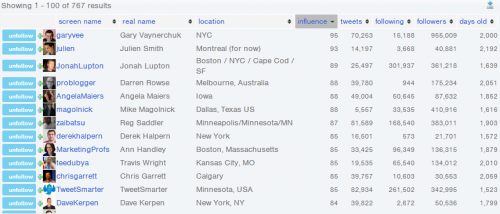
First- Go to FollowerWonk.com and click on the “compare users” tab

Second-Type in your twitter handle, and the handle of another author who covers a similar subject matter, or writes similarly to the article you’re trying to promote.

Then check out the “followers of both” link.

NOTE: DO NOT SEND DM’S TO EVERYONE HERE!!!!!

All you want to do is find people who wouldn’t be made too uncomfortable if you were to send them a Dm.

Even though Liz and I have some pretty influential people following both of us, I know I don’t have a relationship with them the same way she does, and wouldn’t want to risk making a fool of myself with really influential people.

However, if I sorted the influence list to show more “normal” people, I could find active twitter users that followed both of us who might also be more accessible

Again “ANYONE WITH A HEARTBEAT” IS NOT A GOOD CANDIDATE.

It’s important to make sure they’re active, but it’s critical that you check out their feed to qualify whether or not you should send them a DM. If they only tweet about macrame and you’re promoting an article about boating, it’s not a good fit.

If it’s somebody you don’t tweet with much, acknowledge that in your dm …

Hey Caylie. I know we don’t talk much but [Insert Hook Here] http://bit.ly/Successful-Dm

This adds an extra level of human to what would otherwise be a fairly robotic process.

And, If you’re wondering how you could get some “in common” followers, here is a great article to get you started with followerwonk(but check followerwonk first, most people I tell about this technique are pleasantly surprised.)

A Word Of Warning

Obviously this CAN backfire if you go overboard with it.

I would not recommend DMing all of your followers for every single piece of content you put your name on.

I would also give a people a healthy period of time in between when you ask for something.

I would ALSO make sure you go out of your way to do something even NICER for them, without being asked.

And I would be sure to thank them privately for when they do contribute.

The reason this method works, and what separates it from being total spam, is that it provides a filter for useful content in an otherwise flooded environment.

If you get selfish and forget that it’s about filtering good content to the right people – well, I’ll let you imagine what happens next.

So, I’m curious, have you ever tried direct asking before? If so what happened? If you haven’t, what’s the stupidest DM you’ve ever gotten that was clearly sent out by a robot. I’m certain we can get some pretty hilarious stories out of this one.

Oh, and if you know anyone who could benefit from this article,(or want to totally light it on fire) test this method out and let’s see how it works 😉

Author’s Bio:

Tommy Walker is the host of “Inside The Mind” a show that fuses online marketing strategy with internet generation humor. Currently, he is conducting a crowdfunding experiment for Season 2, which proposes to do no less than flip the world of online marketing on it’s head. You can find him @Tommyismyname

Thank you for adding to the conversation!

Buy the Insider’s Guide to Online Conversation.

Filed Under: Marketing /Sales / Social Media, Strategy/Analysis, Successful Blog Tagged With: bc, calling people to action, how to ask, LinkedIn, small business, Twitter traction, who to ask

  • « Previous Page
  • 1
  • …
  • 11
  • 12
  • 13
  • 14
  • 15
  • …
  • 73
  • Next Page »

Recently Updated Posts

Is Your Brand Fan Friendly?

How to Improve Your Freelancing Productivity

How to Leverage Live Streaming for Content Marketing

10 Key Customer Experience Design Factors to Consider

How to Use a Lead Generation Item on Facebook

How to Become a Better Storyteller


From Liz Strauss & GeniusShared Press

  • What IS an SOB?!
  • SOB A-Z Directory
  • Letting Liz Be

© 2025 ME Strauss & GeniusShared