
Successful Blog

  • Home
  • Community
  • About
  • Author Guidelines
  • Liz’s Book
  • Stay Tuned

Don’t Let Your Business Blog Content Become a Biology Project

March 21, 2012 by Thomas

Just about all of us at one time or another has had to deal with rotten food.

In many cases, we leave something out too long or leave it in the fridge for an extended period of time; hence it soon takes on the junior high science project that many of us thought was cool back in the seventh grade.

In our adult years, however, such projects are not only viewed as unfavorable, but they can be costly when running a business.

Working in marketing full-time and doing freelance writing on the side, I literally come in contact with dozens and dozens of business blogs on a daily basis. The number one threat to their existence in my opinion is stale content.

When some business heads feel like the content is just there to fill space and show both current and potential customers that the site is active, I just want to come up to them and shake them for about five seconds. My main question as I am shaking them is what are you thinking? In many cases, they probably are not doing much of that in the first place.

What is the Purpose behind Business Blogs in the First Place?

Company blogs come in all shapes and sizes, be they for someone just beginning to run a business or someone who’s been around the block a time or two. In many instances, the blog is used as a tool to attract current and potential customers to the site, and then provide them with worthwhile information that they can take away.

On the surface, that sounds like a great premise for having a blog in the first place. Where that becomes an issue is when the lead content is left to sit on the site for days and days and days and….

Soon, visitors coming to the site begin to see the same old and tired copy anchoring the site. Before long, what was once good content starts turning into that bagel or loaf of bread that was left sitting out on the counter for weeks and weeks. You get the picture, it isn’t pretty.

As someone that has written and overseen a number of business blogs over the years, I cannot stress enough the importance of maintaining fresh content on the site.

Among the obvious reasons to do so:

  • Search engines will be more favorable to your site if the content is regularly updated;
  • Fresh content puts your company blog out there as an authority on a subject or subjects, singling you out from competitors;
  • A continuously updated blog site makes it much easier to approach potential advertisers that will want to get their name linked to your site;
  • With updated blog content, you can have real-time interaction with readers, leading to more opportunities to convert potential customers into customers.

One small business blog I recently came across, one which I will not name, was last updated in the fall of 2011. Last time I checked the calendar, we were coming up on the middle of March.

My first thought was maybe this company had gone under and the site was still showing up on Google searchers. As it turns out, the company sure is still business and looking for new clients as we speak. If I were consulting them, I would not advise them to start their sales pitch by referencing the site’s blog.

I make it a habit to clean out my refrigerator once a week so that nothing can become a biology project behind that closed door.

Perhaps more business owners should take on a similar project to make sure their company blogs are not festering something nasty.

Remember, the time for conducting science projects was back in school, not when you are running a business.

Photo credit: marqui.com

Dave Thomas, who covers among other topics workers compensation and credit card processing, writes extensively for Business.com, an online resource destination for businesses of all sizes to research, find, and compare the products and services they need to run their businesses.


Filed Under: Business Life Tagged With: bc, Blog, business owners, clients, Content

Dear American Worker, Are You Pessimistic On Your Retirement Plans?

March 14, 2012 by Thomas

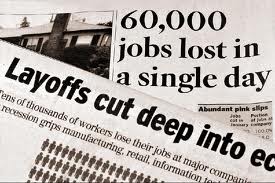
The last few years have brought some unwanted news for many American workers and that does not appear to be changing anytime soon.

According to a recently released report from the Employee Benefit Research Institute (EBRI), worries regarding one’s job security and mountains of debt are leaving many American more doubtful than ever when it comes to their retirement.

The recent EBRI survey (approximately 1,270 workers and retirees ages 25 and up) shows that a mere 14 percent of workers claim to be “very confident” they will have enough money to live a comfortable life during their retirement years. Meantime, 38 percent of workers claim to be “somewhat confident” and 23 percent report they are “not at all confident.”

According to many of the survey respondents, current priorities trump retirement plans at this point and time.

Job Security a Major Concern

The survey shows that approximately 42 percent of respondents claim a lack of job security is the number one issue they are facing, with only 28 percent of workers claiming to feel very confident they will be gainfully employed for as long as necessary. Lastly, 62 percent of workers report that their debt is their biggest challenge now.

Money put away for retirement is a big obstacle right now for many American workers, as approximately 60 percent of those surveyed report having total savings and investments of less than $25,000 (excluding the value for their residence and defined benefit plans). Even scarier, nearly 30 percent of these respondents claim to have less than $1,000 in their savings.

According to an EBRI spokesperson, “A lot of the people who have either lost their jobs or are worried about losing their jobs are trying to put a little money away for a rainy day and just don’t have money to put into savings right now.”

High Health Care Costs Prove a Burden

One of the major factors right now eating away at available money to put into savings are high health care costs. According to the survey, only 13 percent of respondents state they are very confident they will be able to meet medical expenses when their working days are over. Meantime, just 26 percent of workers claim to be very confident that they will even have the necessary funds to cover basic expenses.

As the American population ages, the irony of the health care issue is that advances in that very area leads to longer life expectancy for millions and millions of people. Living longer lives also means needing to put away more money in order to meet those needs.

With retirement funds scarce for many American workers, more and more are delaying retirement in order to keep a regular paycheck coming in, while increasing their Social Security benefits by waiting to ages 67 and 70 to start taking benefits.

On the down side of that idea, approximately half of current retirees report they exited the workforce unexpectedly due to health matters, a disability, or an employer that let workers go or even ceased operations.

So before gloom and doom set in from reading these numbers, the report does point out that more employers are automatically enrolling workers in retirement plans such as 401 (k)s, with many of those companies increasing contribution levels on a yearly basis.

EBRI’s spokesman pointed out that “We continue to find that employees lucky enough to be working for an employer that sponsors retirement plans — and who choose to take advantage of it — are not only much more likely to have a significantly higher amount of retirement savings, but also much higher confidence.”

As an American worker, what do you view your retirement to be like?

Are you confident today that you will have enough money for tomorrow or should you be doing A, B, and C to right your financial ship moving forward?

Photo credit: gobankingrates.com

Dave Thomas, who covers among other topics workers compensation and credit card processing, writes extensively for Business.com, an online resource destination for businesses of all sizes to research, find, and compare the products and services they need to run their businesses.
Filed Under: Business Life Tagged With: bc, investments, Money, retirement, savings, workers

Be Healthy

March 8, 2012 by Rosemary

A Guest Post by
Rosemary O’Neill

cooltext443809558_authenticity

Sometimes, you’re cruising along at light speed, taking names and kicking butt, and all of a sudden…bang, you’re sick as a dog.

You suddenly have to rely on others, an uncomfortable position for anyone who is used to being in charge at all times.

In my particular case, I lost my voice completely. No teleconferences, no drive-through ordering, no chatting with friends or reading to the kids. It was humbling and jarring.

But here’s what I really want to share—in the midst of this, I had two different situations where friends stepped in and took over for me, and both times, I had to be almost physically restrained from jumping in to help. (My wonderful husband was on the other coast, providing moral support via text.)

It finally sunk in. While you’re trying to be a human-centered business, don’t forget that you are one of the humans in the center of it! If you aren’t taking care of yourself, and letting your friends take care of you, then you won’t be there for the long run.

So today, go quaff some orange juice, get out the Purell, and if you do get sick, admit you’re human and let someone take care of you.

Heartfelt thanks to my friends Coleen, Elyse, and Susan for coming to my rescue this week!

_____

Author’s Bio: Rosemary O’Neill is an insightful spirit who works for social strata — a top ten company to work for on the Internet . Check out their blog. You can find her on Google+ and on Twitter as @rhogroupee
_____

Filed Under: Business Life, Successful Blog Tagged With: bc, focus, health, LinkedIn

Be Prepared

March 1, 2012 by Rosemary

A Guest Post by
Rosemary O’Neill

cooltext443809558_authenticity

Within the last year, I lost a cyber-friend unexpectedly. I use the “cyber” qualifier only because I never met him in person, and I never even spoke with him on the phone. However, we frequently connected on several different social platforms, and he was a long-time customer as well. Imad Naffa was an intelligent, energetic, and prolific person, and I miss him still.

Even though he passed several months ago, I still see his face or his name pop up from time to time in notifications, buddy lists, and my old content. Each time this happens, I take a moment and offer a little prayer for his family.

But it really started me thinking about the consequences of our digital lifestyles. I don’t use pre-scheduled content very often, so when I pass, my voice will stop rather abruptly. However, my hope is that I’ve built a legacy of relationships, useful content, and a company that endures. Imad built an amazing, valuable company and community for those who deal with building codes and permits (http://www.naffainc.com/).

I also want to ensure that those I leave behind can pick up the ball gracefully.

Here are some ideas and resources that can support your digital legacy planning.

Great blog post about digital wills
http://socialimprove.com/blog/can-you-profit-from-a-digital-will

Four steps to manage your digital afterlife, from CBS News
http://www.cbsnews.com/8301-505146_162-57368367/4-steps-to-manage-your-digital-afterlife/

How to notify Facebook of death & account memorials
http://blog.entrustet.com/digital-executor-toolbox/how-to-delete-and-memorialize-facebook-accounts/

Can your heirs inherit your digital downloads?
(Note the response from the anonymous iTunes support employee in the comments)
http://conversation.which.co.uk/technology/digital-download-legal-rights-after-death-amazon-itunes-apple/

How to notify Twitter of death
https://support.twitter.com/groups/33-report-a-violation/topics/122-reporting-violations/articles/87894-how-to-contact-twitter-about-a-deceased-user

Mega-resource list of digital death, memorial or afterlife services
http://www.thedigitalbeyond.com/online-services-list/

Have you created a plan to ensure your digital legacy endures?

_____
Author’s Bio: Rosemary O’Neill is an insightful spirit who works for social strata — a top ten company to work for on the Internet . Check out their blog. You can find her on Google+ and on Twitter as @rhogroupee
_____

Filed Under: Business Life, Successful Blog Tagged With: bc, death, digital life, legal planning, LinkedIn

Is Layoff a Precursor to Running Your Own Business?

February 29, 2012 by Thomas

With the endless string of layoffs that hit American businesses the last few years, many workers were left to fend for themselves, wondering how long it may be in between jobs. For some, however, a job lost is an opportunity gained.

Whether it was a lifelong dream or born out of necessity, countless individuals have taken those layoffs and turned them into the opportunity to start and run their own small businesses. In doing so, however, they are oftentimes left with myriad of questions, both from themselves and from family and friends.

Prior to striking out on your own with what could be your dream of a lifetime, keep several things in mind about how to start a business.

On the positive side:

  • Individuals find themselves with the opportunity to make their own decisions for a change, something that can prove very refreshing;
  • Individuals are able to set their own hours. It should be noted, however, that run one’s own business oftentimes involves a lot more time and energy, especially if there is a family involved. The days of the 9 to 5 routine may very well be gone in such a situation;
  • Individuals can earn more money running their own business as opposed to working for someone else, but keep in mind that there are also more expenditures when being self-employed;
  • Individuals will likely have to find their own health insurance coverage since they are no longer under a company’s employ. There are also things to consider like employing others, providing workers comp coverage, having business insurance and more.

On the negative side:

  • Individuals are required to make all their own decisions, meaning more time and effort must go into planning things out not only today, tomorrow, next week and next month, but the next year or two;
  • Individuals may be scraping the barrel when it comes to finding all the necessary funds to not only start the business, but keep it afloat early on. We all know that many small businesses fail within the first year to three years, so make sure you have a financial lifeline available if you need it;
  • Individuals should they choose to hire employees essentially become psychologists. No two employees are alike, so expect to have to oversee an array of personalities. Running a small business is hard enough, don’t let those under you become a major distraction;
  • Individuals will have a ton of paperwork to deal with. While a small business owner can and likely will hire someone to do their books and may even have legal counsel at their disposal, there is still a paper trail that leads back to them. You need to make sure you’re an organized individual who can respond rather quickly to any customer issues, financial audits, potential lawsuits and more.

The downtrodden economy of the last few years has in turn opened up a number of doors for people who otherwise would likely still be with their employer or another one.

If your dreams of opening a small business still remain important to you, take the time to weigh the pros and cons of such a move.

Remember, it is your business to get it right the first time around.

Dave Thomas, who covers among other items obtaining phone systems, writes extensively for Business.com, an online resource destination for businesses of all sizes to research, find, and compare the products and services they need to run their businesses.

Filed Under: Business Life Tagged With: bc, businesses, jobs, layoffs

What to Know Before You Choose a Loan to Finance Your Business or Your Life

February 24, 2012 by Liz

Borrower Beware

cooltext443809602_strategy

All loans are scary, because you are signing yourself over to a debt; but some loans are much scarier than others. Some are scary due to the product you are purchasing; some because of who the money is being borrowed from; and some due to their very structure. It is a sound plan to know what type of agreement you are entering into.

It is a good idea for your financial well being to avoid these loan monsters:

  1. Lifestyle loans. Whether you are taking out a loan to fund a vacation, a big-screen TV, plastic surgery, a wedding, or something completely else, loans for lifestyle changes are bad for your finances. Usually the improvement in lifestyle is short-lived, and then you still have loan debt to be repaid.
  2. Home-equity loans. Considering the way that the bottom dropped out of the housing market in recent years, its amazing that anyone would want to risk borrowing against and their home. As the economy begins to improve, it is very likely that the home-equity loan will regain its former popularity with banks and consumers alike. When a person borrows against their house, it can be a strong indication that their spending habits are out of control. Many people that do take out this type of loan do so to pay off a car loan or credit card bills, which is not wise because a home-equity loan is a 15-30 year loan being used to pay for products or services which will only be useful for a fraction of that time.
  3. Interest-only loans. Taking out an interest-only loan does not get one any closer to paying off the product the loan paid for. These loans only benefit the lender, because the consumer pays interest indefinitely, way over and above the amount they would have paid for the product to begin with.
  4. Loans with a longer term than the useful life of the product. No one wants to continue paying on a product after its useful life has ended. It’s very risky for the lender, and any borrower who would knowingly do this must be crazy. The only incentive to pay off such a loan is the threat of a lawsuit or damage to your credit report.
  5. Pawn shop loans. Pawn shops value your sellable possessions much less than you do, and thus almost never lend the full amount that the borrower wants. This is because the pawn shop wants to be able to make a profit on your electronics, jewelry, or other valuables should you not repay your loan and they have to sell your possessions.
  6. Credit card cash-advance loans. Credit card cash advance loans start charging interest immediately, not every month like regular credit card use. A person would be better off just using their credit card regularly, and paying it off at the end of the month to avoid interest charges.
  7. Debt-consolidation loans. Debt + debt = debt. Most people who get a debt consolidation loan wind up running up the credit cards again they used the loan to pay off, which completely defeats the purpose. Then they are back to having multiple payments to make. It is much wiser to compose a budget, and stick to it.
  8. Co-signed loans. Co-signing a loan can be very dangerous because it obligates you to pay off the loan, should the other party fail to pay it. Why would you want to pay for something that you didn’t own? Sometimes parents will co-sign a loan for their children to help them build credit, but a secured credit card is a much safer option for that purpose.
  9. Car title loans. Unless you like the possibility of losing your car, taking a loan from a title loan shop is not smart. If you fail to repay your loan, the lender will take your fully paid-off car and sell it. The lender also does not have to return any money to you, when they profit from selling your car.
  10. Overdraft Loans. If you need an Overdraft loan, then you should be paying more attention to your bank account. This type of inadequate attention can get you into financial trouble. Know how much money you have, and don’t spend more than that amount
  11. Tax refund anticipation loans. If you have a tax refund coming, you should never get a loan from your tax preparer. If you really need your tax refund money faster, have your paperwork e-filed, and ask that your refund be direct-deposited into your checking or savings account.
  12. Payday loans. Taking out a payday loan is the beginning of a vicious cycle of debt that is very hard to break. Payday loans are designed for very short periods of time, usually up to only a month, and have very high interest rates which make it hard for borrowers to catch up. Many only manage to pay the weekly minimum, which doesn’t even cover the full interest.
  13. Margin loans to purchase stocks. There are people out there who have made a lot of money by buying stocks on margin, but this is only when they are lucky enough to have the stock they bought increase in value. If you take out a margin loan, and your stocks decrease in value, the broker can demand cash deposits to your account to cover the loss. If the loss is bad enough (usually 25% of the amount you borrowed) the broker can sell your stocks, and you could end up owing money to your broker and having no stocks at all.

For the sake of your pocketbook, avoid these loan monsters. More often than not, they do more harm than good on the borrowers side.

_________

Author Box
George Martin is mortgage loan expert also he provides expert advice on credit card balance transfer and credit card management.. He provides advice on high interest credit card and sensible credit transfer.

Thank you, George, for this practical advice.

–ME “Liz” Strauss
Work with Liz on your business!!

Buy the Insider’s Guide to Online Conversation.

Filed Under: Business Life, Successful Blog Tagged With: bc, credit cards, lifestyle loans, LinkedIn, small business, small business loans

  • « Previous Page
  • 1
  • …
  • 57
  • 58
  • 59
  • 60
  • 61
  • …
  • 186
  • Next Page »

Recently Updated Posts

Is Your Brand Fan Friendly?

How to Improve Your Freelancing Productivity

How to Leverage Live Streaming for Content Marketing

10 Key Customer Experience Design Factors to Consider

How to Use a Lead Generation Item on Facebook

How to Become a Better Storyteller


From Liz Strauss & GeniusShared Press

  • What IS an SOB?!
  • SOB A-Z Directory
  • Letting Liz Be

© 2025 ME Strauss & GeniusShared