Successful Blog

  • Home
  • Community
  • About
  • Author Guidelines
  • Liz’s Book
  • Stay Tuned

15 Tips to Effectively Use Social Media for Small Business

December 5, 2012 by Guest Author

by
Brian Jenkins

cooltext443809602_strategy

Why Small Businesses Struggle with Social Media and What They Can do about it

A recent survey conducted by Manta, the popular online community for small businesses, showed that 90 percent of small business owners are involved in networking online. Of those, 74 percent believe networking online is just as, if not more, valuable than networking in person. Almost 50 percent of the small business owners surveyed believe that targeting and gaining prospective customers is the most valuable benefit of networking online.

However, the large number of online and social media channels that exist makes it challenging for small business owners to effectively navigate and properly use them.

  • 58 percent of small business owners say they have a difficult time finding value in using Facebook for promoting their business. Pinterest and Groupon, two popular consumer websites, have proven to be ineffective for small businesses.
  • Many small business owners struggle with social media because they don’t have the budget to hire a social media marketing expert or they don’t have staff members with enough free time to learn how to effectively use social media.
  • Many of the online articles that provide social media tips for small business owners are not specific enough, and what’s worse, many of the articles contradict each other, making it very difficult for small business owners to confidently create a social media marketing plan.
  • Many small business owners fail to gain an audience through social media platforms and increase sales because they either don’t have a substantial amount of content or enough engaging content to keep folks interested.
  • Unfortunately, many small businesses simply don’t try to engage people at social media sites; they instead annoy prospective customers by bombarding them with promotional messages. Many small businesses fail to nurture social media relationships. Instead, they’re just looking for a quick sale.

15 Tips to Effectively Use Social Media for Small Business

  1. One of the best ways to learn how to use social media is to learn how other small businesses, especially those in your niche, use it successfully. Follow some successful brands on Twitter and see how they engage their audiences.
  2. Work on becoming an authority in your niche at social media websites.
  3. Increase your online popularity with how-to videos. Create a custom channel on YouTube; video thumbnails in search results attract people more than text does. Videos also help you get to the top of search results. Most people spend significantly more time watching video than reading web pages. Provide how-to tips that your competitors don’t provide. Create a collection of short instructional videos about your products or services which include testimonials from happy customers. Make sure your videos are three minutes or less.
  4. Be social with Twitter, Facebook, and other social media sites; don’t just announce products and services.
  5. Run competitions on Twitter and Facebook.
  6. Ask bold or interesting questions to provoke a reaction from your Twitter followers.
  7. Encourage people to retweet your content.
  8. Use Facebook to show visitors what you’re passionate about.
  9. Create a custom welcome tab on your Facebook page. Use a call-of-action to encourage non-fans to become fans. After you get the “Like,” offer a valuable free item in exchange for their name and email address.
  10. At your Facebook page or blog, create a list of interesting questions and provide insightful answers to the questions online. Provide new questions and answers every day.
  11. Work to obtain links to your site from authoritative blogs in your niche or a related niche. Offering to write guest posts is one why to do this.
  12. Providing content that solves your visitors’ problems builds trust and the content may get linked to and shared with others.
  13. Start a blog and ask visitors to participate. Effective blogs include bold headings and plenty of images. Provide a call-to-action at the bottom of every blog post. Ask visitors to leave a comment, share the blog post at one of their favorite social media sites, or click on a link for information about a product.
  14. Post funny photographs or humorous short stories that are relevant to your business.
  15. Be responsive to your audience. Business is all about relationships, so be generous to people and take a genuine interest in them.

Small businesses that have had success with social media have found that what works online is much like works offline — offering specific value that’s relevant to their customers, friends, and fans.

What tips might you add for small business success with social media?

Author’s Bio: Brian Jenkins writes about a variety of topics related to careers and education, including careers in marketing, for the Riley Guide.

Thank you, Brian! Great advice!

— ME “Liz” Strauss

Buy the Insider’s Guide to Online Conversation.

Filed Under: management, Marketing /Sales / Social Media, Successful Blog Tagged With: bc, connecting with customers online, LinkedIn, small business, small business social media

7 Reasons No One Reads Your Company Blog (And What to Do About It)

December 4, 2012 by Guest Author

How to Blog

by
Timothy Carter

cooltext443809602_strategy

7 Reasons No One Reads Your Company Blog (And What to Do About It)

Alright, maybe you’ve got a company blog. That’s great. With that, you’ve got a semi-casual avenue to “talk” to your customers, share news and comments about what’s going on, and provide some valuable or useful information while you’re at it. Maybe at some point, you’ve even realized that you can use it as a customer service platform by making it home to easily accessible FAQs – always useful, especially if you sell tech stuff not everyone is going to figure out quick.

So why isn’t anyone reading your blog and how can you remedy this problem?

Problem 1: You Bore People

Simply put, you’ve got nothing on your blog that people want to read. You don’t ask them questions, get them thinking, or engage their emotions. Your blog could contain the most useful information in the world, but it won’t do you any good if people fall asleep halfway through your first paragraph.

Solution: Spice Things up a Bit

Add pictures to give visual representations of what you’re talking about. Maybe toss in a relevant video or two. Engage people’s emotions and make them feel things other than boredom and crushing apathy! Give them something in the content to care about, rather than write like you’re slapping together a technical manual you know nobody is ever going to read.

Problem 2: It Looks Awful

Your site might be one of the ugliest things they’ve seen on the Internet. Okay, that is actually harder to pull off than it sounds, but that’s mainly due to the sheer density of the ugly, horrific things you can find if you bother to look.

Solution: A Makeover

First things first: get rid of the clutter. Remove any widgets or things that the blog doesn’t actually need, because they’re just taking up room and probably don’t fit in with the overall “look.” Go for simpler, less flashy colors, rather than the sparkle and glitter you’d expect from a teenager’s custom page. Rearrange things so there’s a lot less clutter and a lot cleaner in presentation. Too much going on at once makes a site ugly and really hard to navigate.

Problem 3: Your Site Is a Lifeless Husk

Is your blog relevant, or is most of the content consisting of nothing more than extinct posts that have no relevance whatsoever? Is all of it outdated information, serving as little more than a magnet for dust and an archive of long-forgotten notions and trends most people would rather forget ever happened?

Solution: Update Regularly

This is probably the single oldest piece of advice ever for people who have a blog, yet it is the one that is most likely for people to ignore. Keep the content fresh and relevant, and keep it coming at a regular pace. This doesn’t mean “update once every three months.” This means “update once a week or more, if you can manage.”

Problem 4: Your Prose Is Purple

“Purple prose” is a term used to describe written content that is long-winded for no real reason, often going into endless metaphors without really saying anything. This is good if you’re trying to write a terrible romance novel of some sort or if you’re emulating the popular writing style of certain historical periods. This is bad if what you’re trying to do is to get a point across.

Solution: Focus Your Content

Cut down on the metaphors and try to keep the content detailed, but without delv Problem 5: Your Content Isn’t Dynamic

Words don’t always say it well enough.

Solution: Add images, graphics, visual representations.

Newspapers and magazines, despite being focused on content and words, words, words, also toss in pictures and graphs to break up the monotony. Pictures are great not only for putting a visual representation of what you’re saying, but also as an “opening paragraph” – every writer knows one of the hardest things to do is to hook people in from the get-go.

Problem 6: Way Too Much Advertising

A blog is not meant to be a platform for advertising and marketing. Yet, some people overload them with ads and marketing banners, with some instances of them using posts as nothing more than sales spiel. People will walk away if you think you’re trying to sell them something they don’t want. This is true even when they’re reading a corporate blog.

Solution: Trim the Ads

Cut down on the ads. What little ads you do keep, make sure they’re not placed in an in-your-face manner, but instead are off to the side where they don’t get in the way of the content or navigation.

Problem 7: You’re Just Not Relevant

In theory, you ought to know your audience best. You know what they want to see and what is critical to their mission. If you don’t know that, you really ought to reconsider your business plan, since you probably don’t know who you’re supposed to be selling to, either.

Solution: Be Relevant

You know your audience, which means that to some extent, you have some idea of what they don’t know. Give them that. Insight into unorthodox uses of their favorite product or little-known functions that might come in handy are possibilities.

Author’s Bio:

Timothy Carter writes about social media, social marketing and trade shows at SmashHitDisplays.com. You can also find him on on Google+ and Twitter as @TimothyCarter

Thank you, Tim, for adding insight to the conversation!

–ME “Liz” Strauss

Buy the Insider’s Guide to Online Conversation.

Filed Under: Blog Basics, Marketing /Sales / Social Media, Successful Blog Tagged With: bc, business-blogging, How-to-Blog, what makes a great business blog

5 Twitter Advantages for Your Small Business

November 29, 2012 by Rosemary

by
Rosemary O’Neill

5 Twitter Advantages for your Small Business

Are you still trying to make sense of Twitter?

As an onlooker, it appears much the same way the New York Stock Exchange looks from the observation window–messy, chaotic, and disorganized. But stand a moment and keep looking, because you will start to see groups of people gathered around specific topics. Over here, a loud tribe of Kardashian followers (we’ll just step around them) and over there in the far corner, an intense crowd of small business owners.

They pop in to conduct their transaction and then move back to their desks on the trading floor.

What’s great about Twitter is that anyone can step out onto the floor and mix it up in the trading scrum.

Use Twitter as a Small Business Advantage

  1. Network and share your expertise – join a regular Twitter chat (check out the massive list of chats here). At the appointed time, go to Tweetchat.com and type in the hashtag for the chat. Follow the conversation and add your own thoughts. With regular participation, you can form a strong network. I highly recommend the #SOBCon chat!
  2. Build relationships to support your PR efforts – it’s an open secret that journalists like to hang out on Twitter. Your faxed press release will get tossed in the recycle bin, but it’s very easy to learn insider information on media likes/dislikes, beats, and current projects on Twitter. One place to start is Twellow’s news and media category (http://www.twellow.com/categories/news).
  3. Find leads – yes, you can actually find real people who might want to be your customer on Twitter. Use Twitter’s advanced search to find people who are searching for “help” plus your keyword, and then offer assistance. The important thing to remember is that you’re providing help, not a sales pitch. That’s the fast route to loserville.
  4. Be available to your customers – Twitter is the open phone line, and although all of your customers might not be on Twitter, the ones who are will appreciate having access to you. Just be sure to subscribe to alerts so you can hear the phone ring when someone mentions you or sends a direct message.
  5. Show your human side – Mix in some personality to your business Tweets, and use it as one more way to humanize your business. Not to share a steady stream of cat pictures, but sharing your passion for motorcycles or movies can be a great conversation starter.

Are you still procrastinating on jumping into Twitter? Share your fears here and maybe we can work together to get you out onto the trading floor.

Author’s Bio: Rosemary O’Neill is an insightful spirit who works for social strata — a top ten company to work for on the Internet . Check out the Social Strata blog. You can find Rosemary on Google+ and on Twitter as @rhogroupee

Thank you, Rosemary!

You’re irresistible!

ME “Liz” Strauss

Buy the Insider’s Guide to Online Conversation.

Filed Under: management, Marketing /Sales / Social Media, Successful Blog Tagged With: bc, calling people to action, how to ask, Linked In, small business, twitter for small business, Twitter traction, who to ask

How to Boost Email Open Rates for Email Marketing

November 27, 2012 by Guest Author

by
Vanessa Parks

cooltext443809602_strategy

How to Boost Email Open Rates for Email Marketing

In the virtual world we live in, chances are your customers are being bombarded with tons of Emails everyday, as Email marketing is one of the most used marketing strategy today for acquiring leads. A study have shown that 97% of small businesses rely on Emails to market their products and services, so to maintain your presence, you really have to strategize and stand out in the way you compose your mails to maximize them being opened and read by your audience. In this article, we will discuss about ways improving your Email marketing open rates to have more success in endorsing your business via Email.

Email-MarketingThings to Understand regarding Email Marketing

First off, before we go deep into specific tips to increase open rates, let us take into consideration some key points about Email marketing. Here are some pointers that you should always put into mind whenever you plan on executing your marketing strategy inEmails.

1. Your customers hate spam.

Spammy links and Emails will always drive people crazy in a negative way. Anyone would want to stay away from spams as they either lead to unwanted links or messages, or worse viruses which can cause serious damage.

2. Your customers hate lengthy emails.

Put your feet in your audiences’ shoes and decide on which length is just okay to read for a few minutes. Practice splitting your sentences into per topic paragraphs, you may also use bullets. If possible, you may opt to use images or infographics instead to capture attention and to prevent using more unnecessary words.

3. Don’t waste your customers’ time.

Time is really gold and all of us hate wasting it. Establish your Emails as very informative to build that great reputation and avoid being known as someone who has nothing to say but trash!

2 Email Marketing Tips

Now we know some golden rules from above, here are specific tips for further attracting opens from your recipients!

1. Personalize it

eMail sent

Create a warm and emotional connection to your audience by adding your personal touch! Some tips that are proven to increase open rates are these two:

– Use Your real Name

– Write your email as if you’re talking to your prospect.

2. Timing of your Email

In order to have more chances of your Emails being opened, think of a good time to send them! The rule is to send them in a time frame where your recipients are in their reading mails period. Sending on end of shift or sleeping/resting times are definitely no-no’s.

Wrapping things up, again, put yourself in your recipients’ shoes. What kinds of Eblast marketing you’d open? Ask around trusted friends and customers; get their feedbacks and experiences, and accompany them with the tips here to maximize your mails being opened!

Author’s Bio:
Vanessa Parks is a Freelance Systems Analyst with 5 Years of solid experience. She has been an advocate of cloud computing and collaboration for improved work efficiency and performance

Thank you, Vanessa, for adding insight to the conversation!

— ME “Liz” Strauss

Buy the Insider’s Guide to Online Conversation.

Filed Under: management, Marketing /Sales / Social Media, Successful Blog Tagged With: bc

Invest Energy in Your Business Relationships

November 15, 2012 by Rosemary

by
Rosemary O’Neill

Relationships take work

Strong relationships, both personal and business, take a consistent investment of energy over a long period of time. Anyone who is selling you “likes,” or Twitter followers, or other nonsense like that is not helping you build your business.

The Tickler File

I love to entertain. Part of the fun is making sure that each person who visits always gets their favorite things. My dad loves blueberries, but not ever baked into anything. My sister-in-law has a particular affection for those little white Russian tea cookies. But I could never hold all of that information in my brain, so I cheat a little. In my Evernote system, I have a “dossier” on each person who visits. It’s my relationship tickler file.

Invest Energy in Your Business Relationships

The most successful business owners and entrepreneurs have a strong network of relationships that they can call on when the chips are down. Liz refers to these as “the people who won’t let you fail.”

But these people don’t just appear out of nowhere. You must slowly build those ties over time, maintaining contact, learning about each other, having face-to-face conversations, and providing support to each others’ causes.

The quick hit of buying followers or making fake reviews will never cut the mustard in the long run. The random stranger who was paid to like your Facebook page won’t be there for you when you launch your new product.

Tips to Build Your Own Tickler File

  • Add notes to your contact system or CRM (e.g., “dog named Babs”)
  • Set up reminders either in Google calendar or in your CRM
  • Start noticing when people share preferences or details about their lives
  • Foster your sense of curiosity about other people, focus on them when they’re speaking, not on what you’re going to say next
  • Don’t just rely on the automated happy birthday status update; get creative and recognize people on days other
  • than their birthday

  • After you meet with someone, write down notes from the meeting for next time, so you can progress each time

How do you invest in your business relationships?

Author’s Bio: Rosemary O’Neill is an insightful spirit who works for social strata — a top ten company to work for on the Internet . Check out the Social Strata blog. You can find Rosemary on Google+ and on Twitter as @rhogroupee

Thank you, Rosemary!

You’re irresistible!

ME “Liz” Strauss

Buy the Insider’s Guide to Online Conversation.

Filed Under: management, Marketing /Sales / Social Media Tagged With: bc, business-relationships, LinkedIn, relationships, small business, social-media

Twitter Traction – How to Ask and Who to Ask

November 13, 2012 by Guest Author

by
Tommy Walker

cooltext443809602_strategy

Big Taboo about Asking on Social Media

So apparently there’s this big taboo about asking for things on social media.

On one side, there’s a camp that says you should never ask for anything EVER.

You should provide high quality content, engage in the community, tweet, share links, comment (you know the deal). and you should always so amazing that if you’re patient, people to come to you.

Then on the other side, you’ve got the camp that says, “why wait?” they use autofollow tools, DM everyone without regard, send mass emails to bought lists… There’s a name for these people – But I’m guessing the editor probably won’t let me use it ;-P

The Middle Ground

I’ve recently discovered a middle ground that was surprisingly simple, and returned results that were pretty shocking to me.

Just ask via private message.

I know right? Who would have thought?

For years, I’ve operated with this fear that if I sent any kind of request through a Twitter DM or Facebook message, I would be instantly labeled a spammer and my online career would crumble in seconds.

But it turns out, with a little finesse & a personal tone, you can use private forms of social media and people will take action.

Twitter Traction – How to Ask and Who to Ask

In this article, I’ll show you an example of how I’ve used private messages en masse that resulted in one of the most commented articles on my blog. Granted, you can’t spend comments, but those comments lead to guest post opportunities, mentions on other blogs and was the topic of conversation on a podcast. And more positive exposure never hurts, right?

The Caveat

You do have to provide value in your work. The person you’re asking should actually be getting something out of it. If it’s not advice, a good chuckle will do.

Whatever you do, do not waste people’s time. Send only that which you’re proud of and are willing to read 20 times in a row yourself. And be selective about who you ask and how frequently.

It also helps if your work already gets some traction on it’s own. It doesn’t have to be crazy, but it’s nice if people you don’t know are finding you without you having to push.

On to the rules.

Presentation — How to Ask

The presentation of your private message is all that that you have to signal to the receiver that you’re sending something useful. Get this wrong, you look spammer. Get it right, and you’re acting as a filter sharing something that’s worth their time. It’s a fine line, but I’ll show you what’s worked for me.

Step 1 – Appear legit. It’s very simple, add the person’s name. Crazy I know. But when you think about it, that’s something a lot of Auto DM programs DON’T do, so taking the extra step really counts. Plus, when you see your own name it’s an instant hook to your attention.

Step 2 – Find some unique angle that will pique their interest. For example, Let’s say I wanted to drive conversation to an article I wrote about online manipulation .

This particular angle is controversy.

You might also use empathy,

humor,

drama.

Really, you could use any number of angles, just make sure it’s compelling.

You may have noticed that most of these use questions and all of them have a customized link.

When I combine all the elements; the first name, the interesting angle, the question and the link; I’m trying to invoke the need to respond and click the link. The custom link just adds a little extra emphasis to the work the lines.

The first time I tested this, I DMed 34 people and 27 of them responded in the comments.

Now, like I said comments don’t add to my bottom line.

But they did lead to a guest post, a mention on a podcast and someone dedicated a whole blog post to talking about the tactic ().

All of this earns impressions of my brand, and brings links back to my site, improving my overall trust factor.

Comments may not do anything for my bottom line immediately, but when playing the long game, all of these things matter.

Segmentation – Who to Ask

So, one of the major reasons why any of this personal asking stuff works is because you’re being selective about who to ask in the first place.

First, they have to be active on the platform. Seems simple enough, but looking at every single profile to determine activity is time consuming, and will most likely be the first thing anyone using this tactic will overlook – I know I did. But, spending the time now saves you from wasting time sending to people who aren’t active.

Second, they have to have some level of familiarity with you.

You might think, “well they’re connected to me, so doesn’t that qualify?” And I have to ask how many people are you connected to on social media with no idea who they are or what they’re about. This is pretty much true for most social media platforms; except Twitter.

On Twitter, you can bend the rules a little. Here’s how.

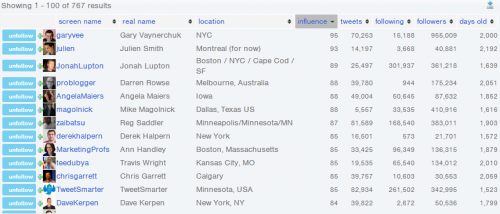
First- Go to FollowerWonk.com and click on the “compare users” tab

Second-Type in your twitter handle, and the handle of another author who covers a similar subject matter, or writes similarly to the article you’re trying to promote.

Then check out the “followers of both” link.

NOTE: DO NOT SEND DM’S TO EVERYONE HERE!!!!!

All you want to do is find people who wouldn’t be made too uncomfortable if you were to send them a Dm.

Even though Liz and I have some pretty influential people following both of us, I know I don’t have a relationship with them the same way she does, and wouldn’t want to risk making a fool of myself with really influential people.

However, if I sorted the influence list to show more “normal” people, I could find active twitter users that followed both of us who might also be more accessible

Again “ANYONE WITH A HEARTBEAT” IS NOT A GOOD CANDIDATE.

It’s important to make sure they’re active, but it’s critical that you check out their feed to qualify whether or not you should send them a DM. If they only tweet about macrame and you’re promoting an article about boating, it’s not a good fit.

If it’s somebody you don’t tweet with much, acknowledge that in your dm …

Hey Caylie. I know we don’t talk much but [Insert Hook Here] http://bit.ly/Successful-Dm

This adds an extra level of human to what would otherwise be a fairly robotic process.

And, If you’re wondering how you could get some “in common” followers, here is a great article to get you started with followerwonk(but check followerwonk first, most people I tell about this technique are pleasantly surprised.)

A Word Of Warning

Obviously this CAN backfire if you go overboard with it.

I would not recommend DMing all of your followers for every single piece of content you put your name on.

I would also give a people a healthy period of time in between when you ask for something.

I would ALSO make sure you go out of your way to do something even NICER for them, without being asked.

And I would be sure to thank them privately for when they do contribute.

The reason this method works, and what separates it from being total spam, is that it provides a filter for useful content in an otherwise flooded environment.

If you get selfish and forget that it’s about filtering good content to the right people – well, I’ll let you imagine what happens next.

So, I’m curious, have you ever tried direct asking before? If so what happened? If you haven’t, what’s the stupidest DM you’ve ever gotten that was clearly sent out by a robot. I’m certain we can get some pretty hilarious stories out of this one.

Oh, and if you know anyone who could benefit from this article,(or want to totally light it on fire) test this method out and let’s see how it works 😉

Author’s Bio:

Tommy Walker is the host of “Inside The Mind” a show that fuses online marketing strategy with internet generation humor. Currently, he is conducting a crowdfunding experiment for Season 2, which proposes to do no less than flip the world of online marketing on it’s head. You can find him @Tommyismyname

Thank you for adding to the conversation!

Buy the Insider’s Guide to Online Conversation.

Filed Under: Marketing /Sales / Social Media, Strategy/Analysis, Successful Blog Tagged With: bc, calling people to action, how to ask, LinkedIn, small business, Twitter traction, who to ask

  • « Previous Page
  • 1
  • …
  • 21
  • 22
  • 23
  • 24
  • 25
  • …
  • 174
  • Next Page »

Recently Updated Posts

The Creator’s Edge: How Bloggers and Influencers Can Master Dropshipping

Is Your Brand Fan Friendly?

How to Improve Your Freelancing Productivity

How to Leverage Live Streaming for Content Marketing

10 Key Customer Experience Design Factors to Consider

How to Use a Lead Generation Item on Facebook


From Liz Strauss & GeniusShared Press

  • What IS an SOB?!
  • SOB A-Z Directory
  • Letting Liz Be

© 2025 ME Strauss & GeniusShared