
Successful Blog

  • Home
  • Community
  • About
  • Author Guidelines
  • Liz’s Book
  • Stay Tuned

10 Reasons to Go on a Vacation

July 28, 2011 by patty

cooltext466496263_leadership

by Patty Azzarello

I want to share 10 of the many sound business reasons to go on vacation — in additon to the fact that you deserve it and are supposed to enjoy your life and have some fun in return for how hard you work…

1. Going on a vacation shows you are competent at your job because you can manage and plan enough to free up some time in your schedule, and not leave a festering mess in your absence.  

Not being able to take a vacation mostly shows that your work and your team are so out of control that you can’t even be gone for a week.

2. No one is impressed that you have not had a vacation in years.  If you think your company, or your team appreciates your super-duper, extra-work ethic, they don’t.   

3. Your team is motivated from seeing that you support and allow people to have a life — as long as you don’t send them email every day!  Set the expectation you will be generally out of touch.  Arrange 1-2 check-in points if you can’t stand to let go entirely, but don’t just go somewhere else and keep working.

4. Your team gets more productive when you go away.  You give them a break from worrying about all the things you throw in their way when they are trying to get their work done.  After about 2 weeks they will miss you and need you again, but in the mean time their productivity will go up.

5. Being unavailable is an effective technique for developing people.  It forces them to step up.  Just be careful not to un-do everything they did in your absence just because it was different than the way you would have done it.

6. If something comes up in your work that you can’t avoid and you need to cancel your vacation, reschedule another one while you are canceling.  This will minimize resentment and disappointment, give you something to look forward to… and ensure you don’t go too long without a vacation.

7. You will be more productive at work, if you step away from it and give your back-of-mind processes a chance to chew on things while you are otherwise in a good (or at least different!) mood. 

8. You will realize that some of the things that you thought were important before your vacation don’t actually need to get done after all.  When you step away, the most strategic things re-assert themselves and all the clutter drops several notches in volume.

9. Your company prefers people who enjoy their life because they have more positive energy for their work.

10. You need a break whether you know it or not!
 

How do you feel about work and vacations?

Let us know in the comment box below!

—–
Patty Azzarello is an executive, author, speaker and CEO-advisor. She works with executives where leadership and business challenges meet. Patty has held leadership roles in General Management, Marketing, Software Product Development and Sales, and has been successful in running large and small businesses. She writes at Patty Azzarello’s Business Leadership Blog. You’ll find her on Twitter as @PattyAzzarello. Also, check out her new book Rise…

Successful-Blog is proud affiliate of

third-tribe-marketing

Filed Under: management, Successful Blog Tagged With: bc, Business Leadership, LinkedIn, Patty Azzarello

How to not get burned out

June 23, 2011 by patty

by Patty Azzarello

cooltext466496263_leadership

Business is Hard

Sometimes business opportunities, challenges, activities, and responsiblities become overwhelming. You get tired.

And as your business grows, things don’t tend to get easier or less busy!

Pick your pace

It’s important to find a pace that you can maintain, so you can keep making forward progress and not get burned out.

I am a cyclist.Â

There are some tough hills that can challenge a rider to the point of total system failure — you can’t breath, your heart races, your legs are on fire.  The only problem is that that happens after 10 minutes, and it may take 30-60 minutes to ride up the thing!

“I can do this all day”

So I force myself to pick a pace, one where even though it is still really hard, I can say to myself “I can do this all day”.Â

When I get my thinking, my legs, and my heart rate and lungs calibrated to “all day”, when I finally reach the top I have accomplished the task, and I am still not at the absolute end of my energy.Â

If you know the how long the hill is, you can push yourself to get to the top faster. But you don’t always know how long the hill is.

So you need a strategy to make sure you don’t burn out on the way.

What is your pace that you “can do all day”

If there is no end in sight to the craziness or turmoil, how much physical and mental energy can you invest over an indefinite amount of time so that you can make it to the top no matter how long the hill is? and still have energy to go forward after you get there?

Get ahead of the competition

When the market gets easier and there are more opportunities, you want to have the energy and the resources to use another cycling term “jump”— to go really fast, right away — while the competition has burned out, given up, or failed along the way.Â

Don’t let you head give up before your legs

Part of the “I could do this all day pace” it to make sure you don’t talk yourself into stopping before you really need to.

I compare this to miserable tough jobs I have had. It is always interesting to note how much of the misery I put on myself, compared to that which was strictly imposed or required by the job.Â

You can actually make a pretty big change in how you feel about your job, by deciding how YOU will manage your energy, and not letting your head give in.

Some ways to get up the hill:

It is your job to keep making forward progress in uncertain and challenging times.  Otherwise you end up just working really hard, and not really moving the business forward, or getting anywhere personally.Â

  • List all the things you are worried about.  Are they all equally worthy of worry?  Budget your worry.  Don’t burn yourself out worrying about things that are not worth it.
  • Stop something. Identify at least one thing you will negotiate “away” and stop doing.
  • Pick a single area to ensure success. Choose one thing that you won’t fail at no matter what – and don’t let the uncertainty throw you off course.  Complete that, then do the next one.
  • Talk to your team. Let them tell you what they think is hard about the current state.  Don’t underestimate the value of letting them talk about this.  Acknowledge the difficulty openly, then focus everyone on something they feel they can control and do well.
  • Build your Personal Brand.  How you act in difficult times does a lot to show the world your brand.  Are you positive and in control, or are you changing your mind all the time, uncertain, all over the place? When you are stressed, are you treating people with respect or are you nasty?
  • Don’t give up on your aggressive brilliant plans.  I do some of my best problem solving on a long hill.  Keep learning, keep thinking, keep building so that you are ready to jump when the obstacles clear.
  • Think. No matter how over-scheduled you may be, schedule some time to think every day.

—–
Patty Azzarello is an executive, best-selling author, speaker and CEO-advisor. She works with executives where leadership and business challenges meet. Patty has held leadership roles in General Management, Marketing, Software Product Development and Sales, and has been successful in running large and small businesses. She writes at Patty Azzarello’s Business Leadership Blog. You’ll find her on Twitter as @PattyAzzarello. Also, check out her new book Rise…

Successful-Blog is proud affiliate of

third-tribe-marketing

Filed Under: management, Successful Blog Tagged With: bc, Business Leadership, LinkedIn, Patty Azzarello, time-management

The Polar Bears have had it…

June 9, 2011 by patty

by Patty Azzarello

cooltext466496263_leadership

Recently I was on the street in a downtown area, and I came across a group of young people with clipboards.

One of them engaged me to share the plight of the polar bears, and all the bad things that are happening to them because of global warming.

My policy on donating to charities is twofold:

1. I have a group of organizations that align closely with my values to which I donate the bulk of my charitable contributions, and

2.  If someone has a good pitch, I’ll usually give them something — 10 or 20 or 50 dollars, because I respect the work they are doing.

OK.  So I want to help the Polar Bears…

I didn’t need to hear a long story about the Polar Bears. I understood the issue. I cared.

This young woman was selling her heart out so I said, I’ll give you $50. 

She said, “I can’t take cash”, what you need to do is sign up here for an ongoing monthly contribution.  Your credit card will be billed each month for the amount you choose. (The lowest monthly contribution on the form was $20.)

I understand you can’t take cash, I said, but I am not going to sign up for a monthly donation.  Can’t you check off somewhere on your form that this donation is a 1-time payment?  NO.  And then she proceeded to tell me why I was wrong to ask.

How to prevent your customers from giving you money

So let me get this straight.  Here is a chance to get my name, my email, and my credit card information – and $50.  And the opportunity to remind me forever after about the polar bears, or other related causes, and ask me for additional contributions forever after.  And the answer is “NO, we can’t do that…”

So I started thinking about all the things businesses do to prevent their customers from giving them money.

The root of it is that buying is an emotional decision for any product or service.

In the mood…

I thought it was very well put by a shop owner I know in a town that is fairly wealthy, during the early days of the economic downturn. He was telling me, “It’s really hard.  Clearly, my customers have money, that’s not the issue.  The issue is that they are not in the mood to spend it right now”.

Think about that.  The opportunity of having a customer who is in the mood to buy.  Wouldn’t you want to do everything possible to tip them over the edge to buy from you, right now, while they are in the mood?

I was in the mood to help the polar bears.  I was turned away.

If you have a customer who is in the mood to give you money right now.  Take it!

More income-prevention techniques

Here are some additional things I have seen businesses do to “break the mood”, and fail to close the deal.

1. We don’t offer this as a product, only as a service.  Or, we don’t offer this as a service, only as a product.  Know how your customers want to buy what you offer, and offer it their way.  Yes, it’s harder for you, but that’s why you get the profits — from dealing with the hard parts and making it easy for the customers to get what they want.

2. No online purchase option. Or the order and payment process is so difficult or confusing that people have to call you anyway. (strike 1) Then staff the phone with incompetent, annoying people, (strike 2) who can’t help, or answer questions, let alone sell (strike 3).

3. We don’t’ take American Express. Get over it.  It’s a little more expensive to you as a merchant.  But people like using their Amex card, and often have business reasons to do so.  You are just demonstrating that you are not a real business.

4. This product isn’t available yet – That may be true, but sell something that IS available now, and include an upgrade to the thing they want later.

5. Continuing to sell after the person is ready to buy.  There’s almost nothing more annoying.  Once the customer wants to buy – STOP selling!!

Dear Charity Organizations,
In my humble opinion, you should give this army of enthusiastic young people (not to mention the polar bears) a chance. Let them close the deal on one-time contributions and get email addresses of actual donors that you can upsell later.  They are working their hearts out for you,  and you have tied their hands. 

I’ve since, been similarly approached in two more cities, and my one-time donation refused. 

PS. Because I wrote the blog post and used the polar bears for an example, I have made a donation to help the endangered polar bears.  But in general, by the time I get back to my computer and have the chance to go to your website, find the program I was interested in, to make a one-time donation, I am no longer in the mood.

Remember, Your product and your value proposition are only part of the reason people buy. If all of that is great, getting them to part with their money is still a personal, human, emotional action.

Whether you are selling shoes, subscriptions, or enterprise technology, make sure you don’t miss the mood.

By the way, I later realized that online their online donation process didn’t work! I was never charged. I went through their whole payment process, but they again failed to take my money.

—–
Patty Azzarello is an executive, author, speaker and CEO-advisor. She works with executives where leadership and business challenges meet. Patty has held leadership roles in General Management, Marketing, Software Product Development and Sales, and has been successful in running large and small businesses. She writes at Patty Azzarello’s Business Leadership Blog. You’ll find her on Twitter as @PattyAzzarello. Also, check out her new book Rise…

Successful-Blog is proud affiliate of

third-tribe-marketing

Filed Under: management, Successful Blog Tagged With: bc, Business Leadership, LinkedIn, Patty Azzarello, Selling

Shoot the Messenger

May 19, 2011 by patty

by Patty Azzarello

cooltext466496263_leadership
are-you-a-reporter

Who is helping?

One of the CEO’s I am working with on a business transformation said to me about one of his managers, “No, he won’t actually help solve the problem, he is more of a reporter.”

Ouch!

Think about your behaviors.

Are you at any risk of being a reporter?

Do you often highlight things that aren’t working?
Do you study things and point out what is wrong?
Do you regularly play devil’s advocate?

Oops!

What adds value?

I always talk about the importance of adding value to the business.

When it comes to reporting trouble, many people confuse what adding value actually means. They think that identifying and exposing problems is adding value. Or that doing analysis and providing insightful commentary about what is broken is adding value.

It is not.

So, you may be thinking…but you have to identify problems if you want to solve them. Or you need to know about issues if you want to fix them. Surely the person who raises these issues is adding value because the business “needs to know”.

Talking vs. Doing

The big, BIG difference for adding value is between talking and doing.

It is the difference between describing the current state or moving something forward. …Between exposing a problem and fixing it, or at least proposing a solution.

Do you have reporters on your team?

You can find them — talking.

Sounding smart, playing devils advocate. Raising important issues. Figuring out what is wrong. Telling people about it.??Do you have solvers on your team?

The solvers are the ones that show up and say, nervously, “I hope it’s OK, but I did this.”

Or, “I found this nasty issue, but here is what I have done to resolve part of it. Can I get your thoughts on these two options to fix the rest of it?”

When solvers run into an impossible problem they say to themselves, “Man this is screwed up, what is the first thing I am going to fix? What will I propose that will move us forward?”

The reporter is the one that gets to “Man, this is screwed up”, and thinks “I have to come up with the most compelling way to communicate how big of a problem this is so that people will get sufficiently worried about it, and I will get credit for exposing it.”

Reporting vs. Solving – the behaviors


Example: An organization that is chronically late delivering.

The reporter might analyze root causes and talk about lack of definition, poor test plans, poor communication, lack of accountability. All may indeed be real issues, but the reporter will expect someone else to lead and to act.

The solver will think through what actions might actually help. Even if it won’t solve the whole problem, they will endeavor to at least move something forward.

In the case of something like chronic late delivery a solver might say, “I am going to create a sign-off document that defines what finished looks like. This will help all of us clarify what specific actions must be completed to reach the deadline. It might not solve the whole problem, but it will make things better and we will learn something by doing it.

Another example: Sell higher

If an organization is not selling strategically enough, a reporter might present information about background and revenue and current sales skills, and recommend kicking off further study.

A solver will find someone in another organization inside or outside the company who is an expert and learn from them. They will experiment. They will try a new sales process. They will tune it until they hit on what succeeds. They will propose specific changes to share the learning.

What is your proposal?

You want to send a clear message that being a reporter is not good enough.

In every organization I have ever led or consulted with, I have found that merely responding to every single news report with the question, “What is your proposal?” goes a long way to solving this. Consistently doing this changes the culture and separates the solvers from the reporters.

The people who come back with a proposal will rise in the organization. Next time and forever after, they will start with a proposal.

The people who get annoyed by this and say things like, “I just thought it was important to make you aware of this”, (by the way, even typing this makes me cringe – I can still picture the specific people who regularly said this to me).

These people will never be significant contributors to the success of the business.

What do you think?

Please leave your thoughts in the comment box!

—–
Patty Azzarello is an executive, author, speaker and CEO-advisor. She works with executives where leadership and business challenges meet. Patty has held leadership roles in General Management, Marketing, Software Product Development and Sales, and has been successful in running large and small businesses. She writes at Patty Azzarello’s Business Leadership Blog. You’ll find her on Twitter as @PattyAzzarello. Also, check out her new book Rise…

Successful-Blog is proud affiliate of

third-tribe-marketing

Filed Under: management, Successful Blog Tagged With: bc, Business Leadership, delegating, LinkedIn, Patty Azzarello

Why avoiding conflict avoids success

May 12, 2011 by patty

by Patty Azzarello

cooltext466496263_leadership
clarity

Clarity Causes Conflict

As I work with management teams who want to successfully execute a change or be more strategic, they often tell me, “This is not a new idea, but we need to make it stick this time”.

I have been thinking a lot about this lately – Why is it so hard to for an organization to do something new?

Here’s the thought: Clarity is the secret sauce for execution. You can’t GO without real clarity. But real clarity reveals conflict, and most people don’t like conflict.

Therefore execution stalls so people can avoid being uncomfortable.

Comfort with conflict

You need to be comfortable with the fact that creating real clarity is going to expose disagreements. It’s going to expose gaps. It’s going to expose things that you need to deal with.

It can be much more comfortable to just leave everything fuzzy so you don’t actually have to address these things. This is one of the key reasons why so many change initiatives fail.

Clarity gives you the trail of bread crumbs to success

Any successful business agenda or initiative needs a tremendous amount of clarity to succeed. First you need to be really clear about the desired outcome. What is expected?

Then:

  • You need to break that big goal down clearly into smaller, concrete parts
  • You need to be clear about who is responsible for each piece
  • You need to be clear about how each piece is resourced
  • You need to be clear about what doing something different in each case means to the old way of doing something
  • You need to be clear about how the roles of specific people change
  • You need to be clear about not only what the new tasks and deliverables are, but what are the new behaviors and values that are expected at each level
  • You need to be clear about how the success of each role will be measured
  • You need to be clear about what the consequences are for not doing the new thing
  • You need to be clear about what will be communicated.


But getting clarity on any one of these points opens the door to conflict.

For example if you say: We need to improve the quality of our products. The priority of the next product release is quality.

That may sound like a clear statement, but…

  • Does that mean that you will hire new people for testing?
  • Does that mean that you will include customer testing earlier in the process?
  • Does that mean that you will measure the performance of the engineers differently? How so?
  • Will you re-rate the priority of all the bugs in the system? Or just some of them? Under what criteria?
  • Does that mean that you will stick to your quality plan when the sales force is clamoring for new features?.

Or if you say: We need to sell higher up in organizations

  • Does that mean that you expect every rep to spend some time on strategic deal making? How much time? Doing what, exactly?
  • How will you engage customers differently? Are people trained to do that? Who will be trained?
  • How will you measure if it is happening? What will you do it if isn’t?
  • Or does that mean that you will split the team into tactical and strategic teams?
  • Will you change the comp plans of the sales team?
  • Will you create new product/solution offers to appeal at a higher level?.

Discussing the answer to all these kinds of questions out loud, with your team, opens the door to conflict.

Once you get really clear, people will not agree.

But that’s the important part.

That means you are doing it right

As I bring teams through this process of getting real clarity, taking the time to hear the opinions and debate, we reach a point where everyone can see what to do differently, specifically.

It becomes clear what everyone needs to do personally to achieve the big goal. Everyone leaves knowing exactly what is expected, and how they will be measured on what they do moving forward.

Being Fuzzy – the comfortable hazard

If you are not clear enough to cause and then work through conflict, I call this being fuzzy. Being fuzzy may be more comfortable in the moment but it causes several problems.

  • Nothing changes.
  • People go back to whatever they were doing before because they clearly know what that is. They don’t know specifically what they need to do, to do the new thing.
  • When the outcome doesn’t happen, you can’t put your finger on what isn’t working, because you never defined exactly what “working” looks like.
  • If people are not performing you can’t do performance management because you haven’t defined the expectations clearly enough to show the gap.
  • If you can’t show the gap, you can’t get people to cross it.

Don’t settle for shallow team pleasantness, or avoid performance management at the expense of getting your business strategy implemented.

As a leader you need to create clarity and navigate through the conflict it causes, if you want to get anything important done.

—–
Patty Azzarello is an executive, author, speaker and CEO-advior. She works with executives where leadership and business challenges meet. Patty has held leadership roles in General Management, Marketing, Software Product Development and Sales, and has been successful in running large and small businesses. She writes at Patty Azzarello’s Business Leadership Blog. You’ll find her on Twitter as @PattyAzzarello. Also, check out her new book Rise…

Successful-Blog is proud affiliate of

third-tribe-marketing

Filed Under: management, Successful Blog Tagged With: bc, Business Leadership, business strategy, LinkedIn, Patty Azzarello

The Book List: Relationships Made Easy for the Business Professional and The Corner Office

April 20, 2011 by teresa

The Book List: a weekly series by Teresa Morrow

I’m Teresa Morrow, Founder of Key Business Partners, LLC and I work with authors & writers to help them with their online book promotion and marketing. As part of my job I read a lot of books (I love to read anyway!).

The books in The Book List series will cover a range of topics such as social media, product development, marketing, blogging, business, organization, career building, finance, networking, writing, self development, and inspiration.

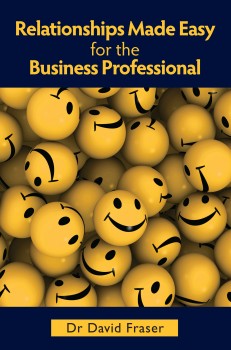
‘Relationships Made Easy for the Business Professional’ by Dr. David Fraser

relationships-made-easy-for-the-business-professional

David Fraser gets it! The struggle out there is the projection of the struggle in here. We can’t begin to heal the world until we heal in here.
Stuart Hepburn, NLP Trainer

In addition to being a good ‘read through’ this book is great to dip into when searching for some insight into what may be holding you back – there is a wealth of great content to help increase personal effectiveness.
Ian Laird, Managing Director NiTech Solutions Ltd.

About the Book*:
The ability to relate to other people is the most critical skill a person can ever have – at work, at home or anywhere else – and strong people skills simply make everything else easier. With the right approach, developing relationship expertise is an easy route to success and one of the few reliable and enduring ways we can improve our lives. But we need to take the task seriously.

Drawing on practical psychology, Neuro Linguistic Programming (NLP) and other wisdom from various philosophies, as well as first-hand experience of organizational life, David Fraser, Ph.D. offers a systematic, practical and intelligent approach to achieving success with other people. Packed with real-life examples and tried-and-tested steps to take, this book is for business professionals who want to develop their interpersonal relationship skills as a key strength.

In his “very positive, helpful and enlightening” and ultimately “uplifting” book, the author sets out the 12 essential areas of interpersonal insight and growth: (1) Attention to others; (2) Attitude; (3) Self-control; (4) Tuning in to people; (5) Personality; (6) Connection; (7) Values – working with what matters; (8) Language; (9) Self-awareness; (10) Attention to yourself – clarifying what you really want; (11) Balance; and (12) Love – the power of care.

The author includes with honesty a flavor of his own learning journey, and in the words of his readers, the result is “accessible and relevant,” “simply fascinating stuff,” and “very easy and interesting to read.”

Here are a few summary points I would like to share with you from each step in the book:

~ Persuasion, assertiveness, and logic aren’t in themselves the answer.
~ We can have a systematic approach to relationship skills using NLP as the basis.
~ The meaning of any communication is indicated by the response it gets.
~ Listen mindfully for maximum attentiveness.
~ Our habitual choice of visual, auditory, kinesthetic, and auditory-digital thinking affects our lives and our relationships much more than we probably realize.
~ We unconsciously filter the information we receive and have different preferences about what we filter for.
~ Remember: about seven percent of the meaning of what we say is conveyed in the words themselves. The rest of the message is in our voice and other non-verbal communication.
~ We delete, distort, and generalize information going from our own internal thoughts to what we actually say.
~ We project onto other people things about ourselves, good and bad, as they do on us

About David*:
Dr David Fraser has a track record of pioneering new approaches to old problems. He has delivered major projects for government and private sector clients in complex and challenging situations and set up a number of entrepreneurial ventures. He is a company director and Chartered Engineer with a First Class Honours degree and a PhD from Glasgow University and an MBA from Strathclyde University.

He is a qualified commercial mediator and a Neuro-Linguistic Programming (NLP) Master Practitioner and has trained with leading proponents of these disciplines. David has taken a particular interest in the skills we use to relate to other people, continuing this study over a number of years and through the highs and lows of professional and personal life.

David applies his unusual blend of expertise as a project manager and facilitator to support disparate groups working together in complex circumstances, including major collaborative projects and matters of national importance. He has also found the approach set out in Relationships Made Easy for the Business Professional to be extremely helpful in his home and family environment. David runs workshop and coaching programs for both organizations and individuals.

With his breadth of knowledge, an engineer’s talent for organizing systematic and reliable solutions, and an ability to write in an interesting, direct, and readable way, David is well positioned to address the age-old problem of how to build effective relationships with other people.
David lives with his wife and three children in Glasgow, Scotland.

You can order a copy of ‘Relationships Made Easy for the Business Professional’ online at Amazon. *this information came from Amazon.

Next, I would like to introduce you to a book on the business book list on Amazon: ‘The Corner Office: Indispensable and Unexpected Lessons from CEOs on How to Lead and Succeed’ by Adam Bryant.

‘The Corner Office: Indispensable and Unexpected Lessons from CEOs on How to Lead and Succeed’ by Adam Bryant

This book came out recently on the new releases (business) list on Amazon.

“The Corner Office is a modern management masterpiece. Adam Bryant distills and weaves together hundreds of gems from some of the most successful and intriguing executives on the planet. The result is one of the most delightful, readable, and useful business books I have read in years.”–Robert Sutton, Professor of Management Science and Engineering, Stanford University, and bestselling author of Good Boss, Bad Boss

“Compelling advice for the aspiring executive.… The conversational format makes these valuable lessons easy to comprehend and digest, and readers are left with a new understanding of leadership–why it’s important, how these experts have worked to attain it, and how they can do the same.”—Publishers Weekly

About the Book
Bryant, deputy national editor of the New York Times and writer of the “Corner Office” feature in the paper’s Sunday Business section, offers compelling advice for the aspiring executive. With interviews with more than 75 CEOs and other top executives at companies of all sizes, he compiles insights on such questions as what does it take to lead an organization? what are the keys to achieving the highest levels of success? Business luminaries like the CEO of Disney, the COO of Qwest Communications, the CEO of Continental Airlines, a vice chairman at Wal-Mart, and the founder of Zappos speak thoughtfully about team creation, keeping the mission on target, management, employee relationships, the importance of feedback, and the creation of an efficient corporate culture. The conversational format makes these valuable lessons easy to comprehend and digest, and readers are left with a new understanding of leadership—why it’s important, how these experts have worked to attain it, and how they can do the same. (Apr.)
(c) Copyright PWxyz, LLC. All rights reserved.

About Adam*:
Adam Bryant, the deputy national editor of The New York Times, has been a journalist for more than two decades. He was a business reporter for The New York Times during the 1990s, covering a variety of industries and topics, including airlines, aviation safety, executive compensation and corporate governance. He joined Newsweek in 1999 as a senior writer, and was promoted to business editor. After six years at Newsweek, he returned to the Times as an editor in the business section, where he oversaw coverage of the collapse of the Detroit auto industry, among other stories.

Adam was the lead editor for two prize-winning series: “Driven to Distraction,” about the dangers of cellphone use behind the wheel, which won the Pulitzer Prize for National Reporting in 2010, and “Toxic Waters,” about water pollution, which won a number of awards.

In March 2009, Adam started the weekly “Corner Office” feature in the Times’ Sunday Business section, and it quickly attracted a large and loyal audience for its insights about leadership and management from prominent leaders. For his book, The Corner Office, Adam studied the transcripts from more than 70 interviews, and looked for patterns, broader themes and lessons. He wove together their candid and wise insights into a book that offers timeless advice on how to succeed, manage and lead.

Adam lives in Westchester County, New York, with his wife and two daughters.

*courtesy of book website and/or Amazon

You can purchase a copy of ‘The Corner Office’ at Amazon.

Filed Under: Business Book, Business Life, Successful Blog Tagged With: Adam Bryant, bc, Business Book, Business Leadership, business relationship books, Dr David Fraser, successful leadership

  • « Previous Page
  • 1
  • 2
  • 3
  • 4
  • Next Page »

Recently Updated Posts

Is Your Brand Fan Friendly?

How to Improve Your Freelancing Productivity

How to Leverage Live Streaming for Content Marketing

10 Key Customer Experience Design Factors to Consider

How to Use a Lead Generation Item on Facebook

How to Become a Better Storyteller


From Liz Strauss & GeniusShared Press

  • What IS an SOB?!
  • SOB A-Z Directory
  • Letting Liz Be

© 2025 ME Strauss & GeniusShared