Successful Blog

  • Home
  • Community
  • About
  • Author Guidelines
  • Liz’s Book
  • Stay Tuned

Create Unique Content and Own Your Business Niche

June 13, 2014 by Rosemary

By Paul Biedermann, re:DESIGN

Sharing other people’s content on social media is nice, but the best content sharers are content creators. Makers. Producers. Originators.

create your own content

It’s one thing to cover that ’80s band on stage with a bad wig at the local fair — it’s a completely different thing to perform a song you’ve written and then share it with the rest of the world for the first time. If it’s good, people will snap to attention. If it’s not so good, well… people may head to the side area for a corn dog, but if it’s really, really good? You could soon find yourself on a much larger stage with a vastly larger audience.

Whether it’s a great song, a witty visual, an interesting article, a compelling video, or an innovative dance routine — making something new that only you could have made captures the imagination and sets you apart from the rest. Heck — being original is what moves the ball forward on the field of human civilization.

As social media continues to evolve — and as all media continues to evolve — the noise quotient goes up.

Everybody is a publisher these days with the potential to reach a vast, global audience within a matter of seconds. What you do with that incredible opportunity is up to you. It’s quicker and far easier to just share what other people have created. Most people do that and that’s fine. But if you want to separate yourself from the crowd, the best way to step it up is to use your own special talents and create original content for your niche that others will want to share.

If that sounds challenging, it is. A bit risky? Maybe. But it is also incredibly gratifying — not only to carve out your own unique space in this always-on, 24/7 online world of ours, but also to have produced something original — perhaps evolving into a broad body of work that could only have come from you. Hone those latent talents! Take a creative writing class, practice your on-camera skills or learn to draw!

The important thing is to be original!

That’s always preferable to going down a path of relative sameness. When you write a blog post, fuel it with passion and take an angle that’s different from what others are doing, even if the topic is a popular one. When you create an infographic, draw a diagram in the sand and photograph it to create your image — anything to be different! Some of the content that has the biggest potential for going viral isn’t necessarily the most polished, but it has a good idea and oozes originality. People love that!

Now that many of us have been on social media for a while, I sense that people are starting to rethink things a bit.

  • Where is the best place to put your time?
  • How can you most effectively manage the online presence you’ve worked so hard to establish?
  • Things change — how do you keep it all going, especially as more people are vying for attention online with no end in sight?

Define your business objectives.

Of course, it all starts with what you are trying to do and defining your business objectives — then developing a strategy that will best reach the people you need to reach, solidifying your brand.

This includes fortifying your efforts with content that will get noticed, get shared, and drive the results you’re looking for. But if you’re interested in real business results, and not just high follower counts of dubious relevance, producing original, unique content and developing relationships is the way to get there. And if you don’t possess the skills to create a specific type of content, that’s fine too. The most successful businesses source the talent they don’t possess themselves to bring their content to life and power their brands — anything less presents a less-than-professional vibe to the world that should not be taken lightly, for it is a reflection on you and your business. Mediocrity is rampant, and sometimes we need to put the ego aside and make an honest assessment of where our time and skills are best spent.

Keeping an eye on the bigger picture and how to achieve real benefits for your business over the long-term should always be central. Yet, to my continued surprise, there is far less talk about content creation and an over-abundance of talk about the tactics themselves — advice on how to use social media, the hottest online tools, SEO, etc. is everywhere — necessary and important, but mostly irrelevant when it comes to producing the kind of meaningful content that will truly make you stand out and get noticed.

There is an avalanche of content flooding the social streams — day in and day out — much of it looking the same, rehashed over and over again. It has only just begun. The time to focus on creating your own original, unique, valuable content is now. It’s also a lot more fun.

What are you doing to create your own amazing content?

Author’s Bio: Paul Biedermann is the Creative Director/Owner of re:DESIGN, a small design agency specializing in Strategic Design, Brand Identity, and Visual Content Marketing — intersecting smart design with business strategies that reach, engage, and inspire people to action. Blending traditional and leading-edge media tactics. Paul consistently delivers integrated, award-winning results for his clients. Connect with him on Google+ or Twitter.


Photo credit: Pixabay / Photo illustration by Paul Biedermann, re:DESIGN

Filed Under: Content, Successful Blog Tagged With: bc, Content, visual

Scaling Content Delivery to Fit Your Bandwidth

May 20, 2014 by Rosemary

By Lisa D. Jenkins

I wasn’t here last week. I know I promised more about visual content but something else has been wandering through my brain, and it’s taken me a bit by surprise. Because the connection is so weird.

Two months ago, I agreed to give CrossFit a 3 month try because The Husband, who loves CrossFit, has graciously embraced so many things I love – live Shakespeare, my quirky clothing choices, BBC television, wine, the crazy things I do to support the causes I believe in … he’s quite the sport.

Crossfit training

So on April 1, off to Arbor CrossFit I went with the goal of participating twice a week. In 2 months, I’ve been a total 4 times and here’s why: I refused to scale the workouts and I paid for it in over-exertion and injuries that equated to lost time. It’s entirely my fault.

I’m still not certain the workouts are for me, but I’ll tell you this: the culture at Arbor CrossFit has me committed to doing a full 3 months. Every person in that box is supportive, inclusive and helpful. They help everyone scale, because they want everyone to succeed. If your ego just won’t listen they’ll let you fail on your own terms but step up right beside you the second you need a helping hand to get back on track.

It occurred to me that I recognized something in this – and there was Liz Strauss whispering to my brain, “Surround yourself with people who won’t let you fail.”

If you’re in business, you can’t afford not to have a group of people like this. They can’t, won’t and shouldn’t do the work for you, but they can help you form an achievable plan and make the right choices. They’ll tell you when the load might be too big. They’ll help you figure out how to scale until you can carry that load. They’ll nudge you when you need to step into something bigger. I have that and it’s invaluable.

If you’re like me, the thought of blogging is rough. And when you read that ‘everyone’ says you should be writing on your blog every day, you get worried. Worried to the point that you never write a word, even if you have something valuable to say, because the thought of failing to publish regularly is paralyzing.

‘Everyone’ is wrong. In case you don’t have someone in your corner yet, I’m taking today to invite you to join me in scaling the weight of content delivery to something that’s manageable for you, so you can get started or re-start.

Try this: write a single post. How long did that take you, from start to finish? I mean to the point where it’s fully polished, proofed and publishable – because grammar and punctuation matter just as much as the image you include. Think about how often you can take that much time to write. Is it once a day? Bully for you! Is it once a week? Also amazing. If it’s twice a month, I’m right here cheering you loud and proud because that’s what you can commit to. Don’t take on a commitment you can’t fill. Publish a few articles consistently and over time you’ll know when you’re ready to bump up the blog delivery.

And if actual writing isn’t your thing? Find another way to tell others about what you do. Share how-to’s on SlideShare, replace long text reports with infographics that share key data findings, and if talking is easier for you, record podcasts instead of publishing articles. Communication isn’t a cookie-cutter proposition – modify the tools you’re comfortable with to deliver your message. (This by the way is a helpful bit of advice I received from my own core group – #Table2!)

I can’t tell you how I got from CrossFit to content – my brain is a weird and mostly wonderful place like that. But I can tell you this: I didn’t name my own sadly neglected blog the Occasional and Erratic Blog for nothing. I’m afraid to commit to writing. Publishing here twice a month is a serious stretch for me.

Now it’s your turn. Will scaling help you publish something online more often? Ready to commit? Tell me what you’re aiming for and every time you hit publish, come back here and share the link. I’ll check it out and give you a virtual high-five, a clap of the hands or anything reasonable you request. Let’s do this!

Author’s Bio: Lisa D. Jenkins is a Public Relations professional specializing in Social and Digital Communications for businesses. She has over a decade of experience and work most often with destination organizations or businesses in the travel and tourism industry in the Pacific Northwest. Connect with her on Google+

Photo Credit: Joint Base Elmendorf-Richardson via Compfight cc

Filed Under: Content, Successful Blog, Writing Tagged With: bc, Content, Writing

Infographics: More Than Just a Pretty Face

April 22, 2014 by Rosemary

By Lisa D. Jenkins

Aesthetically appealing, colorful collages of text and imagery that combine to quickly share complex information in bite-sized quips of stats. They drive shares, visibility and clickthroughs at an accelerated rate. They’re infographics, and they’re everywhere.

If you’re ready to add info graphics to your own online content strategy, here are some basics to get you started.

What’s Your Message?

To build a coherent visual representation, you need a focused story line. You have to know what you want to say. What data will you use? Do you want to:

  • Tell the story of your brand?
  • Segment industry stats?
  • Generate product visibility?

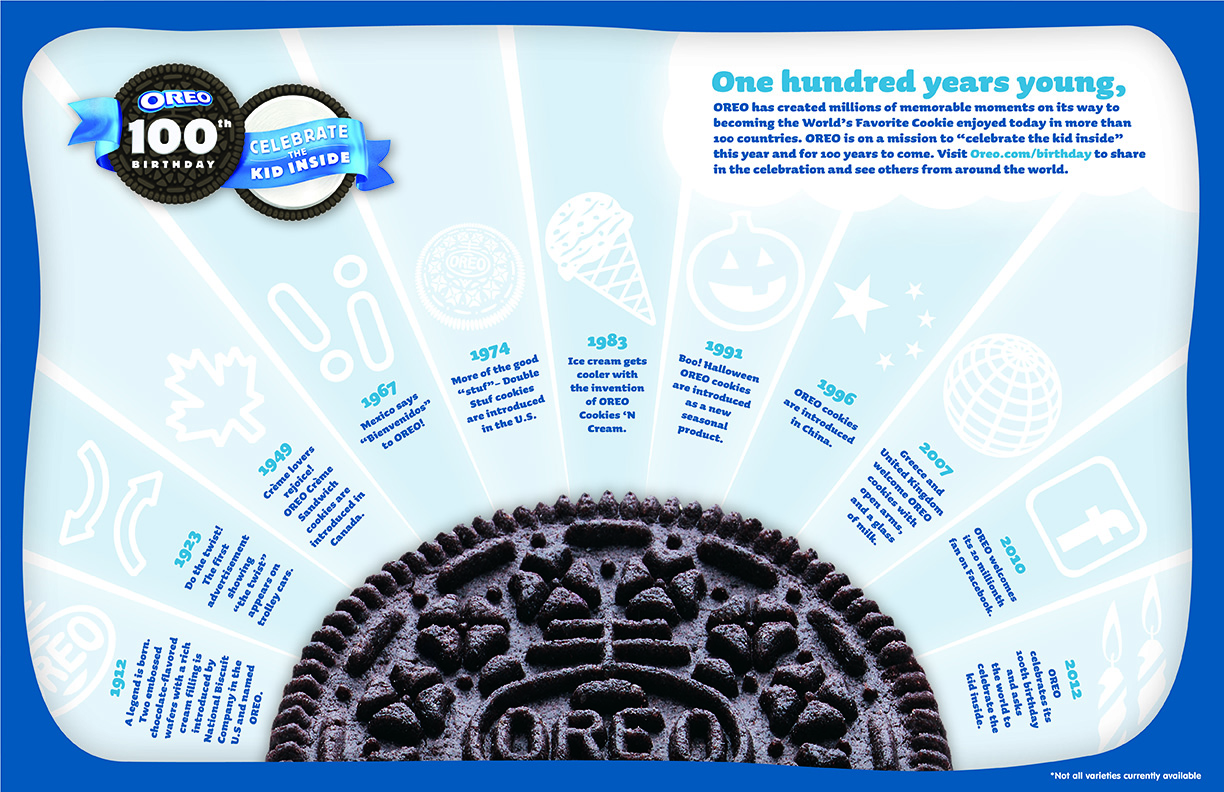
Kraft used the occasion of the Oreo’s 100th birthday to demonstrate the cookie’s history with an infographic.

Oreo 100th Birthday infographic

Why Are You Sharing Your Message?

The answer to this question is not, “Everyone has an infographic so we need one, too.” As with any marketing endeavor, there has to be a goal for investing resources into creating your content. Aside from driving traffic, will your infographic:

  • Create brand affinity or loyalty?
  • Educate stakeholders on trends?
  • Ask viewers to self-segment so you can refine marketing campaigns?
  • Convert prospects to customers?

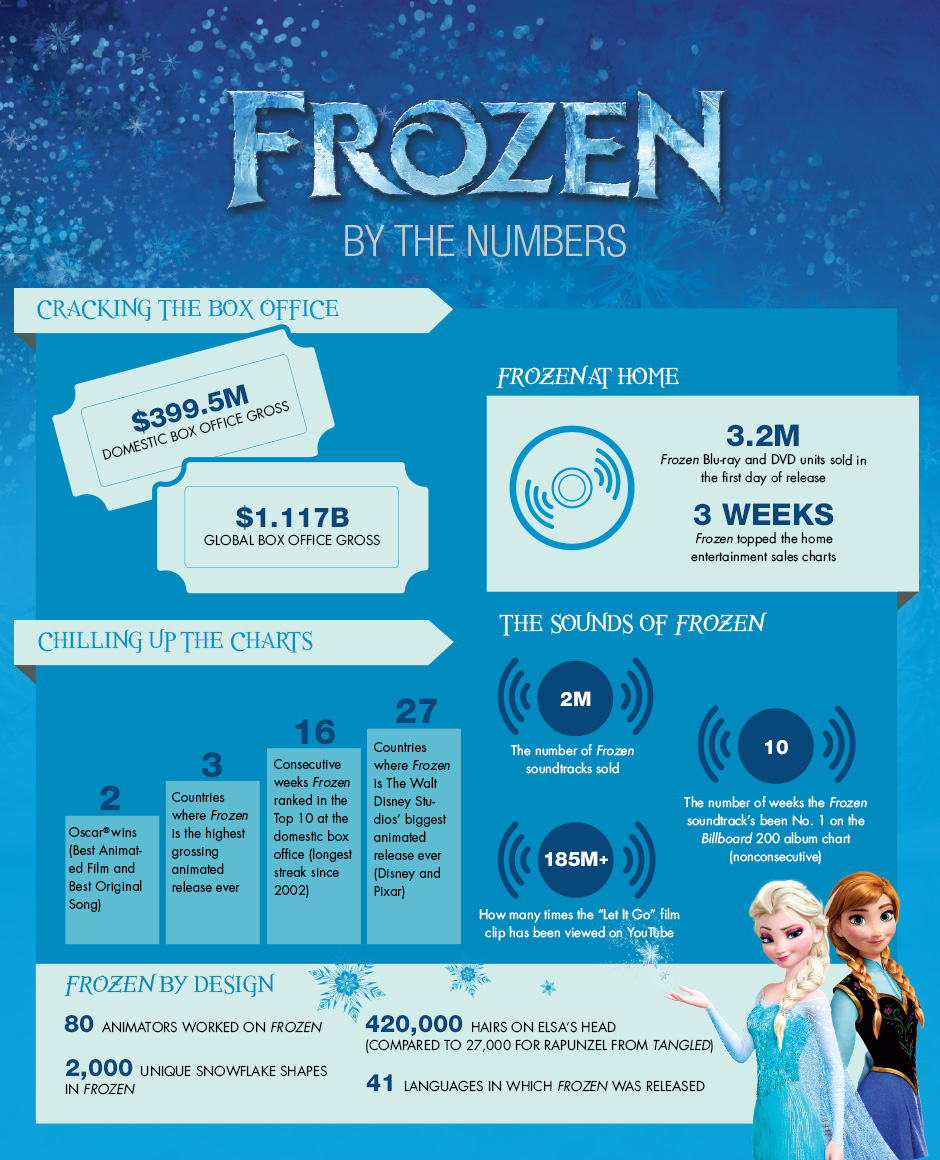
The Walt Disney Company used this infographic to illustrate the success of Frozen.

Frozen movie infographic

How Will You Share Your Message?

Seriously. What do you want this to look like? All the things that go into creating a successful visual apply here. Take some time and align your design with your goal. Think about:

  • Color palette
  • Font choice and size
  • Graphic elements
  • Layout

Where Will You Share Your Message?

You’ve got your infographic published to your site, now what? As with any owned content, you’ve got to promote it. Make sure it’s branded so people can find you and help you meet your goal, then:

  • Publish it to your social channels and remember to include the right size image preview for each platform.
  • Submit it to infographic galleries; don’t forget Flickr.
  • Allow people to embed your infographic.

Create Your Own Infographics

When you’re ready to tell your story with an infographic, here’s a list of DIY tools you can use.

  • visual.ly
  • easel.ly
  • Picktochart
  • Infogr.am

The appeal and importance of visual content, and infographics in particular, are undeniable. That said, I urge caution. The written word still holds value and as the use of infographics becomes more prevalent, I’m beginning to miss the days when people could connect their thoughts, ideas and data together with words.

I understand the attraction, but I fear a return to communicating solely with images and losing the nuance of language.

Author’s Bio: Lisa D. Jenkins is a Public Relations professional specializing in Social and Digital Communications for businesses. She has over a decade of experience and work most often with destination organizations or businesses in the travel and tourism industry in the Pacific Northwest. Connect with her on Google+

Filed Under: Content, Successful Blog Tagged With: bc, Content, infographics

Content: Serving Up the Same Thing Differently

March 18, 2014 by Rosemary

By Lisa D. Jenkins

Where I used to live, there’s a thing called Bite-Size. When I moved there, I assumed it was similar to finger steak I couldn’t have been more wrong.

Bite-Size is made with 2-inch hand cut chunks of beef and each restaurant has its own proprietary seasoning and cooking technique. One does a dry rub with batter and deep fry, one marinates and broils, while another seasons and grills. You order it cooked to temperature, just like a steak and depending on where you go, it’s served au jus, with tartar sauce or with ranch.

In a town of 100k or so, there are no less than 10 privately owned restaurants that serve their own version of Bite-Size, and each restaurant’s version has a fiercely loyal customer base. Ask any meat-eater in the valley and they’ll tell you exactly why the Bite-Size they love is the best and why you should try it.

How does that happen with a product that’s basically the same? Easy; every customer has a unique set of taste buds. Even yours.

Content is a lot like Bite-Size.

Regardless of the industry you’re in, the content you publish most likely bears some resemblance to the content your competitors publish. “If that’s true, why should I bother,” I hear you ask. Because it’s the flavor of what you deliver that strikes a chord with your customers and makes them come back for more of what you’ve got.

While you and Competitor X are both publishing content around Widget A, your target customers are not the same. They’re segmented by their very real preferences for things like the language you use, color, brand voice, etc. And they choose who to do business with based on those preferences.

That’s why it’s important not to mimic what others in your industry are doing too closely. You don’t want everyone’s attention, you want the attention of people who are going to stay with you.

Individuality will draw the right people to you.

NorthFace is very down to business, no frills. The phrase high tech – low drag comes to mind. The Husband prefers NorthFace’s delivery and that’s what’s allowed in his Inbox.

NorthFace email newsletter

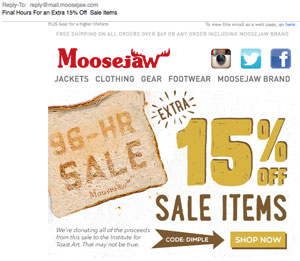
Moosejaw is all sorts of silly and fun. I giggle every time I see a newsletter from them in my Inbox and it makes me smile to spend my money with someone who understands the importance of humor.

Moosejaw email newsletter

Same basic products, different flavor.

Content strategy isn’t not about making sure you’re posting the same, keep-up-with-the-joneses content everyone else is. It’s about sharing that message with your own voice so that the people you want to attract find it valuable and recognizable.

Call it perspective, call it secret sauce, call it seasoning … how do you prepare and serve up your content to stand apart?

Author’s Bio: Lisa D. Jenkins is a Public Relations professional specializing in Social and Digital Communications for businesses. She has over a decade of experience and work most often with destination organizations or businesses in the travel and tourism industry in the Pacific Northwest. Connect with her on Google+

Filed Under: Content, Successful Blog Tagged With: bc, Content, email, newsletter

It’s All “About Us”

January 7, 2014 by Rosemary

By Myrna Vaca

The “About Us” page on your website provides a great way to give your potential customers the lowdown on why they should be doing business with you and to remind your current customers why they are purchasing your products and services. Unfortunately, some companies pass up this golden opportunity to tell the world how great they are.

Other than your home page, “About Us” is probably the most widely read section of your website. Visitors go there to find out more about your company and to decide if they want to continue searching your website for additional information. Don’t disappoint them.

Tell Your Tale

Your initial goal in creating your “About Us” page should be to grab the visitors’ attention and encourage them to stay a while. The story you tell should be interesting and well-written; if you’re not a writer, consider hiring one to turn your thoughts into a literary masterpiece – or at least into an engaging narrative.

Here are some ways to give people some insight into who you are and why they should trust you enough to do business with you. This is especially important for online stores because your customers don’t see you face-to-face.

  • Include a short bio about your background, education, experience and credentials, along with a photograph of yourself. If you have employees, include information and photos to introduce them to your potential customers as well.
  • Offer information concerning the products and services you provide.
  • Put together a statement that tells your potential customers what sets you apart from your competition.
  • Explain how and why you started the business.
  • If there’s an interesting story about the products you sell, tell it. And don’t be afraid or too humble to tell people about what motivates you. Tell them why you can’t wait to wake up every morning and get to work.
  • Do you have a vision for your business? If you do, tell your potential customers about your dreams and where you’d like the company to be in a decade or so.

Spreading the Word

There should be other important information on your “About Us” page besides your personal story and the story of your business. Here are some other important details for you to include.

  • Testimonials – These will help you establish credibility. Your satisfied customers are your best advertising.
  • Awards – If you’ve been cited by a professional or community organization, tell people about it.
  • Media coverage – If the local newspaper or an online magazine has published a story about you or your business, provide a link on your “About Us” page.
  • Press releases – If you aren’t a writer, hire one to put together press releases about your business. You can send them to print and online publications, and you should have them available on your site as well.
  • Newsletter – If you don’t have a newsletter that you send to customers and potential customers on a regular basis, maybe you should consider establishing one. The “About Us” page is a good place for a link that allows visitors to sign up for the newsletter.
  • Blogs – If you or your employees are blogging about your products or services, it’s a good idea to provide a link from your “About Us” page.
  • Social media – Make it easy for people to interact with you with links to your Facebook page and other social media platforms.
  • Picture this – Photos are great, but only if they are of real people and places.

Consider Your Customers

Now that you’ve put together all the important information about you and your business, you should dedicate some of the space on the “About Us” page to your customers and those that you hope will someday be your customers.

  • Facts are important – Boast about it if you know that your products are shipped on time 100 percent of the time and that you ship the right product 99.5 percent of the time.
  • But don’t make stuff up – If you don’t have statistics that make your business look reliable, don’t fabricate them. Instead, explain what your goals are and how you intend to meet them.
  • Congratulate yourself – Tell your potential customers about the important certifications you’ve earned and awards you’ve won. You’ll have to decide which ones are important and which ones aren’t.

Your “About Us” page can serve as a great marketing tool, but just because you’re happy with the page you create today doesn’t mean you should be satisfied with it tomorrow. You should continually update the page, especially when you enhance your education or experience, obtain major customers or gain a foothold in new markets.

Author’s Bio: Myrna Vaca is the Head of Marketing and Communications at Lyoness America, where she directs media relations, branding, advertising and website development. Lyoness is an international shopping community and loyalty rewards program, where businesses and consumers benefit with free membership and money back with every purchase. Check out Lyoness on Twitter.

Filed Under: Blog Basics, Content, Successful Blog Tagged With: bc, Content, Design, website

How to Avoid the 6 Most Common Business Blogging Mistakes

August 23, 2013 by Rosemary

By Landon Lourell

If you have your own business, then you’ll definitely want to make sure that you use all of the tools available to you in so that you can reach as wide an audience as possible and start building up a platform. One of the most powerful platform building tools out there today is blogging.

Before you jump in and unleash your first blog on the business world, you’ll want to make sure that you’re doing it the right way. Put your excitement to the side for just a moment and do some research to see what makes a blog popular and what makes a blog a complete waste of time for you and your audience. There are six mistakes in particular that a majority of bloggers seem to make that can tarnish your business blog.

1. Neglecting to Include a Bio

It doesn’t matter how magnificent, insightful and informative your blog posts are, readers want to know who you are and what kind of business you have. Be sure that you have a full ABOUT US page somewhere on your blog, preferably in a location that’s easy for readers to see. On the ABOUT US page, include a bio and either a picture of you if you’re the sole proprietor of your business, or a picture of you and your staff. Doing this allows your readers to connect with you and your business instead of you just being a faceless, nameless blog.

You should also be sure that you have either your name or the name of your business prominently on your blog. The header is one of the best spots for this. By including your name in the header, you’ll make it easier for search engines to find you and your awesome blog posts. Your name and the name of your business are your brand, always remember that.

2. Lack of Contact Information

Think of what it’s like reading one of the best blog posts you’ve ever read and wanting to get in touch with the author only to find no sign of contact information. Readers shouldn’t have to spend time going over your blog with a digital fine-tooth comb trying to find an email address, website address or phone number where they can reach you or a representative of your business. You never know how many valuable business connections you can make with your blog, but you won’t make any at all if no one can reach you. Be sure to add contact information on your ABOUT US page.

3. Lack of Information About Your Services

Let readers know what type of services you offer. Be as specific as possible when describing your services, so that you don’t confuse anyone and make sure that your blog posts are relevant to the kinds of service you offer and the industry that you’re in. You’ll get a lot of raised eyebrows if you’re an economist writing blog posts about how to put antique cars together.

Your blog should be a place where you share information, interact with your audience/potential customers, and offer free tips. Readers don’t want to feel like they’re reading a sales ad for your business every time they visit your blog. There’s nothing wrong with a plug here and there, but focus more on giving than getting.

4. Having Too Many Blogs

There’s no need for you to have multiple blogs if you have multiple services; all that does is give you more posts and things to write about on the one blog that you have. If you decide to have multiple business blogs, one or more of them is sure to be neglected. Some blogging platforms give you the option of having more than one page for your blog where you can post about different subject areas. Readers don’t want to have to bookmark all three of your business blogs when it’s better and easier for the both of you for you to just have one blog. If your readers receive an email notification every time you post a new blog and you update all of your blogs on the same day, you’ll clutter up their inbox, which is a huge no-no.

5. Not Including a Link to Your Website

Be sure that you include a link to your business website on your blog. Think of your blog as another chapter in your novel. Give your readers a table of contents so they know exactly where to go when they’re in need of a certain type of information. With links, you’ll want to be careful that you don’t have too many of them as this can potentially scare readers off. In today’s fast paced world where most people have a short attention span, who has the time or the desire to click through ten different links? Besides a link to your business website, include links to any articles or guest blog posts that you’ve written or that your business is mentioned in.

6. Making Commenting All But Impossible

Making readers jump through a variety of hoops just to leave a comment will more than likely frustrate them and cause them to abandon the whole thing. When you get a sizeable audience, you might have to be more diligent about keeping out spambots, but in the beginning you don’t really have to worry about them too much.

While these are the most common blunders to avoid on your business blog, a few more you’ll want to avoid include filling your blog with unnecessary graphics, having long load times for your blog and blogging inconsistently. Have fun with your blog and make it your own, but make sure that you have a few ground rules in place before you start.

What are some of the most glaring errors and missteps that you’ve noticed on other blogs, business or otherwise?

Author’s Bio: Landon Lourell is a marketing associate with MonsterDisplays, an online source for trade show displays. Landon is passionate about all things business marketing related and enjoys sharing his knowledge with others through blogging.

Filed Under: Blog Basics, Checklists, Successful Blog, Writing Tagged With: bc, business-blogging, commenting., Content

  • « Previous Page
  • 1
  • 2
  • 3
  • 4
  • 5
  • 6
  • Next Page »

Recently Updated Posts

Is Your Brand Fan Friendly?

How to Improve Your Freelancing Productivity

How to Leverage Live Streaming for Content Marketing

10 Key Customer Experience Design Factors to Consider

How to Use a Lead Generation Item on Facebook

How to Become a Better Storyteller


From Liz Strauss & GeniusShared Press

  • What IS an SOB?!
  • SOB A-Z Directory
  • Letting Liz Be

© 2025 ME Strauss & GeniusShared