Successful Blog

  • Home
  • Community
  • About
  • Author Guidelines
  • Liz’s Book
  • Stay Tuned

Do You Know the Six Stages of a Dysfunctional Project?

May 29, 2009 by Liz

relationships button

Sometimes it’s nice to do work things on the weekend–to use the free time you have to get a jump on the next week.

Some projects raise the bar to meet our ability to put in extra time. Don’t give up your life to make your work go faster. You could find yourself living less and less and working more and more instead. And in the end, you might end up a wreck rather than feeling like you’ve done something worth accomplishing.

Project problems can seem like one-of-a-kind things — certainly they’re only related to this awful project, this difficult client, this inexperienced team member. But if every project has it’s problems, then something dysfunctional is happening.

The Six Stages of a Dysfunctional Project
1. Enthusiasm
2. Disillusionment
3. Panic
4. Search for the Guilty
5. Punishment to the Innocent
6. Praise and Glory to the Non-Participants.

How do you spot a dysfunctional project on the horizon?

–ME “Liz” Strauss
Work with Liz!!

Buy the ebook. Learn the art of online conversation.

Filed Under: Inside-Out Thinking, Motivation, Successful Blog Tagged With: bc, life., Productivity, project management

The Castaways of Survivor SxSW Austin: How to Find ADOS Immunity at a Huge Conference

March 23, 2009 by Liz

Off to the Island We Go

I was still a young pup when I discovered the key to conferences. It doesn’t matter what industry you’re in. They’re arranged, funded, and attended by people. People at conferences seem to fall victim to the same behaviors. By the end, the folks leaving can look like they’ve lived a season of Survivor — Take for example this recent conference: Survivor SxSW Austin.

People were off to the island of Austin. Soon enough SxSW castaways realized that their ties to home were gone. We started saying hello; finding common ground; seeing who had a SxSW badge, forming our teams. The people of the town, the people of restaurants, the people in the cars, cabs, and hallways become like so much scenery — we only interacted with them when we needed essentials — food, clothing, and shelter (well, mostly food.)

Survivor SxSW became Reality 2.0. Anticipation was high. Possibilities were higher. Intentions and expectations were everywhere. “Do everything” looked like the only option between now and home. Survival required focus and follow through in the alien environment that only a huge conference can be. The folks who came without training were at a serious disadvantage.

The 3 questions on the Survivor site were heard throughout the week.

  • Who’s most under-estimated?
  • What’s the wildest moment so far?
  • Which castaway seems most out of their element?

Who would be left standing at the end of a week?

It’s easy to feel alone. No one gets automatic immunity. You have to find your own.

The Castaways

Huge conference after huge conference the cast doesn’t seem to change. Let me introduce you to the folks I always see. They were there last year … but like a new season of Survivor, they seemed to be the same people with different names.

  1. The first timer: She was glad to be there and overwhelmed that everyone knew what she didn’t — that just because you know 100 people at the same conference, it doesn’t mean you’ll see any of them. She’s was soon wishing she’d come with comfortable shoes, with a plan, with a friend to keep her company.
  2. The up and comer: He went for the win. In a few hours, everyone knew him. He was networking until the cows came home, or at least back to his hotel. You’ll know him by the number of flickr pix that you find tagged with his name. Do you have a copy of his book? Wait, he hasn’t had time to write it yet.
  3. The information junkie: Her head was in the panels. She could quote chapter and verse of the keynotes and blogged every question. Her program was worn to shreds from handling by Day 2. She exchanged cards with every speaker, but didn’t really have a conversation the entire week.
  4. The party monkeys: Each morning they built alliances on the list of parties they’d attend that evening. The next day they spoke slowly about how long the lines were. They lost their voices and their hearing by bits with each new sunrise.
  5. The rockstar: She showed up for appearances, did her gig, smiled at fans, shook their hands, and disappeared almost as quickly. She might have gotten off most easily because her unreal fame fits the unreality of the conference with a resonating rhythm.
  6. The social jockey: He decided what to do and which people to spend time with based on whether they add to his visibility. You know your star is rising if his kind spoke with you this year.
  7. The sponsors and the sponsored: They worked their butts off and hardly had time to talk. They made everything happen. When they had downtime they talked business or partied like the attendees.
  8. The camera crew: The camera crew was busy with their cameras. They are not allowed to interact while the cameras are on. They’ll experience the conference when they look through their flickr accounts.
  9. The pros: They treated the conference like a Twitter stream — taking part in what they found valuable, letting the rest go by. They did business. They attended some sessions and events. They skipped others for quality conversation. They got sleep every night. They kept their feet on ground and their thoughts in perspective.

Lots of regular folks were there too, by Day 4 they were easy to identify. They were the ones who were still awake and itching to find their own pillow. A Survivor Experience can wear on the most grounded psyches. These are the folks who disappeared from the interwebs when they got home.

How to Find ADOS Immunity at a Huge Conference

Lots of great things happen at conferences. SxSW is outstanding for what it offers –incredible opportunities to expand your network and constant input to move your thinking to new levels. You’ll meet great people and if you try, you’ll get a chance to know them. To be successful, you need to find immunity to an extreme case of ADD that someone called ADOS — AD-oooo shiny.

Five ground rules will help.

  1. Build your network before you go. Meet people via email and telephone long before you get to the “island.” Huge conferences are more valuable if you already have a connection to the people you’re going to meet. You’ll also find that more of the meetings that you plan will actually take place.
  2. Invest in a goal. That will give your conference a direction and a basis on which to make decisions about what to do next when unexpected opportunities jump in front of you.
  3. Only plan 3 – 5 things each day and be lethal about getting those done. Interruptions and opportunities to explore people, places, and conversations will be everywhere all day long. If you find you have time to do more than you planned, you’ll be ahead of the game.
  4. Make time for at least one important conversation daily. Go to lunch with smart people. Talk about smart things. A week of continuous small talk can make any person feel shallow, insecure, and a little lost.
  5. Make time for sleep. Don’t think you can do everything. No one will notice if you missed that third party on Tuesday. Everyone will notice if you look a wreck and can’t think by Day 3.

Those few strategies can help keep your balance. You’ll accomplish your goals, get a return on your investment, and learn plenty from just being there. You’ll head home a Survivor, feeling like the tribe was worth every minute you spent in their company.

What do you do to survive huge conferences?

–ME “Liz” Strauss

Register for SOBCon09 NOW!!

Work and network in a small quiet space with a dream team.

Filed Under: Marketing /Sales / Social Media, Successful Blog Tagged With: bc, conferences, LinkedIn, Marketing /Sales / Social Media, Productivity, relationships, SXSW

Creative Batteries: How Far Can You Go on a Single Charge?

February 12, 2009 by Guest Author


by Seth Simonds

How long can you work on a creative task before you need to recharge?

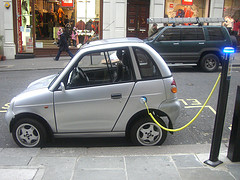
I like to think of my creative energy in terms of a little electric car. Not a beautiful and fast electric supercar (who am I kidding?) but a little bee-bop two-seater with an 8-inch steering wheel. If I had a picture of my creative energy, it’d look a lot like the one in the photo, only blue.

Thinking in terms of a small electric car allows me to plan for my projects based on three factors:

  1. My Range: I’m good for about 150 miles of projects before low-battery warnings start to sound. Sure, I can push a bit more, but if I do, I’ll need to take an extended break before I can get back to work in top form. There’s a time to push ahead through blinding exhaustion in order to get a task done but I try to avoid it.
  2. My Itinerary: Having a plan means I’ll know when to stop  for breaks so that I keep myself charged and can bring a project to completion. Planning can seem like a dreadfully dull portion of a project but the resulting energy makes every moment of planning worth the effort.
  3. My Destination: If you’ve ever driven a car the size of my creative energy, you know that it can be hard to see over and around the larger vehicles involved in a project. Financial restriction trucks block intersections and deadline buses will try to run you off the road. Having a clear idea of what my end product allows me to stay focused no matter what short term distraction comes up.

I’m not a tireless machine that can happily trudge around social media stapling smiles to telephone polls and posting stump speeches on my blog without ever needing a break. I’m more like that little electric car, using power at a discernible rate. I get worn out during projects and find myself growing frustrated with people over things I’d never notice if I were getting enough sleep. I get dismayed by human nature and sometimes catch myself saying things like “I hate people” even though I don’t really mean it.

That all changes when I’ve planned out a project and know what my destination is and how I plan on reaching it. When I take time to recharge by quietly reading a novel, talking on the phone with a friend, or going for a walk, I find that my energy level stays high and projects are completed with a flourish. Bringing a friend along for the ride can add a lot to a project as well. The picture of the car shows only two seats but there’s room for a lot more people than you’d imagine!

What do you do to keep your battery charged?

Seth Simonds is about writing, networking, sharing in crazy conversations with brilliant people. He writes at Seth Simonds.com
Follow him on Twitter: @sethsimonds
photo credit: Flickr: frankh

Buy Liz’s ebook to learn to the art of online conversation.
Register for SOBCon09 NOW!! See your online network explode!

————————————————–

Filed Under: Motivation, Successful Blog Tagged With: bc, LinkedIn, Productivity, Seth Simonds, time-management

Inspiration When You’re Not Inspiring

August 11, 2008 by Liz

Be Productive

Puppy

In a perfect world, I might find every day motivating. I might wake up inspired and inspiring, filled with energy and energizing those around me.

It’s hard to do some days, especially on Mondays.

But I’m learning. . . .

I don’t think I’ll ever hit the ground running when my uninspired self is in the building. I’m learning not to force things. When I push myself to be more than I’ve got with me, I somehow start pushing other people and pushing over things.

When I’m uninspired I walk slowly, make room for big thinking, and do something to improve while I wait for the idea machine. Accomplishing one thing — a clean space a new blog post — can be incredibly inspiring.

How do you get inspiration when you’re not feeling inspiring?

–ME “Liz” Strauss
Work with Liz!!
Image: GeekPhilospher – free photo

Get your best voice in the conversation!

Filed Under: Motivation, Successful Blog Tagged With: bc, inspiration, Ive-been-thinking, Motivation/Inspiration, Productivity

Social Networking: Do You Need a Memory Upgrad . . . ?

June 26, 2008 by Liz

What Was the Question, Again?

Personal Identity logo

Someone writes a comment, sends you IM, or walks up to you at a trade show and makes it clear he’s met you before. He’s acting like you’re the best of friends. But you have no clue who the guy is.

Been there . . .

Do You Need a Memory Upgrade?

Does that mean we’re losing our memory? It’s probably not memory loss, but it could be sure sign that we need a memory upgrade. Forgetting people and information can be a seriously liability to success these days.

Relationships are build on experiences that went before. We have to remember the experiences for the relationships to move forward in a good way.

Here are three ways we forget . . .

  1. Fading: We meet someone and forget his or her name seconds later. That’s called fading. We didn’t move the name from short-term memory into “working memory.”
  2. Interference: New information can interfere with old information. Old information can also mix up with new information.
  3. Distortion: When we have vivid recollections of events only to find later that the events happened differently.

Ten Ways to Upgrade Your Personal Memory Bank

We all have the power to rebuild our memories by doing simple things when we’re learning new information.

  1. Think about what you’re learning and be sure you’re clear on it. Try to restate when you know in other words
  2. Associate new information with something you already know. “Oh Joe, you’re a friend of Joanna Young! So is Bob Hruzek!”
  3. Being fully present when you lrarn new things to keep old information separate from what you’re learning. Don’t be playing on Twitter the first time you use Plurk.
  4. Break big blocks of information into smaller chunks. Practice one point on this list until you have it as a habit.
  5. Involve as many modalities — visual, auditory, kinesthetic — as you can. See things. Talk about them. Touch them while you’re at it.
  6. Overlearn things by teaching someone else.
  7. Apply the information quickly. When you’re introduced, use the person’s name immediately.
  8. Repeat things that you think you might forget. 2+3=5, 2+3=5, 2+3=5 . . .
  9. Debrief and retell important events with people who were part of them as soon as you are able. That was a fabulous podcast! Let’s debrief on what happened!
  10. Blog your experience. Last night I met Eric Benderoff at the blogger meetup hosted by Gas Pedal.

Doing what you can to “defrag” your brain is also a great idea.

First impressions are important as ever, but they sure lose their glow if on the second go we can’t place the person we met.

Having a great memory is powerful way to demonstrate we value relationships. Everyone likes to be remembered. Nothing beats a second meeting that easily moves the first meeting forward. People respond when we invest in them — they invest back.

How do you keep your memory fast and functioning?

Click for more information on Memory and Information Processing.
–ME “Liz” Strauss
Work with Liz!!
Buy the ebook and find out the secret.

Filed Under: Productivity, Successful Blog Tagged With: bc, memory, personal brand, Productivity, social-networking

Show Your Workspace Some Love

June 13, 2008 by Liz


I Don’t Read Your Desk

Messy Desk


Productivity.

A desk is like a garage — it’s where you keep your tools. It helps if it’s organized, but your car will run fine when it is not. But messy writing is a sign of messy thinking. It’s proof our ideas aren’t under control. No one wants to be behind the wheel with someone who can’t keep the car on the road.

The thing is it’s a whole lot easier to do clear focused thinking when we don’t see clutter all around us looking back. If we take a few minutes to straighten where we work, our thought come through more easily. Here’s a way to make work more motivating when you return Monday morning.

Friday’s Answer to a Motivated Monday

Finish your last work task early on Friday, so that you have time to complete this list. If you’re working late this week, do all you can to take a “last half hour” anyway. On Monday morning, you’ll be glad you did.

  • Put things done away.
  • Lay out things that still need attending to. Mark what needs to be done. Make a to-do list, if that’s your way.
  • Use the things you laid out to make a plan for next week. Decide what you will tackle first and what your three most important goals will be.
  • Order the Monday tasks by putting what you can get done fastest first. Do this for two reasons. You’ll quickly have a sense of accomplishment, and you’ll be able to pass on what you finished to someone else can take that piece to the next step.

Then consider the week closed, leave the work at the office, give your brain a break, and have a weekend. What a great way to remind yourself and everyone else that you can enjoy your job — head for the weekend with an office that looks like it could be in a magazine . . .

Whether you work in a building away from home or in your bedroom, it’s boost to your Monday to walk back into a space that’s ready to work in.

Don’t you think the way that we take care of ourselves shows in our work? Show your workspace some love. You’ll feel it back guaranteed.

–ME “Liz” Strauss

Related articles
Brand YOU–You Are What They See
Brand YOU–What’s the BIG IDEA?
Don’t Let Burn Out Singe Your Brand

Filed Under: Motivation, Successful Blog Tagged With: bc, personal brand, Productivity, success, thinking

  • « Previous Page
  • 1
  • …
  • 11
  • 12
  • 13
  • 14
  • 15
  • …
  • 20
  • Next Page »

Recently Updated Posts

Is Your Brand Fan Friendly?

How to Improve Your Freelancing Productivity

How to Leverage Live Streaming for Content Marketing

10 Key Customer Experience Design Factors to Consider

How to Use a Lead Generation Item on Facebook

How to Become a Better Storyteller


From Liz Strauss & GeniusShared Press

  • What IS an SOB?!
  • SOB A-Z Directory
  • Letting Liz Be

© 2025 ME Strauss & GeniusShared