Successful Blog

  • Home
  • Community
  • About
  • Author Guidelines
  • Liz’s Book
  • Stay Tuned

Cool Tool Review: Personality Inventories

September 23, 2010 by Guest Author

Todd Hoskins chooses and uses tools, products, and practices that could belong in an entrepreneurial business toolkit. He’ll be checking out how useful they are to folks in a business environment.

Cool Tool Review: Personality Inventories
A Review by Todd Hoskins

A few years ago Liz looked at the Myers-Briggs Type Indicator through the lens of personal productivity. For years, organizations have used personality tests to evaluate leadership styles, workplace interactions, and for team building. I think personality inventories are a great tool for examining interpersonal relations within a company, and can be a valuable tool for personal growth as well.

What I do not like . . . Companies that make hiring decisions based on personality test results are trying to mechanize their workforce. It is a bad practice, regardless of the research that supports it. If you have a role and need it to be filled by a “type,” then you will likely not get more than the type. The best hiring managers I’ve known make decisions based on qualifications, proven work experience, cultural fit, and gut instinct. The “ideal candidate profile” is just a way to expose your own needs. At some point, it needs to be questioned. (Don’t we all have stories of the “crazy hire” that turned out to be brilliant?

So, let’s be clear. You are not a type. You are a person who has patterns of behavior and preferences that can be categorized, but there will always be anomalies. No test can tell you (or your boss) who you are, but it can be an effective:

  • Conversation starter
  • Evaluation of biases and prejudices within your organization
  • Tool for evaluating work styles
  • Impetus for individual growth

Personally, I am a fan of Carl Jung, so I do like the MBTI. You can take a quick online test here. The online tests (especially the free ones) are not comprehensive, but every online test I’ve taken over the past eighteen years has confirmed the results of the first professionally administered test: I am an ENTP. Some would say this would make me an excellent dictator, assassin, CIA agent, or freelance writer. After taking the test, here is a good place to start looking at the type.

What can you do with it?

  1. Have a conversation: Does your office environment respect and nurture the various types?  Or, do you prefer some qualities more than others?  There is strength in diversity!
  2. Do you know how to talk or work with your boss in ways that are effective?  Peers?  Employees?  Customers?  SpeedReading People has made a business out of this, and I recommend their services.
  3. What are the strengths?  What areas are lacking?  Both organizationally and individually.

To a degree, you are who you are.  But there’s also great power in learning how to stretch and expand within the areas you gravitate to least.  For example, I am very, very strong on the “N” of intuition within the MBTI.  I am working on the sensory perception – this column represents some of that work.  How can I be more practical?  I may be good at integrating theory, but I put conscious effort into grounding myself in the concrete world.

Summing Up – Is it worth it?

Enterprise Value: 4/5 – If you can afford it, hire a consultant to do this right.

Entrepreneur Value: 5/5 – Know your people, and let them know you.

Personal Value: 5/5 – Don’t stop with the MBTI.  There’s lots of great resources out there.  And remember, it’s just a starting place – data before insights.

Let me know what you think!

Todd Hoskins helps small and medium sized businesses plan for the future, and execute in the present. With a background in sales, marketing, and technology, he works with executives to help create thriving organizations through developing and clarifying values, strategies, and tactics. You can learn more at VisualCV, or contact him on Twitter.


Filed Under: Successful Blog, Tools Tagged With: bc, MBTI, personality, SpeedReading People, Todd Hoskins

Man, This is all screwed up…

September 23, 2010 by patty

by Patty Azzarello

cooltext466496263_leadership
this-is-screwed-up1

As a leader how do you deal with with negative energy?

Leading in rough times

This has come up a lot lately, so I wanted to talk more about this point I often mention as one of my top Leadership Values:

It is never the wrong idea to be positive and to lead.

When I say this I do not mean you should bury the problems and pretend everything is OK. Quite the opposite.

Face reality.

I mean jump in with both feet, acknowledge how ugly it is, and personally help find a way out of it.

When it gets bad…

OK, so they said there would be no layoffs, and now they are laying people off. They are treating people like crap. They don’t care. People are pissed off. Now there is even more pressure on schedules and cost cutting. My boss has checked out. No one has my back. I am getting blamed for things that are not my fault. My organization is likely to be shut down, so why should I care. Nothing I do matters.
What will you do next?

Winston Churchill once said,
“If you are going through hell, keep going!”.

You have a choice: Jump on all the crap with an equally negative attitude, or face it head on as leader who intends to make a positive difference for the business and the people.

Why do people choose to be negative?


It’s funny.

It is a wonderful comedic platform to go on about how messed up everything is and how stupid all the managers are, and how no one gives a damn about the employees.

It’s cool.

Being cynical and subversive is way more cool than being the boy-scout, showing that you are aligned with the lame corporate way of doing business.

You look smart.

If you can use a lot of details and data about why everything is screwed up, and dive into endless root-cause analysis, and catalog all the blame at a very granular level, some people will think you are really smart.

It’s easy.

Being negative and generating lots of data and commentary absolves you of having to do any work to fix anything.

But…

Being Negative is Toxic

It doesn’t help.

Nothing moves forward or gets better. This type of negativity draws people in because it a source of energy, and camaraderie in the absence of positive leadership. It becomes the way things are. And then it defines the future.
What does it look like to be positive and to lead?

Acknowledge the bad.

This is a really crappy time. I’m disappointed too. What do you think?.

Invite some discussion.

Let people tell you how this is impacting them. But then close that discussion off and make it clear you are planning to go forward. Ask for their help.

You have my commitment and support to create a new plan of attack. We can’t keep doing things the same way because it is killing us, but we need to move forward. Let’s focus on one thing that we can do well and start doing it right now. Or, at a minimum, let’s focus on how we can build our career capital for the future.

Life is long

If you choose negative path, or if you choose to checkout, or broadcast how screwed up everything is, in reality it might not make a big difference in that moment. So what are you hurting? You are having some laughs.

Sometimes there is no way practical way forward. Your organization could be being dismantled, outsourced or eliminated entirely. So who cares, right? What’s the big deal if I check out? It doesn’t matter anyway..

I have faced this many times at the helm of an organization who was being acquired or laid off… it might not seem like anything we do matters right now because this is all going away.

What you do now matters to YOU

Just remember that even though it might not matter in the current business situation, all of those people around you will eventually move on to other jobs in other places.

They will remember how you acted NOW.

Will they remember someone taking cheap shots at everyone and everything and checking out? or will they remember someone who stepped up tried to find a way to help?

If you can’t help the business, help the people.

People need you to be positive and to lead. It is never the wrong choice.

If it’s too bad, get out

If it’s really bad, get out. But while you are on your way, it is still the right choice to be positive and help others — if for no other reason, because it’s better for you.

You can build a hugely positive reputation for leadership in tough times.
People are always watching. It always matters.

How have you dealt with negative energy as a leader?

It’s so important (and at times really difficult) to stay positive. How do you it? Please share in the comment box!

—–
Patty Azzarello works with executives where leadership and business challenges meet. She has held leadership roles in General Management, Marketing, Software Product Development and Sales, and has been successful in running large and small businesses. She writes at The Azzarello Group Blog. You’ll find her on Twitter as @PattyAzzarello

I’m a proud affiliate of

third-tribe-marketing

Filed Under: Business Life, management, Successful Blog, Writing Tagged With: bc, LinkedIn, Patty Azzarello

Social Media Book List: #SPORTStweet and The Power of Less

September 22, 2010 by teresa

A Weekly Series by Teresa Morrow

I’m Teresa Morrow, Founder of Key Business Partners, LLC and I work with authors to help manage their online book promotion. As part of my job I read a lot of books (I love to read anyway!).

This week I will be highlighting I book that I am working with the author and football legend, Ronnie Lott, co-author of ‘#SPORTStweet’ and the other book I have had on my reading list, ‘The Power of Less’ Leo Babauta.

The books I discuss in the Social Media Book List Series will cover a range of topics such as social media, marketing, blogging, business, organization, career building, finance, networking, writing, self development and inspiration.

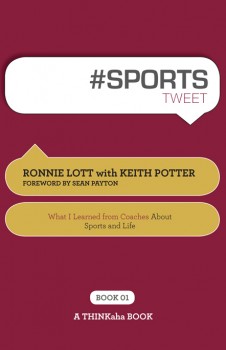
‘#SPORTStweet: What I learned from Coaches about Sports and Life’

by Ronnie Lott and Keith Potter

#SPORTStweet: book from Ronnie Lott and Keith Potter

“Ronnie is a winner in life. You will learn, as I have, about what it means to be a role model, proud parent, and the hardest working person to better your team. Winning is his life and he embodies greatness.”
Baron Davis, Star NBA Point Guard

“This book is a fun read and Ronnie touches on great points!”
Marcus Allen, Heisman Trophy Winner and NFL Hall of Fame Member

Here are a few inspirational and motivational tweets from ‘#SPORTStweet’I would like to share with you:

#6: Racial diversity always means something. Think about your teammates; really appreciate each other, and even your difference

#19 You want assistants who own your basic values; but dare to hire people who are strong where you are weak.

#47 It’s possible to be the toughest guy on the field and the nicest guy off the field. If you need evidence, look at Merlin Olsen.

#59 When we lost, Coach Robinson always said that it was his fault, not ours. “I didn’t do enough to get you ready.” That’s leadership.

About the Book:
In ‘#SPORTStweet: What I Learned from Coaches About Sports and Life’, football legend Ronnie Lott has thrown open the doors to the secrets that made him the toughest defensive back of all time and unearths his driving motivations in short, readable profiles from his days before, during, and after the NFL.

Get behind the scenes to see the synergy between Lott, Montana, and Rice, and sneak a taste of the coaching geniuses that made the 49ers and the USC Trojans iconic sports dynasties. Get personal with Ronnie as he reflects on life and relationships and get pumped up by his inspirational words.

“If you can just get in the periphery of greatness,” writes Lott, “some of it is bound to rub off on you.” This book gets you close to a champion. It shows you the heart of greatness—the heart behind the hit!

#SPORTStweet is a treasure-trove for every athlete, coach, student, teacher, and parent. After reading this book, sport-lovers of every age will be inspired, informed, entertained, and even changed by the influence of Ronnie’s brief but power-packed words. Like a hit from Ronnie Lott, this book will get your attention.

#SPORTStweet is part of the THINKaha series whose 100-page books contain 140 well-thought-out quotes (tweets/ahas).

About the Authors:

The name Ronnie Lott screams toughness and excellence. As a ten-time Pro Bowl selection and a first-ballot Hall of Famer, Ronnie is one of the most respected figures in professional sports. Add his four Super Bowl rings with the San Francisco 49ers to what was arguably his best season, leading the NFL in interceptions with the Oakland Raiders, and you’ve heard only part of the story.

Off the field, Lott is known as a tireless advocate for children. His nonprofit, All Stars Helping Kids, has raised millions of dollars to improve the lives of at-risk young people. Even more, Ronnie is a coach and catalyst for other athletes who have a heart for making their communities a better place.

Keith Potter is an author, faith-coach and inspirational speaker, committed to empowering champions, rejuvenating marriages and revitalizing organizations. After leading and launching non-profit enterprises for twenty-five years, Potter understands the passions, principles and priorities that mobilize people for both goodness and greatness. As the creative force behind the nonprofit The Champion Project, Keith Potter coaches leadership teams and emerging leaders internationally. He is the consummate teacher, catalyst, and friend to influencers in numerous fields.

You can purchase a copy of ‘#SPORTStweet’ online at ThinkAha Books.

*I have received a complimentary copy of #SPORTStweet by the author as this book mention is part of a virtual book tour I am conducting.

A book on my reading list that I have had the pleasure to read is ‘The Power of Less’ .

The Power of Less by Leo Babauta

With being someone whose life does revolve around the internet, I know all to well, the influence the web has on my life and the lives around me. And that is one of the reason why this book interested me. With being so able to connect with people so easily, it is good to find the balance (or at least our own definition of balance) in our lives with living more simple the way it works for us.

About the Book:
With the arrival of the 21st century we have encountered a mental and material explosion in the Western world: we have near-unlimited information at our fingertips, we can have children who are healthy and safe, and we have wealth and possessions beyond what most of the world can dream of. Yet we are more stressed than we have ever been: the majority of us are profoundly unhappy. Though we are surrounded by what we want, our desire to keep and still get more creates a pressure that we cannot tolerate. But the flipside of our society is that we can choose what to accept, and what not to accept: what to keep, and what to lose, joyfully and consciously. With this handbook of simplicity, Leo Babauta shows us why less is powerful, the difference between what you want and what you need, and how to clear out what you don’t.

About the Author:

Leo Babauta is the author of several motivational books and the creator and blogger at Zen Habits, a Top 100 blog with 130,000 subscribers — one of the top productivity and simplicity blogs on the Internet. It was recently named one of the Top 25 blogs by TIME magazine.

Babauta is considered by many to be one of the leading experts on productivity and simplicity, and has also written the top-selling productivity e-book in history: Zen To Done: The Ultimate Simple Productivity System. It has sold thousands of copies and has reached tens of thousands of readers.

Babauta is a former journalist and freelance writer of 18 years, a husband and father of six children, and lives on the island of Guam where he leads a very simple life.

He started Zen Habits to chronicle and share what he’s learned in his life transformation that started in 2005.

*this information was provided by Amazon
*I also received a complimentary copy of this book to offer a book mention/review on Successful Blog. However, my —> (my comments) are mine solely and I was not compensated for these.

You can purchase a copy of ‘The Power of Less’ on Amazon.

I truly hope you will check out these books and please comment and let me know your thoughts on them.

Filed Under: Business Book, Business Life, Successful Blog Tagged With: bc, inspirational book from sports, Leo Babauta, motivational books, Ronnie Lott, social media books

Cataloguing Creativity: How Do You Organize Your Ideas?

September 22, 2010 by Guest Author


cooltext455576688_blogging

—-

Are you a collector?  Do you see something on television or while you’re out shopping and just have to have it?  Perhaps this scenario sounds familiar: You pick things up, here and there, and over the years you;ve acquired quite a collection.  Then, one day, you’re inspired to use one of those handy-dandy items and you can’t find it anywhere!

I am not a collector.  That isn’t to say that I don’t have a collection.  Through the generosity of various relatives, I have stacks of cookbooks, fancy kitchen tools, and  various odds and ends.  These items are carried in by the truckload by the helpful relatives and deposited in my house, where I am left to stash them away for future use.  And stash them away I do, here, there, and everywhere.

Days pass, sometimes weeks or months.  Suddenly, I’m inspired.  Where’s that Super Doodle Noodle Maker Aunt Bonita gave me?   Where in the world did I store it away?    I want to make Super Doodle noodles and my Super Doodle Noodle Maker is nowhere to be found!

Do you catalogue your creativity?

What’s the point?  Most of us collect blogging ideas as we go through life.  Our great, creative ideas for our blogs  can get lost in the hodgepodge of daily life if we don’t develop some way to catalogue them.   Finding a way to organize those ideas is a essential to having them when we need them.

There are many ways to keep track of those great ideas.  One tool that has helped me is a small notebook.  I carry it around in my purse and when I hear or see something that I think I could use later, I jot it down. Sometimes, the little notebook isn’t on hand, so I grab a piece of paper and write it down there.  So, now I have a small stack of papers and notebooks that I keep beside my chair, on hand for when I need to find that great concept from the past.

A little notebook is a start but it certainly isn’t going to keep things organized for future reference.  To keep things on track, I divide my concepts into categories for quick reference.  Ultimately though, something more will be needed.  Ideally, a file drawer organized alphabetically and divided by category would work best.  Being able to access information quickly and accurately when needed is an absolute necessity when you need to recall that one great idea or when inspiration runs out and you need to pull from your catalogue of creativity.  If my kitchen were as organized as my blogging ideas it would be a cinch to find my Super Doodle Noodle Maker when I need it!

How do you keep your ideas for blogging organized?  Let us know what works for you.  

Jael Strong writes for TheWriteBloggers, a professional blogging service which builds clients’ authority status and net visibility.  She has written both fiction and non-fiction pieces for print and online publications.  She regularly blogs at Freelance Writing Mamas .

Thanks, Jael

–ME “Liz” Strauss
Work with Liz on your business!!

Buy the Insider’s Guide to Online Conversation.

I’m a proud affiliate of

third-tribe-marketing

Filed Under: Successful Blog, Writing Tagged With: bc, blogging, LinkedIn

7 Steps to a Vision that Grabs a Community by Its Soul

September 21, 2010 by Liz

(Updated in 2020)

10-POINT PLAN: 1.2 Articulate the Vision

CommunityPhoto by John Schnobrich on Unsplash

Why Have a Vision?

Last week, I wrote Why You Absolutely Must Share Your Vision Early and Often. Now, it’s about the how-to.

Imagine three corporations that build and sell computers for small business and entrepreneurs. Each corporation defines its business in a different way.

Brand A says: Our company is in the business of making products for consumers who need them. We do the work they can’t do and offer it at a fair price.

Brand B says: We’ve are the leader in quality, creative solutions to the complex technology problems that entrepreneurs and small business owners face today. We make it our business to know their problems and to find a way to solve them. We deliver on our promises and we’re committed to staying the best in the industry.

Brand C says: We are a network of deep and strategic partnerships with employees, vendors, partners, and small businesses leaders who work together to build products and work environments that inspire and generate creativity, competence, performance, and trust and to create jobs and solutions that build the economy now and for future generations.

Brand C is the description that connects the company to every person on the planet.

How Does Vision Attract Community?

The vision is more than the mission. It’s the destination drawn clearly so that every member of the new community can see it, understand it, speak about it with passion, and believe that it will happen. The vision is not a product devised and made by a crowd or a committee. It’s a leadership decision — the original strategy expanded with thought and design to elevate it to a higher calling.

The vision is the cause that attracts and unites the people of the community. It why they invest tireless hours and best efforts — because they are building …

  • something that makes an important difference;
  • something that no other company is building;
  • something that needs every individual’s unique contribution
  • something that no one individual could build alone.

The vision isn’t a dream. It’s a work in progress … a group aspiration in the true sense of it’s definition, breathing toward. The vision gives the community a why for why they are investing the time of their lives each day into this work. The vision is more than economic, more than profession, it is a commitment to accomplish something meaningful in the world.

7 Steps to Communicating a Vision that Grabs Folks by the Soul

If you’re looking to build a thriving business, start with a long-term, loyal internal community of employees. They will build and protect a healthy innovative culture, promote the values of the business, stay with the company, develop expertise with coworkers, and live to serve customers. What better way to build a brand than to agree upon the values that you stand for and create an environment that nurtures brand ambassadors?

It takes the right vision to attract the right people to that kind of community culture. When we meet the best people, we have to tell them about that vision, or how will they see it? Here are 7 steps to articulating a clear vision.

    1. Think contribution. Think partnerships. Re-imagine your team or your business at this highest, most useful place in the world — financially, professionally, and philosophically. Talk through what you see with people you trust until you have a image, a vision, of what that business offers to employees, partners, vendors, and customers.
      We’re inviting the highest quality people who have a stake in teaching and learning technology to join together in building products, services, and opportunities that show other people how business can work better for customers.
    2. Think ideal membership. Make the vision irresistible: smart, feelingful, and life-changing on a world-scale.
      We’re only interested in the best minds, best designs, and the best problem solvers with the highest values. We’re going to align our goals and build stable, successful, ethical business models that freely give support to fledgling business in depressed areas to create an economy that helps us all grow.
    3. Think contributions and returns. Find the words to describe it simply in ways that others can see the value of what you’re going for.
      We’re building the business that listens, learns, contributes, and invests in the people who help it thrive — it will be the business that people want to work with and for — the sort where every person makes a difference.
    4. Think recruitment. Be able to speak to the benefits of being a part.
      One benefit is that under-achievers and those who will sacrifice anything to raise the bottom line won’t want to work here.
    5. Think champions and heroes. Invite the people who see the vision to be involved in highly visible ways. Talk about what they’re doing encourage them to talk too.

The communications team has started a newletter for partners and vendors working with inner city high school enterpreneurs. Let us know if you want to volunteer.

  1. Think honest communication. Talk publicly to everyone in as many ways as you can — live your message.
    I’ll be listening to the folks who have experience where I don’t. I’ll be looking to learn from you how to do this better. That includes everyone I know.
  2. Think evangelism and growth. Invite people to pass on the vision and the invitation.
    Who else belongs here? Tell us.

It’s not the how or what of work that builds community. It’s the why. The underlying vision that unites us toward building something that we can’t build alone. A community needs leadership to set and invest that vision and so that they can feel smart, safe, and powerful in investing too.

Once the community sees the vision and realizes that leadership commitment. People who share those values will pick up the message, the tools, and the passion to contribute to the cause. The culture will grow from their actions.

Humans are wired to be deeply inspired by causes greater than ourselves. To inspire a community to invest its soul, we have to show them why we’re willing to invest our own.

Have you really communicated your vision? Are there ways you might make it clearer to the people who can help it thrive?

Related
To follow the entire series: Inside-Out Thinking to Building a Solid Business, see the Successful Series Page.

–ME “Liz” Strauss

Filed Under: Community, Inside-Out Thinking, Successful Blog Tagged With: 10-point plan, Community, internal community, LinkedIn, Strategy/Analysis, vision

The HUGE Gap Between Reach and Trust

September 20, 2010 by Liz

Do You Trust Yourself?

cooltext443809437_relationships

During a discussion of The Difference Between Begging for and Building Influence a a few weeks ago, @StevePlunkett asked me to do a long think about credibility and reach. I’ve been doing just that and now I’m writing another post his challenge inspired.

The Pulitzer Prize Paper, Reach, and Engagement

Once upon a time, I subscribed to the Chicago Tribune. (I apologize to the New York Times and my friends who Yankees fans. I also live in Wrigleyville.) I subscribed to daily delivery during the period that the Tribune won 11 Pulitzer Prizes. I’m not certain that I read any of the winning articles. Though the paper came as promised, with a job in the city, my schedule often didn’t offer me the time I wished to read it. Even when it did loosen a bit, I didn’t read every word of it.

So though the paper reached me. I wasn’t exposed it. I was on their list and I would bet that I was counted in their ad fees based on circulation.

My point is that reach only meant I was paying for it.

I don’t watch television, so I don’t need a TIVO to skip the commercials. On the rare occasion that a television movie or event might attract me back to the huge screen monitor that we usually use as a computer, we end up talking through the ads or channel surfing just because we can.

I know a number of people online who own online tools that charge small fees and send out informational mailing lists. I know thousands more that belong to social sites and read blogs that carry ads. Whenever I ask about the ads, I find that we’re becoming advertising blind … except when we’re shopping or looking to see what sort of ads our friends are using.

So, technically those ads are reaching me, but they’re equivalent to a sales rep who knocks on my door but never gets an answer.

Then a new algorithm emerges from social media. If I pay close attention and “prune” my power network just right, I should be able to connect to the perfect 150 power people who have each also connected to another 150 power people and so on outward. A mere two generations out would be a network of 3,375,000 power people. But just to hedge the bet, perhaps I should connect to 150,000.

Thing is any message I send to my own group only gets read the same as the Tribune did … when they have time. Probably less than that, because I don’t have 11 Pulitzer Prizes behind what I’m saying.

Let’s not even talk about the email newsletters and direct mail that gets pitched without being opened.

Reach is not a guarantee of engagement, participation or even exposure.
Reach is merely a possibility.

Andrew Smith at marcom international points out,

“For decades, PR has been seen by many marketeers as “cheap reach via editorial” – in other words, the goal of PR was to gain editorial coverage that provided the greatest number of opportunities to see – at a significantly lower cost than advertising.”

But even cheap is expensive if no one is paying attention.

And even when I do pay attention, can you assume that I trust what you’re saying?

No. Not unless I know you.

Reach and Trust

We interact with thousands of people through our lives and if we’re a corporation that number of interactions can grow to millions. Still the fact remains that people prefer to work with people we know and business moves faster, more easily, and with fewer micro-decisions when we can depend on people we trust.

The ability to reach millions with our message means hardly anything if they don’t trust the people or place the message is coming from. Now that we work online even Google has been trying to figure out how to trust.

A good marketer should always be able to reach more people. A great marketer knows that ideal customers who share the marketers’ values might actually pay more for products and services that incorporate those values in everything. An irresistible marketer knows and trusts those customers.

Reach is not nearly as powerful as attraction.

What Moves People to Trust You and Your Brand?

Trust … credibility … authenticity … transparency These words have become key terms in the social business lexicon. But they’re not new to business. Relationships have been the foundation of solid partnerships since growing businesses started growing. Ask any number of successful Venture Capitalists, if they have to choose, they will tell you that they will put their money on the team they can trust.

What moves us to trust?

Steven M. R. Covey, who wrote the book on Trust, points to 4 Cores of Credibility — So that’s where I went to start my think on credibility, with his words. integrity, intent, capability, and results. Together they carry the four reasons we trust ourselves, our friends and the people and companies with whom we choose to work.

And we’re finding that social business has made it more complicated than we might think.

It’s no longer about only about how far our message can reach or how many people will receive and consume it. The question is whether a credible message can travel that far and still be believed.

  • Integrity. A guy runs up to you on the beach, opens his coat and says, “Wanna buy a watch?” Your response is likely to be negative. It’s hard to believe that watch is the deal that he says it is. A man of integrity probably wouldn’t choose that form of work.

    Integrity is the ultimate of walking your talk. he etymology of integrity is “wholeness, soundness” from the Latin, *intetritatern* “sense of uncorrupted virtue.” It makes a foundation upon which a person’s true character can stand. It’s a person’s character who gives “his word,” shakes a hand. makes a promise, and signs a contract.

    Integrity is what we rely on when we say that a person (or a company) will never lie to you, that he has no hidden agenda, that her behavior is stellar, that they will always make good on what say they will do.

    Whether we’re acting as a company or an individual looking in the mirror is what we say we believe totally in line with our standards? Integrity is the conviction to stand up for what is true and valuable to you and to trust yourself to always choose for your values no matter what people are around you. Integrity builds trust and respect in its Have we the personal and professional strength to say “no” to deals and relationships with people who stay sitting down.

    Do you show up as the same person everywhere people find you?
    Do you live your company’s message with the people you work with and with your customers?
    Do you ever keep promises to yourself, your friends, your family, and the people you work with?
    Do you tell the hard truth as easily and with as much love as you tell the great things?

    Decide to BE what you believe. Stand for something.

    How do your actions demonstrate what you believe?

  • Intent. Ever get an email or a request from a friend that sounded like it was just for you, only to find out that it was a sales pitch and he or she send the exact words to a whole list of people? A person of pure intent would never set up a situation that would make you wonder about what his or her agenda might be.

    People and companies live with intent. They lean forward and stretch toward building open relationship before promoting self-interest. It’s good intent to understand the power in partnership that is forthright and mutually beneficial. Think of Warren Buffet and the respect he has earned. He’s a great combination of integrity and intent. And through good intent, Warren Buffet accomplishes many things that benefit others and his own companies.

    Do you reflect on what motivates you and how that might work for others?
    Do you move yourself outside the center to get a more balanced view of world?
    Do you make the success of other people mission critical to our own success?
    Do state your true intentions to yourself and to others before you act?

    Share your plan and your purpose. Focus on mutual benefits.

    How do you make it easy to see what you’re up to?

  • Capabilities. Think of the leaders who inspire. They have knowledge, talent, skills, ethics, attitudes, and identity. They’re not just smart and visible, but they attract us to follow them because they know where they’re doing. They have means and the confidence to do the job and the way they talk about their capabilities raises everyone on their team.

    Do you know your strengths, talents, what comes naturally, and why people follow you?
    Do you have the expertise to do what you set out to do?
    Does your style attract and encourage relationships and learning?
    Do you establish a culture that is open and supportive?

    Be constantly learning. Know what value only you can bring. Do the same for others.

    How do you use your abilities to inspire confidence and leadership?

  • Results. Talent and skills are nothing, if we don’t do, produce, and respond to the right things. People and companies we trust focus on delivering the right results to meet the highest expectations. They bring all of their resources to fulfill their promises — faster, easier, and more meaningfully than anyone might have imagined. Their record for results precedes them.

    Do you show up, make clear decision, and put your best work into all you do?
    Do seek out a team of people who are smarter and more experienced than you?
    Do you focus on delivering outstanding satisfaction to every customer?
    Do you look to consistently raise the bar higher?

    Be engaged. Take responsibility with intent to win.

    How do you make outstanding and successful things happen?

The difference between reach and credibility is the difference between sending a message out to everyone who might listen and communicating integrity, shared intent, competent commitment, and consistent performance.

What all of us wish for is to be able to trust without fear or worry of the wrong results. We prepare for negative consequences because positive outcomes don’t hurt us. In those relationships where trust is truly present, we’re relieved of the burden of having to build extra safety nets because we know that you are looking out for our best interests — we know you’ll be standing beside us if something goes wrong.

The huge gap between reach and trust is that with trust I believe …

I will always be able to say I bet on you and I won?

–ME “Liz” Strauss
Work with Liz on your business!!

Buy the Insider’s Guide to Online Conversation.

I’m a proud affiliate of

third-tribe-marketing

Filed Under: Marketing /Sales / Social Media, Successful Blog Tagged With: bc, capability, credibility, integrity, intent, LinkedIn, results, trust

  • « Previous Page
  • 1
  • …
  • 337
  • 338
  • 339
  • 340
  • 341
  • …
  • 1050
  • Next Page »

Recently Updated Posts

The Creator’s Edge: How Bloggers and Influencers Can Master Dropshipping

Is Your Brand Fan Friendly?

How to Improve Your Freelancing Productivity

How to Leverage Live Streaming for Content Marketing

10 Key Customer Experience Design Factors to Consider

How to Use a Lead Generation Item on Facebook


From Liz Strauss & GeniusShared Press

  • What IS an SOB?!
  • SOB A-Z Directory
  • Letting Liz Be

© 2025 ME Strauss & GeniusShared