Successful Blog

  • Home
  • Community
  • About
  • Author Guidelines
  • Liz’s Book
  • Stay Tuned

Three of the Best Website Builders for Time-Crunched Graphic Designers

February 21, 2014 by Rosemary

By Teddy Hunt

OK, so perhaps you’re a graphic designer who knows he or she can create one hell of a website that impresses visitors. But sometimes there’s just not enough time, and you have to leave the hard work to the Internet. Whether you want to create an online portfolio to showcase your work, or a website that people can visit when they need your services, there are plenty of options out there to meet your needs and get a functional website running.

With that said, here are three of the best website builders available if you’re too “busy” to do it yourself.

lazy designers

Wix

Wix currently has more than 43 million registered users, with about 45,000 new ones joining every day. This website builder works well for photographers, musicians, small businesses, and yes, designers. It’s especially great if you’re a beginner so to speak, since it’s relatively easy to use and features a “Help” function that’s well thought out and easy to use. Here are some other pros and cons of Wix to think about before taking a test drive.

  • Impressive templates. Wix includes more than 280 templates or you can create a customized one.
  • Drag and drop interface. Simply choose what you need (text, pictures, slideshows, etc) and put them where you want without restrictions. Although it’s not the easiest builder to use out of the three, it works well.
  • Support and help. As stated earlier, Wix provides unmatched support and help. There are buttons you can click on for answers when you’re stumbled all over the website. With a VIP plan, you get one-on-one support.
  • Advertisements on the free version. Unfortunately, if you’re using Wix for free, your published website will include ad logos on the side and bottom of it. All three of these web builders have ads in some form or fashion in the free versions, but Wix has a considerable amount more. You’ll have to upgrade to get rid of the ads.
  • Can’t change templates. Once you decide on a template, you’re stuck with it. So choose wisely.
  • Won’t manage complex e-commerce needs. Want to build an online store? Stay away from Wix.

Weebly

If you’re looking for an easy-to-use website builder that doesn’t sacrifice reliability, look no further. Weebly is perfect for graphic designers who want to showcase their portfolio without much effort put into building the website. Here are some other pros and cons of Weebly to think about before taking a test drive.

  • The best drag and drop builder on the market. Yes, even better than Wix. There isn’t an overwhelming amount of tools, but still more than enough to build a functional and professional website.
  • Free. Not only is Weebly free for most users (or really cheap for those who want to upgrade), but the advertisements are minimal. No limits. No credit card information required. No pressure to upgrade.
  • Range of templates. Even with a free account, there’s a template for everyone (and you can change it).
  • Won’t manage complex e-commerce needs. See con about Wix.
  • Limited amount of designer-caliber templates. But Weebly is changing this rapidly, so it won’t be a con for long.
  • Basic blog functions. If you want to blog on your website, you’ll have to get used to the basics. Unfortunately, Weebly lags behind when it comes to blog post organization and management. Also, you can only promote your posts through Facebook and Twitter.

Squarespace

Squarespace launched in 2004 and has since used memorable marketing videos, good publicity, and stunning example websites to push itself to the top of the website builder food chain. It currently runs more than 1.8 million websites. Although most probably won’t appreciate what Squarespace has to offer, graphic designers most certainly will. Here are some other pros and cons to think about before taking a test drive.

  • Commands your attention. The templates on Squarespace are beautiful and rich with imagery, making it look like you poured your heart and soul into designing your blog or website.
  • Responsive templates. Meaning you can resize your browser and your content will automatically adjust to provide your visitors with an optimized viewing experience. This is so crucial for end user engagement. It’s critical to note in web design the advancement of photo quality coupled with the popularity and on-the-go convenience of tablets.
  • Extensive styling options. Squarespace offers them, other website builders don’t.
  • More difficult to use. Simply put, you need to invest some time and effort before taking advantage of all the tools that Squarespace offers. If easy is what you’re looking for, look elsewhere.
  • Drag and drop feature not as smooth. Wix and Weebly’s drag and drop interface seem to work smoother.
  • You can customize everything without going into codes. This is actually a con for the average Joe, but to an experienced graphic designer this might not mean much.

All three of these website builders work well. It all comes down to your wants, needs, and abilities.

Have you used one of these before? What was/is your experience like?

Author’s Bio: Teddy Hunt is a freelance content writer with a focus on technology. When not behind a computer, Teddy spends the majority of his free time outdoors and resides in Tampa, Florida.

Photo Credit: anoldent via Compfight cc

Filed Under: Design, Web Design Tagged With: bc, Design, website

Beware the Social Media Cockroaches

February 20, 2014 by Rosemary

He came to the house every month on Wednesday. Armed with powerful chemicals, he made sure that no “Palmetto bugs” found their way inside. While he made the house safe for scaredy cats like me, we would banter about business.

social media cockroaches

His long-term plan was to go out on his own, and once he found out what I did for a living, he had a million questions.

“I already bought a ready-made website from XYZ hosting company, and I have business cards. How can I use Facebook to get more customers?” (Because when I use the word Internet in any conversation with a civilian, they immediately envision me as a Facebook expert.)

I struggled with my answer, mostly because you can’t answer that question in the 10 minute space of time it takes for pest control to occur in a two story home, but also because there is no easy answer.

Anyone who says, “just go get a Facebook page” is being short-sighted. And anyone who prescribes any “social media” solution without doing a lot of listening first is selling snake oil.

My take was that pest control is a highly referral-based business, and he needed to ensure that a) his customers have an easy way to spread the word to their friends, and b) he shows up when people who live in my local area search online for “pest control.”

Ultimately, my advice was to ignore social media until he defined who his target market was, where they lived, and how they shopped for pest control.

Could he use social media to help his business? Absolutely.

He could start regularly blogging to create a content resource that might move him up in the Google search results. He could make a series of funny Vine videos. He could use Twitter advanced search to find local people Tweeting about bug problems. There are hundreds of avenues he could take. Sure, he could even start a Facebook page.

But good marketing advice isn’t like a “hot stock tip” you overhear in the elevator. There’s no one-size-fits-all.

And if you’re working with someone who offers to “set up a Facebook page” as a first step, before learning your business, don’t walk away. Run.

Author’s Bio: Rosemary O’Neill is an insightful spirit who works for social strata — a top ten company to work for on the Internet . Check out the Social Strata blog. You can find Rosemary on Google+ and on Twitter as @rhogroupee

Photo Credit: James Niland via Compfight cc

Filed Under: Marketing, Marketing /Sales / Social Media Tagged With: bc, marketing, social-media

Create a System for Success

February 18, 2014 by Rosemary

By Angela England

5313296821_bf892e1944

I’ve stopped thinking in terms of daily “goals” and have begun thinking about creating daily systems that will create success in my life. I still have goals – lots of them – but I wake up each day focused on what I need to do, rather than what I hope to get. It’s a small shift, but highly effective, and here’s why.

Goals are Temporary and De-Motivate When They are Reached

I experienced this post-partum depressive state after I finished writing my first print book, Backyard Farming on an Acre (More or Less). Before, I had written prolifically and finished each project, eBook, or blog post excited and energized for the next thing to tackle. But Backyard Farming was so intense, and finishing the book was all-the-things to me, so when I turned in the last of the book I basically cried for a week and ate lots of ice cream. It hardly felt like a success to me.

What I realized is that I was waking up in the morning and thinking, “Now what?” instead of “Let’s go!” My goal was reached. The job was done. My brain had quit.

Since that point two years ago, I’ve written three additional books (one for a client and two for myself), launched a major course, added another blog to my roster, and tackled numerous guest posts and client opportunities.

Now, my daily system is to write 1,000 words a day no matter what. And in doing so, I’m able to be continually productive on a variety of tasks and projects. The shift was subtle but profound. The project may change, but the system of producing doesn’t.

The Habits Are What You Can Control

Whatever your business goals are — sign 3 new clients, sell 100 copies on launch day, or get a thousand readers on this blog post — you can’t really control those outcomes. You can’t force someone to click the buy now button or make someone share your post. You can control what YOU do, however, and that pushes you closer to the side of success. Think Steven Covey’s Circles of Influence and focus on those things which you can influence.

I can update my media kit, prepare some guest posts for a new book launch, and pick a conference to attend in order to connect with others in my industry face-to-face. Those actions will probably help me reach my business goals, of course, but by turning my energy towards what I can control, I’m infinitely more energized. And, therefore, more effective.

Reward Your Positive Action on a Daily Basis

One of my favorite things to do is to find effective ways of staying motivated in the areas where I want to be the most successful. It’s been great for me to find new ways to reward myself for daily habits that will produce long-term success in my business and life. Even simple things can be surprisingly effective.

For example, I don’t log into Facebook until I’ve written my first 500 words for the day. Usually, once I’m halfway to my daily goal, I just keep going all the way and often have 1,000 words done almost first thing in the morning. If I were to let myself jump into Facebook and other people’s plans for my day, I would find it more difficult to focus on the system for success that I’ve created.

Another thing I’ll do is avoid my favorite television shows until I finish the next chapter in my book, then reward myself with an evening marathon session to catch up. These are simple, perhaps silly examples, but they are stunningly effective for keeping me on the success side of the slight edge.

Goals Can Limit Your Focus and Ability to See New Opportunities

Lastly – goals lock you onto a set path and could actually prevent you from seeing the opportunities around you. I love this quote from an earlier post of Liz’s which says:

“Imagine opportunities everywhere you look. Lucky people know that opportunity doesn’t knock often. In fact, they know it doesn’t knock at all. People make opportunities from little things they see. Opportunity hides in the details. Look, listen, read, and search for ideas and trends between your niche and your skill set. Then bend and twist and turn those ideas to see how they might become uniquely yours.

Make a practice of looking at everything to see how you might improve it…how you’ll make it more fun, faster, cooler, friendlier, easier, quieter, more musical, lighter, more romantic, more exciting, more inviting, more anything…or less something.”

When you are so focused on a specific goal that you get tunnel vision you could miss a brilliant, but unexpected opportunity. Some of the coolest things that have happened in my life weren’t those things I could have scheduled or marked on a five-year plan. I still have a five-year plan, of course, but I realize that my system of connecting, producing consistently, and staying available to serendipitous encounters has empowered success in my life in brilliant ways.

What systems have you created to help propel you towards success instead of bogging you down in an external set of expectations?

Author’s Bio: Angela England is a mother of five living in rural Oklahoma but more, she’s also a problogger, speaker, and author of several books including Backyard Farming on an Acre (More or Less) and Getting Prepared. Her most recent projects are helping people transform their blogs and business by publishing amazing books and producing multiple books this year under the Untrained Housewife brand.

Photo Credit: zen! via Compfight cc

Filed Under: Successful Blog, Writing Tagged With: bc, goals, Writing

Yes, You Can Improve Your Marketing ROI

February 15, 2014 by Rosemary

By Michelle Rebecca

When it comes to making an investment, we all want to get what we pay for. Nowhere is this more true than in the world of marketing. Your return on investment (ROI) is an important metric for helping you to appraise the effectiveness of your campaign and for making changes as they’re needed. Here are some ideas to help you improve both your ROI and your bottom line.

Choose the Right Landing Page

Sending prospective customers to the wrong landing page after they’ve clicked on one of your links is a little bit like letting department store customers off the elevator onto the wrong floor. Don’t make them do any more work than they have to. In other words, it’s about eliminating as many barriers as you possibly can between them and conversion.

When your customers click on a link to get more information about a particular sale or product, make sure they’re taken directly to what they’re looking for. It’s a simple fix to implement, and it can make all the difference in the world.

Understand How Buying Actually Works

We’re all consumers in one way or another, so we’re all familiar with the different stages of the purchasing funnel, which include awareness, comparison (or research) and, eventually, the buying stage. Knowing where your customers are in the process is important for improving your ROI.

What you need to do is understand and leverage the connection between your marketing efforts and the sales process. Part of this process comes down to targeting serious buyers, rather than browsers, by enticing them with keywords that focus on conversion, such as “Buy Now,” “Purchase” or “Place Order.”

Engage in “Social Listening” with Multiple Accounts

There are many possible roads that lead toward creating constructive discussions about your product or brand. On all of them, fans are left with the impression that their favorite companies genuinely value their input and want to create a dialogue with them.

One thing you might consider is setting up multiple social media accounts: one for general marketing, and another that you can use to engage in more personal conversations with customers. Find out what they like, what they don’t like and what they’d change if they had the chance.

Recognize the Important of Budgeting

Budgets can be fluid, most particularly in online marketing campaigns. Your budget should reflect the particular needs and performance of each of your campaigns on an individual basis. Also make sure you’re constantly researching advertising costs across mediums to ensure that you’re putting your money into the right place.

You’ll want to prioritize the more successful campaigns; pumping more cash into ineffective marketing techniques is going to do you no favors. If you’re seeing stale results, consider switching things up. Often businesses get stuck in one medium of advertising without realizing the new avenues that are constantly popping up on the web. Have you been focused solely on SEO for the past three years? Maybe you should try your hand at content marketing.

Know What’s Going On

One thing you can do to help you zero in on an appropriate budget and campaign strategy is to use valuable tools like Google Alerts, Talkwalker, SocialMention, or Topsy to help you identify popular search terms or trending topics. Knowing which brand terms are being used across the web can help you to shape your campaign appropriately.

Make Conversion Easy

There’s a whole branch of marketing science dedicated to uncovering what types of barriers get in the way of customer conversion. Cart abandonment and bounce back are measurable metrics, but what can you do to help ease customers toward conversion?

It could be as simple as making your site easy to navigate. Place calls-to-action on each page in such a way that they can’t be missed but also won’t get in the way. In this way, you can create the sense that the customer is working toward a goal as they navigate your site.

Use A/B Testing to Guide Your Campaign

One of the most important things you can do to improve your ROI is to experiment with different marketing tactics. Doing simple A/B testing with different ad copy or campaign placement can help struggling campaigns find their footing and illuminate areas where you have the opportunity to improve. You may be surprised to find that even small changes like font size and color could have a significant impact on customer engagement.

Know Your Target Market

We saved this one for last, but it may actually be one of the most important things to remember as you craft your online campaigns. Knowing who your audience is will save you from spending a lot of money on poorly placed ads.

There are plenty of studies available that can help you to better understand the types of people who use various websites. For example: knowing who uses Pinterest can help you decide if taking the time to pin your company’s products is going to be a worthy use of your time.

We all travel in different circles, so pinpointing where your customers are going to be is pretty difficult. Focus instead on making an informed guess on where they are likely to be, and you’ll be on your way toward creating a brilliantly targeted campaign.

Hopefully this has helped to demystify ROI, its challenges and what it means for your business. By making just a few simple changes, you’ll rest easier knowing that your money has been well spent.

Author’s Bio: Michelle is a blogger and freelancer with a passion for social media and blogging. She loves how social media connects people across the globe, and appreciates that blogging gives her the opportunity to voice her thoughts and share advice with an unlimited audience. Follow her on Twitter and Google+.

Filed Under: Marketing /Sales / Social Media, Successful Blog Tagged With: bc

Leaving Your Mark: 7 Popular Logo Design Trends

February 14, 2014 by Rosemary

By Teddy Hunt

A logo is one of the most powerful weapons you have when it comes to annihilating your competition and standing alone as the most powerful company in your industry. Conversely, having a poorly designed logo is the equivalent to shooting yourself in the foot. When creating your company’s logo, make sure that it’s something that positively stands out and attracts potential customers and clients in the blink of an eye. 

With that said, here are seven popular logo design trends that you should consider using if you haven’t already. 

1. Purposeful Negative Space

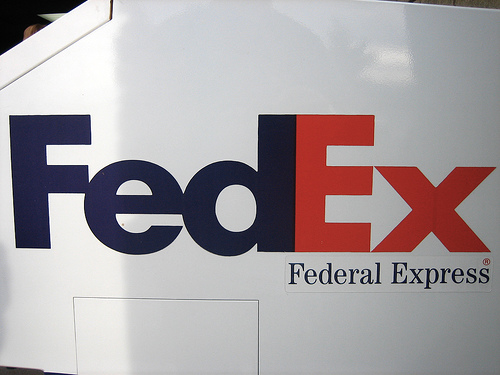
FedEx logo design

Image via Flickr by adactio

Negative space, also known as white space, is essentially space that doesn’t include content (it doesn’t have to be white — it can be any color as long as it doesn’t have content). The purpose of negative spacing in logo design is to draw attention to a specific object without having their eyes wander all over the place. Combining design and negative space in a clever way is also effective. The FedEx logo is one of the best when it comes to using clever design and negative space (take a look between the “E” and “x”). 

2. Dynamic Letterpress Techniques

 
This is one of the newer techniques used by logo designers, adding depth to objects within the design. The technique essentially elaborates on original letterpress design, providing a new look that’s appealing to the eye. Letterpress was originally done in print, but graphic designers are now using computers to recreate their own unique styles of this technique. If you want to follow the newest trend out there, this is the one. 

3. Line Art

Line art is an image that has distinct straight and curved lines placed against a plain background, without changes in shade or hue to represent either two or three-dimensional objects. Graphics designers usually use a pen tool in Illustrator to create a clean and thin-shaped logo using this type of art. Here are some great examples of line art used in logos. 

4. Gradient Mesh Adds Depth

It’s said that gradient mesh is one of the most powerful tools in a graphic designer’s Illustrator toolbox, but it isn’t easy to master the skill of using it. One of the biggest benefits of being able to use this tool effectively is that it helps you provide depth to a logo in ways that other tools can’t, enabling your to recreate shadows and highlights that give your logo a unique perspective. Here’s a beginner’s tutorial on how to use the gradient mesh tool.

5. Contrast With Dual Impact

Simply put, graphic designers use the dual impact technique to create a double impression in a logo. If you look at this dual impact logo example, you’ll notice an outline of a buck within an elephant. This dual impact design provides a clean and clever logo that’s perfect for a wildlife zoo. 

6. Geometric Abstract Polygon Styles

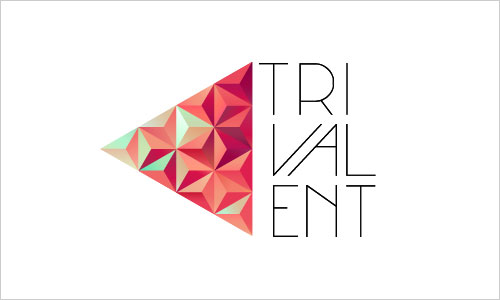
One of the most popular and common technique in logo design in 2014 involve geometric abstract polygon styles. Although the name of the technique sounds complicated, it simply refers to making different abstract shapes stand out within one or multiple areas of the logo. If you’ll still not picturing clearly in your head, take a look at this logo example that highlights the concept and technique. 

7. The Overlap Technique 

The overlap technique in logo design has been around for ages, but it’s especially becoming popular this year. Graphic designers using this technique allow different elements of a logo to overlap one another, making it possible to add depth to it in a way that makes it interesting but not distracting. eBay’s logo is a great example of overlapping typography to create a unique look, making it a logo design that’s effective. 

It’s more important than ever to have a logo that stands out and says that your company matters in the world. Applying the right technique and design can make all the difference. 

What new logo designs have you noticed that are stellar? Leave a comment below and let us know. 

Author’s Bio: Teddy Hunt is a freelance content writer with a focus on technology. When not behind a computer, Teddy spends the majority of his free time outdoors and resides in Tampa, Florida.

Filed Under: Design Basics Tagged With: bc, Design, personal-branding

Extend Yourself

February 13, 2014 by Rosemary

Skywalk
Grand Canyon Skywalk

All of the good stuff happens in the little moments where you just say to yourself, “heck with it, I’m going for it.” When you extend yourself beyond what you thought was possible.

You’ll never see what the Grand Canyon looks like from an eagle’s perspective unless you have the guts to step out onto the Skywalk.

And you’ll never know if you can run a successful business unless you decide, and take that first step.

The first step seems intimidating, but there are ways to start building momentum that don’t involve tightrope-walking across the canyon (even Wallenda carried a pole for balance). This is not an exhortation to quit your day job and recklessly hang out a shingle.

This is a call to action. Any action that takes you in the direction of your goal.

If your goal is to start a business of your own, there are many “first steps” you can take. The Small Business Administration offers these 20 Questions to Ask Before You Start a Business. That’s a good, thought-provoking starting point.

Extend Yourself Toward Starting Your Own Business

  • Consider embarking as a “lean startup,” as described by Eric Ries. Go out fast with the minimum viable product and iterate from there.
  • Post your concept on a crowdfunding site like Kickstarter. Get your supporters on board before you get too far down the road, and gauge interest in your idea.
  • Assess your key strengths (for example, using Strengths Based Leadership principles). This might give you insight if your struggling to decide among several different business ideas that inspire you.
  • Interview someone who is running a business like the one you want to start. Find out how they started out, what their roadblocks were, and what they learned along the way. Find small business owners to connect with at a site like AMEX Open Forum, and start building relationships.
  • Sit yourself down and bust out an actual business plan for your concept. Nothing takes off the rose-colored glasses like getting down to brass tacks. Who is your ideal customer? Exactly how will you reach them? What is your pricing structure? Do you need financing? Harvard Business Review offers an article called “How to Write a Great Business Plan,” along with lots of other resources.

It’s time to stop talking about starting your business, and start doing something. Get out of your comfort zone, extend yourself, and take that first step.

We’re here for you!

Author’s Bio: Rosemary O’Neill is an insightful spirit who works for social strata — a top ten company to work for on the Internet . Check out the Social Strata blog. You can find Rosemary on Google+ and on Twitter as @rhogroupee

Photo courtesy of Leonardo Stabile, via Flickr CC.

Filed Under: management, Successful Blog Tagged With: bc, business, entrepreneurship

  • « Previous Page
  • 1
  • …
  • 38
  • 39
  • 40
  • 41
  • 42
  • …
  • 84
  • Next Page »

Recently Updated Posts

Is Your Brand Fan Friendly?

How to Improve Your Freelancing Productivity

How to Leverage Live Streaming for Content Marketing

10 Key Customer Experience Design Factors to Consider

How to Use a Lead Generation Item on Facebook

How to Become a Better Storyteller


From Liz Strauss & GeniusShared Press

  • What IS an SOB?!
  • SOB A-Z Directory
  • Letting Liz Be

© 2025 ME Strauss & GeniusShared