
Successful Blog

  • Home
  • Community
  • About
  • Author Guidelines
  • Liz’s Book
  • Stay Tuned

What Are You Doing to Weather the Economic Storm Clouds?

February 20, 2013 by Thomas

Depending on which financial analyst or politician you listen to, the U.S. has either averted going off the financial cliff for now or is poised to run into even tougher financial roadblocks ahead.

So, what should small business owners be doing to position their companies for what appears to be slower economic growth for the remainder of this year?

First and foremost, do not panic.

Small business owners need to remember that the economy always goes through its ups and downs, so doing a major layoff or cutting back dramatically on one’s advertising and marketing budgets, those kinds of moves typically do not make good financial sense.

As one who runs a small business, think about the following:

* Manpower – Whether in good financial times or not, having the right size staff in place is very important. If you find that finances are dictating you need to cut some people, look at a few options. First, how would your business be impacted if you lost some people? Would it impact the services you provide to customers? Secondly, would those remaining employees be asked to take on added responsibilities while still receiving the same salary they are now? If so, will that create some morale issues in the office? One option before cutting is talking to those you are thinking of letting go, seeing if they would stay on at a reduced salary and possibly decreased benefits or picking up more of the tab to continue receiving benefits;

* Promotions – One of the biggest gaffes small business owners make when the economy gets challenging is cutting back on their advertising, marketing, and public relations campaigns. The thinking is oftentimes that competitors are doing the same, so it is a safe time to trim this area of business. Actually, it is probably the worst time to do it, as some competitors are doing just the opposite. While there may be times you need to trim such budgets here and there, never go into a full-scale cut, because you will likely miss out on potential sales. Instead of trimming your main promotional budgets, look to do more with free promotion vehicles such as blog posts and social media;

* Future – Undoubtedly, tough economic times will pass for many who run small businesses, so it comes down to a matter of surviving the difficult stretches, allowing you to prosper when things improve. You should always be thinking growth and not contraction as you look at the big picture. What can you do to grow more with the resources you presently have? How can your company pull itself away from the pack and give customers something no one else can? Finally, how can you as a business owner safely guide your company through some stormy financial seas, knowing that there is a light at the end of the tunnel? Always be thinking about what the next step takes to grow your business;

* Past – Finally, never forget where you started from and where you are now. In order to be a successful business owner going forward, you need to learn from your past mistakes. Whether it was some bad hires or layoffs, some bad investments, or even spending too much money for products and services needed for you to run your company, never make the same mistake twice.

As a small business owner, what are you doing to make your company as economically sound as possible in 2013?

Photo credit: mozy.com

About the Author: With 23 years’ writing experience, Dave Thomas covers small business topics for a variety of websites, including Reputation.com.
Filed Under: Business Life Tagged With: bc, budget, economics, Money, small business owner

Learning By Doing

February 15, 2013 by Rosemary

By Jeannie Walters

It’s sad to me how many people think they can’t do it. Whatever it is, they truly believe they cannot do it because they don’t have a rule book.

I remember interviewing a young woman who told me, in a job interview, that she could do whatever I outlined for her on a list and trained her carefully to do. “What if it’s not on the list?” I asked. Her answer was if it wasn’t on the list, she didn’t see it as one of her duties.

“It must be on the list.”

She didn’t get the job. Not because she wasn’t capable, because I believe she probably was, but because she was scared of the unknown. She was scared of trying new things. She felt she had to be taught every little thing before she would attempt it.

Baptism by fire is not a bad way to learn. It’s uncomfortable and scary, sure, but if you can survive, you can really make things happen.

There is no degree for customer experience. And yet that’s the focus of my career. Every day I’m doing something that scares me a little bit. And why not? Humans are awesomely unpredictable. What worked last time will not necessarily work this time.

How do you learn by doing?

Jump in, the water’s fine.

Next time you find yourself saying, “But I’ve never done that before” as an excuse to NOT do it – stop yourself. Rephrasing helps me. “I get to do this for the first time!”

Learn from the masters.

Since the dawn of time, humans have been learning from one another. If you’ve never hosted a webinar before, be sure to attend a few to see what works and what doesn’t. If you’re scared to start that kickboxing class, go to the gym the day before and scope it out a little. It’s ok to do research and recon.

Ask for help.

While this seems to be an issue for many of us, it’s a critical part of learning. Ask for support and help, even if it’s just having a few friends there to cheer you on.

Keep up.

The best people I know are perpetual students. With so much information so readily available out there, it’s easy to keep learning. If you are in a role that is about marketing, make sure you read and follow and watch what’s out there about that role. Do your homework, but don’t let that be a crutch, either. Sometimes you have to stop the surfing and get stuff done.

Forgive your missteps.

Have you ever noticed we are often kinder and more forgiving to others than we are to ourselves? Doing things we haven’t necessarily been taught how to do means we will learn from our inevitable mistakes. If something doesn’t work, examine what didn’t work about it so you can improve the next time. Cut yourself some slack. Forgive and move on.

Give it your all.

Creating something from nothing requires brain power, stamina and determination. There will be times you want to give up, mostly because it’s outside your comfort zone. Don’t do it. Set a small goal and accomplish it. Then set a loftier one and accomplish that. You can do this.

The world is such a cool place these days. We can connect with like-minded people all over the world and create our very own dream jobs. Don’t let a lack of “a list” prevent you from accomplishing great things. Do it. The learning will happen.

Author’s Bio: Jeannie Walters is the Chief Customer Experience Investigator™ and founder of 360Connext, a customer experience consulting firm. Walters has been focused on customer experience issues for more than 15 years and works with organizations all over the world.

Walters now speaks, writes, consults and generally thinks about how the small experiences we have each day – going to the bank, ordering online, tweeting – create the greater experience of our lives. Walters lives outside of Chicago with her husband Mike and their two young sons. As such, her current hobbies include cheering on distracted t-ball players and building impressive Lego villages.

Filed Under: Business Life, management, Productivity, Successful Blog Tagged With: bc, education, Learning, Motivation

Can You Put a Price on Your Reputation?

February 13, 2013 by Thomas

What would you do if your business reputation was suddenly turned upside down?

Many small business owners are lucky that they never have to answer that question, yet others are confronted with that very scenario more often than they would like.

Whether it is dealing with something they manufactured, perhaps an event that was initiated by an unhappy customer or employee, those who own businesses should always have one eye on how they and their business are viewed by others.

With that being said, how can you best position your online reputation and that of your company before problems arise?

Some tricks of the trade include:

* Positive promotion – Use the different tools at your disposal to promote all the good things you and your business can do. This can be done via press releases, blog posts, social media, online forums, and more.

* Community involvement – As a small business owner, you hopefully have already established yourself in your community. If not, get active in your community, this through things like sponsoring local events, attending local events, working with other area businesses to promote them etc.

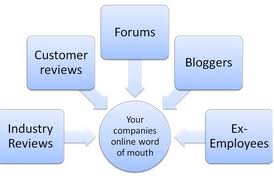
* Knowing what is being said about you – While your daily business tasks undoubtedly take up much of your time, you can’t turn a blind eye to what folks are saying about you and your company, especially online. Have your ears to the ground as to what the chatter says about you and your business, how you treat customers, what products and/or services work and which don’t etc. If you don’t listen, your customers may deliver a message that ultimately you will hear.

In the end, there is no price you can put on your reputation other than it is priceless.

As a small business owner, have you ever had your reputation called into question?

If so, how did you go about letting current and potential customers know that they should do business with you?

Photo credit: webseoanalytics.com

About the Author: With 23 years writing experience, Dave Thomas covers a variety of small business topics, including looking at how I need online reputation protection.


Filed Under: Business Life Tagged With: bc, customers, reputation, small business, social-media

You Might Be the Problem If…

February 12, 2013 by Guest Author

By James Ellis

Sales sluggish? Traffic down? Conversion rates dipping? Boss seeming a little gruff with you lately? Fewer smiling customers? More customer comments than you’d like?

They all have a root problem and a root solution, but sadly, you’re not going to like it.

The problem is you.

Not the editorial you, the plural you, the groupthink you, or even the royal you. You. The person reading this. You’re the problem.

That’s not 100% true. You didn’t cause the housing crisis and the fiscal cliff. You didn’t create all the public uncertainty slowing economic growth. But you are still the problem.

Why? Because the only person you can control is you. If you claim it’s your boss’s fault, that means you get to pass the buck. If you decide lower conversion rates are because your customers are dumb, that’s an excuse to not try and fix it.

But you can’t just “fix it,” can you. Especially if you believe that the fault lies with someone else. Making it your fault and your problem means that you get to do something about it, not just blame and move on. Making it your fault means that power lays in the one place you can use it: within you.

And that’s not just some self-help/new age/zen-esque notion. The problems with your business and site are usually you, in that you haven’t figured out how to build a site for your customers. You built a site for you.

The joke among web designers and graphic artists is that the client always wants to logo bigger. Why? The logo doesn’t ever help the customer, it’s bigger to stroke the ego of the client. Every pixel of space added to the logo is a pixel taken away from something the customer might actually want. Every interstitial ad is ten seconds you stole from your user. Every home page that touts how much you appreciate your customer is a another click the customer has to slog through to get to their order status.

When you send marketing emails, do you fill it with junk that you want the customer to know, or do you fill it with what the customer actuality wants? Is your web site showing products that you want the customer to know about, or the products your customers came for?

Do you even know the difference?

Don’t you love it when two airlines merge and they tell you that they did it for your convenience. It wasn’t to lower operating costs and increase margins while bringing standards of customer service to ever-falling levels? This is what a company calls convenience?

Do you know the difference between “important customer emails” and “spam?” I bet the standard you have for your personal emails and those your company sends are different.

And that’s why you are the problem. Because you are the only person who can stand up for what your user wants and actually give it to them. They will reward you later with more sales and better word of mouth. But for right now, as the calendar changes over, the burden falls on you to fix your problem.

How will you become the solution?

Author’s Bio: James Ellis is a digital strategist, mad scientist, lover, fighter, drummer and blogger living in Chicago. You can reach out to him or just argue with his premise at saltlab.com.

Filed Under: Business Life, Customer Think, management, SOB Business, Successful Blog Tagged With: Action, bc, business, solution

Getting out of Bed on a Dark Day

February 7, 2013 by Rosemary

By Chris Brogan

I got diagnosed with severe clinical depression over a year ago, and for a while, I really hung to that diagnosis. It helped me frame a lot of what had been going wrong in my life. But then, I realized that I was really clinging to it. A lot too much. And so I decided that I’d try a new tack.

“YES AND” THINKING

Improv actors have a rule: you must never say no in a performance with another improv actor. If they start with, “You seem tired today,” you may not say, “No, I’m not.” You must say, “Yes, and…” and say what will keep the performance moving. I decided that with my depression, I’d adopt some “Yes, And” thinking to the process.

If it’s a dark day, and if I feel down, I don’t want to get out of bed. Bed makes for a great sanctuary when you’re depressed. But here’s what I’d tell myself: “I want to stay in bed. I’m depressed. I have severe clinical depression.” Pause. “Yes, and though I want to stay in bed, I’ve got work to do, and I really like to eat, so I’d best do some of that work. Let’s start by just getting out of the bed for a minute and see if you can walk around.”

SHAKE THE LABEL

I found something else out: once you earn a label, you really hold onto it, good or bad. If you’re labeled as the show-off, you start thinking about ways to do so. If you’re labeled the rebel, you ask, “What would a rebel do about this?” If you’re labeled as severely clinically depressed, it’s easy to say, “Well what do you expect? I’m depressed.”

But my girlfriend, Jacq, got me thinking about ways to shake the label. She said, “You’re down. You’re not feeling well for a moment. That’s okay. But let’s not let it shake the rest of the day.”

Now, realize that when you’re suffering from depression, the last thing you want is for someone to cheer you up. That’s not okay. But what I did take from her perspective was that I didn’t have to stay depressed. And just that one thought got me to really shake off the label. Now, even if I’m really feeling bad, I don’t immediately label it as “depression.” Instead, I look at what’s hurting, acknowledge it, and then try to let that hurting continue while I go about my day. I don’t tamp it down. I try to feel it.

THIS IS JUST MY RECIPE

Everyone is different with how they face their day. But in figuring out these few little details, I’ve been able to get more done. As someone working on being the SOB that Liz wants me to be, that’s how I accomplish as much as I can. I’d love to hear your own recipes for getting out of bed on a dark day.

Author’s Bio: Chris Brogan is CEO & President of Human Business Works. We help you learn to do work the way you want to do it. He’s the author of a new book, It’s Not About the Tights: An Owners Manual for Bravery. See him at SOBCon!

Filed Under: Business Life, Motivation, Productivity Tagged With: bc, inspiration, labels, Motivation

Revenue is the Small Business Livesaver

February 6, 2013 by Rosemary

By Elaine Love

The facts are set in concrete; at this point it is wet concrete or perhaps quicksand because it can change. As it stands now income taxes, payroll taxes, capital gains and dividend taxes and employee health care benefit expenses are all increasing. With these indisputable facts in mind, what is the small business owner to do?

If you are like me, you concentrate on increasing your market share and your sales volume within your current market share.

Analysis, not Paralysis Wins

Think like your customer. If you were in your customer’s business, what would you like to have? Ask yourself honestly if you are delivering that ideal product or service. If the answer is regretfully ‘no,’ then what do you need to change to make it a ‘yes?’

GM suffered a devastating bankruptcy in 2009. Just two years later, they reported a record profit. With the announcement recently of a totally redesigned and improved Corvette, they are demonstrating their commitment to improved quality going forward. Even though the Corvette represents a miniscule portion of GM sales in comparison to its truck line, it demonstrates the resurgence of quality. The Corvette is the first vehicle to be launched since the bankruptcy. The customer demanded better quality and GM is responding.

What does your customer want? What are you delivering? If there is one place to cut corners, it has been proven throughout history that it is NOT in product quality, customer service or effective marketing.

Market Growth Sectors

When you started your business, you researched what was currently available in the marketplace, what you could improve on the existing offerings and what unfilled niche remained. Go back to basics and do exactly the same research all over again.

Market research studies, interviews of your customers and intelligent observations pinpoint areas in which you can improve your current product or service and add additional products or services to fill niches. Sometimes you need to create the niche by informing them of a benefit they had not fully realized they needed.

Remember Apple’s introduction of the first iPhone? Steve Jobs presented the advantages of the iPhone before the marketplace even knew they needed those features combined.

Sales Revenue

Once the areas to improve and expand are identified, take action. Make the improvements and launch to fill the niche. Keeping capital liquid allows small business owners the ability to capitalize on marketing opportunities.

Small businesses can react very quickly to sales opportunities. An unexpected but delightful powder dump (several inches of light fluffy snowfall for the non-ski informed) is an excellent opportunity to push the word out to get to Steamboat Ski Resort quickly. Take advantage of a last second deal with the airlines to offer an incredibly low rate for Valentines, ‘take your sweetheart for a spring ski trip’ deal on airfare and lodging. Search for new marketing opportunities and capitalize immediately.

Don’™t Get Ready –“ Stay Ready

If you have your postcard campaign ready to launch, call your printer and issue instructions to print and mail the campaign. Blast the offer out to the social media network; ‘the postcard is coming. Present the postcard for an extra deep discount or special bonus.’

Create a new brochure for the newly discovered market niche using brochure design templates. Create a sales campaign to highlight the benefit your product or service offers to fill the market niche, why you are the best one to offer that benefit and a compelling reason to contact you immediately for more information. When you create an impressive marketing piece and produce it through the services of a top quality printing company (for example, check out PrintPlace.com), you are proud to present your marketing materials to your sales force and the marketplace.

Consistent Brand Recognition

Expand upon the highlights of your new brochure and create booklets as additional distribution pieces. Duplicate the elements of your brochure and booklet into your website. Providing a consistent high quality image creates brand recognition. Customers need to see a consistent company image multiple times. They see your company online, see you in social media and hold your brochure in their hand; this repeated consistent image solidifies your brand in their mind and paves the way for a buying decision.

Combining high quality printed marketing materials with your online presence captures the marketplace.

Action Steps

Keep your money liquid and be ready to pounce on marketing opportunities. The best way to mitigate increased expenses is to increase revenue. Increase revenue through delivering superior products and services which fill market niches and high quality marketing to distribute your message to the marketplace. Increasing revenue is the small business owner’s lifesaver.

What is your strategy for growing revenue this year?

Author’s Bio: At home in the Colorado Rocky Mountains, Elaine Love writes about small business and the mindset for success so essential for an entrepreneur. She is the author of Emotional Ice Water. Find her on Twitter @elainelove44 or Elaine4Success.com

Filed Under: Business Life, Marketing /Sales / Social Media, SOB Business, Successful Blog Tagged With: bc, marketing, personal-branding, revenue

  • « Previous Page
  • 1
  • …
  • 44
  • 45
  • 46
  • 47
  • 48
  • …
  • 186
  • Next Page »

Recently Updated Posts

Is Your Brand Fan Friendly?

How to Improve Your Freelancing Productivity

How to Leverage Live Streaming for Content Marketing

10 Key Customer Experience Design Factors to Consider

How to Use a Lead Generation Item on Facebook

How to Become a Better Storyteller


From Liz Strauss & GeniusShared Press

  • What IS an SOB?!
  • SOB A-Z Directory
  • Letting Liz Be

© 2025 ME Strauss & GeniusShared