Successful Blog

  • Home
  • Community
  • About
  • Author Guidelines
  • Liz’s Book
  • Stay Tuned

Providing the Full Value of a Purchase

October 14, 2014 by Rosemary

By Lisa D. Jenkins

I’m building my backpack gear set and this past weekend I bought a sleeping bag. Not a regular “throw something on the floor because we’re out of beds” type bag, but a serious “keep me warm in the wilderness at zero degrees” type bag.
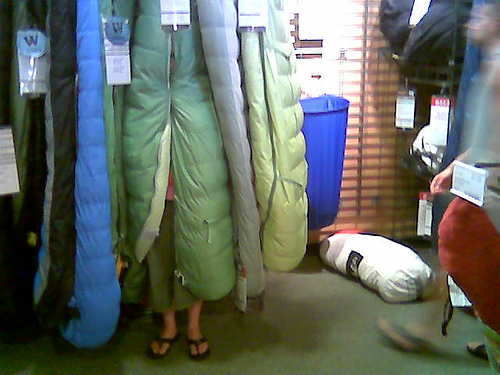
sleeping bags

I had no idea where to start, so naturally I began researching on the internet. I learned all kinds of important buzz words: R factor, temperature rating, fill power. These words were everywhere, the implication being they were important and should be factored into my purchase decision. The issue was that I didn’t understand HOW to factor them in.

I’m a newbie.

Armed with my fledgling knowledge I went out into the brick and mortar world to find someone with expertise who could help me choose the right bag.

My first stop was a well-known big name outdoor store. The clerk was mostly friendly but seemed a bit exasperated when I used the words I’d learned during research. I lined out how I expected to use my bag, explained I’d be backpacking with it and asked her to point me toward likely contenders and help me choose one.

She walked me to a rack of hanging bags pointed to one end and said, “The women’s bags are at this end. Each one is tagged with specs you can use to figure out which one you want.”

Tags. So basically, reading – like I’d done on the internet – before I walked through the front door of this store with the hope that an educated human could help me? Not what I expected.

We left and headed to another outdoor store. Where I hit paydirt.

The owner spent almost an hour and a half explaining everything I needed to understand about sleeping bags so I could choose exactly the right bag. I learned that, for me, loft was more important than fill, and that fill was more important than temperature rating. I also learned that fill power is misleading and that temperature ratings are incredibly subjective.

Then I looked at tags on roughly a dozen bags, and this time I understood how to filter the tag information. I took an hour getting in and out of two bags and deciding which one I wanted. It’s a bit heavier than I’d expected, weighing in at just under 3 pounds, but I am fully confident it’s the right bag for me.

On our way out, I realized the store had been closed for an hour and half. I was so embarrassed. I began apologizing and the owner told me no apologies were necessary. Then he said, “I don’t want you to be sorry about the time you spent here. That time let me give you the full value of your purchase. You let me teach you how to make the right choice for you and that’s important because you’re unique and your needs are unique. This type of sale is one of my favorites.”

And that’s when it hit me.

Buzz words are like sleeping bag tags.

We all use them – sometimes with irony and sometimes in earnest. What those of us who use those words in blog posts, presentations and website copy need to remember is that buzz words serve us, the holders of knowledge, not the customers who need the knowledge.

Customers come to us because they need our product or expertise. Tossing a bunch of jargon at them from a landing page or slide deck doesn’t let us speak to their unique needs. Nor does it help them truly understand how we’re the best fit for the gap they need to fill.

Get around the buzz words.

Every website has copy and the use of some words is inescapable because things like SEO matter. But there are ways to go beyond the buzz words and help customers feel confident in choosing our services or products over those of another vendor.

Follow the buzz words up with simple language that demystifies what you offer.

Install live chat on your website so prospects can communicate with a human.

Respond to inquiries with a phone call instead of an email.

At a certain point, our customers need to have some questions answered. They might not even know which questions to ask. It’s our job to help them learn what those questions are and how to prioritize the answers for themselves so they can make an informed decision.

When we give customers the full value of their purchase, they’ll convert with confidence.

Author’s Bio: Lisa D. Jenkins is a Public Relations professional specializing in Social and Digital Communications for businesses. She has over a decade of experience and work most often with destination organizations or businesses in the travel and tourism industry in the Pacific Northwest. Connect with her on Google+

Photo Credit: sdbrown via Compfight cc

Filed Under: Marketing Tagged With: bc, customer-service, sales

Four loyalty programs worth following

September 18, 2014 by Rosemary

By Diana Gomez

Every day I read about how to grow your business and expand your clientele. And sure, getting new customers is an important factor in any marketing tactic, but what about the ones you already have?

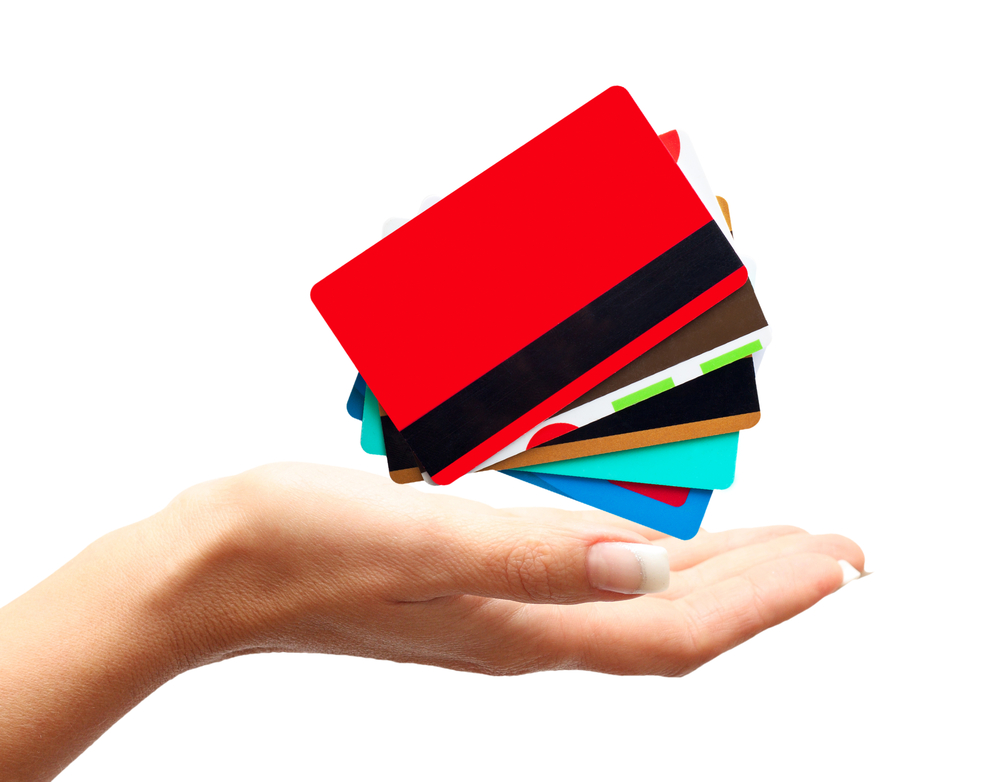
Hand with loyalty cards

One look at how phone companies are rethinking their treatment of already-loyal customers is proof that those are the ones who need attention. Don’t just give new customers the chance to get a new phone at a good deal. Offer those perks to the people who you already have on board, and they’ll be spreading the good news rather than telling their friends to steer clear.

Don’t limit yourself. Stop thinking of ways to get newbies when the key lies in your current customers — that is, if they’re satisfied. And they will be with a simple thank you. Reward them with experiences worth bragging about. Points-based loyalty programs are fine if the reward is clear, but it’s the reward experiences that will help grow your business via good old word-of-mouth, from your currently thrilled customers.

Here are some examples of companies that apparently get it:

Starbucks

It didn’t take much convincing for me when a cashier first told me how much I could save with My Starbucks Rewards. The idea is to download the app, which keeps track of every purchase. With each purchase, you get a star, and on the 15th, you get a free drink. Keep collecting stars and you can get extras at no cost. You know all of those adjectives we use to order a coffee? They cost money, and it all adds up.

So rather than pay extra for soy milk and vanilla, I accrued 50 stars and got all of that stuff for free. And it genuinely feels like I’m doing a friend a favor by informing them that their latte could be cheaper. Everyone wants a cheaper Starbucks coffee, don’t they? But get this: not only do you get rewarded for purchases through the app, but you can also make purchases within it and avoid the queue. Quite the game changer when you need a quick coffee en route to the office at 8:45 in the morning.

Orange

One of the most successful, widely used loyalty programs is offered by Orange. Formerly known as Orange Wednesdays, two-for-one Wednesdays have staying power with the deal of a deal: two movies for the price of one. Not only do you have to tell a friend (because you have to bring a friend), but that person will be equally enthusiastic about the reward of a free night out.

Wednesday is now a crazily crowded night at the theatre, but Orange also offers discounts on other events. From theatre to comedy to music, users get a chance to have all kinds of cheap nights out. Again, the idea of offering an actual experience proves effective in gaining loyalty. How many people stick with Orange solely due to the two-for-one deal? A lot.

KLM, and Most Airlines

Although airline rewards programs have been popular for years, they’re worth mentioning because it’s a tried and true example of how customers will keep coming back again and again if there’s a reward worth getting. And cheaper tickets, upgrades, and VIP treatment in airport lounges are definitely perks people want.

Sure, I can find a lot of great deals from a competitor, but wasting miles on an airline that I haven’t done a lot of business with is a no-brainer: I’d rather stick with the program I’ve built the most miles with. When those points accrue and inevitably pay off, it’s entirely worth it to get an entire free flight one day rather than a few slightly cheaper ones along the way.

Costa Coffee

So many people love a tangible rewards card, and the Costa Coffee card is a pretty popular one. Simply registering for a card alone will earn your tenth coffee on the house, and that immediate gratification is just the hook that will leave a customer instantly…hooked.

Keep using the card, and every nine hits gets you a free coffee. Sometimes, a simple free coffee is worth shouting about on a Facebook status. Anyone can give away things people may not need, but there’s a guaranteed smile in store for anyone whose day is made brighter by a complimentary cup of something that is entirely necessary for the day’s survival.

So there you have it. Follow in the footsteps of programs like these that have earned their own following and kept it, and you could very well see the numbers rise without spending a second focused on anyone other than the customers you’ve already snagged. Offer incentives that are actual experiences worth shouting about, and they probably will. People appreciate a thank you now and then, and showing that your company is generous will speak to your customers the most. Ultimately, the benefits will boomerang right back at you.

What loyalty program do you use the most?

Author’s Bio: Diana Gomez is the Marketing Coordinator at Lyoness America, where she is instrumental in the implementation of marketing and social media strategies for USA and Canada. Lyoness is an international shopping community and loyalty rewards program, where businesses and consumers benefit with free membership and money back with every purchase. Check out Lyoness on Twitter.

Filed Under: Marketing, Successful Blog Tagged With: bc, loyalty, marketing, rewards

Good, Better or Best?

September 16, 2014 by Rosemary

By Lisa D. Jenkins

How do you invite customer feedback on the products or service you offer?

Whether it’s through an online form, a digital survey or a personal conversation, the way you frame the request for feedback can affect the way your customer answers you — and the quality of the feedback you receive.

A story about food … and feedback.

cold cocktail glass

It’s no secret I’m a foodie. I’m always on the lookout for new experiences with food and drink, so when I noticed a relatively new restaurant had opened up near my neighborhood, I was all in. I’ve been there several times to try out different brunch and lunch items.

The unique menu isn’t overly large because the owner/chef makes it a point to prepare everything from local sources. The ketchup is made in-house, the coffee is roasted just four doors down from restaurant and the staff is genuinely interested in whether or not we’ve enjoyed our meal.

The servers are attentive but not in a hovering way. They take our order, serve our meals, then disappear for a couple of minutes. I’m not sure how they time it but they return after everyone has had at least two bites of their meal to ask, “Is everything delicious?”

Not “Is everything tasting okay?” or “How is everything?” or “Is there anything else I can bring you?”

They ask if everything is delicious.

And they wait for an honest reply from everyone.

If something isn’t delicious, polite but pointed questions are asked so the server can get to the heart of the issue as quickly as possible. What kept this dish from being perfect? Was it temperature, spice, or texture? Too savory or too sweet? What isn’t working?

Over the past months I’ve seen a couple of item descriptions change ever so slightly. I’ve also seen a few items disappear.

Because I’m friendly with the staff, I know this is due to customer feedback. If an item isn’t received as delicious 90% of the time, it’s adjusted according to the feedback servers get or it’s removed entirely. As a customer, I feel incredibly valued.

In this way, the restaurant has been able to stay true to its mission and vision while providing a better experience for the diners who ultimately keep the doors open.

It’s simple and brilliant.

Which brings me to the point.

When you ask for feedback, do want customers to help you be good at serving your market, or to be the best at serving your market?

Author’s Bio: Lisa D. Jenkins is a Public Relations professional specializing in Social and Digital Communications for businesses. She has over a decade of experience and work most often with destination organizations or businesses in the travel and tourism industry in the Pacific Northwest. Connect with her on Google+

Filed Under: Marketing, Successful Blog Tagged With: bc, customer-service, feedback

Secrets of solving the customer’s problem

August 28, 2014 by Rosemary

The plumber told me I needed a drywall guy.

Then the drywall guy said he couldn’t remove the garage ceiling without the HVAC guy moving the ductwork.

HVAC guy noticed that the rat had chewed through some electrical wiring. Time to call the electrician.

Pest control guy came in and killed the rat.

You know who my hero is in this story?

Yes.

Pest control guy.

As a business owner, I work extremely hard to read between the lines when I’m talking to a new customer (or a potential customer). I want to be the rat-killer hero.

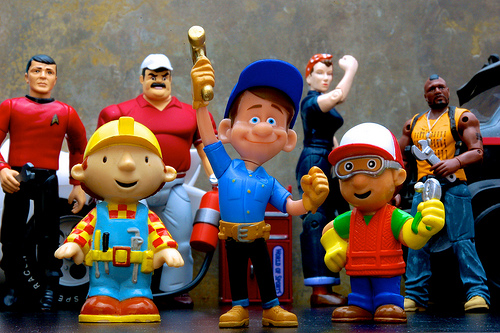
variety of contractor action figures

Listen First

“To a guy with a hammer, everything looks like a nail.” Mark Twain

It’s tempting to fall back to your favorite solution every time a new customer approaches. However, if you want to be successful in the long term, you have to hear what the customer is telling you.

In my example above (true story), I wasn’t telling any of those contractors that I needed new drywall, revamped HVAC system, or rerouted electrical wiring. Yet that’s what was recommended to me in each case. I looked exactly like a nail.

An entrepreneur with staying power will be comfortable referring business to others, coming up with a tailored plan of action, or simply refusing business if the customer isn’t a good fit.

Make Sure You Have Many Perspectives

Nurture diversity of thought on your team. Assemble colleagues who will bring different experiences to the team, so that when a new customer comes in the door, you can offer a well-seasoned approach.

Solving the customer’s problem often requires putting yourself in his/her shoes. It’s much easier to do that if you have surrounded yourself with creative thinkers, and people from different backgrounds.

Help Them Even if You Can’t Help Them

Occasionally, a potential customer will require services you simply don’t offer. Rather than trying to “sell” them, offer to help them find a partner that will be a good fit. You will earn trust and gratitude, and build the foundation of a great business reputation.

Offer to help, even when there’s no obvious benefit on your part. That’s how you build “whuffie,” as described in Tara Hunt’s book, The Whuffie Factor. She says, “Individuals understand how to build Whuffie because every relationship is important to them – especially when they are starting out..”

In your next conversation with a customer or potential customer, stop selling drywall and start looking for the rat.

Author’s Bio: Rosemary O’Neill is an insightful spirit who works for social strata — a top ten company to work for on the Internet . Check out the Social Strata blog. You can find Rosemary on Google+ and on Twitter as @rhogroupee

Photo Credit: JD Hancock via Compfight cc

Filed Under: Marketing, Successful Blog Tagged With: bc, customer-service, marketing, sales

How To Over-Deliver by Setting Expectations

August 14, 2014 by Rosemary

When I was about 13, my family went on a camping trip. Canoeing, roasting marshmallows, and hiking were on the agenda.

Allegany State Park

“Hiking” as a concept is not generally something a teenager will be keen on.

In my case, I was definitely more of a “find a shady tree to read under” type of teenager.

The rest of the family wanted to do this hike, so they told me it was “just a short walk, no big deal.”

By mile 5, I was aware I had been bamboozled. (Turns out it’s about a 6 mile hike.)

You really don’t want to hike several miles with an irate teenager. I proceeded to make the rest of the day miserable for everyone, because my expectations had been thwarted.

Whenever you’re dealing with your customers, vendors, business partners, and employees, it’s all about setting expectations up front.

  • Is your service going to lift my revenue by 10% in one year?
  • Is the meeting going to last 15 minutes?
  • Are you going to send me 2 customers a month in referrals?

Whatever stake you put in the ground at the outset is going to determine whether the other party feels the relationship was successful.

The people who bungle this rule the most are sales people.

“No, termites aren’t a problem around here.”
“Sure, the software has that feature!”
“My workshop will change your life.”

Over-promising and under-delivering are a two-headed monster.

So how does a successful entrepreneur stop himself/herself from getting carried away?

  • Be specific in your claims
  • Back it up with real customer stories
  • Have a documented process
  • Connect the sales team with the development and customer service teams
  • If you’re talking with a prospect, paint a realistic picture of how your relationship will work
  • When you’re talking numbers, be aggressive but not dishonest. Don’t promise that you’ll get them the top slot on Page 1 of Google search results.
  • Ask your customer what their expectations are, right at the outset.

And don’t ever take your teenagers camping.

Author’s Bio: Rosemary O’Neill is an insightful spirit who works for social strata — a top ten company to work for on the Internet . Check out the Social Strata blog. You can find Rosemary on Google+ and on Twitter as @rhogroupee

Filed Under: Marketing, SOB Business, Successful Blog Tagged With: bc, customer-service, marketing, sales

What is Your Customer Buying?

August 12, 2014 by Rosemary

By Lisa D. Jenkins

Every brand or business is selling something.

When we create social media profiles, curate content and provide customer service, we do it hoping current and prospective customers will buy from us or tell their friends about us.

What are you selling?

Answering is marginally (but not entirely) easier for those of us who sell concrete products. At the most basic level, Nordstrom sells things to wear. Whole Foods sells things to eat. FAO Schwarz sells things to play with.

For those of us who sell intangibles, it’s harder to define because what we sell is less about the product or service and more about the experience.

The question then becomes not “What are you selling?” but “What is your customer buying?” Once you understand things from your customer’s side of the table, it’s easier to market to them.

What might that look like?

The local mechanic sells oil changes. The customer isn’t buying an oil change, they’re buying the peace of mind that comes with knowing their transportation will continue to get them where they need to be. Market the peace of mind.

Consultants sell their reputation. The customer isn’t buying reputation, they’re buying knowledge they don’t possess so they can be more successful. Market the knowledge.

Banks and credit unions sell mobile check deposit. The customer isn’t buying mobile check deposit, they’re buying the time they would’ve spent waiting in line and using it for business meetings or kindergarten graduations. Market the time.

Visitor bureaus sell destinations. The customer isn’t buying a destination, they’re buying memories that will bind them to others for the rest of their lives. Market the memories.

What you’re selling isn’t necessarily what your customer is buying, but the two aren’t and shouldn’t be mutually exclusive.

It’s time to sit on the other side of the table. Consider things from your customer’s perspective.

What is your customer really buying?

Author’s Bio: Lisa D. Jenkins is a Public Relations professional specializing in Social and Digital Communications for businesses. She has over a decade of experience and work most often with destination organizations or businesses in the travel and tourism industry in the Pacific Northwest. Connect with her on Google+

Filed Under: Marketing, Successful Blog Tagged With: bc, marketing strategy, Selling

  • « Previous Page
  • 1
  • …
  • 8
  • 9
  • 10
  • 11
  • Next Page »

Recently Updated Posts

Is Your Brand Fan Friendly?

How to Improve Your Freelancing Productivity

How to Leverage Live Streaming for Content Marketing

10 Key Customer Experience Design Factors to Consider

How to Use a Lead Generation Item on Facebook

How to Become a Better Storyteller


From Liz Strauss & GeniusShared Press

  • What IS an SOB?!
  • SOB A-Z Directory
  • Letting Liz Be

© 2025 ME Strauss & GeniusShared