Successful Blog

  • Home
  • Community
  • About
  • Author Guidelines
  • Liz’s Book
  • Stay Tuned

How can you use Leverage for Your Business?

March 25, 2014 by SOBCon Authors

Got leverage?Leverage is a powerful tool. We’ve talked about it at length here. If you missed it, check out SOBCon IS Leverage.

Which is a great definition – and a very abstract one. Let’s make it more immediately applicable for you.

How can you use Leverage, the cornerstone of what SOBCon IS, for your business?

Leverage can be used to get feedback from others – While you’re in person at SOBCon, you can share your troubles with the rest of the people at your table. Don’t worry – they won’t judge you. Chances are, they’re going through the same thing you are – or they just got through what you’re going through. A few years back, I sat at a table with 4 other business owners. We all were struggling to get feedback from our customers. Feedback that we desperately needed to move our businesses forward in a new direction. We talked about survey tools, and the best time to send the survey e-mails, and all sorts of other things about surveys.

We found a solution we all agreed to – and then one person at the table said “What if instead of surveying all our customers, we each agree to call someone else’s 5 best customers and find out what they love (and loathe) about working with the other business owner. Then we can all get honest feedback, not have to worry about our customers feeling like we’re fishing for compliments, and we can all help each other.” And so we did. Instead of a boring e-mail survey, that we all had been delaying for weeks (or in some cases years), we helped each other as soon as the event was over. Simple. Easy. And something I never would have thought to do had I not been at that table.

Leverage can be used to amplify your message and your audience – When you make a friend, you make one more person who might share your work. When you join a community, you get a bunch of people who might share your work. Because SOBCon is such an intimate event, if you want to, you can connect with nearly everyone in attendance, and you can find just the right people to amplify your message and share your work, as well as tons of people who you can share their work, and amplify their message. The collaborative part of SOBCon is one of the most wonderful and amazing parts to me.

Leverage can help you create a better product, something better than you could create by yourself – Everyone has unique talents and skills, and everyone looks at things a little differently than you do. Or maybe it’s just me. I find that

Leverage can be used to test an idea out before you release it to the world – What better test than to work with your peers – and with people who have no idea what you do – all in one? Leverage offers a great way to run an idea past a bunch of people in a short period of time and create your own pre-launch team to gather feedback and make your product or service even better. You might even get a customer or two out of it, like SOBCon alum Jesse Petersen has done with his WordPress design business.

Need more Leverage?

Join us at SOBCon in Chicago, June of 2014. We’ve got Leverage. We are SOBCon.

And if you come, you’ll be Leverage too. You’ll be able to tap into the great minds that have previously gotten Leverage from SOBCon, that are looking to Leverage SOBCon 2014.

SOBCon is Leverage. Leverage is SOBCon.

The only question that remains is are YOU Leverage? Are YOU going to be at SOBCon? Leave a comment and let me know. I can’t WAIT to meet you!
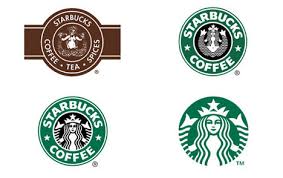
Image courtesy of wikipedia commons

Filed Under: SOBCon Site Posts Tagged With: bc

5 Reasons Why your Business Needs a Blog

March 25, 2014 by Rosemary

By Teddy Hunt

Blogging might have come to prominence in the late ’90s, but rumors of its demise are greatly exaggerated. Social media might have become the focus for many businesses, but they’re missing out on a valuable marketing opportunity. Read on to discover why your business needs a blog now.

A Blog Helps the Public Relate To Your Business

A blog can turn your company from a faceless corporation to a much more human firm. It’s the place where businesses can show their personality and act a little more light-hearted than they do in other professional avenues.

It may seem daunting to loosen your tie, but it’ll do your brand some good. The friendly voice of a blog can help you cultivate long-term relationships with your customers and increase their brand loyalty. Eighty-two percent of customers say they enjoy reading relevant blog content from brands, and three in five say they feel a company’s positivity through their blog.

Potential employees also read company blogs to help them decide on the best employer for them as they generally create a better sense of what a business is about than a stiff corporate site.

Through your blog, you may find you’re attracting more appropriate candidates for available positions.

A Blog Gains Consumer Confidence

A steady stream of relevant blog posts shows readers you are dedicated to your industry and a good source of information. As your business blogs on a regular basis, you’ll start to establish yourself as experts in your field. Studies show that 81 percent of readers trust the advice they receive from blogs.

The key to gaining this trust is using the blog for more than self-promotion. Share your knowledge about your field, such as your insights about trends and your commentary on local affairs. Posts that are packed with insider information presented in a clear, accessible way are powerful marketing tools that are likely to be shared through email and social networking channels.

A Blog Improves Your Position on the Web

Your social media presence will drive visitors to your website and increase brand awareness, but it doesn’t improve your position on the web the way that blogging does. Every time you update your blog, you add new content to your site, and search engines take notice. Remaining current is one of the best ways to stay on top of internet search engine rankings.

Ranking well is a complex science, but the most important factor Google considers is the number of inbound links. So it’s worth noting that companies that blog have 97 percent more inbound links than businesses that don’t.

Search engines also consider the number of indexed web pages when calculating your ranking. Websites with blogs perform so well because they typically have 434 percent more indexed pages than their competitors.

Web position is so important because three-quarters of browsers never scroll past the first page of Internet searches. A blog can help your business stay in pole position and more than double its website views.

A Blog Increases Sales

As you might expect, a blog doesn’t just drive readers to your business website. It also encourages customers to spend up. Roughly three in five consumers say they’ve made at least one purchase based on the information they’ve read on a blog post.

There’s even evidence to suggest blog posts may be even more important than traditional advertising, with 70 percent of consumers insisting they learn about businesses through articles rather than ads. This may be because customers can mentally switch off when they feel like they’re being marketed to. Blog posts are a much more subtle form of advertising, so they can capture the interest of these customers that don’t warm up to commercials.

A Blog Can Become Part of Your Social Media Strategy

Coming up with all those pithy status updates for your Facebook and Twitter pages can be taxing, but your blog can help you out. It’s easy to blast every new blog post into your social networking feeds (just be sure to tweak the update to suit each social network, and engage with those who share it).

This means you can spend less time social networking yet still give your connections fresh, new material. Integrating your blog with Facebook and Twitter will also drive traffic back to your blog and company website, which gets customers one step closer to making purchases.

So what are you waiting for? There’s no better time for your business to get blogging!

Author’s Bio: Teddy Hunt is a freelance content writer with a focus on technology. When not behind a computer, Teddy spends the majority of his free time outdoors and resides in Tampa, Florida.

Filed Under: Content, SEO, Successful Blog Tagged With: bc, blogging, content marketing, SEO

5 of the Most Recognizable Company Logo Revamps Ever

March 21, 2014 by Rosemary

By Teddy Hunt

Most major companies undergo an image rebranding process at some point in their life cycles.

Some companies have done it many times. Call it a sign of the times, a way of evolving to keep up with industry trends, or to reflect a brand’s changing dynamic. No matter what the reasoning behind it, it’s fun to look at the brands that we know and love today and see how much they’ve changed right in front of our eyes. Here, in no particular order, are five of the most recognizable company logo revamps ever.

1. Pepsi

Pepsi logo

Image by Hi Wave Event Creation

Pepsi has undergone so many image changes, it would be impossible to mention them all here.

What’s interesting to note is that the delicious fizzy drink was first introduced to the public in 1893 as “Brad’s Drink.” Coined after pharmacist Caleb Bradham, who first concocted what we now know as “Pepsi” in his drugstore. He made it out of carbonated water, vanilla, rare oils, sugar, pepsin, and cola nuts.

Since then, the Pepsi logo has undergone a number of image changes, each reflecting the trends of the times. These changes were each subtle in nature, but brought it to an image that hardly resembles the original logo at all.

2. Starbucks

Starbucks logos

Image via WebUrbanist.com

The latte-making coffee giant has reinvented its public image a number of times since its inception in 1971. As a testament to its successful brand recognition, Starbucks has stopped using its company name in its logo altogether. Much like Nike and Prince, it’ll now represent itself solely by a symbol.

3. Coca-Cola

Coca-Cola logos

Image via Flickr by Eric Kilby

Unlike its biggest competitor, Coca-Cola has always had the same name. Its logo, however, has most certainly changed with the times. The trademark swirly font has stuck around for the most part, but the shape and style of the rest of the logo have evolved, from having negative space around the name to a red background, the recognizable white swirl under the text, and the notable addition of the word “classic” under and “Enjoy” above the text.

Some periods of the logo featured a black background as an alternative to the classic red. The brand itself hasn’t changed, but the visual effect most certainly has.

4. Wal-Mart

Wal-Mart Logo

Image via WebUrbanist.com

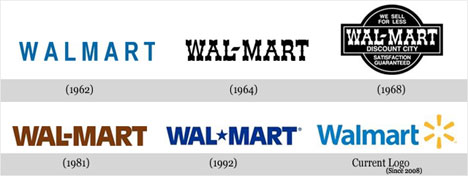
Wal-Mart represents another internationally recognizable company logo that has changed several times. Since its inception in 1962, it has changed seven times. For the first 20 years or so, the logo had a frontier feel, but dropped it in 1981 when it opted for a brown version of the font we recognize today.

After nine years of the brown color scheme, the retail giant adopted the blue color scheme that has become synonymous with the Wal-Mart name. Finally, as part of its massive rebranding campaign that included the new slogan, “Save money, live better,” it slimmed down the font and added its now-iconic yellow spark.

5. UPS

UPS Logo

Image via ShareALogo

The United Parcel Service has stuck pretty close to its roots when it comes to its logo and marketing materials. The standard shield we’ve all come to know has been with UPS since it opened its Seattle doors in 1907. Back then it featured the silhouette of an eagle carrying a package in its talons. Since then the beloved parcel delivery service has only mildly tweaked its logo a few times.

However, the company underwent a worldwide rebranding process that included a sleek new logo to represent the company across all platforms. This new image stuck with the company’s traditional brown color scheme and shield but gave it a modern twist, adding a subtle 3-D effect and a sans-serif font while simultaneously coining the phrase “We [heart] logistics.”

In order to keep up with the ever-changing dynamic of today’s economy and consumer expectations, major corporations are constantly reinventing themselves.

What are some of the most recognizable logos you’ve noticed getting a facelift lately? Have you been inspired to take another look at your own logo?

Please share with us in the comments below.

Author’s Bio: Teddy Hunt is a freelance content writer with a focus on technology. When not behind a computer, Teddy spends the majority of his free time outdoors and resides in Tampa, Florida.

Filed Under: Design, Successful Blog Tagged With: bc, branding, Design, logo

The Hotel, the Airline, and the Restaurant are all Publishers. Are You?

March 20, 2014 by Rosemary

At SOBCon Portland last year, I had the honor of interviewing Chris Erickson from the Heathman Hotel for one of our sessions. His hotel was in the news at the time because it had been used as the setting for the Fifty Shades of Grey books.

Rosemary ONeill Chris Erickson interview SOBCon Portland

However, as we all discovered, the hotel already had a well-deserved reputation for being forward-thinking long before E.L. James decided to give them a different type of fame.

One thing Chris said during our interview was, “I consider myself a publisher.”

There was definitely a moment of silence in the room as we all took that in. Imagining how far content marketing, social media, and digital outreach have come. A hotelier says he’s a publisher.

Chris explained that he considers it part of his job to produce content (in many different forms) that will support the Heathman’s reputation and business strategy.

But doesn’t it all go back a lot farther? The airlines have had in-flight magazines for quite a while now.

Chipotle is spending millions on well-executed mini-movies to sell carnitas burritos.

Is it time for every business owner and entrepreneur to think of themselves as a publisher? And how does this mindset shift your process, your work product?

According to Google, a publisher is “a person or company that prepares and issues books, journals, music, or other works for sale.”

Characteristics of Being a Publisher

  • By definition, a publisher is not an amateur. He/she is presenting items for sale, not as a hobby.
  • A publisher both “prepares” and “issues” the materials offered. He/she takes care that the items are error-free and ready to be issued to the world. By issuing, the publisher stands behind what he/she has prepared.
  • Publishers take a risk when they present materials for sale. They invest in the content, not knowing for certain what the reward will be.
  • Publishers must know their market. Is there room for this work? Is it the right time? Is this work creative and different enough to inspire others?
  • A publisher makes hard decisions.

Do you consider yourself a publisher? Why or why not?

Don’t miss out on SOBCon Leverage 2014 yet? You’ll definitely want to be in the room.

Author’s Bio: Rosemary O’Neill is an insightful spirit who works for social strata — a top ten company to work for on the Internet . Check out the Social Strata blog. You can find Rosemary on Google+ and on Twitter as @rhogroupee

Filed Under: Content, Marketing Tagged With: bc, content marketing, publishing, Writing

Should You Turn Down a Better Paying Job for Job Security?

March 19, 2014 by Thomas

ajob

A higher paying job can bring a positive change to your life. However, it may not necessarily be a better job option if you are not confident that you can keep it for a long time.

If your current job or another job offers better security, you may want to think twice before diving headlong into the more lucrative job.

Here are the pros and cons of turning down a higher paying job for job security:

Pros of Choosing Job Security over Higher Pay

Lower Risk of Losing Your Job

A high paying job is generally more sought after, and therefore, it may offer lower job security.

If a company is willing to offer a high salary for a certain position, it should not have difficulty finding suitable candidates.

As such, there is a higher chance that you will be replaced if you do not meet your employer’s expectations satisfactorily. Sticking to your current job or getting a secure job puts you at a lower risk of losing your job.

Less Stressful

Salary is usually determined by job requirements and responsibilities.

If you decide to take a better paying job, you have to be prepared to assume greater responsibilities.

Playing a more important role and working in a new environment can make you feel uncertain, anxious and worried, and contribute to your stress level. Stress can affect your work performance and make it more difficult for you to hold on to the job.

If you feel that you will be more comfortable staying in your current job or getting a less stressful job, it may be a good idea to turn down the higher paying job.

Enhance Your Resume

Being employed by a company for a long time shows that you are a loyal employee, and it will make your resume look better.

If you cannot hold on to the high-paying job for long and have to look for another job, it may give your future interviewer the impression that you are a job hopper.

Also, if your current employer is not happy with your decision to leave the company, he or she may not give you a good reference.

Cons of Choosing Job Security over Higher Pay

Miss Out On an Opportunity to Improve Your Quality of Life

Getting a higher paying job enables you to meet your financial obligations more easily and improve your quality of life.

If you have a family, you can provide a better life for your spouse and children, and enjoy greater financial peace of mind. However, the improved financial situation may not last long if your new job is not secure.

Give Up a Possible Chance to Advance Your Career

The higher paying job you are offered may be a career advancement opportunity.

Other than offering a higher salary, it may also provide a chance for you to learn and perform higher-level tasks or assume a leadership role. It may be your dream job if you are able to hold on to it.

Making the wrong career move can have a negative impact on your life.

Just as many smaller companies worry about their small business reputation, those job hunting and/or changing careers need to be resolute to the fact that different jobs offer different possibilities.

Make sure you weigh the pros and cons above before you decide whether you should accept or turn down a higher paying but less secure job.

As a professional, what is more important to you in regards to a career, your salary or your security?

Photo credit: thinkbigmagazine.com

About the Author: John McMalcolm has written a wide variety of blog posts and articles for many websites, from resume tips to running a small business.

Filed Under: Personal Branding Tagged With: bc, career, finances, job-security, work

Building Trust In Business: Don’t Get Engaged On The First Date

March 18, 2014 by SOBCon Authors

dice question mark

The subject of “trust in business” comes up a lot.  Recently I had a conversation with Ric Dragon (Author of Social Marketology, speaker, artist, drummer, CEO of DragonSearch & Kred Top50 Marketing Blogger) about this (he’ll be speaking about the subject at SOBCon in Chicago this June).  During our conversation a few key points came up that I’d like to share.  Starting with…

A LESSON IN TRUST: WOULD YOU GET ENGAGED ON THE FIRST DATE?

Consider the dating world – whether you’re remember years ago or last Friday.  How do you feel on a first date?  What are you looking for?  What if…

The guy you’re on a date with asks for you name, orders a drink and after one drink suggests you go back to his place?

(If this has happened to you I’m sorry if I brought back an “ugh” memory…)

You probably were uncomfortable which made him uncomfortable which… You get the idea.

What about a date that goes perfect?  Then they guy asks you to marry him at the end of the night?

Uncomfortable again, right?

What’s the point here?

Ric and I had a few discussions (and laughs) along these lines.  The point is business relationships are built on trust and trust comes in stages; there are steps to building it.  The days of the sales funnel from the 1900’s are gone; you can’t break the process or just follow the 7 steps to success in sales and expect people to give you money.  What you ask for (business deals) has to match the level of trust you’ve built with the person (the step you’re at in your professional relationship).

Where should you start?

UNCOVER THE REAL MOTIVATION

What is your real motivation for doing things?  What is theirs?

According to Simon Sinek trust in business is the “physical response that you have my best interests at heart.”

To have someone’s best motivations at heart you have to first create trust levels that match invitations.  This goes back to the most animal level of human existence.  The tribe was built for food, shelter and protection from the weather and the wild environment our ancestors lived in.  You needed to trust members of your tribe to protect you when you slept and provide food for families.  Without that trust you couldn’t function and the tribe would fall apart.  The motivation of each member of the tribe had to be transparent and supported by their actions.

Today we’re not fending off saber tooth tigers and spending weeks hunting for food.  We still have the need for trust and we still have those age-old instincts ready to protect us.  Have you ever sat down for a business meeting and quickly felt pressure from the other person?  You knew they just wanted a sale and didn’t care about building a relationship over time; their relationship process is go in for the kill and get the money.

If you push people and go into business situations with the motivation of “get the money” as your primary motivation that’s how other people will feel about you.  What can you do instead?

Change your motivation.  You can go into that same business situation with the primary goal of discovering what their biggest challenge is and finding a solution for that (which may be your product or service).  Part of that discovery might mean a few more meetings.  They’ll respect you more and begin to trust you.

Getting on the same page with clear motivations is what most people miss…  Once you do that you’re on your way to….

CREATING AN ENVIRONMENT OF TRUST

There are a lot of team building exercises out there.  Ric brought up the example of one trust exercise:  You’re blindfolded on a platform with a group of people below.  You cross your arms over your chest and fall backwards trusting that the group is going to catch you.  If you don’t believe they will catch you your arms shoot back to protect yourself and break your fall.

How can you be sensitive to this process and build trust faster?  When it comes to other people it’s most important to pay attention to what they do; not just what they say.  The same can be said for you – every action you take says something to people.  Think about how you act in meetings.  When you’re talking to someone show them you have their best interests at heart.

What are you saying to the people in your life every day?

One example (of what not to do) is telling your kids you trust them but then monitoring everything they do on Facebook; checking their text messages and insisting on having their email and other passwords (which, of course you log into regularly).  In that scenario your children won’t learn or feel trust in you no matter what you say – your actions are saying something else.  Loudly.

When you show trust you will create trust.  With that in mind let’s look at a few…

QUESTIONS TO ASK TO CREATE ENVIRONMENTS OF TRUST IN YOUR LIFE

If you want to create amazing connections and an environment of trust in YOUR life here are a few questions from Ric summing up what you should be looking for:

  • Do they have your best interests at heart?
  • Think about the entire experience: Are you acting as if you have their best interests at heart or are you here for yourself?
  • What’s your motivation for engaging with people? Take another look at that through the lens of trust as we’ve discussed.

With this in mind what will you do differently TODAY to build trust in your relationships?

What other ways would you suggest to build trust in the business world?

Ric DragonRic Dragon is the author of Social Marketology and the DragonSearch Online Marketing Manual, both published by McGraw-Hill. He is the CEO and co-founder of DragonSearch, with more than 20 years of extensive experience in graphic design, information architecture, web development and digital marketing


mark-j-carter-sobcon-headshotAbout The Author: Mark J. Carter is the founder of ONE80; his mission is bringing conversations & storytelling back to business… through mentoring (programs, events & marketing).  He currently serves as Vice President of Communications for the Chicago Area Chapter of Meeting Professionals International (MPI).


Filed Under: SOBCon Site Posts Tagged With: bc, Dragonsearch, Ric Dragon

  • « Previous Page
  • 1
  • …
  • 35
  • 36
  • 37
  • 38
  • 39
  • …
  • 959
  • Next Page »

Recently Updated Posts

Is Your Brand Fan Friendly?

How to Improve Your Freelancing Productivity

How to Leverage Live Streaming for Content Marketing

10 Key Customer Experience Design Factors to Consider

How to Use a Lead Generation Item on Facebook

How to Become a Better Storyteller


From Liz Strauss & GeniusShared Press

  • What IS an SOB?!
  • SOB A-Z Directory
  • Letting Liz Be

© 2025 ME Strauss & GeniusShared