Successful Blog

  • Home
  • Community
  • About
  • Author Guidelines
  • Liz’s Book
  • Stay Tuned

What Makes a Blog Compelling?

March 1, 2010 by Liz

Talk to Me

cooltext443809558_authenticity

What will make a blog compelling to a user?

It’s a favorite question. Getting people to come and stay is what I do, and talking about it is almost as much fun. I might have said it in a slightly more corporate way, but what I answered was basically this.

Humanity is what’s compelling. We’re all hungry for a connection that makes us feel real.

Quality content that serves real human needs served up by a real human being is the combination of three things: head, heart, and practical meaning. Put them together and a blog — or rather one who writes it — can make a reader feel inspired, moved to action, and wholly alive.

People recognize the real deal.

Visitors to a barroom or a blog figure out quickly whether they get to be who they really are, and whether that’s okay with everyone already there.

Authenticity allows everyone to tell their own truth and feel valued for it.

When that “feeling valued” happens, we give back — in attention, participation, and loyalty. When we’re invested, we don’t walk away.

That’s the heart of compelling.

A compelling blog is human in every way.

What makes a blog compelling to you?

–ME “Liz” Strauss
Work with Liz on your business!!

Buy the ebook. Learn the art of online conversation.

Register Now!! for sobcon-vmc

Recently, working with a client, I was asked the question,

Filed Under: Business Life, Marketing /Sales / Social Media, Successful Blog Tagged With: authenticity, bc, LinkedIn, relationships

Use the Power, Wonder Working Power in the Words

February 25, 2010 by Guest Author

A Guest Post by Hollie Pollard

cooltext443809437_relationships

This week a christian hymn has rung in my head. The refrain goes like this “there is power, wonder working power in the blood”. With that song ringing in my head I got thinking about power and the power we have as bloggers. The dictionary defines power a couple of ways that I think applies to us as bloggers.

” ablitity to act or produce an effect” and “possession or control, authority, or influence over others”

Each of us who sit down to our computers to write has a power. Have you ever thought about the power behind your typed word? I have learned there is a power to words I and other bloggers use. We tap into that power each and every time our fingers hit the keyboard.

Every time we type we have the ability to become educators, entertainers, comedians, sharers, reporters, engagers, healers, builders of community and the list goes on. As a fairly new blogger I have realized there is power in the word and I have a responsibility with that power:

1. I must be authentic. My words have to be mine. I must share my way. I try hard not to compare myself to others in my niche. I think my story is pretty unique thus my perspective and twist may be different and may connect in ways others would not and with that comes power.

2. I want to inspire. I want to move people to action or at least engagement. In almost every post I try to achieve this goal. For me it is about finding ways to make life a little easier, a little simpler, a little less expensive but then I am a frugal mom blogger. I share how I am doing it. If I can get you to do something then I have tapped into that power.

3. I want to encourage. Every day there are enough trolls and critics. I find there is a real need for encouragers. We need more people willing to lift up others. After all don’t we all need our own cheering section. When I reach out to others I want to build community and lift it up and for me that is the best use of my power.

I have recognized that there is power in the word, wonder working power. Have you? What do you do to utilize the power that is your typed word and how can it make you more successful? For me, I feel successful as a blogger if I am able to tap into that power to be authentic, inspire and encourage.

How do you use the power of your words?

_____
Hollie is a solo flying frugal mom with a love for all things Internet related. You can find her blogging at Common Cents Mom or SimplyHollie.
You can find me tweeting at as well as @CommonCentsMom.

Hollie is also the winner of the FREE trip to SOBCon2010!

Thank you, Hollie!

–ME “Liz” Strauss
Work with Liz to become more visible on the web!!

Buy the ebook. Learn the art of online conversation.

Register Now!! for sobcon-vmc

Filed Under: Motivation, Successful Blog, Writing Tagged With: bc, LinkedIn, relationships, Writing

How Your Instincts Will Blow It for You, if You Don’t STOP!

January 11, 2010 by Liz

Strategy Is More Than Meets the Eye

cooltext443809602_strategy

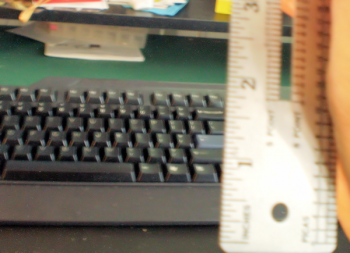
When I was small I liked to hold up my thumb and index finger to frame a tall building in the horizon to make it seem as if the building was smaller than my hand. Today I took picture of the face of my full-sized keyboard that makes it appear as if all of the keys fit into less than a 2-inch high span.

2-inch-keyboard

We know it isn’t true, but our eyes want to believe it. Humans do that kind of thing a lot. Our senses and our instincts sometimes lead us down a shaky path. They tell us that the Earth is flat; that stars are tiny; and that when we are threatened we should fight or run.

It’s all perspective and assumptions.

How Your Instincts Will Blow It for You, if You Don’t STOP!

We have a conflict in a meeting, get a nasty comment on Twitter or some writes a critical blog post about us and instinct kicks in. Our hearts start pumping and our minds begin to form a defense. It’s the “flight or fight” instinct and it will blow it for us, if we don’t watch out.

Few things in our work or social lives need the protection from deadly consequence of the fight or flight instinct. We’re more rational now. Yet the reptile part of our brains still emits the adrenalin that makes us want to respond more quickly than our thinking. We’re ready to put out fires, but the best firefighters focus on the results.

If we respond while we’re still focused on the event, our perspective and assumptions are like the pictures of the building and keyboard — out of proportion to reality. We lose sight of other points of view and possibilities. Other people become tiny enough to squash. It’s easy to snap, crack, bend, or break something or ourselves, only to find out later that we didn’t have the whole plot.

Hard as it might be to STOP and walk it off, a little time and distance from the “event” usually brings a clearer, calmer and more appropriate response.

  • Think about every possible reason, ludicrous and crazy that might have caused the event.
  • Think of how hard it might be to explain your fury to a stranger 10 years from now.
  • Realize the power you give when you take on the defense.
  • Decide how the person you want to be would rise to a response.
  • Think of the impact of your response on the people around you. If you respond on the Internet, think how you’ll see that response 1, 2, or 10 years from now when you see your words again.

You might question the behavior. You might ignore it. You might express your thoughts and future expectations. Or you might end a relationships because you’ve found out that your values don’t match up. It’s unlikely that you’ll instinctively throw water on a grease fire and make things worse.

Strategy is not automatic. Strategy is doing what works.

How do you keep your instincts from blowing for you?

–ME “Liz” Strauss
Work with Liz on your business!!

Buy the ebook. Learn the art of online conversation.

I’m a proud affiliate of

Teaching Sells

Filed Under: Marketing /Sales / Social Media, Successful Blog Tagged With: bc, LinkedIn, relationships, Strategy/Analysis

To FAIL Is Human, to Respond Is …

January 7, 2010 by Liz

Who Always Gets a Perfect Score?

cooltext443809437_relationships

So we put our heads and our hearts together into what we do.

In this environment, we think fast. We move fast. We execute with the information that’s available. Sometimes we make the wrong choice. Sometimes the other guy gets there first. Sometimes what we built doesn’t work the way we thought it would.

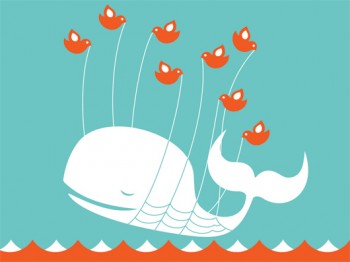
We could put up a sign to let folks know that working on it.

twitter-fail-whale-large

But when the sign goes up often enough to become an icon, when people make new versions that involve Home Simpson and tattoos, then we’re an exponential FAIL. We all know about Twitter FAIL FAIL FAIL. But we’re not Twitter and we don’t have millions of new accounts signing on everyday.

One little fail can knock down a whole lot of good that we’ve built up.

What’s critical is our response.

  • Hear the problem.
  • Learn.
  • Thank the people who found it for helping you.

When people point out a FAIL, stand beside them. Look where they are pointing.
It’s so much more productive than standing in front of them and feeling pointed at.

Always remember there’s a person on the other end of the issue.

To FAIL is human, to respond is more than service. That’s when humanity and character show through. Relationships built in a FAIL situation, often become FAIL SAFE in the end.

When has a FAIL served you?

–ME “Liz” Strauss
Work with Liz on your business!!

Buy the ebook. Learn the art of online conversation.

I’m a proud affiliate of

Teaching Sells

Filed Under: Customer Think, Marketing /Sales / Social Media, Successful Blog Tagged With: bc, Customer Think, identity, LinkedIn, relationships

15 Ways to Help the People in Your Business and Your Life

December 21, 2009 by Liz

A Guide to Customer Service and Relationships of Sorts

cooltext443809437_relationships1

Our economy has become so self-service, we’ve all gotten good at knowing what we need and how to get things done for ourselves. Yet, the social business culture has also taught us that the most powerful question in business is “How can I help you?” Imagine if we took that “help you” view to every person we know.

51b9iwndaal_sl160_

In his book, B-A-M!: Delivering Customer Service in a Self-Service World, business author and entrepreneur Barry J Moltz replaces customer service myths with a tactical approach that shows companies how to make more money through attitudes and actions that will help their customers feel satisfied in good times or bad. Creating satisfied customers is the only enduring competitive advantage left in a world market where virtually everything is a commodity. His advice applies to every blog, every business and every life.

He’s talking about treating customers — people — as if they count.

I’ve read Barry’s book twice now. Once as a manual on customer service and again as a guide for relationships of every kind. The validity of his guidance is that the advice works both ways. I don’t think he’ll mind if apply his customer service ideas to business relationships and replace the word customers with the word people when I restate of few of his ideas.

  1. Define your relationships deliberately, conversationally, and indirectly by observing and listening to what people say to and about you.
  2. Be personable and gracious toward every person at all times.
  3. Treat people with dignity and respect.
  4. Consider the other person’s needs, deadlines, goals, and point of view first.
  5. Encourage them to talk and listen carefully to what they say.
  6. Understand their expectations before we go beyond them.
  7. Anticipate in good ways with friendliness, openness, and patience.
  8. Talk to people one at a time and treat every person as an individual.
  9. Build trust by letting them be part of a balanced give and take.
  10. Remove negative talk and negative views from all of your interactions.
  11. Put quality in everything you do.
  12. Find some quality to admire in the actions of everyone in your life.
  13. Offer training or guidance and leave room for people who color outside the lines.
  14. Celebrate your advocates and fans. Get to know your critics, they understand you better than you might suspect.
  15. At the end of each day, measure your success by looking in the mirror.

Not every person’s opinion is of equal value, of course. Not every one will see you as you truly are. But every person is a human, at the very least find room to respect the lifeform.

People don’t care how good we are, until they know that we care. It’s the care that drives the service. A problem handled with respect and care brings us closer. It’s the care that keeps them with us even when things go a little wrong.

We’re learning about that “how I can help you”? question. Have you found it has power in your life too?

Liz's Signature

Like the Blog? Buy my eBook!

Filed Under: Business Life, Motivation, Successful Blog Tagged With: BAM! Delivering Customer Service, Barry-J.-Moltz, bc, customer-service, LinkedIn, relationships

Trusting Ourselves, Structure Damage, and Recovering

November 2, 2009 by Liz

A Project Post by Liz Strauss and Kristi Daeda

I’ve been working on a special project with Kristi Daeda, an awesome friend, writer, and career counselor. Our project will take many forms for people working on true trust and business relationships. Right now we’re working on breaks in our trust and world view. We’ve named them structure damage.

relationships button

What Is Structure Damage?

It can happen when the world seems most in order. Suddenly, without warning, someone or something pulls the rug out of from under us. Trusting what’s next can be hard.

Structure damage occurs when we are faced with a change that we’re not prepared to deal with. The change can be big or small, it can occur in our professional lives or our personal lives, it can be something that happens to us or something that we realize or decide that changes the way we see the world.

Not every change causes structure damage. Structure damage is when change moves us into that fight-or-flight mode, impacting our emotions, behavior or worldview. The change doesn’t have to represent a threat, it only has to be perceived as one.

If you want to catch the situation before it gets out of hand, get in touch with what’s normal for you, and what’s abnormal. If you’re experiencing any of the following, you might be suffering from a shaking foundation.

  • Stress that you can’t pinpoint the source of. It doesn’t go away when the project’s done or when you’re away from work.
  • An emotional reaction that’s out of step with the situation, like snapping at a coworker.
  • Taking things personally.
  • Feeling like you don’t know what the next step is to move forward.
  • Irrational fear, confusion, or distress.
  • Questioning your current situation or future path.
  • A feeling of powerlessness.

In high-stress situations, you may also experience physiological effects — things like your heart pounding, difficulty focusing, or headaches.

If you normally feel confident and in control, dramatic swings from even keel are a sign that something’s up. That’s your opportunity to ask yourself why you’re feeling the way that you are. Start working backwards — when did you start feeling this way? Did something trigger that change? What about that trigger situation upset you? Keep tracking, and you might be able to find the source — the body blow.

How to minimize the impact

Cultivate flexibility … a few words from Kristi …

Most people think of bridges as static structures. Concrete and steel, built to weather all manner of abuse. But bridges have hinges and joints. They flex and sway in the wind. Their components are engineered to not only be strong enough to bear the weight of traffic, but also to bend to carry the weight of traffic and respond to the elements. It’s this flexibility that allows this giant machine to function, bearing the impact, working with the conditions.

Growing up, my definition of a successful life was to pursue an education, get a job in a traditionally respected, intellectual, moderately lucrative field, get married, have kids, and buy a house in the suburbs. I had a few gifts to bring to the table, but perhaps one of the most notable was my ability in math and science. It was a natural progression to consider engineering as a field.

When I got to college, I struggled with my classes. Not because I wasn’t capable, but because I couldn’t motivate myself to do the work. For someone who has never had a shortage of drive, this was unsettling. What was wrong with me? I ended up frustrated, confused. I tried to reconcile my definition of success with what I was feeling every day — that I was on the wrong path.

My entire worldview — the plan I had laid out for myself, the rules that I lived by — was on very shaky ground.

The structure damage I experienced was to my understanding of success.

There’s a difference between being in control and being prepared. Being prepared allows you to create a platform for success as you’ll be ready to deal with most issues that come your way. The effort to be in control can only lead to frustration — the world is so large, and your span of control is really miniscule in comparison.

  • Let go of your master plan. The least predictive question still asked in job interviews is this: where do you see yourself in five years? At the pace the world is moving, it’s difficult to predict where you’ll be in five months. We resist change mostly because in order to accept change, we have to relinquish control. We like to have things in order, buttoned up all the time. It’s why we’re so into productivity and time management — helps us build systems to keep things from falling through the cracks. But some of the best things in our lives come when we’re completely out of control. How would your energy change if you didn’t have to push for a specific result all the time, racing across the stream or upstream, and instead went with the flow? Chances are you’ll get to as good or better of an outcome, with a lot less paddling.
  • Look for the opportunity. Practice this skill. When something comes your way that’s unexpected, ask yourself — what doors are open now that weren’t before? It may take a few minutes to shake off your initial reaction, but after that, take a minute and answer the question. It doesn’t do you any good to focus on the paths that have closed to you. Keep yourself focused on how you can move forward.
  • Challenge yourself to succeed. Adapting to change is a verifiable skill. If you can bounce back from a layoff, create a positive lifestyle after divorce, or even change your agenda when all the players aren’t in place, it’s an accomplishment. Dealing with change is such a valuable skill in the business world that there’s an entire area of specialization — Change Management — just for people who can facilitate it well. So aim to make your reaction to change a badge of honor. It’s a badge that will serve you well.

We’ve all found ourselves in a situation where someone or something has moved what we believe. Winners take up the gauntlet and find a new set of rules.

How do you recover when structure damage strikes where you live?

–ME “Liz” Strauss and Kristi Daeda
Work with Liz on your business!!

Buy the ebook. Learn the art of online conversation.

I’m a proud affiliate of

Teaching Sells

Filed Under: Business Life, Marketing /Sales / Social Media, Successful Blog Tagged With: bc, LinkedIn, relationships, social business, structure damage

  • « Previous Page
  • 1
  • …
  • 9
  • 10
  • 11
  • 12
  • 13
  • …
  • 54
  • Next Page »

Recently Updated Posts

Is Your Brand Fan Friendly?

How to Improve Your Freelancing Productivity

How to Leverage Live Streaming for Content Marketing

10 Key Customer Experience Design Factors to Consider

How to Use a Lead Generation Item on Facebook

How to Become a Better Storyteller


From Liz Strauss & GeniusShared Press

  • What IS an SOB?!
  • SOB A-Z Directory
  • Letting Liz Be

© 2025 ME Strauss & GeniusShared