Successful Blog

  • Home
  • Community
  • About
  • Author Guidelines
  • Liz’s Book
  • Stay Tuned

Small actions, taken consistently, can move mountains

June 12, 2014 by Rosemary

When Rosa Parks decided she wasn’t going to give up her bus seat, she may not have had in mind kicking off a movement that would change life in America.

Herman Melville, writing the sentence “Call me Ishmael,” probably didn’t sit down to write “the novel of the century.”

Mother Teresa simply decided to care for one person at a time. She had no thought of becoming beatified by the Catholic Church.

We all have to find our own first small action.

One organization that is truly living this credo is Milaap. It’s a crowdlending platform that has raised more than $1.5 million, with a 98.48% repayment rate. They are celebrating their fourth anniversary with a 24-hour online conversation about sustainable giving.

Members of the site choose a project/borrower to support, and how much they wish to lend, and Milaap gives 100% of your loan funds to the borrower.

You then receive updates on the project via email, and get repaid. The funds can be reinvested in another micro-loan if you wish.

The concept is so simple. With each small loan, lives are changed. With each changed life comes promise and possibility for everyone touched by that life.

Reading through the available campaigns to support, you see families who can use a $100 loan to buy chickens to expand their chicken coops, to help abused women start their own businesses, or bring potable water to underserved areas. Each of these project groups are taking a single small action to improve their lives. The ripple effects over time will be enormous.

Maybe today you’re reading this post with a mountain sitting in front of you.

Is it a physical disability?
A financial hardship?
Do you have an enormous challenge at work?
A burning idea for a new business?

Whatever the mountain is, you can find a first step. Even if you’re moving it with teaspoons, you can make progress right now in this moment.

Maybe you can be inspired by Milaap and gather supporters to help you carry teaspoons.

Molly’s lovely post from this past Monday reminded us that we can’t do it alone. That’s even more true when the mountain looms large.

If you’d like to learn more about Milaap and the work they’re doing, visit their site at Milaap.org.

If you’d like to get help and support from your fellow teaspoon carriers, let us know in the comments. Let’s take the first action together.
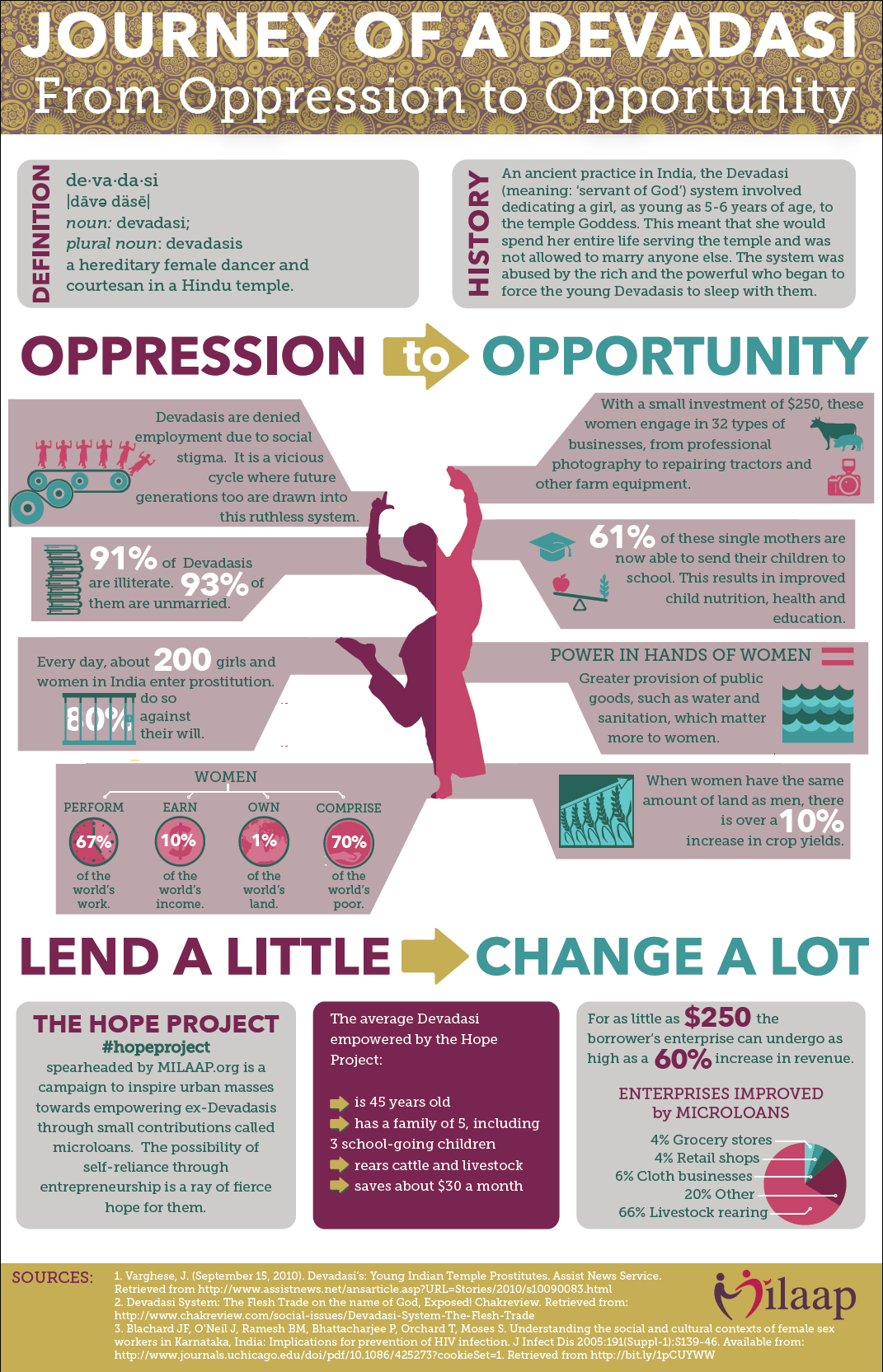

Milaap infographic
Author’s Bio: Rosemary O’Neill is an insightful spirit who works for social strata — a top ten company to work for on the Internet . Check out the Social Strata blog. You can find Rosemary on Google+ and on Twitter as @rhogroupee

Filed Under: Community, Motivation, Personal Development, Successful Blog, teamwork Tagged With: bc, charity, nonprofit, teamwork

Having Inconsistent Contact with Customers?

June 11, 2014 by Thomas

acontact

You have a fantastic website that gives customers all of the information they need about your product or service. You may even have a blog to go with your website to provide further information or to answer questions.

However, many businesses often overlook the importance of one page: the Contact Us form.

Even if they include it on the site, they fail to maximize its potential.

Call to Action

Businesses often lack the knowledge on how to use call to actions to convert more customers by making the contact form a bigger part of the website.

It’s commonly added to the menu along with the other pages on the site. However, a link to the form should be included with all of your calls to action.

At the point where you invite customers to contact you, there should be a link that makes it easy for them to do just that. If they have to navigate from somewhere else, they may get distracted and forget to complete the action.

What Makes a Good Contact Page

After viewing your website, the Contact form is the next “first impression” that you make.

If someone is taking the time to contact you for any reason, you want to make it a positive experience for them. It should be easy to access and have personality, but it should not be cluttered. You don’t want your visitors to get bogged down with what is on the page and forget to actually make contact with you.

The problem with many standard Contact pages is that they are designed solely for functionality without thought about the people that will be using them.

As Howard Yeh, founder, investor and president of ContactUs.com says about the process of designing a contact form, “We approach the problems that websites face not just as web developers, but as online marketers, experienced lead-generators and sales account managers. And with that mindset, we’ve built both features and data solutions to make those jobs easier.”

You want to look at your Contact page as a marketer.

Does it provide a warm welcome and then a call to action that visitors will understand?

It should also be short and efficient.

Collect the necessary information to provide an accurate and thorough reply but don’t waste your visitors’ time filling out unnecessary fields.

Multiple Avenues to Reach You

While some customers will feel more comfortable with the idea of sending out a message or email, others still prefer a phone call.

A contact link should be visible on all pages right in the area where it does the most good.

On some pages, this may be as a sidebar while on others; you might want it right below a product or list of services you provide.

An effective Contact Us form is one that converts your visitors into customers. It is included as a way to help you establish new relationships and continue to grow current ones.

Make sure your contact page is working for you.

Photo credit: Image courtesy of Stuart Miles / FreeDigitalPhotos.net

About the Author: Joyce Morse is an author who writes on a variety of topics, including content marketing and small business.

Filed Under: Business Life Tagged With: bc, contact, customers, marketing, small business, website

The Secret of My Success

June 5, 2014 by Rosemary

Moving into a new home is a major undertaking.

Once the boxes are cleared and the new neighbors start bringing over key lime pie, you invariably have to start calling contractors of various stripes.

moving is hard

Lawn guy, handyman to fix the screen door handle, pest control, air conditioning repair, you get the picture. Making all of these calls over a compressed period of time gave me a true education in “who gets the business.”

You know who gets the business?

The person who answers the phone. If everyone fails that test, then it’s the one who returns the call the fastest.

Woody Allen has been often quoted as saying “showing up is 80 percent of life.”

When asked later about the quote by William Safire in the New York Times, he elaborated:

“My observation was that once a person actually completed a play or a novel, he was well on his way to getting it produced or published, as opposed to a vast majority of people who tell me their ambition is to write, but who strike out on the very first level and indeed never write the play or book. In the midst of the conversation, as I’m now trying to recall, I did say that 80 percent of success is showing up.”

Do you have an ambition to start a business, or are you actually doing it? Doing it means answering the phone when it rings.

Businesses hanging out a shingle, getting that Google places listing, polishing up their SEO to get a good search engine rank, and hoping for good word of mouth are truly only 10 percent of the way to the sale.

If all of those things happen and you don’t answer the phone, you’re dead in the water.

Yes, this same imperative applies to online businesses, consultants, writers, and everyone else.

Three Keys to Answering the Phone

  1. Manage your time effectively. Make answering the phone a priority. Yes, it’s probably more important than posting on your Facebook page.
  2. Create a system so that nothing slips through the cracks. Whether you’re using a notepad or a sophisticated contact management system like Salesforce or Nimble, put a mechanism in place that will remind you to follow up.
  3. Practice active listening when you do answer. Don’t launch into a pitch; wait and let the person on the other side tell you what they are contacting you for.

If you show up and answer the phone, you’ll come out ahead every time. (But let’s keep it our little secret, ok?)

Author’s Bio: Rosemary O’Neill is an insightful spirit who works for social strata — a top ten company to work for on the Internet . Check out the Social Strata blog. You can find Rosemary on Google+ and on Twitter as @rhogroupee

Filed Under: Marketing /Sales / Social Media, Productivity, Successful Blog Tagged With: bc, customer-service, Motivation, Productivity

Is Your Home Office What You Want It to Be?

June 4, 2014 by Thomas

aofficeMore and more people are working from home.

Maybe it’s telecommuting for an international multi-billion dollar company, or it could be running your own small business from home where you are your only employee. Maybe sometimes you’re in a company’s office, other days you’re at home.

Whatever the case may be, it’s becoming more the norm for people to be working at home.

According to a Forbes piece, at least 30 million Americans work from home at least one day a week. This number is growing and is expected to continue to do so over the next few years.

One of the main reasons people do opt to work from home, and why companies are supportive, is because work productivity is shown to increase for those who work from home.

Not only do home officers save time (which means money) by skipping the commute, they also can be more productive at home by working in more personalized comfort.

When it comes to that personalized comfort, which is conducive to productivity, how do you get the optimal home office for an affordable price?

Take a look at some of these tips to find what works for you and enhances your own space:

• A designated space – It’s important to have a designated work space aside from your home life. Keep the doctor bills and PTA forms somewhere else. Make sure this space stays all business and your productivity will increase. It’s not cost prohibitive to do this, you just might need to do some organizing.

• A comfortable space – If you are at your desk for any extended time, you need to be comfortable. Major retailers, including Walmart, offer great specials on affordable and comfortable office desks to make working from home a positive, comfortable and productive experience. Along with the desk, you need a comfortable chair to keep your posture and back healthy.

• A well-lit space – You will be happier working in a space with good lighting. If you can’t have natural lighting, find some lamps that offer good light. Even the paint color on the wall adds to the lighting feel; choose a color that works well for you, makes you happy and that you find positive energy from. Paint is an affordable way to make a big change in a space.

• A clutter free space – Even if you’ve banished all your home clutter from your work space, make sure you continue to keep it clutter free. Toss or file old documents, organize material on a regular basis and keep what you can electronically, toss the hard copies.

If you can set up your work space when you first start your home office experience, your productivity will shine. It’s beneficial to do it the right way from the start so you don’t need use valuable time to make changes.

But if you do need to change something, do it – it will be worth it for your comfort and productivity.

Photo credit: decoist.com

About the Author: Heather Legg writes about small business, staying within a budget and making the most of what you have.


Filed Under: Business Life Tagged With: bc, customers, home, office, small business, telecommute

Don’t Let Ties That Bind Lead to Content That Strangles Online Growth

June 3, 2014 by Rosemary

By Lisa D. Jenkins

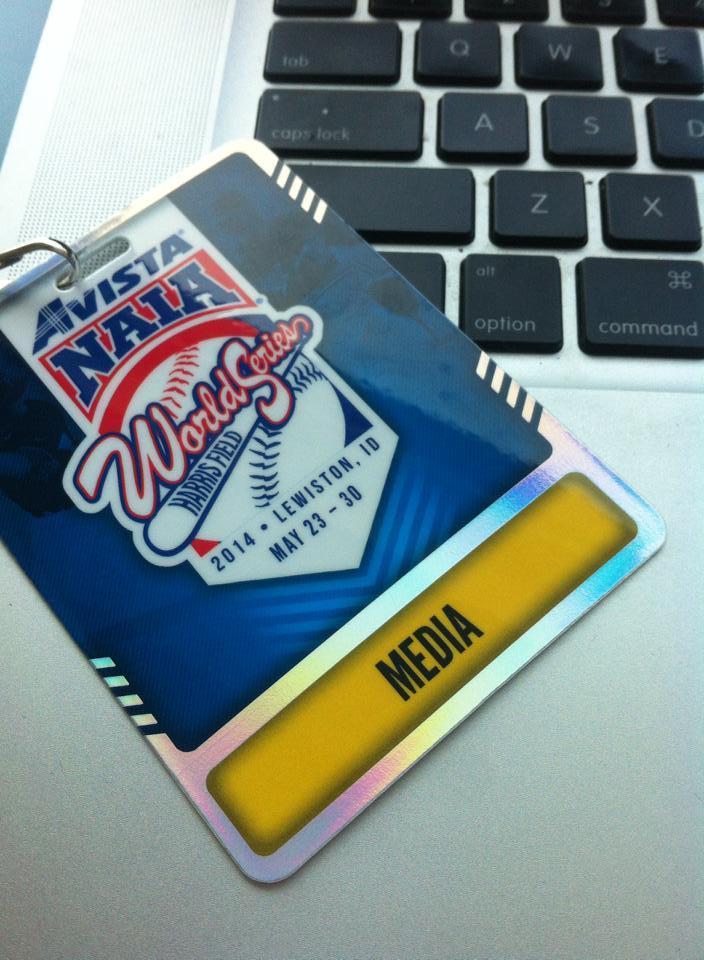
Last week, I was supporting a radio broadcast team covering a long-standing, week-long live event with tweets. This is the fourth year I’ve been part of the KOZE Sports team and this year I keyed in on something new. Not with the event but with the team of two announcers responsible for bringing the event to thousands of people across the nation.

NAIA media pass

Over the several years Brian Danner and Mike Tatko have been announcing NAIA World Series Baseball, they’ve developed a history. They’ve created and maintained off-air relationships with each other, coaches and players, families of coaches and players, fans, officials and a host of other people. A natural part of those relationships is personal experiences that spawned stories most of the listening audience knows nothing about, but those stories come up in on-air color commentary. Because that’s what sports color commentary is … stories to fill dead air between plays.

What I keyed in on, was they way these two men were able to share their histories. Instead of cracking a private joke on-air about something that happened in the past, they took the time to fill in the back story. Every memory reference was colored in. Every person listening was provided with an explanation that invited them into the conversation.

In the same way that Danner and Tatko have developed a history, brands that were conceived and launched online or brands that have been curating content over an extended period of time have a very real history.

One thing that makes a brand and its content attractive to people is a consistent voice that shares that history and the new events that continue to contribute to it. This takes on increased importance when you have a team of people managing that voice.

With any good team you want to encourage ties and relationships that give your team members a sense of connection. A cohesiveness that allows them to pull together to pursue common marketing goals. The danger comes when the intimate aspects of those ties and relationships begin to bleed over into the conversations that take place on your social media profiles.

I’m not writing about behind-the-scenes snapshots of Team Member Josephine caught sleeping at her desk during a quick power nap. Or teasers of an almost-ready-to-launch product. I’m writing about insider banter made up of private jokes and subtle references to previous events new followers might not be familiar with. Instead of being invited to participate in and contribute to conversations that occur on your Facebook Page, Twitter stream, Tumblr profile, or LinkedIn presence, your followers become observers, voyeurs if you will, over an exclusionary conversation.

An oblique reference once in a while shouldn’t damage your brand but if your team becomes comfortable with presenting too many tweets, updates or posts that have overly private resonances and not enough public appeal, people will stop retweeting, sharing or giving +1’s because they don’t have the contextual references they need to understand the content your team is publishing. It will kill your online momentum.

The best time to manage this situation is before it occurs by addressing expectations for your team’s online behaviors in a set of social media guidelines.

If you find yourself having to navigate the situation as it’s occurring online, you need to find a way to help your team bring the content back around to a place where your followers feel included and invited to take part in a conversation.

Author’s Bio: Lisa D. Jenkins is a Public Relations professional specializing in Social and Digital Communications for businesses. She has over a decade of experience and work most often with destination organizations or businesses in the travel and tourism industry in the Pacific Northwest. Connect with her on Google+

Filed Under: Audience, Content, Successful Blog Tagged With: bc, connection, personality, voice

The Whuffie Factor, Five Years Later – Interview with Tara Hunt

May 29, 2014 by Rosemary

Last week, in my Internet travels, I stumbled across a reference to Whuffie.

No, Whuffie is not a cleaning product.

The Whuffie Factor, by Tara Hunt, was published in April 2009, when we were all talking about “Web 2.0” and Captain “Sully” Sullenberger. If you didn’t pick up this seminal book five years ago, you should go grab a copy now. Its advice is still very relevant today. Among other things, Tara predicted the rise of subscription music services, content marketing, and many of the reputation-building ideas that are now canon.

Tara Hunt hasn’t relaxed over the last few years, moving from co-founding the groundbreaking Citizen Agency to her current position as Social Digital Leader at MSLGROUP, and helping her clients build relationships along the way. As a long-time participant and builder of online communities, Tara exemplifies the principles she advocates…she walks the walk. When I randomly reached out via Twitter, she was right there and ready to share her thoughts about how things have evolved over the last five years.

The Whuffie Factor

It’s been five years since you wrote The Whuffie Factor. What do you think has been the biggest business shift during that time?

Has it already been five years?! I can’t believe how much time flies. The biggest business shift during this time has been the overall adoption of social media into the marketing mix. There are very few companies that don’t do anything at all online. The issue now is that everyone is using social media tools, but very few are actually using them truly socially. I see too many examples of companies putting the same kind of content on social networks as they would have placed in traditional media. “Here are our product benefits!” “Our product is awesome!” “You should try our product!” The medium has changed, but the strategy has not.

Do you think it’s more difficult now to build Whuffie?

The bar is definitely higher now to build Whuffie, because brands are competing with their own customers for trust and attention. In the beauty space, the amateur YouTuber has hundreds of thousands (and even millions) of subscribers who hang on their every word while the huge beauty brands with their enormous budgets are still struggling to get any engagement. They try to pay for it, but it’s fleeting. Individuals understand how to build Whuffie because every relationship is important to them – especially when they are starting out – but brands are still thinking in terms of mass market. They don’t know how to invest in one relationship at a time. They are so used to buying a large number of views. They don’t realize that those individual relationships are worth so much more in the long run than a paid view. It’s a matter of valuing the wrong metric.

That being said, the bar is still set pretty low for brands and we celebrate brands that even partially understand this. So, I guess it isn’t more difficult to build Whuffie, it’s just still a foreign concept.

Is Whuffie like Fight Club (i.e., if you have Whuffie, you don’t talk about Whuffie)?

Hah! It’s more like being cool. Cool people (and brands) don’t say they are cool. They just are. If I went around bragging that I have 50,000 followers, people would wonder how valuable that audience really is.

Online communities are a hot topic right now; are you surprised it’s taken this long for everyone to wake up to the value of community?

Yes and no. I’m surprised because it has seemed obvious to me for nearly 15 years, but I’m not surprised because I’ve worked with so many clients over the years who need to see where something is going before they are willing to invest in it. The bigger the company, the more risk-averse they are to trying ‘unproven’ techniques. They have more at stake. They have to report to shareholders and employ leagues of people who count on them to grow the company. I understand that. However, I’ve seen so many examples of companies who win time and time again because they are willing to take a leap of faith. Everyone who waits to watch the results, then jumps in are shrugged off as late adopters.

When I went back to re-read The Whuffie Factor, I expected to find a lot of material that would need to be updated or tweaked because so much has changed in five years, but it’s surprisingly evergreen advice. What would you update if you were going to publish a revised edition?

You know, that is wonderful to hear! I get tweets from people all of the time that they just finished reading TWF and got so much out of it and I usually answer, “Really?” LOL. I shouldn’t be surprised, though, because core principles are core principles and that’s why I wrote it to be more of a business philosophy/strategy book than a business tactic book. If I was to publish an updated edition, I have hundreds of new examples to underscore the basic premise that brands should be focused on building Whuffie and not likes/followers. The examples I used were tiny compared to what has happened.

Would you like to shout-out any companies or brands that are “Whuffie-rich” right now? It looks like Threadless (which you highlighted in the book) has done a great job of keeping its Whuffie going.

Threadless keeps it going because being truly social is in their DNA. There are lots of new upstarts like Dollar Shave Club, Hello Flo, Uber and AirBnB that also have social in their DNA. They aren’t afraid of it. They embrace it and gain loads of Whuffie. But there are also some bigger companies that are impressing me. Chipotle has done an amazing job of building Whuffie in a crowded fast food market. Burberry, under Angela Ahrendts took all sorts of risks as a luxury brand to become more social and digital and it paid off in winning a whole new generation of buyers. There are multiple luxury brands who are winning over new generations of buyers and seeing it pay off handsomely like Chanel, Donna Karen, and Diane von Furstenberg. On the food side, Red Bull and Oreo are killing it with their focus on engaging social content. Red Bull sees themselves as a creative content shop that happens to sell an energy drink. What the Whuffie-rich examples all have in common? They focus on the customer, not on themselves.

You predicted the rise of music subscription services (monthly fee for unlimited downloads). Are you using Rdio, Spotify, Pandora, or Beats Music yourself?

Did I? Yay me! (I know that I should remember that!) I’m using multiple services: Focus@will, Rdio, Spotify, and more. Plus, it’s moved into video. We watch everything via streamed service and haven’t had cable in eons. And for magazines, I’m using NextIssue.

I see you’re writing a report about Furry Influencers. Can pets have Whuffie?

Hahaha….yes. It seems from my research, they can have a WHOLE LOT OF WHUFFIE. It’s serious business now. These Furry Influencers are signing six-figure deals and hitting more red carpets than some of the traditional human celebrities. There is all sorts of amazing psychology behind this, but in many ways this breaks the authenticity rule. We all understand that it isn’t L’il Bub or Boo the Pomeranian who is behind the keyboard or camera phone, but we listen to them anyway. We are reeled in because we love the content (adorable animals satisfy our dopamine addiction), then we find out about pet brands from them. I subscribed to BarkBox because of Manny the Frenchie’s Instagramming his monthly box. There is actually research that cuteness can make us more indulgent. This is dangerous!

If you’d like to connect with Tara, you can find her at http://tarahunt.com or as @missrogue on Twitter.

Author’s Bio: Rosemary O’Neill is an insightful spirit who works for social strata — a top ten company to work for on the Internet . Check out the Social Strata blog. You can find Rosemary on Google+ and on Twitter as @rhogroupee

Filed Under: Interviews, Successful Blog Tagged With: bc, interview, Tara Hunt, whuffie

  • « Previous Page
  • 1
  • …
  • 111
  • 112
  • 113
  • 114
  • 115
  • …
  • 1050
  • Next Page »

Recently Updated Posts

The Creator’s Edge: How Bloggers and Influencers Can Master Dropshipping

Is Your Brand Fan Friendly?

How to Improve Your Freelancing Productivity

How to Leverage Live Streaming for Content Marketing

10 Key Customer Experience Design Factors to Consider

How to Use a Lead Generation Item on Facebook


From Liz Strauss & GeniusShared Press

  • What IS an SOB?!
  • SOB A-Z Directory
  • Letting Liz Be

© 2025 ME Strauss & GeniusShared