Successful Blog

  • Home
  • Community
  • About
  • Author Guidelines
  • Liz’s Book
  • Stay Tuned

Work Hard, Play Slow, Make Business

April 30, 2010 by Guest Author

A Guest Post by Erno Hannink

cooltext443809437_relationships

What I admire in the American culture is the quest for success. Most Americans I meet want to be number one and have an entrepreneurial spirit. Everyone can make it and be a success is standard in the US culture. It already starts with the competitions at school.

Let me show you some differences with the European cultures and what an entrepreneur might learn from this difference.

In Europe becoming No 1 is not everyone’s agenda. It is nice to have financial success but not necessary. Our rating for tests in school in the Netherlands, where I live, is mostly from 1-10 and 10 is the best and 1 is really bad. Most of the Europeans feel that 6 is good enough, no need to go for that 10. It’s similar for most countries in Europe. You can see that same attitude in the workplace at organizations and companies. We try to satisfy the customer, there is not really a need to surpass their expectations on delivery.

Entrepreneurship is in American DNA and that grows the nation. Europeans work less and therefore we can spend more time with our families and friends, cook and have dinner at home. This is the basis for less stress and healthier lives.

Where there is great success there is also great failure. The difference in rich and poor is huge. In our culture, you can become rich but the poor have a safety net. The government plays a large role in this. If a company needs to fire employees, the fired employees get money — first from the company and later from the government. This all needs to be paid with taxes. This makes the gap between rich and poor somewhat smaller. The poor do not have it easy, but will survive, have a roof over their head and are able to eat food, and use the health system.

In most of the European schools, English is part of our education. More and more Europeans use American social networks like Facebook and YouTube. This means that more and more people read and speak English. However, language is in the detail. Detail is where we can make mistakes and have misunderstandings.

There is also a difference in the home base. In the US there are 50 states and many cultures, but mostly people speak the same language: English. In Europe there are 44 countries that all have their own culture but more importantly, most have their own language. This makes the home base for a companies service or product already a lot smaller. Selling your products in several European countries is easier said than done. It involves language, cultural and national regulations.

I have worked for and with companies from the US and all over Europe. It is great to learn and enjoy all these cultural differences. If you want to expand you business outside the US it relatively easy these days. You can get in contact with local people via the social networks and get to know potential partners.

Once you start working with people from outside your culture it is great to see what you can learn from them. Take care not to force your way of working on to the other culture.

Have you been to Europe? Next time you come to Europe look at the differences and see what you might take home to use in your way of working. I would love to connect with you, I want to learn from you and maybe you can learn from me.

_____
Erno Hannink is a Social Media Specialist for Independent Professionals and Social Media Business Coach. Through the use of social media and a focus on online publishing of valuable information, Erno helps independent professionals attract and retain more clients. He is the author of the book ‘Attracting Clients – How Independent Professionals and solopreneurs can get new clients using the internet” (free download) and also blogs on enthousiasmeren.nl (Dutch). You can find Erno on Twitter as @ErnoHannink

Thanks, Erno. I’ve enjoyed knowing and learning from and with you. 🙂

–ME “Liz” Strauss
Work with Liz on your business!!

Buy the Insider’s Guide to Online Conversation.

I’m a proud affiliate of

third-tribe-marketing

Filed Under: Community, Motivation, Successful Blog Tagged With: bc, Erno Hannink, LinkedIn, relationships

Cool Tool Review: Expensify

April 29, 2010 by Guest Author

Todd Hoskins Reviews Tools for Small Business

cooltext451585442_tools

Todd Hoskins chooses and uses tools and products that could belong in a small business toolkit. He’ll be checking out how useful they are to folks who would be their customers in a form that’s consistent and relevant.

Cool Tool Review: Expensify
A Review by Todd Hoskins

I have a shoebox of receipts, and a file folder for business expenses. How often do I spend time rummaging through the box for lost receipts? I’m embarrassed to admit.

Pain and expense reporting go hand in hand. The scanning, the spreadsheets, the documentation, the mileage log . . . you get the idea. Expensify completely changes this experience from painful to painless (and paperless to boot).

Imagine this . . . you get an email receipt from a hotel or airline and you forward it to an address that automatically uploads a copy awaiting your categorization (think TripIt). Or, you take a client to dinner and while emptying your pocket the next morning you simply take a photo with your phone and send it on its way (think NeatReceipts). You can also log a cash expense via SMS (think taxicabs). Finally, directly import your business credit card account and your reporting is being updated as you incur expenses (think Mint). These are just a few of the many features and services offered by Expensify. The days of the shoebox are numbered.

expensify1

They have done their research. As someone who has submitted, approved, and paid expenses in the past, I can’t find any holes. Better yet, it’s free if you are having expenses submitted by two or less people. More than two, it’s $5/month per person.

The beancounters and procedural police are taken care of as well. Expensify also provides additional support for the entire expense reporting workflow on their site – after submitting a report, the boss can approve the expenses online and the finance person can provide reimbursement electronically via direct deposit. Additionally, Expensify offers tight integrations with QuickBooks™, FreshBooks, Google Apps, and Salesforce.

Summing Up – Is it worth it?

Enterprise Value: 5/5 – currency conversion + customized policy mgmt

Entrepreneur Value: 5/5 – saves money and time

Personal Value: 0/5 – do your mileage log elsewhere, use Mint

Filed Under: Successful Blog, Tools Tagged With: bc, LinkedIn, Todd Hoskins

How To Be An Honest Blogger Without Being A Jerk

April 28, 2010 by Liz

Do You Like These Sandals?

cooltext455576688_blogging

I ordered my daughter a new pair of Stride Rite sandals for the summer. We went to the store to pick them up, and I slipped an excited toddler (she loves fashion at the ripe age of 2) into a pair of brown and gold sandals.

“Do you like them?” I asked her, thinking I knew what her response would be.

My honest little Micah said, “No.”

To be honest or to be nice

What kind of blogger are you? Are you the honest blogger? You would have told me that you didn’t like those sandals point blank, like my daughter, without giving a care to the time, effort and money that went to making those sandals part of my kid’s wardrobe.On the other hand, do you consider yourself to be a nice blogger? You say what people want to hear. You would tell me that shiny footwear was the most adorable creation since ruffled dresses. You would also agree with the critic who hates the sandals. You want to be everybody’s friend.

There are pros and cons to each disposition.

If you’re always honest,

  • You get to be yourself, an easy assignment.
  • People will know exactly how you stand on an issue.
  • You could drum up business with your truthful outlook.
  • Your words might evoke anger, frustration or hurt feelings.
  • Your brutal honesty might scare people away from following you.
  • Your name could be destroyed if you come off as a jerk.
  • People will feel comfortable sharing their true colors. (Is this a pro or con? That depends on you).

If you’re always nice,

  • People will like you, and you always will have people to agree with you.
  • People will be drawn to your pleasant disposition.
  • You could create work for yourself with your kind demeanor.
  • You don’t get to always be yourself because you strictly want to be nice. It can be difficult to fake how you truly feel.
  • Readers might wonder what the deal is if they find you contradicting yourself for the sake of niceness.
  • People will wonder if you are human or an alien from “V” because you don’t show anger.

The solution: be both

Season your words with salt, the old adage goes. Be honest and be nice. It’s easy to express your opinion when you know the majority will agree with you. Perhaps your blog post reads, “Having a baby is a miracle.”What if a group will not like, possible hate, your opinion? It might be difficult to say, “A woman should never have an abortion.”

What do you do when you need to express yourself on a controversial topic?

  • Don’t use disrespectful speech, and mind your manners. That means you say how you feel without bashing the opposing party.
  • Back up your claims. Don’t make brazen remarks without listing your reasons why you feel the way you do. Your argument might be enough to make a person question his differing viewpoint if you give convincing evidence.
  • Be thorough. This goes along with the last point. Throw in some expert opinions and statistics to support your case.
  • Acknowledge the other side. Your post should include the opposing side’s perspective and why you disagree. This way, you say, “I’m willing to agree to disagree.”
  • Respond to feedback. Controversial posts get people talking, and that’s great. You should be sure to respond to feedback from people genuinely interested in the topic, whether they support you or disagree. Be careful with people only looking to argue, rather than discuss. You can choose to respond to the comment on the post, respond privately or ignore them completely.

Be specific

My daughter said she didn’t like the sandals. I later discovered she loved the sandals and didn’t like that they were a smidge too large for her.The most important way to be an honest, non-jerky blogger is to be specific when you write. Describe your opinion as thoroughly as possible. Make a series on your topic if you can’t fit it into one post.

Get out there and blog your heart out. It’s what people really want.

How do you manage to be an honest blogger without being a jerk?

—-
Terez Howard operates TheWriteBloggers, a professional blogging service which builds clients’ authority status and net visibility. She regularly blogs at Freelance Writing Mamas . You’ll find her on Twitter @thewriteblogger

Thanks, Terez!
–ME “Liz” Strauss
Work with Liz on your business!!

Buy the Insider’s Guide to Online Conversation.
I’m a proud affiliate of

third-tribe-marketing

Filed Under: Successful Blog, Writing Tagged With: bc, blogging, LinkedIn, relationships, Terez Howard

Social Media Book List: Social Media for Nonprofits and is Talent really overated?

April 28, 2010 by teresa

A Weekly Series by Teresa Morrow

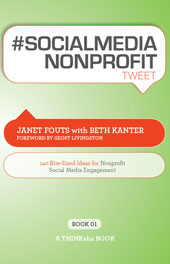
I’m Teresa Morrow, Founder of Key Business Partners, LLC and I work with authors and writers by managing their online promotion. As part of my job I read a lot of books (and I love to read anyway!). I am here to offer a weekly post about one book author I am working with and one book I have put on my reading list. This week I will be highlighting ‘#SOCIALMEDIANONPROFIT: 140 Bite Sized for Nonprofit Social Media Engagement’. and ‘Talent is Overrated’ by Geoff Colvin. The books will cover topics such as social media (Facebook and Twitter), organization, career building, networking, writing, self development and inspiration.

#SOCIALMEDIANONPROFITtweet

socialmedianonprofittweetmid

#SOCIALMEDIANONPROFITtweet is written by Janet Fouts & Beth Kanter.

Social Media has taken the world by storm, however, some non profit organizations have not figured out how to use social media to there best benefit. This book shares with those who work with and in these organizations, the ideas, tools and resources available to them through social media.

Here are few of the tweets from #SOCIALMEDIANONPROFIT:

~You already communicate, campaign, fund raise, serve, and build community locally. With social media, you can do that with the world!

~Is there another way to connect with thousands of people instantly and regularly for free?

~Social media IS the next business revolution—if an organization is not engaged they will look dated and out
of touch in no time.

~What do you measure now? Measure that before and after using socialmedia. See if it improves. If not,
change how you use it. Repeat.

~People WANT to become engaged in your venture. LET THEM! Help others become invested in
your mission.

~The most important part of social media is the “social.” Personalize everything—your beaming face is
better than any logo!

About the Authors:

Janet Fouts, is a social media coach, teacher and speaker. She helps individuals and corporations understand how to use social media tools and work efficiently in this emerging field, and conducts in house and virtual training sessions on social media tools and strategy.

Janet has been working with small businesses to develop their on-line presence and working with online community for 13 years. She is partner in the award winning web design and development firm Tatu Digital Media. She freely shares her knowledge on several social media platforms including her blog at JanetFouts.com

Beth Kanter, is the author of Beth’s Blog: How Nonprofits Can Use Social Media, one of the longest running and most popular blogs for nonprofits. She is co-author of the forthcoming book, ‘The Networked Nonprofit,’ to be published by J. Wiley in 2010.

Beth is the CEO of Zoetica, a company that serves nonprofits and socially conscious companies with top-tier, online marketing services. In 2009, she was named by Fast Company Magazine as one of the most influential women in technology and one of Business Week’s ‘Voices of Innovation for Social Media.’ She is the 2009 Visiting Scholar for Social Media and Nonprofits for the Packard Foundation.

You can purchase a copy of #SOCIALMEDIANONPROFITtweet online at ThinkAha books or at Amazon.

This blog post is part of a virtual book tour by Key Business Partners and I have received a complimentary copy of #SOCIALMEDIANONPROFITtweet by the author.

Talent is Overrated

Now I would like to highlight a book on my reading list–Talent is Overrated.
I have to admit before I go any further. I have read some of this book and I enjoyed what I have read so far.

In this book, the author brings up a very interesting point about what talent really is and how we in the world define it.

He starts out the book with this quote,”Great performance is more valuable than ever–but where does it really come from?”

Colvin brings up those who are perceived to have “natural talent” and is it really natural and are you born with these talents OR is it that because Venus and Serena Williams, or Michael Jordan, or Tiger Woods practiced the skills in their chosen profession more than anyone else may have is that the reason they are as good as they are playing their sport.

About the Author:

Geoff Colvin, is Fortune’s senior editor-at-large and has written hundred of articles for the magazine including its popular column Value Driven. He lectures widely and is the regular lead moderator for the Fortune Global Forum. Colvin graduated Harvard cum laude with a B.A. in economics, and received his M.B.A. from New York University’s Stern School. His first book, Talent Is Overrated, earned global acclaim and was a Wall Street Journal, BusinessWeek, and New York Times business bestseller. www.GeoffColvin.com *courtesy of Amazon.com

You can purchase a copy of Talent is Overrated on Amazon.

I truly hope you will check out these books and please comment and let me know your thoughts on them.

Filed Under: Business Book, Business Life Tagged With: bc, Geoff Colvin books, social media books

How to Listen Your Way to the Best 30-Second Pitch Ever

April 27, 2010 by Liz

Social Media Doesn’t Connect People Do

cooltext443809558_authenticity

Welcome to the social web where everyone and everything is connected. Just build a profile and you are too! Right?

Well, maybe technologically, but it takes more than a few links to build a relationship with a person that makes a difference to building your brand or moving your business forward.

Social media tools work so much more effectively when we decide a few things before we use them.

What to Do Before You Go Social

Every now and then a event like the social web disrupts things and we need to figure out new ways of relating and connecting with the people who help us grow. Leaders reach out listen and learn from the best and invite those folks in to participate and be part of what they’re doing.

The social web has made it easier and faster to reach out further to find the ideal clients and customers we might want to work with. It’s foolish not to have a plan to use the social tools available to us to that in the best ways we possibly can.

Here are six ways to be effective at social business.

  1. Know what business you’re in. Sounds simple, but it’s not about what you make or what you sell. We need to be seriously sure of what we do for our customers.
  2. Choose the ideal customer you want to work with. The whole game changed when the world became our marketplace. We can’t do everything for everyone in the world. Draw a picture. Make a prototype of the customer you’ve just identified. What do you offer that makes that customer’s life faster, easier, or more meaningful? Choose those who are going to love what you do and build your website, your content, and your offers all around them so that they recognize you.
  3. Now that you think you know that. Go find people who meet that description and ask them what they care about … and listen. Find them where they meet online and where they meet offline. We can’t grow if we only talk to the people we already know and only visit the places we always go to.
  4. Use the social tools to talk to them about what they like to talk about. Then keep listening — build relationships and get to know your potential customers better. When you talk about what you do, talk the way you tell friends what’s going on in your life.
  5. When it’s natural talk about how you might align your goals with theirs and build something together … something you might not be able to build alone.
  6. Make it easy for your online and offline customers to meet you and each other. And encourage them to meet and talk with each other as often as they can.

And keep doing all six steps over and over again.

The generational nature of the social culture means that our base of customers is always shifting, growing, learning. Bringing our offline customers online and meeting our online customers offline will only deepen our relationships with all of them.

When we’re authentically listening, we can hear who actually needs our help. The best 30-second pitch is when when we can answer, “By the way, that’s what I do.”

Have you tried listening to find out who needs what you have to offer?

–ME “Liz” Strauss
Work with Liz on your web presence!!

Buy the eBook. and Register for SOBCon2010 NOW!!

Filed Under: Successful Blog Tagged With: 30-second pitch, bc, LinkedIn

Winning at Social Media in an International Market

April 26, 2010 by Guest Author

A Guest Post by Christian Arno

cooltext443809437_relationships

Marketing, in one form or another, has been helping the cause since time immemorial and now it just got personal. Market savvy entrepreneurs are using social media websites like Facebook and Twitter and their online communities to target customers and listen to exactly what they say.

Social Media websites give both producer and consumer a voice and offer the transparency and sense of community that are now charming customers across the world into parting with large amounts of money. Here are some things to remember:

Marketing, the Differences

Traditional marketing, like press releases and advertising can be likened to throwing your advertising budget up in the air and saying ‘I hope these lands on someone interested.’ Tapping social media opens up a dialogue with your customers and usefully corrals all of your cash-cows in a few, easy to find, on-line fields. People can then say what they specifically like or loathe about your product and you, through careful monitoring, can act accordingly.

Marketing, the Similarities

You need not think that you can set up a group on Facebook and Lo! Your product has created an on-line community of well-wishers and unpaid market researchers. You still need to put the advertisements out there. Pay Per Click advertising campaigns (PPCs), for example, allow you to see which adverts the fish have been nibbling at and allow you to tailor your approach. Targeted audiences have always been at the heart of marketing, social media just takes it a step further.

Get Community Going

People will work for free. The happy sense of bonhomie and camaraderie that web groups and chat forums engender brings out the best in human nature and offers entrepreneurs a splendid opportunity to profit from this.

Translating is one way of doing this. Any international marketing scheme has to face the thorny question of translation. Keywords for Search Engine Optimization (SEO), and subtle nuances must all be carefully interpreted and adapted to suit new target audiences, but a team of professional, native-speaker translators can be a serious drain on the purses.

Crowdsourcing is one way round this — when you invite the community of web-users out there to come and do the spadework for you. People always like showing off their bright ideas and this increasingly popular practice is the perfect forum for doing so. It also allows people to get directly involved in your brand. Wikipedia is one such example.

The Edinburgh Fringe Festival ran an extremely successful crowdsourcing project on Twitter for their 2010 program cover. Festival lovers were encouraged to tweet their ideas for illustrations, which were then heaped with praise and/or criticism by everyone else before the successful ones were drawn by a professional illustrator, whose work was streamlined live online. The festival hype this built up created a strong sense of community and beat all but the most ambitious advertising campaigns.

The Misguided Public

The problem with People Power is that people can get it wrong and this is particularly true of translation and technical material. Take, for example the case of Chicken entrepreneur Frank Purdue. His slogan was ‘It Takes a Tough Man to Make a Tender Chicken!’ Taking his campaign into Spanish this became, ‘It Takes a Tough Man to Make a Chicken Aroused!’

If you do not invite a professional to translate your material from the start then you should strongly consider getting one to check what the well-meaning public have submitted.

Wit Goes a Long Way

Burger King put Facebook to good use with its whoppervirgins.com campaign. It offered the ‘sacrifice ten friends’ application which caught people’s imaginations to the tune of over 20 000 users, who ‘sacrificed’ 200 000 friends for free whoppers. The campaign was memorable, unusual and had just enough humour to make it a real hit.

An Honest Embrace

Social media encourages a culture of transparency and honesty that can create great interest in your company. Sun Microsystems’s CEO, Jonathan Schwartz set up a blog that received about 400 000 hits a month and attracted positive, negative and downright insane comments. This kind of transparency, at the highest level, increased trust among consumers and therefore interest in the product.

Likewise, Graco have managed to hugely personalise their brand by building a community on Flickr. They promote it heavily on the Graco blog and in doing so encourage people to submit pictures. The pictures highlight the people behind Graco and the people who use their products. They have introduced offline community gatherings and the pictures from these are also posted on the Flickr page. This takes the concept of social media beyond the blogosphere and combines it with offline marketing, humanising the community around the product. Something that TV advertising campaigns struggle to do at a much higher cost.

Who Does All This Reach?

Lots of people. Young, geeky men are not the only people who use the simple to use and highly gregarious social media sites. You have only to take a look at Facebook to see the number of middle aged users has risen dramatically in recent years. A survey by Insidefacebook.com reports that 22 percent of registered users are between 35 and 65, and that the fastest growing group is women over the age of 55.

But this is just one site. The international marketer must look beyond Twitter and Facebook et al, to capitalize on the opportunities social media offer. In Japan, for example, 80% of social media users are signed onto Mixi.jp, while Orkut predominates in Brazil, Xanga in Hong Kong.

Wherever you launch, social media marketing is a source to be reckoned with.

What do you think it takes to win in social media?

____
About the author: Christian Arno is the founder and managing director of Lingo24, an international translation company which provides language translation services to and from all the major languages in the world. Follow him as @lingo24chr on Twitter.

Thanks, Christian! The whole thing changes when we realize the world is our community!

–ME “Liz” Strauss
Work with Liz on your business!!

Buy the Insider’s Guide to Online Conversation.

I’m a proud affiliate of

third-tribe-marketing

cooltext443809437_relationships
Buy the Insider’s Guide to Online Conversation.

I’m a proud affiliate of

third-tribe-marketing

Filed Under: Marketing /Sales / Social Media, Successful Blog Tagged With: bc, culture, LinkedIn, translation

  • « Previous Page
  • 1
  • …
  • 369
  • 370
  • 371
  • 372
  • 373
  • …
  • 1050
  • Next Page »

Recently Updated Posts

The Creator’s Edge: How Bloggers and Influencers Can Master Dropshipping

Is Your Brand Fan Friendly?

How to Improve Your Freelancing Productivity

How to Leverage Live Streaming for Content Marketing

10 Key Customer Experience Design Factors to Consider

How to Use a Lead Generation Item on Facebook


From Liz Strauss & GeniusShared Press

  • What IS an SOB?!
  • SOB A-Z Directory
  • Letting Liz Be

© 2025 ME Strauss & GeniusShared