Successful Blog

  • Home
  • Community
  • About
  • Author Guidelines
  • Liz’s Book
  • Stay Tuned

How to use hashtags without looking like a doofus

March 21, 2013 by Rosemary

To hashtag or not to hashtag, that is the question

It looks like a tic tac toe board, or the pound sign from a push-button telephone. The weird and wonderful hashtag is pretty much everywhere, from TV shows to the sides of buses. This post will get you up to speed with the latest hashtag etiquette, so you can take advantage of its power.

Hashtag etiquette
The origins of the hashtag go all the way back to IRC, which is a free real-time text chat tool that was popular before graphic interfaces (and video chat) took over. (Incidentally, there are still a lot of people using IRC.) The hashtag was used to pull together messages that all related to a certain subject. Later, Twitter denizens decided to adopt the same mechanism (legend attributes this to Chris Messina).

When you see a hyperlinked hashtag, it means you can click it to find content that relates to that subject, whether it’s an event, show, Twitter chat, meme, or random topic. When you see a non-hyperlinked hashtag, it usually means that someone has inserted a hashtag in a platform where it’s not recognized. That’s usually seen as an annoyance by the citizens of that platform, so it might be best to avoid doing that.

Recent hashtag changes

Supposedly Facebook is going to announce that it will start recognizing hashtags soon. This is a major boon to marketers, who will now be able to extend the reach of a hashtag across two huge platforms at once (Twitter and Facebook). Flickr also just added hashtags to its iOS app. However, Pinterest’s latest update renders hashtags non-clickable.

Pro hashtag tips

  • If you’re using a new/unfamiliar hashtag, go to Twitter Advanced Search and check to see who else is already using it. You can also use an external site like hashtags.org.
  • Join some Twitter chats in your niche; it’s a great way to network. You can use a tool like Tweetchat to automatically add the hashtag to your Tweets and see the stream.
  • Don’t use more than one hashtag in a status update unless there’s a really compelling reason.
  • Remember you’re in public. Since hashtags are aggregated all over the place, remember that content you hashtag is accessible to the world.
  • If you’re using a hashtag for an event, be sure to publicize it in advance, and then display it at the event on screen, and on conference materials. The first two questions at every conference are what’s the WiFi password and what hashtag should we use?
  • If you want to see action around a specific hashtag from across the web, look at a site like Twubs.com, which pulls together content from a hashtag and allows you to screen content if you’re streaming it live (to delete spam from the stream).

Are you using hashtags? Have any hashtag pet peeves you want to share with us?

Author’s Bio: Rosemary O’Neill is an insightful spirit who works for Social Strata — a top ten company to work for on the Internet . Check out the Social Strata blog. You can find Rosemary on Twitter as @rhogroupee

Filed Under: Marketing /Sales / Social Media, P2020 Tagged With: bc, blog marketing, etiquette, hashtags

What All Freelancers Must Know About Tax Season

March 20, 2013 by Rosemary

By Adria Saracino

To the new and veteran freelancer alike, tax season can be a time of dread. While there are many tax benefits to be taken advantage of, it can be difficult to navigate the maze of regulations surrounding each deduction–not to mention you have to make sure you’re sending all of the correct forms to the correct places.

But it doesn’t have to be a complete headache — not with the right resources. That’s why we’re recommending the seven tips below, which cover all of the essentials, as well as the documents available in this extensive tax resource center. With these two sources, you’ll find answers to all of your most burning freelancer tax questions — and a few you didn’t even know to ask.

1. Know What Taxes You’ll Need to Pay

If you’ve ever worked directly for an employer, you’re probably used to paying income, social security and Medicare taxes. As a freelancer, you’ll also need to pay a self-employment tax. This is because you are your own business, and therefore have to match your tax contributions in the same way your employer would have, for a total contribution of 15.3%. That’s 12.4% for social security and 2.9% for Medicare tax.

You’ll also have to pay an income tax, for which you can use your last year’s rates as a guide, or you can check the IRS site for income bracket cutoffs. Lastly, it’s important to check with your state revenue department and municipality to determine whether or not they are expecting taxes from you as well. For most freelancers, you will make the bulk of these payments in the form of estimated taxes at the end of every quarter — that’s the 15th of every January, April, June and September — using form 1040-ES.

2. File the Correct Forms

Every time a new client hires you as a contractor, they will have you fill out a W-9. That’s so that when tax season rolls around, they can send you a 1099, which will state the amount of money they’ve paid you. Note: You won’t receive this form for total income of less than $600.

You may be used to filing a 1040A or 1040-EZ form; as a freelancer, you’ll have to switch back to the original 1040 form, as you’ll be reporting self-employment income. To account for taxes related specifically to your business you will also need to file a Schedule C, though those with relatively simple businesses like writers or graphic designers will be fine filing a less complex Schedule C-EZ.

Lastly, you will need to calculate your self-employment tax on Schedule SE form.

Note: These forms and types of taxes paid will differ slightly for freelancers who have filed as a corporation — something all freelancers should consider for tax and liability purposes — but that is an article unto its own.

3. Take Advantage of Deductions

Now for the fun part! There are a number of juicy deductions available to freelancers. That said, it’s important to know the difference between what counts as a business lunch and what counts as a “ridiculous splurge that will anger the IRS.” And we can’t say it enough: keep your receipts.

  • Office Supplies: From the furniture in your office to that colorful new packet of Post-Its, office supplies are fully deductible. However, if you’re just starting out, you may want to brush up on the differences between current and capitalized expenses.
  • Advertising and Internet Expenses: Billboards, fliers, leaflets, online ad campaigns, and the internet connection itself. Add the expenses up, and deduct away.
  • Professional Services: Whether you’ve employed a bookkeeper to keep track of your finances or you’ve taken a continuing education course to further your career, the costs you paid are all deductible.
  • Insurance: If you have business insurance, it’s fully deductible. Health insurance is as well on form 1040 as an adjustment to income.
  • Home Office: You can deduct a percentage of your rent and utilities, based on the size of your home office.
  • Travel: If you travel to clients, track your mileage for a deduction at the 2012 rate of 55.5 cents per mile. Travel for business trips is also deductible, as are any meals and hotel rooms related to business travel.

This is just a sampling of the deductions available. You’ll find a more extensive guide here.

4. Be Wary of Audit Red Flags

One big caveat to all of these deductions: the IRS keeps its eye on freelancers for any kind of fudging, so you’ll want to make sure you’re not setting off alarm bells. A few common triggers include:

  • The Home Office Deduction: This is by far one of the most commonly abused deductions, partially because the regulations concerning just what you can and cannot claim are both strict and a little difficult to understand. The gist of it is that the area you claim as a home office needs to be used exclusively for business, and you need to stick quite tightly to obvious borders. Read more about these regulations in IRS Publication 587.
  • Mileage: While we highly recommend you deduct mileage, if you use your car for both business and pleasure, you’ve got to do a good job of tracking and separating the two. Keep in your car a little book with columns for start and end mileage, date, and description.
  • Meals and Entertainment: Again, deducting for this is perfectly acceptable, as long as it’s within the realm of reason. Deducting for a good meal with an important contact is fine, but perhaps not if it costs several thousand dollars. Use a good dose of common sense to avoid this trigger.

5. Sign Up for Electronic Filing

Repeat after us: filing your taxes electronically will make your life infinitely easy. Through the Electronic Federal Tax Payment System, you’ll even be able to file your estimated taxes. It takes a little time to set up, but will be well worth it in the end.

6. Use Tax Software Made for Businesses

Likewise, tax software can make your life so much easier, as can accounting programs that automatically create reports and forms for you. File for free through the IRS, or compare a number of good tax programs here.

7. Hire an Accountant

You’re in business for yourself, and you may very well enjoy being totally self-sufficient. But hiring an accountant can mean outsourcing many of these steps. It can also ensure you’re not missing anything, especially in terms of new tax laws. Lastly, a good accountant will find you deductions and loopholes you could have never known existed (unless you wanted to read through a mass of byzantine tax documents in your free time…). All of these things make hiring an accountant an expense that pays for itself, at least in the beginning of your freelance years. Just make sure to do so early before they book up.

Take-Away

Filing taxes as a freelancer can be complicated, but doing so allows for numerous personal benefits. Take the time to learn the regulations and get to know the forms so you can take advantage of all there is to offer and also cover all of your bases.

Still Confused? Check Out This Tax Checklist

  • _____ Pay social security and medicare taxes (15.3% of income)
  • _____ Pay estimated taxes throughout the year using IRS form 1040-ES by the 15th of January, April, June and September.
  • _____ File a 1040 form.
  • _____ File a Schedule C or Schedule C-EZ.
  • _____ File a Schedule SE form.
  • _____ Carefully track and claim all deductions. Keep all receipts and avoid classic audit red flags.
  • _____ Sign up for the Electronic Federal Tax Payment System.
  • _____ Buy tax software.
  • _____ Consider hiring an accountant.
Author’s Bio: Adria Saracino is a marketer, blogger, and occasional freelancer. When not consulting on best business practices, you can find her writing about style on her personal fashion blog, The Emerald Closet.

Filed Under: Business Life, Checklists, SOB Business, Successful Blog Tagged With: bc, business, freelance, tax

What is SOBCon?

March 19, 2013 by Rosemary

By Glenda Watson Hyatt

SOBCon is so much more than the brilliant speakers who co-founders Liz Strauss and Terry Starbucker hand pick to create a particular message, theme or flow.

SOBCon is the equally brilliant individuals sitting at your table who willingly and freely share their expertise and experience during the Mastermind sessions.

SOBCon is the interactions during breaks, lunch and after hours. Oftentimes those interactions are as valuable, if not more so, than the speakers sharing their content. Those interactions evolve into friendships, collaborators and partnerships that last long after the 2.5 days in Chicago. Those interactions and subsequent relationships are the glue that holds SOBCon together; dare I say the SOBCon family because that is what it feels like.

Having attended four SOBCons, I have benefited immensely from the interactions, both during the SOBCon weekends and afterwards. I have been fortunate to be part of an invaluable brain trust group with Becky McCray, Deb Brown, Paul Merrill and Jon Swanson – all part of the SOBCon family – who are always only an email away for brainstorming, advice and encouragement. Because I am surrounded by people who will not let me fail, I have recently launched my motivational speaking career.

Glenda Watson Hyatt and Mark HorvathNow, my friend, my hero Mark Horvath needs to tap into the brilliance of the SOBCon family. Once homeless himself on Hollywood Boulevard, he now uses social media to shine the spotlight on those individuals living on the streets – who most of us try to ignore as we walk past. Mark shares hundreds of heartbreaking as well as uplifting stories on Invisible People TV to raise awareness about homelessness.
However, this past year has been rough and Mark has plowed any money he received back into Invisible People TV to help those he serves. That is how dedicated Mark is to the issues of homelessness.

He needs to be at SOBCon in Chicago in May to be amidst those with ideas, insights and connections to take Invisible People TV to the next level so that he can earn a paycheque and continue to do this selfless work.

To assist Mark to be at SOBCon in May, please give your financial support at the Invisible People TV donation page. Then let Mark know that your support is for him to attend SOBCon. Mark can be reached via Twitter (@hardlynormal) and Facebook.

Thank you for backing one of our SOBCon family who makes the biggest difference for people who get noticed the least.

Author’s Bio:
Glenda Watson Hyatt, Motivational Speaker –http://www.glendawatsonhyatt.com/
Author of bestseller I’ll Do It Myself – available on the Kindle at http://amzn.to/RlP5Qj

Filed Under: Community, Motivation, SOB Business, Successful Blog Tagged With: bc, Community, interaction, sobcon

Will 3D Printing Replace Traditional Printing?

March 19, 2013 by Rosemary

By Elaine Love

The media is buzzing about the “newest kid on the printing block.” What marvelous potential exists for this new technology! Just think what 3D printing can accomplish for the medical community, the automobile industry, architecture and even the toy industry. Will 3D printing ever reach the widespread popularity of the print industry as we know and use it currently?

Pause and hit Rewind

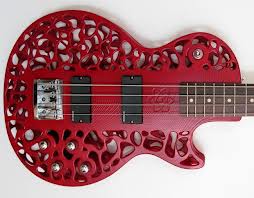
3D printed guitar

How does 3D Printing Work?

Three-dimensional printing is a process by which layers of material are stacked creating a physical object. Materials such as plastics, fabric fibers and even human tissue are fed into the machine to create the designs. Depending upon the machine, those layers could be created through stacking layers of light (FTI- film transfer imaging), fusing heated plastic filament or metal wire (FDM – fused deposition modeling) or laser technology with at least seven different types of metals (SLS – Selective laser sintering).

Sound complicated? Relax. I don’t pretend to understand exactly how the technology works. Do you know all of the exact technology behind how your smart phone works? Neither do I, but we still use our phones constantly.

What Benefit does 3D Provide?

Construction

Imagine being able to create an intricate architectural design to visualize exactly how your building or sculpture will look prior to construction. Imagine being able to create artificial limbs for accident victims or to correct birth defects. Imagine being able to create a spare part for a machine long after the model had been discontinued.

Through contour crafting it is possible to build an entire home: concrete foundation, plumbing, electrical wiring and all of the furnishings. A 2500 square foot house could be built in 20 hours. Imagine the benefit in restoring homes for victims of natural disasters.

Medical

Artificial limbs, prosthesis, can be created to assist accident victims and correct birth defects. 3D printing can produce medical devices such as those used in my spinal fusions. It is scary to think what could be created from human tissue as this technology advances.

Transportation

Prototypes of automobiles, planes, boats and other mobile devices can be created and tested; design adjustments can be made prior to the expensive final production stage.

Toys

Can you imagine giving a child a 3D computer to create their own toys? At least it would be more engaging and positive for their mind than watching violence on TV. A few decades ago a child was given an erector set; next came Legos. Imagine telling a child to go to their room and create their own toy. At this point the complexity of programming the machine prevents this scenario, but will that change in the future?

Blogger

How would a blogger utilize the services of a 3D printer? Imagine bringing your concept to life? The familiar quotation is “A picture is worth a thousand words.” Adding an image to your text enhances the visual appeal and engages the reader. Granted, becoming an excellent photographer to capture the 3D image to include in your post could present a challenge, but then you are up for a challenge. Tap your incredible imagination. Let me hear from you.

The possibilities are endless

What’s the Catch?

Three-dimensional printing is not new; 3D has existed for three decades. 3D printing has been too expensive, non-accessible, inefficient and too slow. Times are changing. According to Lisa Harouni of Digital Forming, detail and quality are improving; the price has been reduced to about $300 and the machine will now fit on a desktop.

What’s the problem?

The programming complexity makes the machine very difficult to use. At this point 3D Printing machines are not user friendly; however with rapidly advancing technology, this could change in the next few years. Three-dimensional printing has the potential to create a manufacturing revolution. Some are touting 3D printing as the answer to ending “made in China.” When manufacturing is cost effective, time efficient to produce, inexpensive to ship and accurate (machines eliminate the human error factor), 3D has the potential to bring the manufacturing industry back to America.

Will 3D Printing Replace Traditional Printing Companies?

No. 3D and traditional printing as we know it now serve two totally different purposes. It’s like asking if an exotic alcoholic drink will replace green tea. Both have their value, but they fill entirely different purposes.

The current fiercely competitive printing industry is expanding. A new online printing company will be challenged to the max to go head to head with the printing giants like Vista Print, PrintPlace.com, or PsPrint. The printing industry is not declining but thriving. Competition in the printing industry is intensifying. UPS and FedEx are trying to capture their own piece of the printing industry market.

A business card created with 3D printing shaped as an exact replica of an entire set of golf clubs may be fun and unique, but imagine attempting to place 20 of them in your wallet.

3D Printer in Every Home?

Does the possibility exist for 3D printers to be in most homes and offices? It’s possible. Is it probable? It was only a few decades ago when Ken Olsen, founder of the legendary minicomputer company DEC said, “there is no reason for any individual to have a computer in his home.” Now we all have at least one computer and probably several when you include our smart phones.

As the volume of information increases and more and more records must be created and retained, does it really make logical sense to create three-dimensional contracts, three-dimensional business cards, three-dimensional letters or postcards and three dimensional grocery lists? No. Will the marketplace still need business cards, legal documents, restaurant guest checks, and printed marketing materials? Yes. The majority of printed materials as we know them will continue to be of significance.

There is a greater likelihood of electronic media replacing some paper documents than 3D printing replacing traditional printed materials. Three-dimensional printing serves an entirely different function in the marketplace than traditional printed materials.

So did we spark your creative juices? How could you potentially take advantage of 3D printing in your online business?

Author’s Bio: At home in the Colorado Rocky Mountains, Elaine Love writes about small business and the mindset for success so essential for an entrepreneur. She is the author of Emotional Ice Water. Find her on Twitter @elainelove44 or Elaine4Success.com

Filed Under: Successful Blog, Tools Tagged With: bc, Design, printing, small business, technology

Steps to Optimize Your E-Commerce SEO

March 18, 2013 by Rosemary

By Brian Taylor

Optimizing the SEO on your e-commerce website is vital to selling more product. It will help your pages rank better on the search engines and keep prospective buyers on your pages longer, increasing conversions and sales. With that in mind we have put together a list of steps that you can use to optimize your e-commerce site’s SEO.

Read them, use them and watch them help increase your revenues greatly.

Concentrate more on each product page

Every single product that you have should have its own product page where as many questions can be answered as possible. It will need a great description, a unique title tag and unique description tags as well. Not only that but it should have relevant internal and external links and have all the social media sharing buttons as well so that it can be ‘shared’ online. Think of every product page as its own website and make sure that:

  • As many questions are answered about the product as possible so that a customer doesn’t have to ‘leave’ the page to finds an answer.
  • All technical specs about the product are included on the page.
  • The product title, the manufacturer of the product and the SKU are text, not images.

Take advantage of category and brand pages

These pages are very important. The average person is not going to be very specific when they first start searching for something online. For example, they won’t search for a ‘Honda Civic DL Sedan’ they will search for a ‘mid-sized car’ and then refine their search as they go. If you have a well done category page with all the possibilities listed someone who’s searching will be taken to the category page first and then be able to refine their search right on your website without leaving. These so-called ‘umbrella pages’ need to:

  • Have all the basic info for each product.
  • Have a descriptive category title on page and META.
  • Include at least a paragraph of content describing them to help prospective customers know what’s being shown as specifically as possible.

Create unique categories to group products

Even though you already have everything listed on your website you should create unique categories to be able to attract even more attention to specific items, like sale items at the end of summer for example. Most e-commerce sites won’t make a new page for ‘bikinis on sale’ but instead just make a ‘note’ on the existing webpage that they’re on sale.

Better to create an entirely new category (and page) to display these items so that they won’t be scattered all over your site but will all be grouped and found in one location.

Heavily incentivize user reviews

This may be the most important step. User reviews are the life-blood of many e-commerce websites. Just like positive reviews about movies will have people lining up at the theater for a new flick, positive user reviews will attract people to your site through SEO. And once they land, they will help persuade them to make a purchase.

The best thing you can do to get reviews is to give your customers an incentive to leave one like an extra discount or something similar. The more reviews the better and, if possible (and it is possible) they should be placed on the product page itself for even more selling power.

If you follow these steps your website will attract, convert and sell more products so don’t hesitate to start using them all ASAP and watch as your sales and revenues start to increase.

Author’s Bio:
Brian Taylor is the VP, Business Development at Forix SEO in Portland, OR. a team of crack SEO experts with an impressive record when it comes to results, experience, and expertise. Forix offers affordable and ethical SEO services in Portland helping small businesses with their Internet marketing needs.

Filed Under: Marketing /Sales / Social Media, SEO, Successful Blog Tagged With: bc, optimize, products, sales, SEO

Devil’s Advocate or Guardian Angel?

March 15, 2013 by Rosemary

By Lindsay Bell

Why are people afraid of being challenged? I’m not talking about the “throw down the gauntlet”, back alley type of challenge, which of course would be unsettling.

I’m talking about healthy debate – defending your ideas, and being asked to think otherwise about a certain subject or path of action. Sure, I’m making a sweeping generalization, as there are loads of people who rise to a spirited exchange of ideas, but in my experience, there seem to be many these days who view it as a negative.

DEVIL’S ADVOCATE OR GUARDIAN ANGEL?

Being a proud devil’s advocate myself, when I stumbled upon an old post by Liz recently, where she dissects devil’s advocates and guardian angels in the workplace, it caught my eye.

Here’s what she had to say about them both:

The position of devil’s advocate is inherently negative. The role is to find holes in the proposed idea. Arguing for the sake of arguing easily can degrade into arguing for inconsequential details or arguing to show how clever the person presenting the argument can be.

The position of guardian angel is inherently positive. The role is to find and fill holes in the proposed idea. Arguing for the possibility of what might work, while checking for risk, leads to dialogue that builds and moulds ideas into useful realities.

FACING THE CHALLENGE

Religious imagery aside, I respectfully disagree.

If the devil’s advocate is looking for holes, it’s to stick a big ol’ red flag beside them so you don’t fall in! They are brainstorming, and looking to better an idea or proposed path. They are thinking of the company’s bottom line, and are trying to avoid the cost of cleaning up after something has gone wrong.

When I’m playing devil’s advocate, I always let people know: “Just playing devil’s advocate here…” – and the reason I do is to NOT insult whoever’s idea it is that I’m challenging. It’s my way of saying “Hey, I’m not asking this to be a jerk, I respect you, but let’s look at it from the other side. I don’t find it ‘inherently negative’. And I certainly don’t “argue for the sake of arguing”.

Granted, my career for the most part has been in journalism/television production. Trust me. You don’t even know what being challenged means until you’ve had your story/idea/interview flayed from top to bottom by a TV executive! But I look back on those formative years with appreciation.

Being challenged like that – daily – teaches you to think differently, it makes you always question “what else” or “what if”, and it forces you to always look at what you’re producing through the eyes of your audience – your community.

An employee fearful of speaking up or proffering an alternative thought is not a productive employee.

Fear creates a culture of complacency within an organization and its teams, and inevitably leads to miscommunication and needless extra work being done.

And yes, both sides of the spectrum need to take responsibility for opening the lines of communication.

Employees need to buck up, get a backbone, and not fear that their manager will think poorly of them if they bring up something that she/he doesn’t agree with. They also need to be prepared to argue their points, thoughts and ideas.

Management needs to ensure there are safe spaces where anyone can raise issues without consequences.

Let’s stop seeing devil’s advocates – who actually have the confidence, candor, and courage to speak up and challenge – as somehow negative.

They might be a little feistier and more fiery than your other employees, but if given the option, I would choose devil’s advocate over guardian angel any day.

And I sure as heck would want one on my team.

What do you think? Do you see the value in healthy debate and a good challenge, or do you immediately feel it’s a negative? Would you choose a Devil’s Advocate or a Guardian Angel? Would love to hear your comments! 

Author’s Bio: Lindsay Bell is the content director at Chicago-based strategic communications and online marketing firm Arment Dietrich, and works in Toronto. A former TV producer, she’s a strong advocate of three minutes or less of video content. She has a cool kid, a patient husband, two annoying cats, and just welcomed Hank, a Vizsla/Foxhound cross, into her home. 

Filed Under: Business Life, management, SOB Business, Successful Blog Tagged With: bc, collaboration, communication, management

  • « Previous Page
  • 1
  • …
  • 63
  • 64
  • 65
  • 66
  • 67
  • …
  • 84
  • Next Page »

Recently Updated Posts

Is Your Brand Fan Friendly?

How to Improve Your Freelancing Productivity

How to Leverage Live Streaming for Content Marketing

10 Key Customer Experience Design Factors to Consider

How to Use a Lead Generation Item on Facebook

How to Become a Better Storyteller


From Liz Strauss & GeniusShared Press

  • What IS an SOB?!
  • SOB A-Z Directory
  • Letting Liz Be

© 2025 ME Strauss & GeniusShared